• Skip to primary navigation
  • Skip to main content
  • Skip to primary sidebar
John Elkington

John Elkington

A world authority on corporate responsibility and sustainable development.

  • About
    • Ambassador from the future
  • Past lives
    • Professional
      • Volans
      • SustainAbility
      • CounterCurrent
      • Boards & Advisory Boards
      • Awards & Listings
    • Personal
      • Family
      • Other Influences
      • Education
      • Photography
      • Music
      • Cycling
    • Website
  • Speaking
    • Media
    • Exhibitions
  • Publications
    • Books
    • Reports
    • Articles & Blogs
    • Contributions
    • Tweets
    • Unpublished Writing
  • Journal
  • Contact
  • Show Search
Hide Search
You are here: Home / Journal

Journal

August 2007

John Elkington · 31 August 2007 · Leave a Comment

Tuesday, August 28, 2007

SPOOK CITY

After getting back from India, I have been taking a couple of weeks off, ahead of travelling to China – and at home, to avoid airports, particularly with climate-change-protestors apparently supergluing themselves to Heathrow’s revolving doors. And one thing I’ve been doing, alongside taking on board copy editors’ comments on the new book, with Pamela’s help from Australia, has been reading William Gibson’s new novel, Spook Country. He has long been my favourite contemporary sci-fi author (http://www.williamgibsonbooks.com/), though – as if often said – his books have gradually slid back into a mutated present.

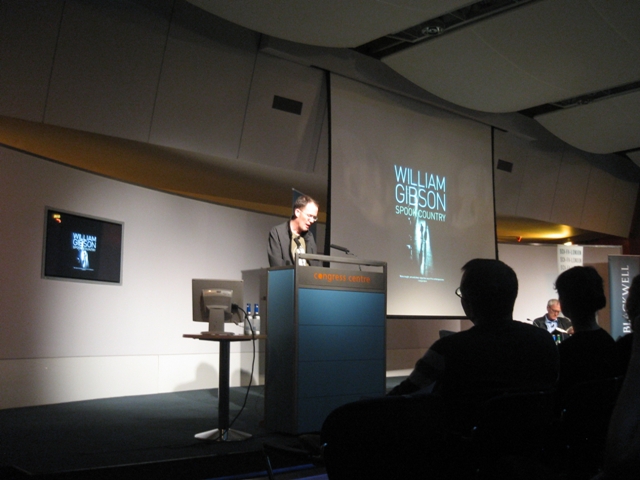
Last night, Elaine and I went to listen to him at the Congress Centre in Great Russell Street, dropping off to see Gaia and Hania on the way, in their respective Soho haunts. A bit like tempting exotic reef organisms out of their lairs. By contrast, struck by the fact that a very high proportion of those turning up for the Gibson reading and interview were wearing black, though a fair few were exotic hybrids of one sort or another. His reading was so monotone that even I almost went to sleep. And when he answered questions, you sometimes got the sense he was trying to fend off the more obsessive elements of his following.

It struck me while reading the book – which I have almost finished – that there is a eerily steady, inexorable, unexceptional, highly detailed flow to the thing, broken periodically by astonishing insights and developments. Reminded me of walking alongside the Nile in Luxor, in 1975, looking across the steady northward flow of green-tangerine water, as the sun set in the west. And then, out of the blue, or green-tangerine, a pair of massive backs broke the surface in mid-stream, and disappeared – never to appear again.

As we walked across to the event, we passed through Bedford Square, where Earthlife used to be based in No. 37. Elaine also used to work for a publisher in the Square. And that set me thinking about Gibson’s ideas on “locative art.” At the moment London has its blue plaques commemorating famous people who lived in various buildings. But what if locative art (http://en.wikipedia.org/wiki/Locative_Art) took off here?

But, as he said at the event, the advent of the cell phone in cities like London transformed them. People who used to walk through the city alone, could now do so in company via their phone. (He noted that when he first saw people on cell phones in London, he thought someone had upended an asylum, because of all the people walking around and talking energetically to themselves.) But what if we could tag every building we had ever worked or lived in, so that others could access our memories, commentaries and so on? If you couldn’t elect to access the memories, it would be like drowning in other people’s worldviews, or taking LSD. But if you could choose what you accessed, it could make walking through a city an astonishingly rich experience.


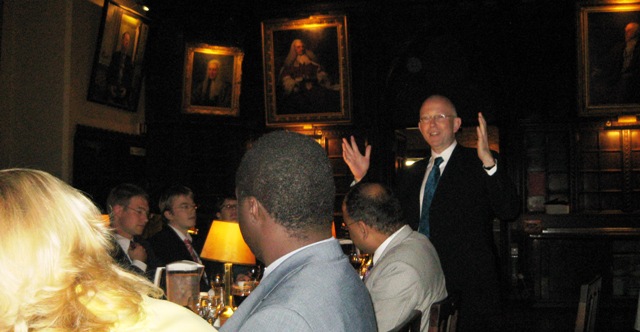
Gibson in full flow

Monday, August 27, 2007

KURTA DAZE

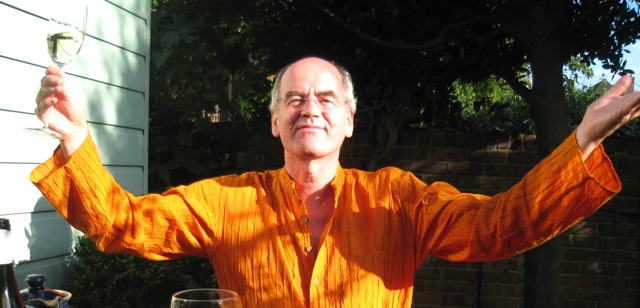
Having decided not to post this photo, taken by Tell (Muenzing) over tea in the garden today, was persuaded to do so by Sam, who likes orange kurtas. This is one of two I bought when in Mumbai, withj help of Kavita (Prakash-Mani). I could get used to them. But Sam, to give the whole story, also says I look like a tipsy guru, so mixed blessings there. Still, I was clearly enjoying both the company and the weather.

Friday, August 24, 2007

ECHOES OF PHOEBE

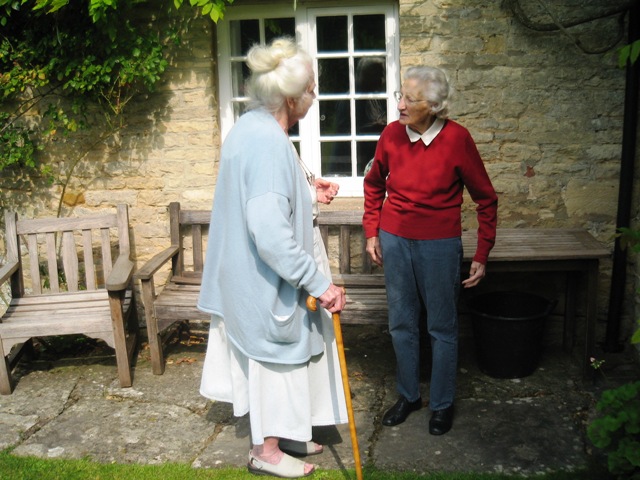
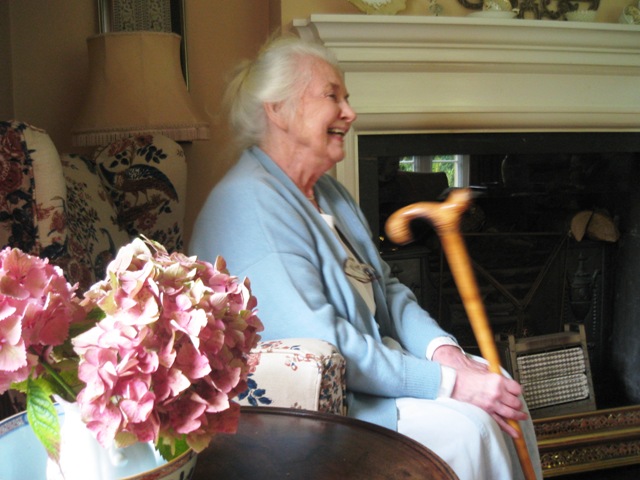
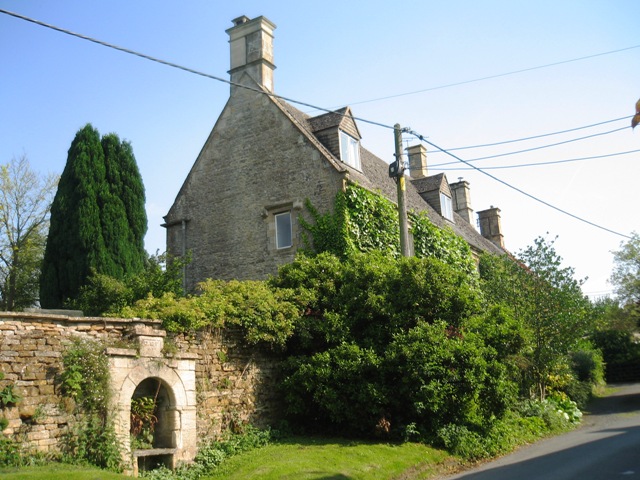
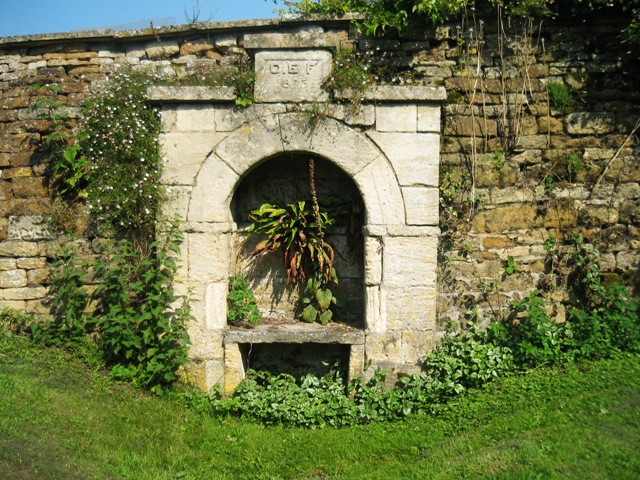
Have always had a penchant for old ladies, so today was rather fun. Elaine and I took my mother across to see an old family friend, Bunny Palmer, in Icomb this morning. Striking how their friends have been dying off – though they were both in wonderful form today. Guy’s Farm garden not quite what it was, but still blessed with a glorious English charm. On the way out, we dropped into the old cookhouse, where a large oven used to cook for the whole village on a Sunday. The state of the roast very much depended on the length of the sermon. Also put me in mind of another much-lamented friend from olden Icomb days: Phoebe, the African parrot who used to hold forth raucously here – and hereabouts.

Thursday, August 23, 2007

ROBERT DAVIES

Jane Nelson called me last Sunday to let me know Robert Davies (http://www.seeingthepossibilities.com/) had died. Now that the news is out, with an obituary in today’s Financial Times (http://www.iblf.org/media_room/general.jsp?id=123950), it’s time to add my small tribute to the towering heap.

I last saw Robert on July 5, at the IBLF event in the Kew Orangery on social entrepreneurs (see blog entry that day, where he is pictured in reflective mood). He was a passionate, consistent, highly proficient example of the breed – and, although our approaches were somewhat diferent, I have always felt that we were very much shoulder-to-shoulder in this field. Alongside people like Stephan Schmidheiny and Bjorn Stigson of WBCSD, Robert was a pathfinder in driving our agenda into boardrooms.

There was clear personal strain in some of the battles he fought. I well recall him coming across to discuss the pressure he came under from parts of the food industry when he insisted on putting obesity on the IBLF agenda a while back. But, whatever the pressures, his approach was admirably summed up by the title of his website and blog, “seeing the possibilities.”

When Elaine and I had breakfast with Robert in Davos earlier in the year, he projected confidence that he could shake the cancer. Having seen so many people succumb in recent years, however, I can’t say I have been particularly optimistic. Still, whatever our condition in life, the last paragraph of the Alison Maitland and Sarah Murray’s FT obituary summed up a key lessons that Robert drew from his own journey: “Our lives are too short not to share what and who we know so the world can profit and the journey to sustainability can be shorter.” Typical of the man – and a model for all those still pursuing the path.

HILL HOUSE GREENING

Am often told that my lifestyle isn’t nearly as green as it ought to be. True, but – for better or worse – my generation’s influence on my parents’ household has been considerable. My father long ago gave up insecticides and switched to biological controls, including getting grandchildren to hunt down caterpillars. Some of the plantings of greens in the garden behind the barn are like lacework, thanks to the depredations of the caterpillars that survived.

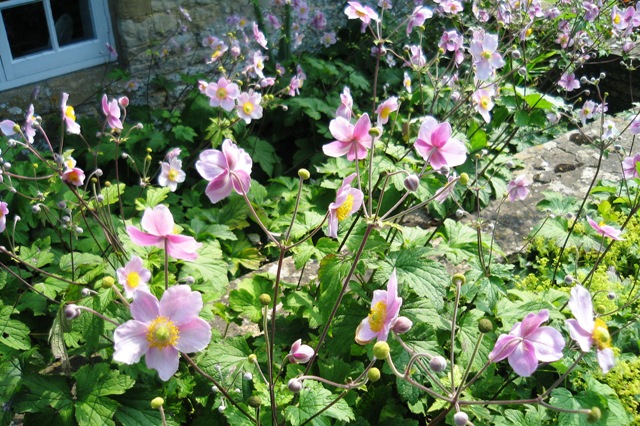
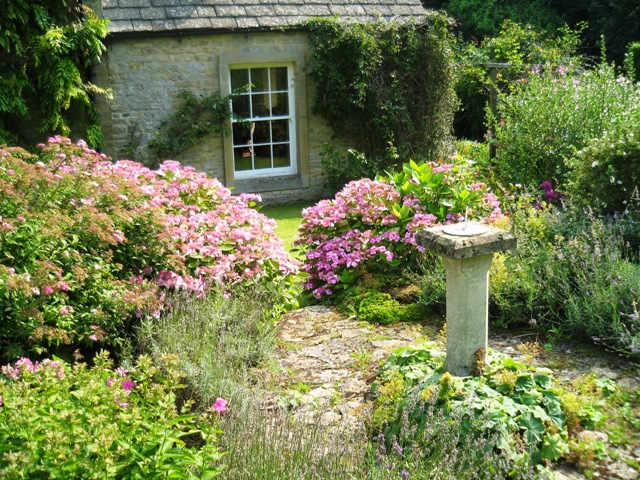
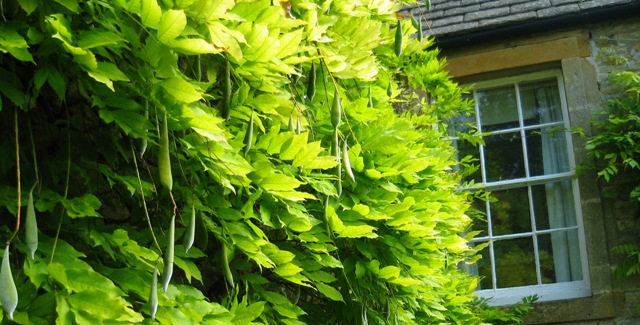
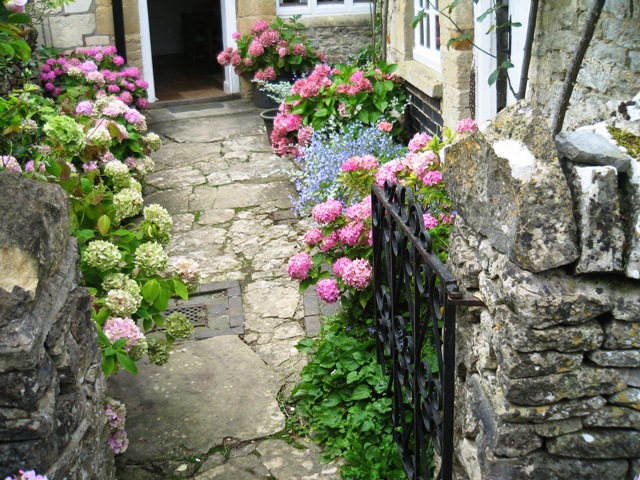
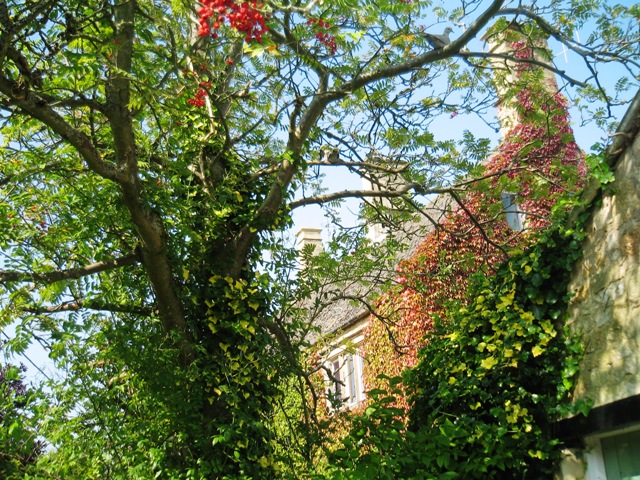
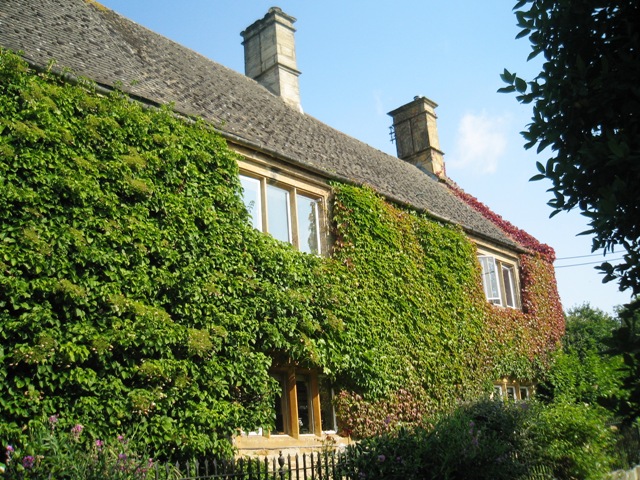
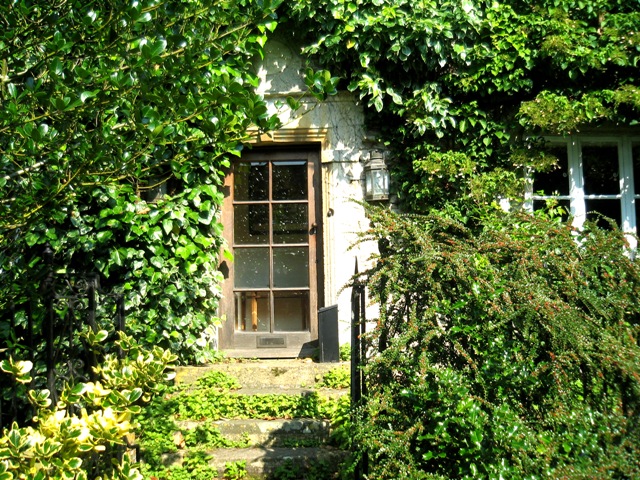
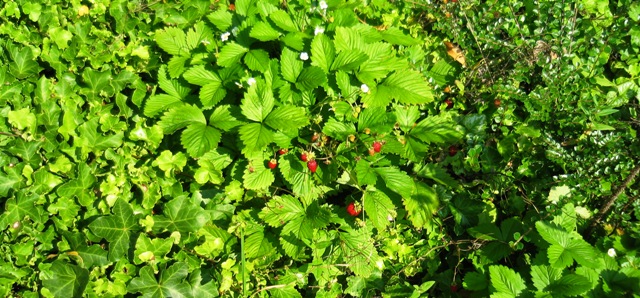
Another question that has taxed us briefly in recent days was whether it’s better to have creepers on a house or not, with some seeing them as damaging to stonework, while others argue that they protect walls against rain and other insults. Looking back at the family photograph albums, which show the house since we moved in almost 50 years ago, in 1959, it strikes me that the greened version of the exterior is way more pleasing than the way it was it looked more or less bare. The last photo: wild strawberries by the front door.

Wednesday, August 22, 2007

IN THE VALLEY

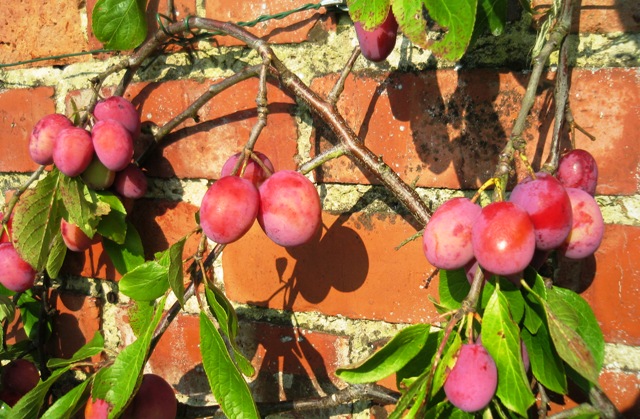
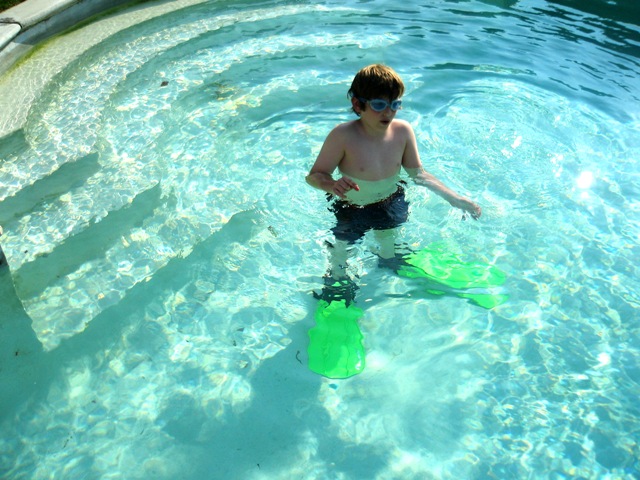
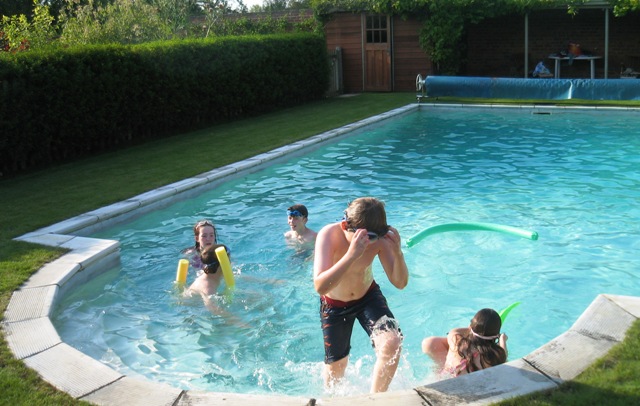
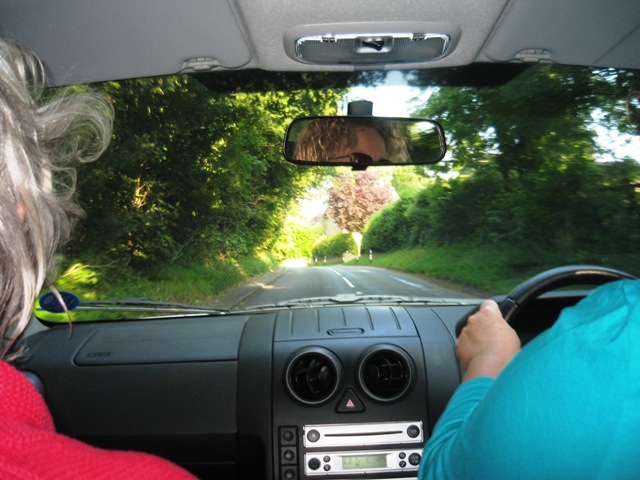
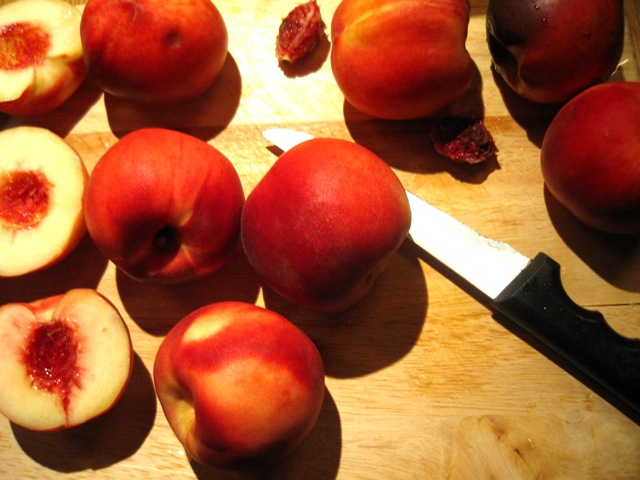
Caroline drove us down into the valley this afternoon to a friend’s house with a gaggle of children, to swim. Victoria plums ripening on the walls of the garden – and memories of when, as teenagers, we used to fish and swim in the nearby Windrush. Then back up the hill. The sliced fruit are part of Caroline and Tessa’s preparations for a forthcoming party of theirs.

THIRD LIBERATION IN OPENDEMOCRACY

My mutated piece on India’s impending ‘Third Liberation’ now appears on the openDemocracy website (http://www.opendemocracy.net/article/globalisation/institutions_government/india_sustainability), whose format and topicality is a wonderful example of the breed.

Tuesday, August 21, 2007

GREEN COLLEGE

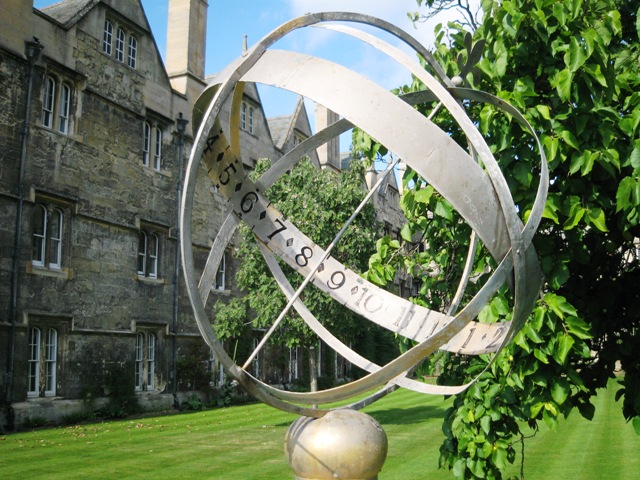
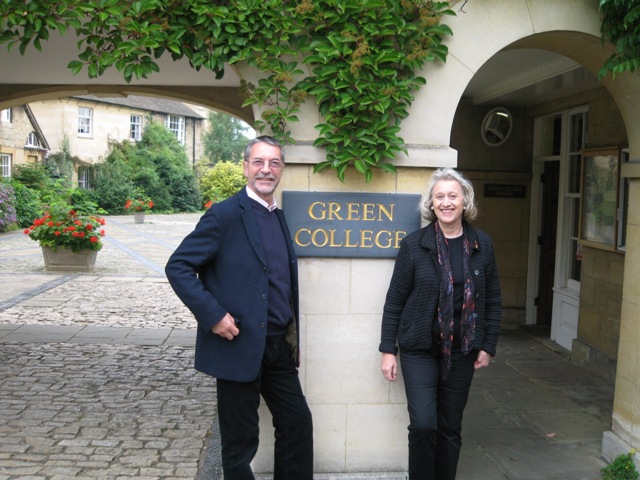
On our way down to Little Rissington today, we dropped off in Oxford to see Geoff Lye – and discuss SustainAbility futures. After lunch, we walked across to Green College, where Geoff is now partly based, and he showed us the Observatory. A different world.

Monday, August 20, 2007

TALKING HEAD

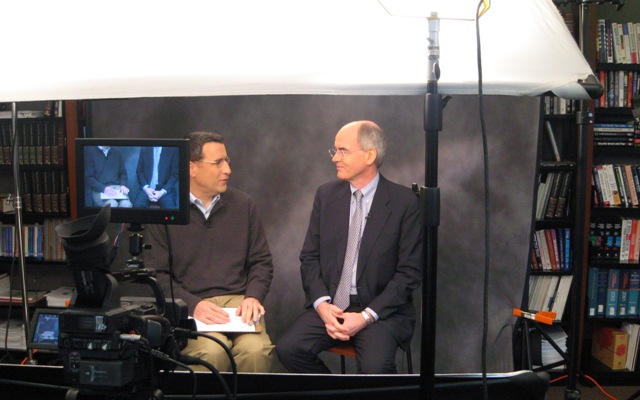
The first in a series of mini-video-interviews on the subject of corporate social responsibility and sustainable development can be found at http://www.bigpicture.tv/videos/watch/00411460f. The filming was done by Marcus Morrell of Big Picture TV, motto ‘Talking Heads, Talking Sense.’ I’m certainly the first here, but it’s for viewers to judge on the second.

Saturday, August 18, 2007

INDIA’S THIRD LIBERATION

On August 16, the day after India celebrated the sixtieth anniversary of its Independence, I found myself standing alongside Niraj Bajaj as we watched the figures on the electronic displays at Mumbai-based National Stock Exchange go from bad to worse—and playfully calculate how much poorer he was as the head of one of India’s largest business houses as the global market correction roared through. Later the same day, on the other side of town, he chaired a session hosted by the Indian Merchants’ Chamber—of which he is President—at which I gave the keynote in support of the Chamber’s centennial year theme of inclusive growth in the context of globalization. My simple message was not entirely comfortable: India faces a far bigger market convulsion before the country reaches its centenary (http://www.imcnet.org/aboutIMC_news.asp?newsid=134).

In his introduction, Mr. Bajaj noted that the ‘Triple Bottom Line’ concept, which I launched in 1994, now offers a means of helping India, Inc. to come up with answers to the challenges that Prime Minister Dr Manmohan Singh had raised in his Independence Day speech. Before explaining how the TBL approach can help, however, I stressed that the world’s second most populous country is now embarked in its third great liberation process since the end of the Second World War. And the third is likely to be greater than either the first and second taken together.

The first was the process of achieving liberation from British rule, finally achieved at horrendous cost in 1947 as the Partition process literally tore the country apart. It was fascinating in recent weeks to see the media—both in India and the UK—explore the rights and wrongs of it all. Suffice it to say that the seismic aftershocks of Partition will probably still be shaping our world in 2047.

The second liberation saw the iron grip of the state gradually prized away from the levers of economic power, as India struggled to catch up with the processes of liberalization, privatization and globalization from 1991. Again, the seismic shockwaves are still working their way through the country’s economy—and will continue to do so for decades to come. But among the beneficiaries of the new order have been some of the leading business people I met during my week in Agra, Delhi and Mumbai.

And the third liberation? Well, if the first broke the stranglehold of the British and the second that of the state, the third will have to simultaneously achieve a triple-whammy—breaking the stranglehold of poverty by bringing the benefits of a modern economy to the more than 250 million of India’s billion people trapped below the poverty line, while protecting the country’s natural environment.

Apart from the pollution and natural resource degradation that are such a striking feature of today’s India, there is also now the growing threat of climate change. Indeed, among those who spoke at the IMC event was Shailesh Haribhakti, Managing Partner & CEO of the leading financial services firm, the Haribhakti Group. Himself a past President of the IMC, he now chairs the Chamber’s committee on global warming.

The scale of the social challenge facing the country was underscored by the Prime Minister’s speech, in which he argued that economic, social, political and educational forms of empowerment are crucial to the nation’s future—alongside effective efforts to tackle the growing range of environmental issues, notably global warming (http://www.hindu.com/nic/pmspeech070815.htm). Like China, however, Indian leaders have often argued that global warming is not India’s problem, given that it “only” contributes a few percentage points of global greenhouse emissions. Indeed, I had heard a senior retired environmental official make exactly that point in Agra earlier in the week, at a business leaders programme organized by the Confederation of Indian Industry (CII).

There I found myself working alongside people like Professor Stuart Hart of Cornell University’s Johnson School, where he holds the Samuel C. Johnson Chair in Sustainable Enterprise Management (http://www.johnson.cornell.edu/faculty/profiles/Hart/) and Professor P.D. Jose of the Indian Institute of Management Bangalore (IIMB). And the mood among the business leaders taking part was distinctly more engaged than it would have been a few short years back, which is just as well, since the country’s second liberation means that a growing share of the responsibility for tackling India’s sustainability (or rather unsustainability) issues will devolve to business. One key factor in that changing mood has been the work of the CII-ITC Centre of Excellence on Sustainable Development (http://www.sustainabledevelopment.in/), under the current chairmanship of ITC Chairman Y.C. Deveshwar.

ITC, which originally stood for the Imperial Tobacco Company, is a company that splits me down the middle. On the one hand, it is like an Indian version of Philip Morris, though the proportion of its revenues derived from the sale of tobacco products has fallen to around 47%. On the other, ITC is increasingly well known for its extraordinary successes in such areas as social forestry—exactly the sort of the ventures that the Prime Minister would like to see more of.

In his speech at the CII event, Mr. Deveshwar accepted that the company’s profile put it in a difficult place. But he stressed ITC’s commitment to “achieving Triple Bottom Line benchmarks is key to our resolve to contribute to the national goal of sustainable and inclusive growth.” The same messages were blazoned over a number of pages in the Independence Day edition of India Today. Among the achievements he reported were the facts that ITC has been a “water positive” company for five years in a row and “carbon positive” for the last two years. It also aims to achieve “zero solid waste,” having recycled over 90% of its solid waste during the past year.

Although such statements are encouraging, it is very clear that—despite a profusion of NGOs—India still has some way to go in developing the sort of civil society organizations that play such a key role in monitoring and challenging business in the developed world. WWF, which also took part in the CII event, is now calling for a Sino-India “axis for business sustainability,” to ensure that the transformation of the global economy proceeds on increasingly sustainable lines (http://assets.wwfindia.org/downloads/wwf_report___indian_companies_in_the_21st_century.pdf). Certainly there is growing awareness that this will be one of the defining issues of the twenty-first century, a point underscored forcefully during last year’s World Economic Forum summit in Davos.

If such countries fail to get their act together in time, we are likely to see the mother of all market corrections. While I was in India, the new broke that the boss of a Chinese factory supplying toys to Mattel had hanged himself as the US company was forced into a massive product recall, following the discovery of unacceptably high lead levels in the paint used in some toys. Such problems, though, are likely to pale into insignificance if and when problems like global warming go into overdrive—and the business community is seen to have dragged its feet as other parts of society tried to mount an effective response.

One of the questions at the IMC event in Mumbai asked what I felt about the 1984 Bhopal disaster. Although I believe that Union Carbide was initially culpable, and that Dow Chemical—which bought Union Carbide’s Bhopal assets in 2001—failed to fully grasp the way that legal, financial moral liability regimes are morphing around the world, I also conclude that various levels of Indian government were to blame for the totally shambolic handling of the aftermath of the tragedy. This is an agenda that my colleague Geoff Lye explored in a recent report sparked by a number of visits to Bhopal, The Changing Landscape of Liability (http://www.sustainability.com/insight/liability.asp).

The changing agenda is easily illustrated by the shift in the work SustainAbility itself has been doing in India. To begin with, the clients were non-Indian companies (like Ford of India) wanting to test their local policies and operations against emerging local concerns, or companies like BT (http://www.sustainability.com/insight/article.asp?id=153) and Norwich Union that have been offshoring call-centre and other operations to India, wanting to assess the responsibility of the relevant operations and relationships. Increasingly, however, there is a sense that Indian companies themselves will be in the market for help in shaping their strategies, performance and accountability mechanisms in areas covered by the Triple Bottom Line agenda.

As one result, we are planning to establish our first emerging economy market office in India next year. That said, my experience in the country as it embarked on its seventh decade of independence leaves me in no doubt that if we are to succeed, we will need to mutate our own business model. A daunting challenge, true, but one that growing numbers of businesses will need to tackle as the impact of the emerging economies increasingly determines the shape and direction of the global economy. And this time the judgment on how we performed will not be made just by the investors and shareholders who have been closely monitoring recent market corrections but by the hundreds of millions of people still excluded from today’s mainstream economy—and, most fundamentally of all, by future generations of Indians and non-Indians alike.

Thursday, August 16, 2007

MUMBAI

Arrived in Mumbai yesterday, Independence Day – and the 60th anniversary of the 1947 liberation from British rule. Day started with a session with Hindustan Unilever, followed by a lunch with the top team at the National Stock Exchange, where I had to speak, then – after a slight detour to the shops with Kavita – an evening conference at the Indian Merchants’ Chamber, where I was the plenary speaker (http://www.imcnet.org/aboutIMC_news.asp?newsid=134). Session chaired by Niraj Bajaj, IMC President. Very lively discussion afterwards, after which we had dinner with Rajni Bakshi (author of Bapu Kuti, and a member of SustainAbility’s Faculty) and Shailesh Haribhakti, Managing Partner & CEO of the Haribhakti Group, a leading financial services firm. He had been at the National Stock Exchange lunch, introduced me at the IMC event this evening and leads the Chamber’s work on global warming.


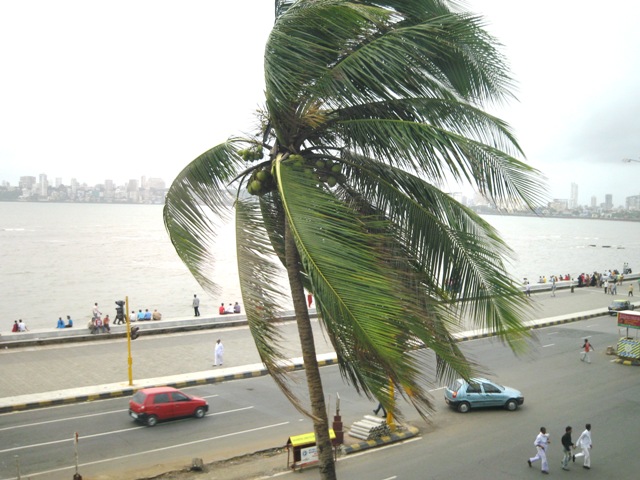
View from my hotel bedroom in Mumbai


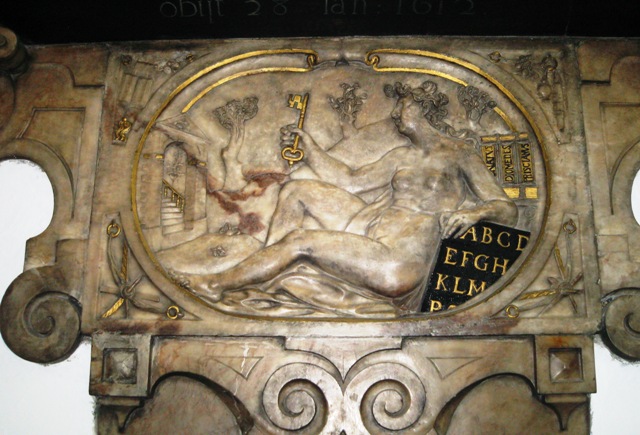
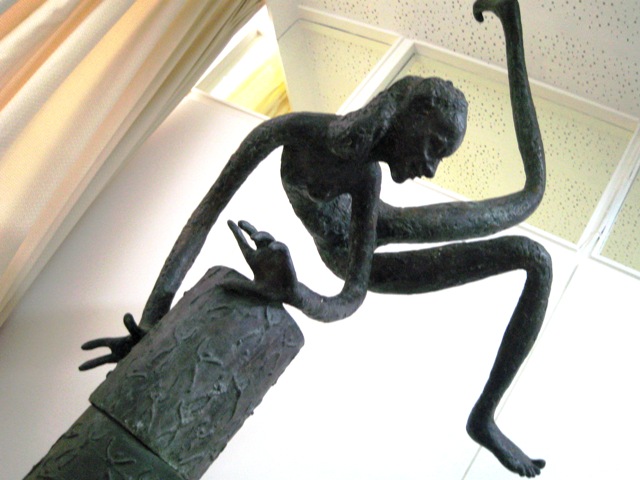
Sculpture at Hindustan Unilever


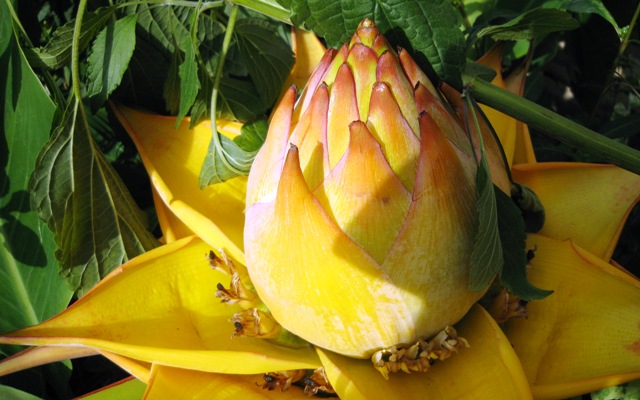
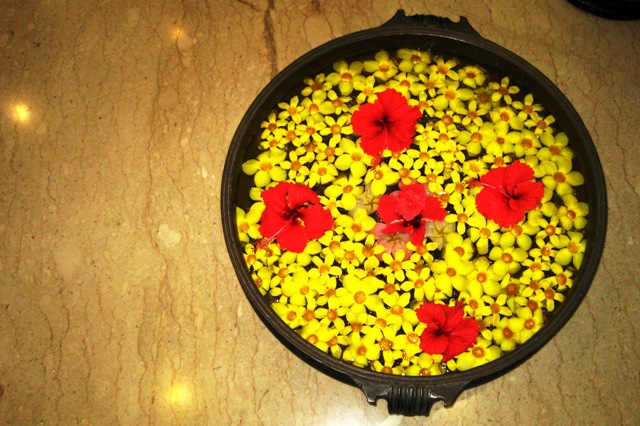
Flowers at the National Stock Exchange

Tuesday, August 14, 2007

AGRA AND THE BLACK TAJ

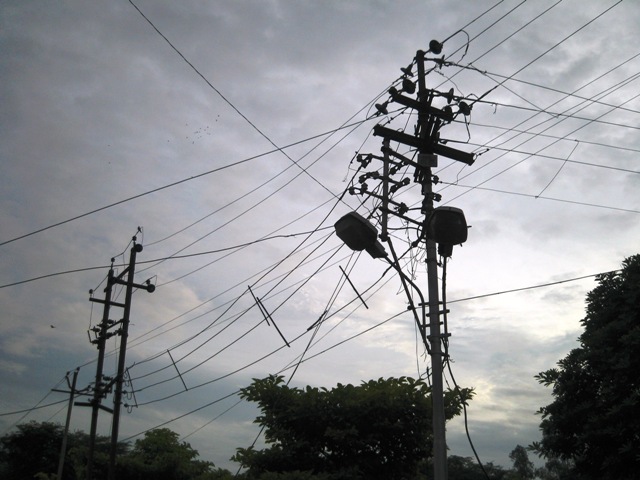
Flew in to Delhi on Friday, getting to the Habitat Centre hotel at around 01.00 on Saturday morning, then up at 04.30 for trip by train to Agra, with Kavita (Prakash-Mani) and colleagues from the Confederation of Indian Industry (CII). Disorientating, shocking experience of wading through the still-asleep bodies of the poor in the railway station, with rats picking their way here and there, and then standing on the station while the dawn gradually lit the sky. Then, once on the train, the Shatabdi Express, through tent shanties into open countryside, with – at one point – a couple of wild peahens making their way past rice paddies in the middle distance.

We have been in Agra for the 1st CII Business Leaders Programme on Strategies and Leadership for Creating Sustainable Organisations (http://www.sustainabledevelopment.in/). (Professor) Stu(art) Hart of Cornell University led off the first two days, Kavita and I the second two. Some of my conclusions on the basis of the experience will be covered in a later posting (‘India’s Third Liberation’). One early highlight: watching Kavita as the only woman in a late-night game of cricket behind the hotel, as bats (the winged variety) flew around overhead – attracted by the insects drawn in both by the spotlights and by the audience. Women seemed to be bitten a good deal, whereas I seemed to escape. Then dinner, where the food was exquiste. But can’t get the country’s yawning social divides out of my head.

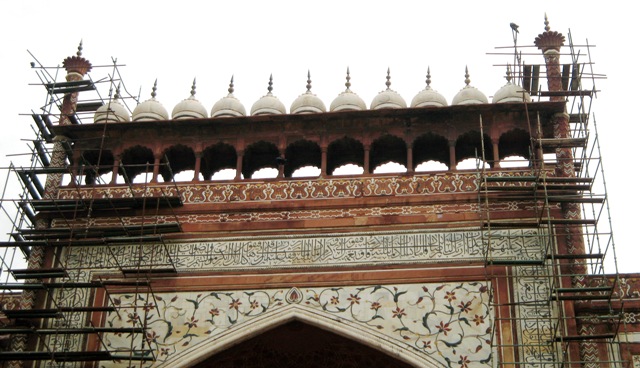
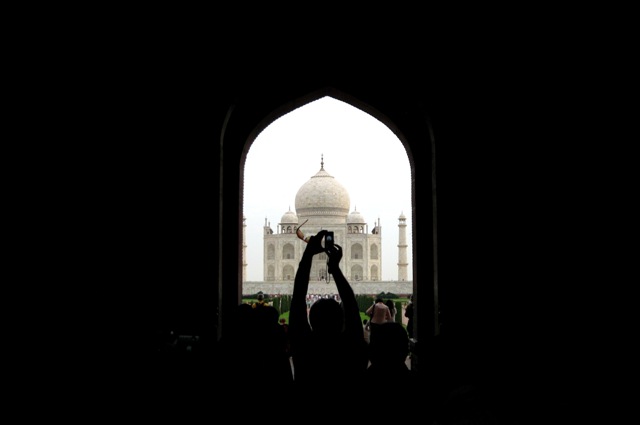
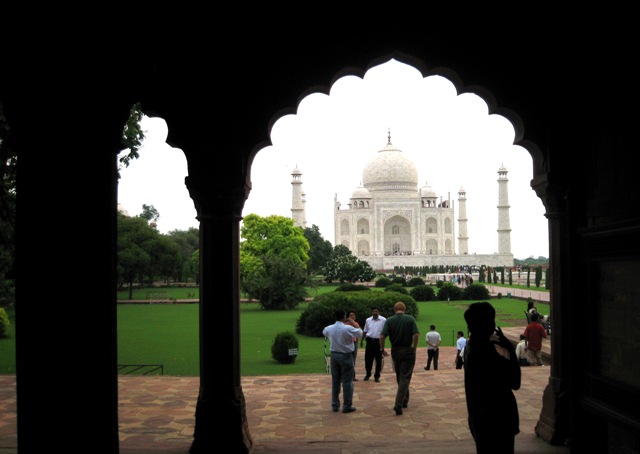
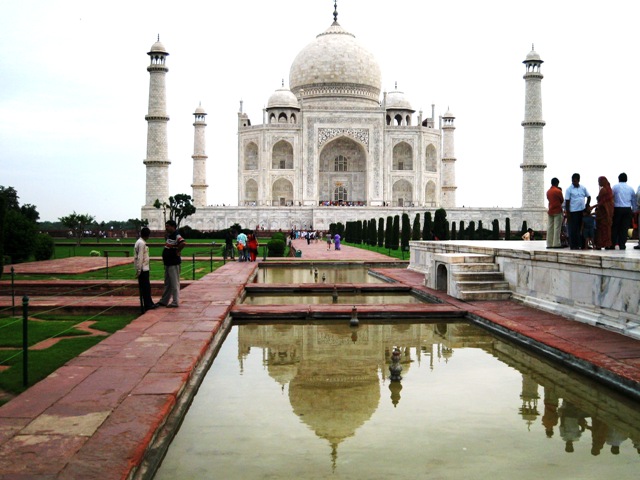
One the Monday morning, around 06.00, some of us took off to see the Taj Mahal (http://en.wikipedia.org/wiki/Taj_Mahal), which I found profoundly beautiful and moving, in multiple dimensions. One of the most extraordinary moments was when our Muslim guide sang the call to prayer inside the tomb – and the echoes trailed off into eternity. The echo was so perfect that you could almost see the decay equations hanging in mid-air. Had promised Sam (Lakha) that I would reflect on her parents, who came here on their honeymoon, and did so as I watched tiny tadpoles wriggling around in one of the ornamental ponds.

I had loved the notion that Shah Jahan had planned a black mirror-image of the Taj for the opposite side of the river, in which he planned to be buried, but Wikipedia concludes that this was a myth. he ended up alongside his wife, Mumtaz Mahal, in the Taj itself.


Not quite the Express: old Japanese locomotive in the the grounds of the The Mughal


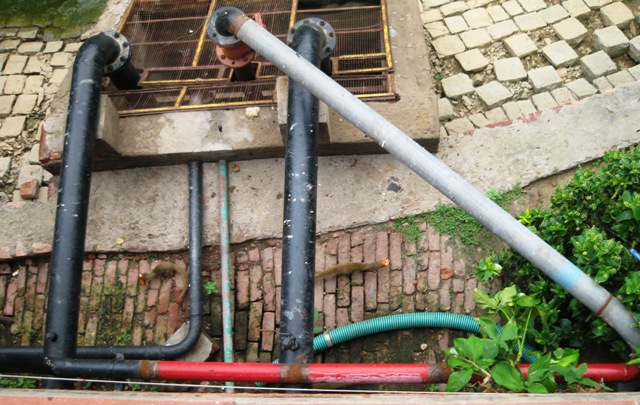
Spot the mongoose pair below the pipes


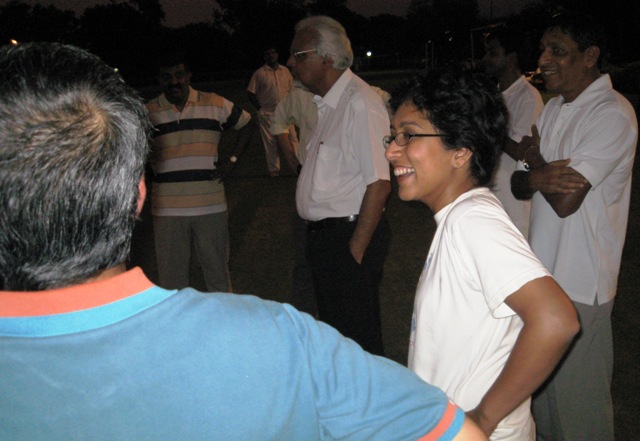
Kavita prepares to play near-midnight cricket, with bats flying overhead (not shown)


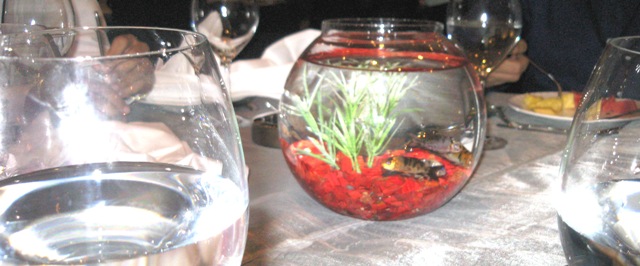
Fish watch us having dinner


Outside the Taj

Getting closer


In view


Stu Hart in green


Taj reflection


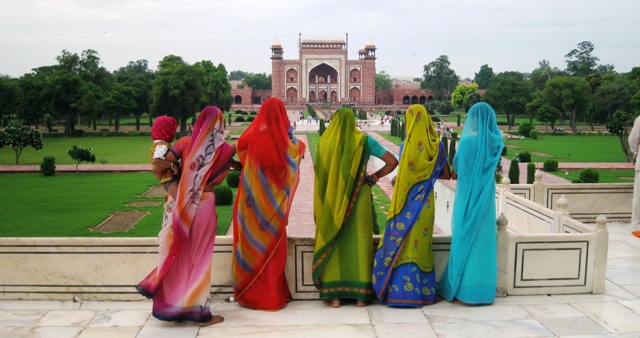
Saris


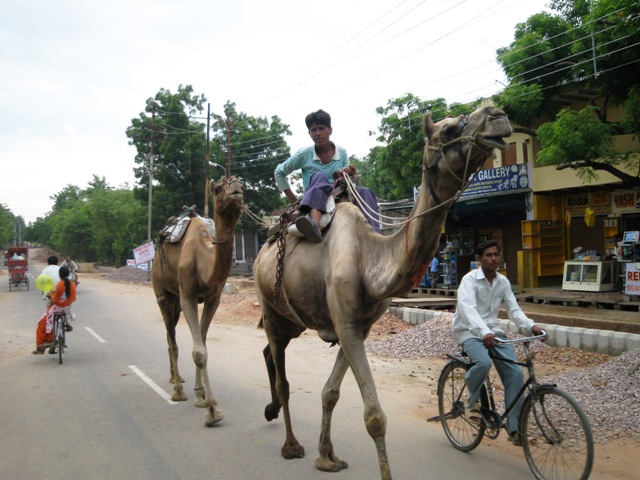
Camels

Thursday, August 09, 2007

TIM – THE COMPANION PIECE

A companion piece to the photograph of my mother, Pat, which I posted on 23 June is this picture of my father, Tim, signing yet another round of Battle of Britain prints. You can see it in his eyes. But it strikes me that the image is an interesting bookend to the earlier one.

THE FOOL

Not sure what I would have made of him in the flesh, but the obituary of Lee Hazlewood in The Times a day or two back (actually on 7 August) was a reminder not only of his glorious (“immortal”, The Times says) song These Boots Are Made For Walkin’, recorded by Nancy Sinatra, but of his sundry other claims to fame. What I hadn’t known about him until I read the obituary is that he also wrote one of my favourite songs from the 1950s, 1956’s The Fool, recorded by Sanford Clark. Found it on the iPod this evening and played it in honour of Hazlewood’s passing.

TREADING WATER

Am watching the crab apples turning red in the garden, as I wait for Demon to come back online after yet another excursion. Working at home today, have been wildly productive, despite the number of times the broadband connection has crashed. Even so, there’s a strange sense of suspension at the moment. Now that the book is in the busy entrails of Harvard Business School Press, I’m finding myself wondering what the next one will be about. I should know better. But something else to think about on the flight to Delhi tomorrow.

Hopefully, will be good to rest the brain for a few hours: the last week or so has been fairly frantic, with other writing tasks, developing an Environment Foundation conference for October on the theme of democracy and sustainability, working on a new project I’m hoping to get off the ground in the realm of private equity and venture capital, and meeting a steady stream of people passing through the office, all on top of more than the usual crop of office dramas. Have myself playing guitar a good deal in the evenings, to decompress, and reading several books – notably finishing Al Gore’s The Assualt on Reason a few days back. A stunning diagnosis, prognosis and prescription for the ills that ail American politics currently.

Sunday, August 05, 2007

GORE & HAWKEN ON IMMUNE SYSTEMS

Have been reading Al Gore’s new book, The Assault on Reason, in recent days and finding it wonderfully provocative. Interesting that both he and Paul Hawken (Paul in his new book Blessed Unrest) use the metaphor of the human immune system for the political challenge facing us: Gore because the Bush Administration (alongside other, deeper-seated factors) has been busily undermining US democracy, Hawken because he optimistically sees civil society organisations worldwide ramping up to the challenge of providing a global political immune system.

July 2007

John Elkington · 31 July 2007 · Leave a Comment

Saturday, July 28, 2007

APPLE’S EYE VIEW OF ELAINE

Playing around with Elaine’s Apple laptop this afternoon, this resulted. Not a great photo, but I liked it, even so.

Friday, July 27, 2007

A PASSION FOR PETER SCOTT

This evening, we watched BBC2’s Peter Scott: A Passion for Nature – and found it profoundly moving. I last met Sir Peter in 1989, not long before his death, at an event in Guiting Power. My main memory, apart from his extraordinary personal charm, was the fact that he was wearing different coloured socks. It may have been intentional. In any event, he had also been one of the judges when I received a 1981 Churchill Fellowship, and wonderfully supportive. But my biggest debt to him was via WWF, which he co-founded. In the programme this evening, David Attenborough called Scott “the patron saint of conservation”, and – as explained elsewhere – the launch of WWF is the main reason I switched on to the conservation cause, in 1961. I confess both to a passion for Sir Peter and to other conservationists of his generation, notably Max Nicholson.

Thursday, July 26, 2007

SOFA TIMES

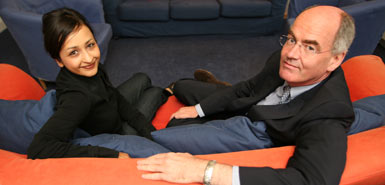
Entertaining session on the sofa this afternoon with Sam (Lakha), being photographed for a joint profile by The Times, for the Crème section. The shoot was only marginally disrupted by Kim and Kelly cackling on the margins. Then across with Elaine to have wonderful dinner with Sam and her husband, Sanjiev. Back in a taxi whose driver’s navigational skills made me think of the book Salmon Fishing in the Yemen, which Elaine gave me recently. Despite having two satnav systems, he headed east when he hit the Euston Road, rather than west. Later, he tried to drive up the entry ramp of Hammersmith bus station. And when we finally arrived back at Barnes Pond, his car was still sitting there as we walked out of sight, headlights staring blankly ahead, as though he had exhausted every sinew in getting us home. The Moon, meanwhile, hung low in the western sky, like a glowing pumpkin that had been left for too long on a surface, its left side strikingly less than a perfect circle.

Tuesday, July 24, 2007

BATTLE OF BRITAIN MEMORIAL

Stepping off the Zephyr at Westminster Pier, I took Maggie and Ritu to see the Battle of Britain memorial on the Embankment, the first time I had seen it. Beautifully done – and very powerful. Moving to see Tim’s name there, too.

BY ZEPHYR TO THE THAMES BARRIER

After a spell of bad weather, with much of the western watershed of the Thames flooded, today dawned fine for our boat trip from Westminster Pier to the Thames Barrier, and back. This was an opportunity for subsets of the IDEO and SustainAbility teams to build on earlier discussions, both in London and San Francisco. The IDEO crew included Tim Brown, CEO, and Bob Adams, who leads their sustainability practice.

We were also joined by Peter Madden, Forum for the Future’s CEO, and Nick Robins, who helped me with our early work on corporate environmental reporting and has since gone on to become something of a star in the world of socially responsible investment. Thought of inviting him because of his book on the East India Company, whose roots can partly be found in this part of London. Sadly, two members of the crew failed to make it: Sophia Tickell of SustainAbility and Becky Buell of Oxfam, because they live in Oxford and floods (or at least fear of same) interrupted play.

We stopped near the Barrier to pick up Andy Batchelor of the Environment Agency, who told us the story of the project. I hadn’t realised that the Barrier has been raised 103 times to date. Given that it took 30 years to get this one built, from the disastrous floods of 1953 to the Barrier’s opening in 1983, it will be interesting to see how long we take to build its replacement – given that its design life only goes out to 2030, on present calculations. We also took a quick look at Thamesmead, much of which is technically under water, which Andy described as “a New Orleans waiting to happen.”

Wednesday, July 18, 2007

AMSTERDAM: TUG & WINGNUTS

Spent most of the time in Amsterdam in meetings, but earlier today Elaine and I took the morning off and enjoyed the city in bright sunshine – a delight after the downpours of recent days. Here are a few pictures of our adventures. Particularly liked some of the ships mooredaround the Nemo Science Centre (http://www.e-nemo.nl/?id=5&s=85&d=551&l=585), the Museum van Loon on the Keizersgracht(http://www.museumvanloon.nl/english/index_eng.htm) and our farewell lunch under the Hungarian wingnut trees at the Restaurant Janvier (http://www.proeflokaaljanvier.nl/), which we happily stumbled upon.

The waiter told us that there was shortly to be a vote on the wingnuts, which had been a gift to the square, but whose roots were lifting the paving stones/bricks all around. We left hoping that the vote goes in favour of the trees …


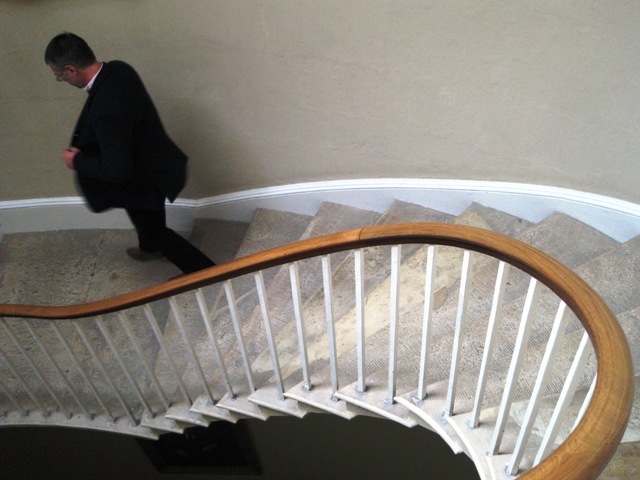
Hein’s stairs, with painted ‘carpet’


Sculpture in foyer of McKinsey HQ, where we had dinner on the top floor


Bridge to Nemo Science Centre


Backbone of Dutch trading empires


One of the boats I liked best – workaday, but upstanding


I liked the star – and the shadows


Prelude


Dancer


Graffiti


Forget-me-nots


Green Wheels, which Hein uses, I think


Window in Museum Van Loon


Staircase


Peacock reflects


Neighbouring roofscape


Lunch at Janvier, under the Hungarian wingnut trees

AFLATOUN


Elaine and I flew to Amsterdam on Sunday, though not without a few strains along the way – as Terminal 4’s baggage system collapsed, with the result that hundreds of people were marooned outside the terminal for ages. So a trip that should have taken a few hours ended up taking around ten, with the result that we arrived very late for dinner with friends, Hein and Helle Sas. Still, the evening made the trip more than worth while.

And so did our time over the next three days with Jeroo Billimoria and her team at Aflatoun. I first met Jerroo in the early days of my involvement with The Schwab Foundation for Social Entrepreneurship and the World Economic Forum. The impact she has on people was demonstrated when we all attended a reception hosted by the Governors of the Dutch Central Bank – and the Bank’s president, Dr Nout Wellink, confessed publicly that he would have gladly given Jeroo anything when they first met, and all she had asked for was offices in the Bank’s headquarters. Which she promptly got.

A while back, Jeroo asked if I would chair Aflatoun’s impact metrics comittee, which I gladly agreed to do (http://www.aflatoun.org/index.php?option=com_content&task=view&id=61&Itemid=69). The inspiration for Aflatoun was Jeroo’s. An Indian national , she grew up and worked among the street children of Mumbai.

“Through this experience she came to the conclusion that a lack of basic knowledge about rights, responsibilities and finance is at the root of economic and social inequality,” Aflatoun says. “The Aflatoun concept is based on a very successful pilot in the western state of Maharastra, India, run by an organization called MelJol, in which they began to teach children in schools how to save money. Not only did this experience create awareness among the children of the benefits of saving and familiarity with the banking system, it also increased their sense of self-esteem and pride. Other positive side effects included improved math skills, improved school enrolment rates, and, in a totally unexpected reversal of the learning model, the parents of children in the program also began to save money. Now, five years later, approximately 83,700 Indian children have successfully learnt to save and spend money responsibly, participated in school-based micro-enterprises, and become socially conscious citizens.”

By the end of 2006, 11 countries were already piloting the Aflatoun Programme Child Social and Financial Education, over 3,000 teachers had been trained and over 100,000 children had been exposed to the Aflatoun concept.

Saturday, July 14, 2007

DOUGHTY CENTRE

Just in from a couple of days at the Doughty Centre for Corporate Responsibility at the Cranfield School of Management (http://www.som.cranfield.ac.uk/som/research/centres/ccr/), led by (Professor) David Grayson. Given that the avionics for the Harrier jump-jet were developed on the site, it struck me that what the assembled folk were trying to do was to develop the equivalent for the corporate responsibility agenda.

It was interesting that a number of external people taking part thought they picked up both a degree of confusion among the CR professionals in terms of desired outcomes from their work and also a sense of unease, which someone noted could either flow from the field’s “teenage angst” or the onset of a “mid-life crisis.” Looking at the average age in the room, it could have been the latter, but knowing David’s extraordinary energy and committment, I suspect that – for this group, at least – it was the former. Certainly I came away charged up, in contrast my reactions to several other recent events.

Thursday, July 12, 2007

NESTA’S £1M AWARD

Took part in a panel this evening launching NESTA’s new Environment Challenge – involving a £1 million award. NESTA is the National Endowment for Science, Technology and the Arts, which aims to help the UK lead the world in the application of knowledge, enterprise and creativity. Other panellists were James Wilsdon, Head of Science and Innovation at Demos and Sarah Butler-Sloss, Chair of the Ashden Awards for Sustainable Energy. The session was chaired by NESTA CEO Jonathan Kestenbaum. The event also launched a new report, The Disrupters, a NESTA/Demos publication on low-carbon innovation.

The theme of the report, by James Wilsdon, Becky Willis and Molly Web, is that “disruptive innovation creates products or business models that transform the landscape. The seeds of disruptive innovation for climate change are everywhere. From the rooftop wind turbines that hold out the promise of self-generated electricity in each household, to the new models of community ownership of energy assets, there are many innovations that have enormous potential. But these low-carbon pioneers tend to remain at the margins of our economy. By their very nature, disruptive innovations do not ‘fit’ easily within established regulatory or economic systems.” So the Demos project investigated how we can nurture and support ‘The Disrupters’: innovators and entrepreneurs who can bring about the step-changes required for low-carbon living. For more, see http://www.demos.co.uk/projects/disrupters/overview

Wednesday, July 11, 2007

SEED

Delightful session this afternoon with longstanding colleague Simone Amber, a social intrapreneur, who runs SEED (Schlumberger Excellence in Educational Development). See http://www.seed.slb.com/en/index.htm. This is a global non-profit education program serving students aged 10-18. SEED began in 1998 as a way for Schlumberger employees, spouses and retirees to share their time, experience and passion for learning and science through a variety of volunteer activities with younger generations of learners. It was involved in putting together the bathub indicator of climate change that Peter Senge presented at the Tallberg Forum (see July 3 entry and http://www.seed.slb.com/en/scictr/watch/climate_change/challenge.htm).

Then, among other things, worked on our application for the Fast Company Social Capitalist Awards – which this year will embrace for-profits for the first time. Has to be in by the end of today.

Tuesday, July 10, 2007

IS IT UP TO POLITICIANS TO SAVE US?

After belated cake with the team for my 58th birthday last month, across with Seb (Beloe) to the Green Alliance summer reception at the College of Physicians, in Regent’s Park. Great to meet up with a bunch of troublemakers, including people like John Sauven of Greenpeace, but utlimately I found the debate on the theme of ‘Is it up to politicians to save us?’ fatuous.

The panellists (http://www.green-alliance.org.uk/grea1.aspx?id=1894) struggled valiantly, counterposing ‘Yes it’s up to politicians’ with ‘No, green consumers can do it.’ Most of the panellists ended up supporting elements of both sides of the debate.

Still, managed to catch up with a number of interesting people afterwards on the College’s lawn, including London’s Deputy Mayor, Nicky Gavron. One of the things we discussed was the extraordinary C40 initiative, bringing major cities together around the world to tackle climate and related issues. If you don’t know about it, take a look at http://www.c40cities.org/


Spiralling cake


Giles (Chitty), Tom (Burke), Julia (Hailes)

Saturday, July 07, 2007

SKETCHES OF FRANK GEHRY

Source: Sony Classics

Hania took Elaine and I to the Soho Curzon today to see Sketches of Frank Gehry, Sydney Pollack’s stunning film focusing on the career and work of one of my favourite architects – alongside people like Buckminster Fuller. At one point in the film Gehry says that the high point of his life is when he faces a blank sheet of paper, about to launch forth into the unknown. Pretty much how I feel – and pretty much where I am. With only four of us in the theatre, a very private view.

Friday, July 06, 2007

JULIE’S BICYCLE

Started the day at the Berkeley Hotel, where a new social enterprise – Julie’s Bicycle (mission: ‘Taking the Heat out of Music’, http://juliesbicycle.trinitystreetdirect.com/) – was launching a campaign to involve the UK music industry in the fight against climate change. Led by Al Tickell (Sophia’s sister) and Jazz Summers of BigLife Management, Julie’s Bicycle has already commissioned Oxford’s Environmental Change Institute to investigate the carbon footprint of the music industry, with this autumn’s ‘Beat the Heat’ program designed to help all parts of the industry get their climate act together.

The aim is to harness some of the energy generated by events like tomorrow’s LiveEarth global music festival to drive change in the industry itself. And typically there are unlikely to be any single answers. As Al Gore himself has put it, we are talking not so much about silver bullets here as “silver buckshot.”

Apart from inputs from Jazz, Al and her uncle Sir Crispin Tickell, credited with waking up Al Gore and Margaret Thatcher to the risks of climate change, we also heard from Professor Chris Rapley, Director of the British Antarctic Survey. Strikingly, he brought in a shiny silver container, from which he extracted two circular samples of ice, drilled from the Antarctic ice-sheet. One of them dated back 38,000 years, if I heard right, to a time when we were still Cro-Magnons struggling to get a fire lighted in our caves, as Rapley put it. And it was extracted from around one kilometre down in the ice. Wonderfully strange feeling to touch ice dating from so long ago as the cores went around the Berkeley ballroom, under blazing chandeliers.

Sat on same table as Chris Morrison, who manages Damon Albarn – and hooked into the conversation when I heard him talking about an expletive-rich exchange he had had with Bob Geldof during the Live8 process, when Albarn criticised the lack of African musicians on stage. I noted I had watched the TV programme a few evenings focusing on Albarn’s new opera, Monkey: Journey to the West. Watching it, I found that Albarn put me in mind of no-one more strongly than Brian Wilson of the Beach Boys, particularly when the story focused on how Albarn had assembled a new instrument out of all the truck bus, car and scooter horns manufactured in Shanghai. Morrison said that wasn’t the first time the thought had surfaced, but really great to see new waves of talent pushing the musical envelope. SustainAbility will be helping Julie’s Bicycle, with both Geoff Lye and I involved initially.

Thursday, July 05, 2007

IBLF AND SOCIAL ENTREPRENEURS


Among the dark suits

Maggie (Brenneke) and I made our way late today to Kew Gardens, glorious even in light rain, where I chaired a ‘fish bowl’ session in front of 80 leaders from business, government and NGOs. Session part of an annual meeting for IBLF, the International Business Leaders Forum (http://www.iblf.org/media_room/general.jsp?id=123940), an organisation that does sterling work across the sustainable development agenda. Had the challenging task of helping six social entrepreneurs to tell their stories, more or less in sound-bites, and then three people from business to respond, all in 55 minutes.

The social entrepreneurs were Nancy Biberman, Co-founder and President of the Women’s Housing and Economic Development Corporation, based in the Bronx, the poorest urban county in the US; John Houghton, CEO of TEDCOR, which focuses on solid waste collection in South Africa; Martin Kalungu-Banda, Founder and Executive Director of The Partnership Forum, Zambia; Manoj Kumar, CEO of the Naandi Foundation in India, who apparently runs the largest kitchen in the world; Zablon Karingi Muthaka, owner of Beta Bins Waste Management, Kenya; and Rafal Serafifn, Director of the Polish Environmental Partnership Foundation.

Then we had responses from Sonjoy Chatterjee, Managing Director and CEO at ICICI Bank UK; Mark Foster, Group Chief Executive, Accenture; and Edwin Fuller, President and Managing Director, Marriott International. Frustrating in that each of the entrepreneurs could have spoken for at least an hour – interestingly and usefully – about their stories, but at least we managed to provide a taster for those around us in the Orangery. Again interesting to see how the social entrepreneur’s stories sparkled when compared with more conventional CSR narratives.


Robert Davies looks reflective

Tuesday, July 03, 2007

RAINSTORM AT CITY HALL

Spent this afternoon and this evening speaking at an event organised by Ipsos MORI at City Hall to celebrate a new survey on public attitudes to climate change – if celebrate is the right word. 81% of Britons interviewed felt that climate change would have no effect on them. More positively, those that recognised that it is happening said they were willing to act, as long as the process was fair. One odd statistic: sales of clothes pegs at Asda have jumped 1400%. Wonderful thunder storm as we convened ahead of the conference in London’s Living Room, atop City Hall. Could almost have been organised to dramatise the risks. Torrential downpour at one stage. Missed it by minutes, having comfortable time to wander around the guitars display outside.

Monday, July 02, 2007

CLIMATE IN A BATHTUB

One of the highlights of the Tallberg plenary sessions was Peter Senge’s run-through of the Climate Change Simulator, based on balancing flows of water into and out of a bathtub. Eureka! To try it out, go to http://www.seed.slb.com/en/scictr/watch/climate_change/challenge.htm

Sunday, July 01, 2007

TALLBERG FORUM ABOMINATION

The spiralling gliders and biofuel-powered monoplane were impressive in the endless Scandinavian twilight as the ‘Heaven and Earth’ concert marked the end of the 2007 Tallberg Forum. Most of the music was indifferent, but Lake Siljan provided a staggeringly beautiful backdrop as children raced around after bubbles blown by all and sundry. But then – as half a dozen hot-air balloons strained at their tethers – WWF performed an abomination. Hundreds of people released plastic WWF-branded pink balloons which swarmed into the skies. Then, to add insult to injury, thousands more balloons were released from great nets. Really, what planet are these people on?


Bubbles


Balloons: hot-air and abominable

June 2007

John Elkington · 30 June 2007 · Leave a Comment

Saturday, June 30, 2007

DINOSAURS ON WHEELS

Surprisingly, given the climate change focus of many of the Tallberg Forum sessions, we were surprised – and weirdly delighted – to see a seemingly endless parade of vintage gas-guzzlers, mainly American, passing through the village. Many of the drivers were heavily tattoed. Didn’t seem quite Swedish.

Friday, June 29, 2007

HOW ON EARTH CAN WE LIVE TOGETHER?

Elaine and I arrived at Arlanda airport on Wednesday, 27 June, expecting to find a bus. People who had been to the Tallberg Forum before saw no evidence of a reception committee or of a bus, so we raced across to catch a train – and rode two hours standing up in the corridor of a speeding train with hordes of young people headed towards the Swedish version of Glastonbury. Met a bunch of semi-familiar faces on the next train, to Tallberg itself, and arrived in wonderful evening sunshine. Borne away to hotel Akerblats by biofuel-powered Saab, then later walked down to the shore of Lake Siljan before collapsing into bed. Nice chat on the jetty with young man who had been swimming in the lake with his large black dog. Evening wonderfully fragrant of hay meadows and mock orange. Everything wildly picturesque.

The big themes this year were climate change and sustainability. I was mainly involved in Track 1, where the question was: As the present path is not sustainable, what is? Sessions were subject to Chatham House Rule and no cameras injunction. Among those I was in harness with: Tariq Banuri of SEI, Nayan Chanda of the Yale Center for the Study of Globalization, James Hansen of the NASA Goddard Institute for Space Studies, Ruud Lubbers of the Netherlands Energy Research Centre, Jonathon Porritt of Forum for the Future, Peter Senge of the Society for Organizational Learning and Achim Steiner of UNEP. The process was so jam-packed that I ended up doing a very brief introductory session with Tariq and Alan AtKisson, and then handing over to the participants to ponder the question: What is sustainability? The session took off like a rocket.

For some reason, I felt frustrated and displaced through many of the sessions. Overall, a sense that there was more interest in talking about the issues than there was in hunkering down and thinking about solutions. Davos may have its faults, but it’s better organised and is enormously energised by the presence of large numbers of social and environmental entrepreneurs. Worth having gone, but the most interesting conversations flowed from accidental, serendipitous encounters walking to and fro from sessions – or, right at the end, when escaping from an overblown session in the Big Tent and chatting with a number of fellow refuseniks. Couldn’t help thinking that the Tallberg Forum is uncomfortably caught between its origins (since 1981) as a small, select and convivial gathering and its rapidly growing size and ambitions in recent years.

One of the most striking features of the event, for me, was the block of ice brought in from Greenland, and allowed to stand in the sun as the Forum proceeded. As it melted away, my sense of frustration grew. Then, weirdly, probably as a reaction, a thought train on some of the things I want to do over the next 2-3 years began to crystallise. More anon.

Sunday, June 24, 2007

WETLANDS WITH REED WARBLER

Had a wonderful walk with Hein and Elaine, in fitful rain, around the Barnes Wetlands Centre. Hein hugely moved to see a reed warbler in the reed-beds, something he has only heard before. We also saw the most amazing duck, with powder-blue beak and seemingly stitched together from different birds. Frogs croaking in the drizzle, including some we could see at fairly close quarters: brilliant green and quite rapt with each other, ignoring us entirely. Meadowsweet out in great froths and masses of orchids, too. Several herons and a stunning tern, airborne sculpture.


Hein and Elaine


Me


Us


Reflections


From a hide

Saturday, June 23, 2007

FIFTY-EIGHTED

Began my 58th birthday by opening a surprisingly large number of cards, including a wonderful one from the SustainAbility team, assuring me – with the aid of a white-coated scientist and graph on the font of the card – that research shows that birthdays are good for you, because we are now discovering that the more birthdays you have, the longer you live.

But one of the nicest images I have been sent in recent days came from my father, Tim, who sent this photograph of my mother, Pat, taken by my sister Caroline. It catches her essence, at least to my mind. She says that it is unduly flattering and reflects the fact that she was looking at Tim …

In the evening, Hein Sas – an old Dutch friend and colleague – arrived, as did Gaia and Hania, Doug and Margot Miller, and Ian and Tina Bruce, and we had a quite wonderful evening. One highlight: Hein brought me the most thunderous silver bicycle bell from Amsterdam, which I think would probably register on the Richter scale.

Thursday, June 21, 2007

CRASH

Had meant to work on the final version of the book at home today, but crashed into bed – mixture of effects of long-term travel, the Brazilian virus and, I’m told, generally doing too much. Could have slept for a week, easily.

Wednesday, June 20, 2007

IMPACT EVENT IN WINDERMERE

Spent the past couple of days on the edge of Lake Windermere, kicking off a very interesting conference held by Impact (http://www.impact-dtg.com/) on sustainable enterprise. Arrived very late on the Tuesday evening, in time to see rabbits scurrying around the country hotel’s lawns. Then the heavens opened, with great crashes of thunder and flashes of lightning. A mixture of Beatrix Potter and Bram Stoker. Fascinated to listen to (Lord) Michael Hastings, who did the session after mine. Explored the social and political dimensions of all of this is a very moving way. And bumped into Ray Anderson and his wife, of Interface, in the grounds, which was fun. He spoke at the same event. Still wrestling with the virus, though, and travelling by train is a bit of a nightmare – not just for me.

Monday, June 18, 2007

TOMORROW’S GLOBAL COMPANY LAUNCH

Spoke at the launch of the Tomorrow’s Global Company Inquiry report today, held at Reuters in Canary Wharf. For more details, see http://www.tomorrowscompany.com/global/news.aspx#newsitem19. My Brazilian virus was at work, though, and I had to chew throat pastilles constantly to keep from choking. Probably looked like a Chicago gangster.

Saturday, June 16, 2007

 
Across early to Editora Globo, the media group, with Cynthia Rosenburg (http://www.empresaverde.globolog.com.br/) – who Jodie (Thorpe) and I work with on our regular column for the new Brazilian business magazine Epoca Negocios (http://epocanegocios.globo.com/). Took part in a panel discussion, followed by photographic session for an interview for the magazine, then wonderful lunch some way away with Cynthia, Editorial Director Nelson Blecher and Ivan Martins, Executive Editor.

Then back to Hotel Transamerica with Cynthia, to do interview, after which I am called down from my room for photography session with long-haired Japanese photographer for a piece that is due to go in Revista Inevestimentos, then work on editing one of the chapters for our book (The Power of Unreasonable People), then into a taxi for dinner with Jodie at an excellent restaurant at the Casa da Fazenda do Morumbi. Wonderful old building, great food, then a walk under the stars among the jaboticaba, mangrove, avocado, magnolia and rosewood trees. The home of the Brazilian Academy of Art, Culture and History, the building houses some of the worst paintings I have seen in my entire life.


Illegal photo taken in lobby of Editora Globo building


Rupert


Ivan Martins and Cynthia Rosenburg


Blinkered


Mall roof on way out


Cats at the Casa da Fazenda do Morumbi


Gate in the gardens


Grill

Thursday, June 14, 2007

FUNBIO

Jodie and I were sped across Sao Paulo this morning to a conference at the British Centre organised by Funbio (http://www.funbio.org.br/publique/web/cgi/cgilua.exe/sys/start.htm?tpl=home&UserActiveTemplate=funbio_english), where I appeared as part of a panel of speakers for three hours or so – in front over 100 people from business, government, NGOs and the media. Funbio (the Brazilian Biodiversity Fund) is a non-profit organisation which received a $20 million grant from the Global Environmental Facility (GEF) some years back. I spoke about our experience with stakeholder engagement, both internally and during processes organised for clients. One of the questions we were asked by one of the discussants turned out to be a concealed question about Alcoa’s recent mishaps in relation to stakeholder processes in Amazonia, though I didn’t realise that till later. After lunch, we spent a couple of hours with Pedro Leitao, Funbio’s Secretary General, and his team, discussing how they might evolve in future. Partly sparked by the work SustainAbility did some years back in preparing the report The 21st Century NGO (http://www.sustainability.com/insight/research-article.asp?id=51).

Tuesday, June 12, 2007

HELICOPTERING AROUND SAO PAULO

Fascinating meeting of the International Advisory Board of Institute Ethos in Sao Paulo, Brazil (http://www.ethos.org.br/DesktopDefault.aspx?Alias=Ethos&Lang=pt-BR), yesterday and today. Then, this afternoon, Joao Gilberto Azevedo Santos of Ethos and I were helicoptered across to the HQ of Banco Bradesco for meetings with the Presidents and senior executives. Welcomed off the roof by Jean Philippe Leroy, who runs the market relations department, which combines investor relations with corporate social responsibility. One thing he told me during the visit: the bank offsets all its helicoptering via tree planting. Hmmm. But was impressed with the way the top brass handled my questions, from the work of their foundation and the climate impacts of air-conditioning, through efforts to control money laundering and invasions of privacy, to the number of people affected by bank robberies each year. One slightly odd observation: have only heard one distant siren of a police car here, in what is meant to be quite a violent city, whereas in London it’s every five minutes at times.

Then three of us were helicoptered back to the Hotel Transamerica for the opening of the Ethos annual conference, where Jodie (Thorpe) gave an excellent presentation on our new report, Raising Our Game, and I took part in the subsequent panel discussion chaired by Aron Cramer of BSR and featuring such folk as Ernst Lichteringen of GRI, Alice Tepper Marlin of Social Accountability International, Ricardo Young of Ethos and Simon Zadek of AccountAbility. One nice, seredipitous touch: Jodie noted that today, the 12th, is the Brazilian equivalent of St Valentine’s Day, which keyed in nicely with our favoured ‘Hearts’ scenario in the report.


Ricardo Young in full flow

NEW BUSINESS & HUMAN RIGHTS WEBSITE

One of my favourite social entrepreneurs is Chris Avery, the man responsible for developing the Business & Human Rights Resource Centre and related website, initially inside Amnesty International UK, and then as a spun-out, independent entity. Declaring a very real interest, I sit on the Centre’s Board of Trustees – and congratulate the team on their revamped website, which has been launched today at http://www.business-humanrights.org/Home

The new design makes it easier to:

· Search for a company and check its human rights record – with over 3600 companies covered

· Stay up-to-date with ‘News’ and ‘Feature of the week’ on the homepage

· Check how companies are responding to concerns raised about their conduct

· Explore the archive of news & reports on over 160 sectors; 180 countries; 160 issues

· Access ‘Special resources’, including all materials by UN Special Representative John Ruggie

· Sign up for free Weekly Updates.

Monday, June 11, 2007

20 YEARS ON FROM BRUNDTLAND

Given that 2007 is the twentieth anniversary of the Brundtland Commission report, Our Common Future, which helped put the concept of sustainable development on the international agenda, it is hardly surprising that SustainAbility has found itself involved in a growing number of events and projects designed to look back, assess progress and then look forward. One of these has been our Raising Our Game project, whose report is now downloadable from our website (http://www.sustainability.com/raising%2Dour%2Dgame/). Separately, a two-part SocialFunds.com article on the theme can be found at http://www.socialfunds.com/news/article.cgi/2308.html

Sunday, June 10, 2007

THE ROAD

I picked it up in the Shaman Drum bookshop in Ann Arbor recently, because I had heard such good things about it. Then I picked it up again as I left home yesterday for the airport – and read it on the flight to Brazil. And I can’t rememember when a book hit me as hard as The Road, by Cormac McCarthy. One that did, which I read back in the late 1960s, was Earth Abides by George R. Stewart. The theme of both books is post-apocalytpic, but McCarthy’s book reads like the very best poetry. Unputdownable. It’s one of the most powerful love stories I have come across, in this case between man and son.

If it is often easier to explain unsustainability than sustainability, this is a treatise in the bleakest unsustainability. A personal journey through the civilizational disintegrations painted on a bigger canvas by Jared Diamond in his book Collapse. And yet the final paragraph of The Road, which in a way twists the knife, is one of the most beautiful distillations of sustainability I have come across – reminding me of afternoons alongside streams like the Windrush in Gloucestershire and rivers like the Stour in Dorset.

Friday, June 08, 2007

SURREAL


Elaine

Elaine and I went to the ‘Surreal Things’ exhibition at the Victoria & Albert Museum today. Had fun with the distorting mirrors, but the thing that stuck in my mind was the wheelbarrow cushioned in pink satin by Oscar Rodriguez. Was it a wheelbarrow or a richly upholstered couch? And that put me in mind of the article in the latest issue of Harvard Business Review by Roger Martin, dean of the Rotman School of Management at the University of Toronto – who I know via his membership of the Skoll Foundation board. His forthcoming book, The Opposable Mind, argues that – like the human opposable thumb – the mind of a great leader can hold opposing ideas in tension at the same time, seeking a better synthesis. That’s a skill we need at SustainAbility, for example, as we try to balance the imperatives of growth with those of influence.

Then we head across to see the new Whole Foods store in the old Barkers building in High Street Kensington, a block from where SustainAbility had an office before we moved to Hyde Park Corner and then on to Holborn. The Whole Foods Market approach is quite impressive (American version of quite) – see http://www.wholefoodsmarket.com//UK/pressroom/pr_06-06-07.html.


Egghead

Wednesday, June 06, 2007

DIRECTOR COLUMNS

Some of the columns I have written for Director magazine can be found at http://www.director.co.uk/INDEXES/Comments/John_Elkington.html.

Monday, June 04, 2007

UN GLOBAL 500

One of the highlights of the last twenty years was when Julia Hailes and I were elected to the UN Global 500 Roll of Honour, in 1989. Received a note today to say that it is celebrating its twentieth anniversary, like SustainAbility. More at http://www.global500.org/

Friday, June 01, 2007

LOW CARBON JUDGEMENT DAY

Spent much of the day chairing the judging panel for the CARS NOT CARBON competition for advertising and marketing campaigns designed to promote ‘greener motoring.’ Organised by the Low Carbon Vehicle Partnership (http:/www.lowcvp.org.uk). My camera battery died part-way through, because I failed to charge it last night after the launch of our Raising Our Game report, which truncated my visual record. Still, Simon Baines of Satellite Marketing took a bunch of photos, so may post some of those when they come throught.

The judges came from such organisations as BP, DEFRA, Ford, The Guardian, Leo Burnett, McCann Erickson, Toyota and Transport 2000. The categories included: Smarter Driving; Low Carbon Fuels; Responsible Vehicle Use; Responsible Low Carbon Business Transport; Low Carbon Passenger Cars; and Low Carbon Vans. We judged as our barge cruised around the Grand Union Canal. T he results will be announced at a conference at the DTI Conference Centre on 28 June.

STICKING YOUR FINGER IN A POWER PLUG

Well, delightfully, I get top billing in the latest issue of Skoll eNews (http://www.skollfoundation.org/newsletter/053107.htm). An exerpt:

Long before “corporate responsibility” was considered de rigueur, SustainAbility was telling corporations they needed to consider the economic, social and environmental impacts of their products. In fact, John Elkington, founder and chief entrepreneur of SustainAbility coined the term “triple bottom line” back in 1994.

Today, as the London-based consulting firm celebrates its 20th anniversary, it has moved to a powerful new agenda. Working with the Skoll Foundation, it is probing the ways that social entrepreneurs reframe seemingly impossible challenges such as health care and climate change as opportunities, shaking up entrenched systems and offering innovative new models. The report that SustainAbility released at the Skoll World Forum on Social Entrepreneurship in March 2007, “Growing Oppportunity: Entrepreneurial Solutions to Insoluble Problems,” is the first in a series of annual surveys, papers and workshops about social entrepreneurship funded with a $1 million, three-year field-building grant from Skoll.

The partnership seeks to accelerate the development of the field of social entrepreneurship by building bridges between social enterprises, businesses and financial markets. It will explore and address the challenges social entrepreneurs face, identify best practices and help build awareness of social entrepreneurship among business and financial communities, where connections can help advance the work of social entrepreneurs.

“People want to see creative, innovative, scalable solutions to problems. That’s why we are delighted to be involved with social entrepreneurs,” explains Elkington. Interacting with these energetic individuals is, he says, “like sticking your finger in a power plug.”

To subscribe to the newsletter, go to www.skollfoundation.org and enter your address in the Skoll eNews box at the bottom of the page.

May 2007

John Elkington · 31 May 2007 · Leave a Comment

Thursday, May 31, 2007

RAISING OUR GAME

Back late from the launch of SustainAbility’s latest report, Raising Our Game: Can We Sustain Globalization? (http://www.sustainability.com/raising-our-game/), at an event co-hosted by Anglo-American at their HQ in Carlton House Terrace. I introduced the report and Sophia (Tickell) chaired the discussion panel that followed, which featured folk like Doug Miller of GlobeScan and Charles Secrett, previously head of Friends of the Earth and now an advisor to London Mayor Ken Livingstone.

Gave special thanks to Ritu Khanna for keeping the project on the tracks – and to Mark Lee, our CEO, for keeping the orgnaisation on its own tracks during the somewhat protracted process. But I’m really pleased with the end result. There was an extraordinary buzz at the reception that followed. These are three pictures that Sam (Lakha) took as she circled Chris Marsden, Jonathon Porritt and I. Our latest recruit, Ori Chandler, who it was announced only today was joining the team, took photos throughout the session, so may post some of those, too, later.


Chris, Jonathon, me


Me, Chris, Jonathon, Mark (Lee)

RAISING OUR GAME

Our second report as part of our Skoll Program was launched in London today. It is now posted on our website (http://www.sustainability.com/raising%2Dour%2Dgame/). Raising Our Game: Can We Sustain Globalization? looks out to 2027 to examine future scenarios for sustainable development, and proposes a new set of rules which could help business rise to the unprecedented challenges ahead. The report looks at the trade-offs involved in future choices over environmental and social value, and at the role to be played by innovation, entrepreneurship and the emerging economies of the South. There will be winners and losers, but no more business as usual. For more information or to register your seat at one of our launch events, please contact Ritu Khanna at raisingourgame@sustainability.com

Friday, May 25, 2007

BUSINESS & HUMAN RIGHTS RESOURCE CENTRE

Spent much of the day with the Business & Human Rights Resource Centre in Charlotte Street. Their website, which is a treasure trove of material on business and human rights – as the label on the tin might suggest, is in the process of being revamped. The new version, which launches shortly, will be a major step forward.

Then back to the office for a call to Brazil, ahead of my trip there next month, followed by a meeting with Henry Saint-Bris of Suez. Also get to leaf through a print copy of our twentieth anniversary report, Raising Our Game: Can We Sustain Globalisation?, which has just arrived from the printers. Much of the weekend will be spent doing slides for the launch on 31 May, hosted by Anglo-American.

Thursday, May 24, 2007

CHELSEA PHYSIC GARDENS

Glorious, fascinating day at the Chelsea Physic Gardens, for a session of the Avdisory Board of Physic Ventures (http://www.physicventures.com/) – during which I did a joint presentation with Sophia (Tickell). The weather was wonderful, although there were moments in the morning when it felt as if we were in Kuala Lumpur. Then in the evening, across to Cafe Fish, near Piccadilly Circus, for dinner with Elaine, Jed Emerson and Jason and Kippy Scott, he of Generation Investment Management.

Monday, May 21, 2007

LOW CARBON, HIGH ADRENALINE

Slightly scrambled day, part of which involved being stranded in a Piccadilly Line train outside Hammersmith for an unconscionable time en route to a meeting on biofuels at Clarence House, chaired by Prince Charles. Got there just as the group was convening – and more or less got over my “low carbon, high adrenaline” experience by the time I was called on to speak. Then back to the office to be filmed for a BBC World series on, of all things, Formula 1 racing. Then out to dinner with Elaine, Will Rosenzweig and his wife Carla. Slightly tired by the time we got home.

Sunday, May 20, 2007

THE SPITTING IMAGE

A couple of days ago, Geoff Lye, Sophia Tickell and I had an interesting lunch with John Gummer and the Quality of Life Challenge team. Geoff has prepared a statement on the need for the UK to become ‘carbon positive,’ which is now posted on the SustainAbility website (http://www.sustainability.com/insight/article_open.asp?id=953) and on the Quality of Life Challenge website (http://www.qualityoflifechallenge.com/). As we convened upstairs, waiting to head downstairs to lunch, I couldn’t resist taking a picture of John’s ‘Spitting Image’ dummy in its glass case …

Thursday, May 17, 2007

SOCIAL EDGE DEBATE

I’m facilitating a debate on social entrepreneurship on Social Edge this week. If you’re interested in taking a peek – or, even better, inputting – here’s the link:

http://www.socialedge.org/discussions/social-entrepreneurship/survey-of-social-and-environmental-entrepreneurs

Thursday, May 10, 2007

A BOARD’S-EYE VIEW


Ready for inhalation of the vapours

Flew in to JFK late last night and was up early today in New York’s Marriott Financial Center to take part in the CRO Conference, sub-titled ‘A Board’s-Eye View of Corporate Responsibility.’ In this case CRO stands for Chief Responsibility Officer, with the event organised by CRO magazine (http://www.thecro.com/). Was part of an early panel session on where the whole agenda is headed, alongside the CERES Director of Governance Programs, Anne Kelly, and two companies: Interface and Neenah Paper. The photograph shows the bank of chairs we were asked to sit on. They reminded me of the tripod that the Oracle of Delphi used to sit on while inhaling the vapours – methane, ethane and ethylene predominantly, as I have been reading in a fascinating book on the subject as I flew around the country. This is The Oracle: Ancient Delphi and the Science Behind Its Lost Secrets, by William J. Broad (Penguin, 2006).


The Oracle of Delphi at work

Wednesday, May 09, 2007

IDEO

Last night, Maggie and I had dinner with Bob Adams of designers IDEO (http://www.ideo.com) at a fantastic Greek cuisine restaurant in Emerson Street, Kokkari (http://www/kokkari.com). Then this morning we made our way across to IDEO at Pier 28 on the Embarcadero, for a session with members of their San Francisco team. We are plotting a possible joint project. Wonderfully bright bunch of people – and an environment that reminds me strongly of the world we worked in when SustainAbility first moved out of our house in Barnes and slotted in alongside Brand New Product Development in Holland Park. Then out to the airport for flight to NYC.


IDEO 1


IDEO 2


IDEO 3


IDEO 4


IDEO 5


IDEO 6: Maggie and Bob

Tuesday, May 08, 2007

SKOLL AND THE FUTURE OF GREEN

After our meeting with Mitch Kapor, Maggie and I are forced to take a town car out to Palo Alto to get to the Skoll Foundation in time. The shame, the guilt, the footprint! And, to make matters worse, we are supplied in the luxurious back seat with elegant bottles of Norwegian mineral water. Sally (Osberg), the Foundation’s President, beats me up on that pretty much the moment we arrive. But then we then have two wonderful sessions, one with Sally and her immediate team, then a wider one, over lunch, with most of her colleagues. A great opportunity to report back on our work so far as part of our ongoing 3-year program with the Foundation. As we travel across the States, Maggie and I are liberally dispensing copies of our first Skoll report, Growing Opportunity: Entrepreneurial Solutions to Insoluble Problems (http://www.sustainability.com/insight/skoll_article.asp?id=937).

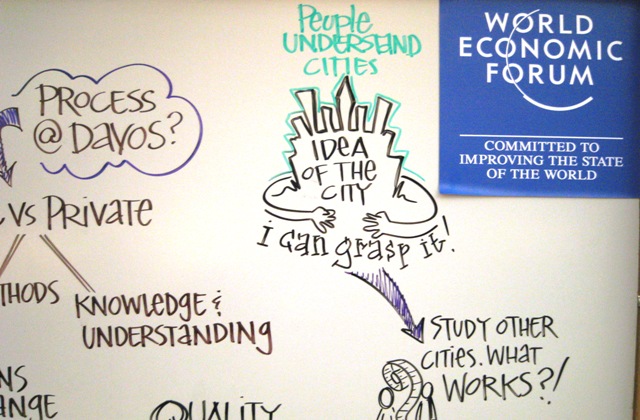
The WEF session itself was held out at HP’s HQ, where we were kindly driven by Laura Vais of the Skoll Foundation. The event, which I facilitated, was off-the-record, but one of the thing that always impresses me about their workshops like this is the instant charting done by their artists. One of the charts for my session appears below.


Our waves hit the big time, again

MITCH, WANDA & US

Day started with a magical session with Mitch Kapor (http://www.kapor.com/: see, too, my February 24 blog). What a startlingly rich city San Francisco is in terms of its human capital and diversity. Maggie and I made our way across to Mitch’s extraordinary building, where dogs were everywhere in evidence, from the moment we were ushered in to the moment we left. In his own office, we also met Wanda, who gave the entire proceedings a slightly surreal, Starwarsish effect.

Talking about the sustainability agenda, and my impending session on ‘The Future of Green’ with the World Economic Forum out at HP, Mitch noted that it is “a done deal,” “game over,” and that the last place any self-respecting company wants to be is “on the trailing edge.” We also talk about his wife Freada’s new book, Giving Notice: Why the Best and Brightest are Leaving the Workplace and How You Can Help Them Stay, which explores why bright young people are leaving the business mainstream (http://www.amazon.com/s/ref=nb_ss_gw/002-9400800-1657641?url=search-alias%3Dstripbooks&field-keywords=Giving+Notice). If there were more people like Mitch, the tide would become a tsunami. I’d join – just for the shirts.


Warm welcome for Maggie


Dog


Dogs


How’d a porcupine get in?


Color-coded: Mitch and Wanda

Monday, May 07, 2007

PHYSIC VENTURES

After an early, fascinating visit with Nan Stone of Bridgespan (http://www.bridgespangroup.org/), Maggie and I make our way across to see Will Rosenzweig and his team at Physic Ventures, particularly Phil Giesler, Director of Innovation at Unilever Corporate Ventures – and now deeply engaged in Physic. This is a venture capital firm that “works closely with entrepreneurial teams and invests in technology-enabled, consumer-driven businesses in North America, primarily early to mid-stage.” Key areas are health, wellbeing and sustainable lifestyles. I’m on their strategic advisory board (http://www.physicventures.com/leadership.html). It’s their first day in their new offices on California Street. Sense that things are on a roll.

Then an interview with Cheryl Dahl, who I first came across through Fast Company, and who is now working on a fascinating web-based venture aimed at green consumers – particularly people who don’t really consider themselves as such. In the evening, Will and his wife Carla take Maggie and I to a wonderful Basque restaurant along Battery Street, Piperade (http://www.piperade.com). Really had no idea that Basque food – and particularly Basque wine – could be so good. I could live here.


A shape that imprinted itself on my brain when I first came to Frisco in the early 1970s

HURRAH, I’M 2,589,000TH …!

While in Ann Arbor, Michigan, a couple of days ago, I met Keith Schneider of the Michigan Land Use Institute. We were talking about websites and blogs with Jonathan Halperin, from SustainAbility’s Washington, D.C. office, when Keith asked how many people visited my personal website. I said I had never asked – and, to a degree, didn’t want to know. But after further discussion he offered to take a look at the site’s performance according to Technorati, which rates sites by number of links rather than visitors.

His feedback TODAY is that this site ranked “778,427 out of 71 million blogs tracked by Technorati.com, the best blog search engine.” Then he took a look at this site and SustainAbility’s via www.Alexa.com. In the interests of transparency, he reported that “Your personal site is ranked 2,589,000. And sustainability.com is ranked 559,024.” He went on to say that “SustainAbility.com is doing very well,” whereas I am beginning to oscillate between a wish that I hadn’t shown an interest and, on the other hand, a mildly competitive need to boost my numbers!

Sunday, May 06, 2007

CALIFORNIAN MEALS AND WHEELS

First full day in San Francisco started with breakfast with Maggie (Brenneke), following which I took the BART train out to San Bruno and a truly weird yellow cab (at least as far as the driver was concerned, but at least with Duke Ellington playing on his fading in-and-out radio) onward to San Mateo for lunch with Debra Dunn, ex-HP and now a member of SustainAbility’s Faculty. Then mainline train back to the city and fairly soon afterwards, with Maggie, across to see Denise Caruso of the Hybrid Vigor Institute (http://hybridvigor.org/), also a member of our Faculty. She recently published an extraordinary book on risk, Intervention: Confronting the Real Risks of Genetic Engineering and Life on a Biotech Planet (hvpress, 2006).

After dinner at a Thai restaurant, Denise drove us back into the city in her open-topped car, with The Beatles booming out Come Together as we crested the rise from her home – and gazed out over that astounding cityscape of lights. The stars were amazingly clear, as was Venus, I think. Given that I have described her part of the city as very much like an aircraft carrier, giving you the sense that you are about to take off over the city and Bay, and that aircraft carriers are sometimes called flattops, it was slightly spooky that the line playing as we crested the ridge was “Here come ol’ flattop, he come groovin’ up slowly” (see http://en.wikipedia.org/wiki/Come_Together).


San Mateo station


Denise’s stairwell

Saturday, May 05, 2007

LETTER OF SUPPORT FOR JOHN BROWNE

Signed a letter of support for Lord Browne of BP while in the US. It appeared today in the Financial Times (http://www.ft.com/cms/s/7a2ddd32-faa7-11db-8bd0-000b5df10621.html) and The Guardian (http://www.guardian.co.uk/letters/story/0,,2072999,00.html).

WHAT DO NGOS WANT?

In to San Francisco, after a couple of days in Ann Arbor, Michigan, with Jonathan Halperin of our D.C. team. We took part in a conference at Michigan University’s Erb Institute for Global Sustainable Enterprise (http://www.erb.umich.edu/) on the theme of ‘What Do NGOs Want?’ Professor Tom Lyon, the Institute’s Director, is developing a book on the theme. Our report The 21st Century NGO will make up one chapter. Groups like Environmental Defense, Greenpeace, the Rainforest Action Network (RAN) and WWF who took part quipped that they felt like “lab rats” or “beetles on a pin,” but the event turned into a very interesting exercise. Great to see old friends like (Professor) Tom Gladwin and Marty Zimmerman, who was a key figure at Ford when SustainAbility first started working with the company.

Magical moment when Erb Institute Associate Director Andy Hoffman asks me how we calculated the height and variation of the waves of societal pressure since 1960 that I have been tracking at SustainAbility since 1994. The answer is that the process has often been a bit like that scene from Close Encounters of the Third Kind when Richard Dreyfuss frantically models Devil’s Tower out of mud. I have grabbed at any data and stray information I could get my hands on. But then Andy opened several pages from his thoroughly studious book From Heresy to Dogma: An Institutional History of Corporate Environmentalism (Stanford Business Books, 2001), and a winner of the Rachel Carson Prize. The trends and the patterns were remarkably similar, even though these maps were data-driven and mine have been somewhat more intuitive.

At one point, Jonathan and I strolled around the town and stumbled across a wonderful shop, The Shaman Drum Bookstore. Couldn’t help myself, as usual. Came away with books like William Broad’s book The Oracle, Gary Snyder’s Back on Fire, Tracy Kidder’s Mountains Beyond Mountains (which Jane Nelson has been encouraging me to read for ages), A Billion Bootstraps: Microcredit, Barefoot Banking, and the Business Solution for Ending Poverty by Phil Smith and Eric Thurman, and Cormac McCarthy’s The Road. Just as well we’re driving a truck …


Jonathan asked for a hybrid – and instead we got …


I’m vertically challenged


Marty Zimmerman (centre) asserts, while Dow Chemical and BP reflect


Jonathan does social service

Thursday, May 03, 2007

BEDFORD ROW TREES

Don’t know what species they are, but the trees in Bedford Row make this my favourite time of year there. The fragrance from their blossoms is heady – though it competes at the moment with the smell of solvents and hot, drilled materials in the London office, where a bunch of new desks and cupboards are being installed at the moment, together with what look like several entry ramps to the fabled information superhighway.

Tuesday, May 01, 2007

BOBBY “BORIS’ PICKETT

Associated Press: Johan Huibers’ Ark

SustainAbility’s London offices are being rewired and redesked this week, so have been working mainly at home, though with regular excursions into central London for meetings – today with James Cameron, Monica Araya and Tanja Havemann of Climate Change Capital in Grosvenor Street. Have also been working on the book and the final stages of our globalization study, the latter due out on 31 May. Plus preparing slide presentations for Ann Arbor and San Francisco later in the week.

And climate is the unlikely link to the obituary this week (Independent, 28 April) of Bobby ‘Boris’ Pickett. One of my least favourite tracks on my least favourite Beach Boys album, which I nonetheless bought while at school in 1964, was ‘Monster Mash’ on Beach Boys Concert. But once heard, the words – by Pickett – were difficult to flush out of one’s mind:

I was working in the lab late one night,
When my eyes beheld an eerie sight,
For my monster from his slab began to rise,
And suddenly to my surprise …
He did the mash,
He did the monster mash,
The monster mash,
It was a graveyard smash.

And the link? Well, in 2004 Pickett took his song, originally released in 1962 and which he also later morphed into such forgettable songs as ‘Transylvania Twist’ and ‘The Werewolf Watusi’, and updated it to produce ‘Climate Mash’, designed to help turn up the heat under the Bush Administration.

Any the picture at the top of this entry? It’s an AP image of the half-size Ark built by Johan Huibers in The Netherlands (http://news.bbc.co.uk/2/hi/europe/6604879.stm). If you can’t win the politics on climate, and you can’t sell enough humorous records to buy yourself a hilltop retreat, the next big thing is to built a monster version of an upended Airstream trailer/caravan and take to the waves.

April 2007

John Elkington · 30 April 2007 · Leave a Comment

Saturday, April 28, 2007

HANIA MAKES ME WANT TO PAINT


Hania Elkington 2007

Hania arrived for the weekend just before lunchtime, drawing me away from my computers. She took us through her photographs of her time in Istanbul this past week, and left me wanting to take up painting.


Hania Elkington 2007

Friday, April 27, 2007

PHOTOGRAPHS

Spent much of this week finishing off SustainAbility’s new report on the future of globalization – and the implications for the future of corporate responsibility and sustainable development. One of the more convoluted studies we have undertaken, long overdue, but I think coming together very powerfully now.

Then home by taxi, because I had to transport back the three huge photograph albums I compiled over the years of the first ten years or so of SustainAbility’s history, which Sam and Kim have been using to scan in photographs for the twentieth anniversary section of the website (http://www.sustainability.com/twenty/). A sample can be found at http://www.sustainability.com/twenty/gallery.asp.

As the taxi unloaded me in Barnes, Julia (Hailes) was just arriving for dinner and to stay the night, ahead of doing a speech on green funerals tomorrow. She brought a copy of her new book, The New Green Consumer Guide (http://www.juliahailes.com/Flyer-NGCG-jun06.pdf). After supper, we all sit through till late going through the albums, recalling old adventures and filling in some of the missing names against age-old photographs. Had somehow missed the mention of her in the Financial Times, despite reading the paper semi-religiously every day, on 30 March (http://search.ft.com/iab?queryText=Julia%20Hailes&y=7&aje=true&x=8&id=070330000595&location=http%3A%2F%2Fsearch.ft.com%2FftArticle%3FqueryText%3DJulia+Hailes%26y%3D7%26aje%3Dtrue%26x%3D8%26id%3D070330000595&referer=http%3A%2F%2Fsearch.ft.com%2Fsearch%3FqueryText%3DJulia+Hailes). The item was on her recent work for McDonald’s (http://johnelkington.com/time-wave2.htm), a company we had a major run-in with after the publication of the orginal Green Consumer Guide.

Wednesday, April 25, 2007

ALWAYS WANTED TO PLAY THE ALBERT HALL

Rory Stear of Freeplay Energy noted – as we all waited to go on stage there today – that he had always wanted to play the Albert Hall. Other panellists for the debate on what it takes to be a ‘Good Director’ were Penny Newman of cafedirect and Philippa Foster Back of the Institute of Business Ethics. The transcript can be found at http://www.iod.com/intershoproot/eCS/Store/en/pdfs/ac07_transcript_panel.pdf.

I continue to contribute a column to Director magazine, the latest of which can be found at http://www.director.co.uk/MAGAZINE/2006/12%20Dec/elkington_60_5.html.

The IoD also launched a new climate change microsite on its website today: http://www.iod.com/is-bin/INTERSHOP.enfinity/eCS/Store/en/-/GBP/IODContentManager-Start;sid=xQsRsteuGQgLbZGdp3AbJH9uV3tiFITovqY=?ChannelID=2&MenuID=20&TemplateName=policy%2fcontent%2ftransport%2fpol_transport_climate_change%2eisml.

Tuesday, April 24, 2007

DOUGHTY CENTRE FOR CORPORATE RESPONSIBILITY

Across to Pall Mall for a small dinner hosted by Nigel Doughty, co-founder of Doughty & Hanson Co., the private equity firm. Tube proved to be having some sort of conniption, so I walked there from Holborn, remarkably quickly. Spotlight of the evening was on David Grayson, recently appointed as the Director of the newly established Doughty Centre for Corporate Responsibility. This has been possible by a £3 million commitment by Nigel to fully fund the Centre for the next five years and to set up a Trust Fund to provide funding for subsequent years.

Friday, April 20, 2007

THE CRETAN TSUNAMIS


Thera today (source: Landsat)

Weird, given that Elaine dreamed of a tsunami on our first night in Aghios Nikolaos last week, during a rainstorm, that this evening we stumble across the BBC Timewatch programme ‘The Wave That Destroyed Atlantis,’ exploring possible links between the Thera/Santorini eruption and the extinction of the Minoan civilization (http://en.wikipedia.org/wiki/Thera_eruption). Although we were told in Crete that the ultimate collapse of the civilization came some time after the eruption, the evidence of widespread tsunamis triggered by the collapse of the Theran caldera and vast inrushing of seawater atop the incandescently hot magma seemed fairly persuasive, with the coast-based Minoans likely to have been overwhelmed. And the archaeological evidence of the cannibalization of young people during the post-tsunami period added a new wrinkle to the Minotaur myth.

Tuesday, April 17, 2007

LAKKI MEMORIAL AND AFTER

As Georgios drives us back down the serpentine road towards the coast, Elaine asks me to catch a shot of a sign to Hania (a coincidence in naming, since Hania’s name came from the world of the Hopi Indians) as we roar around yet another a hairpin bend. I ask Roland if we can stop off for a moment to see the memorial to Cretan resistance in the mountain village of Lakki. It works out – and the sculpture is impressive. A reminder of just how hard-won the island’s independence has been. Later we stop for wonderful Cretan yoghurt and honey by a river, before having a final wander around Iraklion/Heraklion, where we encounter evidence that at least some aspects of the bull cult still flourish.

Despite early concerns about the difficulty of achieving a hat-trick with Syria, Cyprus and now Crete, ACE have pulled it off once again. As a result, if the Fates allow, we hope to head back to this extraordinary island under our own steam. But a parallel challenge will be to work out what the fourth ACE in our hand might be, though if we allow the current tempo to continue that wouldn’t be until 2009.


Lakki memorial


The general direction of Hania


The cult of the bull continues

Monday, April 16, 2007

SAMARIA GORGE

As we prospect for wildflowers on the Omalos Plateau, old tyres are everwhere, often strewn in circles like mushroom rings. When I go across to one circle, their use becomes obvious from a solitary colony: they are stands for mobile beehives. Sadly, the Samaria Groge is closed until next month, so six of us content ourselves by climbing up to its westernmost end, with fairly hard going at some points – though our oldest member, she’s over 80, is pretty much like a mountain goat. As we go higher, a cuckoo – or cuckoos – call back and forth far below.

After we get onto the top of the mountain, and within sight of the Gorge’s end, Elaine and I unhook and scramble up to sit in the bowl of a giant, gnarled cypress tree, where the droppings suggest that various forms of wildlife seem to watch life go by when humans aren’t about. We watch vultures circle overhead and engage in roiling mobbings with ravens and choughs. A perfect ending to an extraordinary visit – though the true end comes tomorrow, with the trip back to Iraklion/Heraklion.


Tyrehenge


One reason why the bees are here


Tools, ancient and modern: shepherd’s crook, branch for a new one, and Toyota truck


Goats create a weird topiary


The climb begins


Clearly, goats aren’t the only natural forces these trees must contend with


An easy patch

Sunday, April 15, 2007

SELINARI GORGE AND RETHYMNON

On our way west, we stop off at the Selinari Gorge, to watch griffon vultures and other birds soaring in the building thermals. Didn’t much like the monastery, or what we saw of it, which felt jerry-built, but maybe it’ll settle in by 2100? Then on to Rethymno/Rethymnon, where Elaine and I hoofed it over the the Venetian fortress that dominates the harbour. Circumnavigated at speed, but well worth the effort. Then on to watch birds at Agia Lake, where the orange trees were in glorious blosson, the fragrance heady – and the orange juice served in the nearby cafe my idea of the sort of libation I would expect in the Elysian Fields. Still kicking myself, though, because I failed to get to the bottom of the frog-croaking sound from within a rubbish bag by the lake.

As we drove west, my mind was on the plight of the Allied troops faced with the German paratroop invasion in 1941. Another woeful tale, at least in part, of British incompetence in the early stages of the war. Had meant to bring Anthony Beevor’s excellent book Crete: The Battle and the Resistance (Penguin, 1992), but couldn’t find it at home before we left. Will read it when I get back. But as we begin the long drive up the winding route to the Omalos Plateau, where our visit will end, many of us are acutely aware of the grim plight of the Allied troops who struggled over the same route after the German invasion, of the heroism of the Cretans who both helped them and fought fiercely to prevent the para-landings, and of the terrible reprisals exacted in the aftermath of the battle and later.


Not at Selinari, but had to get it in


Kevin with an eye on higher things, vultures mainly


Snaking hose


Rethimno/Rethimnion harbour


Vista from fortress


All along the watchtower


Given the Cretan love of cement, this could be a modern shrine with votive instruments

KNOSSOS COLOSSUS

Spent this morning at Knossos, starting with a moment of reflection in the shadow of that great man, a colossus of archaeology, Sir Arthur Evans. Though much criticised by future generations of archaeologists, his was an extraordinary genius. Scooting ahead of the group, I had much of the site to myself for periods and its scale was palpable. During the so-called Second Palace Period (1700-1350 BC), the palace covered 22,000 square metres and had over 1500 rooms. It’s not hard to see where the Greek notion of the labyrinth came from, nor – when you hear of the tribute levied on the expansive Minoan colonies – where the myth of an all-consuming Minotaur might have come from.

I was greatly struck by the abstract beauty of the bull horn sculptures, by the relief frescoes and by the melting alabaster blocks that one encounters all over the site. People may not like the Evans affection for concrete reconstructions, but they presumably have served to protect some of the site from the elements.

As we have travelled, I have been reading the latest episode in the Dune series, Hunters of Dune, by Frank Herbert’s son Brian and Kevin Anderson (Hodder & Stoughton, 2006). Herbert was also a genius, of a different sort to Evans, but one whose mind was also able to roam over centures and millennia in a quite extraordinary way. After years of trying to track him down, I finally met him and his wife Beverly either in 1981 or 1983, ironically just as he was heading back to Seattle from London and I was just returning to London from Seattle. My original essay based on the session can be found at http://johnelkington.com/inf-people-herbert.htm. Although qualitatively different, Hunters turns out to be an excellent read – and worthy successor. Indeed, I can’t wait to read the concluding volume in the series.


Knossos Colossus


Welcoming blooms


North entrance


And again


Nest


My reflection, leaning on a wall


If only stones could speak


Even monumental alabaster melts over time


The Royal Road

Saturday, April 14, 2007

CHOUGHED AT MONASTIRAKI GORGE

Across to visit the gorge mouth that we can see from our hotel on the other side of the Gulf or Mirabelle. As promised, a colony of choughs to aerobatics for us along the way. Then I drag Elaine off down the gorge and up along a levada, or irrigation canal, leading to a set of ruined watermills on the other side. Fascinating design, with the wheel turned by the water below the wheels that ground the grain. When I tried to find a way back across the gorge lower down, it proved fruitless and we had to double back – though, mercifully, a small group of stragglers were still poring over flowers part-way back, so our tracks were covered.


Mouth of Monastiraki Gorge


Chapel 1


Chapel 2


Choughs


Part of one of the watermills

GOURNIA AND ENVIRONS

Pleasure heaped on pleasure. Any concerns we may have had about scoring a hat-trick with ACE study tours have long-since been banished. This morning we visited Gournia, the best-preserved of all Minoan towns. It enjoyed a massive strategic advantage, controlling the narrow isthmus which enabled traders and others to send goods overland to the south rather than relying on the much more dangerous sail around the eastern cape. The site was discovered by an American, Harriet Boyd-Hawes, who started digging in 1901. A wonderful site, and fascinating to see how the coastline has shifted since, a process you can see continuing as you watch. Here I found myself chewing on juniper berries – various others followed my lead, but I’m not sure they were quite as impressed, with at least one saying she preferred to get her juniper infusions via gin.

After a walk along the coast, plant-spotting, we had a glorious lunch in Pakia Ammos, with Elaine, Kevin, Roland and I eating in the open, under a bright blue sky. Several of the party went swimming before lunch, though the wind was quite cold and the waves seemed full of plastic sacks and other assorted detritus. Retsina, small pastry packages of spinach and cheese, calamare, octopus, sardines, and other seafood delights. Heaven.


Wild gladiolus at site entrance


Gournia wildflowers


The journey commences


Kevin instructs


Roland is a man of the book


Nests of the processionary caterpillar


Nest in my juniper snackery


Yesterday’s rain is adding to the sedimentary fan


Vista in blue


Prostrate plants speak to wind’s power


Spiny centaury again?


Pakia Ammos

THE PALACE OF MALIA

Spent the morning at the excavated Palace of Malia, first discovered by Joseph Hatzidakis in the early twentieth century – and a site showing evidence of extensive earthquake damage at various points in its history. Two extraordinary finds we only saw in the form of photographs were the famous gold pendant showing two bees and the extraordinary leopard’s-head axe, both of which are in the Museum of Iraklion/Heraklion – currently under refurbishment, and therefore inaccessible.

After the visit, I found myself snacking on the shoots of an Aleppo pine near the museum, which were delicious. Then we walked along the coast, in my case alongside the crashing waves. One of the plants I was most struck by here was spiny centaury, whose structure of thorns reminded me of Tim Smit’s biomes at The Eden Project. But when I looked up the name via Google, the images that appeared looked nothing like the plant we had seen. Any suggestions?

As we were leaving, a beautiful purple heron came winging by from the nearby marshes – a wonderful sight. But my overall reaction to the coast here was one of profound sadness: the amount of rubbish and litter dumped everywhere defies the imagination. And, sadly too, I very much doubt much of what we saw as we walked the coastline will ever be of much interest or use to future archaeologists. But some entrepreneurial rival to ACE might think of doing a spotting tour of mineral water bottles, beer cans, condoms and the like. When we got back to the hotel in the early afternoon, I crashed – sleeping for three hours solid.


Even with tyres scattered around the landscape, this was something different – but what?


The colour of clay


Malia plants 1


Malia plants 2


Malia coastline


Spiny centaury?


Windswept Elaine

Friday, April 13, 2007

ZEUS AND THE LASSITHI PLATEAU

Friday 13th. Inland to the Lassithi Plateau, past some of the surviving traditional windmills on the lip of the plateau. Then a walk through farmland, past rubbish tips and with a distant view of what may be an abattoir with a ram’s head affixed to its central window. We are looking for birds – and find them a-plenty. Some people also see frogs in the river, though my eyes are on the snow-covered peaks in the distance. Then off to the Dhiktean Cave in which Zeus is reputed to have been born. Climbing up towards the cave affords wonderful panoramas of the landscape. A wren sings at the mouth to the cave and three Griffon vultures do a glorious fly-past.


Windmills 1


Windmills 2


On one side of the path …


… and on the other …


Another sometime scourge


Mouth of the Dhiktean Cave


Cave 2


Cave 3


Cave 3 – and isn’t that Zeus in the middle?


Coins at the bottom of the Cave

Wednesday, April 11, 2007

VENETIAN LION AND LEPERS

By boat later this afternoon to the long-impregnable Venetian island fortress of Spinalonga, which was only handed over to the Turks some 50 years after they had taken over the rest of Crete. More recently, for the first 50 years of the twentieth century, the island was a leper colony, Europe’s last. Lepers were sent there even when drugs had become available that would have made such suffering and incarceration needless. But it was hard to recall those dark days when walking around in the sun, admiring everything from Roman nettles to the colour of the waters surrounding the fortress’s walls. Reminded us of the Venetian castles we prowled around in Greece in 1970, with their extraordinary cisterns. Later, we headed back by boat to Plaka for an excellent fish supper, ending with raki.


Spinalonga looks innocent today


Feeling tyred, presumably after a second life buffering boats


In range


Door 1


Door 2


Flowers


Turret


‘Prow’


Carved graffito on a prickly pear leaf


Kevin and Roland


And there’s the lion various people had been looking for


Elaine 1


Elaine 2


Nets in Plaka


Corner of Plaka fish restaurant where we sat above the harbour

FARMING THE WIND

After lunch, we went up onto the mountains above Elounda, looking back over Spinalonga. Spying a vulture circling over a distant windfarm, I took off among the olive groves and made for the ‘Temple of Vestas’ – a Danish windpower company I have long admired.

There had been a degree of disagreement in the group when we had first espied the machines, with a fair amount of distaste expressed by some, whereas I find well-designed aerogenerators things of great beauty. Indeed, spent a fair amount of time during the early 1980s trekking around windfarms worldwide while writing Sun Traps for Penguin. Elaine finally tracked me down among the white giants and we walked back along the ridge to rejoin the group, who were poring over every wildflower encountered along the way – or springing back to loft their binoculars and watch some bird passing overhead.


Spinalonga from above 1


Spinalonga from above 2


Goatsbeard – like a huge dandelion head


An even larger dandelion head


Courtesy of Vestas


Windfarm 1


Windfarm 2


End of a cable drum


Grove 1


Grove 2

SALT PANS AND SUNKEN CITY

A morning spent in and around Elounda, particularly the former Venetian saltpans – which apparently attract waders, though there are few about today. On our way to Elounda, we stop off on a high point and take in our surroundings, for me the high point here being a huge carpenter bee. Once down by the saltpans, we pass by a number of disused windmills and the waters under which lie the ruins of the sunken city of Olous, on our way out to the Spinalonga peninsula. I amuse myself by eating a fair amount of salty samphire, which is genuinely delicious.


Everything here is under construction


She doesn’t look as though she’s going willingly …


View across the saltpans


Windmill


Elaine shows the way


Underneath the lampost


Windmill 2


Windmill 3


Blues

AGHIOS NIKOLAOS

Arrived yesterday afternoon in Heraklion, en route to Aghios Nikolaos and the Hotel Miramare – the beginning of a week-long study tour on ‘Crete: Birds, Flowers and Minoans.’ Organised by ACE Study Tours (http://www.acestudytours.co.uk), with whom we have previously travelled to Syria and Northern Cyprus. Those trips were so spectacular that I confess we are somewhat uneasy that Lady Luck is unlikely to strike three times in a row. But early conversations with the tour leaders – Kevin Hand and Roland Randall – suggest that our chances are way better than even.

It had rained last night and the steps of the hotel this morning were squiriming with long black millipedes, so the wildlife element of the trip has already begun … and, as usual, I’m finding it hard to shake off the BlackBerry habit, though try to indulge surreptitiously.


Vista from our balcony


Graffito


Nearby cemetery

Sunday, April 08, 2007

KITES

Gaia, Haia and John (Jencks) just passed through to collect the car and head west, to Little Rissington. As we drove through the Chilterns last weekend, to the same end, the sky was busy with red kites, a glorious sight. And they seem to be spreading west from their site of reintroduction.

Then, last night, I picked up a copy of the 1986-1995 Indypendium, a celebration of 20 years of journalism in The Independent, and stumbled across Richard Mabey’s ‘The Kite Flies Again,’ the last piece in the collection. He notes that the red kite was once a common bird across the whole of Britain, but was exterminated by the English landed gentry and their gamekeepers. In the early 15th century the bird made such a contribution to public health in London by virtue of its scavenging that it was a capital offence to kill one.

Later still, I stumbled on a TV programme on Douglas Bader’s downing in 1941, his ‘kite’ at the time being a Spitfire. Programme dragged at times, as the archaeological team dug up one aircraft wreck after another, but the final conclusion was that Bader had been the victim of ‘friendly fire,’ rather than colliding with an Me 109, which put a different spin on things (http://en.wikipedia.org/wiki/Douglas_Bader). Watching the excavations was significantly more interesting in the light of the stream of items that the archaeological team that dug up my father’s Huricane sent us over the years. Extraordinary, too, to see how many planes came down in such a small area of France.

Wednesday, April 04, 2007

THREE AMBULANCES

Back late this afternoon from Little Rissington, after a couple of wonderful days with my parents at Hill House. On current trends, the ambulances will soon be finding their way there with their eyes closed. In the past three months, several ambulances have come to collect or return family casualties. First, my youngest sister had some sort of stroke when Elaine and I were in Davos, which brought an ambulance to her London home; then my painterly sister collided with her easel and damaged her leg very severely indeed, necessitating another ambulance, this time to Hill House; and now, a few days back, my mother effectively died in the kitchen – and had to be brought back to life by my youngest sister, now fully recovered and, mercifully, originally a hospital sister. Another ambulance.

The three of them joke that they are competing for attention – and even tries to tie my collision with last year’s Mongolian woman (see 23 August, 2006 entry) into the general pattern of mayhem, but I’m beginning to think that cycling in London is safe by comparison with living the rural idyll. On ambulances, I have no complaints, but the Little Rissington casualties, while full of praise for the crews, say Gloucestershire ambulances have a ride akin to Sherman tanks.

  • « Go to Previous Page
  • Go to page 1
  • Interim pages omitted …
  • Go to page 271
  • Go to page 272
  • Go to page 273
  • Go to page 274
  • Go to page 275
  • Interim pages omitted …
  • Go to page 282
  • Go to Next Page »

Primary Sidebar

Introduction

I began this blog with an entry reporting on a visit to the Woods Hole Oceanographic Institution on Cape Cod, on 30 September 2003. The blog element of the website has gone through several iterations since, with much of the older material still available.
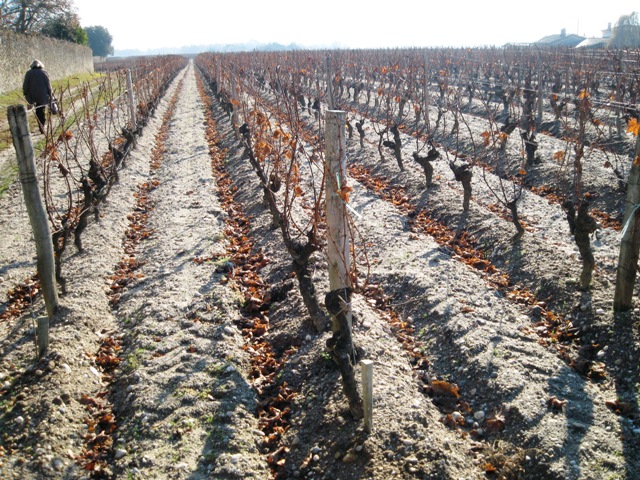
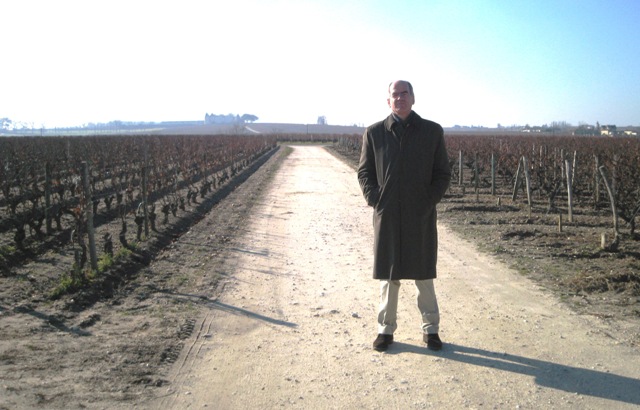
Like so many things in my life, blog entries blur the boundaries between the personal and the professional. As explained on this site’s Home Page, the website and the blog are part platform for ongoing projects, part autobiography, and part accountability mechanism.
In addition, my blogs have appeared on many sites such as: Chinadialogue, CSRWire, Fast Company, GreenBiz, Guardian Sustainable Business, and the Harvard Business Review.

Recent Comments

  • Thomas Forster on Reminder of Glencot Years
  • Thomas Forster on Reminder of Glencot Years
  • Julia on Reminder of Glencot Years

Journal Archive

About

John Elkington is a world authority on corporate responsibility and sustainable development. He is currently Founding Partner and Executive Chairman of Volans, a future-focused business working at the intersection of the sustainability, entrepreneurship and innovation movements.

Contact

john@johnelkington.com  |  +44 203 701 7550 | Twitter: @volansjohn

John Elkington

Copyright © 2026 John Elkington. All rights reserved. Log in