• Skip to primary navigation
  • Skip to main content
  • Skip to primary sidebar
John Elkington

John Elkington

A world authority on corporate responsibility and sustainable development.
  • About
    • Ambassador from the future
  • Past lives
    • Professional
      • Volans
      • SustainAbility
      • CounterCurrent
      • Boards & Advisory Boards
      • Awards & Listings
    • Personal
      • Family
      • Other Influences
      • Education
      • Photography
      • Music
      • Cycling
    • Website
  • Speaking
    • Media
    • Exhibitions
  • Publications
    • Books
    • Reports
    • Articles & Blogs
    • Contributions
    • Tweets
    • Unpublished Writing
  • Journal
  • Contact
  • Show Search
Hide Search
You are here: Home / Journal

Journal

March 2007

John Elkington · 31 March 2007 · Leave a Comment

Saturday, March 31, 2007

BULLRUSHES

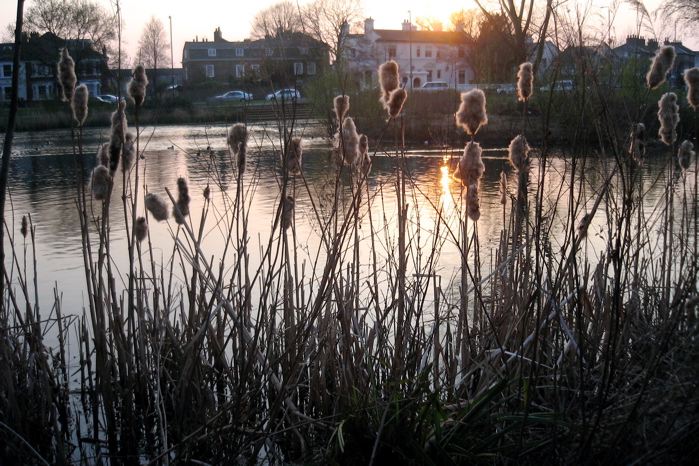
The plantings of bullrushes and reeds around Barnes Pond are beginning to get into their stride – the sun was setting behind one clump as we walked back from a trip into central London today, largely to pick up the laptop I stupidly forgot to bring back after last night’s celebration. As we sat alone in the office and I did a message to the team, it brought home how much of SustainAbility’s undoubted achievements of the past 20 years have depended on other people. Then, this evening, having bought DVDs of the latest Bond film Casino Royale and of The Queen, we watched the former. Wonderfully distracting, doubly welcome since the peer reviews have just come in for the new book – but I think I’ll leave that until Monday. Have always expected this next stage to be complicated.

Friday, March 30, 2007

SUSTAINABILITY IS 20

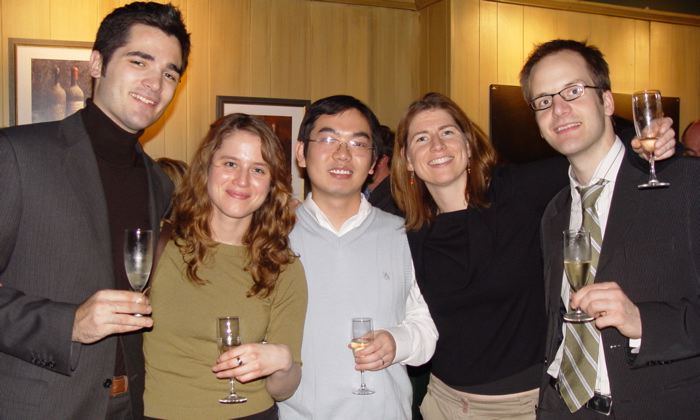
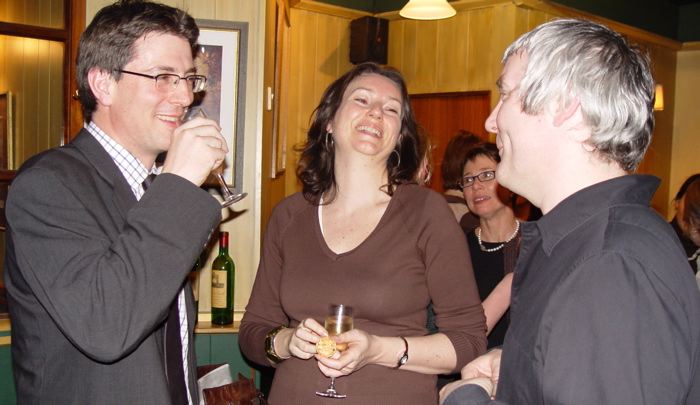
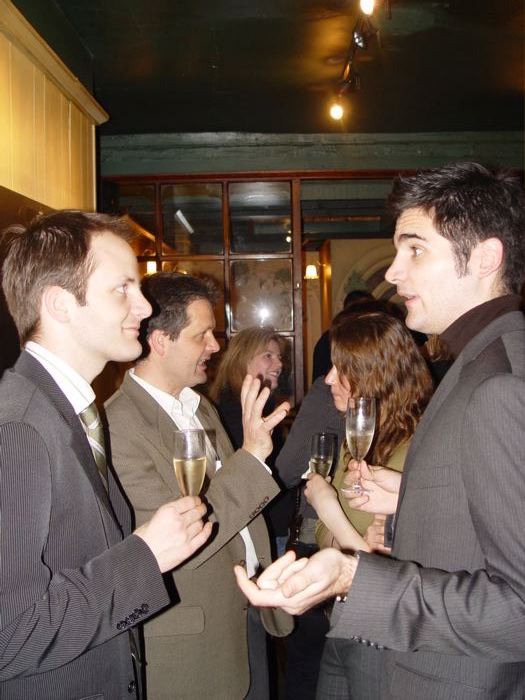
Today we marked SustainAbility’s twentieth anniversary, kicking off a process of celebrating the organisation’s twenty-first year and pushing forward our ongoing transformation. A special 20-years-on section of the SustainAbility website will be launched next week.

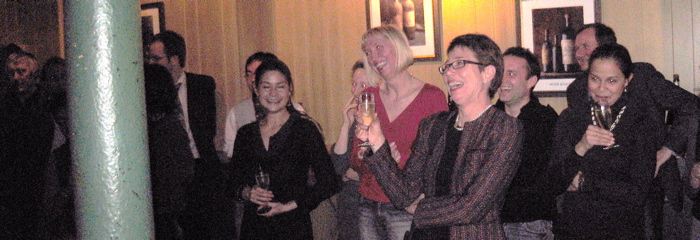
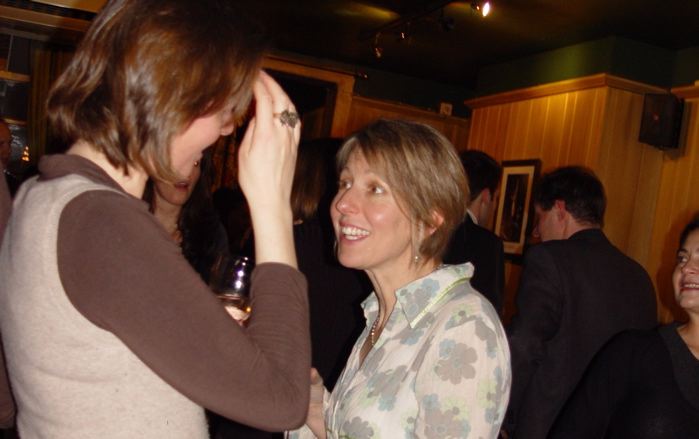
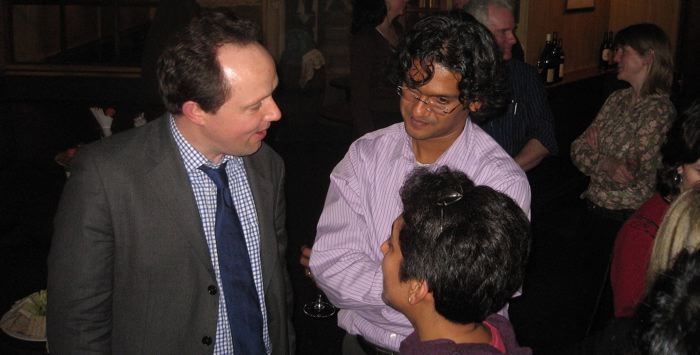
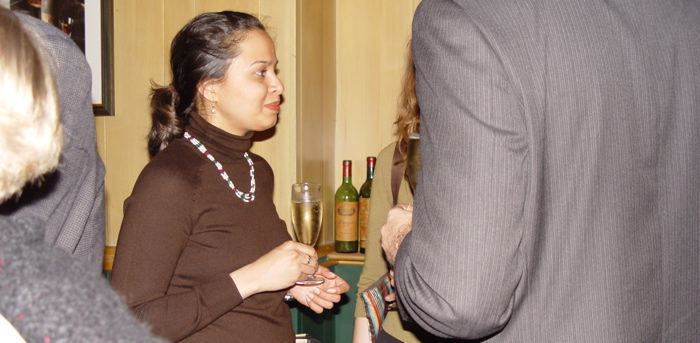
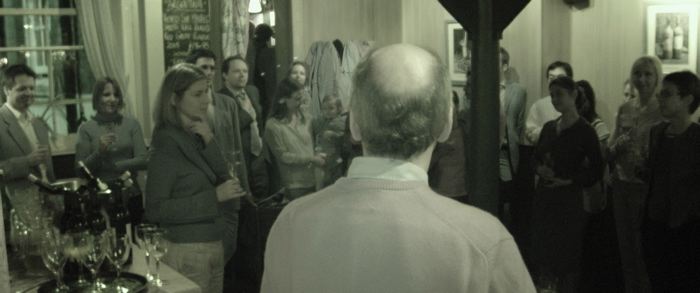
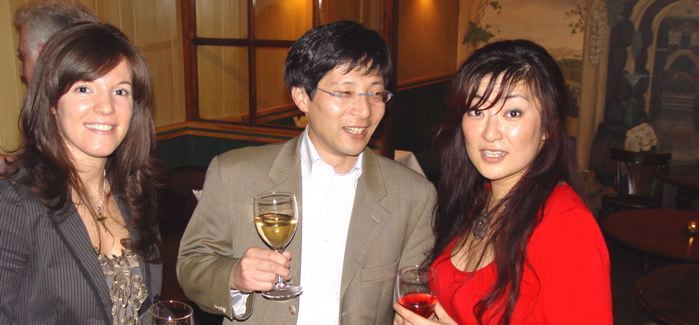
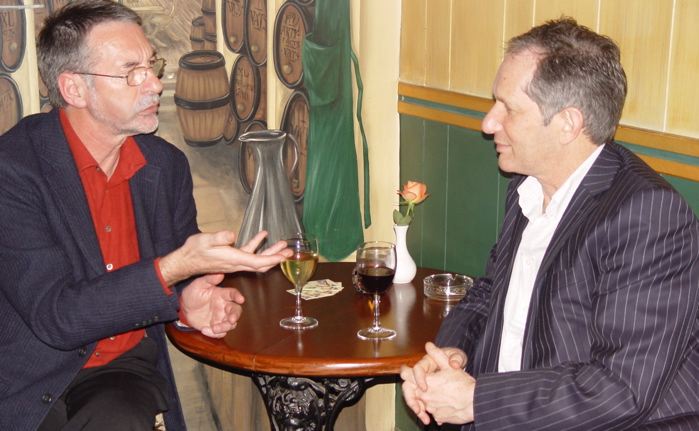
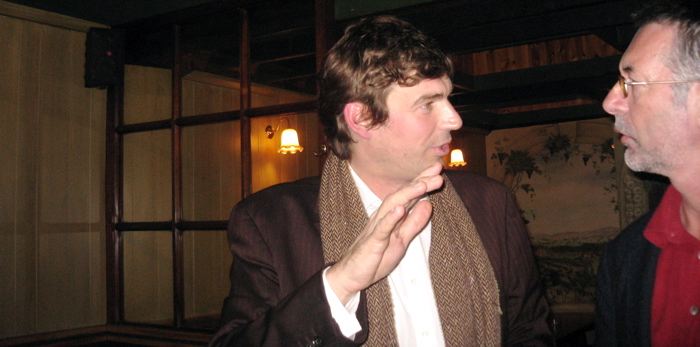
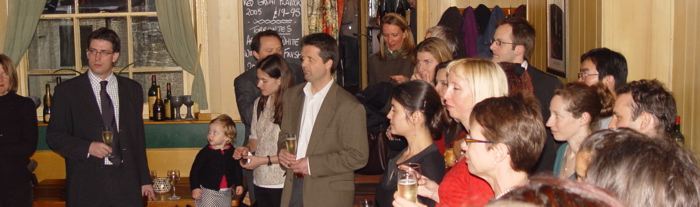
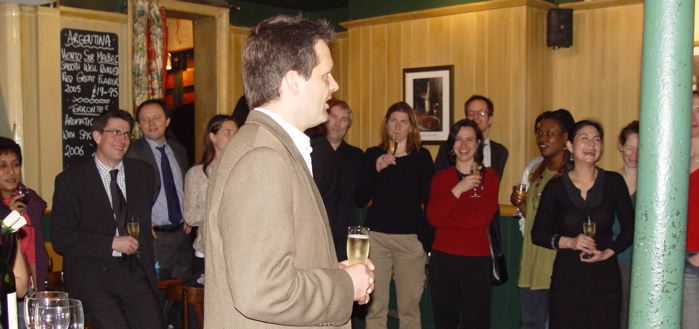
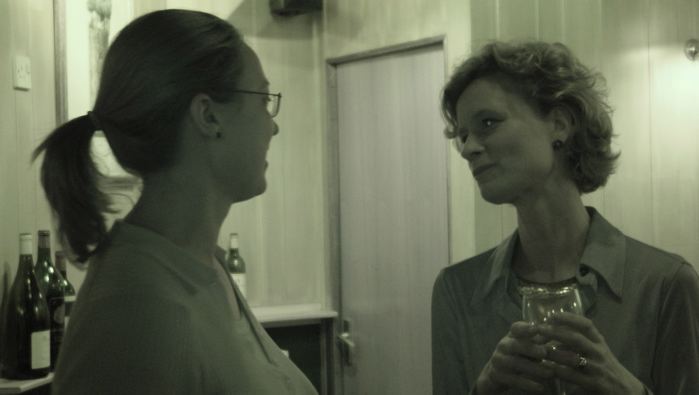
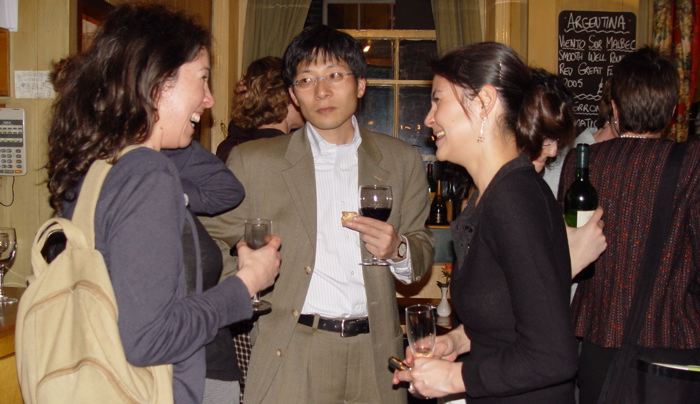
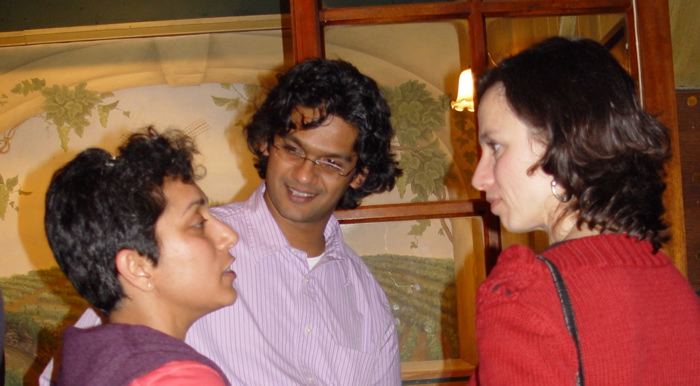
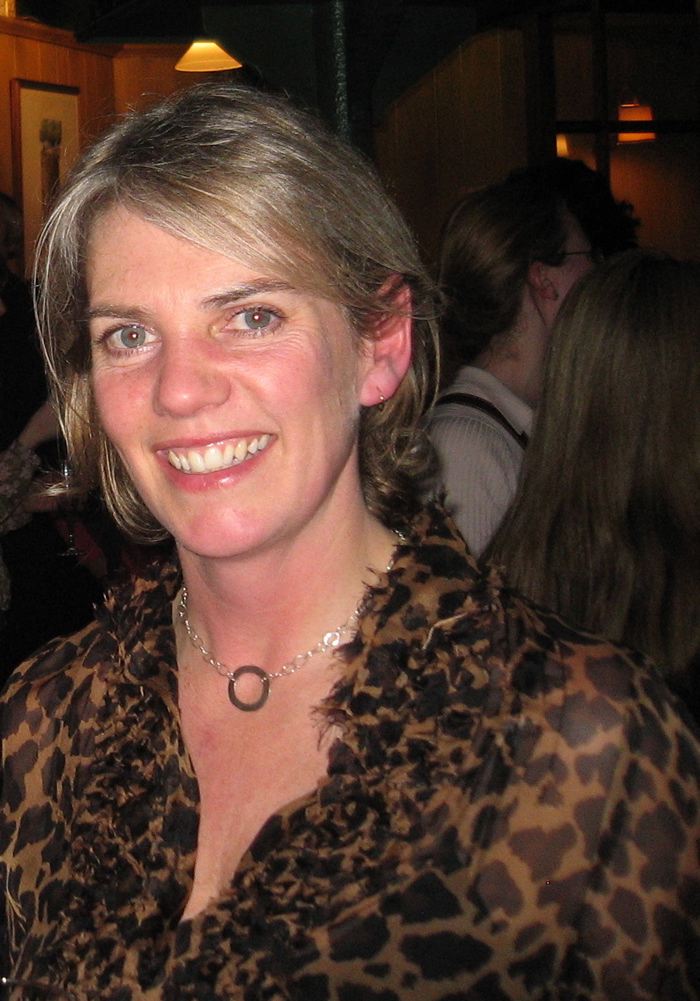
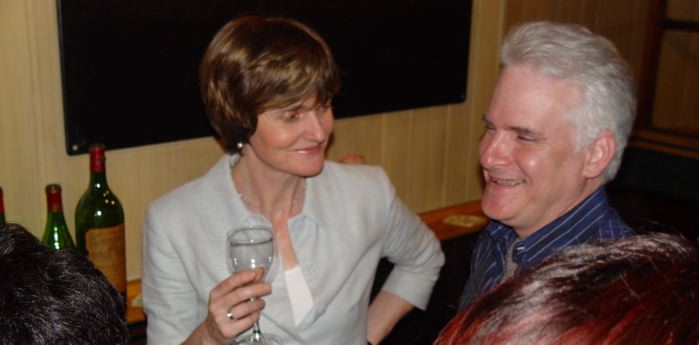
In this first event, which coincided with a Board meeting today, we mainly invited the UK team and alumni from over the years – including Fiona Byrne, our first-ever employee. Sadly, co-founder Julia Hailes couldn’t make it, but will be involved in later stages. The US team also couldn’t make it, though their latest recruit – Jonathan Halperin – was with us. We used his presence to celebrate the extraordinary success of our US colleagues since that defining early setback, when we were based in New York, of our team watching the planes fly into the World Trade Center. Also from the US, Debra Dunn, a member of the Skoll Foundation Board, joined us – having spent much of the week at the Skoll World Forum in Oxford (see earlier postings).

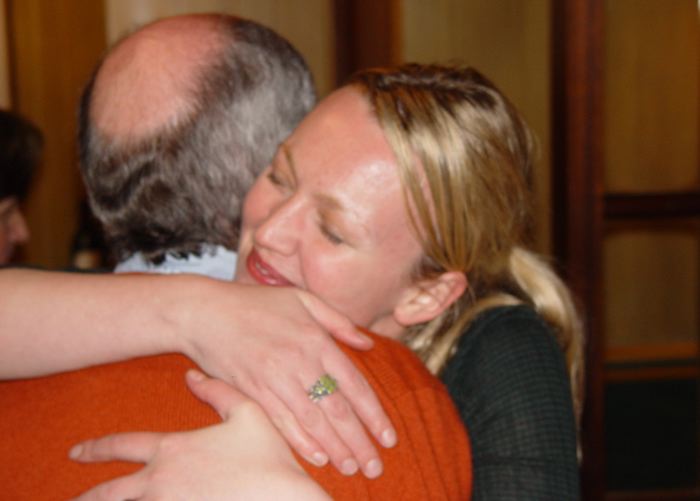
A deeply moving gathering of the tribes, with every face telling a story. I recall, for example, when Geoff Lye joined us in the early 1990s and he and I couldn’t pay ourselves for several months – something he helped us put right by getting the organisation onto a much sounder financial footing. He now splits his time between us and the Oxford-based Environmental Change Institute, where he focuses on climate change. And among those present was Jonathan Shopley, now CEO of the CarbonNeutral Company, but a colleague on the consultancy side of my life when we were launching SustainAbility. He jokingly complained that when people Google his name today, a blog entry of mine comes up No. 1, describing how Gaia amd Hania embraced him on our doorstep after his long ride north from South Africa. Can’t see what he’s complaining about: when I Googled him, the blog came up No. 4 …

More seriously, our continuing friendships and relationships with such people underscore one of the more delightful aspects of SustainAbility. Unlike an oceanic wave, which maintains its form in passing but leaves individual water molecules that once formed it behind in its wake – our organisation may have involved 80-90 people in its Core Team over the years, but those who have moved on have tended to stay as part of our extended family, in some cases as members of our Council, which ran for ten years, and now our Faculty.

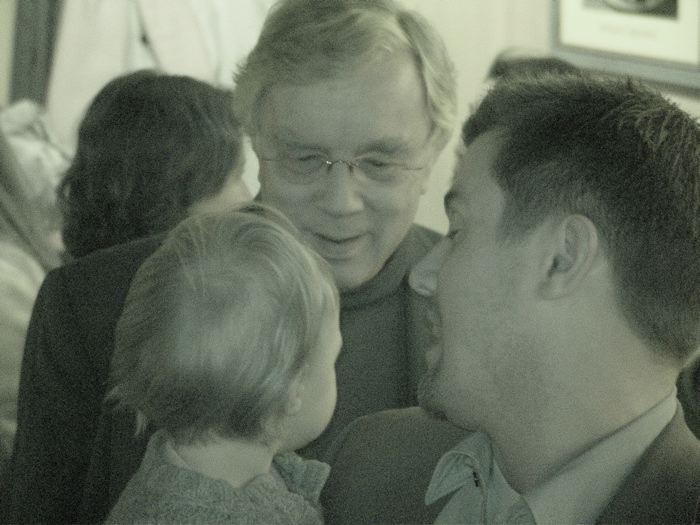
Gaia and Hania brought me a ‘birthday’ card, celebrating 20 years of their third “sister,” SustainAbility, which shared our family home for several years before it flew the nest. Now it is more or less grown up and over the next few years will increasingly be in the business of establishing nests elsewhere in the world, including – we hope – India. Twenty years on from the launch of the Brundtland Report, which began the process of mainstreaming the concept of sustainable development, the idea of intergenerational equity has gained a fair amount of traction – and, in my mind at least, that was symbolised by the presence of Norah Lee, daughter of our CEO Mark Lee, who pops up in a couple of the photos below. My thanks to Tell Muenzing, who took many of them.
Thursday, March 29, 2007

SKOLL WORLD FORUM 2007

Bumped into Geoff (Lye) at Oxford Station, while waiting for a train back to London. Railways, as usual, in turmoil, with our train cancelled because of missing guard. But nothing could drown out the astonishing experience of the past few days at the Skoll World Forum.

From the music of Salman Ahmad and the gentle wisdom of Charles Handy through to the thoughts of David Galenson on the different forms of creativity and Larry Brilliant (of Google.org) on reasons for optimism, this was an unbelievably rich banquet of ideas and – in line with this year’s theme of ‘Innovators in Action’ – there was a regular jolt of electricity from social and environmental entrepreneurs from, by Jeff Skoll’s count, 40 countries on six continents.

We launched our first Skoll Report, Growing Opportunity: Entrepreneurial Solutions to Insoluble Problems, co-sponsored by Allianz and DuPont (http://www.sustainability.com/news-media/news-resource.asp?id=938). And the four of us (Sophia, Maggie, Ritu and I) were involved in three separate sessions.

One, ‘Partnering with Business,’ ran on Wednesday, was chaired by Sophia, and featured Maggie, social entrepreneurs Blaise Judja-Sato (VillageReach) and Chris Elias (PATH), and leading speakers from The Bill & Melinda Gates Foundation, GE Asset Management and GSK.

The second, chaired by Jan Piercy of Shorebank, focused on the challenge of accessing capital for social enterprise, and I was on the panel alongside folk like Penny Newman of Cafe Direct, Michele Giddens of Bridges Community Ventures, Tim Reith of Community Innovation UK and Arthur Wood of Ashoka.

And the third, as the event moved towards its conclusion, came earlier today. I chaired a discussion with Bill Drayton of Ashoka and Ed Miliband, Minister for the Third Sector, with whom a number of us had dinner last night at the Said Business School. First time I’d met him, but was impressed by his grasp of the subject and the clarity of his delivery. Still, Larry Brilliant was a tough act to follow, particularly with his astonishing swooping in and out of the Indian sub-continent via Google Earth, or similar, in the process of demonstrating how horrendous the risk of climate change is to low-lying countries like Bangladesh.

To view the Forum sessions online, go to http://www.skollfoundation.org/skollcentre/skoll_forum.asp

Wednesday, March 28, 2007

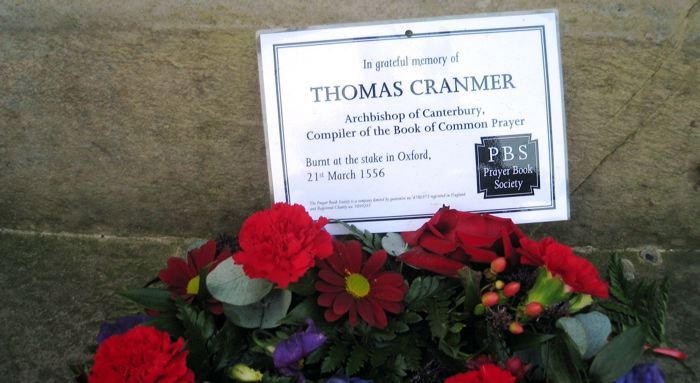
THOMAS CRANMER REMEMBERED

In the olden days, Oxford saw the burning of people whose thinking was outside the bounds of orthodoxy. Last night Geoff Mulgan noted that the Skoll World Forum was being held just around the corner from where Archbishop Thomas Cranmer was burned in 1556 (http://en.wikipedia.org/wiki/Thomas_Cranmer). Passed the spot today.

RISING TO THE TYPO CHALLENGE

The Guardian devotes a full page today to my piece on ‘Rising to the Challenge’ (http://environment.guardian.co.uk/climatechange/story/0,,2044046,00.html) – and you have to admire their consistency in ensuring that their random typo generator is always switched on. Somehow they managed to convert the acronym for the venture capital firm Kleiner Perkins Caufield & Byers into KPBM, twice. I take my hate off to them.

Tuesday, March 27, 2007

ONE PLANET BUSINESS, SLAVERY AND SKOLL WORLD FORUM

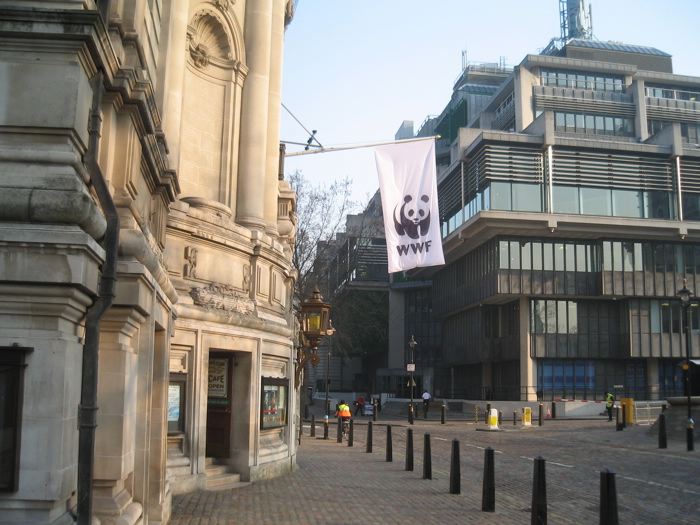
Began the day with WWF at Westminster Central Hall, helping launch the new One Planet Business report that SustainAbility has developed with WWF and a range of other partners (http://www.sustainability.com/insight/research-article.asp?id=941), including the Global Footprint Network – one of the winners in this year’s Skoll Awards (see below). Clive Anderson moderated and made a particularly pointed comment about Sky TV being both carbon-neutral and tax-neutral, an issue that SustainAbility has been covering in its work on the tax agenda for business (http://www.sustainability.com/insight/research-article.asp?id=450).

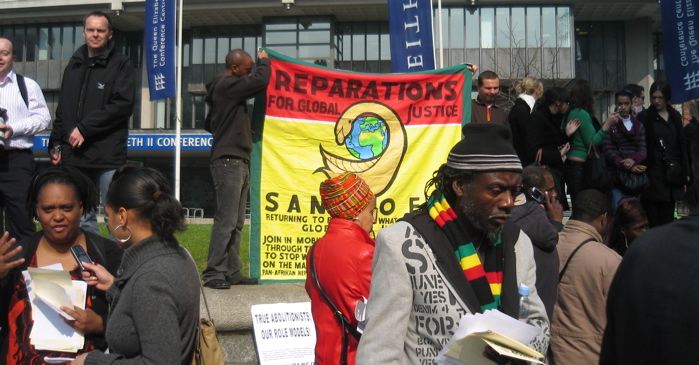
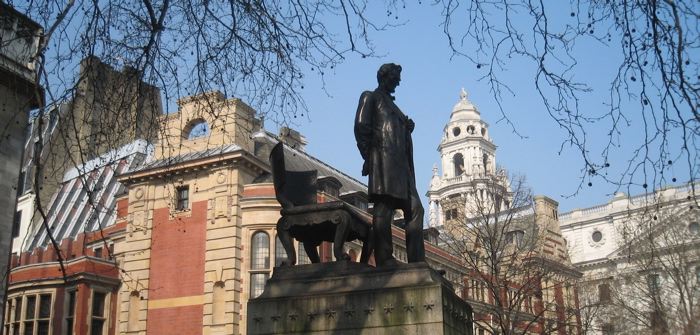
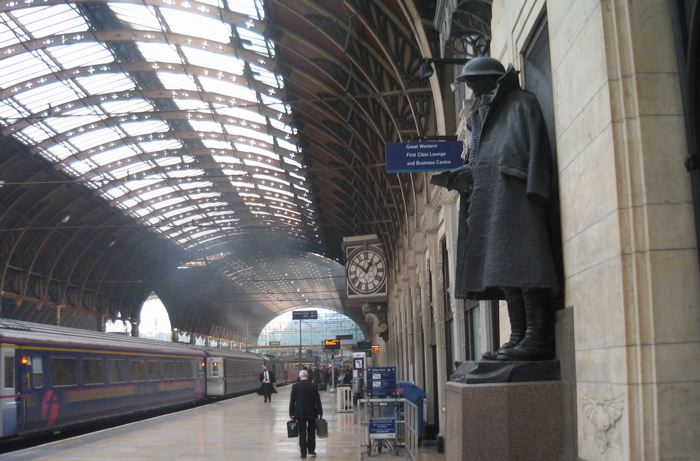
As I left, I passed a demonstration calling for reparations for the slavery era – and, in Parliament Square, the brooding statue of Lincoln. Then by train to Oxford, where I snapped the always moving statue of the WWI Tommy reading mail from home, to take part in the Skoll World Forum (http://www.skollfoundation.org/skollcentre/skoll_forum.asp). The opening ceremeony was held in the Sheldonian Theatre, an exquisite building – but its seating also provides exquisite torture for the lower anatomy.

Staying at The Randolph Hotel, which a troubled friend signed into some 30 years ago planning to burn the place down. They guessed: he signed in as Lucifer. My brother had to go and bail him out.


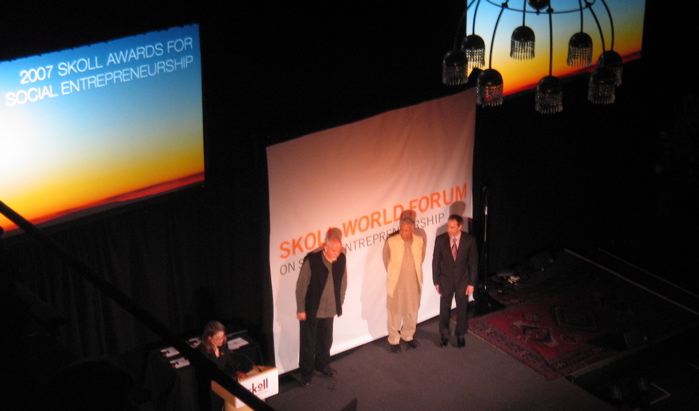
Fuzzily from the Sheldonian Gods: Sally Osberg, Peter Gabriel, Muhammad Yunus and Jeff Skoll

Monday, March 26, 2007

CHATHAM HOUSE AND HARRY POTTER

Spoke at a rather dreary Chatham House conference, ‘Sense & Sustainability,’ before heading down to Oxford for a Skoll Foundation dinner to celebrate the 2007 crop of social entrepreneurs. Held in the dining hall of Exeter College, where – Jeff Skoll said – Tolkien came up with the basic idea for Lord of the Rings and, more recently, sundry parts of Harry Potter were filmed.


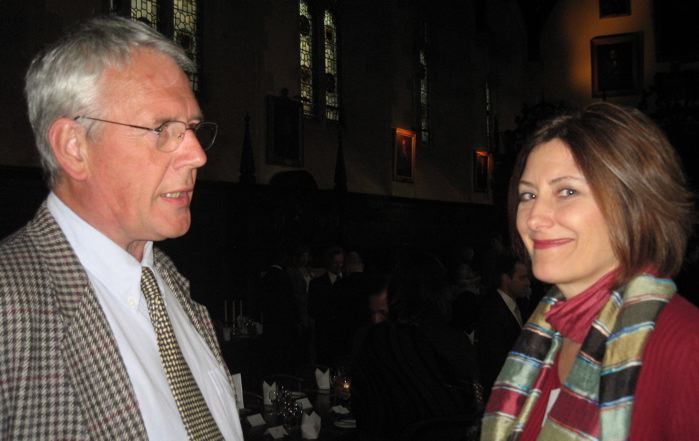
Barry Coleman (Riders for Health) and Susan Burns (Global Footprint Network), Exeter College

Sunday, March 25, 2007

DIVERSION EN ROUTE HOME

Have never come across more roadworks than on our trip to Fowey and back, taking the ‘fast’ route via Bristol westward, then coming back on the A30 and A303, and dropping off to see Julia Hailes and her family for lunch. The Google Earth time estimates turned out to be pretty much spot on, though, despite some quite extraordinary diversions, which probably means I wasn’t driving at the most fuel-efficient speed. Still while they may have blurred by, I relished the burial mounds and tumuli around Stonehenge as we headed east.

Saturday, March 24, 2007

A PERFECT DAY WITH TIM SMIT

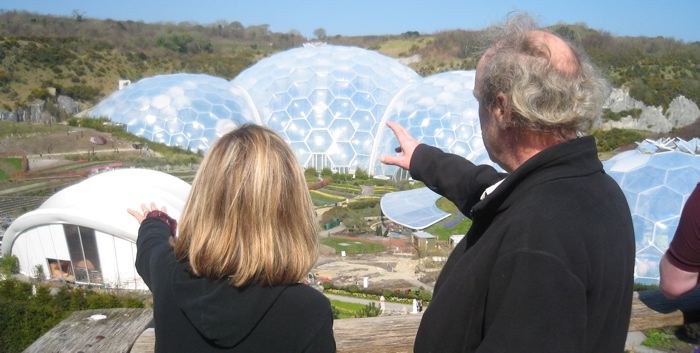
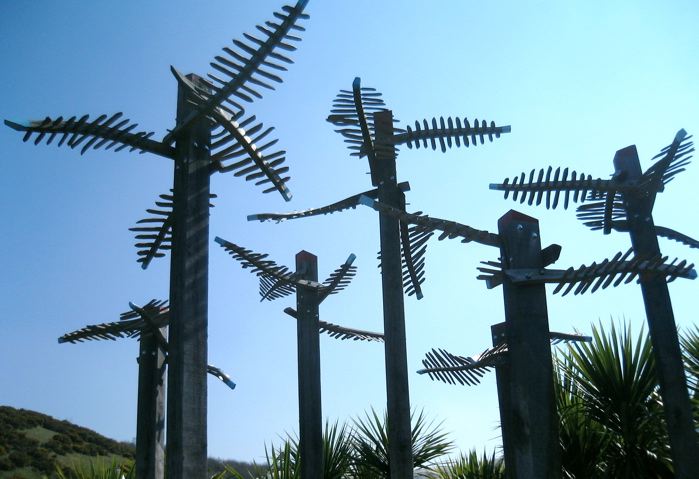
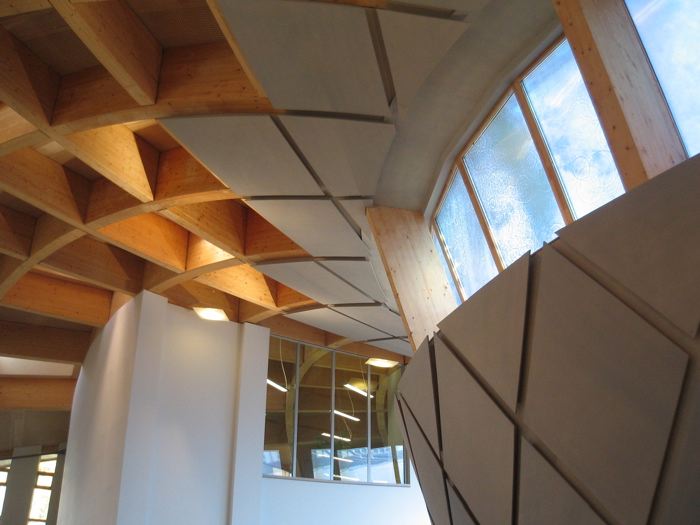
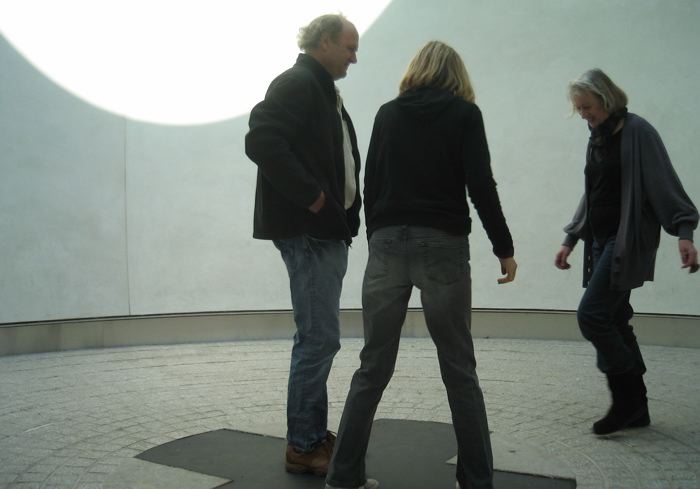
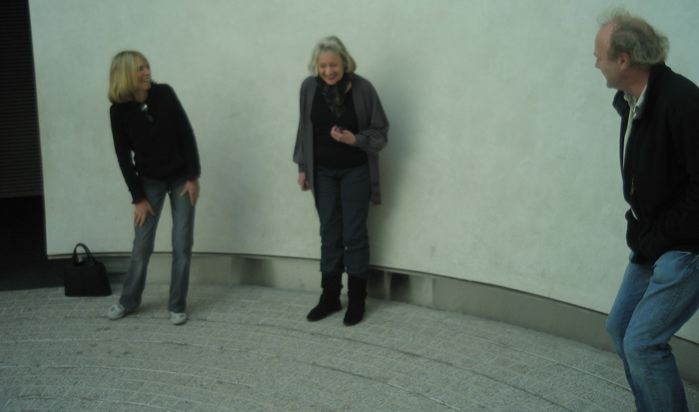
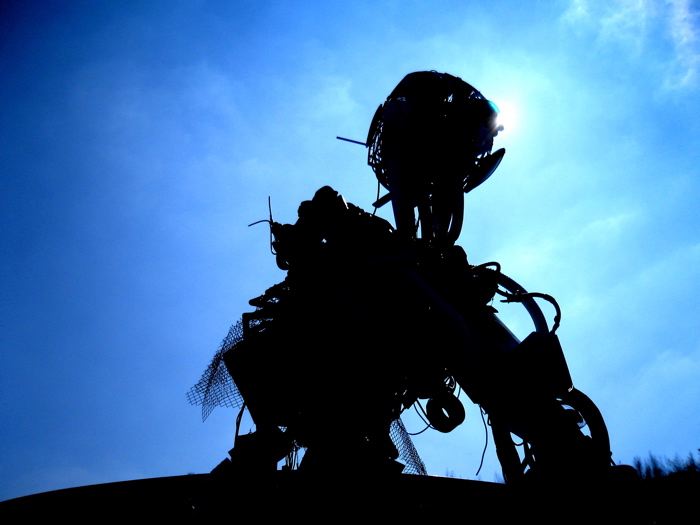
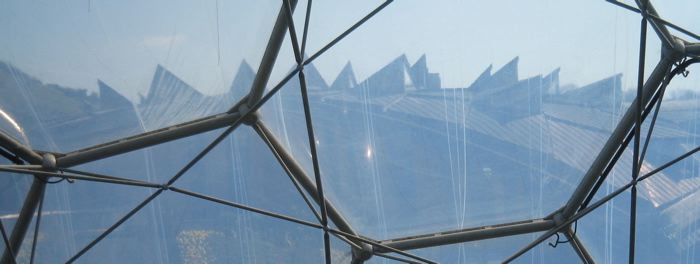
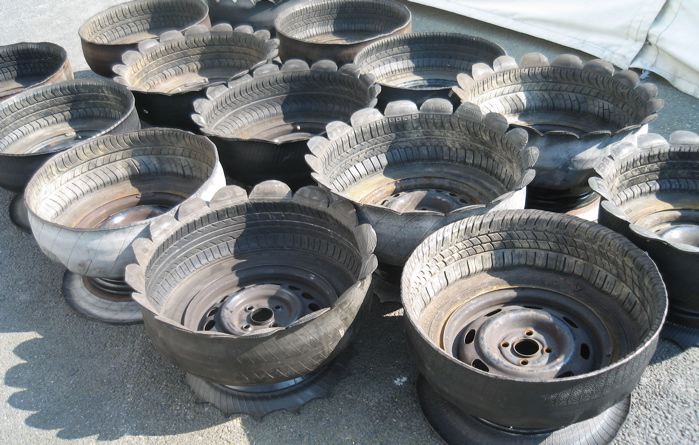
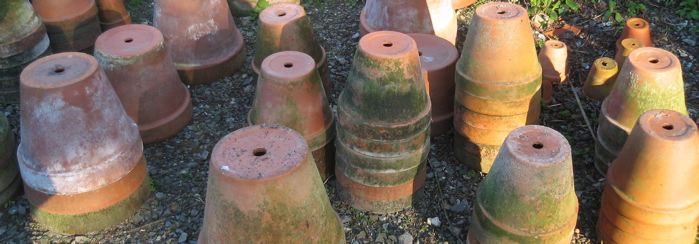
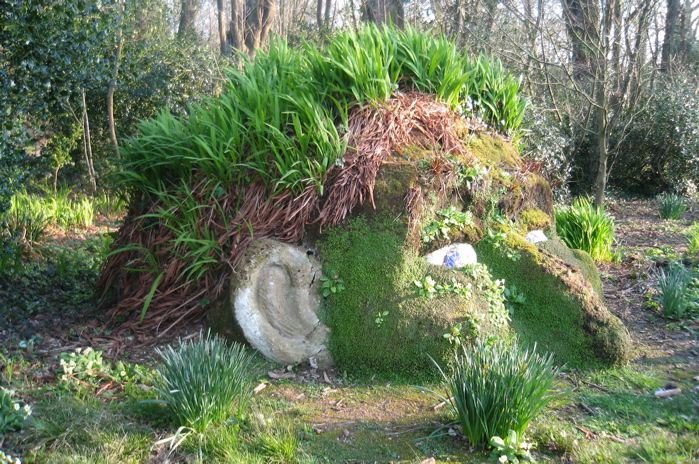
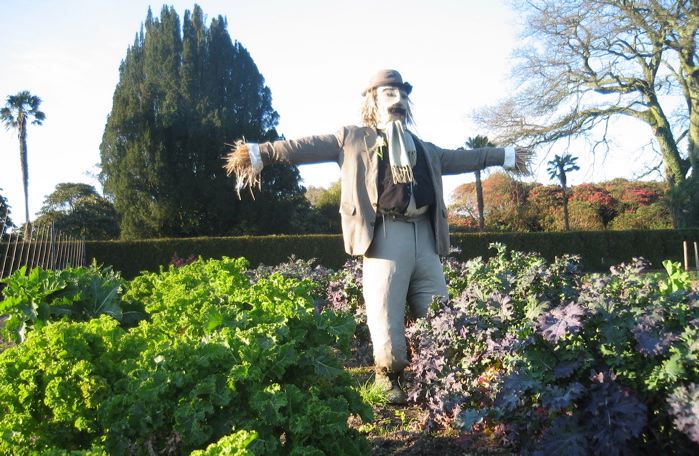
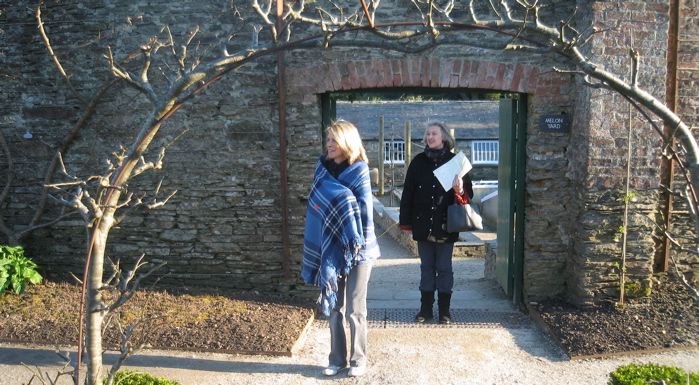
Having driven down to Fowey from London last night, Elaine and I headed across to the Eden Project (http://www.edenproject.com) for 11.00 this morning, to meet up with Tim Smit – and he gave us the Grand Tour. Some images below. Wonderful to see where ‘Seed,’ by Peter Randall-Page (http://www.peterrandall-page.com/) will stand from June. We talked on after a late lunch and then Tim, the epitome of hospitality, led us across to the Lost Gardens of Heligan, which we managed to get around before the sun went down. Just. One of the most extraordinary days of my life, with the skies blue horizon-to-horizon from the moment the sun came up to the moment it disappeared. As the three of us took stock back at the Hotel Marina, over a bottle of Framingham Pinot Noir, I couldn’t get Lou Reed’s voice out of my mind.


Waterboatman


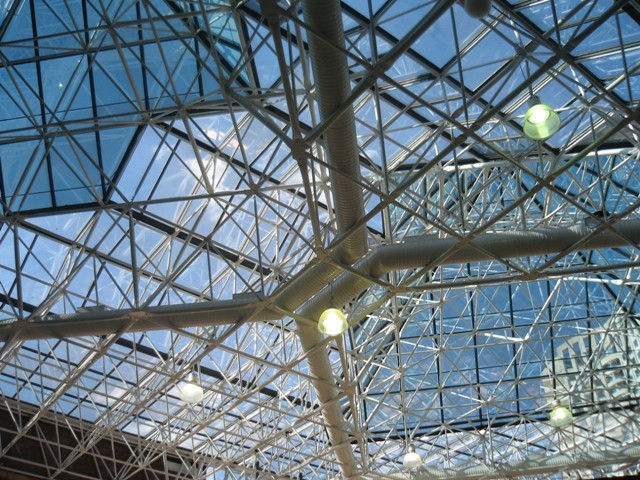
Dome from dome: Tim and Pamela talk geodesics


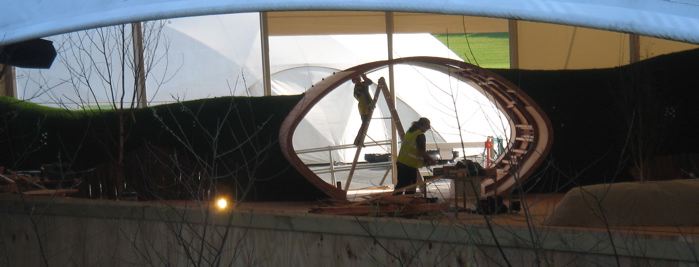
Fishbones?


Heavenly glass


Heavenly roof


Enough said


X marks the spot where Peter Randall-Page’s ‘Seed’ will stand


Testing the acoustic


WEEE Man


Saurian scales


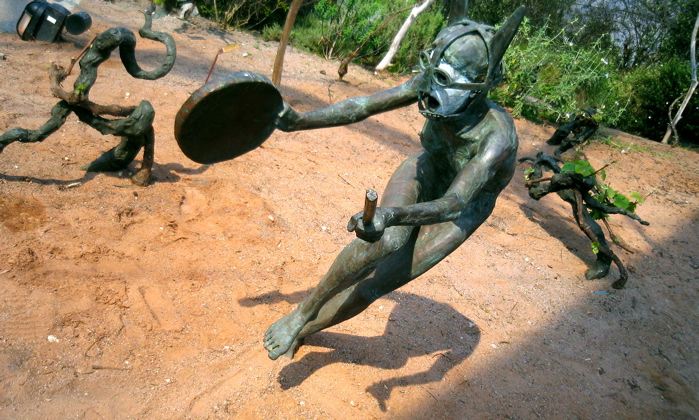
A different drum


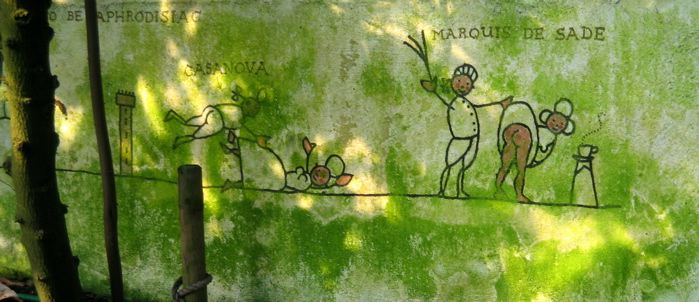
Cassanova and the Marquis de Sade


What are they hatching?


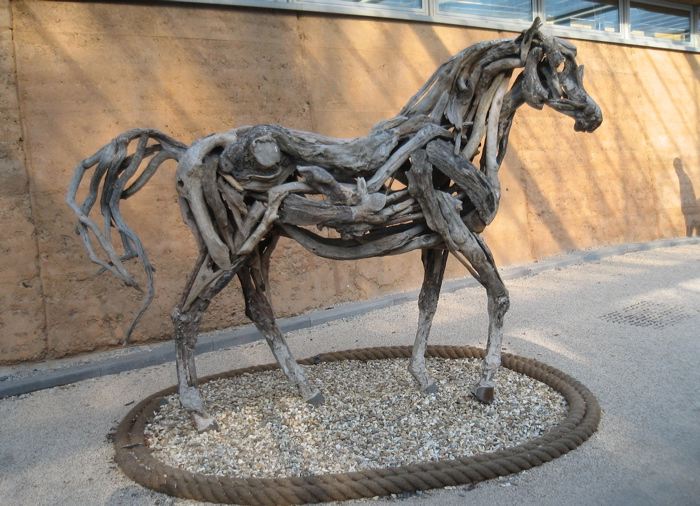
Tim’s steed


Eden flowerpots


Heligan flowerpots


Not quite up to his eyeballs


Brassica seem unafrighted


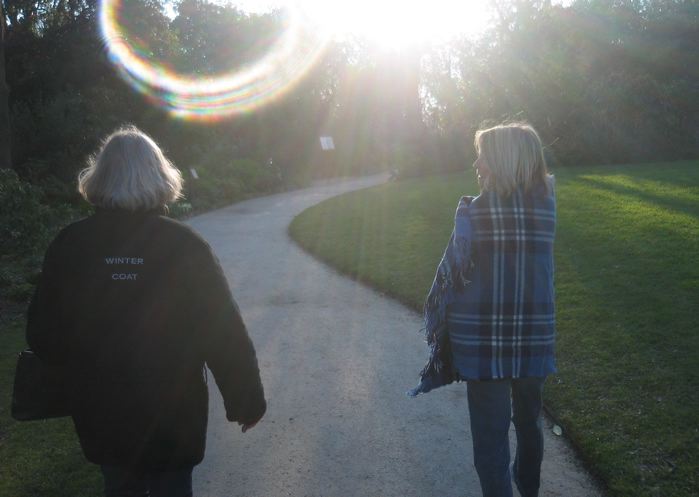
Cooler: Pamela (wearing rug from our car) and Elaine


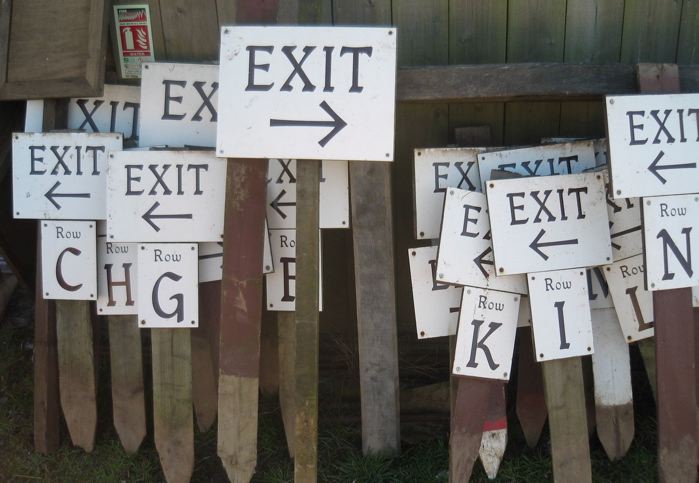
Exits


Sun begins to set


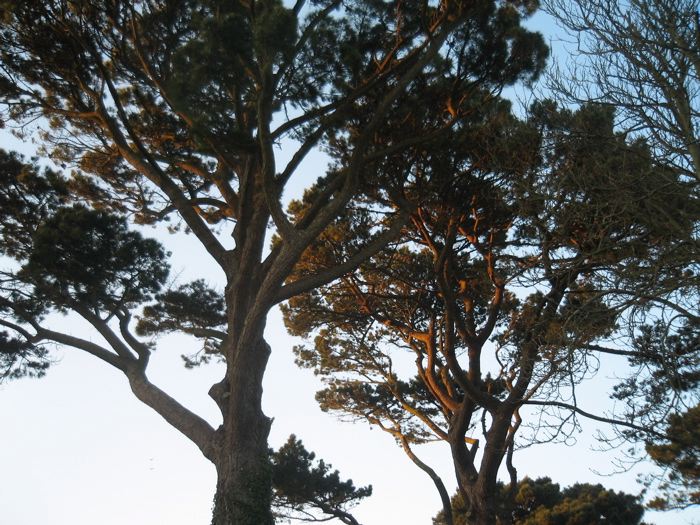
But it still lights up the trees when we get back to Fowey


And then the lights come on

Monday, March 19, 2007

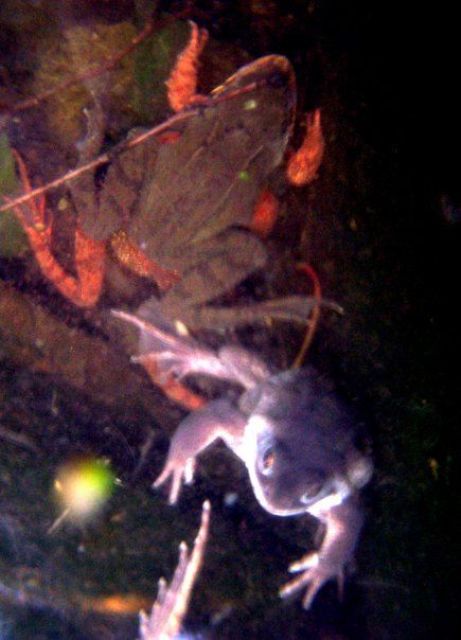
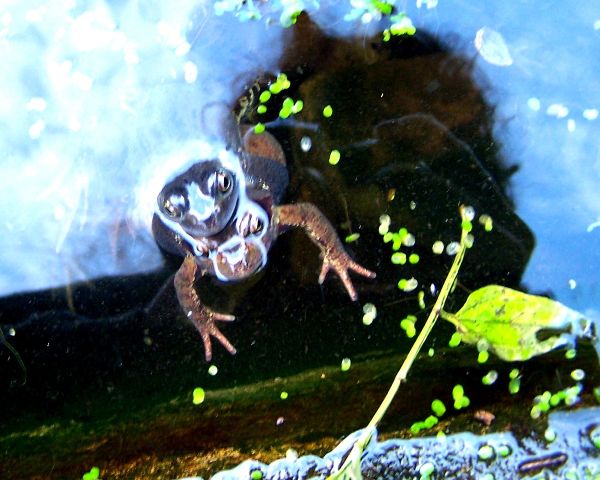
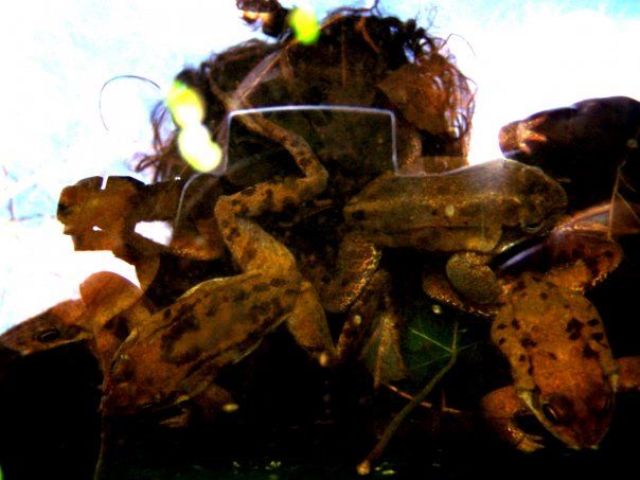
INVASION OF THE FROGS

Gaia and Hania were over yesterday and, after we talked about the frogs that have taken over Gaia’s garden in North London, she emailed me some photographs she had taken. Some of the amphibians are unlike anything I have seen in this country before, except – perhaps – for one orange fog I saw in a welter of the beasts on a Cumbrian moor behind Eskdale Green maybe 30 years ago. Maybe I haven’t been looking in the right places. But maybe encouraging when frogs seem to be in such precipitous decline in so many places.

Who’s the alien?

Saturday, March 17, 2007

JACK, THE DEBATE IS OVER

I had thought it progress when Jack and Suzy Welch had concluded that it was time for business to act on climate change even if the science wasn’t yet proven, in their ‘The Welch Way’ column in the February 26 issue of BusinessWeek. Given how much Welch has resisted this whole agenda, this seemed like the dikes beginning to break. But the March 19 issue now carries a very prominent letter from an Ian Keay in Palo Alto, arguing that “Jack, the debate is over, and the scientists have won …. There is no more time for fence-sitting.” I only know one Ian Keay in Palo Alto: he was our Best Man in 1973.

Tuesday, March 13, 2007

WEAK SIGNALS, LSD AND KPMG

Stopped off briefly in St Bride’s Church, off Fleet Street (http://www.stbrides.com/), as I walked across to a meeting of the Tomorrow’s Global Company Inquiry Team this afternoon. A place of worship for 2000 years, the site is a wonderful island of calm. The extraordinary Wren church has been the “the spiritual home of printing & the media” for 500 years. According to the Church’s website, something that would have seemed a miracle even a few decades ago, the church stood empty for seventeen years, after “a wartime bomb had left the church a smouldering shell.” An extraordinary sense, despite the ecxesses of today’s media, that this has been an axial point around which successive battles have been fought for freedom of speech.

Then on to KPMG’s HQ, just around the corner, for the meeting. At the dinner afterwards we were considering the key skills and attributes of tomorrow’s CEO and other business leaders. I scribbled down four in my little blue Moleskine notebook before the tour de table began, and when it was my turn to speak – after around 15 contributions – none of mine had been mentioned.

One was a Superman-like ability to see way back down complex supply chains, a form of X-ray vision. Another was the capacity to pick up early on weak signals of new risks and opportunities. The problem here, I noted, was that if you become too sensitive to weak signals it’s a bit like being on LSD, where everything seems significant. Someone I had earlier challenged on his Neanderthal positioning on climate change fired back that it seemed as if I had taken LSD – to which I replied that, as usual, I knew of what I spake. Laughter followed, but the point stands: and it’s a rare mind that can do this.

A third item on my shortlist was a sense of humour, which often signals an ability to play with ideas and see things from odd angles. Not as powerful as LSD, perhaps, but in the longer term likely to leave more of the brain intact.

Maybe it’s the Sixties, and all that went with them, but in these various conversations around the future of globalisation – including SustainAbility’s own 20th anniversary report on the theme, which I am working on at the moment – there is too often a comfortable, dangerous assumption that the processes of globalisation will run on rails. That seventeen year hiatus at St Bride’s should be a reminder that History rarely runs on rails, and neither will current forms of globalisation.

GREEN ALLIANCE BROWN

The news hoardings were full of Gordon Brown’s greening as I headed across to the Café Royal last night for the Green Alliance (http://www.green-alliance.org.uk/) event showcasing the Chancellor. Apparently he was invited last year, but the invitation was turned down. Then when David Cameron was invited instead, the Treasury called to demand why Brown hadn’t been invited? Hey-ho, but here we go, it seems: climate change and carbon budgeting have become the stuff of the political steeplechase.

I have to admit I was pleasantly surprised by Brown, though can’t say I trust his instincts after his action in areas like pensions and the ill-fated Operating & Financial Review (OFR). He noted that when he commissioned Sir Nicholas Stern’s report on the economics of climate change, he had no idea about the scale of the challenge the world faces. His ideas for upgrading the United Nations Environment programme, for greening the World Bank and for ensuring that future Chancellors of the Exchequer have to count – and account for – carbon were welcome. Indeed carbon budgeting (and the implications for the Treasury) is an area where Geoff Lye – who now straddles SustainAbility and Oxford’s Environmental Change Institute (http://www.eci.ox.ac.uk/) – has been investing a great deal of effort in recently.

Brown also reported that he is going to ensure that all homes eventually have energy efficiency ratings, like white goods such as fridges, which is welcome, and he is writing to the European Commission to ask that member states be allowed to reduce or remove the VAT on green products. All good stuff, as far as it goes, but I thought his prediction that climate change would radically transform global governance over the next 5 years a little far-fetched, though much stranger things have happened.

Sunday, March 11, 2007

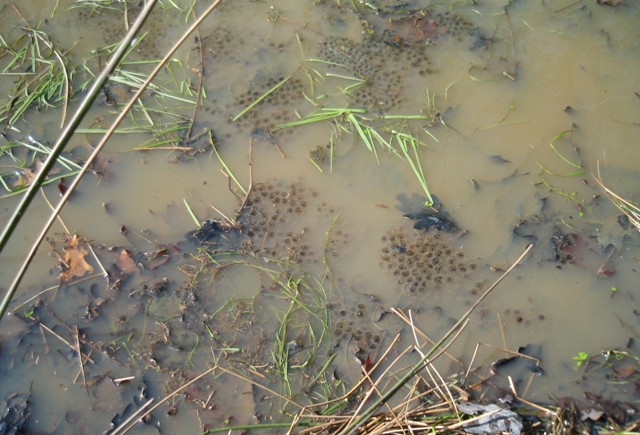
FROG SPAWN

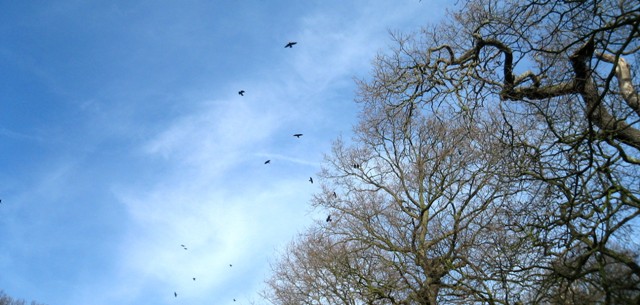
Glorious walk in Richmond Park today, with jackdaws, rooks and parakeets in joyous Spring-time mood. Had a sudden hunch that the frogs would be spawning and we walked over to the Secret Pond, to find several clumps of spawn already afloat. Uneasy feeling that they may be too early.

Friday, March 09, 2007

ONE PLANET BUSINESS INTERVIEW

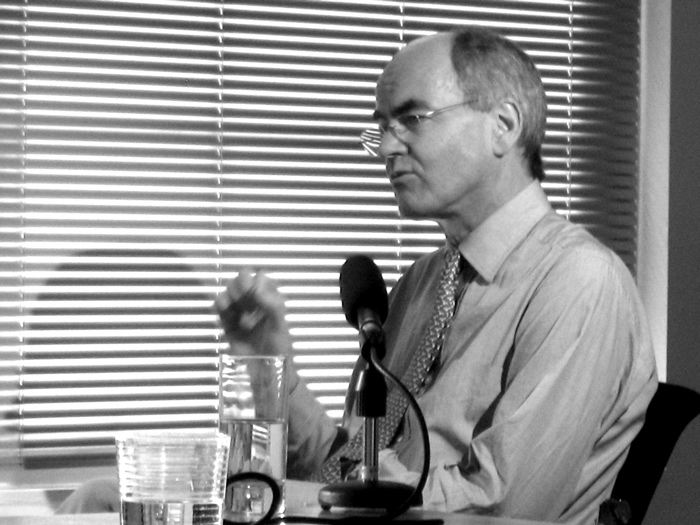
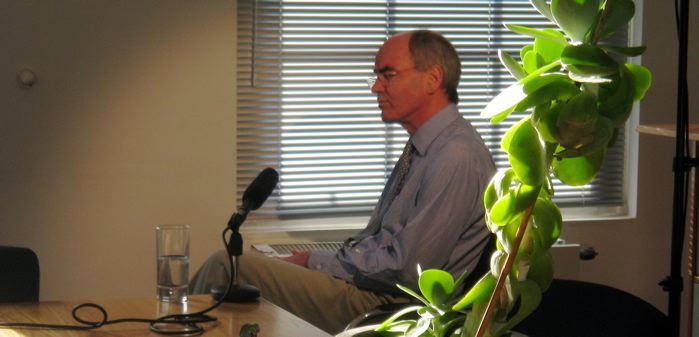
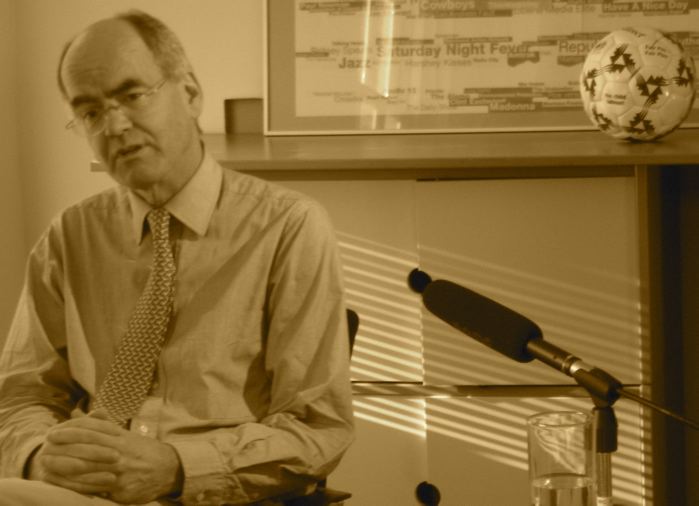
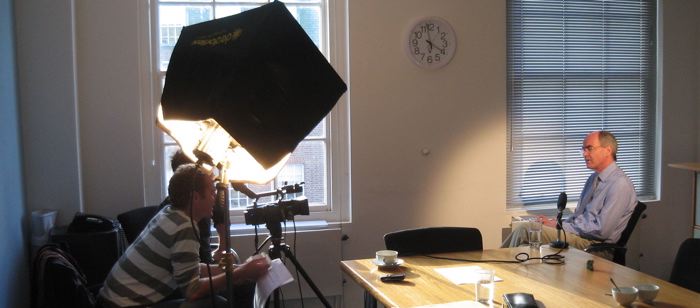
Did a filmed interview today for the launch of the WWF One Planet Business report and programme later this month – a project which SustainAbility has been helping with. As we filmed, Sam (Lakha) flitted around with the diminutive Canon camera and these are some of the results.


Venetian blind and three echoing glasses


A touch of green


Eye off the ball


Q&A


Q side of the equation


Almost done, Sam?


The killer question

(All photos: Sam Lakha)

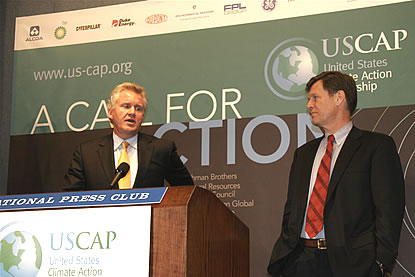
SUSTAINABILITY JOINS USCAP


Jeffrey Immelt (Chairman and C.E.O., General Electric) and Jonathan
Lash (President, World Resources Institute) at the launch of the USCAP
Call to Action [Photo credit: Reggie Lipscomb, NPS Photography]

SustainAbility has signed up as a supporter of the US Climate Action Partnership. The USCAP (http://www.us-cap.org) is a group of businesses and leading environmental organizations that have come together to call on the Federal government to quickly enact strong national legislation to require significant reductions of greenhouse gas emissions. USCAP has issued a landmark set of principles and recommendations to underscore the urgent need for a policy framework on climate change.

The statement we provided to USCAP along with our endorsement reads as follows: “As SustainAbility enters its 21st year working with businesses to address society’s greatest challenges, we are encouraged by the leadership and courage demonstrated by the members of the USCAP. We share their sense of urgency regarding the global need to dramatically and rapidly reduce greenhouse gas emissions, and we join them in their call for national climate change legislation in the US.”

The six principles that are core to the USCAP Call for Action (http://www.us-cap.org/ClimateReport.pdf) are:

(1) Account for the global dimensions of climate change;
(2) Create incentives for technology innovation;
(3) Be environmentally effective;
(4) Create economic opportunity and advantage;
(5) Be fair to sectors disproportionately impacted; and
(6) Reward early action.

THE ROBERT DAVIES BLOG

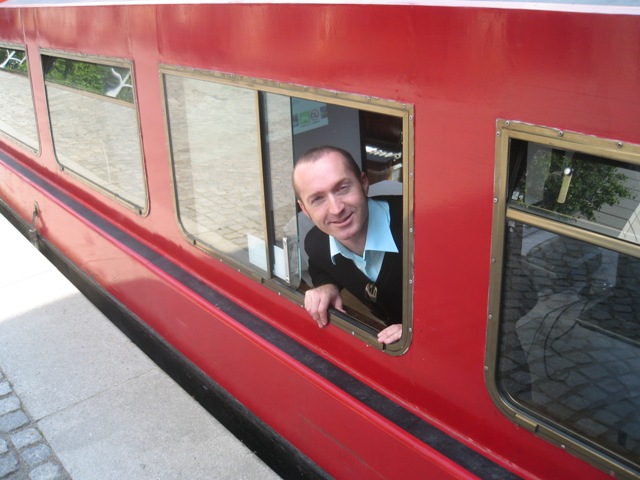
Someone I have known for many a year, Robert Davies (CEO of the International Business Leaders Forum, http://www.iblf.org/), has started a blog which affords a very different – and very interesting – window on the linked fields of corporate responsibility and sustainable development.
Wednesday, March 07, 2007

IMPERIAL PINK – AND BLUE

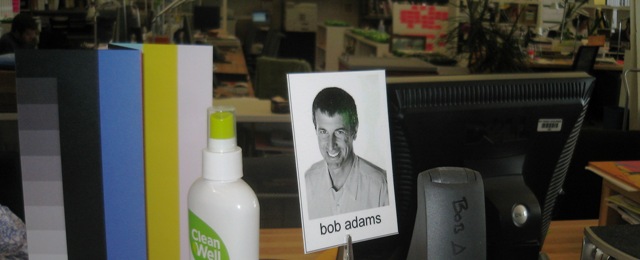
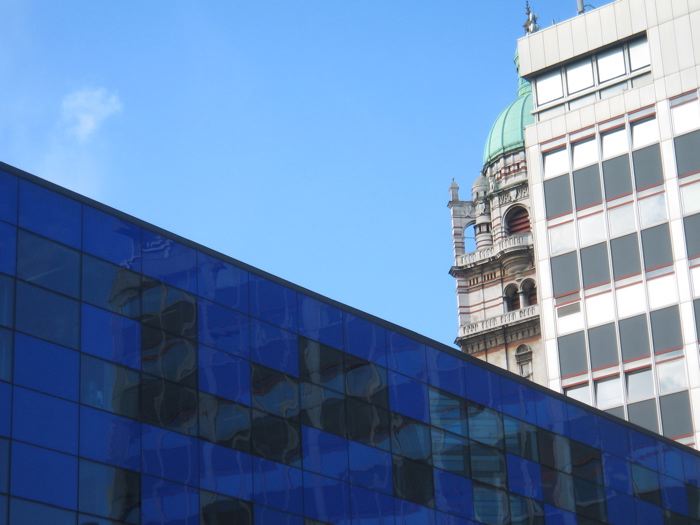
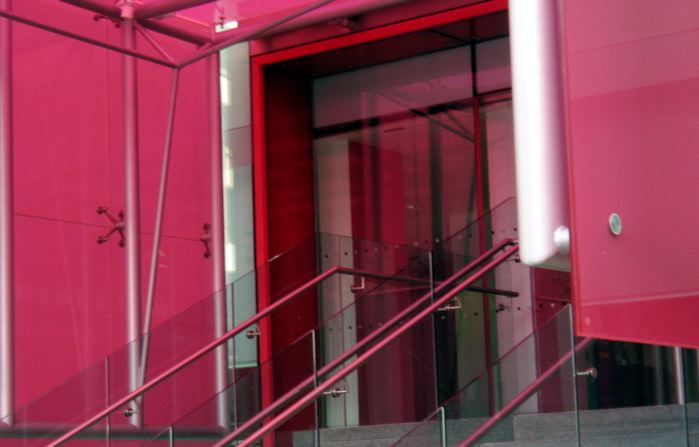
Always enjoy doing sessions with the Business & Environment MSc students at Imperial College, the course run by Andrew Blaza, which I did again this morning. Highly diverse and engaged group. Back to a bunch of writing tasks, but particularly the report we are racing to finish in time for the Skoll World Forum at the end of the month. One theme of my Imperial session was the need for more creativity in this space – and this week, so far, we have had visits from creative folk like Bob Adams of IDEO (http://www.ideo.com/) and a number of his UK colleagues, from Kris Murrin of ?What If! (http://www.whatifinnovation.com/), and from Sara Olsen of SVT Consulting (http://svtconsulting.com/about/team.html).


Imperial blue


Imperial pink

Sunday, March 04, 2007

THE MASON PEARSON HAIRBRUSH

In between blogging and doing catch-up work for the office, I have been wading through piles of The Times, Financial Times, and other assorted newspapers that have accumulated at home while I was away, including today The Observer and The Sunday Times. Yesterday’s FT included a nice column from Carolyn Lyons on the Mason Pearson hairbrush, “the brush that really brushes.” Its design roots go back to 1885, apparently.
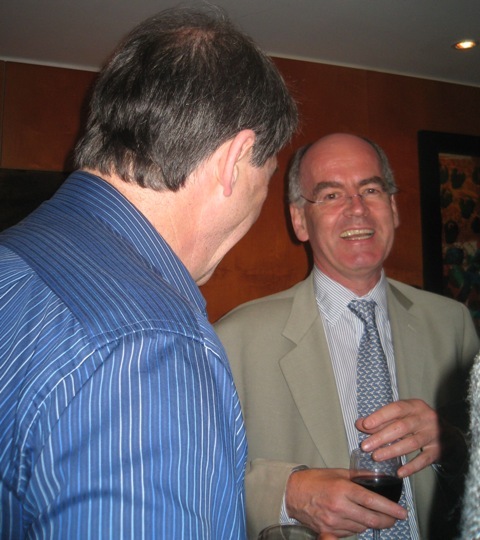
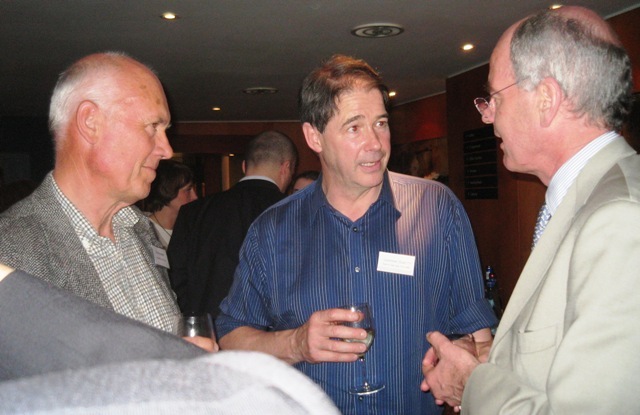
All I know is that it was always the standard brush in my family – and Elaine’s – and still is. But the story that sticks in my mind is my mother’s, who used to use these redoubtable brushes to tan our hides when we were small. At one point, the handle of a brush broke off. So she sent it back to Mason Pearson, with a polite note saying that she had used their brushes to beat her children for many a year. Not sure that would square with human rights rules these days, but, obligingly, they sent her a new one.

BAPU KUTI

One of the wonderful things about the Bangalore visit was the generosity of spirit of the people who I met around the city. Rohini Nilekani, for example, not only introduced me to the work of Arghyam (http://www.arghyam.org; motto: ‘safe, sustainable water for all’), but put me in touch with Rajni Bakshi, who is deeply knowledgable about the deep history of civil society movements in India, particularly those based on the thinking of Mahatma Gandhi. Though Rajni lives in Mumbai, she and I had two long telephone conversations while I was in Bangalore and then, as I was packing to leave, the door bell went – and Rohini had sent over a copy of Rajni’s book Bapu Kuti: Journeys in Rediscovery of Gandhi, published by Penguin Books, India, in 1998 (http://www.amazon.com/Bapu-Kuti-Rajni-Bakshi/dp/0140278389).
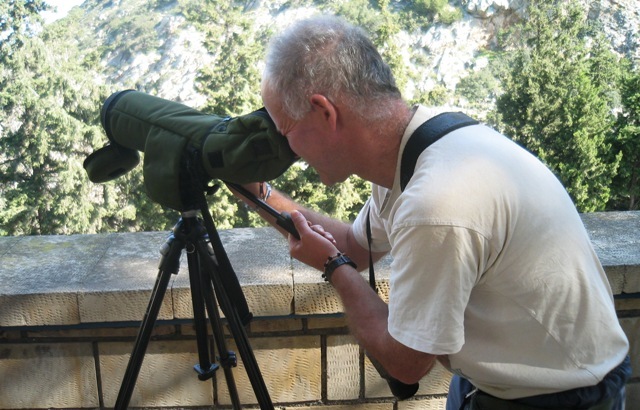
Read most of the book on the flight back, aided by the fact that it was delayed by a couple of hours, and was soon scribbling reams of notes. A wonderful, threaded series of twelve stories of activists who have taken forward Gandhi’s thinking – all linking back to Bapu Kuti, the simple, elegant ‘mud hut’ originally designed by and built for Madeleine Slade, or ‘Miraben’, an extraordinary aristocratic Briton who had sailed to India in 1925, aged 33, and adopted Gandhi as her spiritual father. After a major attack of malaria, he lived in what became known as Bapu Kuti for many years and it subsequently became a shrine.

Among the things that struck me about the stories Rajni tells are the impact of the thinking and work of Joseph Cornellius Kumarappa (http://en.wikipedia.org/wiki/J._C._Kumarappa), whose “economics of permanence” anticipated sustainable development by several decades, and the unbelievable courage of people like the founders of Ganga Mukti Andolan (GMA), which fought to reclaim the Ganges from those pillaging it.

Got a comforting look from an air hostess when she passed and saw my eyes brimming with tears as I read the words of Shanti Devi, a 55-year-old widow who had been active in the GMA since its beginning: “We will fight, no matter what happens. If I die fighting then like a daughter I will go to sleep in the lap of Mother Ganga.” What made the words even more powerful was the knowledge that the GMA insisted on non-violence, while their often extremely violent opponents resorted to techniques like slashing those who resisted their power and then immersing them in the river, to bleed to death.

Saturday, March 03, 2007

BANGALORE TRAFFIC

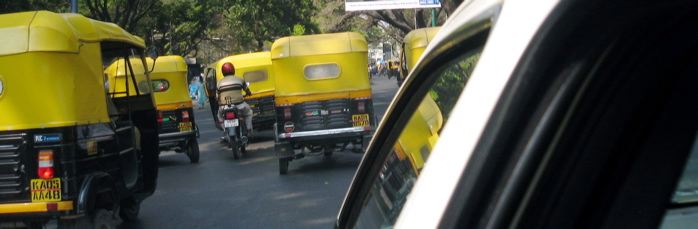
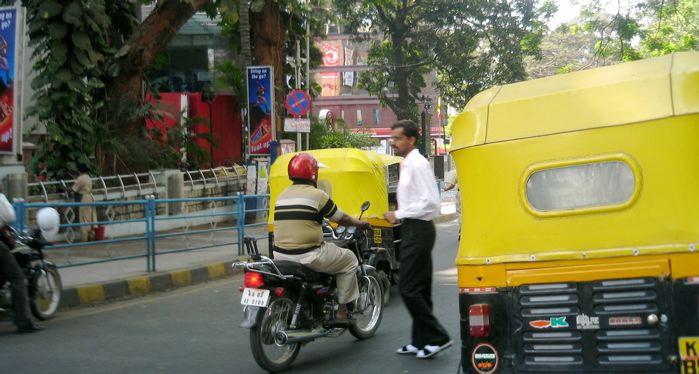
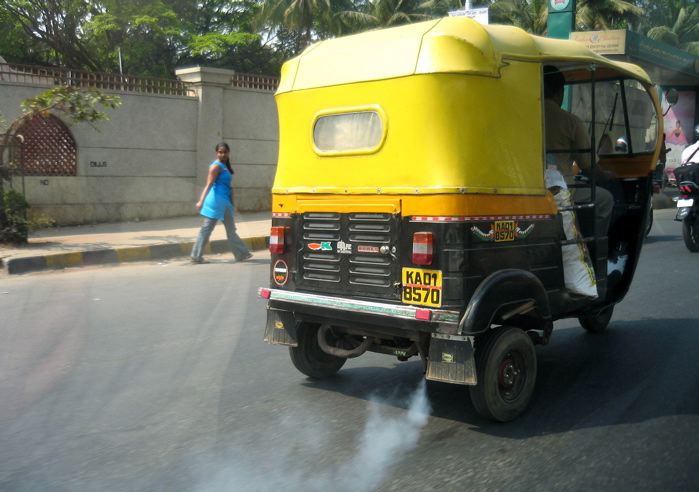
Bangalore’s traffic seems to run on just two principles: first, drive as fast as you can, as close to the vehicle in front as possible, with no thought for lane discipline; and, second, put your hand hard on your horn at every possible opportunity. You get used to it surprisngly quickly, though I wouldn’t want to try it on a cycle – except if I was shielded on either side, like one cyclist I saw today, by what looked like milk churns. Some of the tuk-tuks were laying down smoke-screens worthy of WWI destroyers – though I only managed to snap one that was fuming in a relatively modest way.
Friday, March 02, 2007

DRAGONFLY SPIES

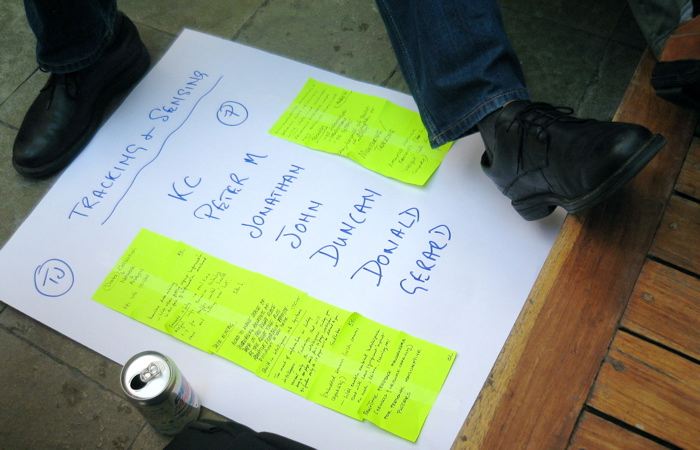
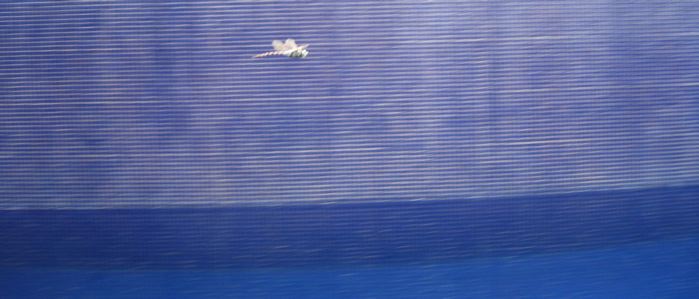
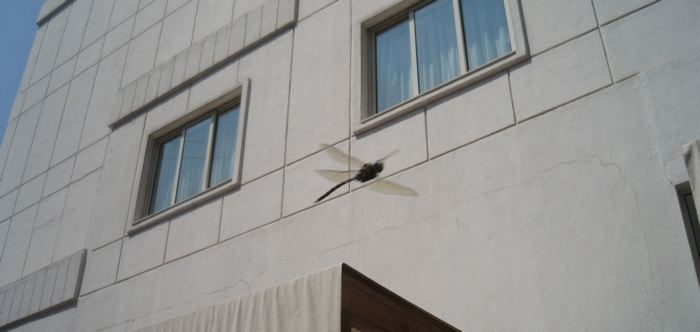
During a working session alongside the swimming pool on the future of tracking, monitoring and sensing, I noted that it would be useful to have a robotic dragonfly to flit acrosss to a nearby working group – and see what they were doing. (Would have been useful, since they were the ones who won the subsequent future business competition.) The idea had surfaced after we had been passing around a set of RFID and other tracking devices. Then, weirdly, a giant dragonfly came and hovered over our group as it was disassembling. I tried to photograph it – and it almost seemed to know what I was trying to do, and played with me. Then it got a little too clever, trying a different flight-path – and, click, it was in frame.


The agenda


Tracking technologies


Fly past


Got you

Thursday, March 01, 2007

ABSTRACTIONS

Apparently, the discussions in Bangalore are proving to be more abstract, more strategic than those in the earlier session in Egham, Surrey. Not surprised, given how abstract some of my traffic pictures turned out.

February 2007

John Elkington · 28 February 2007 · Leave a Comment

Wednesday, February 28, 2007

TECHNOLOGY FUTURES 2007

Tremendously interesting discussions of the future of sustainable mobility and related subjects as the Shell event gets into its stride. Some photos of some of the sessions and between-session-moment shown below.


A day on the tiles – and they look like Julian’s sandals


Sunil reports back


Screens 1


Screen 2 – at end of an introduction to Bangalore-based Infosys

THE PIRATE

The Times today carries an obituary of Lothar-Günther Buchheim, known as ‘The Pirate,’ and whose work formed the basis of one of my favourite TV series of all time, Das Boot, the engaging but periodically hellish story of a U-boat crew (http://en.wikipedia.org/wiki/Das_Boot). Not sure why I have my BlackBerry alarm set to ‘Sonar’ – should freak me out, but it was the least offensive of the electronic cacophony provided.

The other German TV series I found totally compelling was Heimat, though in large part that was because by the time it got to the 1960s and 1970s it was portraying a world – in Germany – that I had some experience of. Buchheim – who once said “I don’t have a mobile phone. I photograph with old fashioned cameras. I don’t have a radio and I burnt my television 20 years ago” – presumably had more time to let his mind run riot. He created a ‘Museum of the Imagination’ in Bavaria (http://www.buchheimmuseum.de/english/museum.htm).

Tuesday, February 27, 2007

GAMECHANGING IN BANGALORE


Boxfish as model for car


In full flow

“Most people go through life playing by rules other people wrote,” say the Shell GameChanger team (http://www.shell/com/home/Framework?siteId=gamechanger-en). “We believe some people can’t stop dreaming about how things could be better under a different set of rules. Once in a while, a dreamer succeeds against difficult odds to truly change the rules of the game on her own. However, often it takes a few things the dreamer doesn’t have to show that the idea will work. For lack of money, a few connections, and perhaps a bit of guidance, many great ideas never get off the ground. Shell GameChanger is designed to provide funds, introduce you to the right people, and perhaps provide some useful advice. We invest in radically novel, early stage ideas in the ‘energy and mobility’ industry to help you get them from your mind to ‘proof of concept.'”

Over the next three days, after a reception and dinner earlier this evening, I will be taking part in the the Shell ‘Technology Futures 2007’ process, organised by the GameChangers team and Innovaro (http://www.innovaro.com/), at the Park Hotel, Bangalore. Because it is subject to the Chatham House Rule, the following postings will be on issues and themes, not what specific people said.

OH, TO BE A BEE

Having spent the day driving back and forth across the city, watching kites circle in the thick smog and averting my eyes from the odd greasy, grey river that looked as lifeless as the Thames in the 1940s, it was a relief to be able to turn my focus to the flowers around the hotel. Sometimes I almost wish I were a bee, cross-pollinating blooms rather than brains.

INFOSYS AND ORB ENERGY

Had a driver take me out to Infosys in Electronics City this morning, then on to Orb Energy, way back across Bangalore. You get used to the jams fairly quickly, though guessing how long any given journey is likely to take is something left to professional drivers – and even then we got it wrong with Orb.

Met Kris Gopalakrishnan at the Infosys campus (http://www.infosys.com), who is Chief Operating Officer and was one of the founders. (Nandan Nilekani, CEO, President and Managing Director, co-chairs the Tomorrow’s Global Company Inquiry, in which I’m involved.) A fascinating conversation about the company’s history, values and future ambitions.

As N. R. Narayana Murthy, Chairman and Chief Mentor, put it when the company – founded in 1981 – celebrated its 25th anniversary last year: “A great corporation must live for hundreds of years. Hence, we are still babies. Even these initial baby-years have taught us several lessons. These lessons are valuable not just for our future journey but for other corporations in the country and, perhaps, the world.” He stressed, among other factors in the company’s success, “An enduring value system based on openness, honesty, integrity, meritocracy, fairness, transparency and excellence.” I came away very impressed.

Then across to Orb Energy, which I had heard of via Samer Salty of venture capitalists zouk ventures, where I sit on an advisory board. Orb represents a large slice of a renewable energy unit that used to be run by Shell India, but spun out (http://www.orbenergy.com/). Again, very impressed – though this really is a baby company. Interested to hear their plans for franchising, which will be useful background for the survey report we are just completing for The Skoll Foundation.


My distant reflection in the Infosys front doors


Flanked by N.P. Ramesh (COO) and Damian Miller (CEO) of Orb

Monday, February 26, 2007

RED SILK ON GREEN

Bangalore is known for its silk – and one of the first things that caught my eye in my hotel bedroom was this silk cushion, with a Mars-like silk button transiting a green silk heaven.

BAGPIPER IN BENGALURU


Bangalore skyline


View from my bedroom


Melons


State Parliament, a building almost worthy of Ceaucescu …

Arrived in Bangalore at around 04.45 this morning and was picked up and whisked away to the Park Hotel. The boom town status is soon clear, with a building site and marble sawing site right outside my bedroom window. A couple of hours sleep before setting off for first round of meetings. They include sessions with a professor of corporate strategy, with Rohini Nilekani of the Arghyam Trust (http://www.indiawaterportal.org/arghyam/) and her team, with Svati Bhogle (CEO) and Mr Rajagopolan (Chairman) of TIDE (Technology Informatics Design Endeavour) and then with the President and Chairman of United Breweries – where some of the brands still have a distinctly colonial feel.


White Mischief


Bagpiper

Saturday, February 24, 2007

MITCH KAPOR PODCAST


Second Life avatars

My latest podcast, featuring Mitch Kapor, who chairs Linden Lab (the organisation behind ‘Second Life’, http://secondlife.com/) and the Mozilla Foundation (http://www.mozilla.org/foundation/), can be heard at http://www.sustainability.com/insight/skoll_article.asp?id=756. One of the most interesting people I have met in ages.

GROWING PAINS AND THE GUARDS MUSEUM

Spent much of the week working on our first survey report for The Skoll Foundation (http://www.skollfoundation.org), called Growing Pains. But it was a fairly fractured week, with a bunch of other things cross-cutting. Among them an enjoyable session with the Forum for the Future scholars on the 20th, a session with Landrover on the 21st (sparked by the Today programme interview I did from Davos on the car industry, biofuels, etc), a dinner with The Company Agency and Acciona that evening, a session with Nick Hurd and Clare Kerr of the Quality of Life Commission (http://www.qualityoflifechallenge.com/) on 22nd, then a meeting with Gib Bulloch of Accenture, plus ongoing preparations for my impending trip to Bangalore.

Was meant to be travelling to India with Kavita (Prakash-Mani), but she has just come down with chickenpox. When I had it, it was just before my O Levels, I had it monstrously, and ended up in the school sanitorium with the wretched pustules everywhere, including behind my eyes. But it did mean that I – in the midst of it all – did a fair amount of reading, including Gone With The Wind. Which stood me in good stead when it came to the History exams, where both the American and British history papers, if memory serves, had questions on the US Civil War and blockade. I got top marks in both, which put me on track for an A in History at A Level, plus an S Level. Given that I got Ds in eveything else but General Knowledge (another A), you could even say chickenpox got me into university.

The dinner on Wednesday was very interesting. Hosted by The Company Agency (http://www.thecompanyagency.com/site.swf) for the Spanish company Acciona (http://www.acciona.es/), who are up to their eyeballs in sustainability (http://www.sostenibilidad.com/). Sat next to – and had a great conversation with – Acciona Chairman Jose Manuel Entrecanales Domecq. Sam had researched the other guests earlier in the day, and I made a bee-line towards Alexandra Henderson, Executive Producer at Endemol. I wanted to say thank you for their extraordinary TV series in celbration of the 700th birthday of Ibn Battutah, Travels with a Tangerine (http://www.endemoluk.com/?q=node/239&tid=7) – which we have been enjoying immensely. Based on the book by Tim Mackintosh-Smith, which I read some years back.

On my other side was Tristan Garel Jones, now of UBS, and facing me, Nicholas Soames. A different world. And the whole thing held in The Guards Museum, a celebration in scarlet and gold of glory, mud and blood. My mind kept flashing back and forth between the conversations at table and the implications of the exhibits all around – including the fact that on Sunday 18 June 1944, the Guards Chapel was hit by a flying bomb and 121 worshippers were killed. And what it must be like for people in Baghdad, where such devastation and casualties are now an everyday occurrence.

DOCKLANDS

A day spent largely in Docklands, apart from writing a regular column early in the morning for Nikkei Ecology, based on a draft supplied by one of our team members, Ivana Gazibara (http://www.sustainability.com/about/profile.asp?id=11180). Then off to ECGD in Canary Wharf, to chair a meeting of the Advisory Council, preceded by an induction session for three new members. Then on to Clifford Chance’s offices nearby for an event featuring Professor John Ruggie, and happily a number of us mentioned his portal at the Business & Human Rights Resource Centre (where I am a Trustee) during the discussion period, including Ruggie himself (http://www.business-humanrights.org/Gettingstarted/UNSpecialRepresentative).

Then raced across London to a restaurant called Bumpkin (http://www.bumpkinuk.com/) in Westbourne Grove, for a dinner hosted by Gary Hirshberg, self-styled CE-YO of Stonyfield Farm, Inc (http://www.stonyfield.com/). Good group of people, good food, but the acoustic of the restaurant meant that – with my bat’s ears – I heard everything and nothing. Homeward late, in a light drizzle, still suffering effects of ‘flu and the displaced back, probably caused by sitting four days in a row with a laptop when finishing off the book.

Sunday, February 18, 2007

AN ECO-WAR-CRIMES TRIBUNAL?

A series of articles in today’s Observer fused together in my mind to raise the question whether – and how – President Bush the Younger and companies like ExxonMobil might eventually be arraigned before a global War Crimes Tribunal? It has been tried with industrial polluters of rivers like the Rhine, but never on a global scale. That may well change, however, if – and when – global warming really gets into its stride.

The first story noted that the Hubble space telescope has captured a star very much like our own Sun blowing up in a cataclysmic explosion. Happily, Robin McKie notes, NGC 2440 is more than 4,000 light years away. Our Sun may have a few billion years left in it yet, but will eventually suffer the same fate, as will any remaining life on Earth.

The second story, by Tom Kington, reported that Italian scientists had been using sea-bed antennae in the Mediterranean to try to capture incoming neutrino particles as they plunge into the sea from outer space, travelling at something like the speed of light. These neutrinos may have travelled hundreds of millions of light years, some presumably even coming from stellar casualties like NGC 2440. Unexpectedly, the scientists kept picking up a cacophony of sonar clicks and other sounds, that proved to come from surprisingly large groups of sperm whales – that appear to have been stealthily living there, having been thought virtually extinct in the Med.

That was the good local news. The bad local news is that climate-driven ecosystem disruptions are causing massive wildlife die-backs off South America and Africa, and on the Pacific coast of America. In 2005, a nutrient-rich current which normally turns up off California in the spring was a month late, causing huge numbers of seabird deaths, and then in 2006 the current cameback in such a form that produced an exaggerated phytoplankton bloom, turning the sea to “green-brown soup”. As the plankton died and oxygen was stripped from the waters, dead zones began to form where little or nothing could live.

Just imagine that these trends worsen significantly. True, such zones have been seen before, but these were three times worse than anything previously recorded in the area. The winds were seen to be the proximate cause, but climate trends loom as the likely fundamental driver. And behind them loom the human and industrial factors spotlighted recently by the IPCC and Sir Nicholas Stern’s review of the economic implications of climate change.

If the global ecosystem does start to unravel, it is in the nature of human beings that we will want to hold someone responsible. Now that the gods are less likely to be blamed, we will need human agents to hold accountable. And who – or what – better than the Bush-Saudi-ExxonMobil axis of evil? True, we are all responsible to a degree, but there are those who, it will likely be concluded, turned closed (or, even worse, partisan) minds on the evidence as it came in. Such sins of omission may not be hanging crimes, yet, but behind them will be many sins of commission. Lawyers who have grown fat on prosecuting cases around asbestos, tobacco and now obesity are likely to be sharpening their knives before long.

No, it’s true, the international community doesn’t have the legal mechanisms to pursue such cases successfully, yet, but if the pressures grow the political momentum will materialise. The fact that people die in the end doesn’t make those who maim or kill them innocent, and the fact that the Earth will eventually be devoured by the Sun doesn’t mean that those who aid and abet ecocide should be allowed to get away scot-free.

THE STARGAZER AND THE DROWNING MAN

It really is the most extraordinary story. A 34-year-old man swept off his cycle and out to sea by a freak wave; battling for several hours to stay afloat as the tide washed him steadily out to sea; and then, miracle of miracles, a local stargazer serendipitously moved his telescope (borrowed from a friend that very afternoon) from the night sky and saw the drowning man. A dash to the sea wall, a thrown lifebuoy, and William Murtha was hauled to safety, suffering from hypothermia but alive.

And, as sometimes happens, his life was transformed by the experience. Everything changed, he changed. He gave up his career, sold the family home and created the ‘Visionaries for the 21st Century’ project, to bring together 500 “inspirers” from around the world. Each has been asked to pen 100 words by way of their own vision statement. Somehow I seem to have crept onto the list and did my 100 words earlier this morning, before getting on with the Skoll survey report we are racing to complete. The result of Murtha’s own survey will be a book and a website, to be launched later in 2007. Most of the proceeds will be used to establish ‘The Imagination Project,’ a non-profit institute for creative writing.

Saturday, February 17, 2007

LIVE EARTH

July 7 will see a series of concerts dramatising climate change, Live Earth. The prime mover: Al Gore. According to today’s Guardian, on Thursday he told an audience in Los Angeles, “We have to get the message of urgency out. In order to solve the climate crisis, we have to reach billions of people. The climate crisis will only be stopped by an unprecedented and sustainable global movement.” Great, but having found myself watching pretty much all of the Live 8 concert, I sometimes wonder about the real catalytic effect of such jamborees in terms of mobilising global movements. Just as Jeff Skoll has been trying to work out how to mobilise parallel campaigns to his socially and environmentally-messaged films, made via Participant Productions (http://www.participantproductions.com/), we will have to work on many fronts simultaneously to ensure that not only does the message of urgency get out but that people – all of us – actually do enough of the right things in response.

PROWLING WOLF

A week in which, with the book sent off on time – on Valentine’s Day – to Harvard Business School Press, my immune system finally gave in to the flu that had been stalking it for well over a month. Elaine has it, too. Then an odd thing last night. Gaia and Hania had been staying overnight in order to catch a very early flight to Prague. I had an extraordinary dream of a wolf turning up, threateningly, in the environs. Preying on cats, which is something the local foxes sometimes do. Then read in The Times this morning that a wolf had just been recaptured after having escaped from Dartmoor Wildlife Park. Given the number of connections in our everyday lives – and the fact that the human brain is a pattern-recognition machine – it is hardly surprising that such coincidences arise almost as a matter of routine, but it’s still strange at times.

Thursday, February 15, 2007

REVOLUTION THROUGH COMPETITION

Maggie (Brenneke) and I has a fascinating session this morning with Mark Goldstein and Cristin Lindsay of The X Prize Foundation’s Automotive Prize project. I have always been fascinated by the impact of prizes on the evolution of technology – like the Schneider Trophy (http://en.wikipedia.org/wiki/Schneider_Trophy). And a few years ago was rivetted by the race to win the Ansari X Prize, eventually won in 1994 by Burt Rutan and Paul Allen, with their SpaceShipOne, shown above in the Washington Air & Space Museum – slung between The Spirit of St Louis and, in orange, the X1 experimental plane.

As the X Prize Foundation notes, “Between 1905 and 1935, hundreds of aviation prizes stimulated the advancement of aircraft technology. One of the best-known prizes was The Orteig Prize, a $25,000 purse offered by hotel magnate Raymond Orteig to the first person to fly non-stop between New York and Paris. In 1927, with the whole world watching, Charles Lindbergh won the prize, becoming the most famous person on Earth. Where no government filled the need and no immediate profit could pay the bill, the Orteig Prize stimulated not one, but nine different attempts to cross the Atlantic. These nine teams cumulatively spent $400,000 to win the $25,000 purse – and spawned today’s $250 billion aviation industry.

“By taking a smaller, faster approach to aviation, Lindbergh and the Spirit of St. Louis Organization showed that a small professional team could outperform large, government-style efforts. Prior to his flight, the press of the day characterized him as a daredevil and an amateur – ‘the flying fool.’ But Lindbergh’s meticulously planned single-engine/single-pilot strategy was a radical departure from the conventional thinking of the day, and his innovative thinking and careful preparation won the full support of the Spirit of St. Louis Organization. A quarter of all Americans personally saw Lindbergh and the Spirit of St. Louis within a year of his flight – and the world changed with their excitement.”

Key metrics of the change, the Foundation recalls:

– Applications for pilot’s licenses in the U.S. increased by 300% in 1927.
– The number of licensed aircraft in the U.S. increased by 400% in 1927.
– US airline passengers increased 30-fold increase between 1926 and 1929.

“The cause of the tremendous growth in aviation experienced after 1927 was not due to a technology breakthrough,” the Foundation stresses. “Lindbergh employed technology that was available years earlier. The growth was a direct result of a monumental change in the public’s expectation about flight. Lindbergh’s flight created the expectation that anyone could fly.”

The X PRIZE Foundation, the brainchild of Dr Peter H Diamandis, has the motto: ‘Revolution Through Competition.’ It was founded to create a similar change in the public’s expectation of space flight, and now exists to create similar shifts in the public’s perception in future X PRIZE areas. In addition to geneomics and automotive sector, they are also thinking of future prizes in such areas as education and povert alleviation.

A complete shot in the arm – despite the flu which forced me home later in the day.

Monday, February 12, 2007

THE ANTIPRENEURS

I pulled out the article ‘The Antipreneurs’ from the Times Magazine on 3 February, but failed to notice the reference to the triple bottom line, Cannibals with Forks and me on the front page of the piece. Was pointed out to me by Maddy (Rooke-Ley) in the office. Anna Shepherd notes that “the triple bottom line – people, planet, profit – has become a standard part of the MBA syllabus.” Then: “As a model it has proved to be successful: making money and reducing employee turnover, as people like working for a company with strong ethics,” says Craig Smith, senior fellow in marketing and ethics at the London Business School. A key Smith text is 1998’s Cannibals with Forks, in which John Elkington, from consultancy SustainAbility, argued that balance sheets would not be sufficient to judge a company’s performance in future – social justice and environmental responsibility would be weighed up, too.”

“They don’t wear suits,” the Times Magazine noted, “they respect the planet and they still make money – meet the new caring, sharing entrepreneurs.” Among the social enterprises mentioned in the article were REN Cosmetics, Tyrrells Potato Chips, Worn Again, Abel & Cole, and Today was Fun (http://www.todaywasfun.com).

Sunday, February 11, 2007

BRANSON’S $25M SAFE FOR A WHILE

God, Branson’s a creature of the zeitgeist. Today was mainly spent finishing off the final chapter for the book, which went off to Pamela early this afternoon. In the first draft, a couple of days back, I had talked about the danger that social and environmental entrepreneurs might be treated as some for of superhero. Then today’s papers had Richard Branson on the same theme, but from a very different angle. “We have no super-hero,” he said when launching his $25 million (£13 million) Virgin Earth Challenge. “We have only our own ingenuity to fall back on.” He was inspired to launch the Virgin prize by the example of past prizes like the Ansari X Prize, which resulted in the first private manned space flight in 2004, and the eighteenth century prize that spurred the pursuit for a device that would measure longitude.

Branson is looking for a commercially viable technology that will result in “the net removal of anthropogenic, atmospheric greenhouse gases each year for at least 10 years without countervailing harmful effects.” But a condition that could keep Branson’s money in the bank for a while is that the technology will have to remove at least one billion tonnes of carbon dioxide from the atmosphere each year.

Interestingly, The X Prize Foundation had already announced its second major prize—the Archon X prize for Genomics—and has been working on others in the social domain, among them contests designed to spur innovative thinking about poverty, hyperefficient cars and health care. But even if it achieves its aim of awarding $200 million or more in 10 to 15 new prize categories over the next five years, there is a bigger challenge still: finding the capitla to scale up any resulting technologies to an appropriate level. For more details, see Fiona Harvey, ‘Branson offers $25m prize for solution to climate change,’ http://www.ft.com/cms/s/e2067f90-b867-11db-be2e-0000779e2340.html, or Matt Richtel, ‘Awarder of Space Prize to Add Others,’ New York Times, January 31, 2007.

Once the book had gone off, Elaine and I took a walk across the Common in balmy weather, then came back to greet Svenja Geissmar and Francesca van Dijk-Dixon and her family. It seems a lifetime since Fran joined SustainAbility, back when we were still in The People’s Hall. I recall that a key thing that attracted me to her thesis was that she had taken the 5-step model of reporting Nick Robins and I had developed and done a graphic (or perhaps it was her husband Ken) showing a ladder propped against the five steps, with an angel lounging on the topmost rung. As we talked, their daughter Freya was drawing a picture of an Aztec stepped pyramid with a striking figure atop it. More than a slight sense of deja vu.

Friday, February 09, 2007

THE DAVOS GRIST

Our latest Grist column, this time on the latest World Economic Forum summit in Davos, can be found at http://grist.org/biz/fd/2007/02/09/davos/

Wednesday, February 07, 2007

SNOW A-COMING

Or so they say. Heavy frost this morning as I set off, but a totally glorious morning by the time I was cycling through Kensington Gardens and Hyde Park. Pretty sure I was cycling alongside the drummer from one of the bands at Ronnie Scott’s the other night as I rocketed down Brook Street – but he rocketed even faster. Frenetic day, with the office bursting at the seams. Among those through today were Steve Viederman, previously President of the Jessie Smith Noyes Foundation, and Monica Araya, who organised my ‘state visit’ to Yale a while back. Also uplifted in reading the manuscript of Paul Hawken’s impending new book, on the global civil society movement: beautifully written.

Tuesday, February 06, 2007

THROUGH THE PALACE RAILINGS

Every morning that I cycle into Holborn, I dutifully – grudgingly – walk past the gates of Kensington Palace, where cycling is verboten. But at least it gives me a chance to stare through the railings. They’ve just filled in a small pond I quite liked to think might harbour amphibians of some variety. There was a public notice explaining why, but I can’t remember what it said. Excuses of some sort. Glorious sunshine this morning, but cold. Fourth day of a migraine that won’t shift, still uplifting to see a pair of swans processing across the water like ice-carved galleons.

Sunday, February 04, 2007

RICHMOND PARK

Something very Ramsay Gibbs-like (a painter we like) about some of the landscapes in Richmond Park today, particularly the one with the rutted tracks. Astoundingly summery weather, despite muddiness in places – and parakeets now established part of the scenery. Most of the day spent working on last chapter of the book.

Saturday, February 03, 2007

WEF CITIES SESSION

And here are some of the photos of the World Economic Forum session I facilitated on cities, with thanks to the Forum.


Hands up


Eddy in the conversation


Google’s Larry Page and flipchart referencing his horizontal lift notion


Part of one of the break-out groups: Xia Deren (Mayor of Dalian),interpreter, Amory Lovins, Yann Arthus-Bertrand

SCHWAB AND DAVOS SUMMITS, 2007

Climate change, trade and social entrepreneurship were the three big themes at Davos 2007, for me at least. True, others may have had a different priority list and it has taken me rather longer than in previous years to work out what was really going on during the 2007 World Economic Forum—or at least what struck me as most significant. This was partly because I plunged straight back into work on my return to London, but also because my sense was that this year really did mark a watershed year for the Forum—whether or not those attending Davos this year really grasped what is going on.

So here is a personal download of both the Davos event and of the Schwab summit, which proceeded it—and this year focused on the business case both for social entrepreneurship and for mainstream business to get involved in the field. Please also see earlier postings below, and postings for openDemocracy (http://www.opendemocracy.net/globalization-climate_change_debate/fixes_4311.jsp) and Grist (in press).

But first, yes, the agenda (http://www.weforum.org/en/events/annualmeeting2007/index.htm) was extraordinarily packed again this year, and the top two issues for the mainstream participants were clear. Climate change was ubiquitous, with 17 sessions devoted to the subject, while the other dominant theme was the need to reinvigorate the Doha Round of trade negotiations. But it struck me that something else was going on this year—and it felt a bit like a hand-over between generations. Alongside the efforts of the Young Global Leaders (http://www.younggloballeaders.org/), my sense was that this was the year that social entrepreneurs really got into their stride in Davos.

And one of the clearest trends this year, again, was the growing focus on private sector, business and financial market solutions to the world’s great social, environmental and governance challenges. Multinationals are seen to have a key role to play in upholding and advancing principles on human rights, labour, environmental and anti-corruption practices in countries with weak regulatory capacity. For more on WEF initiatives in these fields, see http://www.weforum.org/en/initiatives/index.htm

Very much in the spirit of this year’s summit, British Prime Minister Tony Blair sounded an optimistic note in his closing remarks. He said that the three key issues that for him dominated the annual meeting—world trade, climate change and Africa—still hang in the balance, but added that there had been progress on each that would have seemed unimaginable even a short time back. In two radical suggestions, Blair recommended merging the International Monetary Fund and the World Bank, and dramatically expanding the UN Security Council. “A UN Security Council without Germany, Japan, Brazil or India, to say nothing of any African or Muslim nation,” he said, “will, in time, not merely lose legitimacy in the eyes of the world, but seriously inhibit effective action.”

In what follows, I will try to sketch out come of the highlights and headlines before zeroing in the social entrepreneurs—who convened for the 2007 Schwab Foundation Annual Summit at Swiss Re’s Rüschlikon centre in Zurich before heading on to Davos. I attended both events, chairing a plenary session on the business case for social entrepreneurship at the Schwab summit and was involved in a number of related events in Davos—including a fascinating session I facilitated on ‘Designing Sustainable Cities.’

Schwab Summit

This was the seventh Schwab Summit (http://www.schwabfound.org/the.htm?p=102) I have intended, the sense now being fairly widespread that the notion of social entrepreneurship “has had a meteoric rise,” as the Schwab team put it, “particularly in the industrialised world, but increasingly in emerging markets.” It is clear that we are seeing the very early stages of a great convergence between the worlds of mainstream business and social and environmental entrepreneurship—an area SustainAbility is looking at in its series of annual surveys of the state of social entrepreneurship for The Skoll Foundation (http://www.skollfoundation.org/).

One of the key indications of the growing mainstream support came when Jacques Aigrain, CEO of Swiss Re, announced that in addition to hosting the Schwab Summit this year at their Rüschlikon centre (http://www.ruschlikon.net/), they would also host it there in future years.

Among key sessions were those focusing on how foundations and other investors decide which social entrepreneurs to support, the change-making agendas of key entrepreneurs, the business case as developed by social entrepreneurs, the mainstream business case for social entrepreneurship, how such change agents can best work in government and the public sector, and—based on a discussion about the process by which Ethos Water (http://www.ethoswater.com/) sold out to Starbucks—what happens when a social entrepreneur “sells out.” For some of the story of how the founders got to this point, see http://www.ethoswater.com/index.cfm?objectid=6FA93E4F-F1F6-6035-B91D178EA0C1ED59

Overall, the Schwab Summit was even higher energy than in previous years—and excellent preparation for those social entrepreneurs who were going on to Davos. And this is an area I personally am increasingly determined to invest a growing part of my time in—as with my role with the newly announced DHL Young Entrepreneurs for Sustainability Awards, (http://www.dhl.com/publish/g0/en/about/sustainability/yes_awards.high.html) now being piloted in five Asian countries.

A Schizophrenic Davos

“Shit is serious business,” is the motto of one of those entrepreneurs, Isaac Durojaiye, founder of DMT Mobile Toilets (http://www.dmttoilet.com/), in whose delightful company Elaine and I took the train from the Schwab Summit to Davos. He is one of the Schwab entrepreneurs (http://www.schwabfound.org/schwabentrepreneurs.htm?schwabid=3725). And it’s truly extraordinary to see these people moving between the worlds of sanitation in Nigeria, for example, and the world of Davos—this being the sixth time I have attended the WEF event. Their presence is one more sign that the world of Davos Man is experiencing seismic changes.

“We are faced by a world which is increasingly schizophrenic,” said WEF Founder and Executive Chair early on in the proceedings. On the surface, the economic indicators might look fairly optimistic, but underneath a range trends are moving in less encouraging directions. “Our world is rapidly changing and power is shifting geopolitically, in business terms and even in the virtual world,” he noted. “Power, wealth and well-being are spread in ever more complex ways, leading to a world which is harder and harder to understand and which often seems alien to us.”

In her plenary speech early on in the summit, Angela Merkel, Federal Chancellor of Germany, and due to take over as G8 President this year, announced efforts for “new forms of dialogue” between G8 leading industrial nations and the emerging economies such as Brazil, India and China (BIC)—along with a closer Atlantic partnership between Europe and the United States. But apart from Senators John Kerry and John McCain, US political leaders were less evidently present this year.

The theme was ‘The Shifting Power Equation.’ Over the course of the five-day meeting, 2,400 participants from 90 countries convened, including 24 heads of state or government, 85 cabinet ministers, along with religious leaders, media leaders and heads of non-governmental organizations. Around 50% of the participants were business leaders drawn principally from the Forum’s members—1,000 of the foremost companies from around the world and across all economic sectors.

A new survey of WEF participants found that a majority of leaders questioned think the next generation will live in a more economically prosperous world. Two-thirds (65%) say that it will be a lot more or a little more prosperous. But the same respondents also indicated that the next generation will live in a less safe world, with 61% believing it would be a little or a lot less safe. Both these figures are broadly in line with the same findings last year. But one finding that has shown a remarkable change is the doubling of those who rank environmental protection as a priority for world leaders. Warnings of the effects of climate change appear to be hitting home with protecting the environment a concern that one in five (20%) think leaders should concentrate on—a considerable increase since last year’s survey, when only 9% rated this as a priority.

One of the key publications launched during the event was the Global Risks 2007 report (http://www.weforum.org/pdf/CSI/Global_Risks_2007.pdf), which highlighted a growing disconnect between the power of global risks to cause major systemic disruption, and our ability to mitigate them. The annual Global Risks report—published by WEF in cooperation with Citigroup, Marsh & McLennan Companies, Swiss Re and the Wharton School Risk Center—suggested that many of the 23 core global risks explored in the report have worsened over the last 12 months, despite growing awareness of their potential impacts.

Among the recommendations:

1. Link energy security considerations with climate change;

2. Urgently begin work on a successor to the Kyoto agreement with three central principles: ensure involvement of the US and major developing countries (particularly China and India); and recognize differential responsibilities for future emissions’ reduction dependent upon past emissions and stage of economic development—alongside and common overall responsibility for climate change
3. Renew terrorism insurance schemes scheduled to sunset in 2007; improve framework for public-private arrangements in other countries, and

4. Prepare for a pandemic, requiring governments to increase research into the identification of critical choke-points in the supply/value chain where skill sets are rare, interdependencies are greatest and the risk of triggering systemic failure is highest.

Opening up

The number of NGOs seemed to have been cut back substantially this year—and the voice of those NGOs that did appear were more muted than in previous years—though I may simply have been in the wrong sessions. That said, the Forum is more open to the wider universe of stakeholders than it was even a few years back. And it experimented this year with a number of new Web applications designed to extend the discussions to a much wider audience. The major debates and discussions were open to the general public via traditional broadcast channels, but also via webcasts, podcasts and for the first time, vodcasts. Some 50 of 220 sessions were webcast.

Internet users were encouraged to field questions to participants via blogs and videoblogs and selected participants were interviewed live in the virtual world of Second Life. Intriguingly, Reuters had a special Second Life correspondent in Davos (http://secondlife.reuters.com/) and—having had a session back in London with Mitch Kapor, Chairman of Linder Labs (http://lindenlab.com/), the organization behind Second Life, SustainAbility is now pondering how to make our own entry into this new world. A podcast featuring Mitch Kapor will be posted on the Skoll Program area of our website (http://www.sustainability.com/insight/skoll_article.asp?id=669) within days.

In terms of opening up the wider world, one of the most interesting people I met during this year’s Davos was Nick Negroponte, who is the main driver behind the One Laptop Per Child initiative—designed to provide $100 laptops to young people around the world (http://www.laptop.org/).

The climate imperative

Although climate change was voted onto the WEF agenda in 1999 or 2000, and has routinely surfaced since then, this year the subject was centre-stage—owing much to Al Gore’s move An Inconvenient Truth (http://en.wikipedia.org/wiki/An_Inconvenient_Truth), the Sir Nicholas Stern’s review on the economic implications of climate change, and the impending report of the Intergovernment Panel on Climate Change (http://www.ipcc.ch/).

The Forum announced the formation of a new international partnership of seven organizations to establish a generally accepted framework for climate risk-related reporting by corporations. Founding members of the institutional consortium, the Climate Disclosure Standards Board (CDSB), include the California Climate Action Registry, Carbon Disclosure Project, Ceres, The Climate Group, International Emissions Trading Association, World Economic Forum Global Greenhouse Gas Register and World Resources Institute.

CDSB member organizations have agreed to align their core requests for information from companies in order to ensure that they report climate change-related information in a standardized way that facilitates easier comparative analysis by investors, managers and the public. The focus will be on the disclosure of the following key climate issues in company annual reports: total emissions; assessment of the physical risks of climate change; assessment of the regulatory risks of climate change; and strategic analysis of climate risk and emissions management.

Although in recent years there has been much progress in raising awareness of the importance of climate-related disclosure among corporations and their boards and shareholders, reporting of comparable information in annual reports remains the exception rather than the rule. “Consistent and comprehensive disclosure frameworks are important to the incentives shareholders provide to corporate managers to deploy capital efficiently,” said Richard Samans, Managing Director of the World Economic Forum. Speaking of the initiative, Carbon Disclosure Project Chairman James Cameron said, “We feel it is well timed and can leverage the standardized voluntary carbon disclosure the Carbon Disclosure Project has achieved—most recently on behalf of 225 institutional investors with US$ 31 trillion of assets who engaged with 2,100 corporations—in a formalized, disclosure process”.

An advisory committee is being formed that will include industrial, financial services and accounting firms as well as other key stakeholders. In preparation, CDSB members met in Davos with representatives of Alcan; American International Group; Capital Group; Duke Energy Corporation; Ernst and Young; Royal Dutch/Shell; JP Morgan Chase; PricewaterhouseCoopers; SUN Group; Swiss Re and Tokyo Electric Power as well as UK Environment Minister Milliband; California Assembly Speaker Fabian Nunez; and United Nations Environment Programme Director General Achim Steiner.

Resuscitating Doha

During the summit, World Trade Organization (WTO) Director-General Pascal Lamy announced that the stalled Doha Round trade negotiations had been given a new impetus by talks between ministers from 30 countries. Kamal Nath, Minister of Commerce and Industry of India, declared: “Despite the cold outside in Davos, we have been able to defreeze the talks that were frozen.” Both were speaking at a session on trade just a few hours after the ministers had agreed to relaunch negotiations suspended last July because of strong disagreements between developed and developing countries, and between the European Union and the United States, on how far agricultural subsidies and tariffs on industrial goods should be cut.

“Today’s ministerial meeting has put quite a lot of energy into the notion that the landing zone is in sight,” said Lamy. He added that he will return to Geneva to oversee fresh Round discussions at negotiator level and call ministers together again when enough progress has been made. But he will only do that if and when the right moment has come. “It won’t be tomorrow,” he said.

Much will depend, however, on how the developed countries move forward. President Luiz Inacio Lula da Silva of Brazil called on the international business community to lobby leaders of rich countries to make concessions in the Doha Round of negotiations for a world trade agreement. “If we want to give a signal to the poorest countries that they will have a chance in the 21st century, the United States, the United Kingdom, France and Germany must make concessions,” he said. “The United States must reduce its agricultural subsidies, and Europe must ease access for agricultural products.”

Other Priorities

Among other priorities that are very much part of SustainAbility’s agenda were human rights (which I address through my role on the Board of Trustees of the Business & Human Rights Resource Centre, though this didn’t get quite the profile this year) and bribery corruption (which I encounter as an issue in my role as Chairman of the Advisory Council of the UK Export Credits Guarantee Department). This year, the heads of the Big Four Accounting firms (Deloitte, Ernst & Young, KPMG and PricewaterhouseCoopers) agreed to work with the WEF Partnering Against Corruption Initiative (PACI) to support the global fight against corruption. Together, PACI and the accounting firms will explore the development of a framework for companies to benefit from independent reviews of their anti-bribery programmes.

In parallel, the Presidents of the World Bank, the African Development Bank, the Asian Development Bank, the European Bank for Reconstruction and Development and the Executive Director of the international Finance Corporation reaffirmed their support of the PACI and recognized the important role the private sector plays in guiding policy and assisting governments in reducing corruption. They have agreed to jointly pilot an country-specific anti-corruption implementation programme, and a sector-specific structural reform that will promote fair competition and transparency.

With China increasingly active in Africa, there was some discussion of what could be done to rein in such countries as they become more influential—and potentially undermine international and regional transparency initiatives. But one of the most upbeat set of conversations I had was with various people from the Indian software company Infosys (http://www.infosys.com/), which I am hoping to visit in Bangalore in February, around a futures session I am due to do for Shell there. Infosys aims to “win in a flat world,” but do so in ethically acceptable ways. Am very much looking forward to visiting them and some of the social entrepreneurs and NGOs in the area.

Whatever Shell concludes in its session on the prospects for technology out to 2030, the 2007 Schwab and World Economic Forum Summits have underscored the fact that new actors are surging into the playing-field—and, in the process, the game we are changing is very likely to change profoundly.

Friday, February 02, 2007

THE CLIMATE FIX

Following my ‘Today’ (BBC Radio 4) interview during the Davos summit, I was asked to do a piece for openDemocracy on biofuels and other ‘technical fixes’ for climate change. The article, co-authored with Geoff Lye, can be found at http://www.opendemocracy.net/globalization-climate_change_debate/fixes_4311.jsp

ATCA POSTING ON BLAIR, DAVOS ETC

One of the networks I take part in is ATCA, or Asymmetric Threats Contingency Alliance run by D.K Matai (http://www.mi2g.com/cgi/mi2g/press/dkm_profile.pdf). Yesterday they sent out a short piece I did in response to their earlier posting of Tony Blair’s speech from the concluding session of this year’s World Economic Forum summit in Davos.

This was my note:

Dear DK and Colleagues,

Asymmetrical Solutions in Davos

One of the more interesting rumours that made its giddy rounds at this year’s World Economic Forum [Theme: ‘The Shifting Power Equation’] was the one insisting that WEF Executive Chairman Professor Klaus Schwab’s session with The Right Honourable Tony Blair [ATCA, 27 January] was in effect a 360-degree interview of Blair for the role of WEF Chairman once the he stands down — or is dislodged. In the event, this turned out to be an expired rumour, squashed by Professor Schwab a few weeks ago, but having found new infectivity in a new and previously unexposed audience. An indication of just how easy it is to be distracted from what even such powerful speakers are saying in plenary session when so much is going on around you, and behind the scenes.

But, whatever the truth of the rumour, and however distracting the shifting power equation may be in Westminster, the Prime Minister’s focus on global issues like poverty and climate chaos is unquestionably the new ‘Spirit of Davos,’ coupled with a deep sense of the developed world’s growing vulnerability to a growing range of asymmetric threats, which have been at the heart of ATCA since its inception in 2001 post 9/11.

Luckily, my own WEF journey began with asymmetry. I count myself hugely lucky to have attended my first WEF summit in New York, the year the whole jamboree decamped to that wounded city as an act of solidarity in the wake of the 9/11 attacks — prototypical examples of asymmetry in action. This was January 2002. Pretty much everyone was off balance and the wave of incoming NGOs and other would-be changemakers found it somewhat easier to penetrate the well-honed defences that had kept them at bay for so long.

But even though issues like those the Prime Minister would raise in Davos six years on were in the air even then, they were still seen as peripheral, speculative. That was also true last year. But 2007 was somehow different: Davos Man and Davos Woman could hardly stop talking about climate chaos. So much hot air, critics will say, but Sir Nicholas Stern was among the climate champions crunching through the snow, pushing the conclusions of his review of the economic implications of climate chaos in a number of Forum sessions — and busily building the case for urgent action. There was also much talk of the impending report of the International Panel on Climate Change, just leaked by the Americans — presumably to give climate sceptics enough time to prepare their defences.

But what struck a number of us was that, while NGO voices seemed somewhat muted this year, the real heroes of Davos 2007 were the people you might describe as providers of ‘asymmetric solutions,’ the social and environmental entrepreneurs who aim to develop scalable solutions to the world’s great social and environmental challenges. They have been groomed by organisations like Ashoka, The Schwab Foundation and The Skoll Foundation to carry their agenda and their business case ever-deeper into the heart of the system. And it’s working. Given the energy of these people, I even found myself wondering whether they shouldn’t be setting the agenda for next year’s Davos?

It’s an unlikely prospect, clearly, but I am just finishing off a book for Harvard Business School Press under the title of ‘The Power of Unreasonable People.’ My co-author is Pamela Hartigan, who runs The Schwab Foundation for Social Entrepreneurship, and many of the social entrepreneurs she and her colleagues support report that they have often been described as “crazy,” by colleagues, friends and even family. But, as George Bernard Shaw sagely noted, real progress tends not to come from reasonable people, who attend to adapt themselves to the world as it is, but instead from ‘unreasonable’ people — who imagine a different world and work against all odds to create it.

While top table discussions this year focused on the ways in which emergent superpowers like China and India are morphing power relationships worldwide, something else appears to be happening on and around the Magic Mountain. Something that gives me more hope than the economic indicators that most CEOs still focus upon. If the first societal pressure wave of the late 1960s pushed us to regulate business, the second (from the late 1980s) pushed us into new forms of ethical competition and corporate citizenship, and the third (from the late 1990s) drove new agendas around global and corporate governance, the emerging wave — which feels more like a rising tide — looks set to drive a raft of new entrepreneurial solutions to the political, economic, social and environmental threats to which so much air-time has been devoted in Davos.

As I mentioned in a previous posting to ATCA, I believe a new generation of entrepreneurs is modelling the way forward. In ongoing work for The Skoll Foundation — founded by eBay co-founder Jeff Skoll — we are contrasting the challenges facing entrepreneurs in the health and energy sectors, to get a sense of where the greatest market failures are to be found. The results will be reported at the Skoll World Forum at the Said Business School, Oxford, at the end of March, and I hope to be able to share at least headline results with the distinguished members of ATCA at that time. But I will be very surprised if they don’t underscore the growing importance of entrepreneurial ‘asymmetrical solutions’ to sustainability challenges.

Best wishes

John Elkington

RONNIE SCOTT’S


Gaia, Hania, John Jencks, Elaine and I had a glorious time at Ronnie Scott’s last night (http://www.ronniescotts.co.uk/), celebrating Elaine’s sixtieth birthday – and listening to Ronnie Scott’s Allstars and then Martin Taylor, an astounding jazz guitarist. We had heard him play with Bill Wyman’s Rhythm Kings a couple of years back, and Wyman was at the next table last night. Described as “Europe’s finest guitarist” by Jazz Times Magazine, Taylor is considered to be the world’s foremost exponent of solo jazz guitar playing. His new group, ‘FRETERNITY’, is a collaboration with long time friends Guy Barker (trumpet) and David Newton (drums). I have never been a great fan of jazz, but will be buying any CD of his I can get my hands on.


Martin Taylor and John Jencks’ shoes

Thursday, February 01, 2007

6 = 9 CARTOON PUZZLE RESOLVED

One of my favourite cartoons of all time – and one I have used for two decades in various ways – was the 6 = 9 image shown here. For years, I have had a query on this website about where the image came from. Today I got the answer – from Russia.

Thanks Andrey! And here’s what he says:

Dear John,

It was a real delight to visit your very interesting site. But one particular thing caught my attention: you were wondering who was the author of the “9 = 6” cartoon.

Being a professional cartoonist I am certainly familiar with this work. The original cartoon was made by Russian cartoonist Igor Vorobyev (maybe Vorob’ev). This drawing brought the author the Silver Prize at the International Cartoon Contest in former Yugoslavia in 1972. So the work was quite recognized internationally.

The work you have used is probably a later copy or rather plagiarism of this original:
http://img220.imageshack.us/img220/1782/vorobmp3.jpg

Sorry, I was not able to identify the author of the later copy. If it is interesting for you, I could try to find more details about Igor Vorobyev. Here is a link to one more of his work:
http://img361.imageshack.us/img361/8131/vorobyev1hx3.jpg

My very best wishes,

Andrey Feldshteyn
http://www.cartoonblues.com

(It happened that I am also an Administrator of the International Cartoon Club, uniting mostly cartoonists from the former USSR.)

P.S. You are welcome to visit a virtual exhibition that we have organized recently:
http://www.cartoon-expo.com/introduction_english.html

DHL YOUNG ENTREPRENEURS FOR SUSTAINABILITY (YES) AWARDS

As one of the international judges, I am delighted to see that the DHL Young Entrepreneurs for Sustainability (YES) Awards program has launched today – in 5 pilot countries in Asia. The inaugural Awards in 2007 will cover: Bangladesh, Pakistan, the Philippines, Singapore and Thailand, with plans to expand the programme to other countries in the future.

Ads for the awards will likely show on CNN in the week commencing 12th February. The Awards website is live at www.dhl.com/yesawards, where the application kit and further useful information related to the awards can be found.

DHL notes that 2007 marks the half-way point in the bid to realise the UN Millennium Development Goals (MDGs), which range from halving extreme poverty to halting the spread of HIV/AIDS and providing universal primary education by 2015 – and comments that this is “a good time to re-energise efforts towards realising the UN MDGs and to celebrate the many successes that have already been achieved.”

January 2007

John Elkington · 31 January 2007 · Leave a Comment

Wednesday, January 31, 2007

LEARN FROM THE LEADERS + PHARMA FUTURES II

I don’t normally post plugs for SustainAbility projects or programs on this site, but two programs we have just put up on the SustainAbility website are rather exciting and worth mentioning.

First, we now offer a new online database on best practice in company reporting. Good sustainability reporting is fast becoming a basic requirement for all companies wanting to operate effectively and with credibility in the sustainability space. Building a great report can be a little easier if you learn from other companies – those with leadership experience and reputations – but this requires research few have the time to do themselves. SustainAbility and Flag have partnered to create Learn from the Leaders (http://www.sustainability.com/insight/article.asp?id=732), an online, searchable database and customized research tool that brings together years of experience reviewing, analyzing and benchmarking sustainability reports. Learn from the Leaders includes hundreds of best practice examples, and you can search them in dozens of different ways, including: (1) SustainAbility’s Global Reporters benchmarking criteria; (2) Global Reporting Initiative (GRI) guidelines; (3) Sector; (4) Region; (5) Issue; and (6) Format.

Second, there is Pharma Futures II (http://www.sustainability.com/news-media/news-resource.asp?id=738) whose new website is now on the SustainAbility homepage. This program is led by our Chair, Sophia Tickell. The healthcare operating environment is changing profoundly requiring creative responses from both management and investors. ‘Pharma Futures: Prescription for Long-Term Value’ is an ambitious investor-led dialogue between the pharmaceutical industry and its investors about how to manage a rapidly changing operating environment to deliver long-term value.

Pharma Futures is convened by pension funds Algemeen Burgerlijk Pensioenfonds (ABP Netherlands), the Ohio Public Employees Retirement System (OPERS, US) and the Universities Superannuation Scheme (USS, UK). As long-term owners of pharmaceutical companies, pension funds have a substantial interest in the continued profitability of a sector that has historically created considerable shareholder value. Pharma Futures recognises the vital contribution that the industry makes to society, through innovative breakthroughs in medical science, improvements to longevity and quality of life, and support to economies. Pharma Futures is centred around two, two day workshops, the first held in London in October 2006 and the second due to be held in New York in March 2007, bringing together the core working group of industry executives and investors.

Tuesday, January 30, 2007

TOMORROW’S COMPANY HITS 10

Across to Wragge & Co this evening with Geoff Lye for a celebration of the tenth anniversary of Tomorrow’s Company (http://www.tomorrowscompany.com). The idea behind this business-led think-tank is to help realise “a future for business which makes equal sense to staff, shareholders and society.” The temperature in the space used for the reception could hardly have been better suited for showcasing what a warmed world will be like. Geoff was a member of the original Tomorrow’s Company Inquiry Team, which reported in 1995. Mark Goyder noted in his speech that much of that report’s analysis has been subsumed into subsequent UK regulation. I’m a member of the ongoing Tomorrow’s Global Company Inquiry Team (http://www.tomorrowscompany.com/global). An altogether tougher challenge.

Monday, January 29, 2007

BUCKS FIZZING

Across to Bucks Club (http://en.wikipedia.org/wiki/Bucks_Club), apparently the origin of ‘Bucks Fizz,’ for an evening reception focusing on the coming year’s programme for the 21st Century Trust (http://www.21stcenturytrust.org/). Thanked (Lord) Chris Patten for agreeing to take a central role in The Environment Foundation’s planned October conference on ‘Democracy & Sustainability,’ to be held on the top floor of City Hall (http://www.london.gov.uk/gla/city_hall/index.jsp). Although set up by folk who wanted a less stuffy gentleman’s club, it was pretty stuffy this evening – with fires blazing at either end of the room. Happily, heard today that we (Environment Foundation) have been awarded a grant by The Esmee Fairbairn Trust (http://www.esmeefairbairn.org.uk/) for the Foundation’s 2007 programme.

I’M ON YOUTUBE

Odd. Nic Frances, Chairman of Easy Being Green, did a video cameo of me in Davos, posted at http://www.youtube.com/watch?v=KKauuqU-iUg

Sunday, January 28, 2007

A DIFFERENT CLIMATE IN DAVOS

After the busiest Davos I have experienced to date, I plan to post reflections piecemeal. But here are some fairly random photos and captions to start with. Overall, the event was the most productive since we first went in 2002, when the Forum convened in New York post-9/11 – with the number of serendipitous encounters this year running off the scale. The main focus: climate change (which really dominated the proceedings this year) and how to revive the Doha trade negotations.
I was running at 10-12 meetings a day throughout, but my biggest commitment was yesterday, when I had to facilitate a session on designing sustainable cities, with participants ranging from the Mayor of Dalian in China through Yann Arthus-Bertrand (the photographer whose images adorn the walls of our London office) and Google’s Larry Page. (When I mentjoned to Larry that we had ducked in to – and very rapidly out of – the famed Google party, because it was so noisy and crowded, he said he felt the same.) Two of my key speakers in the session were Lawrence Bloom, Chairman of EcoCities, and Amory Lovins of the Rocky Mountain Institute.
Then I went straight on to be one of several roving experts in a pressure-cooker session – run in rip-roaring style by Bloomberg’s Craig Copetas – forcing CEOs and others to adapt to real-time scenarios based around a series of melt-downs in the global energy system. Was in harness with the likes of Amory and Dan Esty of Yale.
Just one example of the serendipity effect, apart from being able to thank London Mayor Ken Livingstone for his congestion charge (which I enjoy as a cyclist) and for letting us have the top floor of City Hall in October for a conference the Environment Foundation is planning on ‘Democracy and Sustainability,’ was my visit to the One Laptop Per Child exhibition in the Hotel Panorama. This is the $100 laptop project developed by Nicholas Negroponte and others (http://www.laptop.org/). He was there, but busy in presentation mode. Then, the next day, I bumped into him, explained that we were covering OLPC in the book, and he agreed to vet.
Took the train to Zurich this afternoon, bumping into Pamela and Barry and Andrea Coleman of Riders for Health (http://www.riders.org/en/html/) at the station – and then travelling down the mountain with them. Arrived home to find my youngest sister had had a brain haemorrhage while we were away, the emails having come into the Apple at home rather than the laptop I was carrying. But it seems that she is well on her way to recovery. Something I always dread is family disasters while I am travelling – particularly to places like Australia.


Magic of the mountains

Shadowed in Davos – in my Indiana Jones hat

A break in the proceedings


Some of the courtesy cars that we didn’t use


Elaine’s self-explanatory coat

One Laptop Per Child 1

One Laptop Per Child 2


One Laptop Per Child 3

Nick Negroponte presents


The Belvedere, where we ducked in – and out of – the Google party

Belvedere 2

‘Doomberg’ 1

‘Doomberg’ 2

Craig Copetas in full flow

Nic Frances of Easy Being Green lights up

Nic 2

Police clearing up as the event winds down
Empty media stand-up interview platform
Waiting for the train
Serendipitous encounter with Barry Coleman and Pamela
Snowscape
Barry and Andrea Coleman of Riders for Health
Pamela

Train snaking

Thursday, January 25, 2007

BBC INTERVIEW ON BIOFUELS

Did an interview from a studio in Davos for BBC4’s ‘Today’ Programme this morning, on biofuels. Somewhat squeezed for time, so unable to challenge the car industry’s current stand on emissions in quite the way I would have wanted – but such interviews always reach an extraordinary range of people (http://www.bbc.co.uk/radio4/today/listenagain/thursday.shtml go to 08.52 am).

Tuesday, January 23, 2007

SCHWAB FOUNDATION SUMMIT 07


Dr Mechai Viravaidya (‘Dr Condom’) and Pamela Hartigan

Elaine and I caught a train this evening to Davos, after two days at the latest Schwab Foundation social entrepreneurs summit, held at Swiss Re’s Rushlikon complex, overlooking Lake Zurich. Among other things, I chaired a plenary session on the business case for social entrepreneurship. My speakers were Debra Dunn (ex-senior-VP at HP and now a board member at The Skoll Foundation), Paul Fletcher (senior managing partner at Actis Capital), Will Rosenzweig (MD, Great Spirit Ventures) and Frans van Scaik (managing partner, Logispring). Overall, a truly extraordinary gathering. And it now looks as if Swiss Re will co-host the event on an annual basis.

We travelled to Davos with Isaac Durojaiye, a big man, Nigerian, with a huge laugh – which at times seemed to rock the train on its rails. He’s in the what he delicately describes as the “shit business,” running DMT Mobile Toilets. Once he was employed as bodyguard to the late Chief M.K.O Abiola. His nickname, ‘Otunba Gadaffi,’ originates from that time. As bodyguard to Chief M.K.O Abiola, he was extremely protective, so people would ask, “Why do you behave like Gadaffi?” (Otunba means “high chief.”)

As the Schwab Foundation notes: “DMT Toilets came about as a result of a request from Chief M.K.O Abiola, who wanted to have a large celebration for his son and charged Durojaiye with the task of organizing security. Durojaiye immediately noticed the lack of toilets at the venue and found that no toilets could be hired in Nigeria for such occasions. In fact, there were hardly any to be found anywhere in the region. DMT’s plan is to reach every part of Nigeria and beyond. His business model was inspired by Dr Bindeshwar Pathak of Sulabh International in India, who has set up about 1.5 million toilets across the country.” Isaac’s achievements give me hope even in a country like Nigeria.
More: http://www.schwabfound.org

Saturday, January 20, 2007

AFTER THE STORM

As Elaine and I took a quick walk around Barnes this evening, in between bouts of working on the book, we came across a tree that had been sawn into great logs by the river wall – alongside a car that had been pancaked. The ‘Great Storm’ hit on Thursday and I am rather glad I wasn’t on the bike that day. Might have ended up in Kansas the way it was blowing by the time we were doing the Environment Trustees meeting: the great plane trees behind the office were gyrating wildly and a TV aerial across Bedford Row was going like a hula dancer.

HRANT DINK

Robert Fisk is one of my favourite journalists, with his remarkably insightful coverage of the Middle East and environs. But his story in today’s Independent was particularly grisly (http://news.independent.co.uk/europe/article2169190.ece). He reported on the assassination in an Istanbul street of Hrant Dink, a journalist who has been courageously trying to get Turkey to admit its complicity in the unbelievably brutal massacre of the Armenians in 1915. This is an issue I have brought up with Turks I have met for decades, including Turkish taxi drivers in places like Berlin who themselves are no strangers to racial enmity, and have almost always had a defensive-shading-through-to-pretty-virulent reaction. In my mind there is absolutely no way Turkey can become a member of the EU until it comes clean on the twentieth century’s first holocaust.

Friday, January 19, 2007

UP FROM THE UNDERGROUND

After a slightly manic day, working on our report on the future of globalisation and getting ready for Zurich and Davos next week, I caught the Tube from Holborn to meet Elaine and Sally and Dick Osberg for an early dinner at The Wolseley in Piccadilly. Then the train ground to a halt in the tunnel. Perhaps it was only 15 minutes before a voice came on the tannoy to say that someone had gone onto the lines at Piccadilly Circus station, but it always seems an eternity when you are in a hurry.

After another wait, the train inched into Covent Garden station – from whence we all herded into the exit passages and then had to climb the endless spiral stairs to escape. No taxis, so I walked as fast as I could through an almost-solid-state-mechanics Leicester Square, ducking down Jermyn Street to avoid the press along Piccadilly, and turning up maybe 25 minutes late. Happily Elaine had made it more or less in time. Joyous conversations, wonderful food, but I couldn’t help wondering what it was that had had that poor soul plunging from the platform?

Thursday, January 18, 2007

GUTTER LANE

I do love the snickets, lanes and alleyways of old London. Today, in wild winds and driving rain, I walked up Gutter Lane – recalling the spat between Cooper Brothers and, if memory serves, the old GLC. The firm wanted to get the name of the lane changed to Cooper Lane, but the riposte was that they should change their names to Gutter Brothers.

Was on my way to a meeting of the WWF UK Council of Ambassadors at Dresdner Kleinwort Benson’s offices in Gresham Street. Some fascinating sessions on WWF’s One Planet Living accounting methodology (http://www.wwf.org.uk/oneplanetliving/index.asp) and on its work on the world’s water economy. Then raced back by Tube to SustainAbility to chair a meeting of the Trustees of the Environment Foundation, idiotically leaving my umbrella and WEF programme in the conference room. (Sir) Geoffrey Chandler was in typically vigorous form, leaving my shins elegantly bruised – and, in the process, helped us develop a high-energy plan for the rest of 2007.

SNEAKY PETE KLEINOW

Obituaries again, and today it’s Sneaky Pete Kleinow, who played pedal steel guitar the only time we saw The Byrds, at Middle Earth in Covent Garden. This was the Sweetheart of the Rodeo era, with Gram Parsons in full flow. Later, Sneaky Pete played alongside Parsons with another of my favourite bands of the late 1960s, The Flying Burrito Brothers. (He’s the one in black.) Had no idea he had done animations for films like The Right Stuff and The Empire Strikes Back.

BREAKFAST WITH JULIA

Got back late last night after doing the audio interview with Peter Senge, but only just behind Julia Hailes, who was staying overnight with us. Appropriate timing, really, since it is almost exactly 20 years since we founded SustainAbility – in March 1987. She had arrived on my doorstep late in 1986, hot-foot from travelling in South America. At the time, I was still involved with Earthlife, at 10 Belgrave Square. Extraordinary to think back to all the travails of that time – and to type this blog entry in the back study where she and I sat back-to-back for two-and-a-half years while we cranked out The Green Consumer Guide and a couple of its successors. Her update, The New Green Consumer Guide, is due out in May. As she left to see the book designer this morning, the wind howled and thumped through the trees outside. Am hoping that I’m not borne off to Kansas when I leave in a hour or so for a meeting of the WWF Council of Ambassadors. (WWF, incidentally, played a key role in funding 1988’s Green Consumer Week, which we organised to coincided with the launch of The Green Consumer Guide.)

Wednesday, January 17, 2007

CONVERSATION WITH PETER SENGE

Interesting 1.5 hour audio interview this evening with Peter Senge of the Society for Organizational Learning this evening (http://www.solsustainability.org/upcoming.htm). A little more broad ranging than I had imagined, but we are talking about doing another which zeroes in on particular sectors and issues. A CD of the interview will be available shortly.

Sunday, January 14, 2007

BUY ARNIE, SELL BROWNE

Seismic shocks are shaking the once-and-future pantheon of green heroes. BP’s Lord John Browne has announced his early departure as chief executive, a few days before the publication of the Baker report on the company’s US disasters. With Russia now seen as likely to bully BP in the same that it did Shell, some see the BP miracle unravelling. But, whatever his flaws, a hugely positive element Browne’s legacy will be his extraordinarily courageous speaking out on the issue of climate change in Stanford and Berlin, as long ago as 1997. Meanwhile, Arnold Schwarzenegger, Governor of California, has launched the world’s first low-carbon vehicle fuel standard, a move that is sending shock waves through the oil industry. His goal: to achieve freedom from “dirty oil and from OPEC.” Who, back in 1997, would have predicted all of this?

Wednesday, January 10, 2007

TO THE LIGHTHOUSE

After a fascinating convening of social entrepreneurs who won this year’s Fast Company Social Capitalist Awards, conclusions of which I’ll try to summarise when I’m back in London for the Skoll Program area of the SustainAbility website, we all bussed over to The Lighthouse, at Chelsea Pier, overlooking the Hudson, for a reception and dinner. Hunter Lovins did an extraordinarily good job of compering, in her somewhat unusual combination of range hat and Arab headdress.

I was thrilled to hear that Astrid Sandoval – who is editing the book Pamela Hartigan and I are doing for Harvard Business School Press – had come up with a list of possible new titles, something we had been slightly stalling on. When her colleague Kirsten Sandberg arrived, having received the list a short while earlier, it was almost instantaneously clear we had a title – and one everyone loved. It certainly has legs.

Later in the evening, Pamela announced the winner of the 2007 ‘Outstanding Social Entrepreneur’ Award from The Schwab Foundation, which she runs (http://www.fastcompany.com/magazine/111/open_socap-partners-firstbook.html).


Mary Poppins passes by


New York man – note fellow to his left


Paul Rice outside The Lighthouse

Tuesday, January 09, 2007

BIG APPLE, GREAT STINK

Arrived yesterday afternoon at JFK – after star-crossed almost-collisions with both Charles Dance and Stephen Fry as I made my way throughHeathrow. Took a cab in to New York, BlackBerrying as I went – with a driver who clearly thought he was racing at Brands Hatch. Result was a number of emails sent to people around the world which were, to put it mildly, challenged on the spelling front. The driver’s cell phone had a ring tone that was the Muslim call to prayer, which livened things up considerably.

Then across to The Algonquin Hotel for a drink with Jed Emerson, his girlfriend and Pamela Hartigan. First time I had been there. One thing it’s known for is the ‘Round Table.’ After World War I, Vanity Fair writers and Algonquin regulars including Dorothy Parker began lunching there. In 1919 they convened in the Rose Room to welcome back “acerbic critic” Alexander Woollcott from his adventures as a war correspondent. Intended as a put-down of Woollcott’s pretensions (the Algonquin’s website notes that he had the annoying habit of beginning stories with, “From my seat in the theatre of war…”), it proved so enjoyable that it became a regular event, strongly influencing writers like F. Scott Fitzgerald and Ernest Hemingway. Though society columns called them the Algonquin Round Table, they called themselves the Vicious Circle.

One less vicious subject of our own mini-roundtable-with Chardonnay: yesterday’s Great Stink of Manhattan. Happily, it was news to me. But the New York Times front page story this morning is titled: “A Rotten Smell in Manhattan Raises Alarms and Questions.” People even put off smoking breaks, for fear of detonating an explosion. To date, no-one seems to know what the cause was. Some people, apparently, were reminded of a similar incident in 2005, though the smell that time was not of sulphur compounds and mercaptans but of maple syrup, on separate days. Again, no-one ever worked out what the source was.

Another subject of conversation: how unseasonably warm it is here. Much of my time in the rocketing back seat of the cab was spent peeling off one layer of clothing after another.

Saturday, January 06, 2007

GOING GREEN

One of the things we do at SustainAbility is track the waves of societal pressure on governments and business. A couple of years back, I got a strong sense that another wave was building – and it’s certainly splashing all over the UK media at the moment. The ‘Money’ section of The Times today is yet another case in point, covering the greening of energy, housing and money. Even started a book in 2004, The New Green Consumer Guide, with Julia Hailes, but she took that over while I concentrated on the book with Pamela Hartigan on social and environmental entrepreneurship. Finished a major rewrite of that on Thursday, with just one chapter still to go. Hoping to discuss with editors and Pamela in New York next week. Meanwhile, it will be interesting to see how long this new green wave runs. My sense is that it will extend at least through the end of 2007, though much will depend on what happens in terms of the health of the dollar, recession, the Middle East, the price of oil, terrorism threats and so on.

A DIFFERENT PLANET

Apart from the war in Iraq and the execution of Saddam Hussein, no subject has enjoyed more oxygen this year than the vexed issue of climate change. As I recalled at a recent event on the climate prospect, I wrote a report on climate change for the Hudson Institute as long ago as 1978, predicting it would be a major threat by the late 1990s. I wonder what I would have made then of today’s newspaper headlines? An article carried by The Independent on 30 December, for example, was headlined: ‘Vast ice shelf collapses in the Arctic.’ The news about the Ayles ice shelf’s becoming a free-floating ice island, apparently over five times the size of central London, coincided with leading climate scientist James Hansen saying that the Earth is being turned into “a different planet.”

A few days earlier, the Financial Times had noted the likelihood that polar bears will be reclassified as a threatened species, following an announcement by the US Department of the Interior. Interestingly, however, the Secretary of the Interior said that climate change was beyond his remit. A bit like saying terrorism is beyond his remit, although anyone viewing the world from the perspective of 2050, say, might conclude that this was a case of the developed world practising a form of ecological terrorism at the expense of the rest of future generations.

Then, on January 4, the Financial Times reported that new data from Australia’s Bureau of Meteorology confirm that the country is now experiencing the effects of global warming more profoundly than other parts of the world. Poetic justice, in a way, given the country’s alignment with the Bush administration on all matters climatic. True, the Howard government has had much to say on the increasingly severe water shortages across the island continent, but the penny (or cent) has yet to drop in terms of the links between water, climate and human and industrial energy consumption.

Meanwhile, today’s Times reports happier news for butterflies in the UK, summed up in its headline: “‘Climate change brings butterfly invasion.’ The number of butterfly and moth species migrating to Britain for the summer has increased four-fold in the past 25 years, we are told. With each degree of temperature rise resulting from global warming, scientists at the Monks Wood research centre have determined, 14 extra species can be expected to cross the Channel in search of new breeding territory. The scientists note, however, that pest species will likely follow suit.

In Italy, according to The Guardian today, malaria is making a comeback, having been eradicated by 1970. Venice is worst-hit. Other diseases enjoying a new lease of life in the country as conditions warm are encephalitis and visceral leishmaniasis. By way of context, of six sustained droughts in Italy in the last 60 years, four have occurred since 1990.

As a result of such trends, according to today Financial Times, northern Europe could enjoy Riviera-like conditions, while the Mediterranean could face crippling shortages of water and of its economic lifeblood, tourism, by mid-century. A new report from the European Commission also envisages growing levels of atmospheric carbon dioxide helping to acidify the oceans, seriously impacting fish stocks. On the somewhat more hopeful side, the report concludes that it would only cost 0.19 percent of the EU’s GDP annually to cut emissions by 25 percent. Sounds more than worth doing, though some scientists say we should be aiming for cuts of 60 percent and over.

KHARTOUM


Finished Michael Asher’s astonishingly well researched and written book Khartoum this morning, which tells the story of the events leading up to the death of General Gordon and, many years later, to the battle of Omdurman. The description of the British Army’s last cavalry charge, in which Winston Churchill took part as a young subaltern, portrays a very different reality than that I imbibed at school in the late 1950s. Astounding what can happen in just two short minutes, enough to win three VCs – and I well recognise the way that time can slow down dramatically under stress, as It has done a number of times as I have flown over my handlebars. A slightly different matter, though, when you are surrounded by hundreds of dervishes wanting your guts for garters.

I remember being very proud in the 1960s that Churchill was a distant cousin, via our great-aunt Helen. And I recall with some embarassment one evening when we were with her, her extraordinarily long white hair a thing of wonder and beauty, at our grandmother Isabel Coaker’s apartment in Pont Street. Great Aunt Helen asked to hear what my brother Gray and I were playing on our guitars at the time. So we popped one end of her hearing aid in one of our guitars. God only knows what it must have sounded like to someone who would have been alive when Omdurman was being fought. Pretty much the same, I suspect.

Must drop a note to Eleo Gordon, the book’s editor. Elaine and I went to stay with her for a couple of weeks in her tiny Pimlico flat in the early 1970s, when I was doing my M.Phil, and we ending up staying 18 months. We, at least, enjoyed it enormously. As I did this book. The great sweep of history is combined with a sensitive handling of the clash of cultures and an even-handed treatment of the soldiers on both sides. In a last-minute twist, Asher links those seemingly-far-off events and people with Osama bin-Laden and the 9/11 attacks and what has been happening in The Sudan, Afghanistan and Iraq. Required reading for anyone who wants to get some sort of grip on the world we find ourselves in. If, God forbid, I were to live into my nineties like Great Aunt Helen, we would be pushing towards mid-century, in a very different world.

Friday, January 05, 2007

U864


Wreck of U864
http://bellona.no/imagearchive/3e34014a5907971417b60916e4631d04

Watched BBC2’s The Hunt for U864 this evening – recalling the only known case in which one submerged submarine sank another. The U864, on her maiden voyage, had been carrying advanced jet engine parts from Germany to Japan, but code-breakers at Bletchley Park learned about ‘Operation Caesar’ and sent a V-class submarine, HMS Venturer, to intercept off Norway. The story was interesting enough for the bad luck that had dogged the German boat, the extraordinary gamble that the British captain took in firing all four of his torpedoes (three missed, the last one – they think it was – hit), and the amazing caculations that allowed Lieutenant Launders and his team on the Venturer to guess where the zig-zagging U864 would be at a particular moment.

A surviving able seaman from the British boat recalled the relief they felt when they heard the U-boat breaking up, but noted the wave of sympathy that quickly followed for those who had died. But they might have been even more concerned had they known what the resulting wreck would be up to over 60 years later. In short, as The Times had put it on December 19, it has become a “toxic timebomb.” The U-boat, which today’s scans show had broken in two, had been carrying 65 tonnes of mercury in 1,857 cannisters, which are now highly corroded. So great is the pollution threat that there are now plans to bury the wreck, 152 metres (500ft) down, with up to 100,000 cubic metres of sand and gravel – or maybe even concrete. One more example of how some of the technologies we use can result in quite unexpected impacts several generations later.

Wednesday, January 03, 2007

WILD LAW – THE PHOTO

Because I’m usually behind the camera, I don’t often get a look-in as far as photos are concerned, but here’s one I received today, of speakers and others involved in November’s Wild Law conference, which I chaired.

Left to right, back row: Kirsty Smallbone (Brighton University); Herman Greene (Center for Earth Jurisprudence); John Elkington (Chair); Vicki Elcoate (UK Environmental Law Association, or UKELA); Simon Boyle (UKELA and Argyll Environmental); Peter Kellett (UKELA vice-chair and Environment Agency)

Front row (speakers): Cormac Cullinan; Satish Kumar; Norman Baker MP; and Begonia Filgueira.

Monday, January 01, 2007

007

So, here we are, another new year. But just reminded by a friend in Japan that this isn’t any old year. March 2007, he notes, is SustainAbility’s twentieth anniversary. February, too, marks Elaine’s sixtieth birthday.

What an extraordinary journey it has been: so much done, so much still to do. Am sitting in the back study where so much of the early work – including The Green Consumer Guide – was done by Julia (Hailes) and I. Today, coincidentally, is also the birthday of her eldest son, my godson. Glorious Moon this evening as I wind down from another day of book writing.

New Year’s resolutions? Having just fired off an email saying yes, if they’ll have me, to an event that will cut into my planned month-long sabbatical in April, one well-intentioned resolution that is already wobbling is to spend more time on friends and family. But urgency underscored by news today that an old family friend fell and broke her leg a few days back, aged 80. So easy to put off seeing people because of work presssures, so seductive to let that bigger world override more local, intimate calls on time. Perhaps it will all be different when the book is done …?

December 2006

John Elkington · 31 December 2006 · Leave a Comment

Sunday, December 31, 2006

DARK DAYS

Day after day on the book, with a little occasional light relief doing columns for e.g. Director magazine and – today – a wonderful email, in response to questions I asked him for the book, from Mitch Kapor, founder of Lotus Development Corporation, on issues around the triple bottom line and scaling. Huge temptation to post such gems immediately, but must try to keep at least some of the book’s powder dry!

Papers again full of the execution of Saddam Hussein. Dark times, though few people so richly deserved this end. Even so, a sense that those notionally in charge of the Iraqi invasion have little sense of how such things are likely to be seen in the round. Saddam, by contrast, seems to have been playing to a wider gallery for some time – even though some of his ploys, like comparing himself to my favourite Kurd, Salah el-Din, were laughable – given what Saddam did to the Kurds. And the complicity of the western powers in Saddam’s rise to power really ought to be the subject of a major inquiry.

Even as I write these words, however, I’m feeling happier than for ages, with the book trundling along well and so much time out. And even as I typed the first line of the paragraph above, Ruben Gozalez dead fingers, in the midst of playing Mandinga, segued into one of my favourite tunes of all time, La Curacha, which I first came across as a teenager in the film Flying Down to Rio. Late this afternoon, we took a walk around Barnes under lowering clouds, watching a pair of dogs swimming out into the Thames in chase of duck and gulls on the water, and then across the Common in wintry but wonderful rain.

Thursday, December 28, 2006

KEW GARDENING

Maggie (Brenneke), the Oregonian who joined SustainAbility earlier this year to help run our Skoll Program, came across to lunch today with her mother and aunt, and then we all drove across to Kew Gardens for a meander. The Gardens were wonderful and the weather weirdly balmy, with a clearish blue sky, and ice-skating rink in full tilt. The most astonishing array of flowers and flowering shrubs in bloom, in the open, which must be making someone nervous about what will happen with the first really hard frost.

EARTHQUAKES

With Hania staying up near Dumfries, we noted the Boxing Day 3.5 magnitude earthquake that hit the town yesterday with more than a little interest. Reminded me of the earthquake that hit Mossley the night before the funeral for Elaine’s father, shaking her awake.

INTERGENERATIONAL EQUITY, WWII VERSION

This week, according to today’s Times, Britain will pay the last instalment of the US$4.3 billion loan given us in 1945 – and Canada will also receive the last payment on its parallel Can$1.25 billion loan. At the time, John Maynard Keynes had apparently warned that the war had left Britain facing a “financial Dunkirk,” which the loans helped us deal with. The whole Lend Lease agreement was an extraordinary form of intergenerational equity transfer, and – from my perspective, at least – more than worth the price in terms of helping rid the world of the Nazis. Thank you FDR.

Friday, December 22, 2006

FOGGED

The fog that replaced the wonderful blue skies of a while back really have hunkered in for the duration. As I cycled in to Holborn on a couple of mornings earlier in the week, my glasses frosted with moisture, the damp cold went deep. Several colleagues flying to Germany were severely disrupted by the huge wave of flight cancellations, among them Tell Muenzing, who came over to Barnes for tea yesterday, before we headed out to see old friends in Richmond. Otherwise have been tidying up loose ends from 2006, refreshing our connections with our far-flung Faculty with the help of Sam (Lakha) and working on a major revamp of the new book. Oddly, despite the fog, am feeling brighter than for a while – perhaps because of the prospect of the break, even though bulk of it will be book writing.


Richmond Park last weekend


Kensington Gardens as I cycled through earlier in the week


Rotten Row, ditto


Wellington Memorial statue of Achilles, which our old Knightsbridge office overlooked

Wednesday, December 20, 2006

VENUS

A whole slew of rock and pop obituaries appeared in today’s Times. One was of Denis Payton, of The Dave Clark Five, who I confess to having liked during the British Invasion of the US era of pop. But the one that really caught my eye was that of Mariska Veres, front-woman of the Dutch band Shocking Blue.

Venus was the only track of theirs I think I ever heard, but I still remember the shock of recognition and pleasure when we turned the Landrover into a gas station in Greece in 1970 and a big truck pulled in behind us. The driver opened his door just as the opening chords of Venus crashed out. Stunning – and if you want a taste, try searching for Shocking Blue on iTunes. The band sank pretty much without a trace after this one mega-hit, though Nirvana (the obituary notes) turned the song into a grunge anthem. News to me.

An odd thing was that during the same two-month journey around Greece, with a long sojourn on the island of Skiathos, we came across Geoff Lye (later a Director of SustainAbility from 1994) in the Pelepponese. He was with a group of folk in a London taxi – and it was only many years after he joined us in SustainAbility that we ultimately, serendipitously worked out that he was one of the folk in that taxi while Elaine and I were among the folk in the Landrover, our family wheels for many a year.

Saturday, December 16, 2006

COPSE HILL

Despite bright blue skies all day, I woke under a dark cloud, not at all helped by reading the newspaper accounts this morning of the Government’s spiking of the Serious Fraud Office investigation of bribery and corruption in defence industry contracts with the Saudis. Disgraceful. Growing sense that the House of Saud will collapse in wreckage and flames, and sooner than we might imagine, potentially dragging much of the western economy with it. If this scenario plays out, we will have no-one to blame but ourselves.

Then, early this afternoon, drove across to Christ Church, Copse Hill, West Wimbledon, with Jane Nelson, for memorial service for Ian Christie’s wife, Caroline. Darkly tragic, but with flashes of humour. Good to see people like Nick Robins, who has just produced a fascinating book on The East India Company, which he bills as the world’s first transational corporation (http://www.opendemocracy.net/debates/article-7-29-904.jsp), and Michael Jacobs, now working with Gordon Brown. Brown’s idiotic decision on the Operating & Financial Review (OFR) makes him highly suspect in my eyes, but he does seem to be doing some interesting things behind the scenes on energy markets and carbon capture.

Friday, December 15, 2006

RUSSIAN OR AMERICAN ROULETTE?

Could never watch that scene in The Deer Stalker, where the Vietcong forced prisoners to play Russian Roulette. But at least it was Russian, with only one loaded chamber, whereas American Roulette (at least as one person today defined it) involves using a gun with only one empty chamber. Spent much of the day at the Royal College of Surgeons with faculty members of the University of Cambridge Business & Environment Programme (http://www.cpi.cam.ac.uk/bep), together with some of the world’s leading climate change experts. Came away believing that, as the same participant put it, we are increasingly playing the American version of roulette with our climate. A strong sense, too, that we are within a few years of being “beyond the tipping point.”

One subject was Venice, where the barrage to keep back a sea-level rise of some 12 cm is set to cost 20 billion euros, whereas some of experts are now talking about up to 50-metre sea-level rises as “domino dynamics” switch in. It’s not just an issue of a possible $1 trillion storm hitting the Gulf of Mexico in the near future but of Europe increasingly switching to a monsoon regime, the monsoons ending in India, the Great Barrier Reef dead in just a few decades as the oceans acidify, or “go sour,” a process that will itself slow the oceanic absorption of carbon, and the death of the Earth’s green lungs, in Amazonia.

One line that sticks in my mind is the gloomy conclusion that “the choice is now between taking a dangerous gamble with the planet – and taking a disastrous gamble.”

Then across to the office and on to a restaurant in north London with the SustainAbility London team, to celebrate the impending holidays and to mark Geoff Lye’s move to non-executive director status after well over a decade with us. Happily he will be spending a growing proportion of his time on climate change at Oxford University’s Environmental Change Institute (http://www.eci.ox.ac.uk/), which should help us put our foot on the gas in this critical area.

Thursday, December 14, 2006

FROST/NIXON

Across to Café Fish for supper with Hania, including six oysters between us, then on to see Frost/Nixon at the Gielgud Theatre. Am not much of a theatre-goer, but it turned out to be a fascinating study of one of the most flawed politicians of modern times. Also an extraordinary insight into the entrepreneurial risks David Frost took in getting the four-part interview onto the world’s TV screens – the most-viewed news programme of all time, they say. Almost a disaster, though, as Nixon fended off the ravening Frost, until the latter managed to shuck the former, prizing him out of his post-presidential shell. Left you feeling almost sorry for Nixon. Michael Heseltine and party arrived shortly after us – and I found myself wondering what such a politician would have made of it all …

Wednesday, December 13, 2006

CREATIVE JUICES

A day when the creative juices ran energetically. Began by taking the Tube to Holborn and reading the latest issue of the Harvard Business Review, particularly the Michael Porter article on the need to reinvent corporate social responsibility (CSR) and Clayton Christensen’s article on the need to apply radical innovation to social issues.

Shortly after I arrived in the office, Rupert Bassett – our designer – arrived and we had a wildly productive session with Ritu (Khanna) and Ivana (Gazibara) on our future-of-globalization project. Next a brief catch up with Julia Hailes on her new book, then back into another highly productive session with Maggie (Brenneke) and Sophia (Tickell) on our upcoming survey of social entrepreneurs.

Took Ivana and Jean-Philippe (JP) Renaut, both of whom joined us this year, to Galleria Charlick for lunch – where we were told that the Galleria team had seen my earlier blog reference to them. The menu may be limited, but the food is consistently excellent. And I love their ‘Power Juices,’ which mix the most unusual ingredients.

Then back to the office for further meetings and work on a proposal for a project I’m hoping to do with The Environment Foundation (http://www.environmentfoundation.net) next year, before going out to dinner with Lawrence Bloom (http://www.lawrencebloom.com/) – with whom I am facilitating a session on the future of cities at the World Economic Forum Davos summit in January.

Sunday, December 10, 2006

LITVINENKO

The newspapers are still full of the fall-out from the poisoning of former Russian spy Alexander Litvinenko, the reality of which was brought home to me when – on my way to St James’s Palace earlier in the week – I walked past the front of the now-closed-for-decontamination restaurant where the story first surfaced. Here’s the photo I snapped in passing.


Itsu, sad and shocked

THE WEEK THAT WAS

A fair amount of through traffic in the London office this week, including Laura Pérez Arce from the Sierra Gorda Biosphere Reserve (http://www.schwabfound.org/schwabentrepreneurs.htm?schwabid=325), already blogged on the SustainAbility website (http://www.sustainability.com/blogs/skoll/skollblog1.asp?id=914, 5 December entry), the Formula Zero team (ditto, http://www.sustainability.com/blogs/skoll/skollblog1.asp?id=914, 8 December entry) also at and Sara Olsen of SVT (http://www.svtconsulting.com/index.html), who focuses on social return on investing (SROI).

Then, yesterday, I took part in the latest meeting of the Board of Trustees of the Business & Human Rights Resource Centre (http://www.business-humanrights.org/Home). Amazing how far things have come along, with a fantastic group of interns from around the world – and we also approved designs for a revamp of the website, which should make it much more visually appealing and accessible.


Lunch arrives @ B&HRRC

Next, back hotfoot to Barnes to help Elaine with preparations for dinner with Doug (of GlobeScan) and Margot Miller, Steve (of Greenpeace Business) and Sandar Warshal, and Gaia, Hania and John. Wonderful evening which once again underscored how privileged we are to work in an area with such extraordinary friends involved.

Wednesday, December 06, 2006

“RATHER A GOOD VINTAGE”

A glorious pale Moon hung over Victoria as I walked across Vauxhall Bridge for a breakfast meeting with Nike in John Islip Street. Mark (Lee) and I had expected breakfast, but instead we found ourselves dropped straight into an intense brainstorming session with around ten Nike people – fascinating discussion over an hour-and-a-half. Key issue is that Nike is dropping the supplier in Pakistan which originally got it into difficulties around child labour, because of endemic corruption, but is keen to work out how to help the local communities transition to new forms of employment. One possibility: various new business models based on – or linking out to – social enterprise.

Then back to Holborn, before shortly thereafter retracing at least some of my steps to St James’s Palace, for the launch event of Prince Charles’ new ‘Accounting for Sustainability’ initiative (http://www.accountingforsustainability.org.uk). Intense security as we threaded our way into the Palace, probably amplified by the fact that Tony Blair was speaking, too. Extraordinarily rich networking over lunch, before the session began, after which we all diligently trooped in to hear James Naughtie of the BBC’s Today programme chair a panel session on the new initiative.

Prince Charles noted that accounting is often seen as “an ancient and even mystical practice,” although much of it has evolved since WWII. In the same way that accountants had to embrace such issues as pension costs and foreign currency trading issues in the late twentieth century, HRH argued, so now they will have to embrace a growing range of social and environmental costs. To date, however, the art is ill-developed, so companies don’t ask themselves such questions as, “How many miles of polar ice cap have we helped melt this year?” No-one is accounting for these costs, HRH observed, though we will all end up paying for them – indeed, we are “running up the biggest credit card debt in history.”

Tony Blair congratulated HRH on being consistently “way ahead of your time” on environmental issues, and wryly noted that he had just left Question Time in the House of Commons in pursuit of a more kindly – and “better paid” – audience. He seemed moderately optimistic about the climate challenge, arguing that, “This is not an impossible thing to do.” But then optimism is the stock-in-trade of politicians. He, like other speakers, referred a number of times to the recent Stern Review on climate change, describing the issue as “the most serious threat that mankind faces.”

The Bishop of London noted that “we’re all afloat in the same planetary Ark,” stressing that those in First Class accomodation won’t long outlast those drowning in steerage. Lord John Browne of BP, meanwhile, warned that too much of today’s accounting is “backward looking,” with a growing need to develop forms of accounting and reporting that are forward-looking. We increasingly need a universal language to embrace triple bottom line impacts, he said.

Meanwhile, a giant portrait of Cardinal Richelieu loomed over the proceedings, and I wondered what a man who died in 1642 would have made of all this? Interesting to recall what a shot in the arm to the English economy Richelieu’s destruction of the power of the French Huguenots was, rather like Hitler forcing out the Jews who would later do so much to contribute to the Allied war effort.

Towards the end of the event, Prince Charles came back on stage and mentioned that he was the same age as Al Gore, who had just appeared by video link. Theirs had proved, he opined, a “rather good vintage,” which I am pleased to believe, since I am the same age. Overall, however, and whatever the outcome of the Accounting for Sustainability project, due to report in a year or so, I found the panel discussion disappointing – with too many senior people from business professing to be on top of the climate issue, when the reality is that no-one is. Indeed someone from one of our client companies told me over lunch that the more he reads about climate change, the more worried he becomes – not least because his home in The Netherlands is technically well below even today’s sea levels.

Tuesday, December 05, 2006

SARA PARKIN, 60 + 40

After a blizzard of meetings, including a hugely energising lunch with Laura Pérez Arce of the Sierra Gorda Biosphere Reserve in Mexico, followed by a US teleconference on the knowledge and education requirements for successful social entrepreneurship, I travelled across to The Geffrye Museum (“of English Interiors from 1600 to the present day”) for a party to celebrate the sixtieth birthday of Sara Parkin, plus her 40 years of campaigning to date. She was a leading light in the European Green Party movement and then a founder-director of Forum for the Future (http://www.forumforthefuture.org.uk). Wonderful gathering of the tribes, with delicious food by Maria Clancey and Passion Organic.

Monday, December 04, 2006

TEST SITE

Up very early with Elaine and across to Tate Modern, with wonderful, balmy walk along the South Bank from Waterloo. Invited to breakfast by Unilever to see the latest Carsten Höller show, Test Site. The artist says his slides are sculptures you can travel inside – and asks what the effect would be if we all did more sliding as part of our daily lives? He suggests that sliding in this way is a means of experiencing “voluptuous panic.” Certainly it was less unpleasant than my normal experience of sliding, when my cycle loses traction on ice at speed.

We both commit our bodies to the depths, riding sacks that are reminiscent of those they use to send dead seamen overboard. You do indeed feel ‘transported,’ building up an extraordinary, juddering momentum as you come down, particularly from the fifth floor (a 58-metre ride). I felt quite set up for the rest of the day – which included a briefing session on an event I am due to do in Bangalore early next year, another on a survey we are planning as part of our Skoll Program, and then another Tubular journey across to Canary Wharf for a meeting of the ECGD Advisory Council. On the way, I espied the most extraordinary slip of a boat, that looked like something out of James Bond, or the as-yet-unmade film The Alien Seedpods Have Landed.


Test Site 1


Gaping maw


Elaine inserted


Swallowed


Another body blurs by


Millennium Bridge


Is it a boat, is it a …?

Sunday, December 03, 2006

INTO THE WEST WITH THE ACCIDENTAL ANGLER

Catching my breath after marathon bouts working on the book, I watched the Custer’s Last Stand episode of Steven Spielberg’s TV miniseries, Into the West (http://alt.tnt.tv/itw/), billed as a “Journey to the Heart of the American Dream.” More like a nightmare. The Little Bighorn massacre was portrayed as it is now thought to have happened, over in less time than it takes “a hungry man to eat his dinner,” or words to that effect. What a fool George Armstrong (should have been Headstrong) Custer was, though the battle-site, which we visited many years ago, is one of the most beautiful memorials I have seen, particularly the tiny Indian prayer-bundles hidden away in the brush.

The most grotesque part of the nightmare was the subsequent tearing away of Indian children to be carted off to a school that would reprogram them, forcing them to eat soap any time they used their own language, and making them choose new names: Hiram, Meredith, Walter … Felt huge synmpathy for the boy called ‘Voice That Carries,’ who had seen the Battle of the Little Bighorn from afar, and ironically gets stuck with the name George.

Then we watched the last program in a wonderful series, The Accidental Angler, in which Charles Rangeley-Wilson, who we have seen fish in some the world’s most exotic locations, returns to London to try to catch native brown trout in the Thames tributaries. However hard he tries, though, he fails, working his way progressively further into the west. In the end, he ventures as far west as Rickmansworth, near where I was born in a mill cottage alongside the Kennet (http://johnelkington.com/babelfish.htm). A sense of coming home – and then he finally catches his trout, just as the fishing season draws to a close.

He ends up in tears at the grotesque things he has seen dumped into the various tributaries, but there was one upbeat moment where he watched conservationists working to restore the upper reaches of the Wandle.

Friday, December 01, 2006

JOOLS AND LULU

Finally made it to the Jools Holland rhythm & blues concert at the Royal Albert Hall – and it was hugely worth the angst in getting there. Elaine, Gaia, Hania, John and I sat up in the Gods, or at least the Choir. Was blown away by the persussionist, Gilson Lavis. Unexpected ingredient in the mix was Lulu, whose bluesy style these days I find surprisingly engaging. And one of the encores was a favourite song, written in 1948, a year after Elaine was born, a year before I was – Enjoy Yourself, It’s Later Than You Think, which runs something like this:

Enjoy yourself, it’s later than you think
Enjoy yourself, while you’re still in the pink
The years go by, as quickly as you wink
Enjoy yourself, enjoy yourself, it’s later than you think …

Sums things up, really.


Lulu prowls, Jools plays guitar


Jools takes a bow

ALCOA FOUNDATION

Back today from a couple of days in Brussels with the Aloca Foundation, which hosted a conference entitled Advancing Sustainability. More details at http://www.alcoa.com/global/en/news/news_detail.asp?pageID=20061201005300en&newsYear=2006.

My speech kicked off today’s session, and was followed by a panel discussion chaired by Meg McDonald (President, Alcoa Foundation), where I appeared alongside Magnus Johanesson (Secretary General, Iceland’s Ministry for the Environment), Tom Lovejoy (President, John Heinz III Center for Science, Economics and the Environment), David O’Connor (Chief, Policy Integration and Analysis Branch, UN Division for Sustainable Development) and Leena Srivastava (Executive Director, The Energy and Resources Institute, India).

One performance indicator: within minutes of finishing, I had been invited to speak – by different people – in Australia, Brazil, Mexico and the US.

Sadly, though, I had to miss the afternoon session with Joseph Stiglitz, in order to get back to London for this evening’s Jools Holland concert. But, as events turned out, I should have stayed and heard him since the flight was delayed for over two hours. When we got back to Heathrow, a rain storm had just passed through, so the plane squatted on the runway for 25-30 minutes, after which the near-suicidal pilot came on the intercom to say they couldn’t pull into the jetty because some electronic beacon had failed. Because I was by now wildly late, and Terminal 4 isn’t currently served by the Underground, I jumped into a cab – and ran smack into lava-like gridlock. Eventually got to the Royal Albert Hall 15 minutes before the show started, borne along on a riptide of adrenaline.


Brussels panorame from my room


Brief encounter

November 2006

John Elkington · 30 November 2006 · Leave a Comment

Wednesday, November 29, 2006

BOLLOCKS, DARLING

I remember, in 1971 or 72, my much-loved, much lamented paternal grandmother Isabel assuring Elaine and I after a cocktail party in her Knightsbridge apartment that when we were grown up we would love cocktail parties. When I assured her I had antibodies to the whole cocktail culture, which were her preferred milieu, her response was blunt: “Bollocks, darling!”

Well, this evening we were at a very interesting party, hosted by Shell, which confirmed me in my long-ago feelings. Yes, Shell CEO Jeroen van der Veer very kindly introduced me to Shell’s new Chairman, Jorma Ollila, previously CEO of Nokia, and I certainly wouldn’t have met him many other places, but I have bat’s ears, where I seem to hear every frequency all at once, and find these events a torment. Indeed, my idea of Purgatory would probably be an eternal cocktail party, with the same guests.

LEAPBLOG

Yesterday evening we launched the new Skoll zone of the SustainAbility website at http://www.sustainability.com/insight/skoll.asp, including a ‘Leapfrog’ blog at http://www.sustainability.com/blogs/skoll/skollblog1.asp?id=914

Thursday, November 23, 2006

EYE WATCHES PARK PELICANS

The Millennium Eye peered at me over Horseguards Parade as I made my way across to the Triodos event this evening – and traffic blurred past. Passing the pelican area, I pondered media coverage of recent pelican-eats-pigeon-in-St-James-Park-shock-horror. The fact that pelicans snack on their cooing neighbours has been known for ages, but no doubt it was news to the children who no doubt watched on in horrified fascination. Made me think of the premieres of Phil Agland’s Korup rainforest film 20 years or so ago, when one bunch of Cameroonians told me that they only liked the bits when animals were eating one another. Tonight it was almost as if the Eye were keeping watch over the unruly parklife.


Millennium Eye

A DAY IN THE LIFE

Once I got back home, put on George and Giles Martin’s astounding Love, which I had bought at Virgin in Piccadilly this afternoon. This is the impossibly wonderful reworking of 26 Beatles tracks for the Cirque de Soleil show – which Geoff (Lye) went on to see in Las Vegas after our board meeting in DC. Don’t envy him Las Vegas, but on the strength of this CD I do envy him the show (http://www.cirquedusoleil.com/CirqueDuSoleil/en/showstickets/love/intro/intro.htm?sa_campaign=internal_click/redirect/love).

Rest of day included meetings with a German financial organisation and Nick Parker of Cleantech Venture Network (http://www.cleantech.com), a session on climate change communication hosted by the International Visual Communication Association (IVCA: http://www.ivca.org) and an evening event hosted by Triodos Bank, launching a new report – The Future of Finance.

James Vaccaro of Triodos (http://www.triodos.co.uk) described the bank as a hybrid between a financial institution and a social experiment – and argued that the growing importance of business means that investment is now almost more important than voting. The other Triodos speakers, Charles Middleton and Peter Blom, described the bank’s emerging focus as “conscious investment.” Nice to see them our old 3P formula, which I first used for a SustainAbility brochure in 1995 or 1996: ‘People, Planet and Profit’ (or ‘Prosperity’, if you want to be a little less provocative).

Speakers like Tom Delay of The Carbon Trust gave a number of examples of entrepreneurial efforts to tackle major social and environmental problems. Jonathon Porritt wondered whether we are now approaching a tipping point in the sustainability field – or whether this is simply one more spasm of capitalism as people try to forcefeed new information into existing business models? But he noted that the recent Stern Report had hit the nail on the head by describing the climate challenge as the greatest market failure of all time.

Monday, November 20, 2006

YALE UNLOCKED

Dinner this evening at the Mirabelle in Curzon Street, to celebrate with Dan Esty and guests the launch of his new book, Green to Gold: How Smart Companies Use Environmental Strategy to Innovate, Create Value, and Build Competitive Advantage. Among many other things, Dan is Hillhouse Professor of Environmental Law and Policy at Yale University and Director of the Yale World Fellows Program (http://www.yale.edu/worldfellows), which was also very much on the agenda. Fellows are high achievers, selected from outside the US at an early mid-career point, generally 5-to-15 years into their professional development, and spend 15 weeks designed to jump their careers into overdrive.

Sunday, November 19, 2006

IBRIDO TV

A side-benefit of blogging this week was that a ‘good news’ web-TV team I hadn’t yet heard of tracked me down in New York – and came and interviewed me virtually at the drop of a hat. They are ibrido (http://www.ibrido.tv/welcome.html). I’m green with envy: I want to be able to step out of a door on our home page the way Daniel Belanger does on their site. Their podcast for that day can be found at http://www.ibrido.tv/video_51, trailing the full interview.

I really like the Antoine de Saint Exupery quote they use on their site: “As for the future, your task is not to foresee it, but to enable it.”

THE DESTINY OF LOVE

The Observer today covers the work of Bao Ninh, who wrote the most extraordinary book I have yet read on the Vietnam War, The Sorrow of War (http://www.amazon.com/Sorrow-War-Bao-Ninh/dp/1573225436) – which in Vietnamese was rendered as The Destiny of Love. Utterly horrifying in parts, as the war was, but whole sections remain in my memory, even though I read it many years ago. One reason I was so interested in the war, apart from the fact that I protested against it, was my friendship with the Observer‘s foreign correspondent Gavin Young, who covered the war and its aftermath in books like A Wavering Grace (http://www.amazon.co.uk/Wavering-Grace-Gavin-Young/dp/0140251154).

Friday, November 17, 2006

WORST CASE SCENARIO


Storm incoming

The lashing rain on the way out to Dulles airport should have been warning enough – but there wasn’t that much I could do in any event. My Northwest flight to Detroit and then on to Lansing was first delayed, then cancelled. After an endless queuing saga, I was diverted to Atlanta on Delta, and then on to Detroit. On the way, I lost my coat – and my pen exploded ink all over my hands as we reached altitude en route to Atlanta.

Worst of all, when I got to Detroit, after midnight, to be picked up by Chris Guenther, we discovered that my large case hadn’t made the trip with me. Given that it had pretty much all my clothes, cables for all my electronic equipment and all the signed forms for the share transfers we have so laboriously been working through at SustainAbility, this was the Worst Case Scenario.

When Chris and I eventually got to Ann Arbor, I had to drop into a convenience store to buy some shaving things, toothbrush and so on. My heart fell when I saw everything was made in China, including the only cold razor on offer. I knew I would end up with a scalped face, as indeed I did this morning.

Still, made it on time – if after precariously little sleep, to see (Professor) Tom Gladwin for an early coffee and then on to a brunch session from 09.00-11.00 with a bunch of students and Andy Hoffman. One person I met for the first time, after a fair time communing by email, was Aparna Sunderam. When she first contacted me, she was a social entrepreneur in Tibet, and is now a student at Michigan. Then on to meeting with Tom Lyons at the Erb Institute, before doing my lecture early afternoon. Introduced by Tom G, I launched forth – and we got into a wonderfully lively discussion. Tom noted that SustainAbility is now the second biggest hirer of Erb Institute students, after the Meridian Institute, I think. And given the quality of the ex-Erb people on our team and the people I met on this trip, I’m not surprised.

Coda on Worst Case Scenario: Annie Oliver in our DC office finally tracked the case down in Detroit, where Northwest were getting ready to project it back to London. Rather than trust them again, we had them store it until I came through after my Ann Arbor trip. And it was there when I arrived late afternoon. Aparna had given me a Tibetan scarf earlier today, saying that my luck was about to change – and, at least with this case, this trip, there seems to have been a local better luck effect.


Playing hide-and-seek with Tom Gladwin

Thursday, November 16, 2006

FIRST U.S. BOARD MEETING

Today, we held our first SustainAbility board meeting in the US, at our office in Washington, D.C., following a reception there last night. A bunch of us walked across to the office from the Willard Hotel this morning in spectacular sunshine, soaking in the glorious yellow of the ginkgo trees along the way.

The evolution of our US team really is a wonder to behold, with a real sense that it has reached critical mass. All credit to Jeff Erikson, our US Director. Given how delightful the current brownstone office is, it’s amazing to think back to our previous offices: the tiny one in Brooklyn from which our much smaller team watched with horror as the planes flew into the World Trade Center in 2001, our bigger, smarter and yet not much-loved first office in DC, and now this one. Feels like home – and even they have a couch these days, to ensure the roll-out of our sofa strategy continues. The thinking behind our couch position is that free-flowing conversations are a key ingredient in the rocket fuel that propels us to new heights …


Gingko tree


Rescued from the street, a gingko leaf follows us to the office


Sam gets a handle on the teapot situation


Tom (Delfgaauw) and Geoff (Lye) after board meeting


Somewhere else where new thinking may now impact our agenda …

LESTER BROWN

Meghan (Chapple-Brown) and I made our way across this morning to the Earth Policy Institute in driving rain, though luckily we quickly found a yellow cab. Had talked to Lester Brown at the World Economic Forum Davos summit earlier in the year about visiting, but then had to cry off last time when I missed a flight out of Ithaca – after a visit Meghan and I made to Cornell University – and then had to drive seven hours in a rental car to catch a flight from JFK. This time we make it, though, and, boy, I wish I had a direct feed into the Brown brain.

The process is made a little easier, of course, by the fact that he is such a prolific writer. Previously with the Worldwatch Institute, he now runs the Earth Policy Institute (http://www.earth-policy.org/) – and manages to achieve an extraordinary amount of media coverage for his thinking. One recent theme has been the danger that the American Dream will become a nightmare when adopted – or aspired to – by China’s 1.3 billion people. That’s only one of many things we discuss with Brown and his colleague Janet Larsen, EPI’s Director of Research.

One subject that sticks in my mind, though, is his observation that the number of failed states is growing – and with it a wide range of health, environmental and security risks for the rest of the world. But anyone who reads this and begins spiralling into gloom (we talked of the suction effect created by failed states, and the way that we may found ourselves pulled in rather like many of those who jumped from the Titanic were sucked into the vortex the foundering ship created), a useful antidote is Brown’s book Plan B 2.0. (http://www.earth-policy.org/). An essential introduction to the man’s thinking.


Janet, me, Lester Brown

Tuesday, November 14, 2006

STONE’S THROW FROM WHITE HOUSE

By Amtrak to Washington, DC this afternoon. The four of us arrived at the Willard InterContinental to be met like royalty, because of the relationship SustainAbility’s US team have built with the Willard on our issues. The hotel, which says it is a stone’s throw from the White House, something which I am still tempted to test, is this year celebrating the 20th anniversary of its re-opening.

And what a place this is. The Willard has hosted just about every US President since Franklin Pierce in 1853. Its anniversary brochure also notes that it was “at the Willard that Julia Ward Howe wrote ‘The Battle Hymn of the Republic,’ where Abraham Lincoln lived for a month, where, in the grand lobby, President Ulysses S. Grant coined the term ‘Lobbyist,’ and where Rev. Dr. Martin Luther King finished his famous ‘I Have A Dream’ speech.” Talking to someone earlier today about bribery and corruption, I noted that one of the prominent American inhabitants of my family tree was Grant’s rampantly corrupt Vice President, Schuyler Colfax (http://en.wikipedia.org/wiki/Schuyler_Colfax), who came so spectacularly to grief towards the end of the Gilded Age (http://www.senate.gov/artandhistory/history/resources/pdf/schulyer_colfax.pdf). The widespread corruption of the era helped precipitate a depression.

After shaking off the dust of our travels in the comfortable embrace of the Willard, we sped across to SustainAbility’s offices for a reception, which pulled together old and new friends – ahead of our first-ever board meeting in the US tomorrow.

Monday, November 13, 2006

IMAGINE

The highlight of today – aside from meeting the likes of Linda Rottenberg of Endeavor Global (http://www.endeavor.org) and Alice Tepper Marlin of Social Accountability International (http://www.sai-intl.org), alongside Sam (Lakha) and Sophia (Tickell) – was a long, long walk on my own through Central Park.

My main purpose in Central Park was to visit Strawberry Fields, the black-and-white memorial to John Lennon. The first time I went there, fairly soon after it was opened, I found myself there alone, except for a small, quiet figure that suddenly appeared on the other side of the circle: Yoko Ono. No such luck this time, but the fall colours were exquisite. And the Alice statuary (http://www.centralparknyc.org/virtualpark/thegreatlawn/aliceinwonderland) was strangely moving, the mushrooms linking nicely to the hallucinogenic fuel that drove so much of my favourite music way back then.

At the nearby Tavern on the Green, on my way, I had come across something that reminded me of this year’s 800-pound gorilla (see previous entry), all the tune of Imagine played in the most eggregiously schmalzy way. Later in the day, Sam and I also met up with a couple of TV people planning a series on sustainability pioneers, which would be useful if it came off.


Green gorilla


Blowing in the wind


Tried to catch falling leaves, but failed …


It’s 26 years …


Last of the fall colours


Not far removed from the hat I wore the other evening …


Alice 2


Hatter 2 – with Dormouse

800-POUND GORILLA IN NEW YORK

Arrived in New York a couple of hours ago, to pouring rain. Yellow cabbed to hotel, where I have been trying to do justice to my role as guest editor of an upcoming issue of marketer, which they are dedicating to the triple bottom line and sustainability. In my main article, I note that at a World Economic Forum meeting earlier in the year one of the WEF people had said that the 800-pound gorilla looming in corporate boardrooms this year has been the issue of sustainability. Seems appropriate to recall in the city of King Kong.

Sunday, November 12, 2006

BLUE MAN FALLING

Racing to get ready to fly to New York, but one thing I had to do before heading off was to write a congratulatory note to Frank Barnard, author of Blue Man Falling. Finished this extraordinary novel yesterday morning, and can’t wait to re-read. Covers the RAF’s campaign in France before the retreat across the Channel and the Battle of Britain. One of Barnard’s references was a copy of a book first published in 1941, Fighter Pilot: A Personal Record of the Battle of France. The author was the late Paul Richey, a member of No. 1 squadron – with which my father Tim also flew. Sent him a copy of Blue Man yesterday via Amazon, such a wonderful service. Talking to my mother, Pat, yesterday, she recalled that when they saw Richey last he was late – his pet swan was ill.

The other reason I am interested to engage Barnard is that he features the sinking of the Lancastria towards the end of his book, which I covered in my blog of November 23, 2005. He has Do-17s sinking the ship and escaping, whereas I had understood a Heinkel 111 was involved – and that Flt Sgt Fred Berry, who later saved Tim’s life, had been awarded the DFM partly on the basis that he had shot down the bomber that sank the old Cunard liner. In the midst of such chaos, it must have been very difficult to keep track of who did what to whom, but I’d like to ensure my facts are broadly correct …

Saturday, November 11, 2006

REVIVING BRAND AMERICA

Filed retrospectively on November 13, after reading a letter in the Financial Times in New York under the title: ‘Bush united the world.’ John Arndt from San Anselmo, California, noted that “Many underestimate how successful President George W. Bush was as a uniter. He succeeded in uniting practically the whole world against him!”

Elaine and I had a delightful dinner this evening with Doug and Margot Miller, he of GlobeScan, and Peter Kinder of KLD. At Whits, just off Kensington High Street. One of the areas of discussion, inevitably, was the potential longer-term impact of the Democrat victories in the US Senate and House of Representatives. And one of the eddies in that conversation revolved around the question of how long it would take for the US to reclaim its pre-Bush 2 position in the world, rebuild its tarnished global brand and recover at least some of the soft power lost in the process.

We reflected on companies like Nike and Shell, where top management eventually admitted some degree of fault as a necessary first step to the recovery process. Phil Knight of Nike may have taken a while to get there, but when he recently noted in a foreword to a Nike report that “yours truly” had been responsible for among other things misreading the runes, my phrase, it was a major step forward. It’s virtually impossible to imagine George W., or Tony Blair for that matter, accepting real fault and culpability, but perhaps even here we should say ‘never say never …’

Friday, November 10, 2006

BLOGGER APOLOGISES

Well not really, but my silence for over a week has been because of Blogger problems, which they prefer to leave to users to sort out. Only a technical wizard, or someone with hours of free time on their hands, could resolve. Thanks to the wizard Craig (Ray) for sorting, and as soon as I can find an alternative to Blogger I will switch.

WILD LAW

First thing I see as I leave the house this morning, on my way to Victoria to catch the train to Brighton, is that someone has taken a hammer to our car – with the result that the bonnet has a hole in it worthy of a cannon-shell strike.

Once on the train, I was poring over the bios of the speakers of the conference I was to chair later in the day at the University of Brighton. Organised by the UK Environmental Law Association (UKELA: http://www.ukela.org), the Environmental Law Foundation (ELF: http://www.elflaw.org) and The Gaia Foundation (http://www.gaiafoundation.org), the event was due to spotlight the ‘Wild Law’ movement, led by Cormac Cullinan. Read his fascinating book, Wild Law: A Manifesto for Earth Justice (Green Books, 2003), as the train rattled south.

Suddenly, a small, dark-haired girl (she turned out to be Romanian) erupted in the opposite seat and asked me, in broken English, what colour my shoes were? What colour was my front door? And what colour my garden? When I asked how old she was, she replied 7. Then she asked me how old I was. When I asked her to guess, she frowned and suggested 8. Then she pointed to a photograph of Satish Kumar, one of the speakers whose bios I was poring over, and asked who he was?

How do you explain someone who at the age of 9, just two years older than my earnest neighbour, had joined the wandering brotherhood of Jain monks, subsequently leaving in his late teens to join India’s land reform movement, then walked 8,000 miles from India to America to meet Bertrand Russell and join the anti-nuclear-weapons movement, handing out tea to world leaders on his way across to London? And, if my memory serves, at the suggestion of women in a weapons factory he had met in Russia, encouraging those leaders he did get to see to brew up a pot before they brewed up the planet? I had missed this year’s fortieth anniversary celebration of Resurgence magazine, which Satish has edited since the early 1970s, because I was in Australia, but hold it and him in great affection. The fortieth anniversay edition of Resurgence (September/October 2006) carried an article of mine on the evolution of the relevant business agendas. Apart from Cormac, other speakers included Norman Baker, who chairs the All Party Environment Group, and Begonia Filgueira of Gaia Law. One of Satish’s lines that sticks with me is, “Let all isms become wasms.” Another: “Long live the worm.”

Also met up before the conference with Fiona Byrne, after many years. Fiona was SustainAbility’s first employee way back in the 1980s, when we were still based at our home in Barnes, and now lives in Brighton with her daughter. Reminded me of just how long we have been hoeing this particular furrow.

At the end of the day, four of us travelled back on the train to London, including Satish and Ed Posey of The Gaia Foundation. Wonderful conversation, palely captured in the somewhat speed-blurred photos below. Alighted from the train at Clapham Junction and looped back to Barnes station. Arrived home to find that Hania had just called in from Madrid (we didn’t even know she was there) to say that she had had her purse and credit cards stolen. Odd to be discussing how to evolve systems of Earth-focused jurisprudence when the waters of criminality lap all around.


Ed and Satish 1


Ed and Satish 2


Ed and Satish 3

Thursday, November 09, 2006

TOMORROW’S VALUE LAUNCH

Today, we launched our latest report, Tomorrow’s Value, at parallel events in London and New York. This is SustainAbility’s fourth international benchmark of corporate sustainability reporting, once again developed in partnership with the United Nations Environment Programme (UNEP) and Standard & Poor’s. This year we introduce a revised methodology, developed in close consultation with experts and leading corporate reporters, and — in line with our sense that the focus also needs to shift beyond disclosure and reporting to communication — we have adopted a portfolio approach. Tomorrow’s Value is the flagship document in a suite of publications that will explore wider aspects of reporting, including communication with financial analysts and the innovation agenda.

I chaired the London event, hosted by Standard & Poor’s in Canary Wharf. Free, downloadable copies of the report are available from http://www.sustainability.com/insight/research-article.asp?id=865, together with a podcast version of highlights of the launch session – and another in which I interview Matt Loose, who ran the 2006 Global Reporters benchmark survey, on the findings. The photos, taken at the reception afterwards, show Sasha Silver of Credit Suisse Securities and Monica Araya, both of whom went through Yale – where Monica organised the event I spoke at (see October 1, 2005 entry). JP Renaut was one of our interns on the Global Reporters project and has since joined the Core Team.

Me, Sasha Silver, JP Renaut

  • « Go to Previous Page
  • Go to page 1
  • Interim pages omitted …
  • Go to page 272
  • Go to page 273
  • Go to page 274
  • Go to page 275
  • Go to page 276
  • Interim pages omitted …
  • Go to page 282
  • Go to Next Page »

Primary Sidebar

Introduction

I began this blog with an entry reporting on a visit to the Woods Hole Oceanographic Institution on Cape Cod, on 30 September 2003. The blog element of the website has gone through several iterations since, with much of the older material still available.

Like so many things in my life, blog entries blur the boundaries between the personal and the professional. As explained on this site’s Home Page, the website and the blog are part platform for ongoing projects, part autobiography, and part accountability mechanism.

In addition, my blogs have appeared on many sites such as: Chinadialogue, CSRWire, Fast Company, GreenBiz, Guardian Sustainable Business, and the Harvard Business Review.

Recent Comments

  • Thomas Forster on Reminder of Glencot Years
  • Thomas Forster on Reminder of Glencot Years
  • Julia on Reminder of Glencot Years

Journal Archive

About

John Elkington is a world authority on corporate responsibility and sustainable development. He is currently Founding Partner and Executive Chairman of Volans, a future-focused business working at the intersection of the sustainability, entrepreneurship and innovation movements.

Contact

john@johnelkington.com  |  +44 203 701 7550 | Twitter: @volansjohn

John Elkington

Copyright © 2026 John Elkington. All rights reserved. Log in