• Skip to primary navigation
  • Skip to main content
  • Skip to primary sidebar
John Elkington

John Elkington

A world authority on corporate responsibility and sustainable development.

  • About
    • Ambassador from the future
  • Past lives
    • Professional
      • Volans
      • SustainAbility
      • CounterCurrent
      • Boards & Advisory Boards
      • Awards & Listings
    • Personal
      • Family
      • Other Influences
      • Education
      • Photography
      • Music
      • Cycling
    • Website
  • Speaking
    • Media
    • Exhibitions
  • Publications
    • Books
    • Reports
    • Articles & Blogs
    • Contributions
    • Tweets
    • Unpublished Writing
  • Journal
  • Contact
  • Show Search
Hide Search
You are here: Home / Journal

Journal

May 2006

John Elkington · 31 May 2006 · Leave a Comment

Wednesday, May 31, 2006

SUSTAINABLE BUILDING SYMPOSIUM

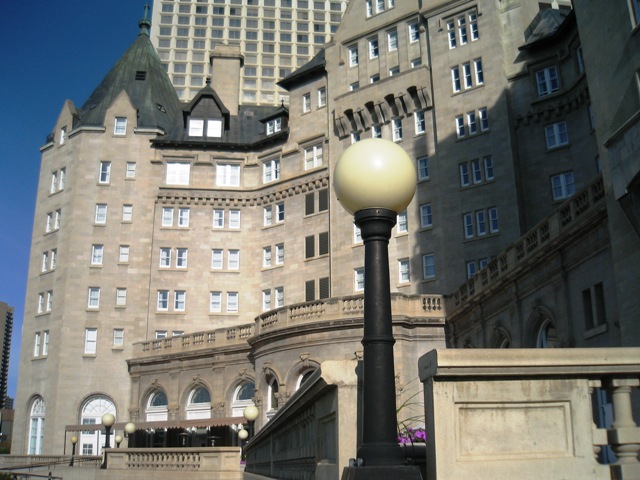
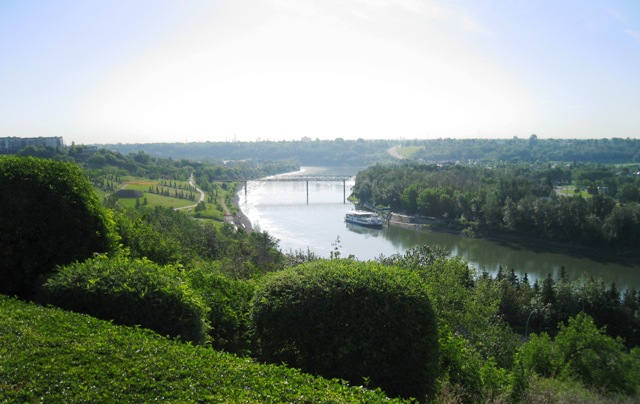
Just finished the second in a pair of speeches, the first in Calgary, the second in Edmonton, as part of the 9th annual Sustainable Building Symposium (http://www.sustainablebuildings.ca) . The event is now hosted by the Alberta Chapter of the Canada Green Building Council (http://www.abcagbc.org). The Edmonton event was held in the Fairmont Hotel Macdonald, which is an extraordinary pile, with gargoyles, apparently – though the thing’s so high it would be hard to see them. But they protect the entrances, it is said. The ‘Mac’ once had a modern extension built, that led to the two buidings being unkindly described as “the Mac and the box it came in.” The extension was later demolished. Still find the built environment fascinating – and a lot has happened in the field since last I looked. One of the most interesting sessions, which followed mine in both instances, was by Chris Corps, who aims to green the valuation professions (http://www.rics.org/Builtenvironment/Sustainableconstruction/biz_greenvalue1105.html). Highly thought-provoking.
Thanks to a last-minute intervention by Jed Emerson, I also got to meet up with Stephanie Robertson, who I last saw when she was working on social return on investment (SROI) at London Business School (http://sroi.london.edu). She now has her own firm, based in Calgary, working in the same field (http://www.simpactstrategies.com). She also had me invited me to sit in on a lunch celebrating the Top 100 Women in Western Canada, organised by the Women’s Executive Network (http://www.wxnetwork.com/). Slightly afrighting, since there only seemed to be two or three of us men in a sea of hundreds of women – and the table I was at was talking about how they had auctioned off the men at a recent meeting. Happily, it proved that they only auctioned off the bachelors.


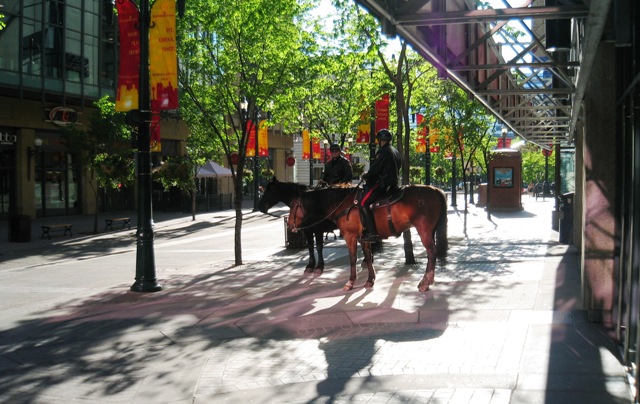
Mounted policemen, Calgary


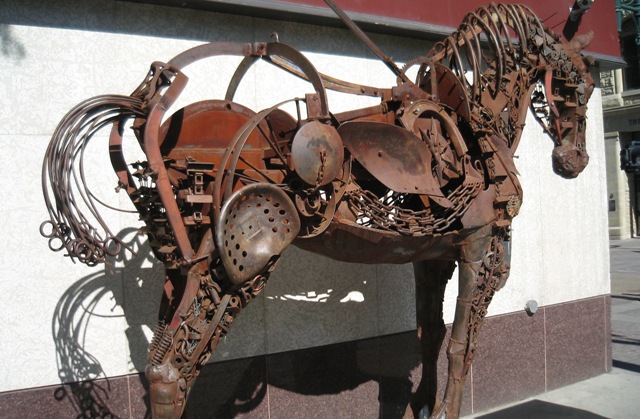
Equine sculpture


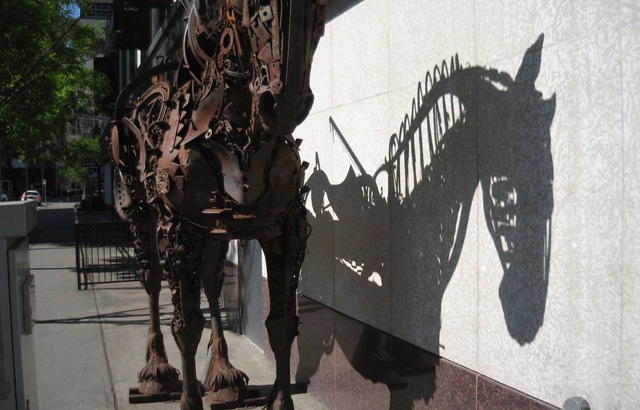
Equine sculpture and shadow


Spot the gargoyles: Fairmont Hotel Macdonald, where the second GBC event was held


View from hotel

Friday, May 26, 2006

LOOKING FOR AN ASSOCIATE DIRECTOR

Every so often, SustainAbility takes a big jump forward. We did it with our name in 1987, we did it with green consumerism, we did it with reporting, we did it with the triple bottom line. We did it when we started recruiting international team members (Peter Zollinger and I had dinner last night with Shelly Fennell, one of our two American directors in the days before we had a US office), we did it when we expanded into the US (with offices in New York, Washington, DC and San Francisco, now consolidated in DC), and we are doing it again with our growing range of activities in the emerging economies space. I think we will also do it with our new Skoll Program (http://www.wwf.org.uk/news/n_0000001811.asp) – for which we are currently looking for an Associate Director (http://www.sustainability.com/insight/article.asp?id=481). And now, after a two-day strategy meeting with six colleagues, I am increasingly confident that we may be on the verge of taking a big leap forward once again – hopefully in time to coincide with our twentieth anniversary next year. Sense of an accelerating realignment in the stars …

Wednesday, May 24, 2006

WWF COUNCIL OF AMBASSADORS 1

Across this morning to 1 London Bridge for my first meeting as a member of the WWF UK Council of Ambassadors. Professor Norman Myers, a long-standing friend and colleague, kicked off with a review of progress (not much of it) on removing the perverse government subsidies that fuel many ecologically devastating activities around the world (http://www.amazon.com/gp/product/1559638354/002-3079020-3832868?v=glance&n=283155). Among the other presentations, one that really sticks in my mind was that by Emily Lewis-Brown on one terrifying possible impact of climate change that has been getting a growing amount of coverage in the scientific press recently: the role that carbon dioxide plays in acidifying the oceans, potentially destroying the world’s coral reefs and many calcium-based life forms on which most marine food-webs depend (http://www.wwf.org.uk/news/n_0000001811.asp).

Tuesday, May 23, 2006

IDENTITY PARADE

After a busy day, I trundle across to Southwark police station for an identity parade. Getting into the place is like getting into Fort Knox, as though they’re expecting the IRA to have a crack at them. Or maybe it’s the Yardies. Four of us have to (separately) watch a video of nine different suspects, to try and identify a criminal. When I was told that we would each see nine different men, all chosen to look very much like the suspect, and given that I only saw the man for a few minutes in the dark last December, I felt it was going to be an impossible task. Weirdly, I recognised him as soon as his picture came up.

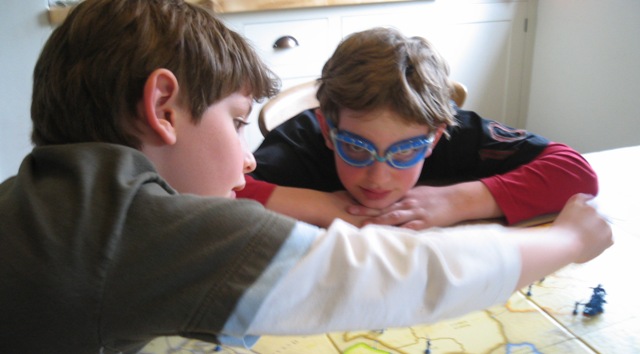
His modus operandi is to approach people in the street and ask for money in a variety of ways. When I came across him, he had stalled his car across the traffic in Barnes, and told me that his wife – there was a girl in the car – was pregnant, on her way to hospital, had left her purse at home, and they had run out of petrol. He offered to give me her earrings as surety, but – pretty much suspecting that this was a fraudster – I gave him what I had in my pockets and told him where to find a gas station. Then I watched as he started stopping people in cars (I had been walking home) and repeated the trick. I waded in and told them what was going on.

What really got under my skin was that he was trading on people’s good will – and, in the process, eroding social capital, reducing the chances that people would help out others in future. Initially, I thought the trip across to the police station was going to be a waste of time, but when I heard other people’s stories – when finally we could talk to one another – I was happy to have taken part.

Sunday, May 21, 2006

CAROLINE CAPTURES ELAINE

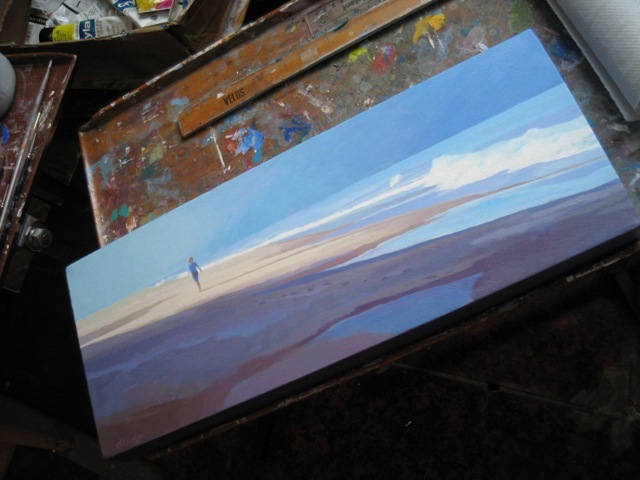
One of the paintings my sister Caroline (http://www.carolineelkington.net) had done since last we were in Little Rissington was of Elaine on Cape Cod – here she signs it. Captures Elaine’s spirit nicely, receding into the blue. It returned with us to London.


Caroline Elkington


Still life on Caroline’s window-sill


Elaine on Cape Cod

HILL HOUSE IN THE RAIN

A wonderful weekend with my parents. Herewith a few incidental images of Hill House, Little Rissington, as the rain fell steadily today. One of the things we did yesterday was watch a recently made film on the Russian exploits of Tim’s 134 squadron in Russia in 1941, during WWII – something that both the Russians and the Department of Defence have on occasion said – for reasons best known to themselves – never happened. However, there is plenty of evidence, for example see http://lend-lease.airforce.ru/english/articles/sheppard/hurricanes/index.htm. Also saw a fair amount of the next-door-neighbours, my sister Tessa, her husband John, and their sons, Gil, Rory and Gabriel.


Not-quite-full-frontal


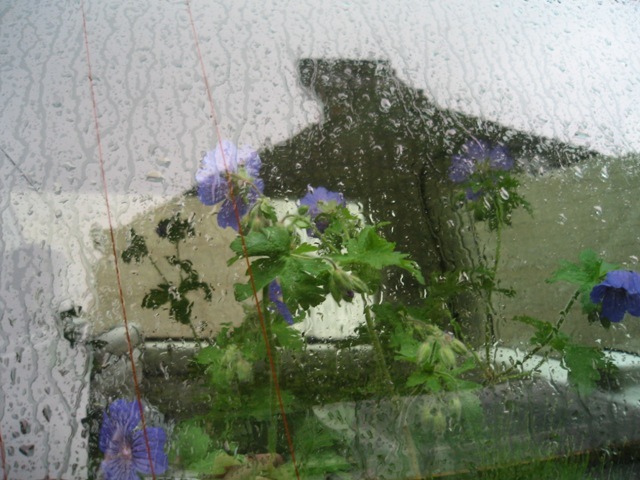
End of Hill House reflected in Volvo rear window, with geranium en route to London inside


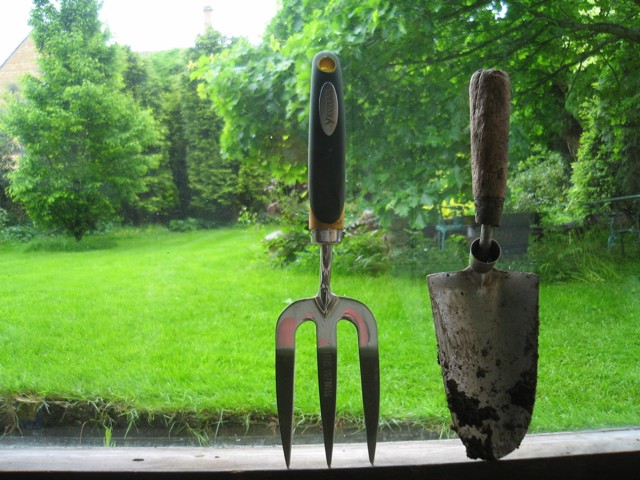
Tools


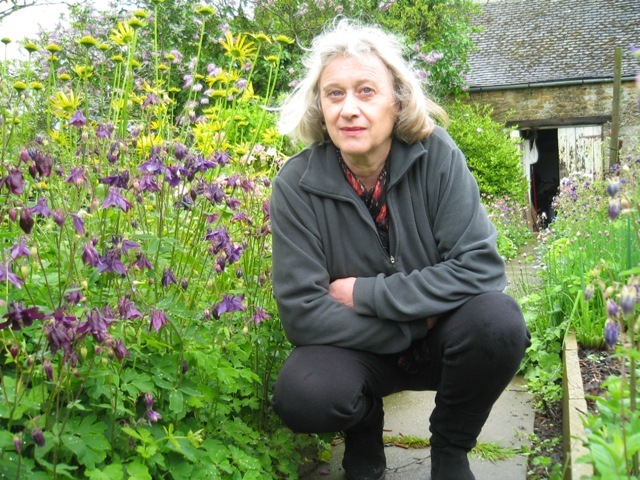
Elaine in the beyond-the barn garden


Reflection in the glass of one of Caroline’s paintings


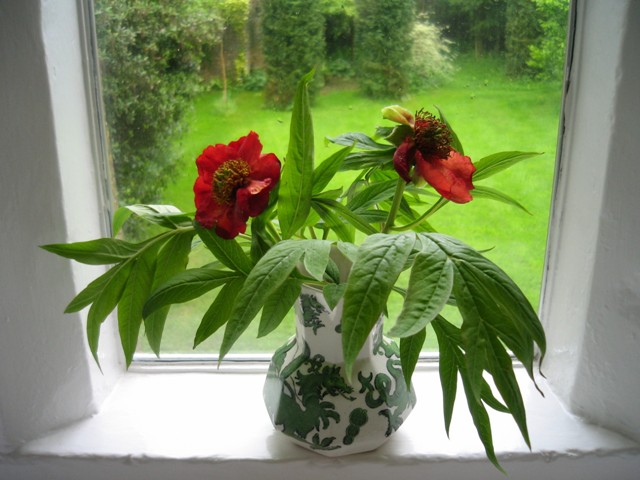
Wilted peonies


Wilted peonies 2


Two of three nephews next door: Rory and Gil

Thursday, May 18, 2006

FORTUNE BRAINSTORM

Took part in a small dinner (20 people) this evening in Soho, organised by Fortune magazine, which I have read for well over 20 years. The event was hosted by 4-5 senior Fortune editors and was part of the build-up to Fortune’s Brainstorm meeting in Aspen (http://www.timeinc.net/fortune/conferences/brainstorm06/overview.html). Others there included Stelios Haji-Ioannou (founder of easyJet and easyGroup), Laura D’Andrea Tyson (Dean, London Business School), Vindi Singh Banga (who runs the Unilever foods business), and Louise Blouin MacBain. Among other things, her foundation (http://www.ltbfoundation.org/) is focusing on is the ‘new biology of mind’. Found myself sitting alongside her, and it all ended up with her offering to sell me her brain …

But the really interesting thing was the way the sustainability issue came up time and again, e.g. around jet fuel taxes, with climate change and current US politics a continuous leitmotif. My increasingly strong sense is that the whole sustainability agenda is coming up the mainstream agenda like gangbusters – a fact likely to be reinforced by next year’s 20th anniversary of the Brundtland Report.

Wednesday, May 17, 2006

SUSTAINABLE PALM OIL

Back late from a dinner hosted by the Malaysian palm oil industry, which is increasingly nervous about campaigns targeting it for habitat destruction, including putting at risk orang-utan populations. Key question, given that the Malaysian industry is working fairly hard to address the relevant issues, is whether Malaysia will feel able to diffentiate itself and its products from less-well-performing countries, such as Indonesia. Seems little or no appetite for that, but unless the consumer can distinguish and choose between products on an informed basis, everyone in an industry gets tarred with the same brush.

The international industry has a sustainability initiative, the Roundtable on Sustainable Palm Oil (http://www.sustainable-palmoil.org/), though my sense is that a great deal more needs to be done if the industry is engage successfully with the wider world. It’s a long time since I was taken around an oil palm plantation, courtesy of long-time friend and colleague Teoh Cheng Hai, then of Golden Hope Plantations. They had just stopped burning old palm trunks, switching to composting. A real pioneer – indeed, I first met them when they, like us, found themselvs winners of UN Global 500 awards. The thing I best remember from that visit, apart from some extraordinary elongated fish swimming around a huge glass tank (but still far too small for them) in a plantation manager’s home, was the ‘winkling’ – a term used for fishing around with hooked lengths of wire in holes in living palm trunks, hunting for grubs that damage the palms – and which would once have been dealt with by the spraying of chemical insecticides.

During the evening, I enjoyed a conversation with Lord (Dennis) Rogan, a textiles entrepreneur, about flax, jute and Northern Ireland. He was energetically involved in the business of making jute sacks until polymers came along and stole the market. I well recall, as a child, playing in and around the old, disused but still flooded flax ponds near the farm where we lived in Northern Ireland. Odd sense of the large-scale rise and fall of great industries, of the processes of creative destruction. At one stage, the evening’s convenor, Roger Hayes, brandished today’s newspaper front pages declaring Britain (accurately) to be in the midst of a gathering drought crisis. All the while, the rain thumped down outside the French windows in the Reform Club.

GE, PEAK OIL & ROLLING STONE

As the mainstreaming of sustainability thinking begins in earnest, with a rapid acceleration likely on issues like climate change once President Bush leaves office, US companies like Wal-Mart have been making public announcements and commitments that would have been inconceivable a few years back. Was talking to a US supplier of Wal-Mart’s yesterday who said that the giant retail company is pulling key suppliers into a growing number of ‘sustainable value networks’, and squeezing them for everything they know about the subject.

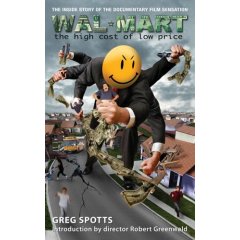
As it happens, I had bought the book Wal-Mart: The High Cost of Low Price (http://www.amazon.com/gp/product/1932857249/002-8165416-0433651?v=glance&n=283155) a few days back, in Docklands, but haven’t got around to reading it yet. Suspect it will have little good to say about the retail colossus, though some might just see Wal-Mart as a longer term means of getting affordable green products to the poor – and, simultaneously, of driving sustainability-related thinking through supply chains.

Meanwhile, I had begun to suspect that General Electric’s much-vaunted ‘Ecomagination’ initiative was more puff than substance, based on the company’ reactions to our queries, but today’s news in the Financial Times was more encouraging. Sales of products and services grouped under GE’s Ecomagination brand rose from $6.2bn in 2004 to $10.1bn in 2005, and the company’s backlog of advance orders has more than doubled to $17bn. As GE CEO Jeff Immelt put it: “With oil prices and other energy costs surging and water scarcity concerns spready, Ecomagination makes even more sense for our investors than it did a year ago.”

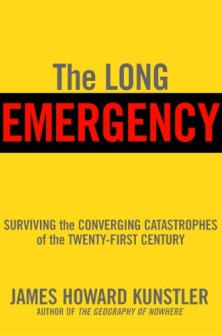
The market demand for such technologies and services can only grow. The sort of drought conditions now affecting south-east England represent only part of the story. On the flight back from JFK the other days, I read The Long Emergency, by James Howard Kunstler (http://www.amazon.com/gp/product/0871138883/002-8165416-0433651?v=glance&n=283155). Very frightening, if you believe – for example – his forecast that we will see the collapse of suburbia in the US as oil prices climb inexorably. Possible to imagine generations of suburbanites becoming embittered, fractious enemies of the state in the same way that the people attracted out into states like Montana by the promise of railway-led property booms became stranded and, in some cases, joined the sort of militias that provided the context for things like the Oklahoma City bombing.

Kunstler first caught my attention when he covered the theme of ‘Peak Oil’ and its likely impacts last year in Rolling Stone (http://www.rollingstone.com/news/story/7203633/the_long_emergency/). I also bought the magazine’s 1000th issue while in the US, partly because of the extraordinary holographic cover this time around, part Beatles and Sergeant Pepper’s Lonely Hearts Club Band, part Stones and Their Satanic Majesties Request. Hard to imagine the Sixties happening without the electricity produced by all those oil-fired power stations that were busily helping us gobble up – to date, according to Kunstler and others – half of the oil ever formed on Earth. And, as demographic and lifestyle trends drive ever-higher energy demand, the next half of that oil will be infinitely harder (on average) to get at and extract, making the net energy value much lower. Fasten your seat-betls.

Sunday, May 14, 2006

FOX RED, PARAKEET GREEN

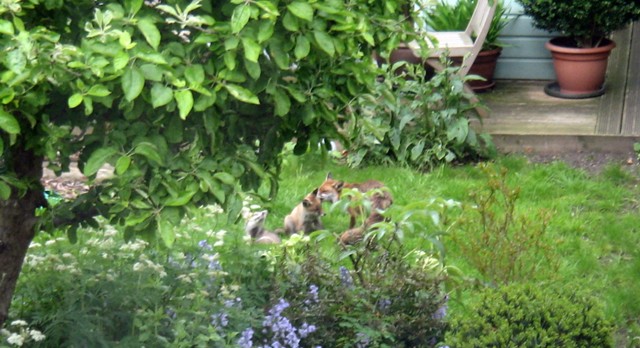
Working away on the book, my eye was repeatedly caught by movement at the bottom of the garden. As a flight of some 20 brilliant parakeets did a southward flypast, a slightly grizzled vixen suckled and played with her three cubs on our somewhat rampant lawnlet. The runt of the litter then spent 15 minutes or so trying to vault off our compost heap onto the wall to follow the rest of the family, failing repeatedly, mainly falling on its head – and looking increasingly dazed. I know the feeling. Now seems to have made it. Small dramas as I write about the risks of WWIII …


Through a closed window, not darkly but certainly fuzzily – maximum zoom on tiny Canon

RUSSIAN REUNION


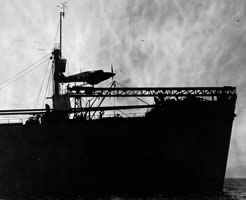
CAM ship and Hurricane

Somehow, Russia is in the air at the moment. For example, I received an application from a Russian earlier today for one of the new posts at SustainAbility, this one an Associate Director role designed to help carry forward our Skoll Program on social entrepreneurship. And no doubt the Russians have plenty of words for snow and icy conditions (see ‘I STAND CORRECTED IN THE SNOW’ entry, below). Freezing conditions were a key part of the challenge for RAF units fighting in Russia during WWII, a fact of which I was reminded this week when Gaia and my youngest sister Tessa accompanied my father, Tim, to the annual event at the London memorial to the Soviet war dead – some 27,000,000 people.

The main reason for his turning up: among other things, Tim served on the WWII CAM ships that helped protect the convoys taking munitions and other supplies around to Murmansk and Arkangel (http://www.liverpoolmuseums.org.uk/maritime/exhibitions/boa/camships.asp). The pilots’ role: to fly Hurricanes off the merchantmen to defend the convoys in waters where the life-expectancy of downed pilots could be counted in seconds, owing to the freezing conditions.

Another reason for his attending: Air Commodore Philip Wilkinson, RAF Retired, and ex-Defence Attache in Moscow, was launching his film on the Russian Wing’s exploits, on the back of the ceremony. Among other things, the low-budget film features a sequence of computer animation showing Tim’s Hurricane taking off from an aircraft carrier and flying inland over the northern coast Russia – see September 14 2005 entry.

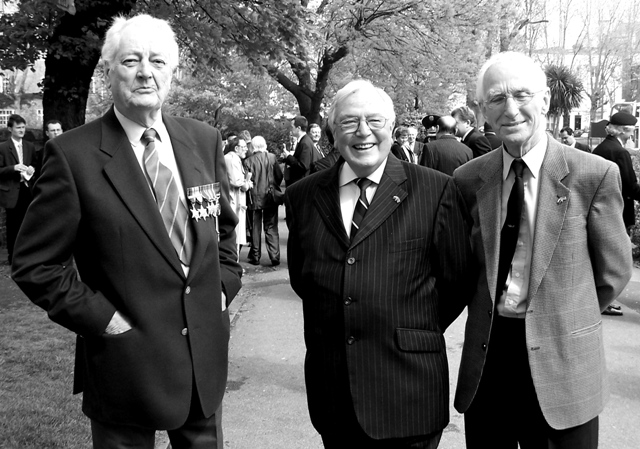
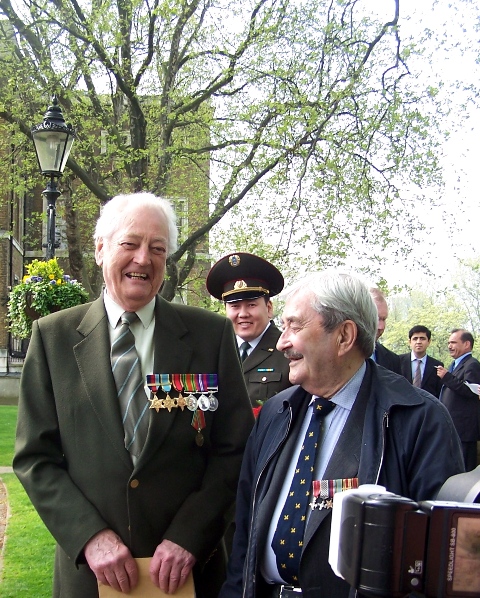
And a couple of the photos Gaia took:


Tim (left), Peter Fearn (ex-RAF; Director of Broquet International Ltd, which markets fuel catalysts developed in the Russian campaign; and Trustee of the Soviet Memorial Trust Fund) and Percy Durham (Hurricane ‘fanatic’ and archivist).


Tim (left) and Peter Knapton, an NCO pilot in Tim’s flight in Russia, subsequently commissioned, serving in Middle East and Burma (where they met again). Later a Group Captain and Air Attache, Moscow.

Saturday, May 13, 2006

ENTER THE AVOCADO

It’s odd how powerful the memories surfaced by tastes and smells can be. Tonight it was avocados. I still remember when we were small – apparently it was 1961 – and my father, Tim, flew in from the independence celebrations in Nigeria, where the British contingent had been headed by Princess Alexandra. The reason I remember this now, since he was often flying in and out, was that he brought back a crate of ‘avocado pears’ – something I hadn’t seen before. My mother, Pat, consumed a substantial number the first day, partly because she was pregnant with my sister Tessa, and partly because the flight had been delayed on the way back, while a new engine was flown out, and they were in urgent need of polishing off.

Exotic then, avocados are now mainstream, though those we had at supper this evening with Adam Ford (who taught both Gaia and Hania at St Paul’s) and his partner Ros were particularly delicious. Tiny: the quail’s egg version of an avocado, from Tesco, apparently. Which had us discussing Adam’s sister Anna’s recently announced appointment to the board of rival J Sainsbury. Last weekend, when I was still in the US, the Sunday Times had done a piece colourfully titled ‘I’m a Celebrity – Get Me on the Board.’ In contrast to the implication of the title, the article underneath noted how valuable such widely experienced people can be on boards as non-executive directors. I particularly liked the quote attributed to the Chairman of one supermarket rival: “She’ll be a great director, representing success and stewardship. I wish I had thought of it first.” How long, I wonder, before such appointments – like the avocado – go mainstream? Much, of course, will depend on how this round of appointments works out.

I STAND CORRECTED IN THE SNOW


Source: iStockphoto

I’m not sure whether I stand corrected exactly, having used the phrase, “But as people like the Inuit have long known and acknowledged via their kayak-loads of words for ice and snow, language can powerfully shape thinking – and perhaps even influence our species’ chances of survival.” But I did receive a fascinating comment today from Ritika Nandkeolyar on the assertion, which appears in our latest piece in Grist (http://www.grist.org/biz/fd/2006/05/09/lee/). “While reading your otherwise thought-provoking piece on the corporate responsibility movement,” she says, “I noticed that you unwittingly perpetuated a linguistic legend.” She goes on to say that the notion that the Inuit have 50, 100, 150 or whatever words for snow is erroneous. She also sent the following links, just in case you’re interested …

http://itre.cis.upenn.edu/~myl/languagelog/archives/000405.html

http://www.ecst.csuchico.edu/~atman/Misc/eskimo-snow-words.html

The argument seems to be that instead of having 50, 100 or 150, they potentially have zillions – which puts one in mind of the old adage that every one of the zillions upon zillions of snowflakes is different. So we probably do need rather a lot of words to do them justice. The second link will take you to a fascinatingly detailed analysis of some of the words the Inuit do use, plus the following as a starter-for-10 of some of the words and phrases Tony Woodbury hears us Anglos using:

– avalanche
– blizzard
– blowing snow
– dusting
– flurry
– frost
– hail
– hardpack
– ice lens
– igloo (Inuit iglu ‘house’)
– pingo (Inuit pingu(q) ‘ice lens’)
– powder
– sleet
– slush
– snow
– snowflake
– snowstorm

But that’s just child’s play. Not surprisingly, the skiing folk also have huge numbers, it seems. Indeed, one piece I saw on the Web (http://www.islandnet.com/~see/weather/journal/2002/snowwords.htm) suggested they have recently coined at least 70, including ‘sugar powder,’ ‘champagne powder,’ ‘mashed potato’ (mushy, wet snow so heavy a shovel stands up in it), ‘boilerplate’ or ‘bulletproof,’ and – weirdly – ‘frozen chicken heads,’ “which forms when spring slush freezes.”

So, I’m older and slightly the wiser.

Thursday, May 11, 2006

DELTA: AIR CHAFF

If my flight from Boston’s Logan airport to New York’s JFK yesterday was anything to go by, Delta will go bankrupt – and deserves to do so. No-one envies the airlines the challenge of recovering from their post 9/11 travails, but difficult times weed the wheat from the chaff. It turned out that I was flying Air Chaff yesterday. We actually ended up in Atlantic City, because the failure of the aircraft’s ice-removal systems meant we couldn’t fly through the clouds over JFK. Once in Atlantic City, it seemed that Delta – or their agents – were determined to do everything possible to make things difficult for their customers. After waiting around five hours in figurative darkness, we were bundled into vans and buses (a gas-guzzling Sherman of a limo in my case, alongside three others, including a woman who is involved in developing AWACS-like aerial espionage systems and should have been on her way to NATO in Brussels) and driven for three hours, at breakneck speeds, to New York – with the radar detector chiming pretty continuously. Once in JFK, the Delta staff, again, showed their default inclination: they could not have been more unhelpful. Unusually, stranded in JFK for 24 hours, I wish them ill.

Wednesday, May 10, 2006

BOB MASSIE

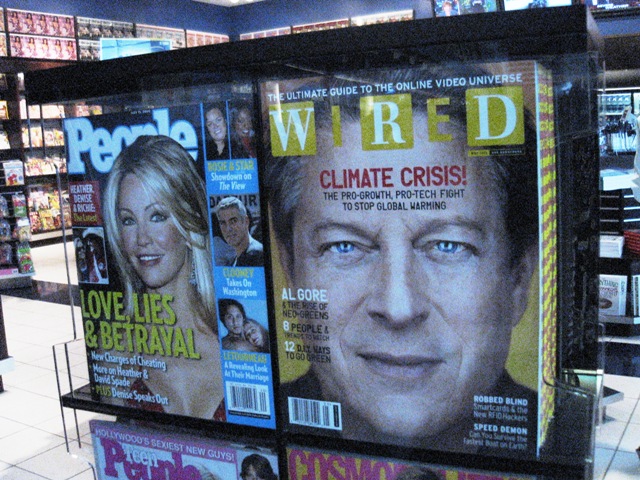
Dropped in on Bob Massie (see March 25 entry), who had also made it to the Harvard event, and his wife Anne Tate, at their home – which was undergoing an energy audit as I arrived. Extraordinarily generative discussion with Bob, then memorable lunch with them both. Among other things, we talked about Al Gore. Later, as I walked through Boston’s Logan airport , I once again saw displays of the Gore cover of Wired, which I had bought a few days earlier. Not too sure about what to make of his positioning cheek-by-jowl, or by-whatever, with what I – perhaps mistakenly – took to be Britney Spears. Then boarded the jet for JFK. And a journey which turned what should have been something like a 12-hour affair into more like a 36-hour affair. But still wildly worth the trip.


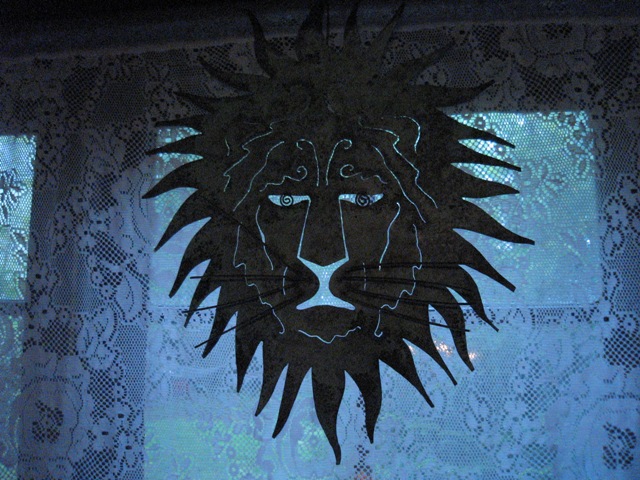
Mask in the Massie/Tate household


Love, lies, betrayal and Gore


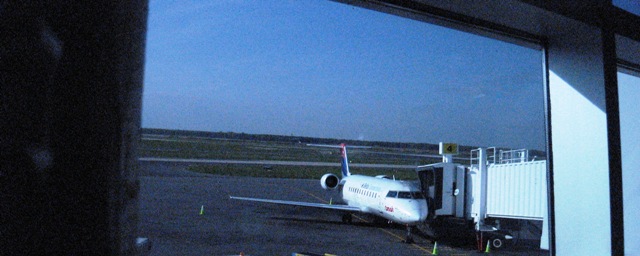
Atlantic City? Weren’t we meant to be at JFK?

IT’S THE ECONOMICS, STUPID

Our latest Grist column, on corporate economic responsibility, is posted at http://grist.org/biz/fd/2006/05/09/lee/index.html

Tuesday, May 09, 2006

“AND YOU HEARD IT HERE AT HARVARD!”

Well, I did my bit for slime molds at Harvard on 8-9 May. I was one of the speakers at a conference held by the Kennedy School of Governance’s Corporate Social Responsibility Initiative (http://www.ksg.harvard.edu/cbg/CSRI/) on the subject of ‘Business and the Millennium Development Goals: New Models of Leadership and Partnership.’ Organised by Jane Nelson (the Initiative’s Director, and a long-standing member of SustainAbility’s Council) and professor John Ruggie (Director, Mossavar-Rahmani Center for Business and Government, KSG and Kofi Annan’s Special Representative on Human Rights), the event drew together leading academics and practitioners from the worlds of business, government and civil society. A wonderful event.

Our session involved my being interviewed by David Gergen (http://www.davidgergen.com/), with responses from Gib Bulloch (Director, Accenture Development Partnerships) and Fernande Raine (Executive Director, Carr Center for Human Rights). All very grown up, and I probably spoiled everything by revealing, once introduced, that thanking Gib publicly for warning me as I was about to take to the stage that I had a blob of cream (from the strawberries and cream served at the lunch that we had hastily gobbled to ensure we were ready for the debate) on my ear-lobe. Happily, this generated a degree of hilarity in the audience, as did David’s quickfire response – when I invited the audience to let us know of any other flaws in the panellists – that I had peanut butter on the other lobe …

When, some time later, we were ending, with the discussion focusing on styles of leadership, I recalled that David had earlier referenced the success of film-makers in making penguins sexy, with the film The March of the Penguins (http://wip.warnerbros.com/marchofthepenguins/). He slyly used this as a way to suggest that Hollywood might even contrive to make Al Gore sexy. But I noted that most of the political and business leaders I met probably didn’t think of themselves as penguins, but as lions or eagles. By contrast, I suggested, an appropriate metaphor and model for 21st century leadership is the slime mold, an old favourite of mine (see, for example, http://www.ucmp.berkeley.edu/protista/slimemolds.html).

Slime molds spend much of their lives as independent cells, but periodically come together and self-organise into strange fruiting bodies that collectively sporulate, and then disengage and go their separate ways again. That is a single species at work, I commented, whereas what we need now are multi-species variants, with business, government and civil society actors learning how to work in this way.

Later still, summing up the event, John Ruggie happily came back to my slime. He followed Rosabeth Moss Kanter, who had delightfully argued that corporate social responsibility is little more than “lipstick on a bulldog.” He noted that we had heard a number of metaphors during the course of the day.

The first he mentioned came from Travis Engen, President and CEO of Alcan – and also Chairman both of the International Business Leaders Forum (IBLF) and the World Business Council for Sustainable Development (WBCSD). Engen had told the story of a blind horse, Betsy, that had to tow a car out of a ditch. The gist of the story was that the farmer who owned Betsy went to one side of the blind animal and said (I paraphrase), “OK Dobbin, get ready to pull,” then went around to the other side and said, “Get ready Silver, and off we go.” And old, wobbly-kneed Betsy dragged the car out – because she thought she was doing it as part of a team.

The second metaphor Ruggie mentioned came from Herman Mulder (Co-Chairman of the Group Risk Committee at ABN Amro Bank), who had spoken of how people switched on to the corporate responsibility and sustainability agendas. Again I paraphrase, from memory: “They go in as pigs and come out as sausages – converted.”

And then, finally he strung Rosabeth and I together, noting that the audience had also heard about “slime molds and lipstick on bulldogs.” And, he said, “You heard it here at Harvard!”

Oddly, it felt like progress, of a sort.

Monday, May 08, 2006

THE STREETS OF CAMBRIDGE, MA

Peter Kinder, who I have been staying with in Cambridge (MA), long ago told me that the streets of Cambridge – one of my favourite towns – were laid out along sheep and cow tracks. And Indian trails. Certainly it feels much more convivial than many US grid-based cities. One evening, Peter (a founder of socially responsible investment analysts KLD, http://www.kld.com/) played me a concert of around an hour of some of his extraordinary record and tape collection. One track in particular sticks in my mind, Rivers of Babylon by the Melodions. As, thinking about it, does a Johnny Cash track in which the story ends with various people singing happy birthday to a 20-year-old man as the hangman’s trap cracks open beneath his feet.

As I wandered around the streets of Cambridge, I came across an exhibit celebrating the life of Margaret Fuller, an extraordinary woman (http://en.wikipedia.org/wiki/Margaret_Fuller). Had no idea that she was the great-aunt of Buckminster Fuller, on of the big influences on my own thinking – who I met in Reykjavik in the late 1970s. Had a wonderful time in and out of stores, before heading acros to meet Mindy Lubber of CERES in Boston (http://www.ceres.org). Also met up with Allen White of The Tellus Institute (http://www.tellus.org/).

In addition, made it to two Cambridge clothes shops I always try to visit in Cambridge (The Andover Shop and J. Press) and The Harvard Book Store, where – among other things – I bought a new book by Nancy Jack Todd, Safe and Sustainable World (http://btobsearch.barnesandnoble.com/booksearch/isbnInquiry.asp?z=y&btob=Y&isbn=1559637781&itm=2). The Todds – John and Nancy – were another profound influence on me in the 1970s, via their New Alchemy Institute.


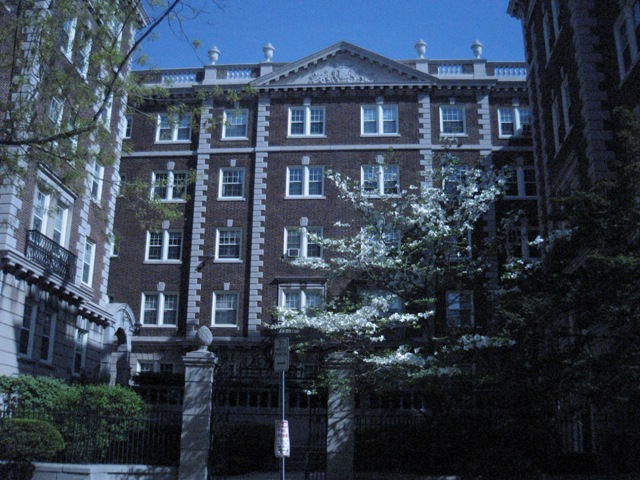
Part of the home-from-home block in which Peter lives


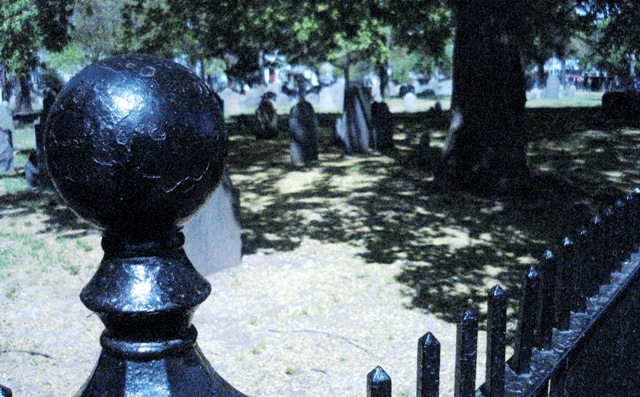
Graveyard in the centre of Cambridge – some of those who helped lay out the city, laid out


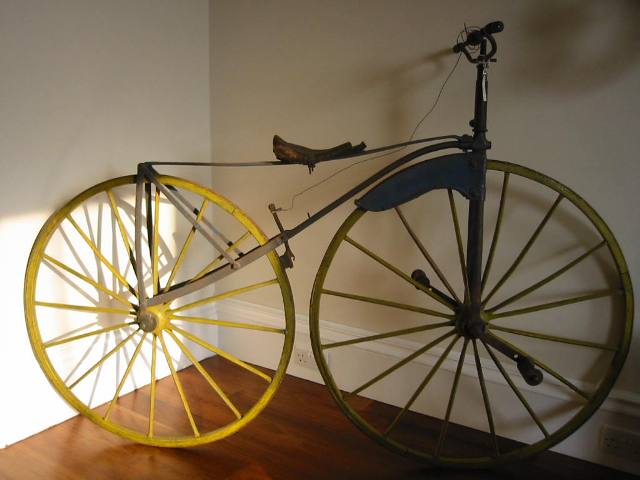
‘Boneshaker’ – a photo I received by email this morning from Fran van Dijk in Edinburgh. Just bought by her husband, Ken. Promptly told various people that I wanted to ride the thing around Harvard, showing Americans what they could have had if only they had not got involved in the Boston Tea Party and stayed as part of the British Empire.


A photo inspired by Fran’s boneshaking image above


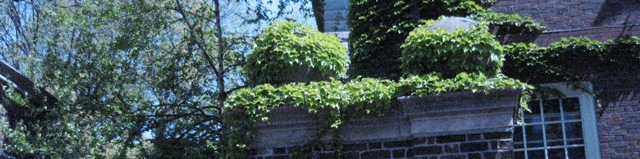
Ivy-covered Harvard balls

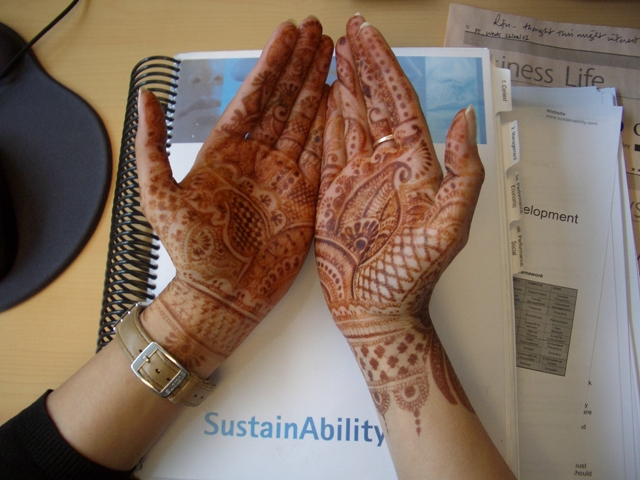
RITU’S HANDS

Ritu Khanna, a member of our London team, just returned from a wedding in India – and her hands struck us all, even me some 3,000 miles away in Cambridge, MA. I think the picture was taken by another team member, Tell Muenzing.

Thursday, May 04, 2006

LUNAR SOCIETY AND CLIMATE CHANGE

A blast from the past. Was called today by Kate Cooper of the Lunar Society (http://jquarter.members.beeb.net/morelunar.htm), which I had thought had shut up shop nearly 200 years ago. They were hugely influential in their heyday in driving the Industrial Revolution, with those attending their meetings having included people like Matthew Boulton, Erasmus Darwin, Joseph Priestley, James Watt and Josiah Wedgwood. Among those that Wikipedia says corresponded with the Lunar folk were Antoine Lavoisier and Benjamin Franklin, who currently lies beside me as I sleep – in the form of Walter Isaacson’s biography.

The original Lunar Society failed to refresh its membership, ceased to be very active as its members aged, and was eventually closed in 1813. The interesting thing about the call today was that the Society is now plotting to turn the West Midlands, the cradle of the Industrial Revolution, into a carbon-neutral zone. Quite like the idea – and the historical resonance, as in converting the source of a climate-destabilising economic life-form into a sustainability incubator. At a time when cities such as London, Melbourne and San Francisco are switching on to this sort of thing, it will be fascinating to see if the West Midlands still has what it takes to make the right sort of world history.

FAUNA & FLORA INTERNATIONAL

Interesting lunch today, where Annelisa Grigg (Director of Corporate Affairs) briefed the SustainAbility team on the work that Fauna & Flora International has been doing with business. They are the longest-established international wildlife conservation group, founded in 1903 (http://www.fauna-flora.org/). Fascinating how many NGOs have moved into the engage-with-business space, though the biodiversity area is still under-served. Like a growing number of other NGOs, F&FI have been evolving guidelines to steer their engagement with companies, a trend we investigated a while back in our report The 21st Century NGO (http://www.sustainability.com/insight/research-article.asp?id=51).

As the sustainable development agenda has moved – like a snowball – to embrace wider social and economic issues, it sometimes seems that environmental issues (other than climate change) are being buried. Over the years, our triple bottom line logic has been a key driving force in all of this. Ironic, really, since it was wildlife that brought me into this space in the first place – but we are now doing our best to re-engage with the world of biodiversity, one reason why I accepted a recent invitation to join the Council of Ambassadors at WWF UK (http://www.wwf.org.uk/core/about/aboutwwf.asp).

Monday, May 01, 2006

OBITUARIES

Having always adored obituaries, was delighted to receive from Philippa Moore (until recently a member of our US team) a copy of Marilyn Johnson’s The Dead Beat (HarperCollins, 2006), a week or two back. Due to travel and writing pressures, I have only just begun reading the book, but it’s a stunning read, an insider’s view of the obit biz, sub-titled Lost Souls, Lucky Stiffs and the Perverse Pleasure of Obituaries.

Today, the papers covered the death of J.K. Galbraith, aged 97. Still remember reading his The Affluent Society all those years ago, as I struggled with economics, perhaps a decade after it was published in 1958. Not really sure how much of it I really took in, despite JKG’s wonderfully clear writing. The obituary in The Times today recalls his memorable response to proposals for tax cuts in the US during 1965: “I am not quite sure what the advantage is in having a few more dollars to spend if the air is too dirty to breathe, the streets are flthy and the schools bad.” On reflection, maybe he had more influence than I remembered – since it was the failure of economics as then taught to address such issues in 1967-68 that persuaded me to give up and switch to other subjects.

April 2006

John Elkington · 30 April 2006 · Leave a Comment

Thursday, April 27, 2006

JANE JACOBS – ALMA MATER


Source: http://www.niagaraindiefilmfest.org/http://johnelkington.com/wp-content/uploads/2006/04/JaneJacobs2.jpg

One of the dangers of reading obituaries first thing in the day is that you find out early on that people you value highly have left the stage – and there’s a risk that that can sour the rest of the day. Sometimes, though, it’s a matter both of regret and celebration, and that is certainly true of today’s announcements (The Times, Financial Times) that Jane Jacobs has died, aged 89. Very, very few people have had such a profound impact on my thinking, even though I suspect she isn’t covered in my ‘Influences’ section on this website. Partly that’s because such influences only become clear in hindsight.

Can only agree with the FT’s obituarists, Martin Wolf and Jeff Pruzan, that Jacobs was “a genius – no other word will do.” Her book The Death and Life of Great American Cities still sits on our bookshelves, dating back to 1961, though I only got around to reading it in 1972. At the time I was starting an M. Phil. at the School of Environmental Studies, University College London. Whatever the UCL folk intended, the initial impact of their teaching was one of “here’s the planning system – and here’s how you will operate it.” Jacobs, by contrast, launched her own counter-revolution to top-down planning, building on her personal experience of New York, particularly Greenwich Village.

In retrospect, it was no accident that my eventual thesis, which came in at book-length (80,000 words instead of the 20,000 allowed), pretty much split the examiners, several of whom disputed whether the subject had anything at all to do with planning-as-then-practised. Exactly. I had looked at the lessons that could be learned from community-built-environment relationships about how to regenerate ageing urban infrastructure in places like London’s Covent Garden, Amsterdam (where I was reminded last week of the way-back plans to turn the city’s canals into roads, only turned down by a single vote), and Venice, rather than razing older communities and starting again with (not-necessarily-by-design) inhuman styles of development. More than anyone else, Jane Jacobs started that particular snowball rolling and I found myself entrained.

Truly, she was alma mater (nourishing mother) to my growing fascination with cities as organic entitities, which in turn led me to a close friendship with planner-turned-urban-entrepreneur Mike Franks of Regeneration. And, given that (as Wolf and Pruzan note) the first 80 pages of Death and Life were devoted to the crucial importance of sidewalks in defining urban quality of life, it is perhaps not surprising that my first job on leaving UCL was with John Roberts and TEST, where we spent several crucial years focusing on – among other things – ‘improving the pedestrian’s environment’ and pedestrianisation.

In terms of my long-term fascination with sustainability, it’s interesting to note her key distinction between expansion and development. The Times quotes her as follows: “They need each other. But they aren’t the same thing. I think perhaps that’s the most important thing I have worked out. And if I am thought of as a great thinker, that will be why.”

It strikes me that in my slides of the three great waves of societal pressure on business since 1960, I routinely show WWF and Amnesty being founded in 1961 and Rachel Carson coming in with Silent Spring in 1962. Jane Jacobs must be in the next edition. Indeed, my oversight is reason enough to have another go. Although I never had the privilege of meeting her, it’s a bit like losing another grandmother or godmother.

Sunday, April 23, 2006

AMSTERDAM AND ENVIRONS

We flew back earlier this afternoon from Amsterdam, where after our time with Wouter van Dieren and his IMSA colleagues we moved across the city on Friday to stay with social entrepreneur Jeroo Billimoria and her husband, Bertjan. Among other things, we had lunch in a cafe watching the myriad versions of cycles go by – I wish I had had one of the combo-cycle-wheelbarrows that now feature so prominently in the Amswterdam streetscape when Gaia and Hania were small. Next,we visited Jeroo’s canalside offices to meet colleagues from her two social enterprises, Child Helpline International (http://www.childhelplineinternational.org/index.php) and Child Savings International (http://www.childsavingsinternational.org/index.php). After dinner, the four of us took a spin around the historic core of the city.

Yesterday, Saturday, Bertjan and Jeroo drove us south to see the windmills of Kinderdijk. Then we looped back via Gouda, where some of the stained glass in St John’s Church (De Sint Janskerrk) really took my breath away, particularly the window showing the capture of Damietta. Apparently this single church now contains fully 50% of the 16th century stained glass remaining in the country. A choir was practising as we walked around, adding to the charm.

On the way to Gouda, I had brought up Admiral van Tromp (http://en.wikipedia.org/wiki/Cornelius_Van_Tromp), who I recalled affixing a broom to his mast and threatening to sweep the English from the high seas. As it turned out, he didn’t manage the trick, but (semi-miraculously) it turned out that we were just 15 minutes from his amazing house, built like a ship, sailing a moated sea. Bertjan detoured to show us. In the evening, we had dinner in a tapas restaurant on the canal in Utrecht and discussed the future.

Then, earlier today, J & B whisked us south to the IJsselmeer and out across the causeway to the former island of Marken, to see the beautiful little wooden houses of the fishing village (http://en.wikipedia.org/wiki/Marken). Next, back to Amsterdam for lunch with social entrepreneur David Rosenberg and his wife Isabel. David is the man behind Utz Kapeh (http://www.utzkapeh.org/index.php?pageID=109), a worldwide certification program that sets the standard for responsible coffee production and sourcing.

Utz Kapeh means “good coffee” in a Mayan language, with the focus here on assurance of social and environmental quality in coffee production. One area we discussed: the ways in which David and his colleagues have been working to address concerns that their approach might conflict with standards adopted by the Fairtrade movement (http://www.utzkapeh.org/index.php?pageID=145&showItem=95&filterCat=A,B,C,D). Key thing, though, for someone who has struggled somewhat to acquire a taste for fair trade coffees, is that the Utz Kapeh Ethiopian coffee is stunningly good.


I wish I had had one of these …


Elaine on Jeroo’s railway-platform-cum-sofa


One of many windmills at the Kinderdijk World Heritage site


No brooms in sight: Admiral van Tromp’s extraordinary, ship-shape home


The Capture of Damietta window, St John’s Church, Gouda


The village of Marken, in the IJsselmeer


Marken 2


Incipient Hummerization of Marken


Jeroo and Bert-Jan

Friday, April 21, 2006

MORE VAN DIEREN JUBILEE PHOTOS

Some more photos of the Wouter van Dieren Jubilee Symposium yesterday, taken by an IMSA photographer:


God knows what we’re voting on, but (third from left, front row, between Wouter and Ashok Khosla) I’m happy


Dennis Meadows, me, Wouter and Jan Marijnissen (Parliamentary and Party leader of Socialist Party)


Wouter works the audience


The gonging

Thursday, April 20, 2006

WOUTER VAN DIEREN

Yesterday, Elaine and I travelled to Amsterdam to celebrate the sixty-fifth birthday of a long-standing friend and colleague, Wouter van Dieren, founder of IMSA (hhtp://www.imsa.nl). In the evening, we went out to Ilpedam for a wonderful dinner in his home, converted from an old barn.

Then, today, I spoke at IMSA’s 20-year Jubilee Symposium at the Royal Tropical Institute in Amsterdam, entitled The Limits: Looking Back and Beyond, as part of an introductory panel session responding to an excellent presentation by Dennis Meadows, providing an update on 1972’s Limits to Growth study. The panel was chaired by Eric-Jan Tuininga and, in addition to Dennis, included Ruud Lubbers, former Dutch Prime Minister, and Jan Marijnissen, Parliamentary Chairman of the Dutch Socialist Party.

Three other plenary sessions I found particularly powerful were those spotlighting Ashok Khosla of Development Alternatives (who I visited earlier in the year in Delhi), polar explorer Robert Swan and his team member Marianne Koene, and the final session by Wouter – during which he was surprised to receive the Dutch equivalent of a knighthood from the Queen. Given that he had apparently been thrown out of the Queen’s palace a few years back, though possibly not by the Queen herself, it was fun to watch him momentarily wrestle with whether or not to accept in front of 400 people. In the end, he opted to wear the gong alongside the memory of his palatial eviction.

Elaine and I sat in on a parallel session first thing today led by Wouter’s wife, Jeannette Hoek, focusing on the work that IMSA and the OASE Foundation have been doing on biosaline agriculture (http://www.imsa.nl/uploads/OASE_work_programme.pdf). Then, later in the evening, we were invited to a dinner at an impressive restaurant overlooking the old harbour of Amsterdam.


Wouter is given a can of “meaningfullness”


As the label confirms …


Ashok Khosla and Friedrich (‘Bio’) Schmidt-Bleek


Eric-Jan Tuininga and Wouter – sporting his gong


Interviews as the event winds down


Elaine and I, courtesy of Dennis Meadows

ZOUK CLEANTECH FUND

My toe continues to dip – or be dipped – into new waters. Venture capital firm zouk ventures (http://www.zouk.com) announced today the successful first closing of Cleantech Europe, its second technology fund. Cleantech Europe will be investing in clean technology businesses in areas such as renewable energy, energy storage, emission reduction, nanotechnology, water and recycling. I am now part of zouk’s Cleantech Industry Advisory Group, alongside Cyrille du Peloux (CEO of Onyx Environmental Plc), Firoz Razoul (Chairman Emeritus of Ballard Power Systems and Steven Zwolinsky (previously CEO of GE Wind Energy and now CEO Gas Turbine Efficiency plc).

Thursday, April 13, 2006

GOOD FRIDAY

Week seemed to be mainly spent in writing columns, articles and introductions for other people’s books. On Wednesday evening, though, 12-15 of us drank fond farewells to Judy Kuszewski (off to have another in the human wave of babies that has been washing through SustainAbility in recent months – among them Monty Buckingham and Norah Lee, both of whom were in attendance) and Kavita Prakash-Mani (off on a six-month sabbatical, which will take her around the world).


Rita (Khanna) and Meghan (Chapple-Brown), taken by Tell Muenzing


Frances, with invisible Monty, and Tell

Yesterday, I went across to Oxford, by train, to see Sophia (Tickell). A wonderfully stimulating conversation. We’re starting work on a position paper for our Skoll Foundation program. Met up with Geoff (Lye) afterwards. Then extraordinarily wet rain this morning as Elaine and I went back and forth to Waitrose, then Mark Lee (SustainAbility’s new CEO) and his wife Valerie, plus their daughter Norah and Meghan Chapple-Brown, who is a member of our US team, arrived for lunch.

By early afternoon, the skies were largely blue and we took a walk to the Barnes Wetlands Centre, where the kingcups are in glorious bloom – reminding me of childhood swamp delights in Northern Ireland. And Ireland also brought to mind earlier in the day when I read The Economist’s review of a new collection of poems from Seamus Heaney, District and Circle. This, apparently, is full of images of farm machinery. Given my memories of things like the itinerant steam thresher from 1950s Northern Ireland, images like that of the turnip-snedder (sic) “standing guard/on four braced greaves” conjure up extraordinary images, tastes and smells, not least of digging up turnips in the fields and eating them raw with the aid of a rusty old pen-knife.

Then, this evening, I watched a fascinating BBC program of Salah el-Din’s destruction of an evolving Crusader castle at Jacob’s Ford, a reverse which – the program makers argued – eventually led to the fall of Jerusalem and – in the wake of the much worse defeat at the Horns of Hattin – to the loss of the Crusader hold on the Holy Land. The shots of Krak des Chevaliers in Syria made me want to head back there at least once more before I shuffle off this mortal coil.


Kingcups


Birch trunks


Reflections


Reeds


Meghan spies on the neighbours


Meghan and Norah try my hat on for size

Sunday, April 09, 2006

APPLE WINDOW

Last weekend marked the thirtieth anniversary of one of my favourite companies, Apple Computer, which is locked in yet another round in its long-running legal battle with another of my favourite companies, Apple Corps, set up by The Beatles. Both have been masters of design: I can still remember the moment when I first saw the apple and split apple images on The White Album LPs at university. These days, however, Apple Computer is still storming ahead, and I took the picture below as I stormed past their Regent Street store on my bike a day or two ago.

A glorious way of spotlighting the iPod. But talking to my mother by phone today, we got onto the subject of the Isle of Mann, where my parents are threatening to flee to escape Gordon Brown. My brain linked the Isle of Mann with the T.T. Races, and thence to a song – Riding in the T.T. Races – by George Formby, whose films I adored as a child. I had the track playing on my Mac within seconds, but my mother wasn’t at all impressed. Still connections were made. She remembered going to see the same films as a child, though at a run-down cinema in North Wales, while on holiday. One of the few film stars she was allowed to go and see, alongside Gracie Fields, though songs like When I’m Cleaning Windows must have raised an eyebrow or two.

IRISH CRASH-LANDING

Ireland has been much in the news recently, partly because of the murder of ex-British agent Denis Donaldson, partly because of the death of author John McGahern, and partly because of the impending ninetieth anniversary of The Easter Rising – source of what W.B. Yeats dubbed “a terrible beauty,” but also source of what Geoffrey Wheatcroft (in today’s Observer) describes as an “evil legacy” of the official acceptance of the endless cycles of violence.

But a very different story brought Ireland back powerfully for me when I got back from the Skoll World Forum last week. Elaine had cut me a bunch of clippings from various papers. One of them, from The Times (30 March), described a Ryanair passenger jet – en route from Liverpool to City of Derry – mistakenly landing the previous day at Ballykelly airfield, five miles from its intended destination.

The story reminded me of the morning we went as children to Ballykelly field, a few miles from the farm where we lived, to see the Avro Shackleton my father – Tim – had landed with all its wheels up. The props on the giant four-engined plane were wildly distorted and I am pretty sure I can remember impressive scorch marks along the fuselage. The thing was like a great blue whale that had dropped from the skies. He will probably beat me up because the picture below is of a different model, but at least it gives a sense of the size of the beast. Few things have made me more aware of the extraordinary nature of heavier-than-air flight.

Saturday, April 08, 2006

BARNES BRIDGE

Weird, you live in an area for over 30 years and, creatures of habit, you travel worn trails. Today we walked crossed Barnes Bridge on my impulse for the first time in many a year, and quickly got a sense of why we didn’t do it more often. A ‘Wasteland’ – April being a cruel month – feel to the area, with forlorn, deserted bandstand, but the view back to Barnes was worth it. And the weeping willows were glorious when back-lit by the setting sun.

Made huge progress with the book today. Had been waiting for the spate of overseas trips and high-profile events to slow before turning back to it, but always with the sense that the flood gates would open – as they just have. Another effect of spring?

Monday, April 03, 2006

SALMON TURN BACKS ON MY BIRTHPLACE

The River Kennet, alongside which I was born (see ‘CounterCurrent’ section of website), has been the site of a fairly longstanding salmon restocking programme – started 27 years ago and intended to boost salmon runs in the Thames, to which it is a tributary. In 1993, 338 returning fish were counted, an all-time high (unless, of course, you go back to medieval times, when tens of thousands of salmon ran up the Thames). But, according to today’s Times, since then salmon returns have collapsed, partly because a series of droughts – among other factors – have seriously hit water quality in the Kennet. Long hot summers have cut oxygen levels in the Thames at exactly the time when the highly oxygen-sensitive fish were trying to get upstream. And a series of ‘freak’ summer storms (but likely to be less freakish if climate change really gets into its stride) have flushed large volumes of sewage into the river. Fish from the latest stocking are due to return in 2009: my remaining uncrossed fingers are crossed.

March 2006

John Elkington · 31 March 2006 · Leave a Comment

Friday, March 31, 2006

SKOLL WORLD FORUM

Just back from three extraordinary days at the Skoll World Forum at the Said Business School in Oxford. The results of the Forum can be found on the Skoll Foundation website (www.skollfoundation.org). The video of the session I chaired with Al Gore and David Blood of Generation Investment Management can be found at http://www.socialedge.org/events%20resources/032106/algore.html.

One of the absolute highlights for me was the dinner which followed the Blood & Gore session, out at Raymond Blanc’s Le Maison aux Quat’Saisons (www.manoir.com). He welcomed the guests, not least – I suspect – because they included people like Al Gore and Robert Redford. The food was wonderful, as was the fact that I found myself sitting between Debra Dunn (among other things, a member of the Skoll Foundation Board) and Zohre Elahlian (http://www.global-catalyst.org/who_we_are_2.htm). Later, to my delight, Redford and I got into conversation, and I was enormously impressed by his deep commitment both to environmentalism and to the cause of social enterprise. His own Sundance (www.sundance.org) was an early, extraordinary example which continues to evolve.


Peter Randall-Page sculpture in the gardens of the Said Business School


Sally Osberg and Robert Redford


Blurred but happy – Andrea and Barry Coleman of Riders for Health


Peter Wheeler (FutureBuilders), Muhammad Yunus (Grameen), Ron Grzywinski (Shorebank) and Celso Grecco (a founder of Bovespa, a philanthropic initiative of Brazil’s Stock Exchange)


Jacqueline Novogratz of the Acumen Fund

Saturday, March 25, 2006

OSAMA & BOB MASSIE’S SERMON

In the same evening, I watched Siddiq Barmak’s heart-rending film Osama on BBC4, underscoring the underadulterated evil of the Taliban, and received the following email about a sermon delivered by Bob Massie, a long-standing friend and colleague, who I called this week from San Francisco. It explores the increasingly terrible repercussions in the US of the Bush regime’s response to the Taliban, Osama bin Laden, Saddam Hussein et al. I mistrust religions and generally loathe sermons, but this one struck a deep, deep chord:

Dear Friends,

I am sending you an account of something powerful that happened at our church last Sunday. A few of you may already have received the words but not the description of what happened.Many people have asked if this can be sent on and my answer is yes, if you think others would find it of value. To the extent that you feel similarly, I also urge each of you to consider what actions might be appropriate for you. Words seems to have lost most of their meaning.

Peace be with all of you.

Bob.

Forwarded Message from Anne Tate (Bob Massie’s wife)

Subject: What Happened at St. James

Something happened in church this week. It left many of us stunned, moved and motivated. The week before, Reverend Michael Povey had powerfully preached about taking up the cross and speaking truth to power in Jesus’ name. This week, Bob Massie picked up the message and brought it home for us here now, in the US. Bob was tired when he came into the pulpit. But he gathered strength as he spoke. At times he spoke softly with sadness, sometimes his voice rose in anger and once he wept. Here is what he said ……

Last week our rector Michael Povey preached a powerful sermon about the need for us to take up our cross in following Jesus. He said that we needed to remember that taking up our cross was about more than coping with arthritis or physical ailments, and more than doing our best in our complicated lives. He said that sometimes taking up our cross meant being willing to challenge the most powerful forces in the world when those forces are corrupting and destroying humanity. I was moved by his sermon. I wanted to respond to it – not just in words but in my actions.

I went up to Michael and told him that I wanted to accept his challenge and that I was sure that there were many other people in the congregation who wanted to respond, but that to do so truly we would need to build new relationships with each other. I love and admire so many people in this community. I admire the devotion and persistence that you bring to many forms of Christian service and witness. I know that many people here are already living intense lives of commitment, and I draw strength and hope from that. My only reservation concerning our Christian witness is that we do so much of our work individually. We go into the world and give what we can, working on many different fronts, giving in many different ways, and then we come here on Sunday for relief, restoration and renewal. Thanks be to God for all the good work that is being done.

But my brothers and sisters, I want to put to you the question that struck me so forcefully last week: are we doing all that we could be doing as a community of the faithful in the face of year after year after year of this “endless war”? On the morning of September 11, 2001 I had a doctor’s appointment at 8:30 in the morning. As I left his office a little before 9:00 I heard from the nurses in the hallway that something terrible had happened – some sort of explosion at the Pentagon.

When I got into the car I learned that the World Trade Center Towers had been hit. I was driving down Highland Avenue, staring through the windshield at the glorious blue sky, when the radio announcer suddenly went silent. I thought my radio had stopped, but the silence had occurred because the announcer was too horrified to say what he had just heard – that the first tower had collapsed. Anne was on her way to Providence but she turned around and came back and together we made sure that our children were fine. And then we came here. We came to this church. We sat alone in that pew and we prayed.

I remember the sunlight that poured in through the great lantern over our heads and I remember how that light shone off of the pool of tears that gathered on the floor. We prayed and prayed and hurled our minds and voices in anguish to God. We prayed for the thousands of men and women who had awoken that same morning just as we had, and who had gone to work or boarded an airplane and sipped their coffee and stared at the glorious blue sky until their lives were ripped from this planet through an act of unthinkable brutality. We prayed a thousand prayers for them and for their families. And in the midst of all those prayers there was one prayer that I prayed with particular intensity, because I felt a great fear rising up within me.

Dear God, I prayed, protect this nation from what it might become. My brothers and sisters, you all know that I have worked hard for candidates I have supported in the past. I have done so because I believe that it is our responsibility as citizens and as Christians to take the future seriously and to live our lives not only as people with private compassion but also with public commitments. But I believe we are now straying into a domain that is far beyond partisan politics. I believe that somehow, through some process that I do not understand, and for which we all bear responsibility, we have drifted into a dark and dangerous place. And because we have busy lives and because we are so conscious of our own limitations and because we feel powerless and because we are never quite sure what it is the right path, we, as citizens and as Christians are watching the erosion, the destruction, the desecration of the ideals which have guided us as Americans for more than 230 years.

The founders of this country feared one thing more than anything else. They feared the concentration of power. They believed that such concentration of power – cloaked in exuberantly blind self-justification – had caused more injustice, and cruelty, and war than any other force in the history of humanity. And with the establishment of our American democracy – government of the people, by the people, and for the people – they sought to forestall that concentration through two tools: the separation of powers and the rule of law. They believed that through the separation of powers and the rule of law, they could hold back the natural human instinct toward coercion. They believed they could hold the line against tyranny. I am standing here because I believe that we are in the midst of crossing that line.

I don’t know when exactly we crossed it. I don’t know what exactly we can do about it. I don’t know why I am suddenly stepping before you today, rather than yesterday, or a month ago. But Michael’s sermon last week touched me powerfully, when he reminded us that we are called to take up our cross and follow Jesus. When Jesus collapsed on his way to the crucifixion, Simon of Cyrene was compelled to take up his cross and carry it. He did not choose it. He was compelled. And some of the crosses that fall before us are clearly not of our own choosing.

My brothers and sisters, somehow, somewhere we have crossed the line. I know that because somehow we have come to accept – to accept! — that there are thousands of fellow human beings who have been imprisoned for four years without recourse, in cages, all around the world outside of normal American legal jurisdiction. They exist in legal limbo without rights. They are not prisoners of war, they are not criminals. They have been kept as animals, they have been turned into slaves, American slaves. And we have done nothing.

We all want freedom and peace and democracy for every human being on earth. We want freedom and democracy for Iraq. But I do not believe that we can achieve such freedom and peace and democracy for ourselves or for anyone else by violating, before the eyes of the world, the principles that we are working to establish. Four and a half years ago, even as I sat in that pew and wept for my country, even as I sensed the terrible dark cloud of revenge and hatred and self-righteousness and brutality that might come over us, I never imagined that I would find myself listening to a president who could shamelessly ignore and then justify torture, who could in his addresses to Congress boast our ability to murder anyone anywhere I never imagined that we would drift to the point where the most fundamental of our legal rights – the presumption of innocence, the protection from warrantless search, the ability to exercise free speech – could be abandoned without all of us rising up into a great wall of indignation. But we have not done so.

Somewhere we crossed the line. On the front page of this morning’s New York Times there is a story about how a shadowy American force called Task Force 6-26 turned one of Saddam Hussein’s torture chambers into a torture chamber of their own, a place without rules or limits, a place they called “The Black Room.” We are drifting into a national Black Room, a place of intimidation and helplessness.

I wanted to phone the Department of Defense and demand to speak to someone about the prisoners at Guantanamo Bay – but then I wondered whether I really wanted to be put on yet another government list and then find myself under arrest the next time I go to an airport. When I talk to my father, an eminent historian and former Naval officer, and I hear him vent his fury over the phone about our government, I find myself wondering what machines or people might be listening in on his intemperate words – and I urge him to be quiet.

Somewhere we crossed the line. We are witnessing the slow militarization of every part of American life. We are bowing down to the false god of endless war. Every brutalized person, every abuse of power, every absurd expenditure, every insinuation of treason, every collapse of legal protection has been justified and excused because we are a “nation at war.” Every time I see that phrase in the newspaper I want to know: at war with whom and with what and for how long? Where is the capital of the enemy that we can march into and occupy? Whose unconditional surrender are we seeking? With whom could we ever sign a peace? How long is this war going to continue? How far will it spread? How much more death can we swallow – how long will it take for us finally, as nation, to gag?

We know from history and experience, from the wisdom of the founders and the wisdom of scripture that the idolatrous pursuit of endless war against an unknown enemy is the most direct path from democracy to tyranny. We are already far down that path, and now we must turn back. My brothers and sisters, I do not know the answer to any of these questions. I am only one person – a frail and tired person. I cannot stop anything by myself. But I believe in you. And I believe in us. And I believe in God. As it says in today’s reading from Ephesians “God’s weakness is stonger than human strength.” And I believe that if the people of St. James, in our frailty and busyness and imperfection, could add our voices to those who can no longer stomach the idea and culture of endless “war,” then the same God who came to us in Jesus can yet again bring forth justice and peace in his name.

What is to be done? I have no brilliant ideas – only faith. I believe we must restore the rule of law. We must decisively and permanently reject the idolatry of endless war. I believe we must pray – each of one of us individually, and all of us together. I believe we must pray – in public, before our legislatures, before our governor, before our military. We must bear witness against the asphyxiating culture of death. When you come forward today, if you want to stop this endless war, put something of yours in this basket. A piece of clothing that you will never see again. Put in your photos of your children or your shoes. And we will mail them to Congress and say, “This is our offering. You have not heard our voices, so we are sending you a piece of ourselves. A piece of ourselves in exchange for the defense of our ideals, the rebirth of our democracy, and the restoration of the rule of law.”

Amen, Amen – dear God Amen.

Bob’s wife Anne writes: “When he stopped speaking, Bob took off his jacket and threw it into the basket he had placed on the rail of the choir. Then he seemed to collapse into the choir pew. Even as he was leaving the pulpit, one young mother stood up, walked directly to the basket and dropped something in. Then another. Slowly, steadily, one by one people came up and placed a piece of themselves in the basket.

“For fifteen minutes or so, the church was silent, except for the steady sound of footsteps as from every corner of the church people came up. Not all at once, never in a bunch but reverently, one by one as if making space for each person’s individual sacrifice, steady as a drumbeat they kept coming up until the basket was full. When we approached the altar for communion, more people were adding things and it was possible to see some of what was placed there. Gloves, someone’s pocketbook, a sweater, pictures, a leather jacket. It was stunning. After the service we collected at the side chapel to pray and talk. Many people seemed to feel that some valve had been opened in them that had been stuck shut.”

My final comment: I can’t remember who it was who said something along the lines of, ‘Be very, very careful which enemies you choose. You will end up being like them.’ Like a sailing ship whose ballast has shifted, the United States has skewed towards its own forms of fundamentalism and seems to be veering way off course. As Peter Schwartz of GBN put it earlier this week, Osama bin Laden – for an inital cost of just 19 lives – has forced the US to spend perhaps $1 trillion to no great effect – and, my words, has turned the one-time champion of global freedom and human rights into one of their most conspicuous abusers. In bearing witness to this profanity, Bob serves us all.

FRISCO PHOTOS

Four by-the-way snaps appear below. The ‘No Pedestrians’ sign is a little unfair, since San Francisco is such a glorious city to walk around. The Caltrain images recall my trips south to Palo Alto this week to see The Skoll Foundation and, a couple of days later, HP. Great service, despite the battery-hen look of the interiors. The carved mammoth tusk was something I caught sight of as I walked back to my hotel. For me, it symbolized both the impact of climate change – and human hunting – on the mammoth populations, and the impact of hunting, habitat change and climate trends on modern-day elephant populations. And something organically complex to set against the mechanical complexity of the Caltrain interior.


Snapped while walking to Dana-Lee Smirin’s car


Caltrain


Caltrain interior


Pachyderm train: a carved mamoth tusk

Thursday, March 23, 2006

CUBICLES, BOUNDARIES & GOLD

Last day in San Francisco started very early, catching Caltrain to Palo Alto again to see the corporate responsibility team at HP. Odd feeling walking through vast expanses of cubicles, many of which seemed deserted. Dilbert territory – and the echoing aftermath of the great gold-rush of the New Economy days. But great people – and my fears about the throttling back their e-Inclusion programs (http://www.hp.com/e-inclusion/en/index.html) were somewhat allayed.

Then a towncar way across the city to Emeryville to see Peter Schwartz of GBN (http://www.gbn.com/). Arrived way too early, but – to my amzement – Peter invited me in to a closed session on future trends in the areas of security, borders and boundaries. Utterly fascinating, with those taking part including former NASA astronaut Rusty Schweickart (http://www.jsc.nasa.gov/Bios/htmlbios/schweickart-rl.html), ecologist Peter Warshall (http://www.gbn.com/PersonBioDisplayServlet.srv?pi=22075) and one of my all-time heroes, Stewart Brand, who I first came across via The Whole Earth Catalog (http://www.well.com/~sbb/ and http://en.wikipedia.org/wiki/Stewart_Brand), stacks of which still loll on our domestic bookshelves. I brought up the notion of ‘bodily trespass’ as an interesting example of the ways in which our thinking on boundaries is changing (http://www.sustainability.com/insight/issue-brief.asp?id=347).

Then, on the flight back to Heathrow, I read more of Joseph Marshall III’s extraordinary book on my favourite light cavalryman, Crazy Horse (http://www.amazon.com/gp/product/0670033553/104-9912561-8885533?v=glance&n=283155). Fascinated – particularly after the GBN session – by how much of the account boiled down to wildly different cultural perceptions of borders and boundaries. The Lakota with their floating boundaries defined by their continuous sparring with people like the Crow and Snake tribes, the trespassing whites with their maps, stakes and surveying tools.

I found myself wondering what the surveyors who carved up Lakota holy spaces like the Black Hills into road and rail routes and gold mining claims would have made of the GPS-based navigation system my Pakistani driver used this morning to get me from Palo Alto to Emeryville? (Just as I wondered what Crazy Horse would make of the memorial being sculpted in his memory by the Ziolkowski family – http://www.crazyhorse.org/ – when we went through the Dakotas many years ago.)

How much we now take for granted as our 747s magically find their way around the globe, but Marshall’s account of the stinking, fetid wake left by the migrants as they passed through once-lush grazing grounds left me deeply uneasy – not least because some of my American ancestors formed part of the wagon trains that moved through that region in the critical era, the 1860s.

Have been re-reading this morning the account that Clara Witter left of their family’s journey across to Denver in 1862. On boundaries, she says, of a trip back east in a wagon in 1864: “The Indians would make a map on the dirt floor of the cabins as we went east and said kill all white people, and they did as they said. Do you wonder I have no love for Indians?” Weird to be able to prowl around the colliding worldviews …

History is concertina’d by seeing my grandmother Isabel’s cousin Hollister, who hosted Elaine and I in Seattle on our first trip to the US in 1973, mentioned as present at Clara’s golden wedding, in 1905. And gold – sadly, the metal that the Black Hills turned out to hold in quantity – was central to the later stages of the Witters’ journey. When the family ran a post office in the hills west of Denver, it had a dirt floor. Miners would come in to collect mail and buy tobacco and other supplies. Clara again: “In those days there was no money – everyone carried a bottle or buckskin bag with gold dust and paid with that. Once a week we would sweep up the office floor and wash the sweepings and get quite a little gold dust.”

No wonder they ended up running a bank.

Wednesday, March 22, 2006

CLEANTECH IX

Spent the day at the Cleantech Venture Network’s latest mega-event, this time in San Francisco (http://cleantech.com/documents/SF%20Forum%20IX%20Overview%20Mar%2002%2006.pdf). Did a 60-minute plenary session with Dr Robert Grubbs of Caltech, who last year shared the Nobel Prize for his work on catalysis (http://www.cce.caltech.edu:16080/faculty/grubbs/). So I began by noting that, having given up chemistry at age 14, I felt at a slight disadvantage! But the session went very well – and I noted that if Bob had been teaching me chemistry I would never have given up. In the midst of his presentation, he noted that US research on catalysts had done much to boost the performance of WWII Spitfires to match the performance of the best of the German fighters. I publicly thanked him – as representative of this branch of chemistry. Didn’t say that I wouldn’t be here if such developments hadn’t happened, given my father Tim’s Spitfire (and Hurricane) days.

We were followed by a particularly high-energy session featuring John Doerr and John Dennniston of legendary venture capitalists Kleiner Perkins Caufield & Byers (http://www.kpcb.com/). Given the often active disinterest of the VC industry in sustainability investments, this was fascinating. They focused on three emerging mega-issues: security, megacities and climate change. Anyone who watches the KPCB website wouldn’t have been surprised (http://www.kpcb.com/news/). They recently announced a new $100 million initiative in “green technologies”. For five years, KPCB has quietly backed greentech entrepreneurial ventures, including Lilliputian (battery technology), Miasole (solar cell technology), and a revolutionary solid oxide fuel cell maker. Two other ventures, they say, wish to remain “stealth”.

“Entrepreneurs are passionate about pursuing clean and affordable water, power and transportation. We’re seeing exciting, sustainable and scalable ventures, including biofuels (like ethanol), energy storage and energy conservation,“ John Doerr was quoted as saying at the time. ”Greentech could be the largest economic opportunity of the 21st century. Disruptive innovations are possible because of recent advances in chemistry, genetics, and material science. American and world leaders are calling for alternatives to $60-a-barrel oil, and entrepreneurs are rising to the challenge.”

My photos (see below) had to be taken without flash, but they give some sense of the session.

Had thought I would know very few of the folk at the Cleantech IX event, but found I knew a fair few. Among those who I bumped into was Jan-Olaf Willums, who told me had recently bought the Th!nk electric car business (http://www.think.no/), so nearly killed when it was taken over some years back by Ford. When San Francisco mayor Gavin Newsom (who Elaine had a long walk with through the snows of Davos earlier in the year) announced later in the day that the city had just decided to specify alternative fuel vehicles in all areas, Jan-Olaf was in there like a shot.

Day ended with a dinner hosted by Cleantech Venture Network co-founder Nick Parker. He had introduced the session I did with Bob Grubbs by saying that I had “saved his soul” a couple of decades back with The Green Capitalists (Gollancz, 1987), in which I had argued that it was possible for capitalism and ecology to work together, hybridize. Whatever, the Cleantech series of events is an extraordinary demonstration of the gathering power of this diverse sector – and much of that has to do with the way Nick and his colleagues have branded the movement as cleantech. No wonder he didn’t particularly like Doerr and Denniston’s use of the alternative term greentech.


John Denniston


John Doerr

Tuesday, March 21, 2006

$1M SKOLL FOUNDATION GRANT

Spent the day with the Skoll Foundation (http://www.skollfoundation.org) in Palo Alto, after early start with Dana-Lee Smirin (Special Assistant to the Dean of Berkeley for Sustainability & New Initiatives). SustainAbility and Skoll have just announced a 3-year partnership, backed by a $1 million Skoll grant. More at http://www.sustainability.com/news-media/news-resource.asp?id=453

CALDER & IDEO

Plane landed in San Francisco in driving rain. On the way into the city by cab, I noticed posters advertising an Alexander Calder exhibition at the SF Museum of Modern Art. Strange coincidence, given that I had mentioned him in a blog on Jackson Pollock a few days back. So once I had dropped off my things at the hotel and taken a shower, I walked across to the SF MOMA (http://www.sfmoma.org/exhibitions/exhib_detail.asp?id=224). A few exhibits were extraordinary, like Two Acrobats, but once again I found that there were 3-4 things I didn’t like for every one I did – but the good pieces were exquisite. Also took in an exhibition on the 1906 earthquake and another (somewhat disappointing) by earth artist Richard Long.

Then I walked (a fair way) across to The Embarcadero. Assuming Pier 28, where IDEO (http://www.ideo.com/) have one of their offices, would be near Pier 29, I made my way there, only to find that Pier 28 was the other side of the Bay Bridge. Having arrived at Pier 29 on time, I then had to scurry – on foot – all the way back past the Ferry Building to Pier 28, in intermittent rain. No cabs, no trams, but plenty of brooding black storm clouds. Got there 25 minutes late, but had a fascinating meeting with their sustainability people – one of whom, Bob Adams, I have invited to take part in our September conference series in Australia and New Zealand.

IDEO, at least this office in an old warehouse, was amazingly reminiscent of the office SustainAbility shared for a couple of years with Brand New Product Development in the Notting Hill area. A sense of wheels turning, with my appetite for getting involved in consumer-focused initiatives and product design building again.


MOMA exit

Sunday, March 19, 2006

READY TO FLY

Getting ready to fly to San Francisco tomorrow morning. Most of the weekend has been taken up by book writing and preparation for events and meetings next week, but Elaine and I did manage a walk through the Isabella Plantation in Richmond Park today, in wonderful Spring weather. trees just about to break into bud, but sense of impending drought. Yesterday’s excursion was across to Volvo in Twickenham, to get a new battery for the car. SustainAbility, incidentally, is currently doing a 6-country stakeholder engagement process for Volvo, and Matt (Loose) has just flown to Beijing to work on that with SustainAbility Faculty member Jeanne-Marie Gescher, of CGA.

Otherwise, we watched Ed Harris’s extraordinary film Pollock, on the last years and art of Jackson Pollock (http://www.imdb.com/title/tt0183659/), whose work I have always found particularly powerful, which includes a brief glimpse of a mobile by Alexander Calder, who is probably my favourite artist. Tonight the freshwater programme in the Planet Earth series (http://www.bbc.co.uk/sn/tvradio/programmes/planetearth/), narrated by David Attenborough. Out of this world.

Friday, March 17, 2006

STRATEGY

If all goes well, 2007 will mark SustainAbility’s twentieth anniversary, which makes our current strategic review particularly timely. It began with a survey of our Network last year (http://www.sustainability.com/compass/register.asp?type=download&articleid=105) and has continued with an intensive series of parallel processes designed to jump us into the next stage of our evolution. The last two days have involved intensive sessions with seven of us: Jeff (Erikson), Kavita (Prakash-Mani), Mark (Lee), Peter (Zollinger), Seb (Beloe), Sophia (Tickell) and I. The new team was humming along on all seven cylinders – the eighth, Geoff Lye, unfortunately being struck low by flu, as have been many of the team in recent weeks. Overall, one of the most extraordinarily creative and productive strategic conversations I can remember in our near-20-year history. We ended up with the walls of the conference room covered in flip-charts, but with a growing clarity on priorities and next steps.


Not so heated, actually

Thursday, March 16, 2006

REPTILE MEETS IMPERIAL STUDENTS

I’m pretty much a reptile in the mornings – it takes me a while basking in the sun to wake up. This morning, instead, I cycled into the teeth of a vicious, cold wind as I raced into the office to do an early morning session with 15 or so students from Imperial College, shepherded – as usual – by Andrew Blaza of Imperial’s Centre for Environmental Policy (http://www.env.ic.ac.uk/research/epmg/EPMGFrontpage.html). As usual, I found the session quite invigorating. Awake, I then moved into the first phase of a 2-day SustainAbility strategy process.

ECGD ANNOUNCEMENT ON BRIBERY & CORRUPTION

The UK Government has published its final response to the Export Credits Guarantee Department’s consultation on the changes made to its anti-bribery and corruption procedures in December 2004. This is something I have been fairly closely involved in as Chair of the ECGD Advisory Council. ECGD will now make a number of changes to its procedures which, the Government believes, will reduce the risk of ECGD supporting contracts tainted by corruption while also being workable for exporters and banks. Details at http://www.ecgd.gov.uk/news_home.htm?id=7001

The response of The Corner House, which catalysed this latest round of discussion, can be found at http://www.thecornerhouse.org.uk/

Wednesday, March 15, 2006

EARTH CHARTER

There are moments when the complexity of our our various interlinking movements and worlds is brought home forcefully – and today was one of those moments. I spoke this afternoon at an event held at Imperial College to raise the profile of the Earth Charter (http://www.earthcharter.org/). The conference was chaired by Alan AtKisson (http://www.atkisson.com/), a member of SustainAbility’s Faculty who is now International Transition Director for the Charter, and by Andrew Blaza of Imperial College (http://www.env.ic.ac.uk/research/epmg/AndrewCV.html).

The other speakers were Princess Basma bint Talal (http://www.princessbasma.jo/), Ruud Lubbers (Dutch prime Minister 1982-1994, http://en.wikipedia.org/wiki/Ruud_Lubbers), Alexander Likhotal (President and CEO, Green Cross International, http://www.greencrossinternational.net/index.htm), Jane Nelson (among many other things a member of our Council, http://www.ksg.harvard.edu/alum/refresher/bio_nelson.html) and Herman Mulder (co-chairman, ABN-Amro Group risk committee, and a leading light in the banking world’s adoption of the Equator Principles, http://www.equator-principles.com/).

A fascinating cross-linking of some quite disparate networks, followed by a reception at the Polish Club and then dinner at Hugo’s, in the Goethe Institute building in Exhibition Road (http://www.goethe.de/ins/gb/lon/uun/hug/enindex.htm). As Elaine and I entered the restaurant, I bumped into Bryn Jones, who I first knew decades ago as a director of Greenpeace, then founder of Landbank, and now (though this was news to me) co-proprietor of Hugo’s. Excellent organic food.

EXPERIMENTING ON THE POOR

The thrust of our argument in our latest Grist column, posted yesterday (http://www.grist.org/biz/fd/2006/03/14/elkington/), is that, with billions of poor people in the world, there is an increasingly powerful case for bringing poverty “into the laboratory,” to study with rigor what alleviates or exacerbates it.

Tuesday, March 14, 2006

CHATHAM HOUSE AND TAXING ISSUES

Speak at the Chatham House conference on Corporate Responsibility: Emerging Risks and Evolving Responsibilities (http://www.chathamhouse.org.uk/index.php?id=5&cid=84), the seventh in a series. Then back to the office, where the team is celebrating (among other things) Mark Lee’s arrival in the London office as CEO and today’s launch of our latest report, Taxing Issues: Responsible Business and Tax (http://www.sustainability.com/insight/liability-article.asp?id=449).

In headlines, our argument in Taxing Issues is that corporate tax planning must come out of the shadows and be subject to the same standards of transparency and accountability as corporate environmental and social performance. Published with support from tax experts and leaders in corporate responsibility, the report argues that pressure is mounting for more transparency over tax in business. However, it also concludes that most companies are resistant to greater scrutiny of their tax planning, and that there is dramatic polarisation between those who see tax as simply a cost to be avoided, versus those who acknowledge stakeholder interest in the issue and recognise tax as part of their social contract with significant ethical issues.

Saturday, March 11, 2006

BASE OF THE PYRAMID LEARNING LAB

Arrived back in London early this morning from Washington, D.C., after a slightly fraught Friday. After taking part in a session of the Base of the Pyramid Learning Lab at Cornell University (http://www.johnson.cornell.edu/sge/boplab.html), run by a long-standing friend and colleague, Professor Stuart Hart, Meghan Chapple-Brown and I drove back to Syracuse – in order to be up early for crack-of-dawn flights to different parts of the US. In the event, she made her flight to Michigan, while I missed mine – because of huge queues at my airline, US Airways. Then discovered that every flight out of the airport (and for all airlines) was booked – overbooked – for the next 24 hours. So had to rent a car and drive 7-8 hours south to DC. Missed my meeting with Lester Brown, a considerable regret, but managed to catch my flight, which was the key thing.

While at Cornell, I also did a lively session with a small group of students. Overall, I found the Cornell visit fascinating. One of the most interesting projects under way there, at least as far as I am concerned, is the open-source Base of the Pyramid Protocol™ Project – designed to generate insight into the processes by which firms can identify and develop sustainable new products and business models in partnership with BoP communities. Stu and his colleagues aim to establish and test a ‘protocol’ for understanding the needs, perspectives and capabilities of BoP communities in depth – and in a manner that provides both them and the corporation with lasting value. Another project they have under way is ‘The Great Leap Initiative’, an experiment to utilize markets at the base of the socio-economic pyramid as the environment for commercialization of undercapitalized intellectual property (http://www.johnson.cornell.edu/sge/greatleap.html).

Shortly after I got back this morning, Pamela Hartigan arrived to talk through our book for Harvard Business School Press. She is mainly here to speak at an event on social entrepreneurs organised by The 21st Century Trust (http://www.21stcenturytrust.org/2006.html), ‘The state, the market and social entrepreneurs: crossing boundaries, building alliances, avoiding pitfalls in meeting social needs,’ held in association with the Coin Street Community Builders and the Paul Hamlyn Foundation.


Not sure what Cornell Man is meant to be doing – but he seems almost Californian, despite snow and lack of clothes

Tuesday, March 07, 2006

FORTUNE COOKIE

Beside my bed in the Ritz-Carlton I find a fortune cookie. The message inside reads: “Do today what you want to postpone until tomorrow.” Well, today actually started with a breakfast at the Cosmos Club, with David Jhirad (VP for Science & Research, World Resources Institute) and his colleague Virginia Barreiro (Director, New Ventures, WRI Sustainable Enterprise Program – see http://projects.wri.org/project_description.cfm?ProjectID=17). Then across to SustainAbility’s wonderful new loft offices, which we moved into in January, but which I hadn’t yet seen. Next, lunch with Jeff Erikson and Juliet Eilperin, environment correspondent of The Washington Post, then back to our offices for a session with Mark Gunther of Fortune. Then across to Union Station with Meghan Chapple-Brown to meet Paul Tebo, previously of DuPont, who I last saw in Delhi earlier in the year.

Monday, March 06, 2006

DUPONT BOD SESSION

Arrived yesterday in Washington, D.C. and had dinner out with our US team. Today was a session with the DuPont Board of Directors, at the Ritz-Carlton Hotel in Georgetown, which was fascinating. They are in search of ‘sustainable growth’ opportunities. In the evening, across to the Smithsonian for dinner with the BOD, where we were told as we arrived in the new Mammals Hall that we should consider the hippopotami and other kindred animals looming around us as we ate as part of a “family reunion”. Not sure all those present were totally comfortable with the idea.

Saturday, March 04, 2006

ROTTEN ROW

Once, Rotten Row was pretty much the end of my cycle journey to work, back when SustainAbility’s offices were at Hyde Park Corner, overlooking the Park. Now when I get there I still have 20 minutes or so to go. But I very much enjoy riding alongside the horses and guardsmen in winter, with their breath steaming out, rather than than in summer, when it’s all dust and flies. When I can find my little Canon in my pocket, I shoot pictures as I streak by. And getting back on the bike after so long jetting around has jump-started the brain again. Ideas for projects, the book and other ventures have been flowing nicely. Photos from two different days this week below.

Friday, March 03, 2006

CRACKBERRIED

Really, I have only myself to blame. I had been lobbying at SustainAbility for ages for something that combined a cell phone with the storage capabilities of a PDA and the email connectedness of a PC. A couple of days ago, 3 BlackBerries arrived at home, and the next morning I cycled them in to Holborn in one of my panniers, like three joeys in the maternal pouch. They have since been incubated very much like a little clutch of aliens, under the loving care of Kim Russell, fed electricity and data, three little parasites feeding on a live host. But once I started to play with them, I was in love. Strange, for someone who hates the telephone so.


The parasites feed


Sam and Kim tend the aliens

DOWNFALL

One of the most extraordinary books I have read in the last couple of years or so was Downfall, by Traudl Junge (http://en.wikipedia.org/wiki/Traudl_Junge), the story of the Third Reich, seen from the perspective of Hitler’s secretary. The film (www.downfallthefilm.com/), which I watched last night on TV through to midnight, despite feeling in need of an early night, did the book proud. The film was well received, unlike a TV series to be shown on Germany’s ZDF TV channel on Sunday and Monday, which sets a love story between a downed British bomber pilot and a German nurse in the heart of the firestorms that destroyed Dresden. Apparently the most expensive made-for-German-TV preduction ever, Dresden: An Inferno is creating a fire-storm all of its own. The best book by far I have read on the Dresden raids was Dresden: Tuesday, 13 February, 1945 by Frederick Taylor (http://www.amazon.co.uk/exec/obidos/ASIN/0747570787/qid=1141490362/sr=2-2/ref=sr_2_2_2/026-1100468-6454015).

February 2006

John Elkington · 28 February 2006 · Leave a Comment

Tuesday, February 28, 2006

FORUM FOR THE FUTURE

First day cycling in to the office in weeks, because of all the recent travel. Fairly icy wind in my face for much of the journey and, partly because I was carrying a fair amount of weight in my panniers, when I got in my legs kept wanting to give way. Still, a busy day soon took my mind of my gelatinous appendages. Starts with a call to Jeanne-Marie Gescher in China and then mutates into work on presentations for Washington, D.C., next week.

Then, around lunchtime, I head off for Old Street area, to Forum for the Future (www.forumforthefuture.org.uk). They have just celebrated their tenth anniversary and – like us – are in the throes of a strategic review. I had been asked by Peter Madden, FFF’s relatively new Chief Executive, to do a ‘provocation’ for their team, with their Cheltenham crew linked in by video. I found it a fascinating session, with considerable similarities between our teams – though we have generally tried to suppress growth, whereas they have been a little more inclined to embrace it. Turns out that our two organisations face many of the same challenges – and we end with an agreement to organise further exchanges.

Sunday, February 26, 2006

DAVID HALL & THOUGHTS OF POLITICS

Yesterday’s Times carried an obituary for David Hall, who I first met at the beginning of the 1970s, when I was getting into the town planning area at the UCL School of Environmental Studies – and he was with the Environmental Education Unit, publishers of the Bulletin of Environmental Education (BEE). But I knew him better through the Town & Country Planning Association (TCPA), where he had been a director since 1967. He went on to higher things in planning, while I got the hell out.

But the roll call of names mentioned in the obituary brought back those years in full force, people like Colin Buchanan, Derek Diamond, Michael Dower, Peter Hall, Desmond Heap, Peter Self – and, David’s chairman at the TCPA, Maurice Ash. And thinking about Maurice brought back a memory from later in the 1970s, when he co-hosted a dinner with author Gordon Rattray-Taylor (for whom Elaine had agreed to do some reseach for a book, but where I ended up doing the work because she found Rattray-Taylor difficult). I was then still working with John Roberts’ TEST and can’t quite remember why I was invited, though it may have been because of my writing at the time for New Scientist. In any event, the dinner was called to begin developing what eventually became The Green Alliance, designed to bring green thinking into the world of politics.

Though I did a ‘political salon’ on Wednesday evening this week in Portcullis House, Westminster, I have long avoided politics wherever possible, preferring the worlds of markets, business, science and technology instead. But increasingly I feel that we will need to plunge into politics if we are to keep the momentum going in the business world.

And that’s happening at the moment. Sam (Lakha) and I have been up to our eyeballs with many things recently, among them a campaign to dissuade the Chancellor of the Exchequer to do some sort of U-turn. On Friday, I was part of a lunch hosted by Raj Thamotheram of the Universities Superannuation Scheme (USS), bringing together a number of people who have been working to stall Gordon Brown’s efforts to push corporate reporting back into the Stone Age – with his ill-judged, more-or-less-off-the-cuff decision to throw the CBI a bone by dropping the already-legislated Operating & Financial Review (OFR) requirement for large UK listed companies. A rather different set of actors from those who gathered to conceive The Green Alliance, but something of the same spirit.

I’m not a natural for smoke-filled rooms, or their smoke-free modern equivalents, but I think many of us were both shaken and stirred by the OFR misstep. And now, having never voted )or even contemplated voting) Conservative in my life, it’s amazing how the combination of some intelligent policy proposals for our issues from David Cameron, the new Tory leader, the intensifying stumbles of the current Government, and the extraordinary implosion of the Lib Dems into sleaze begins to divert one’s political thinking into alternative channels …

Tuesday, February 21, 2006

ENDS OF THE SPECTRUM

Fascinating day, where in addition to a very stimulating session with Sophia (Tickell) on SustainAbility’s evolving work in the area of social entrepreneurship, I had lunch with John May (who I first knew of in the 1970s, when Elaine was working at Wildwood House and John was working with Wildwood on The Index of Possibilities) and then, later in the day, a phone call with Dr Robert Grubbs. He is the Nobel Prize-winning chemist from Caltech who I share a Cleantech Venture Forum platform with in San Francisco in March (http://cleantech.com/documents/SF%20Forum%20IX%20Agenda%202%2015%2006.pdf). Given that I gave up chemistry, against all the advice of my long-suffering school, at age 14, we potentially made an ill-matched pair, but the conversation was great fun and highly informative. He and John could be at completely different ends of the sustainability spectrum, an extreme specialist versus a generalist, but both – from their very different perspectives – are zeroing in on sustainable technology. John blogs at The Generalist (http://hqinfo.blogspot.com/).

Saturday, February 18, 2006

GOOD NIGHT, AND GOOD LUCK

Hania came home this evening and we watched George Clooney’s film Good Night, and Good Luck (www.clooneystudio.com/goodnightandgoodluck.html). Set during the early days of broadcast journalism in 1950s America, the film chronicles the conflict between television newsman Edward R. Murrow and Senator Joseph McCarthy and the House Un-American Activities Committee. Brilliantly shot, with the sumptuous black and white cinematography reminiscent of that seen in films like Key Largo, released the year before I was born (http://www.imdb.com/title/tt0040506/).

The storyline revolves around the very public feud that develops when the Senator responds by accusing the anchor – Murrow – of being a communist. The acting is brilliant and the drama intense, but to my mind the film doesn’t really capture the intensity of the climate of fear that developed during the era of McCarthyism, a period when Humphrey Bogart and Lauren Bacall (stars of Key Largo), among others, took extraordinarily brave stands against McCarthy.

That said, I can see the film doing well, because it underscores the paranoia and self-defeatingly vindictive mind-set of the current Bush regime – and appeals to the Hollywood sense of the media saving the world. And it underscores the dangers of allowing the fearful and narrow minded to redefine the meaning and rules of democracy.

Friday, February 17, 2006

COUNTERFEIT STONES

Part of me was still spooling in across the Atlantic, having arrived back from Toronto this morning, but we had been invited out tonight by Steve and Sandar Warshal – to The Gate vegetarian restaurant in Hammersmith, and then on to see The Counterfeit Stones (www.counterfeitstones.net) at the Riverside Theatre.

Had no idea what to expect, having never seen the band, The Bootleg Beatles or anyone else of that ilk, but like the rest of the capacity audience I soon found myself doing at least three things simultaneously: (1) jigging up and down energetically, even if not quite getting to the point of dancing down at the front; (2) appreciating how well the Counterfeits have learned to mimic The Stones; and (3) recognising what a truly great band The Stones have been, even if it’s hard to remember much original that they have done in the past 20 years. Though I’m now addicted to the Ronnie-Keef axis, this show reminded us – despite all we now know about what a bugger he could be – how crucial Brian Jones was to the early music and look, with his multi-instrumentalism, his exotic taste in chemicals and, above all else, his beautiful hair.

The Stones make it into my as-if-Desert-Island-Discs (see http://johnelkington.com/inf-music.htm), with Jumpin’ Jack Flash – whose opening chords were playing on the cafe jukebox in 1968 when I was first introduced to Elaine by Frankie Crowe.

Thursday, February 16, 2006

DAVID WHEELER AND SCHULICH SCHOOL OF BUSINESS

Warned last night that Peterborough was due for an intense ice storm last night and impassable conditions this morning, I was delighted to find the town car waiting at 08.45 and, while the snow meant that the journey back to Toronto, York University and the Schulich School of Business took two hours rather than the normal hour-and-a-half, we managed to tuck in comfortably behind a convoy of eight snowplows bombing along at a quite considerable rate, given the conditions.

Spent the bulk of the day with a longstanding friend and colleague, David Wheeler, who these days is Director and Erivan K Haub Professor in Business and Sustainability at the Schulich School of Business, York University, Toronto. In parallel, he is the Founding Director of the York Institute for Research and Innovation in Sustainability – a strategic initiative of York University embracing all ten faculties (http://www.sustainableenterprise.com/people/davidwheeler.html). Also a member of SustainAbility’s Council. Met a wide range of his colleagues and students, and did an invigorating afternoon session with a cross-section of the Faculty and MBA/PhD students, in which I presented our thinking and work. Great fun – and highly stimulating. Indeed, after a period of many years where I found surprisingly little of interest in much of the university world, a bunch of schools are coming on like gangbusters – with Schulich very much in the forefront.


Heading south


One of the snowplows near Toronto, where it was thawing already

Wednesday, February 15, 2006

CANADIAN CANOE MUSEUM

Early this morning, I ducked across by cab to Peterborough’s Canoe Museum (www.canoemuseum.net). Created by Kirk Wipper, this is the largest collection of canoes, kayaks, paddles and related artifacts in the world. Taxi driver who took me hadn’t been, taxi driver who collected me hadn’t been, and nor had a number of other people I talked to during the day. What a treasure they’re missing! Few things are closer to the Canadian soul than the canoe – and I have always adored both canoes and kayaks, as much as anything else as objects of design, as sculpture. Wonderful example of beautiful forms following functions. Among the books I bought: The Canoe: A Living Tradition, by John Jennings, and Algonquians, Hurons and Iroquois: Champlain Explores America, 1603-1616, by Samuel de Champlain.

Had to go around at some speed, because of other commitments, but this really is one of the most rewarding museums I have been to. And the links to the opening up of the country are made very clear with exhibits on the portage era. When opening up my Tapscott-Lopes Lecture this evening, I noted that it’s all-too-easy to think that the current generation of environmentalists invented environmentalism, yet even a few moments in this museum underscores the fact that there were environmentalists and conservationists of extraordinary stature way before the Boomers came along.

I also said that, for an environmentalist, I have always had a peculiarly developed taste for technology, partly because of an early fetish with 1930s and 1940s aircraft, but also partly because of areas I have got involved in like renewable energy and biotechnology. Thankfully, at least in my case, canoeism and kayakism is the technology fetish that dares speak its name. But I also noted that it – if you see humanity as a disease of trees, as we have been described at least once – then you could view canoes as a key vector that carried that disease into a new world. That said, the uses of wood here are enough to persuade at least some trees that the sacrifice was worth it.

Photo: Bill McLennan

The museum was a wonderful reminder, too, of one of my favourite sculptures, The Sprit of Haida Gwaii, an 18-foot cast bronze sculpture by Bill Reid featuring an extraordinary cast of mythical animal and human figures busily paddling – or being borne along in – a dugout canoe (http://www.dfait-maeci.gc.ca/can-am/washington/services/haida-en.asp). Have spent ages hovering around it in Vancouver airport at various times.

THE TAPSCOTT FILE

Flew in from Miami, as the Beatles once put it, yesterday. Not BOAC, but American Airlines. From the Bahamas to Toronto was an interesting climatic jump, with the snow increasingly apparent for the last leg of the flight. Then followed by an hour-and-a-half town car ride out through the burbs and then through darkening woodscapes to Peterborough. Fascinating day today at Trent University (http://www.trentu.ca/), founded in 1964, motto ‘The World Belongs to Those Who Understand It,’ where I give the annual Tapscott-Lopes Business and Society Lecture this evening. Earlier in the day, I did a lunch with Faculty, then a 2-hour afternoon session with a broad spectrum of students and some Faculty members.

The first Don Tapscott-Ana Lopes Business and Society Lecture in 2003 featured Don, speaking on ‘Integrity and Trust in a Transparent World,’ based on his book The Naked Corporation. The book explains how the new era of transparency has caused a power shift toward customers, employees, shareholders, and other stakeholders. Although I had spoken to Don (http://newparadigm.com/) by phone in the past, this was the first time I had met him and his partner, Ana Lopes.

She is a member of Trent’s Board of Governors and in 1995 founded a communications company to help clients reposition their companies in the digital economy. Ana was Premier Bob Rae’s Executive Assistant from 1992 to 1995 and, as a leader in Toronto’s Portuguese-speaking community, helped to found Abrigo – a counselling service for women and children, and a shelter for women from across the city’s immigrant communities.

The second lecture, last year, featured Jim Hill, CEO of Cherry Hill Digital (http://www.trentu.ca/news/daily/archive/040304jgriffin.html).


The yellow has been controversial


A science building surges forward like a destroyer

Monday, February 13, 2006

AFTER JAWS

Weirdly, on the day that the death of Jaws author Peter Benchley was announced, we were out in a boat, in fairly bleak conditions, sailing over one of Grand Bahama Island’s reefs – looking down at the wreck of a tug and at sharks, though these were reef sharks (see bottom photo, below) not Great Whites. Interestingly, Benchley later became a firm convert to conservation – including the conservation of Great Whites (http://www.nytimes.com/2006/02/13/books/13benchley.html?_r=1&adxnnl=1&pagewanted=all&adxnnlx=1140296428-SZ7Muqg+Kv4qOIZCZosUog&oref=slogin).

Saturday, February 11, 2006

PIRATES, WRECKERS AND SPONGERS

Spent much of the morning ambling around Freeport, where we find ourselves at the ‘Our Lucaya Beach & Golf Resort’ – because that’s where the BIFMA International (www.bifma.org) conference was held and it was easier for me to stay over and write ahead of a trip to Toronto on Tuesday, rather than flying back to London. This afternoon I also spent much of the time reading, inside or in the sun on the beach. One of the books I read was Paul Albury’s The Story of the Bahamas (Macmillan Education 1975), which cast that ‘Our Lucaya’ tag in a very different light. The native Lucayans – who were, by all accounts, an attractive, healthy, welcoming people – were pretty much wiped out by the incoming Spaniards, who used them for slaves. Eventually the Spaniards turned to African slaves, arguing that they were worth 4 or 5 Lucayans, but by then an entire race was extinct.

When the Spaniards first arrived in Haiti, which is where the Lucayans are thought to have originated from, there were perhaps 300,000 Tainos. Sixteen years later, only 16,000 were still living. By 1550, there were thought to be less than 500. Today there are none. Believing that the Spaniards were from another world, many Lucayans were easily lured aboard the slaving ships with promises that they would see their relatives in heaven.

The book is also a rich mine of interesting stories about piracy, wrecking and the sponge industry. The best known pirate was probably the infamous Edward Teach, or ‘Blackbeard’, though the region was also home to women pirates who managed to grab their fair share of notoriety – among them Anne Bonney and Mary Read. Another period of the area’s history I remember reading about in the early 1960s was the blockade-running ventures of the US Civil War and the rum-running of the Prohibiton era. Indeed, as we flew in from Nassau, it was hard not to see many of our co-passengers as today’s equivalents of rum-runners. A sense of concealed menace, of dark undercurrents running beneath the brightly lit, cocooned world of the tourist.

Because Elaine’s father was raised in Barbados, we have long taken an interest in this part of the world. And sponges were another link, featuring heavily, soggily in the bathscapes of our early years. Like many other industries on these islands, the spongers had periods of fantastic profitability, but then overtaxed their natural resource – and, though they later learned to farm sponges to some degree, industrially made alternatives were soon ousting the natural products. I was always fascinated that the sponges we used as children were once living animals. Among the types of sponge traded from the Bahamas, apparently, were the wool, velvet, reef, hardhead, yellow and grass varieties. The names conjure up one of many worlds that once existed here – and which have been largely forgotten in the rush to quarry the latest resource, tourism.

As we walked around Freeport, we saw evidence of a more recent industry, big game – or deep sea – fishing. Many of the boats moored in the harbour were obviously designed to go after fish like the marlin, increasingly endangered, and it was hard not to see them as killing machines in the process of doing themselves – and their owners – out of a future. Their fishing chairs (photos below), from which the wealthy catch big fish with the aid of technology that would have been unimaginable for the likes of Ernest Hemingway, reminded me of electric chairs. But maybe that was just wishful thinking?


Coconut palm


Local flora


Elaine and local flora


Reflection of moorings


High tech sharks


Their precursors


Fishing chair 1


Fishing chair 2

Friday, February 10, 2006

JOHN PERRY BARLOW BARES HIS SOLE

Lunch today was on the beach, the tables and chairs sinking into the white sand, and with a fair old trade wind blowing. You had to hold your salad on your plate to stop it ending up in Cuba. Under heavy cloud, and with a man trying to take off on a parasail and bouncing across the stacked chairs and tables, we found ourselves sitting opposite one of the two main speakers for the afternoon, John Perry Barlow. Had known of him (http://homes.eff.org/~barlow/) for years, particularly as a lyricist for The Grateful Dead, as a long-time contributor to Wired magazine, which I used to adore, and as co-founder of the Electronic Frontier Foundation (http://www.eff.org/), which campaigns for free speech in cyberspace. But had never met him. Turned out we had a shared interest in comparative religion, among other arcane subjects, and things took off from there.

He was probably a bit of a shock for the audience, though he soon had my brain geysering. One of his early observations was that when he is living in the Chinatown area of New York, one of the bars nearby is home to a large mobster or enforcer type who has a “genius” son. So every time John turns up, the guy brings out his son, and the question the boy asked John about furniture was something along the lines of: “What would chairs look like if our legs bent the other way?”

Like the Indian industrialists I met there a few weeks back, Barlow hates government with a will – as do many folk from where he lives, Wyoming. And the feeling is mutual, as his blog (http://blog.barlowfriendz.net/) underscores, particularly his post-Burning Man experiences last year (http://barlow.typepad.com/barlowfriendz/2004/12/a_taste_of_the_.html). But when it comes to multinational corporations, he’s a little more conflicted in terms of government’s role. Viewing them as a higher form of human life, but one with an enormous stake in the next two quarters, not in the future, he sees they need regulating and reining in.

One of the issues he talked about – and it had some of the audience shifting in their seats – was intellectual property, a term he described as an oxymoron. He noted that The Grateful Dead had been early entrants into the open source and content-for-free world, deciding to allow their fans (Deadheads) to record their concerts, which generally produced better music than their recording sessions. The result was a a huge boost in their popularity, although he noted that while they could fill just about any stadium, one reason was that – so loyal were the Deadheads – that the band pretty much trucked a large part of the audience along with them.

Tomorrow’s economy, he predicted, will be more about relationships than property, with value turning out to have an increasingly powerful link back to familiarity – hence the the benefit of the underground market in Grateful Dead concert tapes. Fans then felt they wanted the ‘totemic’ CDs, even if the tapes were generally better.

Extraordinary man – and someone I mean to follow up, not least because if his efforts to ‘wire’ the South. He even got involved in a project to wire Timbuktu, on the basis that – to paraphrase – “if you can wire Timbuktu you can wire anywhere.” One of his phrases that sticks in my mind – though it’s one I’d heard before – was that a key responsibility for us all is “to be a good ancestor.” That’s the very stuff of sustainability, done right. Later, as we chatted after his session, another delegate came up and the two of them compared their Japanese shoes. So I asked them both to bare their (Japanese) soles, which they did – though sadly I only caught John’s.

Thursday, February 09, 2006

THE BAHAMAS

Arrived in Nassau yesterday in the middle of a downpour, then took a Dash 8 to Grand Bahama Island. Elaine has come along for the ride, on BA Air Miles, but sadly we are both still suffering from congested ears because of the ‘flu I was wrestling with through Davos – and the unpressurised trip up to 14,000 feet on the Dash 8 causes more distress than did the entire transatlanic ride, I suppose because that flight was pressurised.

Am here to speak at the annual conference for US furniture manufacturers. Followed on from Clyde Prestowitz, who was a key trade negotiator when US-Japan trade relations were at their nadir, and recently pubished a new book, Three Billion New Capitalists: The Great Shift of Wealth and Power to the East. Clyde’s messages were forceful, hard-hitting, among them that the US is now on financial life support from China and Japan – and that the dollar will need to devalue by between 50% and 75% to restore some sort of balance. While this could well mean the repatriation of some furniture (and other) manufacturing to the US, the economic, social and political impacts would/will be dire.

Much of my presentation, sadly, went over the audience’s heads at something like 30,000 feet. One very intelligent woman even challenged me later as we got into an elevator as to whether there was such a thing as global warming? The industry is struggling with some of these issues, including how to break up and recycle prison furniture, an area in which they have trials running. But there is a real concern about moving from safety, health and environmental issues to wider sustainability approaches, not least because of the social equity dimensions – which makes these people, and most American business people, profoundly uneasy. And, meanwhile, President Bush assures them that climate change isn’t an issue.

Monday, February 06, 2006

PARAKEETS

Elaine and I recharge our batteries by walking around Richmond Park this afternoon, partly – I have to admit – to give the car a chance to recharge its battery on the way across. We use it so little that the battery (which is relatively new) keeps failing to start the car. Beginning to wonder whether we could do without a car: they can be expensive pests. As are the parakeets that continue to build their numbers across London and its environs, the expense being calculated in the impacts on other bird species that the parakeets dispossess from their homes and habitats. But they are still a stunningly attractive – if raucous – addition to the landscape.

Saturday, February 04, 2006

CLAWED FROG FUNGUS

If any one class of animals brought me to environmentalism, it was frogs – largely in Northern Ireland. Have been reading for years about possible reasons for the worldwide decline in frog numbers, among them climate change. Now a piece in today’s Independent (Michael McCarthy, ‘Pregnancy test may have spawned deadly frog fungus’) offers a possible root cause, or at least contributory factor. And the story underscores how interrelated things are getting in a world of more and more people doing more things and travelling more often.

Researchers at South Africa’s North-West University think that the international die-back in many species of frogs can be traced to the spread of the chytrid fungus, itself spread by the trade in African clawed frogs from South Africa – they were used in pregnancy tests from the 1930s through to the 1960s. The grisly fact is that a possibly pregnant woman’s urine would be injected into a clawed frog and, if she was pregant, the hormones would stimulate the frog to spawn within hours.

Some of the exported frogs were released and some escaped into the wild. The fungus, it transpires, can move quickly through water and can jump from one from one frog species to another. Apparently, scientists believe that the fungus is to blame for the diappearance of the golden toad of Costa Rica, and at least two-thirds of the 110 species of harlequin frogs from South and Central America. Nor is climate change blameless. In some parts of the world, shifting temperatures have made water conditions perfect for the further spread of the fungus.

Photo: Dong Lin, Californian Academy of Sciences

Source: http://images.google.co.uk/imgres?imgurl=http://www.calacademy.org/science_now/invasive_species/images/http://johnelkington.com/wp-content/uploads/2006/02/african_clawed_frog_500w.jpg&imgrefurl=http://www.calacademy.org/science_now/invasive_species/african_clawed_frog.html&h=651&w=500&sz=35&tbnid=IXaWO9SNy62rbM:&tbnh=135&tbnw=103&hl=en&start=1&prev=/images%3Fq%3DAfrican%2Bclawed%2Bfrog%26svnum%3D10%26hl%3Den%26lr%3D%26sa%3DN

January 2006

John Elkington · 31 January 2006 · Leave a Comment

Monday, January 30, 2006

DAVOS 2006

Back very late tonight from Davos, which turned out to be the best WEF event I have participated in to date, for a variety of reasons – but one was what I think of the SETI effect. On my Mac at home, there is a SETI (Search for Extraterrestrial Intelligence) program, which analyses batches of the latest electronic signals received from space. At times at such WEF events, it’s easy to feel like a SETI researcher, sending endless signals into space but getting nothing – or only echoes – back. But this time the messages started to come back, strongly, and from every direction. I soon lost count of the number of times I was stopped by people I had never met who said that they had been told by X, Y or Z to track me down at Davos. Chaired a session on Global Risks and was a discussion leader for two others events. Will write and post a summary of the event in the next few days.


One of a number of masks in reception area of Congress Hall


Klaus Schwab mask during protest


And another mask


Security fence


Peter Eigen of Transparency International spotted on Bloomberg


Social entrepreneurs spotlighted in Schwab Foundation corner of Congress Hall


Limos wait with their engines running


And more …


On his first trip to Davos, Richard Branson sells everything, up to and including Virgin Galactic


On the train between Davos and Zurich


Elaine on the way back to Zurich

ZURICH

A few photos from our trip to Zurich, and overnight stay for a Sustainable Asset Management (SAM)/Dow Jones Sustainability Indexes advisory board meeting today. Last night we had a wonderful dinner with Alex Barkawi, Managing Director of SAM Indexes (http://www.sustainability-index.com/), and his wife Kecia, plus Michelle Chan-Fisher of Friends of the Earth (also just back from Davos, where she launched a new report on the banking sector,
http://www.commondreams.org/news2006/0127-11.htm) and Dow Jones Editor John Prestbo.


Horizon from train yesterday


Fish in shopfront diplay – caught my eye in part because of sustainable fisheries discussions at Davos


Statue on water front


One of many beautiful signs …


… and another …


Peter in his spectacular offices


My reflection in a VW


Peter and Alex Barkawi at SAM

Monday, January 23, 2006

ENVIRONMENT FOUNDATION

End of 3-day consultation at St George’s House, Windsor Castle, organised by The Environment Foundation, which I chair. This time, though, we were working alongside the 21st Century Trust. The subject: the prospects for sustainable development in the emerging economies, particularly China. One thing I discovered from Tessa Tennant of ASRIA was that Mandy Cormack, previously of Unilever and another of our speakers, is her older sister. Tessa’s language around the transition from bamboo to plastic is picked up in the scenario group I am part of and becomes one of the axes of the 2 x 2 matrix we develop to explore the interrelationships. We will develop summaries of the scenarios when I return from WEF.

After lunch, I jump in a taxi to Terminal 2, to catch a flight to Zurich with Elaine for the 2006 World Economic Forum event in Davos. Last time, I managed to lose the air tickets both on the way there – and on the way back. Elaine virtually refused to travel with me ever again. This time all I do is leave my jacket, and with it my wallet and passport, at Windsor Castle. Discovering the fact only when I get to Terminal 2, I then embark on a manic taxi ride to and fro to collect the jacket, making frantic calls to Sam (Lakha) as I do so. Miraculously, we make out flight – and get into Davos, finally, around midnight.

Friday, January 20, 2006

WHALE IN THE THAMES

Great excitement today as a bottle-nosed whale turned up alongside the House of Commons (http://news.bbc.co.uk/1/hi/england/london/4631396.stm). Our Portuguese cleaner, Fernando, SustainAbility’s second-longest-running employee, was almost beside himself with joy.

Tuesday, January 17, 2006

SIERRA GORDA

Day started with a visit from Pati Ruiz Corzo and Laura Perez Arce, the prime movers behind the Sierra Gorda Biosphere Reserve, in Mexico, who I first met via the Schwab Foundation (http://www.sierragordamexico.org/eng_entrada.html). Then into a wildly productive two-day strategy meeting for SustainAbility, with Yasmin Crowther, Mark Lee, Sophia Tickell and Peter Zollinger.

Monday, January 16, 2006

MEN WHO SHOT THEM DOWN

Across this evening to Buck’s Club in Clifford Street for the launch of the 21st Century Trust’s 2006 programme by Lord Patten. Arrived to find Lord Moore, formerly private secretary to the Queen, talking to a Polish architect I know about the Stalag Luft III prisoner-of-war camp in the country. Lord Moore said he had spent two-and-a-half years there in WWII, having been shot down on his first mission over Europe – in a Lancaster on a bombing raid against Munich.

I asked how many of the crew survived. He was the only one: as navigator he had been sitting towards the middle of the aircraft when it broke apart in mid-air. I noted that my father had had the good luck to be shot down over England during the Battle of Britain. I mentioned that in the 1960s Tim had subsequently met – quite serendipitously at an event at the West German embassy in London – the German Me109 pilot who had shot him down. Lord Moore seemed mildly thunderstruck. Said that when he once went to Germany with the Queen he found himself talking to a German who, again quite by happenstance, turned out to be the Me110 pilot who had shot him down.

Oddly, when I went to the same 21st Century Trust event last year, I met Baron Hermann von Richthofen, a direct descendant of the Red Baron. My Baron was once German Ambassador to the UK – responsible for the embassy where Tim met his would-be nemesis. A weird sense of wheels-within-wheels, or perhaps simply of the human brain as the ultimate in (sometimes spurious) pattern recognition organs.

Friday, January 13, 2006

BOMBAY CHAMBER OF COMMERCE & INDUSTRY


Kavita – trying, as usual, to find out how to get to mysterious addresses

We stay at the Taj Hotel, hard by the Gate of India. In stark contrast to the grinding poverty we have seen in Delhi and, to a lesser degree here in Mumbai, the hotel today hosts a conference on ‘Luxury’. We see signs advertising it as we drive around the city.

Morning begins with a visit to the Tata Council for Community Initiatives (TCCI), where we meet Anant Nadkarni, Vice President – Group CSR. More or less wherever you go in India, the Tata Group (http://www.tata.com/) seems to be the dominant feature in the business landscape. The TCCI is chaired by Kishor Chaukar, who took an active part in the CII CEO Forum earlier in the week. An early broadening of focus moved the TCCI spotlight beyond community relations to environmental management, and now social entrepreneurship and sustainable livelihoods are also key focal areas. The 2006 ‘Tata Workout Session’ will be on sustainability.


Anant Nadkarni, left

Then on to PricewaterhouseCoopers, where we meet Drs Ram Babu and Muna Ali to discuss the nature and scale of the Indian markets for professional services in corporate social responsibility and sustainable development. Then back to our hotel on the train, which is an experience in itself, for separate (but ultimately overlapping) meetings with Deepa Ruparel of ISDC (Integrated Social Development Consultancy: http://www.isdcindia.com), who does social audits for companies, and with Nirja Mattoo, Chairperson of the Center for Development of Corporate Citizenship at the S. P. Jain Institute of Management Research (http://www.spjimr.org).


Train in the other direction


Women waiting to board their own carriage – and this is off-peak


Under way


Lunch on its way

Then a quick walk around the Gate of India before the day really starts in earnest. Kavita and I make our way over to the Hilton Towers to see the Bombay Chamber of Commerce & Industry. I speak at a meeting of their Management Committee. Walking into the meeting, with those present mainly being CEOs, company chairmen and the like, I decide on the instant not to use my slides and instead do a 25-minute presentation off the top of my head. In the event, it works rather well. Then on hot foot to give ‘Global Leader Lecture’ on the subject of ‘Sustainability and the Rise of India as a Global Power’. Then a reception, then into a taxi and out to the airport for a 02.40 flight back to London.

A cameo as the taxi blares its way airportwards. Under a huge underpass, 50-60 people are settling down for the night, on sheets of cardboard or rugs. On one, a young boy and – I assume – his mother are caught in an emotional exchange. She is crying her eyes out, in full view of the passing traffic. Few things I have seen here have touched me as deeply.


Gate of India through streaming water


Gate of India, from the sea side


Taj Hotel


Security men


Mother and child


Hitchcockian moment in front of the Taj Hotel

Thursday, January 12, 2006

‘BLACK MONDAY’ SHOWS DARK SIDE OF INDIA’S GROWTH

Our India visit coincides with a major political controversy about the killing of twelve tribal people protesting against – and demanding compensation for – land seized by the state on behalf of business. Sonia Gandhi, as president of India’s Congress Party, used a visit to the mineral-rich state of Orissa yesterday to condemn the slaughter on January 2 of people trying to stop the construction of a perimeter wall by Tata Steel – part of the giant Indian group we will visit in Bombay tomorrow.

Today’s Financial Times sees the attention being given to these deaths as likely to encourage other popular protests against development projects, including a modernisation project designed to bring Mumbai airport – where we flew this evening – into the 21st century. As the FT puts it, “The myriad regulations governing land ownership are a bonanza for venal politicians.” For eveyone else, as the Confederation of Indian Industry puts it, they are a nightmare – to use the FT’s words – “of Kafkaesque proportions.”

NGO FORUM FOR RESPONSIBLE BUSINESS

Another stretching day. Starts with a meeting with many of the environment/sustainability team at CII, including KP Nyati (who heads the environment management division) and Dr Aditi Haldar, Counsellor – Environment. Brian Kelly and Paul Tebo also take part. The plans for the new Centre of Excellence for Sustainable Development are exciting. Next, Kavita and I are off to the International Finance Corporation (IFC), who have partnered with SustainAbility on our work on the business case for corporate responsibility and sustainable development. Meet with Robin Sandenburgh and Sameer Singh.

Main part of the day, however, involves taking part in a conference organised by the new NGO Forum for Responsible Business, initiated by Partners in Change (PIC: http://picindia.org/what_we_do_NGO%20Forum.shtml). PIC CEO Viraf Mehta is also a member of SustainAbility’s Faculty, another indication of how seriously we are now taking the challenge of developing some sort of platform in India in the coming years. I talk about the conclusions of SustainAbility’s recent study, The 21st Century NGO.

Then across to the domestic airport for our flight to Bombay/Mumbai. Excellent flight with Jet Airways, reading a book I bought in Delhi a few days back, Travel Writing and the Empire, edited by Sachidananda Mohanty. A bit academic in parts, but fascinating nonethless. And, as usual, William Dalrymple’s contribution on Fanny Parkes and the process of ‘going native’ is spellbinding. Try to take part in a SustainAbility strategy meeting by cell phone as Kavita and I head into Mumbai by taxi, but my phone betrays me yet again.

HARVARD BUSINESS SCHOOL PRESS

Pamela Hartigan is in New York today and, among other things, signs the contract with Harvard Business School Press for our new book on social enterprise. Many thanks to our agent, Doris Michaels – who Elaine met when we were in California early last year, when I was giving a lecture at the Haas School of Business, Berkeley. Now the really hard work begins.

Wednesday, January 11, 2006

RED FORT AND HAMAYUNA TOMB

The serious, grown-up parts of today’s program included a visit to India’s Institute of Directors (much more interested in sustainability issues than its UK equivalent, from which I resigned a while back because of their policies). But the real high points of the day for me were: lunch with Shankar Venkateswaran, Executive Director of the Indian end of the America India Foundation (AIF: http://www.aifoundation.org/) and a member lof SustainAbility’s Faculty; a visit to Kavita’s delightful uncle and aunt; and, later, visits to the Red Fort and to the Hamayun tomb complex. Sign of the times: surprised to see as we headed towards the latter in our car a street vendor selling the Harvard Business Review, among other publications. We arrived at the Hamayun Tomb as the sun was setting, which added immeasurably to the beauty and the pervading sense of melancholy.

Red Fort

On the road


Raju Prasad, our driver in Delhi

Hamayun Tomb

Tuesday, January 10, 2006

CII CEO FORUM

Kavita and I spend all day at the Confederation of Indian Industry (CII) CEO Forum, where I do a plenary keynote in the morning. Among those taking part from outside India are Brian Kelly, who is a key mover and shaker in the Sustainable Enterprise Academy (SEA: http://www.sustainableenterpriseacademy.com/SSB-Extra/sea.nsf/docs/SEA) and Dr Paul Tebo, recently retired from DuPont, where he led the charge on the giant US chemical company’s ‘sustainable growth’ strategy. They had invited me out to dinner on my first evening in Delhi, which had been a nice way to find my feet. Weirdly, and coincidentally, an email came in this morning asking whether I might be able to speak at a DuPont board meeting in March. Delightful dinner with a dozen or so people, hosted by Yogendra Kumar Saxena of Gujarat Ambuja Cements Ltd. Talked much of the evening with Ambreen Waheed. She is Executive Director of the Responsible Business Initiative, based in Lahore, Pakistan (http://www.RBIpk.org).


CII CEO Forum: podium and two shots of Paul and Brian

Monday, January 09, 2006

AN NGO DAY IN DELHI

If there’s one thing that India – where Kavita (Prakash-Mani) and I arrived yesterday – is not short of it is NGOs. But they come in all sorts of sizes and styles. Today we visited some of the bigger, more influential and better known ones. We did so in the midst of what is billed as Delhi’s coldest winter for 70 years: when we arrived at the airport yesterday, the temperature had fallen as low 0.2 degrees C. Quite pleasant, though finding our way out of the airport raised my temperature slightly – the place was bursting at the seams with hundreds of Indian blue berets and their kit, and our driver disappeared in the melee.

NOTE: My Indian photos look as though they have been shot through pollution haze and at night. Some, particularly the shots of the Hamayun tomb complex, were taken in evening light, but for the rest the camera seems to be in a slightly depressive mood.

We kicked off today with the Centre for Science and the Environment (http://www.cseindia.org/), where we met Chandra Bushan – who among other things leads the Centre’s work on the environmental ranking of companies and industry sectors. As we talked, we could hear the mewing of kites in the background: they seemed to be perching on the roof overhead, monitoring the passing traffic in pigeons. CSE was founded by the late Anil Agarwal, who I first met in the 1980s when he was with Panos in London. He commissioned me to write a piece on water issues dogging countries like India, particularly India. They have become dramatically more important since – indeed, CSE led the charge recently when Coca-Cola came under fire for alleged over-use of groundwater and for the levels of insecticide residues in its Indian products.


Smog from my hotel window


Kavita and Chandra Bushan

Anil campaigned on many fronts, but – although you can taste the air pollution even as your plane drops in towards Delhi – one of his greatest successes was in getting the country’s government and judiciary to drive the shift from petrol and diesel to compressed natural gas (CNG) for taxis, ‘autorickshaws’ and buses. One of CSE’s latest projects is a sector study on the cement industry, particularly interesting since one of the companie we plan to meet here ranks No. 2 in the CSE sector survey.

Later in the day, we visited WWF (http://www.wwfindia.org/), to see Ravi Singh, Secretary General and CEO – who I first met early last year at the WWF summit in Vancouver. As we spoke, and against a backdrop of whirling kites, a small squirrel with a three-banded tail fidgeted its way along his window sill – which made me take rather more seriously the notice on the door to his personal rest room declaring that the place is a squirrel sanctuary.


Rest room home for the restless

Next, we headed across to Development Alternatives (http://www.devalt.org/), founded by Dr Ashok Khosla, someone else I have known for a fair few years. We had lunch with Ashok and colleagues on the roof of DA’s interim building, which they are occupying while their new premises are built. Their motto: ‘Creating Large Scale Sustainable Livelihoods’. All hugely relevant to our growing interest in social enterprise and the scalability of small-scale experiments and pilot programs. A truly impressive organisation and team.


Askok Khosla (right), Vijaya Lakshmi (left) and George C. Varughese (second left)

Finally, we head back to the India Habitat Centre (http://www.indiahabitat.org/main.htm), where we had started off with CSE. The Centre, in fact, ends up serving as a ‘strange attractor’ throughout our visit, with our peregrinations routinely looping back through its vast air-pollution-hazed spaces. Our last formal meeting of the day was with TERI (http://www.teriin.org/), where we had an interesting session with Director-General Dr R K Pachauri, who I first met 4-5 years back when we helped organise and facilitate a stakeholder engagement session for Ford in the US. He chairs the Intergovernmental Panel on Climate Change (IPCC), an issue that has even India exercised – though the unusually cold weather here at the moment apparently has some Indians querying the whole notion of global warming. One of the most impressive features of his office: a collection of cricket memorabilia, alongside probably the most extensive array of Christmas and New Year greeting cards I have seen anywhere, anytime. No question, the man’s connected, though I wonder (and doubt) whether there was anything from President Bush.


India Habitat ‘roof’


Dr Pachauri and part of his collection of cricket memorabilia

Friday, January 06, 2006

SHOULD WE RETHINK NUCLEAR?

SustainAbility has always refused to work with tobacco, defence and nuclear companies. There are many reasons for this, but key among them on the nuclear front were the risks associated with nuclear breakdowns and meltdowns, the timescales involved in the disposal of radioactive wastes, and the proliferation of nuclear weapons. Such concerns were already in the air after the US Three Mile Island accident in 1979, but they became even more urgent in 1986—the year before we founded SustainAbility—in the wake of the Chernobyl disaster. Now the twentieth anniversary of Chernobyl will provide some of 2006’s great media stories. Mark Lee and I got one in early late last year, as part of our regular column for Grist (http://www.grist.org/biz/fd/2005/12/13/nuclear/).

The statistics that will be rolled out will do nothing to help politicians trying to sell nuclear power to the public. Take thyroid cancer, normally a rare disease, with just one in a million children falling victim. In the highly abnormal conditions found in the main Chernobyl fallout zone, perhaps a third of children who were under four years of age when they were exposed are likely to develop the disease. In Belarus, where perhaps 70 percent of the fallout landed, around 25 percent of the country’s farmland has had to be removed from production, and nearly 1,000 children die each year from thyroid cancer.

All of which makes the nuclear industry a very difficult partner for NGOs and others wanting to advance sustainable energy. Indeed, when the Chernobyl site was closed down in 2000, activists celebrated the beginning of the end for the industry. Today, they can point to the trend line for nuclear reactor construction starts as evidence that the industry is dying. The line begins by leaping upwards from the mid-1960s to the mid-1980s, peaking in the wake of the first oil shock, but then falls back sharply over the subsequent 20 years.

And yet growing numbers of people—including several well respected environmentalists—argue that the industry has a bright future, thanks to climate change. In 2004, for example, green activists were shocked when one of their idols (and one of mine), James Lovelock, the independent scientist best known for his ‘Gaia Hypothesis’, warned that global warming is now advancing so rapidly that only a massive expansion of nuclear power can save our industrial civilization.

There has even been talk of a ‘Nuclear Renaissance’. Climate change is one driver, but so is the ‘Peak Oil’ debate, the idea that global oil production has passed—or will shortly pass—its peak. The World Energy Council says that the nuclear industry is “poised to expand its role in world electricity generation. Plant life will be extended in some markets, such as Finland or Sweden; new plants will be built in Asia; governments and voters will accept the inevitability of new nuclear power stations in Europe, Africa, North America, Latin America, and even the Middle East.”

Meanwhile, some of the world’s biggest users of nuclear power are signaling that they will soon have to decommission many existing reactors. Strikingly, Tony Blair warns that by about 2020 coal and nuclear plants generating more than 30 percent of the UK’s electricity will have to be decommissioned. “Some of this will be replaced by renewables,” he notes, “but not all of it can be.”

Having written a book on the prospect for renewables as long ago as 1984 (Sun Traps: The Renewable Energy Forecast, Pelican Books, see http://johnelkington.com/pubs-books-science.htm), I’m about as pro-renewables as it’s possible to be – with a long-standing mistrust of the nuclear industry, having watched them fairly closely during periods like the Windscale/Sellafield THORP planning inquiry and via visits over the years to the Windscale area to see cousins. Nor do I want to see nuclear siphoning off funding that would be better spent on energy efficiency and renewables.

It seems to me fairly clear that we can count out nuclear fusion for the foreseeable future. For the west, the fission future will very much depend on things like the forecast price of fossil fuels, the cost of the carbon permits needed by fossil fuel power plants, and the extent to which governments subsidize nuclear power. New technology, like the much-vaunted pebble-bed reactor, will also likely play a key role in determining the relative acceptability of the nuclear option. So, whatever the outcome, we probably do need to review our ban on nuclear industry work at some point. If you have views on the subject, please e-mail me at elkington@sustainability.com.

Monday, January 02, 2006

NEW YEAR IN PARIS

Arrived back in London via Eurostar late last night, after four wonderful days in Paris with Elaine, Hania and her boyfriend. It was snowing lightly when we arrived in Paris. Walking through the Luxembourg Gardens (where we were taken with the graffito assuring us that ‘Life is not bed of rosese’), it became distinctly Siberian. Later, as we emerged from the catacombs on the first full day it seemed that the cold weather was set in for the duration, but not long after it turned to rain.


‘Life is not bed of rosese’


Some denizens of catacombs would have agreed, presumably


Happier times underground: Le Franc Pinot Jazz Club, Ile Saint Louis

Great meals at places like Le Dome and Angelina’s, near where we had to give way for a troop of 8-10 Segways semi-cruising, semi-tottering, along the pavement. Despite the extraordinary technology, which I learned about when reading the book Code Name Ginger on Dean Kamen’s attempts to revolutionise transport, there is something ridiculous about them in such surroundings – particularly when compared with conventional bikes, also in evidence.

Segways on the Rue de Rivoli

One day, Elaine and I walked around old haunts, including the Place des Vosges. I had come here in 1973, to stay with Gavin Young, the Observer foreign correspondent, in an apartment owned by part of the Rothschild family. I was interested in the Place des Vosges for a number of reasons, one was that it was an early attempt at town planning, which I was studying at the time, and it is now the oldest square in Paris, apparently. My main memory of the apartment was of a giant wood and canvas Siamese cat, perhaps six feet high. An extraordinary time in all sorts of ways, mainly because of Gavin’s company (our jaunts took in everything from La Coupole to the Marx Brothers and A Night at the Opera) and deep knowledge of the city. But it also sticks in my mind because Paris at the time was like a ghost town in parts, policed by CRS forces – because, I think, Golda Meir was visiting. And because Elaine’s brother had just had a near-fatal car accident and was in a coma.

Place des Vosges

Among the visits this time, we went to a great jazz gig at Le Franc Pinot jazz club on L’Ile Saint Louis (to hear a quartet led by by Pierre Christophe, playing in the style of Erroll Garner) and to the Centre Pompidou, to see the extraordinary Dada exhibition (http://www.cnac-gp.fr/Pompidou/Manifs.nsf/0/9F43A653A3897921C1256EBD00476011?OpenDocument&sessionM=2.2.1&L=2). Wish I had had a couple of days to wander around the exhibition, particularly once I realised it ran chronologically. Have always loved Max Ernst and Man Ray, of whose work there were masses of examples, including Cadeau, shown in my photo below. It was only after taking it – with no flash, as is my way in such circumstances – that I noticed that no-one else was carrying a camera, so tucked mine away.
Struck me as I walked around the exhibition that we may now be moving towards another period like the one that spawned Dadaism. We don’t have WWI, thank heavens, but the world as we have known it is in flux because of the impact, among other things, of the Internet, terrorism and counter-terrorism, and the entry of China and India into world markets. There’s no name yet for the deep stirrings under way, or maybe there are too many names, but 50-100 years from now the future (and exhibition designers) will no doubt have a name for what we are living through – and headed towards.


Dada exhibition poster

Man Ray’s Cadeau

A (very) distant view of the Eiffel Tower

Elaine and Hania at the Centre Pompidou

On the last day, yesterday, we walked until I almost collapsed, through at times fairly heavy downpours. Walking the streets suits me much less well than walking in the fields or mountains. So the last few images are studies in (fairly dark) blue of New Year’s Day 2006.

Dark clouds hung over the city, at the end of a year that has been traumatic for the French, what with the state of the economy, the voting down of the proposed European Constitution, the loss of the 2012 Olympics to London, and the recent race riots. In many ways, the Chirac era will be seen as a time of missed opportunities, but France will recover. Hopefully, while retaining and re-energising its culture, it will come back less arogant, friendlier. Maybe it’s wishful thinking, but there was already some sense of that in the streets. People stopped and asked if we needed directions more often than I remember from past visits. Or maybe that was just post-Christmas good cheer?

The Eurostar home gave me an opportunity to read another 150 or so pages of Juliet Barker’s extraordinary book Agincourt, though I felt a need to hide the cover each time one of the French attendants arrived alongside. One of the most insightful books on medieval history I have ever read – and one that also brings home the startling emotional, family and social impacts of what happened just north of the Somme in 1415.


Roof-top knights caught my eye because I’m reading Juliet Barker’s Agincourt


Seine-borne evidence of the night before


We’re lost, looking for Priori a The


Tuileries 1


Tuileries 2

  • « Go to Previous Page
  • Go to page 1
  • Interim pages omitted …
  • Go to page 274
  • Go to page 275
  • Go to page 276
  • Go to page 277
  • Go to page 278
  • Interim pages omitted …
  • Go to page 282
  • Go to Next Page »

Primary Sidebar

Introduction

I began this blog with an entry reporting on a visit to the Woods Hole Oceanographic Institution on Cape Cod, on 30 September 2003. The blog element of the website has gone through several iterations since, with much of the older material still available.

Like so many things in my life, blog entries blur the boundaries between the personal and the professional. As explained on this site’s Home Page, the website and the blog are part platform for ongoing projects, part autobiography, and part accountability mechanism.

In addition, my blogs have appeared on many sites such as: Chinadialogue, CSRWire, Fast Company, GreenBiz, Guardian Sustainable Business, and the Harvard Business Review.

Recent Comments

  • Thomas Forster on Reminder of Glencot Years
  • Thomas Forster on Reminder of Glencot Years
  • Julia on Reminder of Glencot Years

Journal Archive

About

John Elkington is a world authority on corporate responsibility and sustainable development. He is currently Founding Partner and Executive Chairman of Volans, a future-focused business working at the intersection of the sustainability, entrepreneurship and innovation movements.

Contact

john@johnelkington.com  |  +44 203 701 7550 | Twitter: @volansjohn

John Elkington

Copyright © 2026 John Elkington. All rights reserved. Log in