• Skip to primary navigation
  • Skip to main content
  • Skip to primary sidebar
John Elkington

John Elkington

A world authority on corporate responsibility and sustainable development.

  • About
    • Ambassador from the future
  • Past lives
    • Professional
      • Volans
      • SustainAbility
      • CounterCurrent
      • Boards & Advisory Boards
      • Awards & Listings
    • Personal
      • Family
      • Other Influences
      • Education
      • Photography
      • Music
      • Cycling
    • Website
  • Speaking
    • Media
    • Exhibitions
  • Publications
    • Books
    • Reports
    • Articles & Blogs
    • Contributions
    • Tweets
    • Unpublished Writing
  • Journal
  • Contact
  • Show Search
Hide Search
You are here: Home / Journal

Journal

December 2005

John Elkington · 31 December 2005 · Leave a Comment

Wednesday, December 28, 2005

GONDOLIER’S NUNBUN

Apparently a week or so before she died, Mother Teresa approved the name ‘NunBun’ for the cinnamon bun discovered at a Nashville coffee shop in 1996 – and widely held to show a striking resemblance to herself. She agreed on the basis that the Bongo Java cafe, where the thing originally emerged from the oven as part of another routine baking, desist from using her own name to describe the bun. Now it has been stolen, The Times reports today.

The paper then recalls similar stories, where an Indian woman in 2003 chopped open an aubergine to find the seeds spelling out ‘Allah’ in Urdu, the Florida woman who found the likeness of the Virgin Mary in a grilled cheese sandwich (she sold it for $28,000 on eBay when it – the sandwich – was a decade old) and the burnt fish finger thought to be a likeness of Jesus, and dubbed ‘The Son of Cod’.

The reason all of this caught my eye was that in 1970 Elaine and I were returning with friends from a long journey through Europe to Greece, and found ourselves in Venice. She and I had wandered off down a maze of alleyways, where we stumbled across a workshop where a wood-carver sat in a state of shock, or ecstasy. A day or two earlier, he eventually told us, he had split open a block of wood to start carving a prow for a gondola, only to find a startling likeness of Jesus in the heartwood. He hadn’t been able to do anything since. Yet more evidence that the human brain is a pattern recognition organ primed to see whatever it wants/expects to see.

Tuesday, December 27, 2005

PARAKEET AND SNOWFLAKES

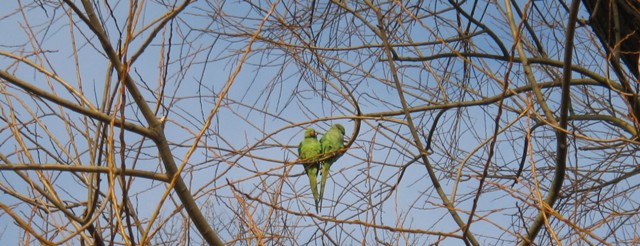
As huge snowflakes – some the size of small chicken feathers – fell thickly from the sky this morning, a lone parakeet flew among them, trying to grab them in its beak. The snow was falling so hard it was difficult to see the bird’s colours, but the shape of its tail was unmistakable. Wasn’t sure whether it was being playful or, because this was its first experience of snow, bewildered.

Sunday, December 25, 2005

CHRISTMAS DAY’S A BLUR


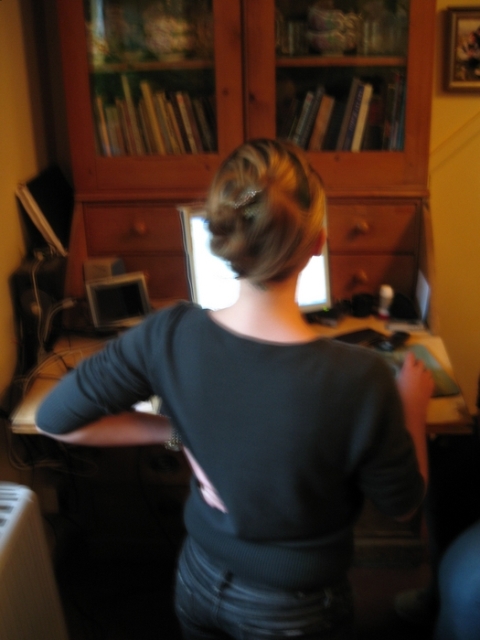
Hania at electronic shrine

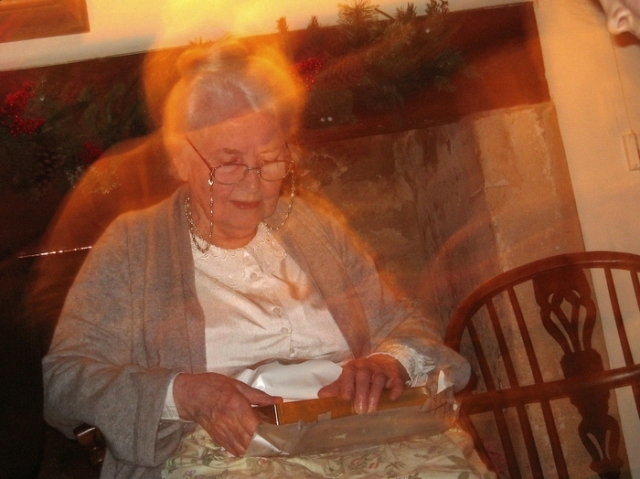
The four of us drive down to Little Rissington for Christmas with my parents, my sister Caroline and brother Gray – and his family. Or at least that was the idea. We so rarely use the car these days that it apparently feels neglected – and refused to start. We had to call the RAC. Still, we got there by lunchtime, though by some electronic demonry the fact that we had lost power meant that the CD player refused to work unless we gave it the magic word – and after all these years we had no idea what it was meant to be. So we did quizzes as we sped westward and G and H harmonised around Elvis songs, which was much more fun. Once there, we unwound. Gray’s daughter, Lydia, commented how much he and I look alike. When I looked back at the photographs, I could see what she saw. At some point, however, someone seems to have touched the wrong button on the camera, so many of the images came out blurred – some spectacularly so. People didn’t just look unwound, but unravelling. In the end, though, I got to quite like the spectral effects.


Pat goes spectral

Saturday, December 24, 2005

CHRISTMAS EVE

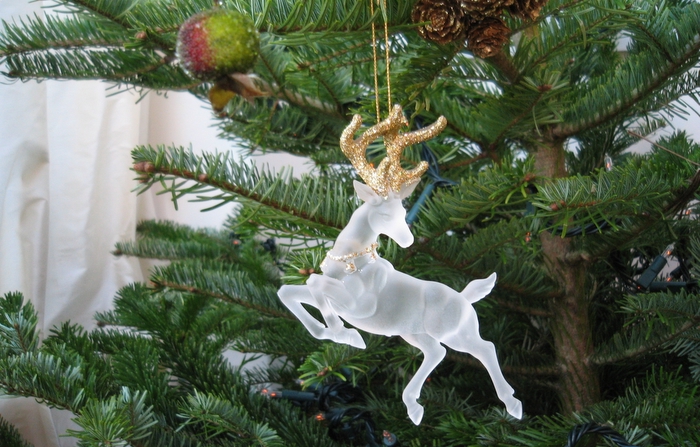
Reindeer


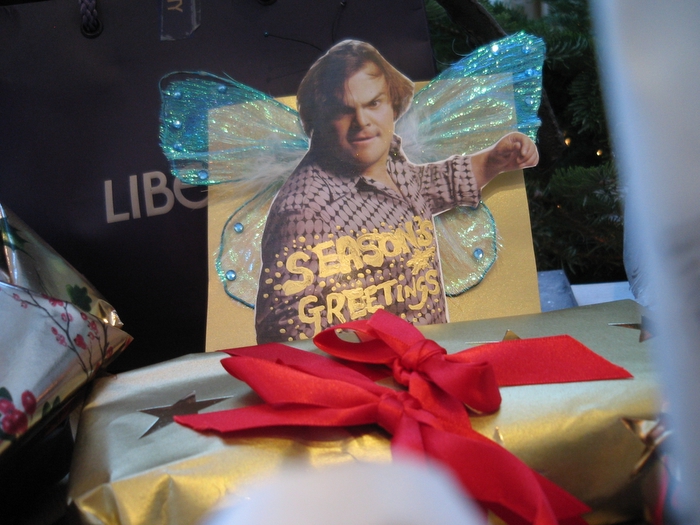
Jack Black: our Christmas fairy

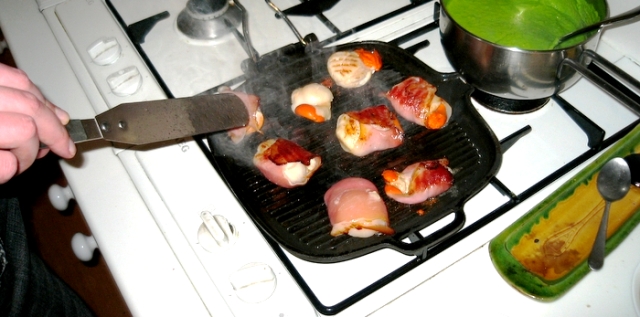
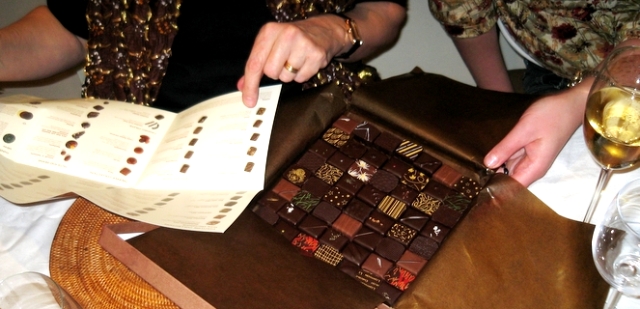
Wonderful Christmas Eve dinner, cooked by Gaia and Hania, featuring inter alia scallops and gilthead bream – and the wildest chocolates, from a family friend. Made by L’Artisan du Chocolate (www.artisanduchocolate.com). My favourite: Sea Salted Caramel, made with unrefined sea salt from Brittany. As the day ends, Gaia and I watch Ridley Scott’s Kingdom of Heaven. Can’t imagine why it didn’t do better. Unbelievably beautiful cinematography. Even as I was watching I couldn’t wait to see it again – the first time that’s happened to me.


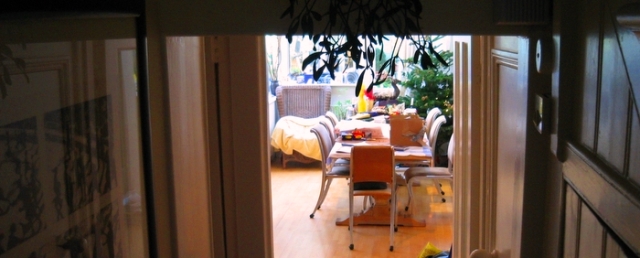
Kitchen 1


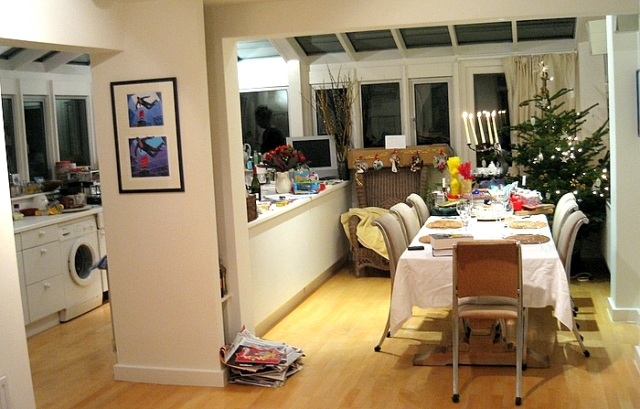
Kitchen 2


Unbaconed scallops are mine


Chocolate heaven


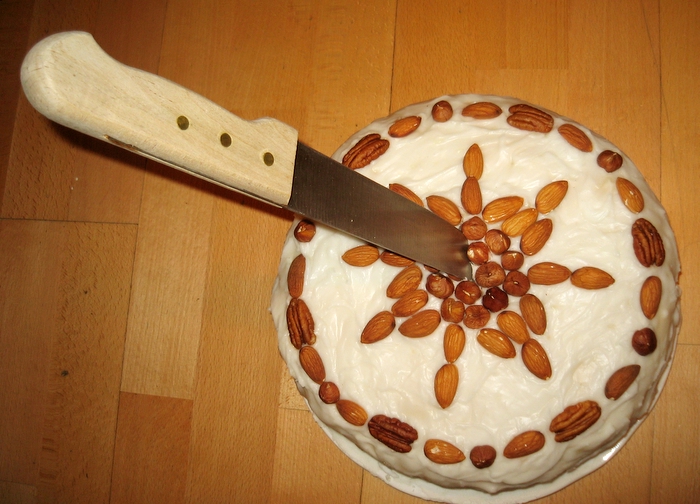
Gaia’s cake

Friday, December 23, 2005

SEASON’S GREETINGS

Racing between worlds, it has been a huge, ongoing pleasure to receive emails from people – some known, many not – around the globe, a fair number of whom have simply stumbled across this site. So for anyone who has come upon this entry, for whatever reason, let me extend my very best wishes for 2006 – and everything that comes before.

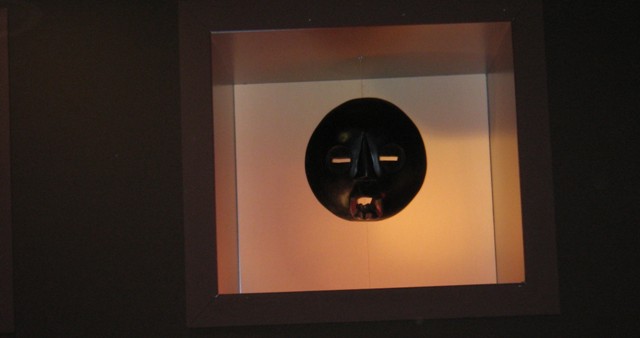
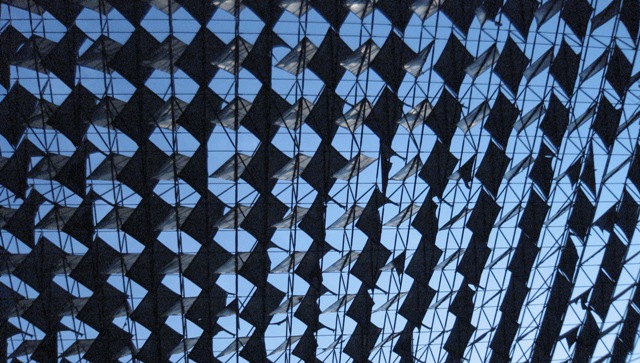
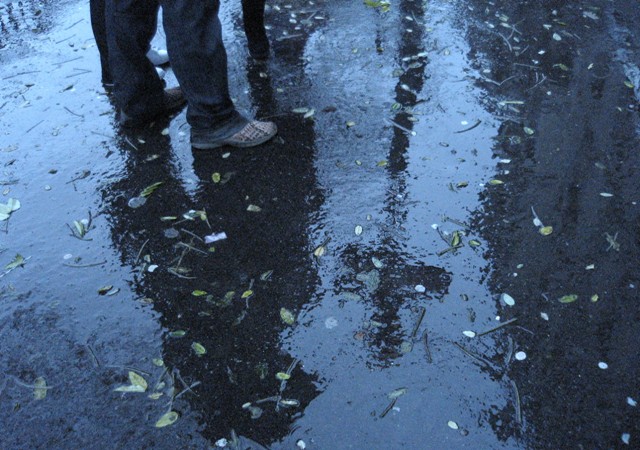
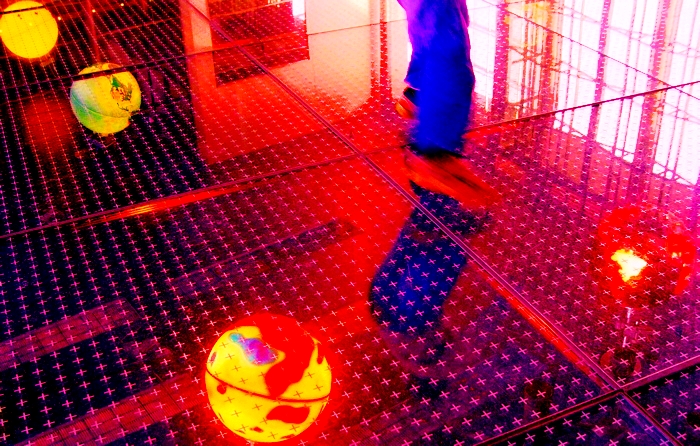
The image is from an exhibit (referenced in the 24 August and 4 October entries) I wandered back and forth across when with VW in October. The legs belonged to a boy who came sliding through as I took the picture. An assisted case of serendipity (see CounterCurrent, http://johnelkington.com/babelfish.htm), in that I saw him coming in peripheral vision. That’s the nature of my job, really. Scanning slightly wider horizons than most people’s work schedules allow them to. And, for me at least, the image caught the multifarious ways in which we all severally view the Earth and all that rides with it around the Sun.

THE YEAR WINDS DOWN

The week has been a blur of activity, trying to get various projects tidied away before the break: among them, the OFR process with USS (see 16 December entry); working on content for the pilot issue of Value magazine, which I have been developing alongside Laurance Allen (former publisher of The Harvard Business Review) and Jed Emerson (www.blendedvalue.org), particularly on the slightly provocative article I have done on the Davos 2015 agenda; a proposal to a major foundation; and down-to-the-wire discussions with Harvard Business School Press on the new book with Pamela Hartigan – which now looks quite hopeful, though the writing schedule looks perfectly horrid. Still, that’s next year …

Meanwhile, I have also been receiving a steady flow of emails from people who have been prowling around this site and reading the blog, which is very encouraging. Some 28 months after I started the blog, it has become more or less second nature – and, often, a useful prop for a sometimes erratic memory.

Tuesday, December 20, 2005

FORD SUPPORTS CLIMATE STABILIZATION

When SustainAbility first began to work with Ford, quite a few years ago, we raised climate change as a key issue. This stance was reinforced when we co-organised (with BSR) a major multi-stakeholder event for the company – and one of the three priority issues that surfaced was climate change. Not a message that most of the auto industry wanted to hear at that stage, with so much of its future fortunes seen to ride on the back of highly profitable (if highly climate destabilising) SUVs. Now, several years later, Ford has become the first auto-maker to embrace the concept of climate stablisation – in its first climate report, published today (http://www.ford.com/NR/rdonlyres/e6vzmdwyz2ycyehpwvuj5sdkrmfknipsreoyznmwwfqtzlwqfbfbcq44ckquxgn5xfir532knjvkq3ovbyhuscz7sfh/fordReptBusImpClimChg.pdf).

Friday, December 16, 2005

SA/USS OFR ROUNDTABLE

In recent days, I have been working with (Dr) Raj Thamotheram of the Universities Superannuation Scheme (USS) on pulling together a roundtable of those concerned about the Treasury’s recent announcement of the abandonment of the Operating & Financial Review (OFR) requirements on major UK companies. I chaired the event today, at USS’s offices in the City. By pooling our contacts, we attracted an impressive turnout from companies, the financial world, NGOs and consultancies that have helped clients up the OFR learning curve.

The summary of the session, which was held under the Chatham House Rule, will be published shortly.

On a personal note, it’s clear that Gordon Brown has set a cat among the corporate responsibility pigeons. Indeed, I can’t help feeling that he is becoming dangerously cloistered, with little personal feel for the corporate responsibility and sustainability agendas – despite his statements on the international poverty agenda. The sense is that he didn’t really know what he was doing, throwing the CBI and other business interests what he imagined to be a bone, only to find his ankles being snapped at by a growing army of NGOs, socially responsible investors and leading companies. The Government is now saying that what it was really trying to do was to ‘recalibrate’ reporting requirements …

Now we have to reclaibrate his recalibration. Although SustainAbility hasn’t been at the vanguard of the OFR movement – largely because our work on corporate transparency, reporting and accountability is more international – the OFR requirement has been seen as one of the leading models in this area. So we are doing everything we can to ensure that this issue is properly aired and addressed. Our new Chair, Sophia Tickell, wrote a letter on the subject to the Financial Times in the immediate wake of the announcement (http://www.sustainability.com/news-media/news-resource.asp?id=399) and we also signed a letter of protest from NGOs (http://www.sustainability.com/news-media/news-resource.asp?id=404).
Then back to the office to take part in a (very energetic and productive) teleconference with the SustainAbility Board.

Thursday, December 15, 2005

SONAE SIERRA IN PORTUGAL

Flew down to Lisbon yesterday to speak today at the annual top management meeting of Sonae Sierra, the shopping mall developer (http://www.sonaesierra.com). Hadn’t heard of them before the invitation arrived, though was given a very useful background briefing by Julie Hirigoyen of David Cadman’s Upstream Consulting. It’s a sector with many challenges, though Sonae Sierra turn out to be way ahead of their competititors in the responsibility stakes – and this year, the fifth in this series of top management forums, the theme was ‘sustainability’. Hence my keynote.

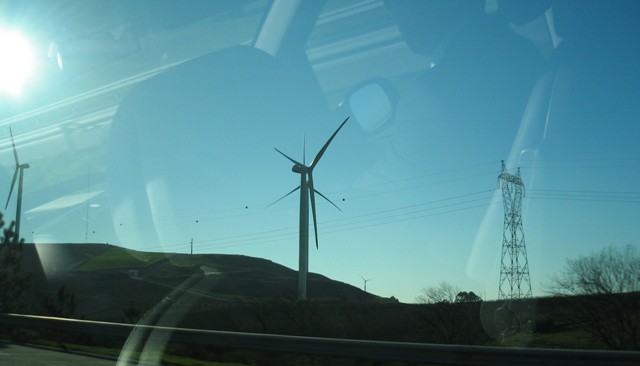
Confess, though, that Richard Sandbrook (see previous entry) was very much on my mind as I was whisked at 140 kph through Portugal in a succession of taxis, against a backdrop of blurring tower blocks, shopping centres and windmills, both ancient and modern. Would our 1970s incarnations have seen what we have managed to achieve in the subsequent decades as real progress As I type these lines, Alvin Lee is singing the line ‘Getting Nowhere Fast’ on my Mac. But I think that Richard – like me – would say that, while demographic and commercial pressures continue to undermine global ecosystems, we have made significant progress in waking up many parts of business and the financial world. The real problems today are often, paradoxically our failure to truly convert citizens and – as a result – politicians and governments.

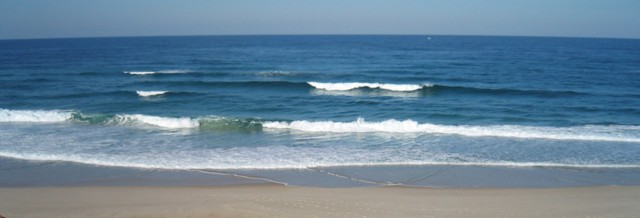
I started my keynote with three astounding images of the plume of smoke from the Hemel Hempstead explosion on Sunday. Made the point that we noticed the combusion of that oil because it happened in an instant, whereas if it had been burned on our roads or in the jetlanes of Europe we wouldn’t have noticed. As I stood by the Atlantic while waiting to do my session, a thin pall of smoke streamed out to sea from a fire on a nearby headland, a micro-scale version of what happened on Sunday. Most people probably saw it as cloud.

After the presentation, had a fascinating lunch with Belmiro de Azevedo (Sonae Sierra’s chairman) and Álvaro Portela (CEO and a great supporter of the triple bottom line approach), before another breakneck journey back to Lisbon, where I took part in a SustainAbility strategy session by mobile phone – with people coming in from as far afield as Zurich and San Francisco. The wonders of modern technology, though for my money nothing beats sitting together on a sofa.


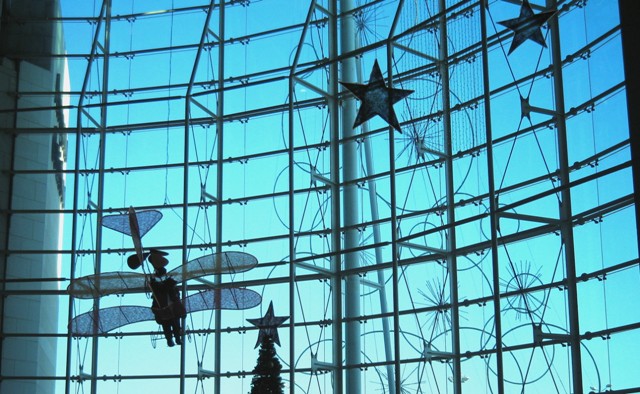
Santa flies past in Lisbon airport


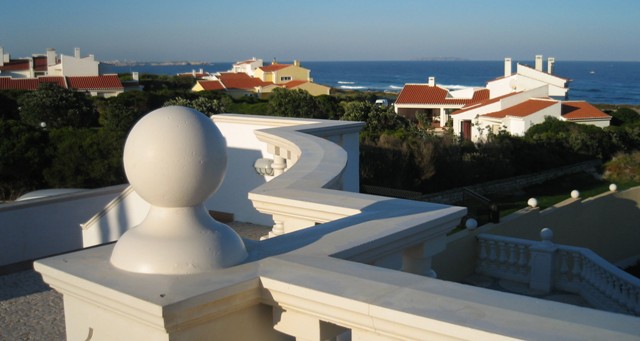
Atlantic 1


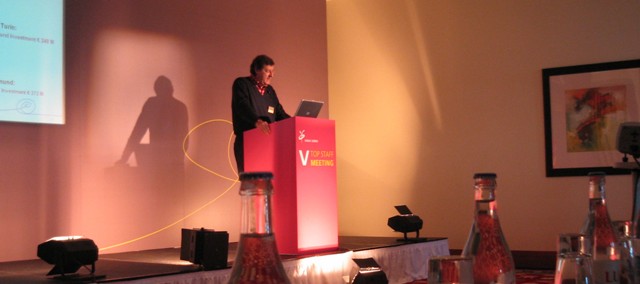
Álvaro Portela, CEO, addresses not just bottles but Sonae Sierra top managers


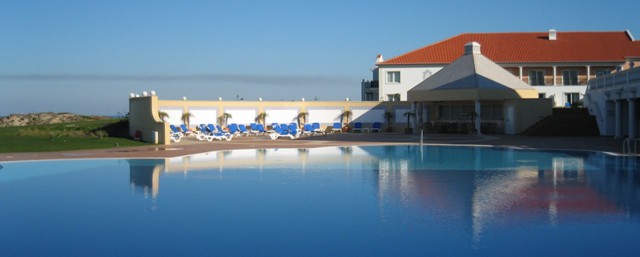
Pool, with smoke skein


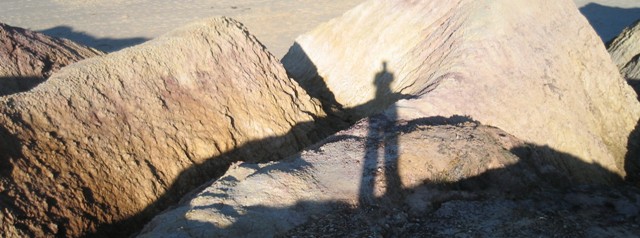
Shadowed as I wait to speak


Atlantic 2


Windmills and pylon

Wednesday, December 14, 2005

RICHARD SANDBROOK

What a year: Marek Mayer, David Pearce and now Richard Sandbrook. Though I knew it was coming, the announcement of Richard’s death in The Times today was still a shock. He had a quite extraordinary influence on our agenda. First met him in the very early days of Friends of the Earth UK, then periodically worked alongside him on projects at IIED in the 1980s, when I was between my ENDS and SustainAbility incarnations. As with many activists of the era, my mental image is of him in wreathed in cigarette smoke, a whirlwind of activity.

One thing that sticks in memory: driving together down to a conference in, I think, Malvern when we were both rapporteurs for the UK response to the World Conservation Strategy, which resulted in the 1983 publication of the UK Conservation and Development Programme. We were so deep in conversation, I managed to hit one of the gateposts driving into the yard at my patents’ home in Little Rissington. The collision hardly disturbed Richard’s stream of consciousness delivery.

While I did the industry report, Seven Bridges to the Future, which formed the first chapter in the eventual, encyclopaedic tome, Richard addressed the UK’s ‘overseas environmental policy’. Much of the process happened at the Royal Society of Arts, one reason why I have since had a great deal of affection for the RSA. It helped keep the green flame at least sputtering during the often-grim Reagan and Thatcher years.

Most recently, I caught up with Richard (who had gone on to a range of roles, including helping to found Forum for the Future) courtesy of Tim Smit of The Eden Project, where Richard was a non-exec director. Tim convenes a ‘Breakfast Club’ in Cornwall of long-standing environmentalists, partly in an attempt to broker a burying of hatchets and to build new constellations of effort designed to crack problems which, if at least in the realm of climate change, seem even more challenging than we started out in the late 60s and early 70s.

POSTSCRIPT: Nice that Jonathon Porritt’s obituary of Richard in Friday’s Guardian notes that “with people like John Elkington and Tom Burke, [Richard] pioneered a collaborative way of working with big business which has become common practice” (http://www.guardian.co.uk/obituaries/story/0,3604,1668531,00.html).

Tuesday, December 13, 2005

KING KONG AND BT

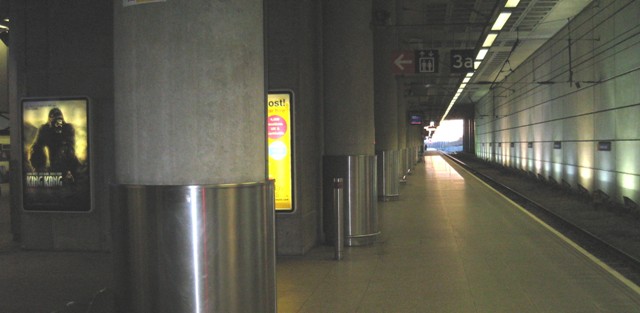
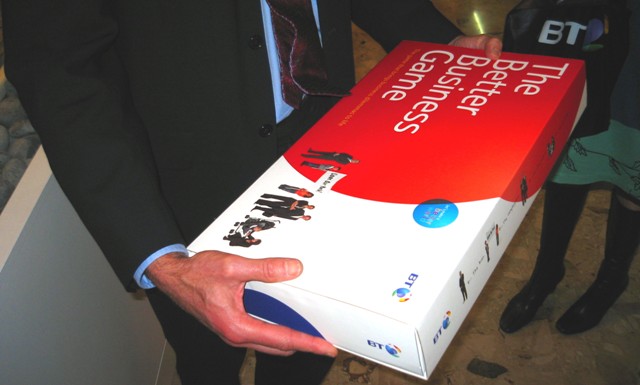
Great breakfast with Carlos Oppe, followed by a sofa session with a couple of the Ecodes team, exploring ways of working together. Then back to Stansted, where I waited in a cold, ghostly environment overseen by a glowing King Kong poster for the next train to London. In the evening, headed across to the BT HQ for a dinner hosted by Larry Stone (BT’s company secretary) and Chris Tuppen (who has long led the charge at BT on issues like the environment and corporate responsibility). Around a dozen people had been invited to hear the results of an MBA dissertation-related survey that had been carried out by Herman Schepers. On a side table, a new game that BT has developed: The Better Business Game. Lively discussion in the BT boardroom, high above a glazed atrium and looking out onto the Dome of St Paul’s, then home.


King Kong waits for a train


The Better Business Game

Monday, December 12, 2005

ZARAGOSA

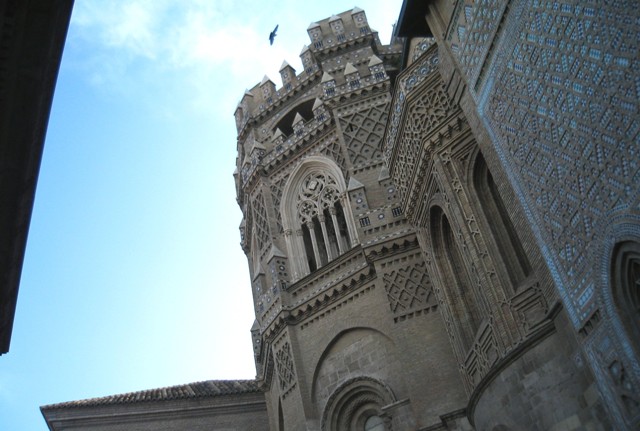
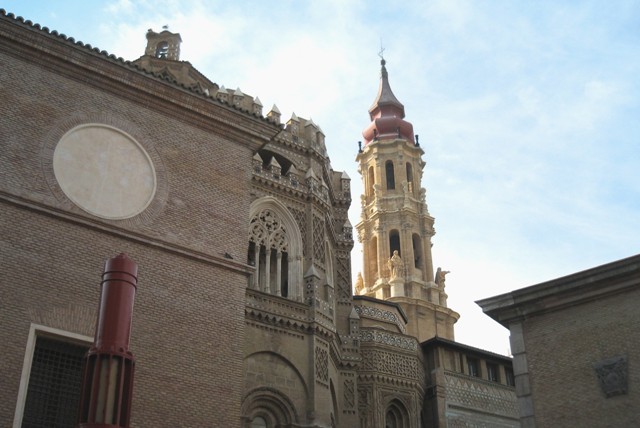
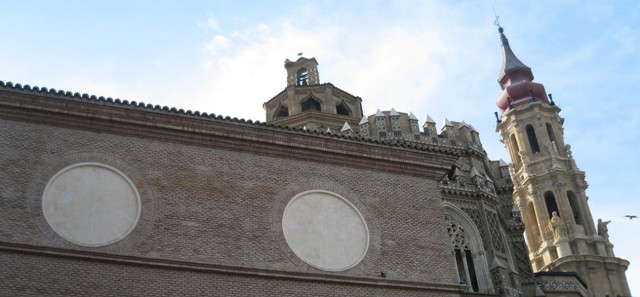
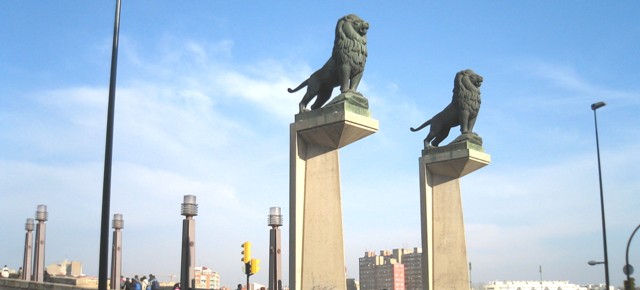
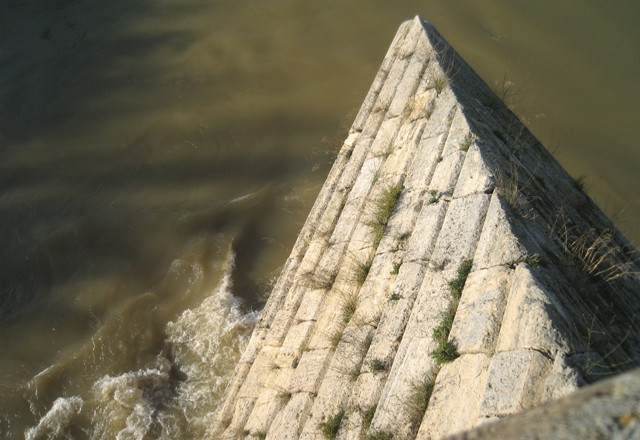
Flew to Zaragosa, via Stansted – first time I have flown Ryanair. Functional, but hardly a pleasure. Zaragoza (frequently rendered as Saragossa in English, derived from the Latin, Caesaraugusta), is located on Ebro river – and is the capital city of Aragon. Was invited by Ecodes (http://www.ecodes.org), the Fundacion Ecologia y Desarrollo, to speak in a series of ‘Tomorrow’s Company’ lectures, previous speakers being Hernando de Soto and John Kay. Walking to the Ecodes office, spotted a stork nesting high overhead: apparently they used to migrate south, but these days often don’t bother. Lunch at the Club Nautico de Zaragoza, alongside the churning Ebro, with people representing government, busienss and NGO sectors.

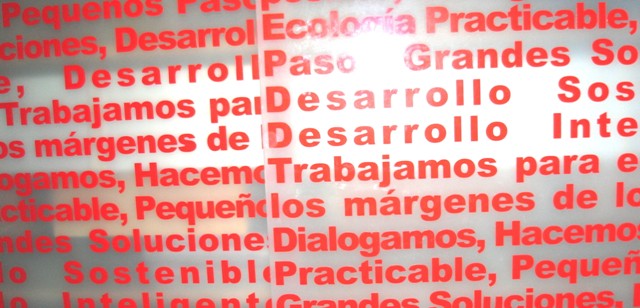
Ecodes did the Spanish translation of SustainAbility’s recent report, The 21st Century NGO, and that was a key part of my theme for the evening, the event held in the Hotel Boston. In the audience, Carlos Oppe, a longstanding family friend, who asked a challenging question: with a major Expro on water due in Zaragosa in a few years, will anything be done to clean up the highly polluted Ebro? The answer wasn’t reassuring. Really liked the Ecodes team – and am hopeful we can develop a closer working relationship with them in future.


Just around corner from Ecodes office


Stork and nest


And again


Lions guard bridge over Ebro


Bridge footing ploughs upstream


Words like sustainable, development and dialogue feature in Ecodes decor

Sunday, December 11, 2005

UNDER A DARK CLOUD

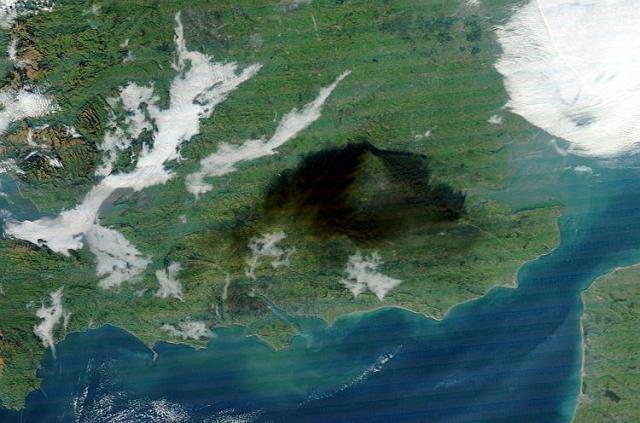
Geoff (Lye) woke to a boom and his Oxford house shaking early this morning, as did our neighbour – and they were some 80 miles apart. Then Elaine noticed a dark black cloud overhead here when she went out to get milk later on. Apparently an oil depot has blown up in Hemel Hempstead. Given that a fair amount of aircraft fuel is stored there, one of my first thoughts was whether my flight to Spain would still be happening tomorrow morning …


Satellite’s eye view

Saturday, December 10, 2005

TORTURE, THE BUTCHER’S BUSH & A GREEN CHRISTMAS

Spent much of the day with the Trustees of the Business & Human Rights Resource Centre, in their new office in Charlotte Street. Huge progress has been made with the B&HRRC website – and with the organisation’s expanding global network. Listening to Annabel Short recounting the story of having to clean the floors and assemble the Ikea bookshelves put me in mind of when Julia (Hailes) and her mother led the cleaning up of the Augean Stables at The People’s Hall, providing SustainAbility with our first truly independent offices many years ago. Just as SustainAbility started off in our Barnes home, so the Resource Centre – while supported by Amnesty – has been housed in Chris Avery’s flat. I think I have a reasonable sense of what a liberation the team’s move to Charlotte Street must have been for him.

One of the highlights, for me at least, was when Annabel gave a potted history of the denizens of Fitzrovia, including a nearby brothel in which flagellation was a speciality of the house. When I Googled one of the women involved, a certain ‘One-Eyed Peg’, I discovered that “the queen” of flagellation “was undoubtedly Mrs Theresa Berkley, of No 28 Charlotte Street, Portland Place” (http://public.diversity.org.uk/deviant/ssflg1.htm). She ended up a very wealthy woman, apparently.

“Her instruments of torture were more numerous than those of any other governess. Her supply of birch was extensive, and kept in water, so that it was always green and pliant: she had shafts with a dozen whip thongs on each of them; a dozen different sizes of cat-o’-nine-tails, some with needle points worked into them; various kinds of thin bending canes; leather straps like coach traces; battledoors, made of thick sole-leather, with inch nails run through to docket, and currycomb tough hides rendered callous by many years flagellation. Holly brushes, furze brushes; a prickly evergreen, called butcher’s bush; and during the summer, a glass and China vases, filled with a constant supply of green nettles, with which she often restored the dead to life. Thus, at her shop, whoever went with plenty of money, could be birched, whipped, fustigated, scourged, needle-pricked, half-hung, holly-brushed, furze-brushed, butcher-brushed, stinging-nettled, curry-combed, phletbotomized, and tortured till he had a belly full.”

And here we are campaigning against torture! More positively, the early social entrepreneur Robert Owen had lived literally next door while founding things like a labour exchange and a school.

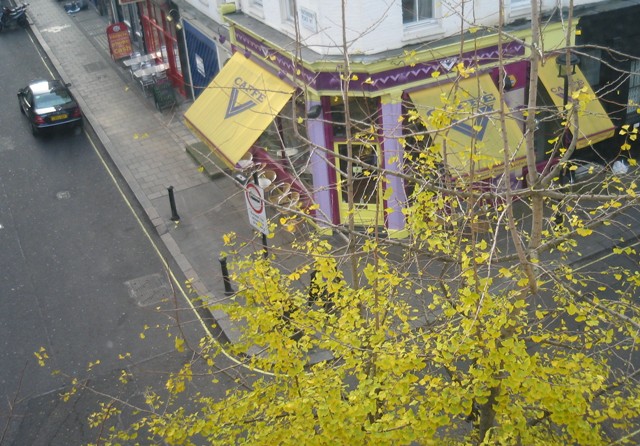
At one point during the day, I tool a photo of a rather lovely ginko tree in the street below, which still had a blaze of yellow leaves. Chris Marsden, who chairs the Board of Trustees, noted that many trees are holding on to their leaves much later this year. Indeed, The Independent this morning noted this could be Britain’s first “Green Christmas”. Once again, as the sun began to set, the Millennium Wheel turned up on the horizon, several of its capsules glistening to the south.

Friday, December 09, 2005

CHRISTMAS PARTY

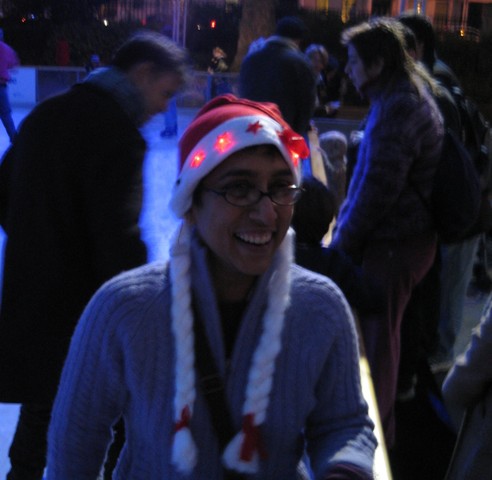
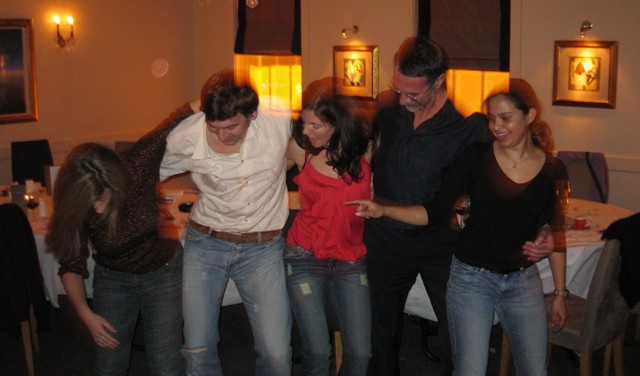
A slightly frantic day, trying to get various articles and slide presentations done ahead of next week, alongside celebrating the tenth anniversary of Geoff Lye joining SustainAbility – which represented one of the major turning points in our history. Then, after most of the team had gone off to ice-skate at the Natural History Museum (with my bruises and workload, I didn’t go), 5-6 of us headed off from the office to the Angel, where we had booked a delightful upstairs room at Frederick’s for our Christmas party.

First time I had been on one of those giant accordion-like buses that I struggle to pass on my cycle as they clog up London’s streets. sadly, this week also saw the final demise of the old Routemaster buses, one of the truly great aspects of the London ecosystem over the 30-some years I have lived in the city. The Routemaster’s passing is a tragedy, in many respects, not least the ability of riders like me to jump on and off at will. But this was a wonderful evening, with younger members of the team bringing in CDs to play on the restaurant’s sound system – which, to my delight, included everything from Nina Simone to Elvis and The Kinks. There’s hope for future generations yet!


Kavita skating, taken by Tell

Suzi, Tell, Kelly, Geoff and Ritu

Thursday, December 08, 2005

2010 + 2012 OLYMPICS

When I was in Vancouver earlier in the year, I suggested to Linda Coady – who heads the team trying to build sustainability principles into the 2010 Winter Olympics, to be held in Vancouver and Whistler – that the 2010 team should meet up with the 2012 London Olympics team. One reason was that I had recently intereviewed David Stubbs, wholeads the sustainability side of the London Organising Committee’s work, for SustainAbility’s newsletter, Radar (http://www.sustainability.com/network/global-influencer.asp?id=244), and had instinctively felt that they would get on. This afternoon, as a result, I found myself chairing a joint session between the 2010 and 2012 teams at Canada House, involving a range of external stakeholder organisations, from Bioregional, Demos, IIED and the International Business Leaders Forum through to the London Sustainability Exchange and WWF-UK. Overall, an excellent discussion – and Linda noted that this was an historic moment, the first time that two Olympic organisers had convened to discuss how to collaborate on the sustainability dimensions of their work. Afterwards, a delightful dinner at Inn the Park, in St James’ Park. Emerged very late to see the Millennium Wheel hovering over the Admiralty in the east.

Wednesday, December 07, 2005

BLACK & BLUE ICE

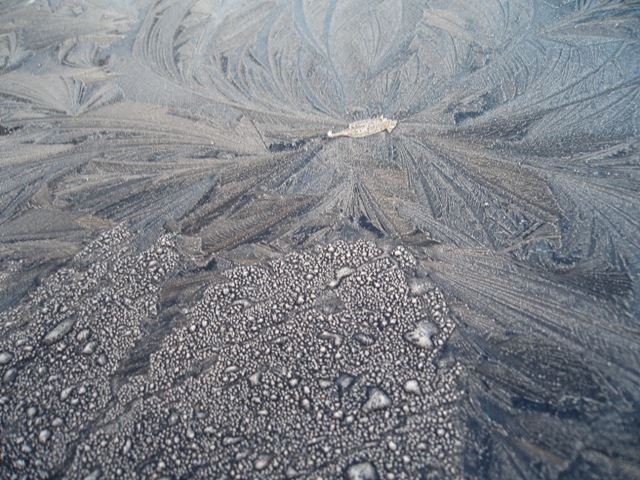
Cycling in to the office this morning, I hit a patch of black ice at a fair speed and whilst cornering – mercifully with no other traffic around – and ended up with swollen joints and a mass of bruises. Having returned home to get patched up, and receive a lecture on not cycling on frosty mornings, I cycled on. A wonderful morning, though by the time I got in various bits of the body were starting to seize up.


Frost patterns on our Volvo

Sunday, December 04, 2005

WINTER FROGS

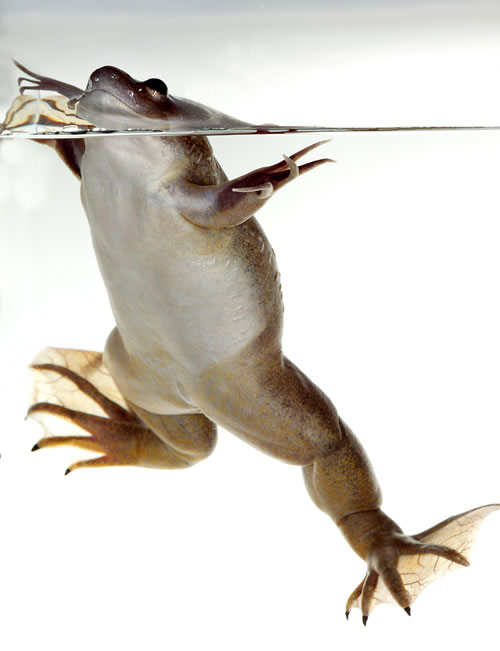
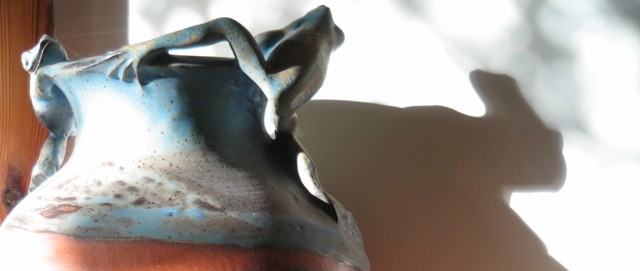
As Elaine and I left for a walk in Richmond Park late this morning, I noticed the winter sun slicing in low and catching a pair of frogs on a vase in the front room. Later, as we walked around the Park, it seemed so mild we even thought of looking in a pond or two for frog-spawn, partly because some of the plants in the garden seem to be coming into blossom weirdly early. But we didn’t: couldn’t imagine that frogs would be that stupid.

That said, there have been some strange selection pressures at work. Over the years, we have loosed a fair few frogs in the Park that we have found and rescued in the streets of Barnes – largely, I suspect, because people bring frog-spawn or even tadpoles back for garden ponds, and the inevitable happens. Even had a fair old row once in the Isabella Plantation with a man who was carrying a great big black plastic sack of spawn. But frogs haven’t been the only things on our mind, not least because Jim Salzman, a professor at Duke University and a long-standing member of the SustainAbility Council, is staying at the moment, en route to a regular teaching jaunt in Sweden.

FREEPLAY IN TIMES

The Times carried a front page teaser on the Freeplay Foundation yesterday, as Kristine Pearson had said they would – and a two-page spread featuring the Salvation Army (one of the older social enterprises in the UK) and Freeplay (one of the newest, http://www.freeplayfoundation.org). Slightly weird concatenation, but wonderful breakthrough for Freeplay.

Friday, December 02, 2005

INVESTING IN THE FUTURE

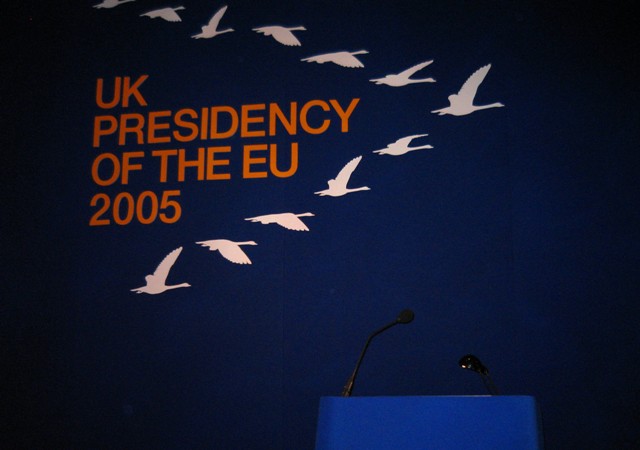
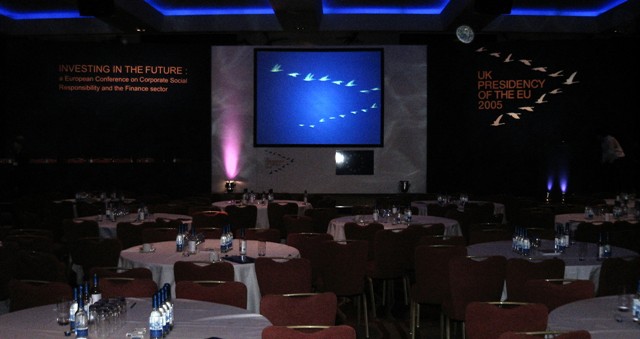
Drafted in late in the day as rapporteur for the Climate Change session at the UK Presidency of EU conference on ‘Investing in the Future’ (http://www.csr.gov.uk/feature.shtml), which focused on the finance sector’s take on corporate social responsibility. Fascinating gathering of the tribes, four floors below ground level along the Albert Embankment. Someone said, as I checked in my coat, that I must get bored with attending all these events, meeting “all the usual suspects,” but it turned out to be quite stimulating: there were a bunch of people I hadn’t seen for ages – and many more I had never met.

(Lord) Richard Holme chaired, noting that the bird design for the event (see photos) could be interpreted either as wild geese or dead ducks. Truth be told, at least to my mind, the event hovered somewhere in the middle: an extraordinary advance on the situation a decade or so ago, but – as ActionAid put it towards the end – not brilliantly effective in terms of identifying actionable new steps for the UK and EU.

One highlight was the report tabled by the CORE Coalition (www.corporate-responsibility.org), A Big Deal? Corporate Social Responsibility and the Finance Sector in Europe – although it contains a case by The Corner House of alleged bribery on behalf of Halliburton in relation to a 2002 project part-financed by the Export Credits Guarantee Department (ECGD), whose Advisory Council I chair.

The man of the meeting, though not present, was Chancellor and would-be Prime Minister Gordon Brown. He is increasingly seen – by all sides of the debate – as having screwed up royally in terms of his arbitrary cancellation earlier this week of the Operating & Financial Review (OFR) for large UK listed companies. Speakers from every side of the debate expressed emotions ranging from incredulity to incredulity (sic). As I noted in my summing up, while I have sometimes argued that we need a new generation of political leaders, if this is what we can expect from Brown I’d almost prefer to have the Conservatives. Better the enemy you know.


Investing in the Future 1


Investing in the Future 2

CHIEF ENTREPRENEUR

The reaction to the announcement on Monday of my new role and job title – ‘Chief Entrepreneur’ (http://www.sustainability.com/about/about-article.asp?id=374) – has been uniformly positive, even excited. Except for the heavenly (Baroness) Barbara Young, Chair of the UK Environment Agency, who declares it: “… the ultimate in poncey titles. One definitely for Private Eye. Does the man have no limits, I ask myself …”

When we were celebrating the management changes at SustainAbility yesterday evening, Matt (Loose) asked me whether I felt any diffeernt as the result ? The answer is yes, in the sense of in-the-process-of-being-liberated, but also no, in the sense that much of what I have done in recent years I will continue doing – only, hopefully, in a higher gear. But it’s odd how one result, God help us, is a strange sense of permission for leaning even further out into the future, the unknown …

November 2005

John Elkington · 30 November 2005 · Leave a Comment

Tuesday, November 29, 2005

BUILDING THE GHERKIN

Flew to Zurich yesterday with Geoff Lye for a meeting today with Swiss Re CEO John Coomber and a couple of his colleagues. Flight from Heathrow three hours late, due to need to grit a runway. On the way, read a new report on climate change, Climate Change Futures, by UNDP, the Harvard Medical School and Swiss Re (downloadable from the Swiss Re website). A bit like the Book of Revelations. As we left the Hotel Helmhaus this morning, saw a poster on the facing wall across the street for a movie of the building of Swiss Re’s London HQ, the ‘Gherkin’. And there was Sara Fox, who managed the project and who I interviewed some time back for SustainAbility’s newsletter, Radar (http://www.sustainability.com/network/global-influencer.asp?id=197).


Poster for Building the Gherkin


A Swiss Re perspective


Birchscape

Sunday, November 27, 2005

BOOMERS AND THINGS THAT GO BOOM IN CHINA

The Baby Boomers are getting a fair amount of press at the moment, as they start to head towards retirement. Bryan Appleyard in the Sunday Times today argues that one thing that marks out the Boomers is their unwillingness to accept the processes of ageing and, ultimately, of death. He is writing a book on immortality that argues that Boomers, more than any previous generation, yearn to live forever.

I’m not so sure, particularly having spent several years researching a book on how previous generations thought of the afterlife. The appetite for some form of afterliving has now been a constant of human thinking for tens of thousands of years. Maybe the twin facts that Boomers have led what Appleyard describes as “charmed lives” in an increasingly secular world helps explain why there has been a growing interest in technologies that promise to help people live longer and look better in this world, but there are other ways of looking at all this.

For example, Elaine and I went to a 60th birthday party last night. Inevitably, many of those present were Boomers – and several were current or ex-Greenpeacers, among them Robin Grove-White, Peter Knight, Peter Melchett and Steve Warshal (a long-standing friend who edits Greenpeace Business). So my reaction to the Boomers-deny-death line is that it has been one of the most pronounced characteristics of the Boomers that they have affirmed and embraced life, in all its myriad forms. Environmentalism itself has been pretty much a Boomer phenomenon.

Which makes me wonder whether we will see last week’s events in Harbin, China, helping to spawn new generations of environmentalists in what looks set to be the twenty-first century’s largest economy? A 50-mile slick of toxic chemicals, including benzene, has spread down the Songhua River, forcing the authorities to cut off water supplies to more than three million people.

The scale of the disaster, of the attempted cover-up by Petrochina (a company I met at a dinner while in Beijing in May) and of the resulting media and public fury reminds me of the way in which the post-WWII boom in the USA and Europe resulted in a proliferation of disasters that, quite unintentionally, helped reprogram Boomers. Having talked to such people as Minister Pan Yue of China’s State Environmental Protection Administration, I think it’s very possible that we may see similar trends there. But we can’t count on it. The challenge for all of us, Boomers included, will be to work out how we can influence what happens in China. If we fail to help the Chinese make their forms of capitalism more sustainable, Boomer retirements may be rather less comfortable than many of those now moving into their sixties hope and expect.

And then, just as I was preparing to post this item, an email arrived from a young Chinese student I met in Oslo last week, reminding me that she and I had agreed to meet in London next month. One more indication that if we work this one well, the traffic isn’t going to be all one way. The next generation of Chinese movers and shakers will be reaching out for solutions to the problems their country of 1.3 billion will inevitably face in the coming decades. I see part of my task in the coming years as helping to position SustainAbility – and our wider movements – to rise to the challenge. And the resulting solutions could just help us turn the corner in terms of shoehorning a predicted 9 billion people into a planet whose ecosystems, to put it positively, are already straining at the seams.

AL-JAZEERA

As I flew back and forth to Oslo this week, I read Hugh Miles’ book Al-Jazeera: How Arab TV News Challenged the World (Abacus, 2005). A fascinating story – and particularly useful background given the current controversy about an alleged conversation last year between Bush and Blair about whether Al-Jazeera’s offices should be bombed (a story which features in both today’s Observer and Sunday Times). While it is clear that they are far from even-handed, I have nothing but respect for the physical and political courage of the Al-Jazeera editors and journalists in bringing freer media to the Middle East – and, in these days of active news suppression, the wider world.

One of the most memorable lines comes early on in the book (page 11), when Egyptian President Hosni Mubarak asks to make a surprise visit to Al-Jazeera’s offices during a state visit to Doha. He and his staff are taken aback by the tiny size of the operation. “All this trouble from a matchbox like this?” he asks. On a different scale, we have had similar reactions from people who have visited SustainAbility over the years, particularly – for some reason – Japanese companies.

STAG’S LEAP, GLOBAL WARMING & NOAH’S WINE

Got an email from Tell (Muenzing) as Elaine and I Tubed in towards Marylebone to say his car had broken down and he had had to take a train from Castle Cary – net result being that we would have to go to a Stag’s Leap (http://www.CASK23.com) wine-tasting on our own. Not something we would have chosen to do, but in the event it turned out to be truly fascinating. The Decanter Masterclass was given by Stag’s Leap founder Warren Winiarski and his daughter Julia. The Winiarski family had opened the Stag’s Leap Wine Cellars in 1972 – and shocked the French when, in a blind tasting arranged in 1976 by an English wine merchant in Paris, with tasters who were French wine experts of impeccable credentials, the Stag’s Leap 1973 SLV triumphed over first-growth Chateau Mouton-Rothschild, Chateau Haut Brion and other famous wines.

Warren Winiarski explained how the French concept of terroir works in his part of the Napa Valley, giving us wines that showed the extraordinary influence of his ‘3Gs’ (grape, ground and ‘guys/gals’, the latter his attempt to capture the human part of the wine-making equation). The interplay between the seismic geology of the region and water-driven erosion was demonstrated in wines that were taken from different parts of the resulting alluvial fans across the Stag’s Leap lands, alternately fiery (the ones grown closest in to the eroding hills, where the soil structure was coarsest) and more subtle (where the soils were finest). He also explained how he applied the ‘Golden Rectangle’ approach to winemaking, but the most interesting exchange – for me, at least – came when he was asked a question about the potential impact of global warming in the region.

Long used to the temperature oscillations driven by the current systems off the California coast, he concentrated on them. But then Julia came in and addressed the question directly, perhaps indicating the way in which understanding of the climate change challenge varies across the generations. She noted that rising temperatures are already showing up in terms of “sunburn and shrivel” in the grapes. The result is that picking now often happens with scissors rather than knives, to remove damaged grapes from the bunches. Other strategies involve pruning the vines to form outward branching Vs, to shade the grapes, and picking the grapes at night – to allow them to cool down.

Then, a final, extraordinary flourish, Warren W said he had something special for us, a wine we would be unlikely to taste again. Because the commercial varieties of vine are now genetically impoverished, he has been travelling to places like Kashmir to find the original wild varieties. And he gave us each a tiny little vessel of a wine that he has made from some of these grapes, which he called “archaeological wines”, akin to Noah’s wine, high in both acids and tannins, very much like an alcoholic fruit juice. It was a wonderful opportunity to savour the roots of winemaking – an art which more than most encourages us to understand and appreciate the wonderful interplays of geology, geochemistry, ecology, biology, microbiology and the human intelligence.

Thursday, November 24, 2005

OSLO

Spent past couple of days in Oslo, mainly at the Norwegian School of Management, after staying last night with Jan-Olaf Willums, a long-standing colleague and friend. This was after an excellent dinner last night with people like Professor Atle Midttun, Jan-Olaf and Jorgen Randers, who I first heard of as one of the co-authors of 1972’s Limits to Growth study.

This was a major conference on corporate social responsibility, which I kicked off alongside Professor Norman Barry of the University of Buckingham. The idea was that I would be pro-CSR, Norman anti. And as we were driven in from the airport it seemed we would find it possible to disagree on just about everything: he didn’t like rock’n’roll, whereas I love it; he loves Broadway musicals, which I don’t. And so on. But then the dykes began to leak as he admitted to an interest in Cream …

In the event, though the School’s new premises are truly spectacular and we got an excellent turn-out, I’m not sure we really engaged the fundamental issues robustly enough in the debate. It’s odd how academic some of these anti-CSR folk are, defaulting to long tracts on the history of company law. All very well, but as the world moves towards a human population of 9 billion and with the climate beginning to wobble, business needs to raise its sights a little. A point that the head honcho from Norwegian insurer Storebrand acknowledged forcefully during the first day of the event.

Inside the Norwegian School of Management


Studying wasn’t like this in my day!

Wednesday, November 23, 2005

THE LANCASTRIA


Postcard of HMS Lancastria in happier days

Trawling through e-mail ahead of a flight to Oslo, I came across yet another (this time alleged) cross-link to Flt-Sgt Berry, who saved my father’s life during the Battle of Britain (see 29 October and 14 September entries). A Frenchman e-mailed to say that he was researching a book on the 1940 sinking of The Lancastria off St Nazaire, the worst maritime disaster to affect Britain, with many thousands of British soldiers and sailors drowned. He also said that he thought that Berry had shot down the plane that bombed and sank The Lancastria (http://www.lancastria-association.org.uk/). A few moments of Googling, however, turned up the assertion (courtesy of the BBC, http://www.bbc.co.uk/dna/ww2/A4103056) that the German aircraft that put a bomb down the ship’s funnel was a Ju88, not a Heinkel 111 – the type of aircraft Berry was credited as shooting down over St Nazaire. But, apparently, Berry’s citation for the DFM mentioned that he had knocked down the Heinkel that had sunk The Lancastria. In any event, Tim – my father – is on the case.

But whatever the facts of this particular matter, I am continuously amazed at the extraordinary power of search engines in general – and of Google in particular. The power to surface accurate facts and inaccurate. Recently hugely enjoyed John Battelle’s amazing book The Search: How Google and Its Rivals Rewrote the Rules of Business and Transformed Our Culture, one of the best business books I have read in a long time.

Sunday, November 20, 2005

RICHMOND PARK

Day of reading and writing. Wonderful midday walk with Elaine around Richmond Park, with fog still hanging over landscape, though by the time we got back most of it had burned away. The Canon IXUSi comes in handy again:


Strawberry grapes over our front door


Deer in the mist


Winter sun


Tree taking a rest


Pond 1


Pond 2

Saturday, November 19, 2005

THE ART OF COARSE WHALING

Various newspapers are bombarding us these days with free film DVDs. Last night I watched the Ray Bradbury/John Houston version of Moby Dick, which I can’t remember seeing before. Elaine’s sister Christine was here with her husband, Michael Green, author among other things of a series of books like The Art of Coarse Acting, The Art of Coarse Sport, The Art of Coarse Sailing, and so on. Turned out that many years ago he had also done a coarse acting version of Moby Dick for the Edinburgh Festival, although as we watched it sometimes seemed that the film scarcely needed lampooning. But it was extraordinary for its time. And fascinating to see so many elements of the 1956 film that would be echoed – intentionally or not – in future films, for example the whale-circling seagulls in Hitchcock’s The Birds (1963) and the marine monster modelling in Spielberg’s Jaws (1975). The whaling scenes that involved real whales reminded me, though, of the role whaling played in triggering early environmentalism, my own included.

Friday, November 18, 2005

CENTRE FOR INTEGRAL ECONOMICS

Lively day, including lunch with John Manoochehri. Wrote several articles, one for a South African publication, Opportunity. Facinating session in the afternoon with Donna Morton of Canada’s Centre for Integral Economics. The Centre was originally launched in 1998 under the name NEW BC, initially as an affiliate of the Seattle-based Northwest Environment Watch (NEW). Those involved recognised the power and potential of economic instruments (like London’s congestion charge) to transform society. CIE projects range from airshed management through municipal ‘tax shifting’ to the future of grizzly bears in British Columbia. I emerged even more persuaded that this is an area where we need to invest a good deal more effort.

Thursday, November 17, 2005

MISSION, VISION AND VALUES

Day begins with an extremely productive session with Sophia (Tickell) and Yasmin (Crowther) on the revamping of SustainAbility’s Mission, Vision & Values. At one point, President Lincoln’s Gettysburg Address comes to my mind and, when Sam prints it off, it turns out to be a wonderful, emotionally charged stimulus for the task in hand. Other meetings during the day include one with Verity Haines of the Royal Society of Arts, on possible themes that the RSA could address in future, and another with Laurence Shorter, who is researching a very interesting book on the nature of optimism. Have always said I’m an optimist, though my (I think realistic, if painful) vision of where we are headed strikes many as profoundly pessimistic. For me, the optimism is in believing we can make headway despite the extraordinary scale of the challenges that face us.

On the way in – and yesterday – have been playing with an IXUSi camera that Canon very kindly gave me when we were with them in Tokyo. Fits into the palm of the hand, yet rates 5 megapixels. The photos below were mainly taken from the bike as I cycled in this morning:


Fence in Holland Park


Albert from behind


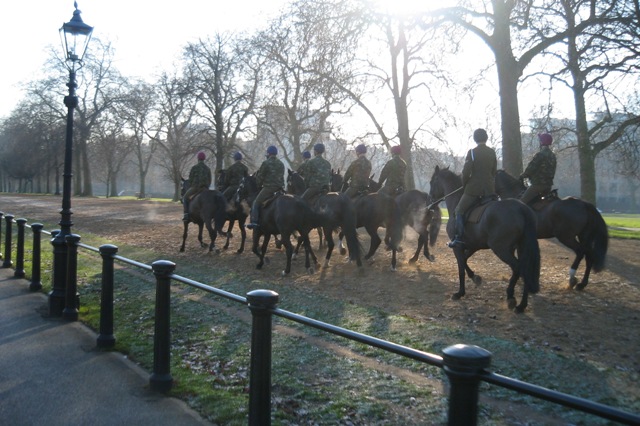
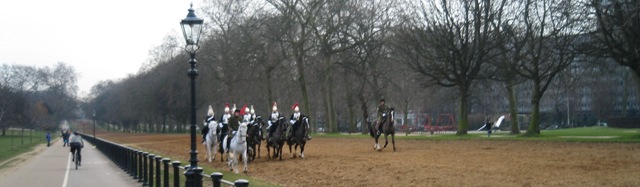
Horses along Rotten Row – more or less opposite our old offices


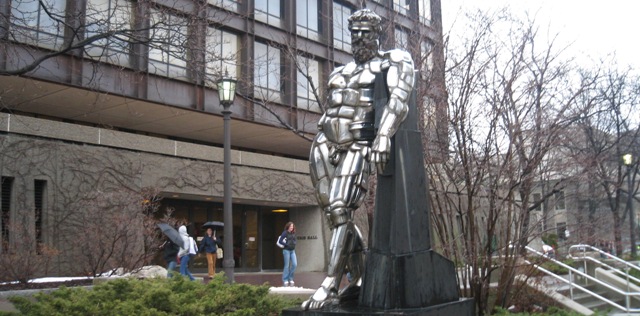
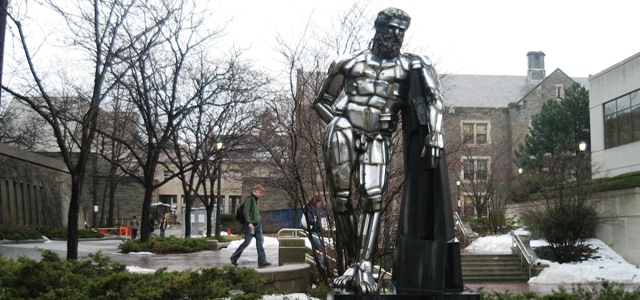
Achilles

Wednesday, November 16, 2005

ECGD

Back from Geneva in time for a lunch with Lucy Siegle, who writes a column on ethical consumption for The Observer. The range of ethical and green consumer choices is expanding, but it’s amazing/worrying how often the same few products surface in discussion. Much work to do. Then on to ECGD, trundling my case on wheels through Docklands, after which I meet up with Elaine for Shell CEO Jeroen van der Veer’s pre-Christmas party at Shell Centre. Then home.


Millennium Dome


Crane


Entry to ECGD building

Tuesday, November 15, 2005

CHINA EUROPE BUSINESS SUMMIT

Whatever else it has been, 2005 has been the Year of China. The giant country has loomed every larger on our radar screen as the year wound by, not least because of my first visit to the country in May[1]. In addition to speaking at the Fortune 500 Global Forum in Beijing, I had wonderful opportunities to meet people from the Chinese government, business and NGO sectors courtesy of people like CGA, the China Business Council on Sustainable Development, Shell and WWF. Then, yesterday and today, I have taken part in the first China Europe Business Summit, held in Geneva by Horasis (The Global Visions Community[2]), which helped me to pull many of the loose threads together—although not all the conclusions were comfortable ones.

The China Europe event—now set to become an annual series—is the brain-child of Dr Frank-Jürgen Richter, who I had first met when he was the World Economic Forum’s Director of Asian Affairs. Now President of Horasis, he had asked me to chair a session on ‘The Chinese Approach to Corporate Citizenship’, which sounded intriguing. In welcoming delegates to Geneva, he stressed that “China’s rise to global eminence is providing formidable opportunities for European firms.” True, but the event also underscored the uncomfortable fact that European—and North American—firms are facing increasingly formidable competitive challenges from the same direction.

In the wake of CNOOC’s recent attempt to take over the US oil company Unocal[3], one panellist wondered aloud how long it would be before a Chinese company had a go at taking over Wal-Mart? Tongue-in-cheek, perhaps, but today’s lightly dismissed improbabilities have an uncomfortable way of becoming tomorrow’s probabilities and realities. And the same, inevitably, is going to be true for the Chinese. Issues that would have once have seemed impossibly remote to them, alien even, are now racing up the business agenda for Chinese companies with international aspirations.

CNOOC President Fu Chengyu was one of the top Chinese business leaders who made frequent reference to issues like climate change during the Geneva meeting. But perhaps the most interesting voice for the future of Chinese capitalism was the extraordinary Zhang Yue, who Forbes magazine listed—with his brother—as No. 25 in its 2001 survey of China’s 100 Richest Business People. Given that he was once a public school teacher, Zhang’s rise to success is even more striking. In 1988, he founded Broad Air Conditioning, where he is now CEO, and which has boasted an 80% share of the energy-efficient air-conditioning market in China. His personal quest, he says, is “to make society a better place to live.”

Zhang was also one of the panellists in the session I chaired. And while several speakers—including Serge Berthier who founded the quarterly Asian Affairs[4] and chairs Oriental International Strategies and the Asia-Europe-Forum—questioned whether China could afford to adopt foreign standards of corporate citizenship any time soon, Zhang repeatedly stressed the stunning nature and scale of the environmental challenges his country faces. Like a number of the companies represented at the Geneva summit, he noted that Broad Air Conditioning’s ambition is to go global. In the process, he noted, the aim will not be to become a “big company, but a great one.” And for that to be sustainable, the international corporate citizenship agenda will become increasingly important.

Several other speakers discussed the rising expectations and standards that all high-brand businesses are now expected to meet. Perhaps most strikingly, we had Eva Biaudet, a member of Finland’s Parliament and a former Minister of Health and Social Services. Modestly introducing herself as “a typical Nordic woman politician”, with an interest in such areas as human rights and climate change, she accepted that it might seem strange that a country of 5 million could have something to offer to a country of 1.3 billion. But she noted that Finnish companies are increasingly active in China, with over 200 firms now employing some 24,000 local Chinese.

That was the positive side. More challengingly, she explained how she is teaching her children to choose between products offered by different companies on the basis of their environmental performance—and, she warned, the behaviour of such companies will increasingly be vetted by western consumers for their performance in relation to such issues as environment, working conditions and human rights.

In headlines, we discussed three main areas of the citizenship agenda: international companies moving into and operating in China; national Chinese countries operating in the domestic market; and, the big long term trend, the growing number of Chinese companies operating abroad.

From the presentations of people like Nick Butler, BP’s Group Vice President for Strategy & Policy Development, it was clear that the best of overseas investors in China are doing their best to ensure that their operations in the country are state-of-the-art. But several speakers underscored the political challenges that will surface as China moves onto the international stage.

Tom Spencer, Executive Director of the European Centre for Public Affairs at Surrey University, and a former Member of the European Parliament, recalled this year’s ‘Bra War’. This resulted in over 80 million items of clothing – including sweaters, trousers and bras – piling up in warehouses at European ports. Spencer accepted that Zhang Yue was highly unlikely to face a consumer boycott against air-conditioners any time soon, but continued to say that the range of contentious issues is growing rapidly. Among others, he spotlighted the continuing problems international companies trading into China face in terms of intellectual property and counterfeiting. In fact this issue surfaced repeatedly through the summit, with some participants arguing that this has been one of the features of Chinese business practice (or, more accurately, malpractice) that has been preventing more EU companies from getting involved.

Interestingly, Spencer also raised the distinct possibility that the early twenty-first century vision—in the West, at least—of ‘turbo-capitalism’ evolving along Anglo-Saxon lines will prove illusory. Instead, our session concluded, the future is likely to be one of multi-polar politics and multiple capitalisms, with huge implications for the types of ‘corporate citizenship’ that will take root (or fail to do so) in the various world regions.

Our last speaker—but one of the most interesting—was Zhao Min, the Harvard-trained President of Sinotrust Management Consulting. When he and two colleagues resigned from China’s former Ministry of Foreign Trade and Economic Cooperation in 1992, Zhao scarcely dared tell his parents that he was venturing into the private sector—and met with sarcastic comments when he went to register the new company with the Beijing Industry and Commerce Bureau. Now Sinotrust employs over 600 people at its offices in Beijing, Shanghai, Guangzhou and Hong Kong.

Zhao joked that in the old order, the smartest Chinese became government officials, the next level down went into education, and (by implication) the bottom of the barrel went into business. Although he commented that there are very few companies anything like Broad Air Conditioning, he reported that business is becoming increasingly popular as a career path for bright Chinese youngsters—and, in a parallel trend, many business leaders are beginning to acknowledge the need not just to pursue raw profitability but also to manage against a “balanced scoreboard”.

The relatively low turn-out for our corporate citizenship session—which faced competition from parallel events on such themes as intellectual property, intangibles, corporate governance and innovation—led some of us to conclude that the title should have been more along the lines of ‘How To Make Billions From Corporate Citizenship’. But it will be fascinating to track the evolution of the emerging Chinese scoreboards as Frank-Jürgen Richter and his colleagues continue to build their series of summits.

[1] See blog entries for 17-23 May at http://johnelkington.com/weblog/2005_05_01_arc.htm
[2] http://www.horasis.org
[3] CNOOC is the China National Offshore Oil Company (http://www.cnoocltd.com)
[4] http://www.asian-affairs.com

Monday, November 14, 2005

FRANCISCO ANSELMO DE BARROS

Arrived earlier this evening in Geneva, for an EU-China conference. In trawling through e-mail after the reception, I came across an exchange among a group I’m working with on an environmental status report for the World Economic Forum. The report will be fairly gloomy, but even gloomier is the news from Brazil, where on Saturday a leading Brazilian environmental activist, Francisco Anselmo de Barros, is reported to have doused himself with gasoline and did what Vietnamese priests used to do at the height of that conflict. Badly burned, he died a day later.

Apparently, he had lost hope in his 20 year battle to protect the Pantanal ecosystem from the impacts of sugar cane farming, taking his life in a desperate attempt to stall the plans of the Governor of Mato Grosso do Sul to allow the construction of 23 sugar/alcohol plants in the Pantanal region. Having just co-written a piece for Grist arguing that those of us who engage business need to remember the activists who have created our agenda, with the focus of the article on the late, great Rosa Parks, this tragedy underscores the point even more energetically. The Grist piece is due to post tomorrow.

Friday, November 11, 2005

GLOBESCAN, LEAD & FORUM FOR THE FUTURE

A day spent skimming around London, first with Sam to High Street Kensington for a meeting with Doug Miller of GlobeScan (www.globescan.com) and Dr Simon Lyster of LEAD International (www.lead.org), to discuss possible joint venture. Then back to Bleeding Heart Yard for lunch with Peter Madden, the new CEO of Forum for the Future (www.forumforthefuture.org.uk). Interesting that so many of us now sense impending change in our field – and are aiming to drive our organisations in new directions. Easy to feel competitive, but there will also be a growing need for different players to come together to achieve scale.

Thursday, November 10, 2005

CAPITALISM AS IF

Walk across to the London Review of Books Bookshop in Bury Place for the launch of Jonathon Porritt’s new book, Capitalism as if the World Mattered. Published by Earthscan (www.earthscan.co.uk). Wonderful gathering of the tribes, but then had to race back to Barnes for a late teleconference with a US publisher.

SHELL FOUNDATION

Walked both ways from Holborn to Waterloo, partly to clear my head. Bumped into various people – including John Sauven of Greenpeace – returning from the South Bank celebration of Ken Saro-Wiwa’s life as I walked across Hungerford Bridge to a lunch at the Shell Centre to celebrate the first five years of the Shell Foundation (www.shellfoundation.org). As Shell CEO Jeroen van der Veer noted, the Foundation team under Kurt Hoffman have made a good deal of progress. I particularly like the work they are doing to tackle the indoor air pollution problem in developing countries, caused by cooking and open-fire heating, and currently having a particularly devastating impact on the health of women and children (http://www.shellfoundation.org/index.php?menuID=3&smenuID=10&bmenuID=7).

One of the people who spoke at the Foundation was Nancy Kete, who runs the extraordinary WRI EMBARQ program (www.embarq.wri.org). And she was remarkably candid about the political problems faced in major world cities as the EMBARQ team try to co-develop more sustainable mobility systems. But they are making progress. One statistic that struck me was that a fast-transit corridor in Mexico City they have helped develop now handles 250,000 people a day and saves them an average of something like an hour a day, either way.

A key strength of the Foundation’s work is its focus on leverage and scale. Sir John Houghton, one of the Foundation’s trustees but perhaps best known for his work on climate change, noted that it used to be said that rather than give a poor man a fish you should give him a fishing-rod and teach him to fish. Today, he suggested, the challenge is to build a fishing-rod factory – or even a chain of fishing-rod factories. A great way of putting it, as long as someone keeps an eye on the long-term health of the fisheries.

REMEMBERING KEN SARO-WIWA

Today is the tenth anniversary of the executions of Ken Saro-Wiwa and eight other Ogoni. Puts me in mind of the not-yet-published column I have just co-authored for Grist on the absolute need for all of us interacting with business to continuously assess our progress (or lack of it) in the light of the values and priorities of earlier generations of activists. In this case, we were talking about the late, great Rosa Parks, sometimes described as the “mother of the civil rights movement.” But Ken Saro-Wiwa’s agenda and legacy must also be a key benchmark for anyone professing to be a change agent in such areas as human rights, national and global governance, and sustainable development.

Sunday, November 06, 2005

ZHENG HE AND PAN YUE


Woodcut of Zhang He’s voyaging (from Wikipedia)

Back late – thanks to almost medieval levels of service on First Rail – from a lunch in Oxford with Vice Minister Pan Yue of China’s State Environmental Protection Administration and Zhang Xuejun, Deputy Director-General of the International Cooperation Center at the National Development and Reform Commission. Geoff (Lye) also took part and the conversation was a wonderful continuation of our conversation earlier in the year (see 19 May entry).

Minister Pan gave Geoff and I collection of Chinese stamps commemorating the 600th anniversary of the ‘Voyages to the Western Seas’ made by the ‘treasure ship’ fleets of eunuch admiral Zheng He (AD1371-1433). A Chinese Columbus, but on a much larger scale, Zheng He set sail at least seven times, but the voyages eventually petered out because of the lack of any underlying economic purpose (other than tribute-gathering) and attacks from northern tribes, which distracted the Emperor. I said that I seemed to recall that the admiral’s ships were burned after the last voyage, and Pan Yue said that many of his maps were destroyed too.

For each step forward …

Saturday, November 05, 2005

DRAGONFLY IN DISTRESS

On Thursday morning, ahead of taxiing out to Narita airport, Judy, Tomoo and I walked around the park in front of the Imperial Hotel. Odd how the robotic, bird-like call of the traffic lights – presumably to help blind people – are echoed by the crows in the park. As we walked by a pond, I saw a dragonfly (wish I could say damselfly) in distress and, stepping over the don’t-step-here ropes, I cantilevered out over the water to rescue it. As I scooped it up on a long stick, a mound of water built up ahead of a Jaws-like carp that obviously saw the insect (much admired in Japan) as lunch. Later, we strolled by a wedding and around a flower show, featuring chrysanthemums, bonsai trees and other plants that had been induced to mimic everything from jellyfish through maiden aunt hair-do’s to exploding neutron stars.

Tomoo, Judy and pond with Speilberg-worthy fish


Neutron flowers


Maiden aunt hair-do flowers – or Portuguese flowers of war

TOYO KEIZAI IS 110

On Wednesday, we started the day with a session on corporate social responsibility at Nippon Keidranren, the Japanese Business Federation. Interesting discussion with Hiroshi Hirose, a Managing Executive Officer at Sumitomo Chemical and Chairman of the Keidanren Committee on Socially Responsible Management, on Sumitomo’s efforts to produce millions of insecticide-impregnated mosquito nets for the developing world (http://www.sumitomo-chem.co.jp/english/society/).

Then, in the afternoon, I did a keynote for the conference celebrating the 110th anniversary of Toyo Keizai (www.toyokeizai.co.jp) They are the country’s leading business publishing group, rather like our Economist group. One reason I know them is that they launched a Green Reporting Award in 1998 and then – in 2004 – a Sustainability Reporting Award.

The event was kicked off by Toyo Keizai President Hiroshi Takahashi, who was followed by Morio Ikeda, Chairman of Shiseido. When I began, I said that I didn’t know what it was like to be 110, since – at 56 – I was only half way there. Optimistic, given that when I returned home I found Elaine had cut out an obituary for someone I knew quite well over the years, Robert Lamb, who had died of a heart attack at 56 (http://www.guardian.co.uk/obituaries/story/0,3604,1591737,00.html).

In any event, I said that if the amount of energy, imagination and professionalism that Toyo Keizai had shown in developing the conference were any guide to what it would be like to be 110, then I was happy to think I might still be alive in 2059. But then I noted that by 2050 the world’s population is expected to have reached 9 billion, Japan’s population is predicted to have fallen fairly dramatically, many of the fisheries on which the country’s diet depends will have collapsed, and climate change will really have got its claws into our global economy. After that I cheered up a bit and went onto a more positive footing!

The second phase of the conference was a panel discusion, with Professor Katsuhiko Kokubu of Kobe University’s Graduate School of Business Administration facilitating. We had presentations from people like Masamitsu Sakurai (Ricoh’s Chairman, President and CEO) and Yoshiya Hara (Chairman, Daiwa Securities). Then I summed up. Overall, it’s extraordinary to see how the corporate social responsibility agenda has pushed into the mainstream here.

In the evening, Judy, Tomoo and I joined Peter David Pedersen of E-Square and Takako Okamura (not the singer of the same name) for dinner at a wonderful restaurant on a hill overlooking Tokyo. She is an extraordinary young woman: used to be a newscaster, then lived with hippies in Australia and discovered alternative, low-impact lifestyles. She returned to Japan and founded the ‘Organic Concierges Association’, to train people to help citizens make the transition of an organic, more sustainable lifestyle.

Friday, November 04, 2005

CANON & THE SPIRIT OF KYOSEI

Flew to Tokyo late on Sunday, arriving late Monday. Stayed in the Imperial Hotel with Judy (Kuszewksi) and Tomoo (Machiba). Slightly disappointed to find the – admittedly luxurious – Imperial is not the one designed by Frank Lloyd Wright and opened in 1923, but a successor opened in 1970 – after the original building had been reduced to a shadow of its former self by floods, earthquakes, wartime bombing and air pollution. We did, though, manage to find the bar inside the hotel where elements of the old hotel are preserved.

Much of Tuesday spent with Canon, where among others we had a session with Yusuke Emura, Managing Director of Canon’s ‘Global Environment Promotion Heaquarters’. The company pursues what it dubs kyosei, which translates as “the spirit of cooperation”. Canon’s honorary Chairman, Ryuzaburo Kaku, wrote a piece for the Harvard Business Review in 1997 (July-August), in which he tracked the roots of the concept back to the period between 1500 and 1640, when Japanese traders were among the most successful in the world. At the time, however, “cultural differences led to considerable conflict. (Some things have not changed.)”

In response, a successful Japanese trader teamed up with a famous Confucian scholar to develop a set of guidelines known as Shuchu kiyaku. The central gist, “that trade must be carried out not just for one’s own benefit but also for the benefit of others. The regulations also stated that despite differences in skin color and culture, trading partners should be considered equals.”

Japan’s subsequent history included the shogunate, when the country entered a period of self-imposed isolation, and its subsequent, ulitmately disastrous period of militarism, which ended with the nuclear attacks of 1945. And it was while trying to evolve a philosophy which presented Japan as part of a wider world that Kaku-san came across the Shuchu kiyaku – and made its principles central of his corporate philosophy of kyosei.

After our meetings, we wandered around the Canon Gallery, which as a long-time photography addict I found fascinating. You could see the long march – or evolutionary ascent – of camera and lens technology, with many early designs closely modeled on Leica’s look and feel. Given that one of my earliest cameras was a Leica M3, I recognised that in a flash. But one of the most interesting exhibits, at least for me, was a cabinet showing some of the hundreds – perhaps even thousands – of components from Canon photocopiers, printers and other products that have been forced into exinction by legislation (particularly in markets like the EU and US) banning the use of such substances as cadmium. It was like looking down at the truncated branches of a fiercely pruned tree of technological life forms.


Ascent of the paparazzi


Cutaway


Mirror, mirror

Canon’s cabinet of extinctions

October 2005

John Elkington · 31 October 2005 · Leave a Comment

October 2005 31 October 2005

Sunday, October 30, 2005

SHE SAT DOWN SO WE COULD STAND UP

Was reading Nine Horses, a slim volume of poetry by Billy Collins (Picador, 2002), this morning and idly musing over my long-standing appetite for obituaries. We get two daily newspapers, The Times and The Financial Times, and I always turn to the Times obituaries section first. In a poem entitled Obituaries, Collins has this to say:

But eventually you may join
the crowd who turn here first to see
who has fallen in the night,
who has left a shape of air walking in their place.

He argues that:

… all the survivors huddle at the end
under the roof of a paragraph
as if they had sidestepped the flame of death.

Well, maybe, but it’s the power of the stories that I find irrestistible. And one this week, that for civil rights campaigner Rosa Parks, was just about as good as it gets (http://www.timesonline.co.uk/article/0,,60-1842813,00.html). Quoted in The New York Times, the Rev. Jesse Jackson said, “She sat down in order that we might stand up. Paradoxically, her imprisonment opened the doors for our long journey to freedom” (http://www.nytimes.com/2005/10/25/national/25parks.html?hp).

She will be the first woman to lie in state in the Capitol Rotunda. For me, her act of defiance, more or less exactly 50 years ago on 1 December 1955, helped lay the foundations not only for the modern civil and human rights movements, but also for the environmental movement. The combination of widespread passive resistance with the political ability to find the allies needed to drive through major legislative changes in the 1960s was a model that would later be copied by the best environmental activists.

Saturday, October 29, 2005

HURRICANE SURFACES – AGAIN

Weird how it keeps happening. Had an e-mail last night from Crispin Whiting, who had found me via the blog, saying that part of Tim’s Battle of Britain Hurricane (see September 14 entry) was being sold on EBay as item #6573315928.

Turned out that Crispin’s great-uncle was a rear-gunner in WWII. I said I had always thought such people were incredibly brave, or innocents aloft, given that fighters generally went for the rear-gunner first. He replied: “Tail-end Charlie was indeed an unenviable post – particularly in a Wellington, when the only way in and out was on the ground. George was presumed lost by the rest of his crew on the first 1,000 bomber raid on Cologne. After the bomb run he opened his vacuum flask coffee only to have knocked out his hand by a close flak burst. The coffee went down the intercom and he spent the rest of a cold run home listening to the skipper first of all urgently calling ‘George, George, are you OK?’ and then the rest of the crew discussing how poor old George had bought it.”

In a later e-mail, Crispin wondered whether the story hadn’t got slightly exaggerated over the years, but it brought back those utterly grim missions in a very human way.

BHP BILLITON

Across to St Paul’s area to facilitate a stakeholder session for BHP Billiton (http://www.bhpbilliton.com/bb/sustainableDevelopment/home.jsp) with Judy Kuszewski. On the BHPB side, one of those taking part was Mick Roche, who has played a central role in getting the ‘Green Lead’ initiative off the ground (www.greenlead.com). As he has long admitted, this is an oxymoron, but I’m impressed with what I have heard, and interested to see whether the same approach can be applied elsewhere in the industry. This is something BHP Billtion are already working on. Another initiative the company is involved in, designed to tackle ethical, social and environmental issues in the trade of diamonds and gold, is the Council for Responsible Jewellery Practices (http://www.responsiblejewellery.com).

Wednesday, October 26, 2005

WAL-MART’S GIFT HORSE

First General Electric, now Wal-Mart – who next? ExxonMobil? The number of major ‘problem’ corporations appearing to roll over in the US is growing, with Wal-Mart CEO Lee Scott claiming to have had an epiphany on climate change and the wider environmental challenge (http://walmartstores.com/GlobalWMStoresWeb/navigate.do?catg=463). “This used to be controversial, but the science is in and it is overwhelming,” he said. He also noted that “we should view the environment as [Hurricane] Katrina in slow motion.” Wal-Mart now says it will invest $500 million a year in new technology, including renewable energy systems.

Well, I’m not usually one to look a gift horse in the mouth, but I’ll bet the Trojans wished they had. And there is something about the nature of Wal-Mart’s pledges which suggest that this huge commercial predator is highly unlikely to change its political and commercial spots any time soon. Scott said that Wal-Mart was going to move on from its historic “defensive posture”, but this still seems like little more than active defence, given the growing pressures brought to bear on it recently in such areas as healthcare provision for workers, the destruction of town centres (with some critics seeing it as a “retail cancer”), for destroying local jobs through outsourcing, a shoddy environmental record, and so ever on. The old phrase “Trust – but verify” comes to mind, but even though Conservation International is apparently backing the company (though I don’t see anything on its website to that effect), I can’t imagine trusting Wal-Mart this side of the next millennium.

Saturday, October 22, 2005

September 2005

John Elkington · 30 September 2005 · Leave a Comment

Thursday, September 29, 2005

YALE

Walked off the red-eye at JFK in surprisingly good fettle, after a couple of hours of sleep at best, and was sped north to New Haven and Yale in a Lincoln Town Car. Picked up from the hotel by Monica Araya, who is doing a PhD on corporate transparency and accountability – and played a key role in organising the event I am due to speak at later in the day.

Then was shuttled – on occasion in heavy rain driving almost horizontally – between sessions with James Gustave Speth (Dean of the Yale School of Forestry & Environmental Studies), Daniel Esty, who runs the School’s Center for Environmental Law and Policy (http://www.yale.edu/envirocenter/) and a group of Faculty members and students, over lunch. Among them Reid Lifset, editor of The Journal of Industrial Ecology (see http://mitpress.mit.edu/jie).

Have known Gus since 1984, when we met at a UN Environment Programme conference in Versailles. In the mid-1980s, when he was still at WRI, he commissioned three reports from me between 1986 and 1989. These were all focused on the implications of a range of technologies for – and potential applications in – sustainable development: Double Dividends focused on genetic engineering and wider forms of biotechnology, The Shrinking Planet on computing and remote sensing technologies, and Cleaning Up on waste management technology (http://johnelkington.com/pubs-reports.htm).

One of the things we talked about was the School’s planned new building project, the Kroon Building. This is being designed by Britain’s Hopkins Architects (http://www.hopkins.co.uk), who also designed London’s new Parliamentary Building. But why didn’t a US firm get the prestigious project? The asnwer is that the EU – and UK – are seen as taking the Kyoto Protocol on climate change much more seriously, with the result that levels of energy efficiency and building sustainability are higher than in the US. A US firm that had competed for the project, Centerbrook Architects and Planners, agreed to take on the role of executive architects instead of designers, something they had never done before. “We really felt there was a lot to be learned here,” explains Centerbrook partner Mark Simon (see Environment Yale, Spring 2005).

Then later the same afternoon I spoke at the 2-hour, standing-room-only session in the Bowers Auditorium, advertised in the poster below. It was kicked off by Dan Esty (who I first some years back through the World Economic Forum) and ended with a panel discusion with three key Yale people in this area: Marian Chertow, Director of the Industrial Environmental Management Program (http://www.yale.edu/environment), Brad Gentry, Project Director, Private International Finance and the Environment Project (http://www.yale.edu/forestry/bios/gentry.html) and Nat Keohane (Assistant Professor in economics at the School of Management). The debate was astonishingly polite and supportive, and I very much enjoyed the conversations afterwards with students from various departments. Then off to dinner at Zinc.

One of the most interesting things going on at Yale is Dan’s Environmental Sustainability Index (http://www.yale.edu/esi/). The 2005 Index, Benchmarking National Environmental Stewardship:The Environmental Sustainability Index, was released in Davos, Switzerland, at the annual meeting of the World Economic Forum on Friday, 28 January 2005. And now they are working on the 2006 Environmental Performance Index (emphasis is mine). For more, see http://www.yale.edu/epm. We shall be keeping a much closer eye on Yale, for this and many other reasons.


The building in which we visited Dan Esty, originally owned by the Winchester rifle family – and, when abandoned for some time, apparently known as ‘The Frankenstein House’.

Wednesday, September 28, 2005

POST NIKE, JETBLUE RED-EYE

Waiting for the red-eye jetBlue flight from Portland to New York, at around midnight. Having flown out to Oregon on Monday, I have spent two days with Nike’s corporate responsibility team, their first offsite meeting (of over 100 people) for some years. Wonderful opportunity to catch up with the likes of Hannah Jones and Sarah Severn, who have been key in driving the corporate responsibility agenda within the company. Fantastic atmosphere and a growing sense that Nike has turned the corner with their 2004 corporate responsibility report, which I read again on the flight out (http://www.nike.com/nikebiz/nikebiz.jhtml?page=24). Extraordinary, particularly if you think what even leading companies were proeared to reveal (very little) when we started off on the reporting beat back in the early 1990s.

But one of the most interesting things for me was to hear more about Nike’s ‘Considered’ product line, which aims to embed sustainability factors from the outset and throughout the product life cycle (http://www.nike.com/nikebiz/nikeconsidered/). Had a great lunch with John Hoke, Vice-President for Footwear Design, whose interest in sustainable design could well hold the seeds of a very different Nike. In terms of life cycles, one of the outside exercises included everyone being instructed to form a line from those born longest ago to those born most recently. I was No. 3 at the grey/gray end of the line. As someone kindly (but accurately) pointed out, the only thing beyond us was a grave-shaped heap of earth.

The off-site was held in one of an extraordinary chain of hotels, the McMenamin Historic Hotels – specifically, in the McMenamin Edgefield (http://www.mcmenamins.com/index.php?loc=3&id=44). For the US, this was seriously eccentric. Originally a ‘poor farm’ for distressed people during the Depression and an insane asylum. In the grounds was a giant orange-red water tank on stilts and my favourite of many murals inside the main building was a vast painting around a staircase of two old ladies in their nighties, sitting astride the water tower as it turns into a rocket and blasts into the starry night sky. Slight shock to find that the facilities were somewhat remote from the bedrooms and shared, but nothing to what people went through in the 1930s!


Water tower


Rocketing up


Dusty Kidd orchestrates a session voting on likely outcome of World Cup football


Exit


Detail of painting on my bedroom door!

Saturday, September 24, 2005

JEREMY CLARKSON’S LOATHING

Well, at least it’s mutual. Jeremy Clarkson – of BBC’s Top Gear motoring programme – confessed this evening to a “deep-seated loathing of environmentalists.” If you haven’t come across him, try http://www.bbcworld.com/content/template_clickpage.asp?pageid=2231. He’s the one who has declared that he wants to run over cyclists who run red lights. I think that cyclists should have lights and obey the Highway Code, but his boorishness is increasingly shading into the area of generational war-crimes. His stance on issues like SUVs and climate change, for example, is several light-years to the right of George W. Bush.

This evening, while looking for a programme on the Waffen SS, we accidentally switched into a Clarkson program that wasn’t billed in the listings, and it turned out to be surprisingly interesting. He was tracing his ancestors and discovered that the inventor of the Kilner Jar was among them.

He drove around the country in his RangeRover SUV, archly wondering what had happened to the billions that “should have been his.” Ironically, he found that the Kilners (who pumped out smoke 24 hours a day, 7 days a week, because they couldn’t shut down their furnaces) had lost a major pollution battle with a neighbour, the Earl of Scarborough. The judge (who Clarkson groaned must have been related to UK environmentalist Jonathon Porritt) ruled that “no man has the right to interfere with the supply of clean air.” And the final irony? Clarkson found that the site of one of the key Kilner factories was later home to the (now defunct) Earth Centre, a self-styled Mecca for environmentalists which failed to attract enough to make a go of things.

It was somewhat surprising that Clarkson didn’t make more of that failure. The sad history of the Centre is summarised by Wikipedia (http://en.wikipedia.org/wiki/Earth_Centre,_Doncaster). I remember the days when Jonathan Smales, the driving force behind the Centre, came around to SustainAbility’s offices in The People’s Hall, near Latimer Road, looking for help. And it’s interesting that the Eden Project, founded by Tim Smit and crew, has done much better – largely because it has been much more commercially minded.

It’s genuinely sad that in Clarkson’s brain it seems to be a Manichean universe, in which it’s a battle to eternity between enterprise and environment. Particularly since that’s what seems to have killed his ancestors’ business. Maybe the incapacity to spot what is going on in the wider world is genetic, a function of the inbreeding he implicitly referred to when he said that all his ancestors on one side of the family seem to come from the same village? The programme ended with a flashover between a photo of the ancestor most directly implicated in the failure of the family business, who looked as if he had been born and bred in the Appalachians, and a picture of a youthful Clarkson, with long curly hair – and looking as if he had jumped a century. Maybe one of his glass-making ancestors stumbled on a recipe for time travel? If so, future generations must hope that the Clarksons have lost the keys.

AMBELOPOULIA

As I sat in the garden this afternoon, enjoying the waning days of the British summer, and catching a breath between writing tasks, one of our two robins came and sat alongside, singing its heart out. Which reminded me of the photo in an article in today’s Independent covering the illegal ambelopoulia trade in Cyprus. It showed a robin dangling upside down from a ‘lime stick’ in Cyprus.

According to the RSPB (http://www.rspb.org.uk/international/illegal_hunting/cyprus/index.asp) , around 3.7 million birds are shot every year, of which some 750,000 are shot illegally. Small birds, and especially blackcaps, migrating through Cyprus are trapped for sale nationally as the Cypriot food delicacy, ambelopoulia. When Elaine and I were in Northern Cyprus earlier in the year, we were struck by the absence of bird-song in many areas.

The technique used to catch the birds is particularly repulsive. The preparation of ‘lime sticks’ involves coating a pomegranate branch with a sticky resin. The birds land on the branch, become stuck and many gnaw off their own legs in their efforts to escape. The numbers of bird deaths caused in this way have been cut dramatically in recent years, but RSPB-funded BirdLife Cyprus (http://www.birdlifecyprus.org/) stresses that the trade still operates in high gear – hardly surprising given that a dozen of these small birds now sells for £22.

Wednesday, September 21, 2005

WEEE ARE THE WORLD

Slightly odd concatenation of circumstances today. After a morning spent planning future issues of SustainAbility’s newsletter, Radar (http://www.sustainability.com/insight/radar.asp), I travelled across to Docklands for the latest meeting of the ECGD Advisory Council. Then back to John Adam Street for the Royal Society of Art’s evening debate on enterprise and the Society’s five Manifesto Challenges (http://www.rsa.org.uk/events/detail.asp?eventID=1739). On a panel with Baroness Glenys Thornton, (Chair, Social Enterprise Coalition), Valerie Bayliss (Director, RSA Opening Minds Project), Richard Murphy (founder, Tax Justice Network) and, in the chair, John Knell (Director of the Intelligence Agency).

At one point, I used a slide of the WEEE Man (http://www.thersa.org/projects/weee_man.asp), which the RSA has organised to dramatise the volumes of electrical and electronic waste each of us produces over a lifetime. Then home, where I discovered that the second of the columns that I do with Mark Lee for Grist has just been posted (http://www.grist.org/biz/fd/2005/09/20/weee/). And the subject is the WEEE Directive and various other EU laws that are helping shape international markets – though the press today carried the story that the EU’s new air quality proposals have just been watered down following industry pressure.

Tuesday, September 20, 2005

CLEANTECH

Among a blizzard of meetings today, had a fascinating session with Nick Parker of Cleantech Ventures (http://www.cleantech.com/), who I have known for years. Have been getting a number of invitrations from this sector recently, which is erupting in the sustainability space. It’s fascinating how the ‘cleantech’ language is coming up the curve, very much like biotech in the 1970s and 1980s. One of the concerns must be another ‘tech bubble’, but cleantech potentially represents a big jump forward from the more traditional slow growth, engineering dominated markets (e.g. waste management) to a whole raft of new, potentially much higher growth opportunity spaces ( he instances solar). Nick sees all of this as reflecting a switch from regulatory drivers to market drivers, from concerns about compliance to growing interest in productivity, and from end-of-pipe to front-of-pipe.

Saturday, September 17, 2005

DAVID PEARCE

Very sorry to read today in The Independent of the sudden death of Professor David Pearce (http://www.econ.ucl.ac.uk/davidpearce.php), someone I had known since the early 1970s. His work on environmental economics and insistence on the primacy of markets in dealing with environmental problems had a major influence on my own thinking. His Blueprint for a Green Economy, written with Anil Markandya and Ed Barbier, was published in 1989, the year after our own Green Consumer Guide appeared. We shared membership of the UN Global 500. At a time when I’m trying to get SustainAbility to focus more on economics, he’s someone I’d have tried get to help us, yet another reason to regret his passing.

CANCER ARMADA

We had read that today would see a Richmond-to-Greenwich armada of boats, but thought we had missed it. Then Elaine and Gaia called as they headed across to Waitrose to say that the tail end was still passing on the Thames, a block or two away. I cycled over to the river wall and caught a few last boats making their way east. This was the 22-mile Trafalgar Great River Race along the Thames – to help people living with cancer. The event is now in its eighteenth year (http://www.macmillan.org.uk/news/news.asp?nid=1758).

Hania also called this morning to say she was on her way home after completing the 17-mile through-the-night walk around London to raise money for the Maggie’s Centre movement (http://www.maggiescentres.org/). The walkers were treated to visits to a number of key buildings as they wended their way, including City Hall. Belatedly, wish I had gone. A new Maggie’s Centre, designed by Sir Richard Rogers, has now got planning permission (http://www.richardrogers.co.uk/render.aspx?siteID=1&navIDs=1,6,12,1156). As I cycled back across Hammersmith Bridge last night, a stunningly beautiful moon was dropping out of the bottom of a plum-coloured cloud hanging over the Richard Rogers complex just to the east.

Friday, September 16, 2005

CNOOC VERSION OF HUMAN RIGHTS

According to FT.com, a senior executive at Cnooc, the Chinese oil company that failed to win buy Unocal earlier in 2005–which Mark Lee and I discussed in a recent Grist column (http://www.sustainability.com/news-media/news-resource.asp?id=349)–said political pressure to block China’s access to oil and gas abroad was a serious infringement of human rights. Yang Hua, the company’s chief financial officer and main negotiator with Unocal, said it was important for the world to grant both China and India, which are now major consumers of oil and gas, long-term energy security. “What is ‘human rights’? I’ll tell you what it means. It means having guaranteed access to energy. It means having petroleum to run your car.”

Thursday, September 15, 2005

DRAMA AT PERSIAN EXHIBITION

After lunch with triple bottom line expert Mark McElroy, I headed across to the British Museum to meet Elaine and see the Persian Exhibition. If I had paid to get in, I think I would have been disappointed, but dramatic events ensured we got in for free. The exhibits – some really extraordinary – were packed into a space that was extremely dark and seemed about the size of a modest London flat.

And the events? In a development worthy of Agatha Christie, someone either fell or was pushed from a great height inside the Museum and the whole place went into seizure as police cars and ambulances (van, car and motorcyle versions) began to arrive. Not sure whether the person died, but the gates were all closed and hundreds of people were trapped inside wanting to get out – and outside, still wanting to get in. Elaine and I wandered around the odd sculpture garden in front of the Museum, with its pink and green figures that also seem to have dropped from a height and then reassembled.

Various people then addressed the confused hordes, and from one of them I thought I gathered that someone had thrown a germ warfare weapon and that we were going to be held in quarantine. (True, I had been reading the September 19 edition of BusinessWeek earlier in the day, which explores the various crises that could further overwhelm US security processes, from a homemade nuke to terrorists pumping smallpox or Ebola into a subway or airport, so maybe my neurons were over-inflamed.) But God knows what non-English-speakers made of it all. In the end, we were all eventually released into the afternoon, with no further explanation.

Wednesday, September 14, 2005

HURRICANE JX-O

With Hurricane Katrina uppermost in many people’s minds, a different sort of Hurricane was in ours over the weekend, the Hawker Hurricane. Parts of my father’s Hurricane have been sent through to us over the years by archaeologists who found its wreckage deeply embedded in West Sussex farmland. And now WWII aviation simulators have been toying around with his machine and film-makers have been recording his experiences when he and his colleagues were involved in the Battle of Britain and, later, when they were transferring Hurricanes to the Russians via Murmansk and Archangel – and training Soviet pilots to fly them.

I hadn’t realised that pilots had their own identifiers painted on their aircraft. The one in which he was shot down on 16 August 1940 was JX-O, as was the subsequent machine he is pictured alongside (see below) when he returned to No. 1 squadron in October that year. And the same identifier now shows up on a virtual version of his original machine (see below) in a Battle of Britain game, thanks to American simulators.


Tim Elkington and JX-O the second


Computer simulation of JX-O in Russia, by Kevin Moffat

BA + BG OFFER CLIMATE OPTIONS

SustainAbility has long offset its carbon emissions, both directly and through a small surcharge on contracts. So it’s good to see two more UK companies offering customers the option of offsetting their carbon emissions, in this case via Climate Care. They are:

British Airways, which has launched a carbon offset scheme to enable their customers to offset the carbon emissions from their flights through Climate Care. Customers that book British Airways flights at www.ba.com can offset their carbon emissions via the booking confirmation form or at www.ba.com/offsetyouremissions.

British Gas, which has launched an initiative that gives their customers the chance to offset the carbon emissions from their gas and electricity use. The initiative, called ‘Climate Aware’, enables British Gas customers to offset their emissions using an online calculator. Customers who sign-up are also offered an energy efficiency audit to help them reduce emissions in the year ahead. British Gas customers can sign up to Climate Aware online at www.house.co.uk/climate

Monday, September 12, 2005

ASHES, BAILS, BALES & GRAVES

My mother Pat’s 83rd birthday, so Elaine and I had headed west last night to Little Rissington, to celebrate. During the morning, the three of us drove across to Burford, to buy her some birthday plants, and came back with a car-full.

Striking how much road-kill there is on the highways and byways: among other things, I saw dead representatives of the pheasant, fox, rabbit, rat and squirrel families. Not sure I wouldn’t prefer to be back in the pony-and-trap era: Pat remembers riding through country lanes in such a conveyance and having time to see and smell the wildflowers. Managed to slam the car into a shuddering stop on the way home, just past Burford’s old woolpack bridge, by shifting from third gear into Drive, something I don’t normally do, but had been experimenting down Burford’s steeply inclined main drag, conditions in which automatic Volvos seem to run away with themselves. The SUV behind me managed to avoid a metallic coupling with our rear end. I think I’ll be staying in automatic from now on.

In the afternoon, Elaine and I walked out past the church, and then around the fields overlooking the Windrush valley as the sun inclined towards the horizon. Hedges are full of blackberries and sloes. The sequence of photos below take the viewer from beyond the church, through the graveyard, down the path through Church Field (with Hill House visible in the distance), through the gate, and then around the end of Hill House and into the garden. Often strikes me that you could walk through the same landscape and take images that were either idyllic or grotesque. I was in somewhat mellow, autumnal mood, and it probably shows. Inside, Caroline and Pat – alongside much of the nation – were watching England somewhat erratically win the Ashes. Reminded me of how much I like the Australians.

Saturday, September 10, 2005

POSH PIGEONS

The Times today contains two items that link, in my mind at least. The first is an obituary of Richard Fitter, naturalist and author of books like Collins’ much-loved Pocket Guide to British Birds and The Pocket Guide to Wild Flowers. I met him in the 1970s through Max Nicholson, who I was working with in setting up Environmental Data Services (ENDS). But I wonder what he thought–and what Max, one of the country’s leading ornithologists, would have thought–of the astounding invasion of parakeets which is also covered in the newspaper today. We have watched them move into Barnes and the surrounding region over the years with a sense of wonder progressively shading into alarm.

The parakeets (apparently known in some parts of London as “posh pigeons”) are raucously present behind the house most days, and apparently are competing with a whole raft of native species, among them kestrels, little owls, nightingales and kingfishers. Ben Macintyre’s piece notes that people are losing patience with the gorgeously coloured birds and, among other things, shouting abuse at them. Given that parakeets are among the best mimics in the parrot world, I wonder how long it will be before the dawn chorus is mainly a matter of four-letter words?

Friday, September 09, 2005

SUSTAINABILITY FORUM ZURICH

Last couple of days spent in Zurich, at the Swiss Re Ruschlikon Centre for Global Dialogue, for the sixth International Sustainability Leadership Symposium. This year, the focus was on ‘The Market Value of Reputation’. I chaired a plenary panel session on the first day, with four speakers: Peter Forstmoser (Chairman, Swiss Re – they are more than a little embroiled in the aftermath of Hurricane Katrina at the moment), Achim Steiner (Director General, IUCN – The World Conservation Union: he argued that the “Houston, we have a problem!” line is also true of economics, which is fundamentally flawed), Thierry Lombard (seventh generation private banker: “We are not good because we are old; we are old because we are good”) and Peter Quadri (Chairman, IBM Switzerland).

Good session and interesting event, but I came away feeling that much of the interest in corporate reputations is akin to navel-gazing, and that what we really need is a few more gales of creative destruction coupled with a much greater focus on entrepreneurial, disruptive solutions to the world’s great problems.

Wednesday, September 07, 2005

DOW JONES SUSTAINABILITY INDEXES

57 companies have been added–and 54 deleted–from the latest round of the Dow Jones Sustainability Indexes, where I am on the Advisory Board (http://www.sustainability-indexes.com). The assessments take account of such issues as corporate governance, climate change, supply chain standards and labour practices. Total assets under management in DJSI-based investment vehicles now amount to 3.3 billion euros ($4.1 billion). Among the key trends identified:

(1) Sustainability is continuing its move from corporate strategy and operations into product and service offerings. Advanced integration of eco-design requirements in the electronics industry, increasing implementation of environmental criteria in project financing and wider use of life cycle analysis in the chemcial industry are examples of this trend, say the DJSI team.

(2) Companies are converging around ‘first generation’ sustainability themes, such as corporate governance and environmental reporting. (Not sure I’d call corporate governance issues ‘first generation’, but let that pass.) The gap between leaders and laggards is opening out as the spotlight shifts to sector-specific issues such as healthy nutrition in the food industry, business opportunities for consumer goods in emerging markets, and anti-crime prevention in the financial sector.

(3) Transparency and accountability are spreading along supply chains, with greater use of environmental and social auditing processes.

(4) Sustainability indicators are increasingly linked to financial value drivers and integrated into Annual Reports, with new regulations, such as the UK’s Operating & Financial Review (OFR) requirement, helping to drive the trend.

(5) Corporations increasingly recognise the importance of human capital management for their success, although there is still felt to be great potential for improvement in areas like talent attraction, organizational learning and employee performance indicators.

Thursday, September 01, 2005

A DAY IN THE ONTWERPFABRIEK

Spent the day in Rotterdam, giving a keynote for the 50th birthday celebration for Dow Benelux. Amazing to think back – as I did in my speech – to 1955, when I was 6 and 8 communist nations (including the USSR) signed the Warsaw Pact, when Churchill resigned as UK PM, and when Rosa Parks refused to give up her seat on a bus to a white man, was arrested, and triggered the Mongomery Bus Boycott.

The Dow event was held in the Ontwerpfabriek, now a UNESCO World Heritage site (http://www.ontwerpfabriek.nl/index.asp?pageid=259a31f7b82841bc9744b474b072fb66). Built between 1925 and 1931, it was once the highest of high tech. It used to house the Van Nelle tobacco, tea and coffee works, but now acts as an incubator for businesses in the world of design and similar. So we would have sessions in rooms with names like Havana, which is romantic but slightly edgy for a passionate non-smoker. The photos below give some sense of the space, style and environs. Stimulating in other ways, too, given that I’m thinking around the EU as an incubator of new global rules for our next Grist column.

When we later had dinner at a wonderful restaurant overlooking the harbour, or at least overlooking the back of an enormous naval auxiliary ship, I noticed that the vile maggot (or Macedonian leaf-miner, see 31 August entry) is abroad here, too.

August 2005

John Elkington · 31 August 2005 · Leave a Comment

Wednesday, August 31, 2005

ANIMALS AT WAR

Every day I cycle in to the office, I pass the new David Backhouse ‘Animals at War’ memorial at Brook Gate, Park Lane (http://www.indielondon.co.uk/events/att_animals_warmemorial.html). It struck me more forcefully today after conversations we had yesterday at CFS in Manchester about animal welfare and animal testing. So I dismounted and took a few photos. It is thought that – to take just one species – 8 million horses died in WWI, so the memorial is richly deserved. But few other countries would erect such a thing. And, on the way back from Manchester, I reflected on the legal ban now in force on fox-hunting in this country, which I both support and yet in some odd way also regret. The thought stream was prompted by the sight of a great red dog fox sitting upright in the evening sun, alongside a canal.

HORSE CHESTNUT PLAGUE

Driving Gaia and a guitarist friend across to a concert in Putney earlier this week, she and I both noted that pretty much all the horse chestnut trees on the Common are in dire shape. Gaia said she thought a Macedonian moth was to blame, but promised to check on the Net and send a link. Here are three links she sent today for what turns out to be a real little horror.

http://www.forestry.gov.uk/forestry/INFD-59YJKP
http://www.forestry.gov.uk/fr/INFD-68JJRC
http://www.forestry.gov.uk/fr/INFD-5ZXGXZ

DAYS AFTER TOMORROW

It’s not quite The Day After Tomorrow in New Orleans and its environs, but CNN reports that, “survivors are facing dire conditions — no power, little drinking water, dwindling food supplies, gunfire in the distance — with no way to get out. And the waters are still rising, at times dotted by the bodies of those who perished when the hurricane roared into town Monday morning” (http://www.cnn.com/2005/WEATHER/08/31/katrina/).

SustainAbility has long argued that it would take one or more really major climate-related disasters in the US to begin to shift the Bush regime. Hurricane Katrina probably won’t be enough to swing things, but it will contribute to the steady drip-drip pressure on the climate Neanderthals. One key factor: unlike people in most of the areas hit by the tsunami, Americans tend to be insured. And that means big insurance bills — and major headaches for the reinsurers, who are already among the most vocal champions of more serious action on climate change. That is a central theme of SustainAbility’s latest report, The Changing Landscape of Liability (http://www.sustainability.com/insight/liability.asp), one of the sponsors for which was the international reinsurance giant, Swiss Re.

Tuesday, August 30, 2005

CFS BANISHES FATIGUE

CFS stands for many different things around the world, among them Chronic Fatigue Syndrome. Having known several people with this version of CFS, I know it’s no joking matter. But as something of a reptile myself, unable to stir until the sun is in the heavens, I felt more than a little dissociated from reality as I got up at 04.45 this morning to head up to Manchester, courtesy of Virgin Rail, and spend a day with CFS – as in Co-operative Financial Services. It was like a shot of adrenalin. The issues ranged from climate change to the risk of creating a genetic underclass. Part of the discussion focused on the future of reporting. In SustainAbility’s 2004 benchmark survey of corporate reporting, the latest CFS report came top (http://www.cfs.co.uk/servlet/Satellite?cid=1108109697271&pagename=CFSSustain/Page/tplCFSPageStandard&c=Page). But the two sessions I did with different CFS groups also woke me up to the longer term potential of a re-energised co-operative movement, if that could be achieved.

Monday, August 29, 2005

APATHY OUT OF FASHION

An ex-colleague, Nick Robinson, currently with BP, just sent me a link to a website I hadn’t come across, http://www.antiapathy.org/. We have been thinking about the fashion industry recently, largely because of its huge impact on other industries, and Anti-Apathy is active in that area. Anyone interested in this area might want to roll up for the Ethical Fashion Show on October 7-9, in Paris (http://www.ethicalfashionshow.com/index2.htm#).

SKYWHALESONG

Spent most of the long holiday weekend working, but the weather over the last couple of days has been glorious, the sky an extraordinary deep blue, the temptation to dawdle immense, but largely resisted. And the skies have had me thinking of fin whales and – in the wake of a piece I read in The Observer yesterday – about new ideas about life in space, alien life-forms. The fin whales came from today’s Times, which reports that fin whales, humpbacks and something like 2000 dolphins have been pursuing fish which have been pursuing plankton in warm currents reaching much further north than usual through the Irish Sea. Climate change, it seems, maybe also linked with Hurricane Katrina, which today just missed New Orleans.

And the skywhales? These are from a Channel 4 TV series (Alien Worlds) that will apparently begin on 4 October, alongside a new exhibition on the ‘Science of Aliens’ at London’s Science Museum (http:www.sciencemuseum.org.uk/aliens). They are reputed to live on Blue Moon, which has a super-dense atmosphere of oxygen and carbon dioxide. The ‘skywhales’ float through the soupy atmosphere on 10-metre wings, preyed on only by ‘caped stalkers’, eagle-like predators that sound like killer whales on amphetamines.

One of the questions raised by the Science Museum website’s alien section is whether someone out there is listening to us? As I sat down to file this blog, my Mac’s screen was dark, with the SETI at home scan running in the background. This uses down time on the computer to process signals received from deep space (http://setiathome.ssl.berkeley.edu/). I haven’t seen any signs of intelligent life as yet, but having always loved whalesong (particularly as recorded many years ago by Roger Payne), I would quite like to hear skywhalesong.

Wednesday, August 24, 2005

WORLDPROCESSOR

With flood tides of data and information sluicing around the world, there is growing interest in visualisation techniques. That’s one reason why I have been experimenting with the notion of the ‘Value Palette’ (http://www.sustainability.com/insight/article.asp?id=322). And was fascinated to see a feature in the August issue of Wired on the work of New York artists Ingo Gunther. He and Worldprocessor (http://www.worldprocessor.com) plot data from newspapers and NGOs onto 12-inch plastic globes. Although the statistics are forever morphing, the impact of some of these globes is extraordinary.

Tuesday, August 23, 2005

CHINA SYNDROMES

The first in the series of columns Mark Lee and I will be doing for Grist magazine went live today at http://www.grist.org/biz/fd/2005/08/23/china/

COMING DOWN FROM SOLVENTS


Hania in repainted kitchen

Finally able to blog again, after further problems with hosting agency. Having taken a couple of weeks ‘off’ at home to concentrate on a range of writing projects, particularly the social enterprise book, I have found myself working as hard as ever on a range of SustainAbility and related projects. But, still, the writing projects have gradually been cranking through, and that in spite of the fact that I have been breathing a very heady, solvent-rich atmosphere for the past week. We have had our kitchen repainted, after twelve years, and there still seem to be limits to what you can achieve with water-based paints. But that’s something to look into again if and when a possible consumer-focused project we are discussing materialises.

Wednesday, August 17, 2005

PEOPLE TREE

Dinner last night with Safia Minney of fair trade fashion company People Tree (http://www.ptree.co.uk or http://www.ptree.co.jp), based in London and Tokyo, and her husband James and Elaine. Had met Safia some time back, via the Schwab Foundation for Social Entrepreneurship, and had interviewed her for SustainAbility’s Radar (http://www.sustainability.com/network/global-influencer.asp?id=258). Emerged re-enthused about SustainAbility’s long-standing idea of tackling the fashion sector as a ‘gatekeeper’ industry that sets the specifications (and, often, horrendous deadlines and pricing levels) that drive so many other industries, among them those producing fibres, textiles and a range of chemical products – including the pesticides used to protect crops like cotton and the dyes that may delight the eye but too often pollute the rivers of major producer countries like India.

Tuesday, August 16, 2005

GRISTWARD HO!

Three painters – one on his way shortly to Iraq as a member of the Territorial Army – are repainting our kitchen after 12 years. But the smell of solvents from the gloss areas has me wondering whether my enthusiasm for various projects during the day has had more to do with what I’ve been inhaling than with what I’ve been hearing. That said, one of the bits of goods news today came as a result of a teleconference Mark Lee and I had today with an editor of Grist (http://www.grist.org), the US electronic magazine. Unusually, they apply humo(u)r to the environmental challenge. Mark and I will be starting a new monthly column for Grist in the autumn.

Sunday, August 14, 2005

BARNES WETLANDS


Overblown dragonfly

Spend a quiet afternoon walking around the Barnes Wetland Centre with cousin Simon Mills and his family. Apart from a few edge-of-vision frogs and the usual birds, real wildfowl are relatively scarce, but the transformation wrought on these once-vast reservoirs is an extraordinary example of what can be done with imagination and determination. Every time I walk past the wonderful sculpture of Sir Peter Scott at the entrance, who drove the whole process, I can’t help but recall the times he helped me – particularly, when as a Trustee of The Winston Churchill Trust, he helped sway the panel towards awarding me a 1981 Fellowship, which I took in the US. And the visits I did during that period represented a big step towards my first Pelican, Sun Traps.

Friday, August 12, 2005

WIRELESS, AT LAST

Working at home this week on a bunch of writing tasks and future presentations, with a trip down to Oxford on Monday with Elaine for a session on SustainAbility’s future format. Today, a couple of IT engineers – one PC, one Apple – came to sort out longstanding issues with my home IT system, which is built around an Apple G4 desktop, one of the most exquisite bits of technology I have ever used. Turns out that the Hermstedt NetShuttle box I had bought some time ago was dysfunctional from the outset, whereas I had thought it was just my incompetence.
While I am constantly confounded by how far computers have come since I began using them in the late 1970s, from the perspective of 2010 it seems unbelievable that we still need engineers to sort out dysfunctional boxes, VPN connections and the like. Hopefully, tomorrow’s computers will be able to sort themselves out, with a dollop of artificial intelligence. In fact, only this morning, I was browsing through a book by John Edwards, The Geeks of War (Amacom, 2005) while waiting for the e-surgery to finish upstairs. If the military can have things like self-healing databases, which Edwards discusses, why oh why can’t we? The answer, of course, is that their budgets help develop such things, then they cascade through what’s left of the world at large.

Monday, August 08, 2005

SOLAR HOME

Drove to Oxford with Elaine, for session with Geoff (Lye) and Sophia (Tickell). Once again hugely impressed by Geoff’s solar home – which continuously informs you on how much electricity the house is using, how much is being captured by the solar panels, and how much is being bought from (or sold to) the national grid. The repayments from the power company may be somewhat token to date, but you catch a whiff of the future.


Geoff shows Elaine what’s watts

Sunday, August 07, 2005

TANGLEY


Caterpillar hedge


Peter, Eleo, me, Elaine

Elaine, Gaia and I drove down to Tangley, beyond Andover, to have lunch with age-old friends, Eleo Gordon and Peter Carson. Elaine and I had arrived to stay for two weeks with Eleo in her tiny Pimlico flat in the early 1970s, when I was at UCL, and ended up staying 18 months. Wonderful – if somewhat fitful – weather. Countryside looked idyllic, though the drive to and fro along the M3 was enough to persuade us that we are fundamentally urban creatures.

Driving in motorway lava streams drains me, whereas cycling to and from work recharges me. Got my bike back from the repair shop yesterday: one set of gears had collapsed, so they have put in new, stainless steel cables. The charge was very reasonable, given today’s labour costs, but it struck me that for not much more than three times the repair cost I could have bought some sort of new bike, made in Korea or China. But the huge amount I spent on the bike (a Dawes) over 15 years ago has repaid itself many times over, not least in standing up to a couple of major spills.

LEAVING SOCIAL FOOTPRINTS

Heard again yesterday from Mark McElroy, who is joining a team of researchers at the University of Groningen in The Netherlands for a three year project as Visiting Researcher. The ultimate ambition is to evolve a systematic methodology for computing ‘blended’ TBL (triple bottom line) scores for companies and others. Further details of his social footprint work from:
http://www.sustainableinnovation.org/the-social-footprint.html

Saturday, August 06, 2005

THE VALUE PALETTE

One of the things I have been working on in recent weeks has been what I dub ‘The Value Palette’. As I have become more impatient with some of the reductionist ways of using triple bottom line (TBL) thinking, which we have been so instrumental in developing and spreading, my brain has been heading off in two related directions: the first towards greater integration across the TBL agenda of economic, social and environmental value added/destroyed, which pushes me in the direction of ‘Blended Value’ (www.blendedvalue.org); and the second is towards a much finer grain focus on the different forms of value that entrepreneurs, companies and investors will increasingly have to understand and blend.

And that’s where the Value Palette potentially comes in. It started of as a thought experiment which began to evolve in my mind as I was toying with an invited paper for the California Management Review – which I’m finishing off this weekend. It took a big jump forward when I bought and read John Gage’s Colour and Culture (Thames & Hudson, 1993/2001) while in Paris recently. And now it features in the latest issue of SustainAbility’s Radar (http://www.sustainability.com/insight/article.asp?id=322).

  • « Go to Previous Page
  • Go to page 1
  • Interim pages omitted …
  • Go to page 275
  • Go to page 276
  • Go to page 277
  • Go to page 278
  • Go to page 279
  • Interim pages omitted …
  • Go to page 282
  • Go to Next Page »

Primary Sidebar

Introduction

I began this blog with an entry reporting on a visit to the Woods Hole Oceanographic Institution on Cape Cod, on 30 September 2003. The blog element of the website has gone through several iterations since, with much of the older material still available.

Like so many things in my life, blog entries blur the boundaries between the personal and the professional. As explained on this site’s Home Page, the website and the blog are part platform for ongoing projects, part autobiography, and part accountability mechanism.

In addition, my blogs have appeared on many sites such as: Chinadialogue, CSRWire, Fast Company, GreenBiz, Guardian Sustainable Business, and the Harvard Business Review.

Recent Comments

  • Thomas Forster on Reminder of Glencot Years
  • Thomas Forster on Reminder of Glencot Years
  • Julia on Reminder of Glencot Years

Journal Archive

About

John Elkington is a world authority on corporate responsibility and sustainable development. He is currently Founding Partner and Executive Chairman of Volans, a future-focused business working at the intersection of the sustainability, entrepreneurship and innovation movements.

Contact

john@johnelkington.com  |  +44 203 701 7550 | Twitter: @volansjohn

John Elkington

Copyright © 2026 John Elkington. All rights reserved. Log in