
• Skip to primary navigation
  • Skip to main content
  • Skip to primary sidebar
John Elkington

John Elkington

A world authority on corporate responsibility and sustainable development.

  • About
    • Ambassador from the future
  • Past lives
    • Professional
      • Volans
      • SustainAbility
      • CounterCurrent
      • Boards & Advisory Boards
      • Awards & Listings
    • Personal
      • Family
      • Other Influences
      • Education
      • Photography
      • Music
      • Cycling
    • Website
  • Speaking
    • Media
    • Exhibitions
  • Publications
    • Books
    • Reports
    • Articles & Blogs
    • Contributions
    • Tweets
    • Unpublished Writing
  • Journal
  • Contact
  • Show Search
Hide Search

Search Results for: Tim elkington

SEPA CEO Terry A’Hearn On Our Tomorrow’s Capitalism Inquiry

John Elkington · 22 April 2020 · Leave a Comment

In an op-ed in Scotland’s The Herald today, here’s what Scottish Environmental Protection Agency CEO Terry A’Hearn had to say about our work together:

In 1994, business sustainability leader John Elkington coined the phrase the ‘triple bottom line’ of people, planet and profit. Despite it entering the business lexicon, twenty-five years later Elkington wrote an article in Harvard Business Review announcing a ‘product recall’ of his triple bottom line concept.
 
The concept had become popular. It had helped bring environmental and social issues into boardroom deliberations. It sparked a series of actions by many businesses to improve their environmental performance and contribute to enhanced social outcomes.

Elkington had hoped it would help fundamentally change our economies. It helped us step forward, but not jump ahead. It led to improvements, but not transformation. Elkington had that rare vision to call time on an idea that had been successful, but needed replacing by something new.

Last year, Elkington and his team at Volans launched its ‘Tomorrow’s Capitalism’ inquiry. Alongside global companies such as Unilever, Aviva Investors, Covestro and The Body Shop, SEPA is participating as the only regulatory agency invited to join the project. We are bringing some of Scotland’s innovation into the project and learning with others as we debate and, importantly, test practical ways of creating the future economy and society that will serve us all well.

Last week, the Scottish Government announced an Economic Recovery Action Group. In doing so, the First Minster said “its role will be to advise government on actions to support economic recovery. And crucially it will consider how these actions can contribute to our aim of building a fairer, and a greener, and a more equal society as well.” 

SEPA will contribute our ideas from our One Planet Prosperity work with our partners in Scotland and from our participation in Volans’ Tomorrow’s Capitalism inquiry.

As we take a moment to reflect on this 50th Earth Day, it’s clear that the next period can’t be an alibi for inaction. The future is not what it was going to be. As Scotland’s environmental regulator, we will maintain our twin focus: regulating in a way that helps Scotland get through this public health emergency and regulating in a way that helps builds an even better, more inclusive and sustainable Scotland.

Rakes’s Progress

John Elkington · 30 March 2020 · Leave a Comment

Earthy shot of Marina Ritschel by JC Hermier

Delighted to see the wonderful Rakesprogress magazine featuring this shot of a long-time family friend, Marina Ritschel (Instagram: @marinaritschel). The theme: ‘Spring Awakening’. The flowers were chosen and styled by our eldest daughter, Gaia Eros (Instagram: @stormandgraceflowers).

That Was The Glory That Was “The Glory That Was Greece”

John Elkington · 17 March 2020 · Leave a Comment

Post 7 of 7

Ultimately, despite the disruption – and ultimately truncation – of the trip, we had a fantastic time. Our guides – Jeremy Paterson, George Terezakis and Bianca de Klein – were outstanding, constantly adapting in real time to the developing coronavirus crisis. We benefitted hugely from their knowledge both of the history of Ancient Greece and their intimate connections with today’s Greece.

Doors were opened that otherwise have been closed. And the Travel Editions team back in the UK sorted out our flights back to a London increasingly teetering on the edge of lock-down. We owe them all a huge debt of gratitude.

We also enjoyed ongoing conversations with a number of the other members of the group, though I’m very far from being a group person. On the ground, I’m typically far ahead, far behind or flanking any group. Scouting, I suppose. That’s how I see things that others miss, like the spray of bee-eaters launching almost from beneath my feet in the ruins of Dura Europa, Syria, and gliding down over the Euphrates.

Can’t wait to go to Greece again, including places we didn’t get to like Mystras and Sparta. But, first, notes on a few final stops we made along the way.

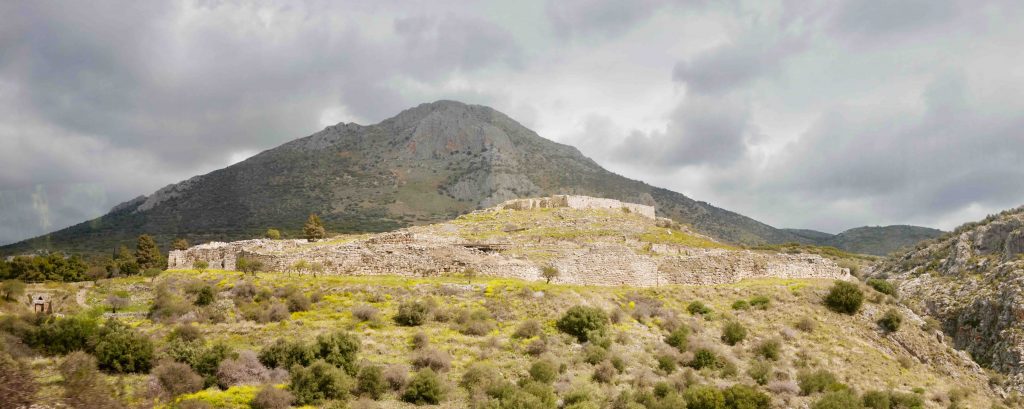
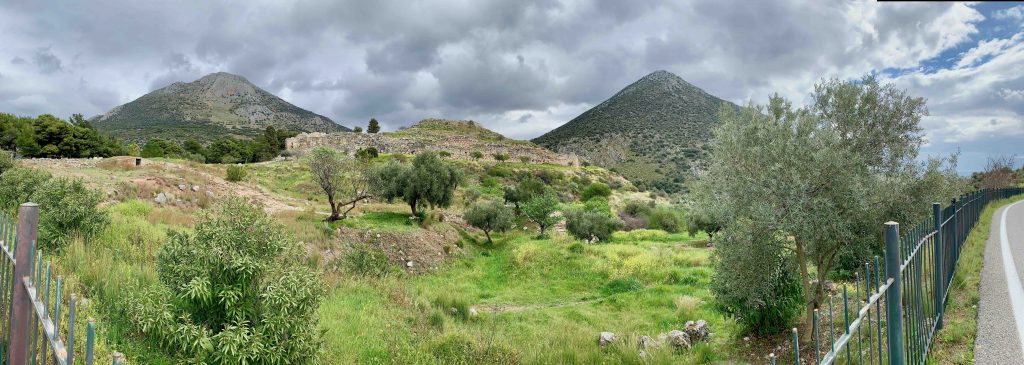
First, Mycenae. I think I first came across the Mycenians in my teens, through their role in the Trojan War. No way were we getting inside the fabled walls on this trip, with COVID-19 stalking the land, but we did have a wonderful prowl around the battlecruiser-shaped hulk of the ruined citadel, with a powerful wind thumping all around – and a fitful sun alternately shadowing and spotlighting the battlecruiser.

Earlier, we had tried to enter a nunnery, where we had been given permission to enter in groups of four. But the nuns had apparently thought better of it in the meantime. No amount of knocking or telephoning could raise them. This is what we saw when we turned our eyes from the attempts to raise the apparently dead.
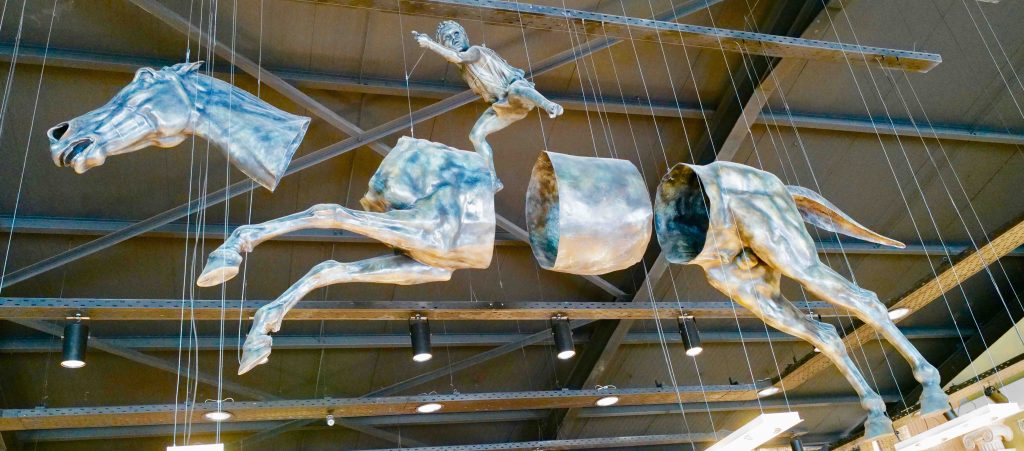
Tourist trap: A riff off the famous Artemision horse and its little jockey
Mycenae, Bronze Age battlecruiser
Panoptic view of Mycenae
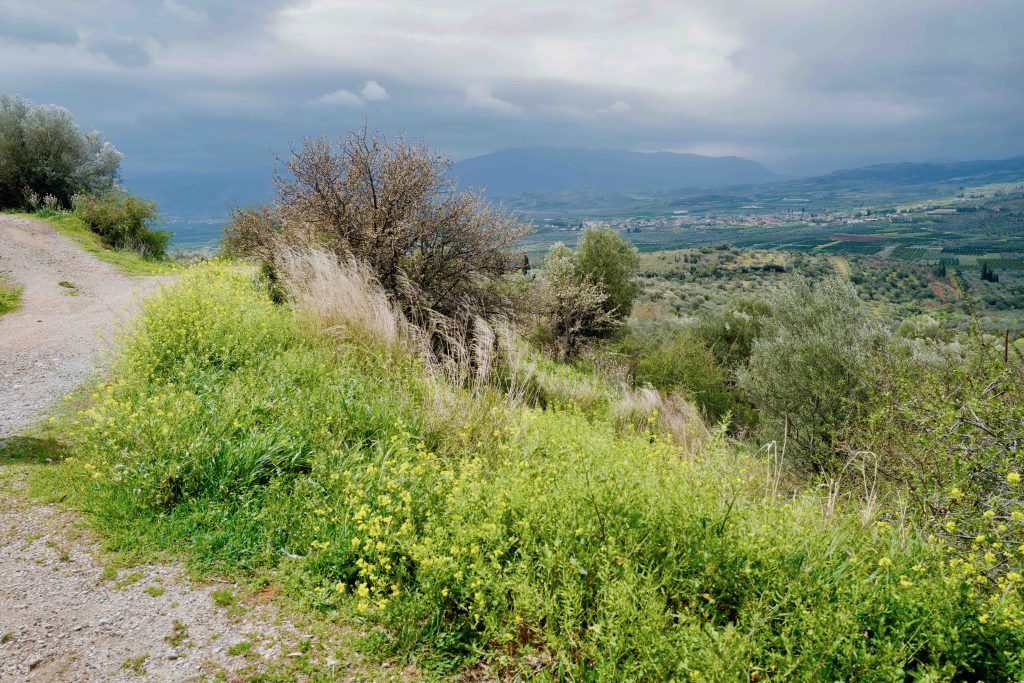
Looking the other way, into a thumping wind
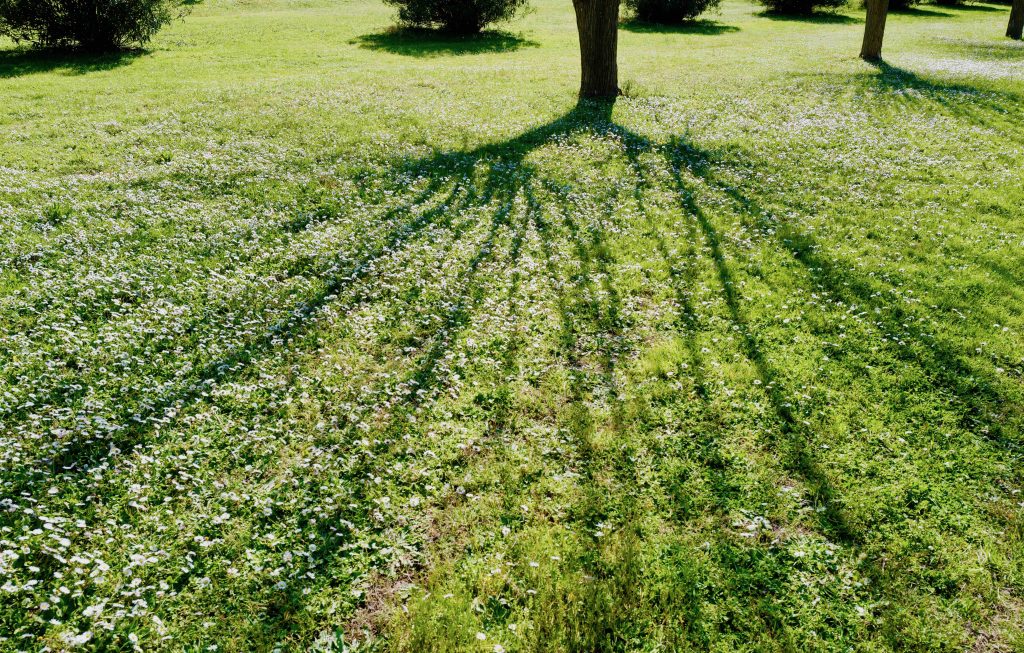
Shadow outside an ancient healing site, Epidauros
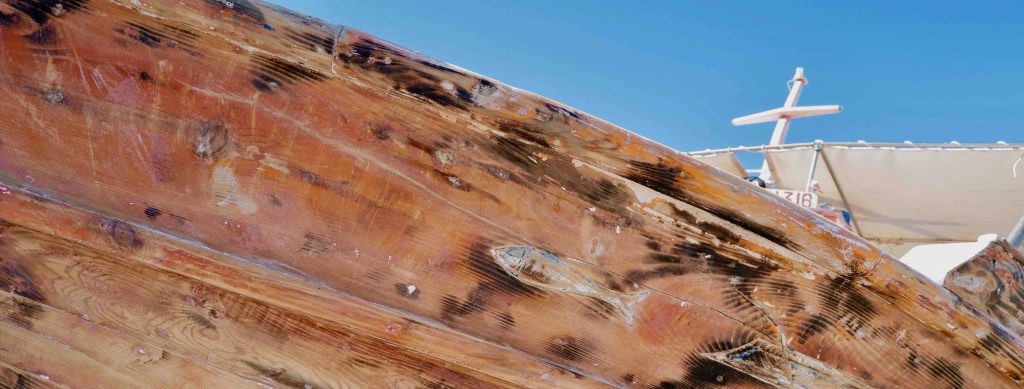
Along the coast, a fish carving on a fishing boat, awaiting repainting
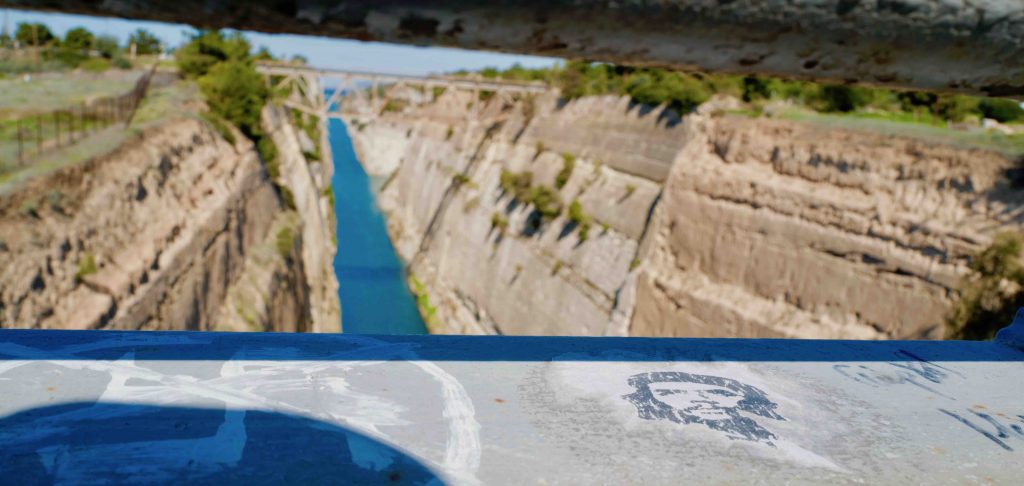
So Che did make it to the Corinth Canal …

Nafplio, With Axeman

John Elkington · 17 March 2020 · Leave a Comment

Post 6 of 7

Loved our visit to Nafplio’s (or, as we knew it, Nauplion’s) Palamidi fortress 50 years ago, back in 1970. At the time, Elaine, Rex and I sat for ages in an underground cistern, watching reflected sunlight from a high window scattering across the walls.

A natural form of the light shows in fashion at the time at places like the Middle Earth club in Covent Garden, which we haunted to see bands like The Byrds, Fairport Convention, The Incredible String Band, Pink Floyd and Marc Bolan’s Tyranosaurus Rex. Those were the days, my friend.

And here are some images from our return visit, when the town was gradually closing in on itself, because of COVID-19.

A tantalising corner of the Palamidi Fortress
Sign of the times, on Palamidi front gate
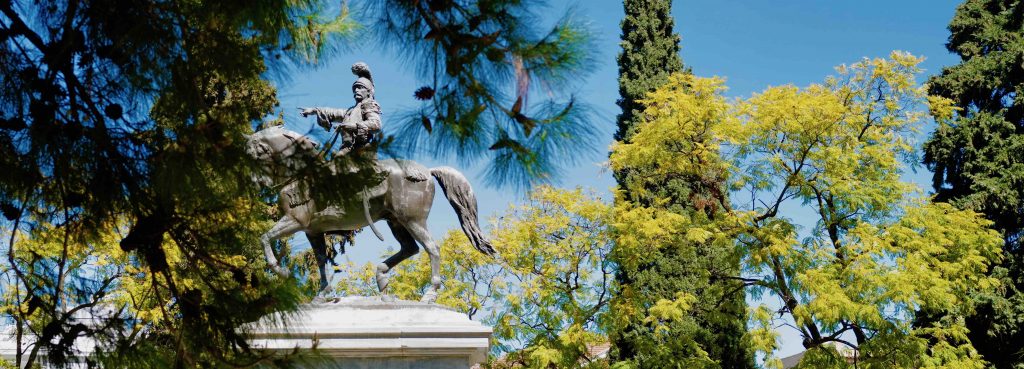
Statue of Theodoros Kolokotronis in Nafplio, a warrior-bandit made good
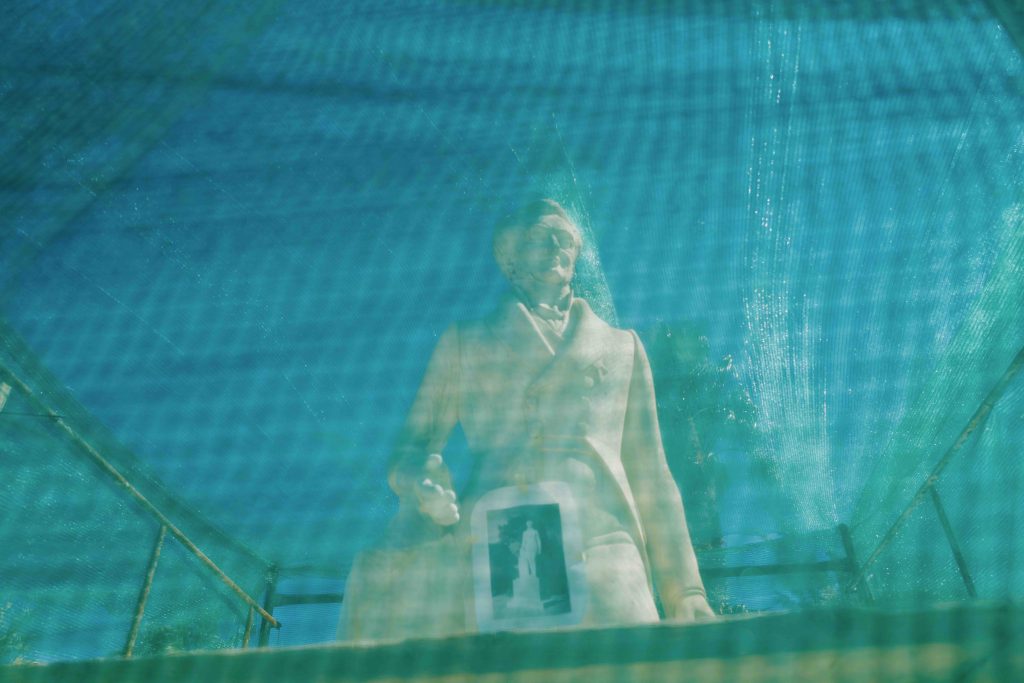
Closed for refurbishment: Ioannis Capodistria, foreign minister for Tsar Alexander I in Russia, and modern Greece’s first leader
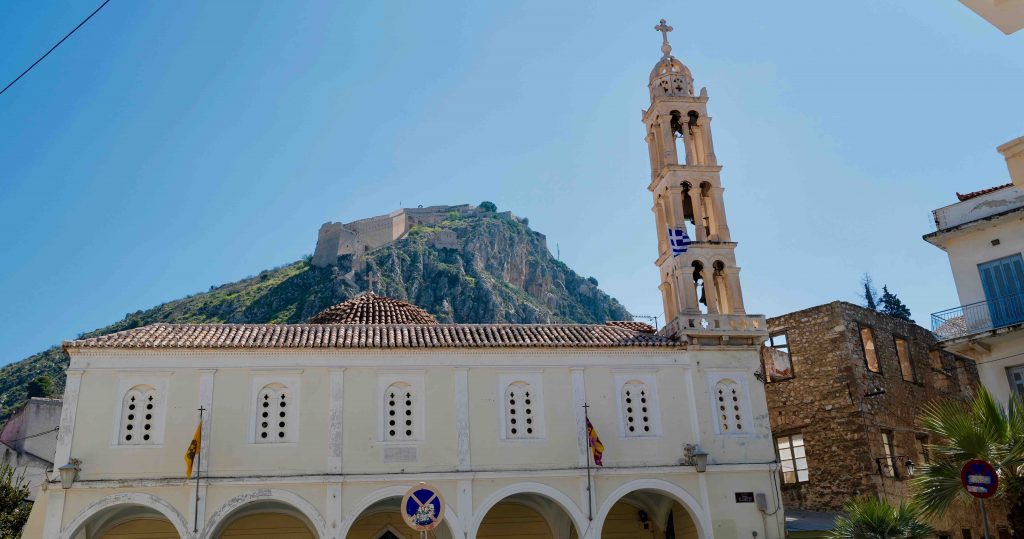
Palamidi looms over Nafplio
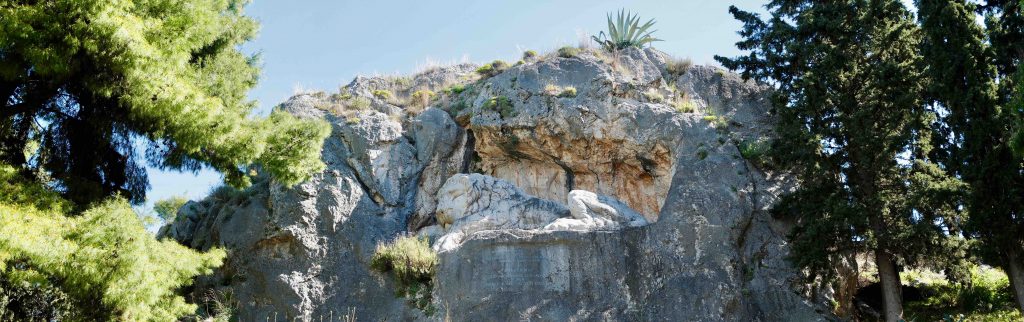
The Lion of Bavaria, commemorating Bavarian troops who died in great numbers from typhus in 1833. Service in Greece was unpopular with the Bavarians, resulting in the deaths of around half of those who served. They failed to understand the Greeks they were meant to help pacify.
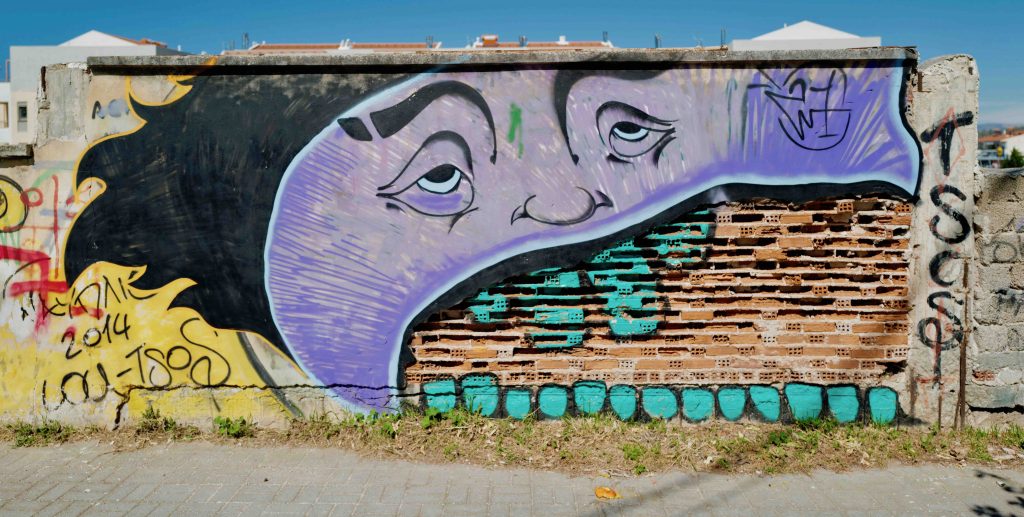
A very different artform: across the road from the Lion of Bavaria statue
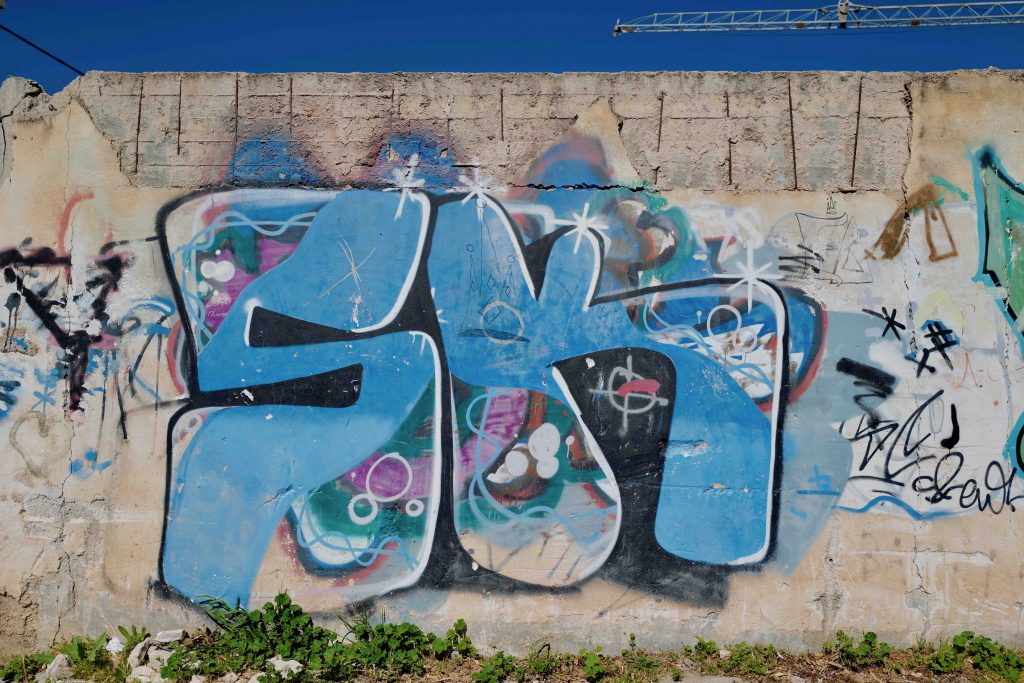
And a little further along
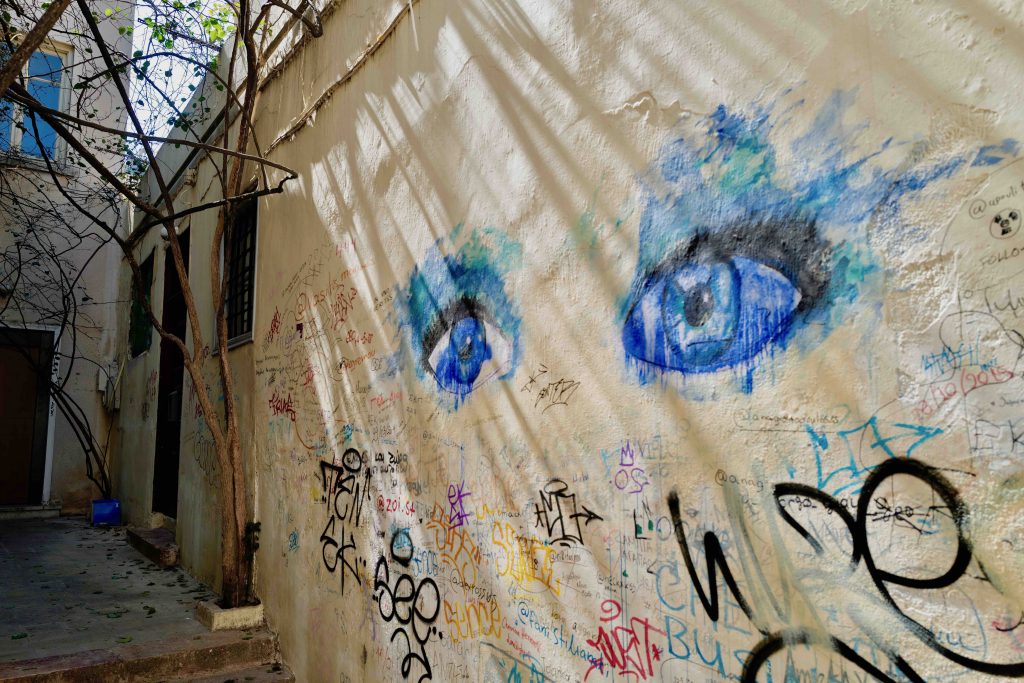
The eyes have it
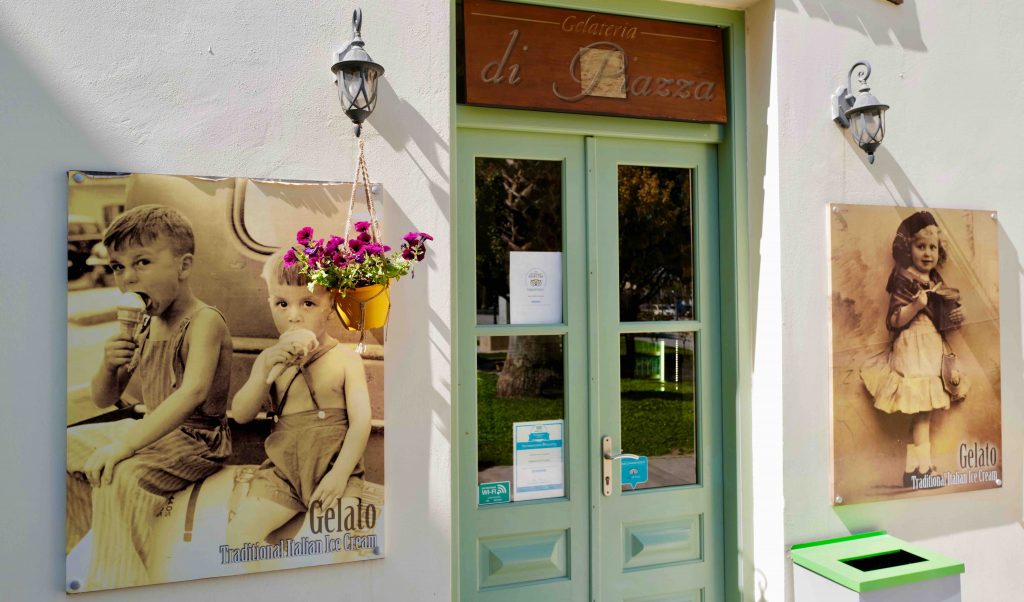
Ice cream parlour, empty
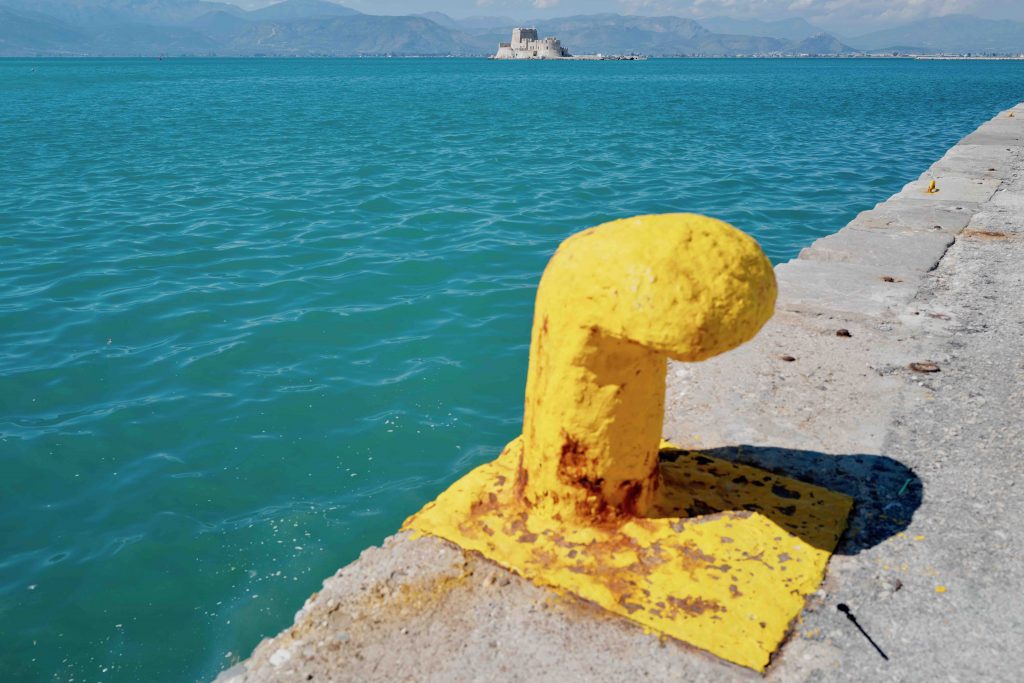
A distant Bourtzi Castle from Nafplio waterfront

Altogether, we were four nights at the Amalia Hotel outside Nafplio, a great base for exploring the city and region. But very few other people were staying – and on the day we left to fly back early to the UK, they closed the hotel entirely.

Lovely to hear frogs in the landscape around the hotel – and to see bats flitting across the evening sky.

One less romantic memory surfaced, however, when George Terezakis, our Greek guide, pointed out the local open prison as we drove by. Near the Mycenian ruin of Tiryns.

That did it. We recalled pulling our Landrover off the road nearby back in 1970. Elaine and I were sleeping in the back of the vehicle, while the others slept around about in tents.

In the morning Elaine woke up from dream that someone was sawing off her feet, which protruded onto the Landrover’s tailgate. Lifting the tarpaulin backflap, she saw a man standing outside, with an axe.

We began talking to him, in French, I think. Turned out he was from the nearby open prison. We asked why he had been imprisoned. He said he had killed his wife’s lover. With an axe. Otherwise, a perfectly charming man.

Delphi By Skin Of Our Teeth

John Elkington · 13 March 2020 · Leave a Comment

Post 2 of 7.

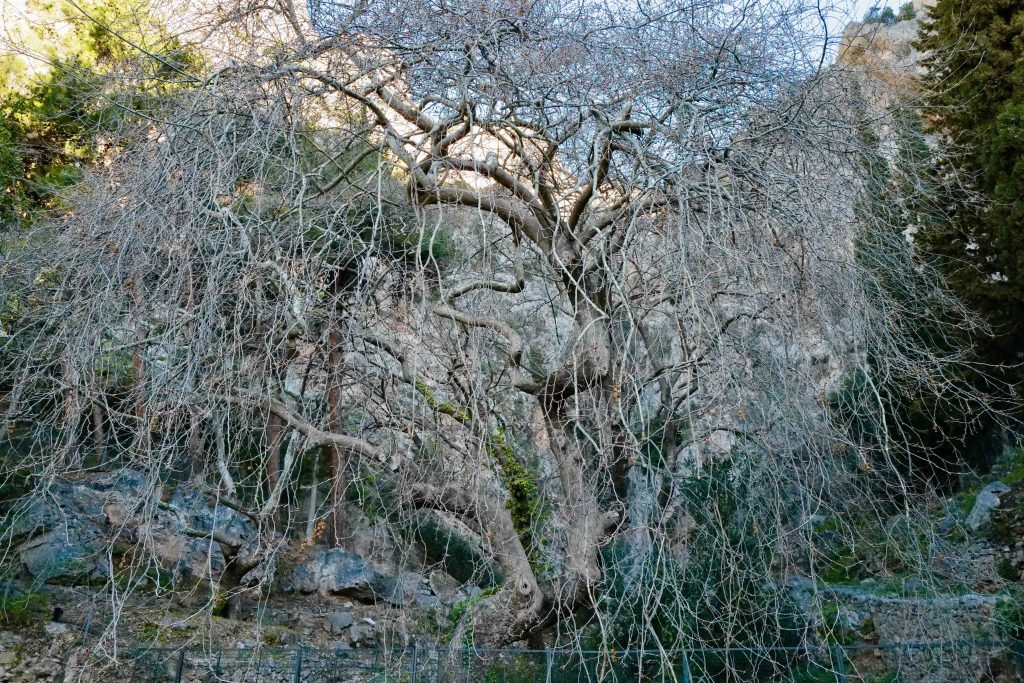
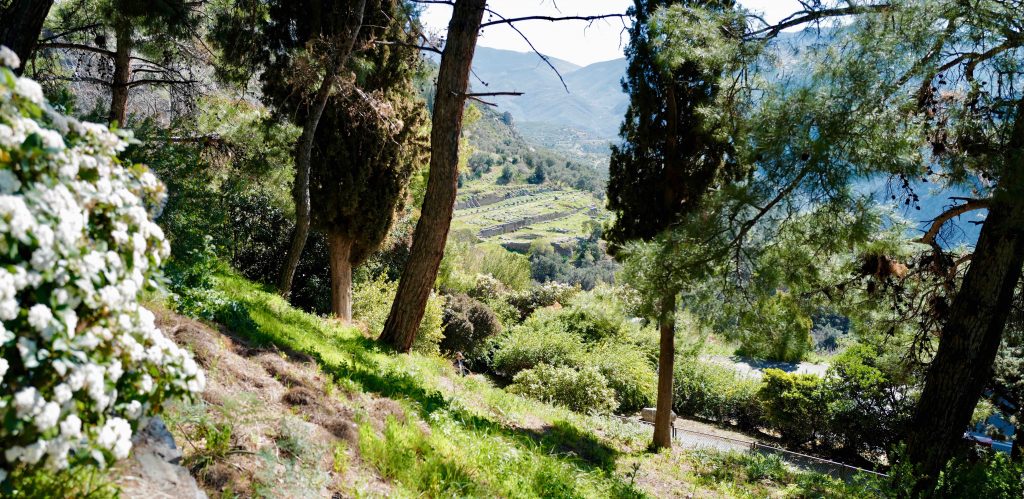
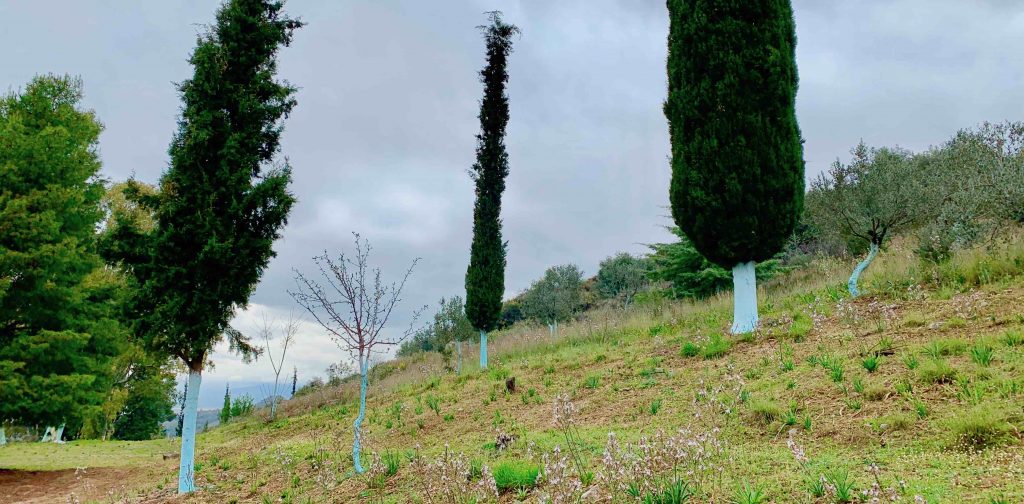
Delphic tree, by some part of the Castalian spring watercourse, from which Elaine and I drank, in hope of insight and foresight
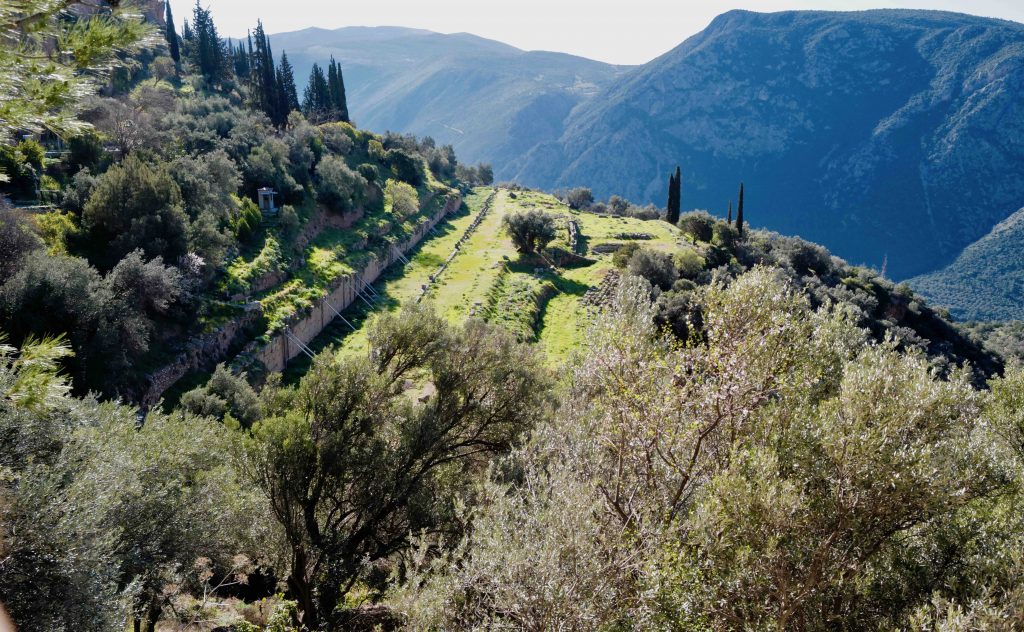
As we arrive, an illuminated landscape downhill
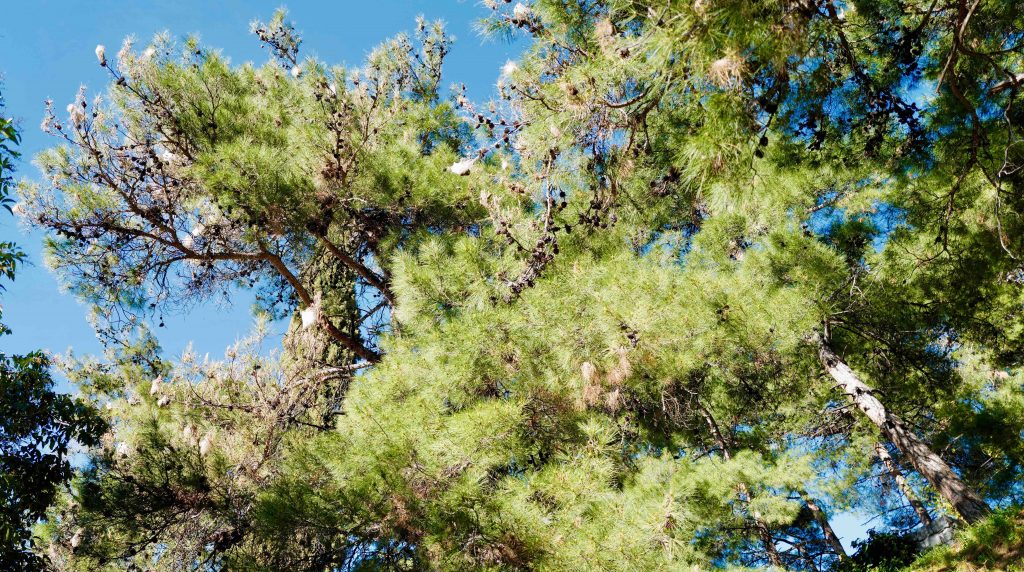
Pine trees infested with pine processionary moth
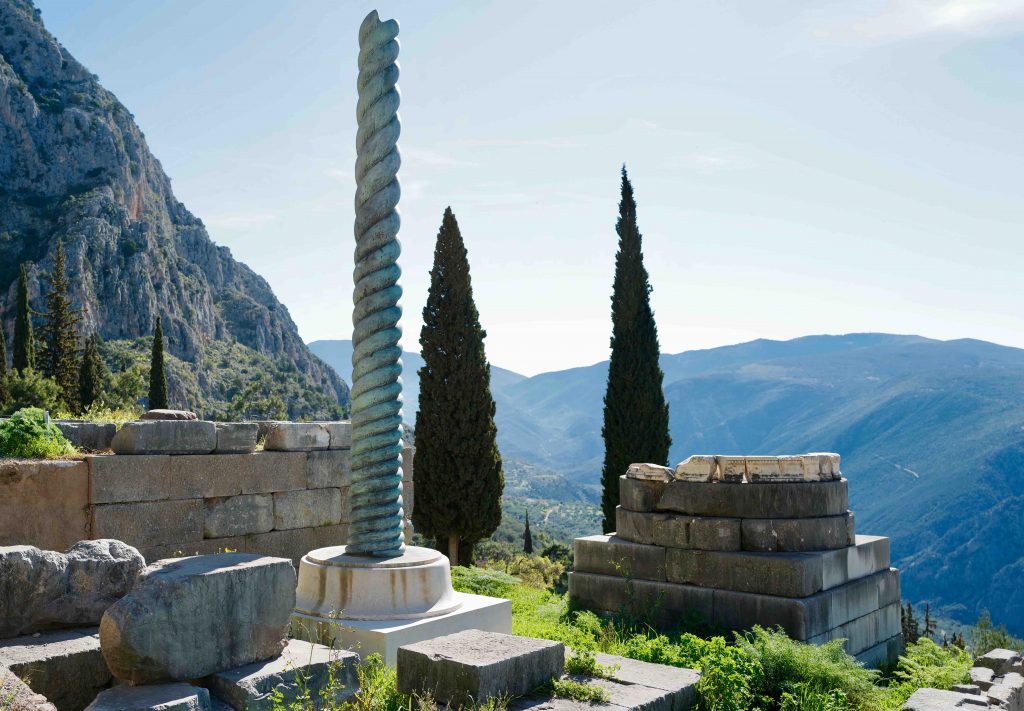
The Serpent Column, headless
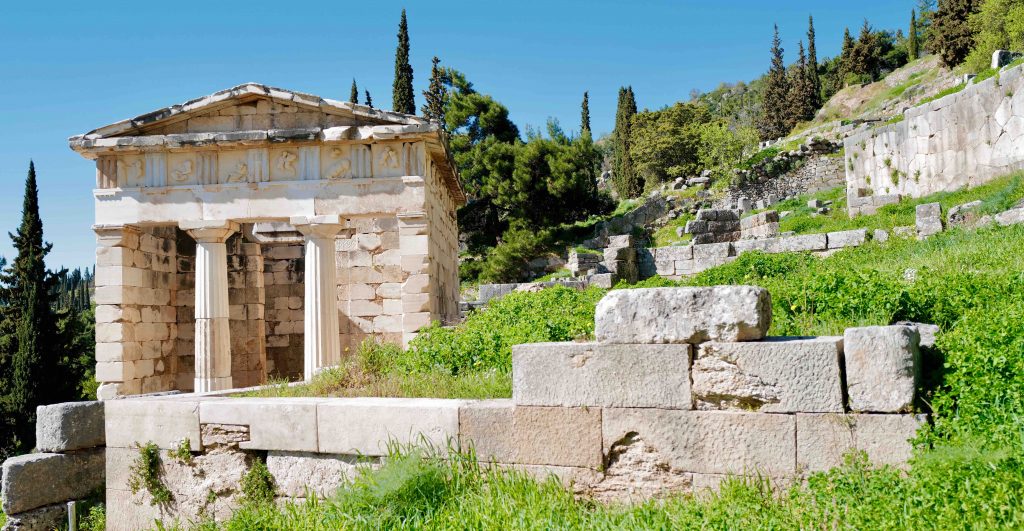
The Athenian Treasury
Looking back across the site, the landscape humming with bees
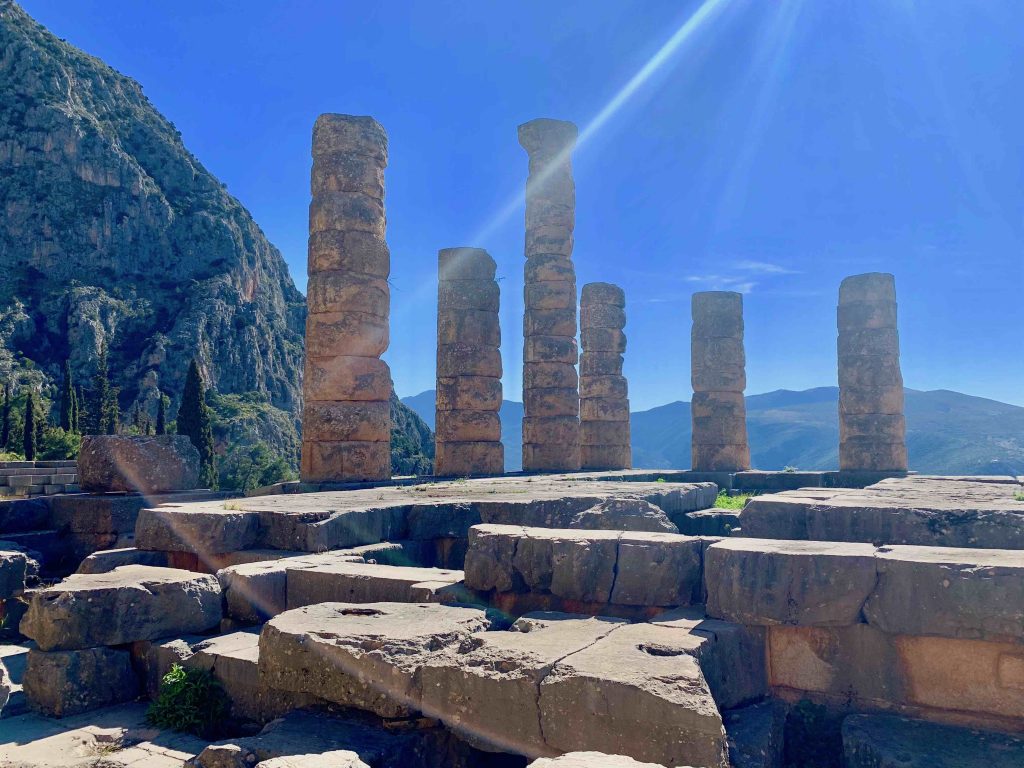
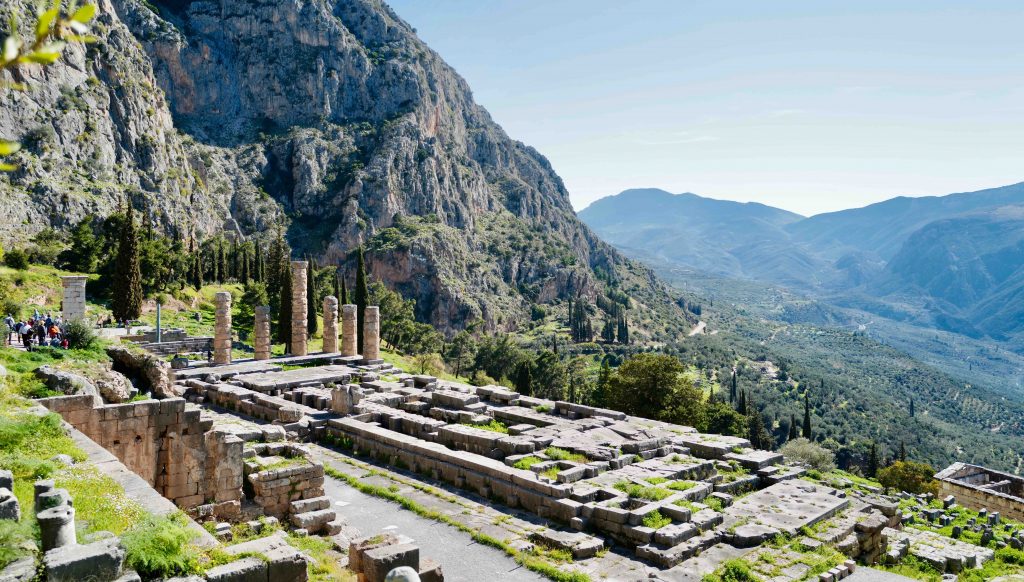
Part of the Temple of Apollo, where the Pythia sat – though our guide, Jeremy Paterson, disputed reports of gases intoxicating priestesses sitting on a tripod above a sacred chasm. I still like the story : )
I get away from the group, in search of peace, quiet and an overview
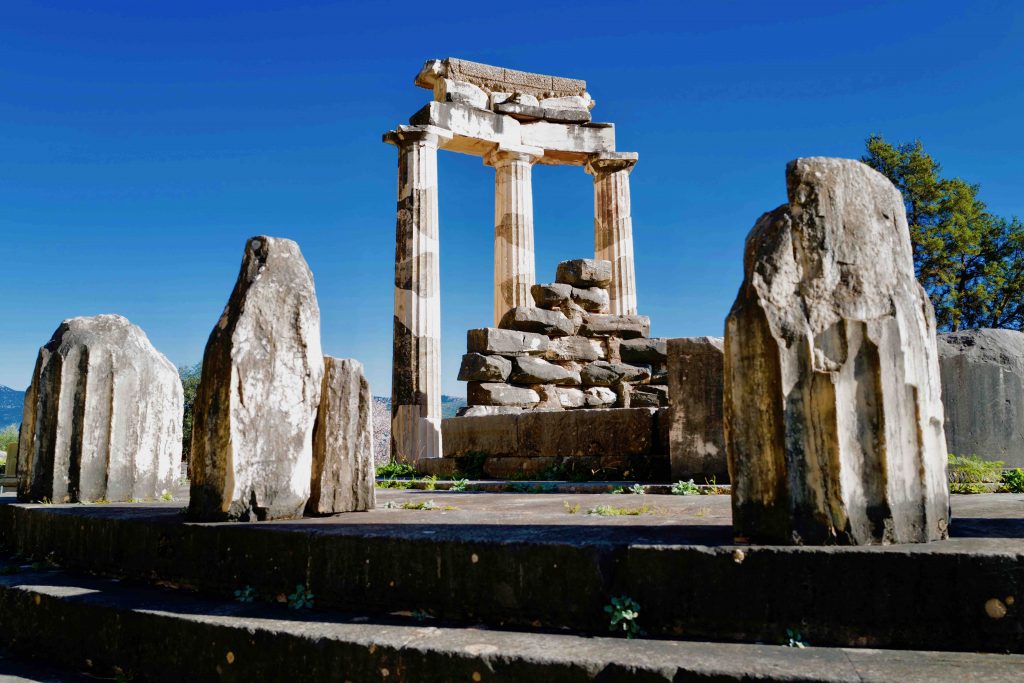
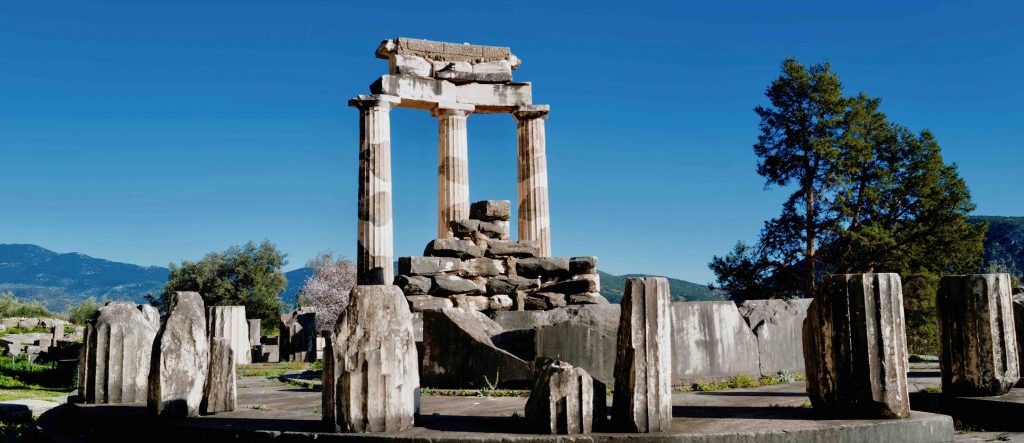
The Temple of Athena Pronaia, which we at least glimpsed in 1970
Ditto
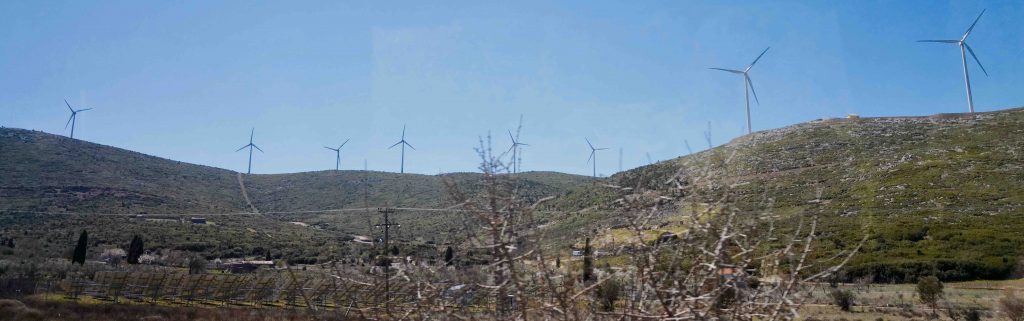
What question would you have had to ask the Pythia to get her to predict this horizon?
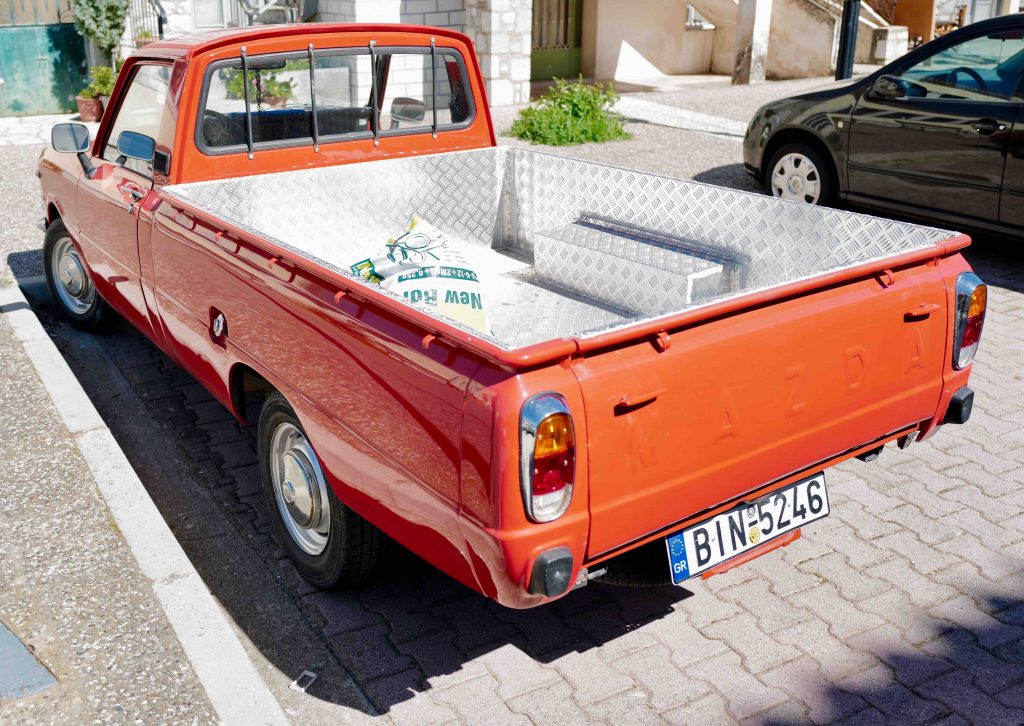
Or horseless carriages?
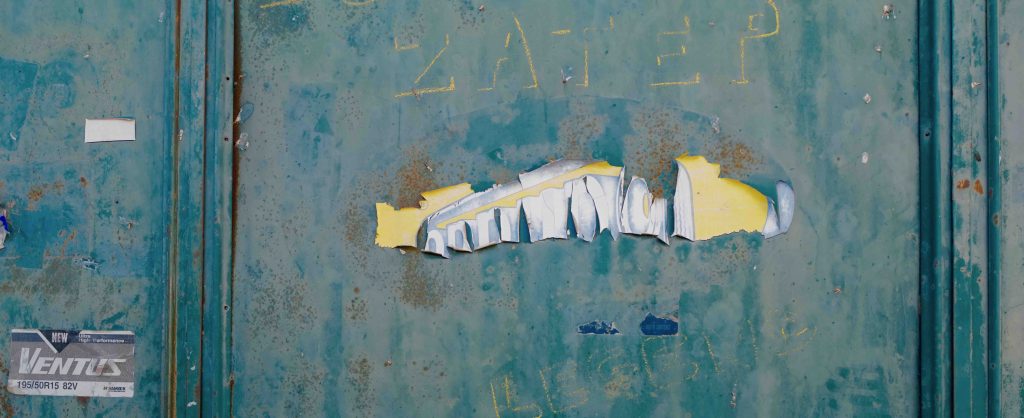
Maybe the future is encoded in peeling paint on a door?

Finally made it to Delphi, 50 years after we arrived to find the site closed – as explained in a previous post. The site was simply humming with bees this time, though the sight of pine processionary moth cocoons in some of the trees was distressing. The museum closed before we could get to it – and not too long afterwards the site as a whole was closed. But we had moved on by then.

A truly wonderful visit, with relatively few other people visiting such sights as the temples of Athena Pronaia and, higher up, of Apollo. A fuller account of the site’s history can be found here. One bit of the recent story that Jeremy (Paterson) challenged was the idea that gases from a chasm under the site had helped induce a state of trance in the priestesses. I confess, though, that I still find the explanation seductive – even if many shamans can get there unassisted.

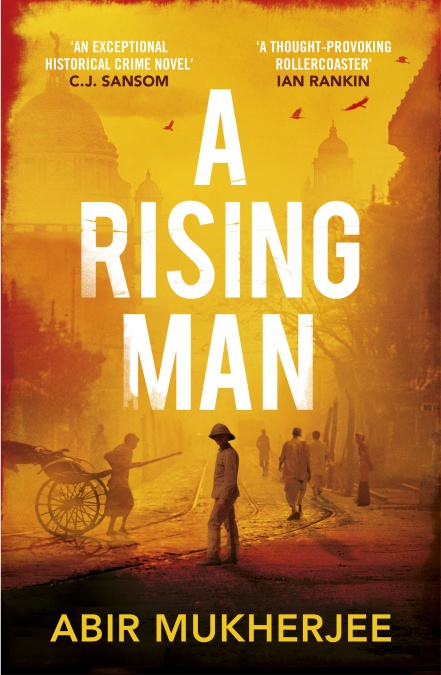
As we travel, with a fair number of books in our baggage train, I have been reading A Rising Man, by Abil Mukherjee. A wonderfully engaging portrait of Calcutta back in 1919, just after WWI, with a simmering independence movement that would take another 30 years to come to blood-spattered fruition.

And I find myself constantly wondering what it is about today’s world, apart from COVID-19, the gathering climate emergency and the exponential undermining of the natural world, that we ought to be paying more attention to as clues to the future in the present?

  • « Go to Previous Page
  • Go to page 1
  • Interim pages omitted …
  • Go to page 30
  • Go to page 31
  • Go to page 32
  • Go to page 33
  • Go to page 34
  • Interim pages omitted …
  • Go to page 134
  • Go to Next Page »

Primary Sidebar

Introduction

I began this blog with an entry reporting on a visit to the Woods Hole Oceanographic Institution on Cape Cod, on 30 September 2003. The blog element of the website has gone through several iterations since, with much of the older material still available.

Like so many things in my life, blog entries blur the boundaries between the personal and the professional. As explained on this site’s Home Page, the website and the blog are part platform for ongoing projects, part autobiography, and part accountability mechanism.

In addition, my blogs have appeared on many sites such as: Chinadialogue, CSRWire, Fast Company, GreenBiz, Guardian Sustainable Business, and the Harvard Business Review.

Recent Comments

  • John Elkington on The Hill House Elkingtons
  • sally fitzharris. (Rycroft) on The Hill House Elkingtons
  • Thomas Forster on Reminder of Glencot Years

Journal Archive

About

John Elkington is a world authority on corporate responsibility and sustainable development. He is currently Founding Partner and Executive Chairman of Volans, a future-focused business working at the intersection of the sustainability, entrepreneurship and innovation movements.

Contact

john@johnelkington.com  |  +44 203 701 7550 | Twitter: @volansjohn

John Elkington

Copyright © 2026 John Elkington. All rights reserved. Log in