• Skip to primary navigation
  • Skip to main content
  • Skip to primary sidebar
John Elkington

John Elkington

A world authority on corporate responsibility and sustainable development.

  • About
    • Ambassador from the future
  • Past lives
    • Professional
      • Volans
      • SustainAbility
      • CounterCurrent
      • Boards & Advisory Boards
      • Awards & Listings
    • Personal
      • Family
      • Other Influences
      • Education
      • Photography
      • Music
      • Cycling
    • Website
  • Speaking
    • Media
    • Exhibitions
  • Publications
    • Books
    • Reports
    • Articles & Blogs
    • Contributions
    • Tweets
    • Unpublished Writing
  • Journal
  • Contact
  • Show Search
Hide Search

Search Results for: Tim elkington

SustainAbility Archive

If I had to pick just one thing I was proudest of in my working life, it would be co-founding SustainAbility. When I recall it pretty much started in our kitchen and a couple of back bedrooms, it’s really quite extraordinary to see what the organisation has become. We are now expanding, both in numbers and in the number of offices, but for more than a decade we struggled continuously to keep our size down. We expressed it—in words coined by my co-Director Geoff Lye—by saying we wanted to grow our influence, not our numbers.

A key reason was that we wanted to retain our independence and our strong links with NGOs, which we felt might be compromised if we grew our overheads too fast and were forced to take whatever work came along. We saw a fair few competitors go down this track and implode. In the event, our strategy has worked pretty well, even though some of the ethical dilemmas we have had to tackle have been very challenging.

To help us in the process, we have been extremely lucky to be able to recruit a world-class Council and Faculty. In various ways they—and our Board, with Tom Delfgaauw as our first Non-Executive Director—have helped us tackle such dilemmas—and navigate our way through the complexities of life at the interface between markets and ethics.

A corporate hybrid: When founded in 1987, SustainAbility was the world’s first consultancy operating at the business end of sustainable development. When registered, its founder-directors were Julia Hailes and myself, though Tom Burke had given important early help.

Throughout, SustainAbility has been a hybrid, combining elements of a consultancy, a think-tank and a campaigning group. Its evolution is sketched under Timelines.

In November 2005, I took a new role and title: ‘Founder and Chief Entrepreneur’, having previously been Chairman/Chair from 1995. Simultaneously, Sophia Tickell took over as Chair and Mark Lee as our first CEO. Some thoughts on my new role can be found at http://www.sustainability.com/about/about-article.asp?id=388.

By early 2003, SustainAbility had offices in London and New York (subsequently moved to Washington, DC), with a core team of 22 people, of 10 nationalities, and a Council and Faculty of more than 50 experts worldwide. A Zurich office opened in the autumn of 2003.

Reality Check: The company’s 15-year progress report, Reality Check, can be downloaded as a pdf file from SustainAbility. A sense of what life at SustainAbility was like in the early years can be had from my published diary of 1989, A Year in the Greenhouse (1990).

Publications: Almost all of the reports I have worked on since 1987 have been produced—and most published—by SustainAbility
Exhibitions

This is now historic, given that our role in organising exhibitions is largely a thing of the past. But, for the record, here are some we have been involved in:

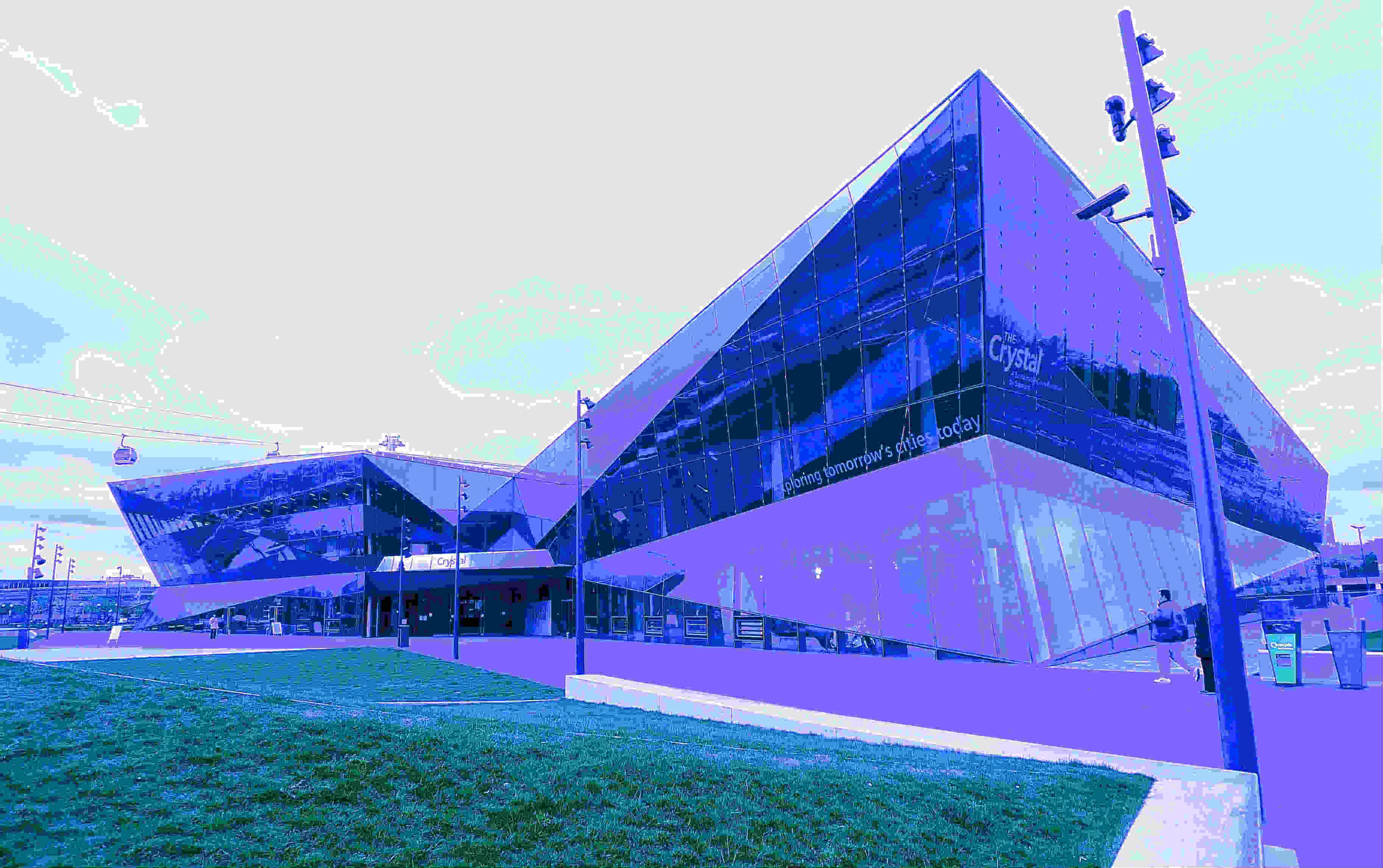
JE Crystal 2

London’s Docklands now feature sustainability exhibition venues like the Siemens Crystal (above), a huge jump forward from the People’s Habitat event I was involved in organizing in Surrey Docks way back in 1976.

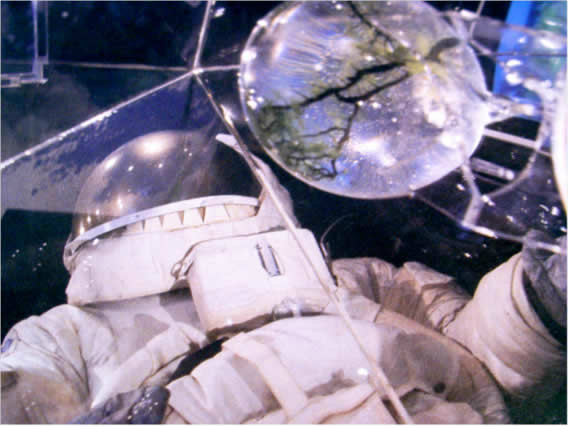
Probably the most effective I have been involved in was 1986’s ‘Green Designer‘ exhibition at the Design Centre. Writing the catalogue led me to raise the question whether the products featured (from NASA space-suits to Rolls-Royce key engines) would appeal to business and, critically, to what I dubbed the ‘Green Consumer’. And that led, a couple of years later, to The Green Consumer Guide.

Rather typically, though, I missed the high-profile launch of the Green Designer exhibition: I was travelling yet again, even then. Such events have been another way of getting our thinking and messages into the minds of ordinary citizens. If a chance to do another of these came along, I would jump at it, despite the extraordinary complexities involved in developing a good exhibition.

Here are some of the exhibitions and similar events we have been involved in:

1992

The Holiday Extravaganza
To launch the book Holiday’s That Don’t Cost the Earth.

1990

Britain’s Greenest School Competition
To build on the success of The Young Green Consumer Guide.

1989

Green Shopping Day
To reinforce the impact of The Green Consumer’s Supermarket Guide.

1989

The Kitchen that Cooks without Roasting the Planet
SustainAbility and Friends of the Earth, at the Daily Mail Ideal Home Exhibition.

1988

Green Consumer Week
To launch The Green Consumer Guide and associated campaigns.

Green Designer 2

Two globes, NASA spacesuit and an EcoSphere at the Green Designer exhibition

1986

The Green Designer 
Exhibition at the Design Council, London – the first time the ‘green consumer’ term, which I coined for the purpose, surfaced.

1976

People’s Habitat
Spread across London’s Surrey docks, this was a counter-blast to the UN Habitat Conference of the same year.

Media


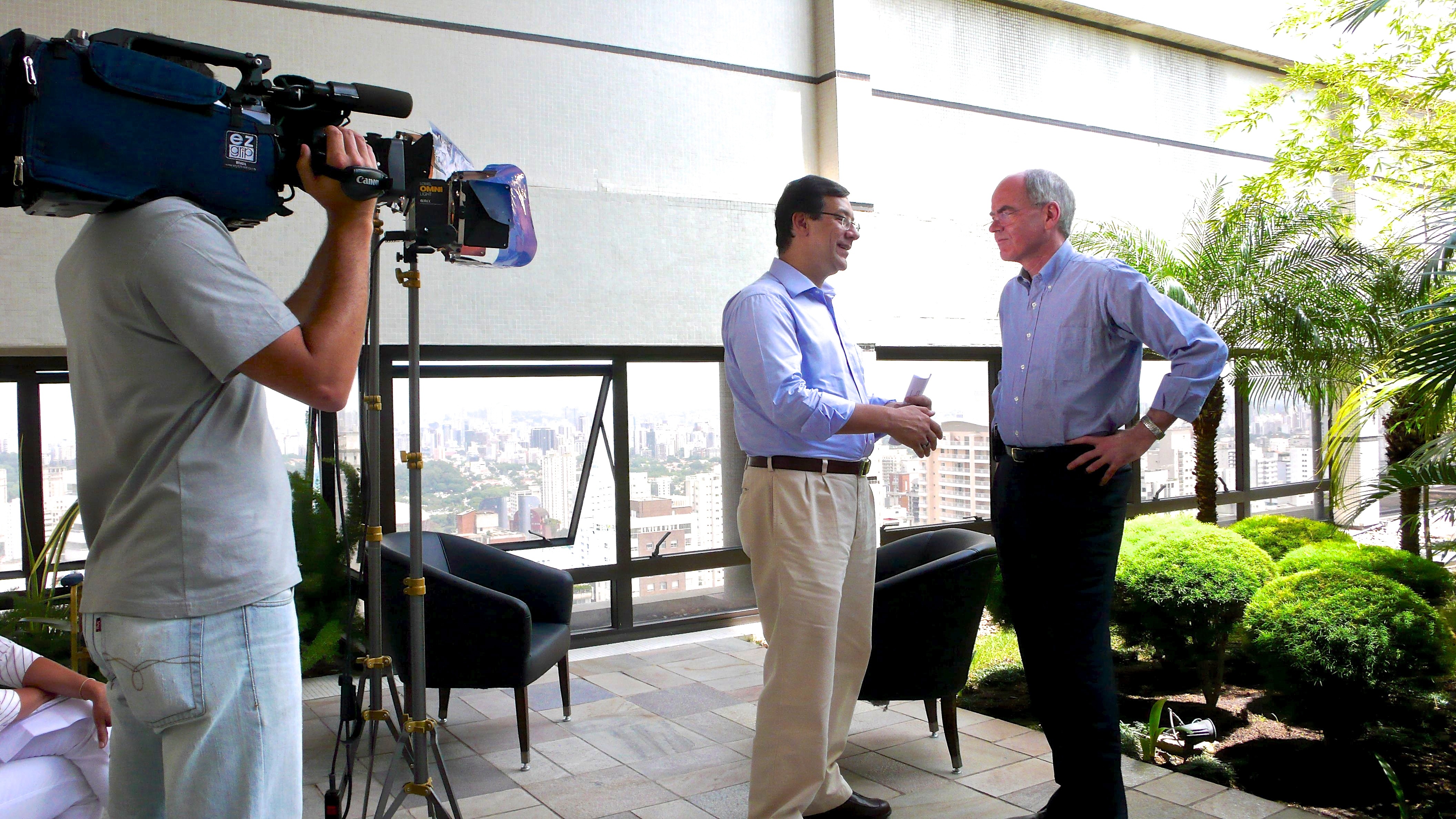
Filmed in Sao Paolo, 2009

Globonews TV interview in São Paulo, 2009

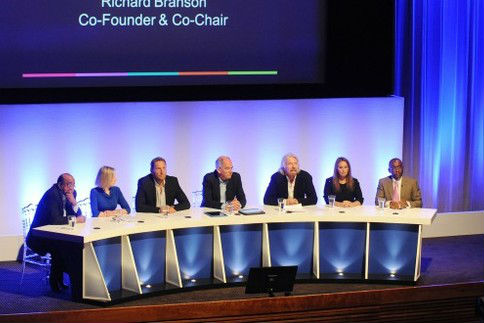
b_team_panel-18533-530x330_news_featured

Sandwiched between Jochen Zeitz and Richard Branson, I chair London online launch of The B Team, 2013

JohnElkington_arms crossedJune07_green 2

Photo for a Brazilian business magazine, taken in 2007 (photo: Paulo Varella, Photoart)

Media coverage of our work goes in waves. It also happens in different parts of the world at different times. We have been poor over the years at capturing the coverage as it happens, because of the sheer volume, though there are several boards in the Volans office where the latest media coverage is displayed. The striking thing is how many languages are featured. And a more up-to-date listing of the articles we do ourselves can be found on the Volans website, here.

Much of the media coverage of our thinking and work has been self-generated, as for example in my first blog for Huffington Post in 2014.

For a sense of the sort of wider media coverage we have had in recent years, here are some filmed interviews that surfaced in our first trawl for this website:

  • Livemint.com, Mumbai, India, 2014
  • India CSR, India, 2013
  • Verantwortung Zukunft, Munich, Germany, 2013
  • Bayer MaterialScience, London, UK, 2013
  • Sky Business News/Centre for Social impact, Australia, 2010
  • Wayne Visser interviews, Athens, Greece, 2010
  • Cambridge University Institute for Sustainability Leadership, interview by Wayne Visser on aspects of our evolving thought leadership:
  • The Economist, London, UK, 2009
  • Harvard Business Publishing, Watertown, MA, USA, 2008
  • Cranfield University School of Management, Doughty Centre for Corporate Responsibility, 2008
  • Valor Econômico, Brazil, 2008

In terms of online interviews and other forms of coverage, here is a small sample:

  • Skoll World Forum ‘Future-proofing Business’ session, Oxford, 2014
  • Interface ‘Cut the Fluff’, 2013
  • Guardian Sustainable Business Awards, tribute to Ray Anderson of Interface, 2012
  • Positive Luxury Q&A, 2012
  • Mother Jones, 2008

This is a section of the website that will be evolved in future.

Sp(r)outing: A cartoon from a Marketing Week article in 1989

Sp(r)outing: A cartoon from a Marketing Week article in 1989

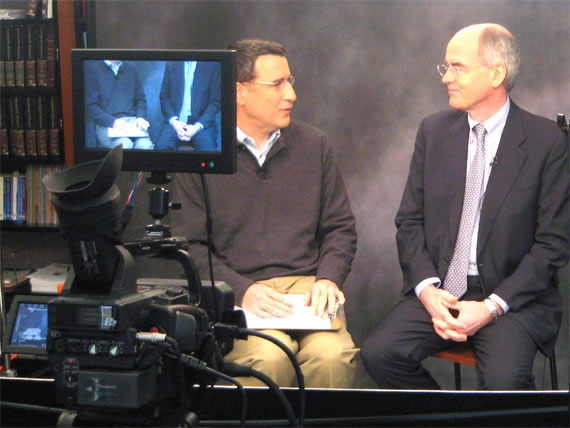
On Screen: Interviewed by Paul Michelman at Harvard Business School Press, 2007

On Screen: Interviewed by Paul Michelman at Harvard Business School Press, 2008

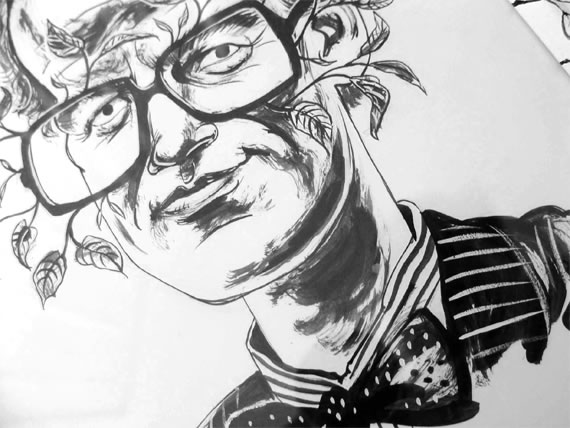
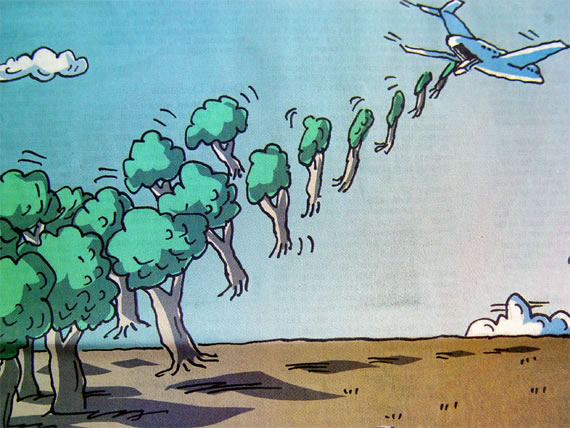
Treed: Section of a cartoon that appeared with a long (and not always favourable) profile of me in the Wall Street Journal Europe

Treed: Section of a cartoon that appeared in the 1990s with a long (and not always favourable) profile of me in the Wall Street Journal Europe, not then a great champion of the sustainability agenda

Cycling

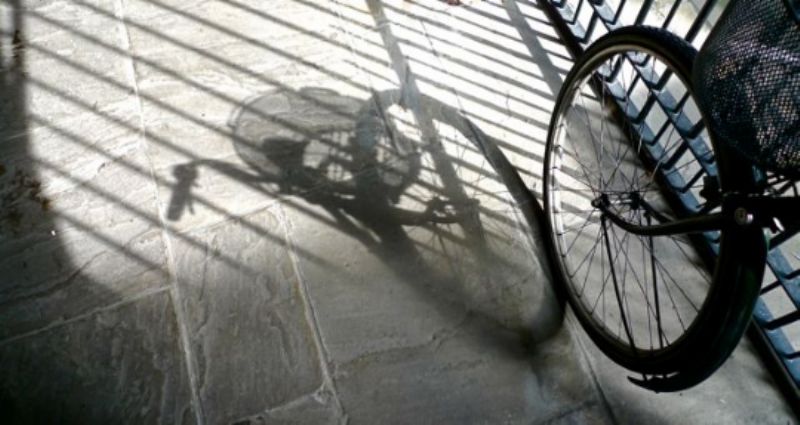
W1 A bike shadow around the corner from 2 Bloomsbury Place

I remember being given my first bicycle, in the 1950s, on the farm outside Limavady in Northern Ireland. I remember getting aboard and hurtling down the bumpy drive, across a (happily not then very much trafficked road) and into the hedge on the other side.

I learned about brakes later that day.

Over the years, cycling has given my huge joy, not least when Kensington Gardens and Hyde Park were opened up to cyclists. In the process, as with many migratory birds, my commute got steadily longer. In the early 1970s, it was from Covent Garden to the Belgrave Square area. When we moved to Barnes in 1975, it took me until the early 1990s to get back into longer haul cycling, initially to the Notting Hill area (when SustainAbility moved there), then Kensington High Street, then Knightsbridge, then Bedford Row in Holborn, and (when we founded Volans) Bloomsbury Square.

As noted below, for much of this time there was an undeclared war between drivers and cyclists, with the result that in around 40 years of cycling I have been left unconscious in the road no less than four times.

My trusty companion through the past 25-plus years has been a Dawes (appropriately named, as it turned out) ‘Mean Streets’ bike, which is pretty heavily built, but its crossbar still shows the scars of the second major accident. Strikingly, another cyclist slowed down alongside me as I pedalled north parallel to Park Lane a few years ago, and offered to buy the bike. I was pleased, of course, but couldn’t imagine parting with it.

Cycling 1: In over 30 years of cycling in London, I have been left three times unconscious, twice with three broken ribs. In 1975, an Indonesian man hit me in Covent Garden, in 2006 a Mongolian woman in Olympia—adding insult to injury by hitting me while I was in a cycle lane. But cycling remains one of my greatest joys …

Cycling 1: In over 40 years of cycling in London, I have been left unconscious four times, twice with three broken ribs. In 1975, an Indonesian man hit me in Covent Garden. In the 1990s a car without lights drove into me in Lonsdale Road in the midst of a downpour at night, and didn’t stop. In 2006 I was hit by a Mongolian woman in Olympia—adding insult to injury by driving into me while I was in a cycle lane. Then, in 2013, three young men in a car hit me from behind in Berwick Street, semi-deliberately, then fled the scene. A long queue of witnesses formed, the case went to trial and the driver paid the penalty. Even so, cycling remains one of my greatest joys.

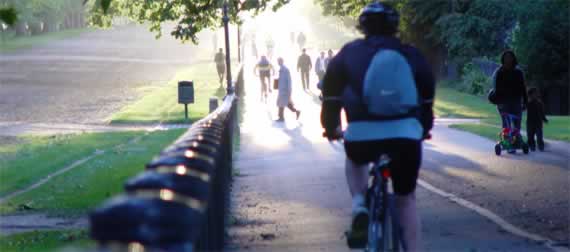
Cycling 2: … as this everything-is-illuminated moment in Hyde Park symbolises

Cycling 2: … as this everything-is-illuminated moment in Hyde Park symbolizes

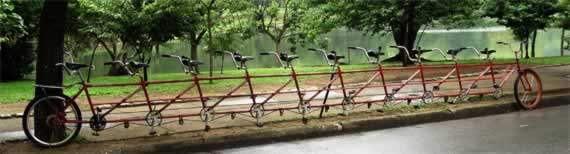
Cycling 3: And then there’s the camaraderie that comes from cycling on a bicycle made for 10—this one snapped in Brazil

Cycling 3: And this could be a symbol of my working life. A bicycle made for 10—snapped in Brazil

Website

In its 2020 version, this website embraces the Green Swan agenda

Looking back, I have been fairly early into areas like personal websites, blogging and tweeting, always interested to find new ways to learn and communicate. The origins of this website lay in a desire to capture what it was like in the relatively early days of the evolving environmental, social innovation and sustainability movements.

The idea was also to explain to the wider world what we were doing and what was working, and what wasn’t.

A decade in, however, our original webmaster absconded to New Zealand. Still, dark clouds, silver linings. I am still immensely grateful to Geoff Kendall, Sam Lakha and Chris Wash for wading in and rescuing the bulk of the old content.

Now the site is evolving for the next stage in my thinking, built around the idea of the Green Swan. More, as they say, anon.

And, by way of background, here is some archive text from the old site which explains some of the original reasoning behind the site:

Archive text from 2003, updated 2008

THE BABELFISH AND THE WEBSITE

I am often asked what exactly it is that I do. Difficult. When filling in the ‘Please state profession’ line on passports and other forms I have long been tempted to write ‘Babelfish’, which I’ll explain in a moment.

And the website? It’s a fairly natural outflow from work I have done under the guise of John Elkington Associates (JEA), founded by Elaine and I in 1983. Later, I changed the name to CounterCurrent.

In compiling the original version of the website, with the help of Rupert Bassett and Lynne Elvins, I was forced to plumb my core values, powerfully shaped by pressures and opportunities described elsewhere on the site.

Eight values that bubbled to the surface were:

– Evolution: Real change happens over generations

– Sustainability: Future generations as stakeholders today

– Diversity: Evolution feeds on difference

– Transparency: Sustainable economies are see-through

– Conversation: Wellspring of insight

– Memory: Capture lessons of experience

– Intuition: Facts only get you so far

– Serendipity: Learn from mistakes and accidents.

These values also eddy through the visual aspects of the site, including the logo. Click here for Rupert’s explanation below of how the original imagery evolved.

And the Babelfish? My work has often run counter-current, hence the imagery of fish swimming against the flow. At Volans and SustainAbility, too, we have aimed to drive the discussion of problems upstream – from symptoms to causes in pursuit of real cures.

But maybe the story runs deeper still. I was born in a mill-house cottage on an island in the Kennet, a tributary of the Thames. Later, as a child, I would find myself surrounded by elvers on a moonless night in Northern Ireland, or communing with wildlife along rivers in Gloucestershire, Somerset and Dorset.

And once we had decided to use fish for our new logo, the imagery proved surprisingly apt. Fish, it turns out, symbolise reproduction, life, freedom, the emotions, our unconscious, the quest for enlightenment, flashes of intuition, prophecy, fertility, plenty, prosperity, good luck, longevity and rebirth. Salmon, the ultimate homing fish and recently returned to the upper Thames, near our London home, symbolise wisdom – vital in a world flooded with data and information.

And that’s where the Babelfish fits in. Brainchild of the late, great sci-fi author Douglas Adams, it was billed as the universal translator. Slip the creature into your ear, we were told, and you could suddenly understand all the Galaxy’s languages. If any one organism symbolises my aspirations, and my work across the turbulent, blurring boundaries between business, financial markets, governments and civil society, this is it.

Finally, for the record, here is the text in which the original logo designer, Rupert Bassett, explained the origins of the fish logo:

fish

Part of the original CounterCurrent design for this website, by Rupert Bassett

Pre 2008 Design by Rupert Bassett

rupert.bassett@btinternet.com

John’s original design brief was to produce graphic imagery which would convey the idea of “swimming against the stream”, a strong metaphor for his campaigning lifestyle. In addition to this, as he communicates using many different forms of media, I was looking to create a flexible graphic system which could be applied quickly and consistently across multiple formats.

The Generic Form
After some study of streaming water and the mechanics of fish propulsion, I found an answer to the brief in the similarity of the forms involved in “swimming against the stream”. Wave patterns, scale textures, shoal paths and river flows all employ the same sweeping curves.

The solution was to create a single generic graphic form, from which all other graphic imagery required could be built by the simple process of repetition. The generic form was constructed using two dynamic sweeping curves, giving an apparently organic and naturalistic shape, without closely representing any specific identifiable aquatic lifeform.

Repetition
The most effective orientation for the generic form is moving “upstream”, emphasised by a background pattern generated by the repetition of the form which moves “downstream”. The background employs a diagonal repeat in the direction of the “head” of the form which emphasises the movement. More naturalistic patterns can be created by the deletion of a random number of shapes from the regular pattern. Colour transparency adds depth to the background.

The curves of the generic form were very carefully located within a grid structure of regular squares. This grid structure is an essential device to facilitate the regular repetition of the generic form in the creation of graphic imagery, and for the integration of other design elements. Any typographic or photographic forms can be sized and positioned according to the dimensions of the grid.

  • « Go to Previous Page
  • Go to page 1
  • Interim pages omitted …
  • Go to page 82
  • Go to page 83
  • Go to page 84
  • Go to page 85
  • Go to page 86
  • Interim pages omitted …
  • Go to page 134
  • Go to Next Page »

Primary Sidebar

Introduction

I began this blog with an entry reporting on a visit to the Woods Hole Oceanographic Institution on Cape Cod, on 30 September 2003. The blog element of the website has gone through several iterations since, with much of the older material still available.

Like so many things in my life, blog entries blur the boundaries between the personal and the professional. As explained on this site’s Home Page, the website and the blog are part platform for ongoing projects, part autobiography, and part accountability mechanism.

In addition, my blogs have appeared on many sites such as: Chinadialogue, CSRWire, Fast Company, GreenBiz, Guardian Sustainable Business, and the Harvard Business Review.

Recent Comments

  • John Elkington on The Hill House Elkingtons
  • sally fitzharris. (Rycroft) on The Hill House Elkingtons
  • Thomas Forster on Reminder of Glencot Years

Journal Archive

About

John Elkington is a world authority on corporate responsibility and sustainable development. He is currently Founding Partner and Executive Chairman of Volans, a future-focused business working at the intersection of the sustainability, entrepreneurship and innovation movements.

Contact

john@johnelkington.com  |  +44 203 701 7550 | Twitter: @volansjohn

John Elkington

Copyright © 2026 John Elkington. All rights reserved. Log in