• Skip to primary navigation
  • Skip to main content
  • Skip to primary sidebar
John Elkington

John Elkington

A world authority on corporate responsibility and sustainable development.

  • About
    • Ambassador from the future
  • Past lives
    • Professional
      • Volans
      • SustainAbility
      • CounterCurrent
      • Boards & Advisory Boards
      • Awards & Listings
    • Personal
      • Family
      • Other Influences
      • Education
      • Photography
      • Music
      • Cycling
    • Website
  • Speaking
    • Media
    • Exhibitions
  • Publications
    • Books
    • Reports
    • Articles & Blogs
    • Contributions
    • Tweets
    • Unpublished Writing
  • Journal
  • Contact
  • Show Search
Hide Search

Search Results for: Tim elkington

Contributions

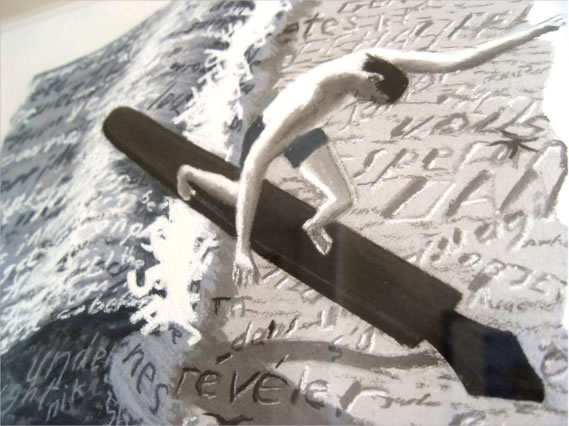
Bogota birds and cage

For me, a graffito in Bogotá captures the way ideas are captured in hard or soft cages, including books

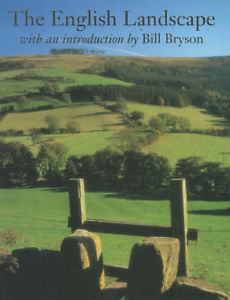
I have been lucky enough to be asked to contribute chapters, articles and forewords to many different books and reports over the years. Among those that stick out in my mind is the chapter I wrote on the London Thames for The English Landscape (2000). That was a real pleasure to write, given my passion for flowing water and its myriad influences.

Otherwise, this section is now well over a decade out-of-date, but is included here as a reminder …

2005

Debating Globalization
Chapter 10, Globalization’s Reality Check
David Held (Editor)
McGraw-Hill, ISBN 0-07-142954-9, Polity Press
ISBN 0-7456-3524-5 (hb), 0-7456-3525-3 (pb)

Bryanston Reflections: Et Nova et Vetera
This river runs through me,
Angela Holdsworth (editor), pages 151-152,
Third Millennium Publishing, ISBN 1-903942 38 1

2004

Societal and Environmental Reporting
John Elkington and Peter Zollinger
Chapter 10 Governance and Risk: An Analytical Handbook for Investors, Managers, Directors & Stakeholders
George Dallas (Editor)
McGraw-Hill, ISBN 0-07-142954-9

The Triple Bottom Line: Does It All Add Up?
Edited by Adrian Henriques and Julie Richardson

2002

‘Economy’ in Our World in Focus: Moving Towards a Sustainable Future
Vision on Publishing and Earth Pledge Foundation
ISBN 1 903399 68 8

Illustrated with remarkable photographs from the legendary photographers’ cooperative Magnum Photos, the book contains essays by the likes of The Dalai Lama, Queen Noor and Maurice Strong. My short essay looked at the prospects for ‘The Chrysalis Economy’.

The Triple Bottom Line

Business: The Ultimate Resource

Bloomsbury Publishing, London

2000
!!eCVQmQEGM~$(KGrHqF,!iEE0E+uBDhBBNRN(T4u,w~~_35

London and the Thames

The English Landscape
Profile Books, London, ISBN 1 86197 113 3

Fantasy Feast 2000: The Fantasy Millennium Parties of the Rich, the Powerful, the Intriguing and the Celebrated
Hector Proud and Idea Generation for Save the Children
ISBN 1 84159 000 2

The idea was that hundreds of “leading personalities” would introduce their ideas for their Millennium parties for 31 December 1999. Those contributing included: Jeffrey Archer, Boy George, Joan Collins, Barry Humphries, Monica Lewinsky, Ozzy Osbourne, Margaret Thatcher, Peter Ustinov—and Dennis the Menace. John’s contribution to Fantasy Feast can be read here.

1999

Boardroom Barometer Survey
John Elkington and Francesca van Dijk
The Sustainable Development Agenda 1999
Environmental Strategy/Campden Publishing Ltd, London
ISBN 1 898750 48 3

1998

Accounting for the Triple Bottom Line
John Elkington and Niklas Kreander
The Sustainable Development Agenda 1998
Environmental Strategy/Campden Publishing Ltd, London
ISBN 1 898750 40 8

1996

Environmental Accounting, Reporting and Benchmarking
Towards Corporate Environmental Excellence: The Role of Business in Sustainable Development
Edited by Teoh Cheng Hai and Martin Abraham for the Global 500 Forum and Golden Hope Plantations Berhad
ISBN 983 99160 0 9

1989

The Natural House Book: Creating a Healthy, Harmonious and Ecologically Sound Home Environment
Foreword for this book by David Pearson, Simon & Schuster.

1984

Gaia: An Atlas of Planet Management
Anchor Press/Doubleday & Company, New York, 1984—co-editor on this Gaia Books publication, whose general editor was Dr Norman Myers

1984

Environment Special Report: Poisons—To Bury or to Burn?
Encyclopaedia Britannica Book of the Year, 1984
ISBN 0 85229 417 4


Publications

JE Jochen + Clean Up 2

My co-author Jochen Zeitz campaigns even when he’s in his kitchen

No single skill has shaped my working life more than writing. I began the process fairly early, writing short stories at prep school and reading them out to the other boys when (as some form of class monitor) I was meant to be keeping them quiet in the after-lunch rest period. 

I once tried to calculate how many words I had written, ending up somewhere in the millions. The key thing, though, is what impact the words have on their readers. What follows is a brief survey of the books, reports, articles and blogs I have produced, with a sub-section devoted to each. Of these, the books have been the biggest challenge—and the greatest learning opportunities. I truly feel most alive, regardless of what I happen to be doing at the time, when I am in the process of research and writing a new book.

Finally, a couple of images from the earlier version of this website, from inside the walls of the book factory:

Incubator: The back study in Barnes where I have written 17 books to date—and where Julia and I wrote back-to-back for several years.

Incubator: The back study in Barnes where I have written most of my books to date—and where Julia (Hailes) and I wrote back-to-back for several years. With my encouragement, Elaine has now colonised this study, so I now tend to write in the kitchen and wherever else I can find a comfortable chair.
Wordboarding: A Geoff Grandfield cartoon that hangs on our walls sums up one part of my life

Wordboarding: A Geoff Grandfield cartoon hangs on our walls, summing it up

Boards & Advisory Boards

JE EcoVadis

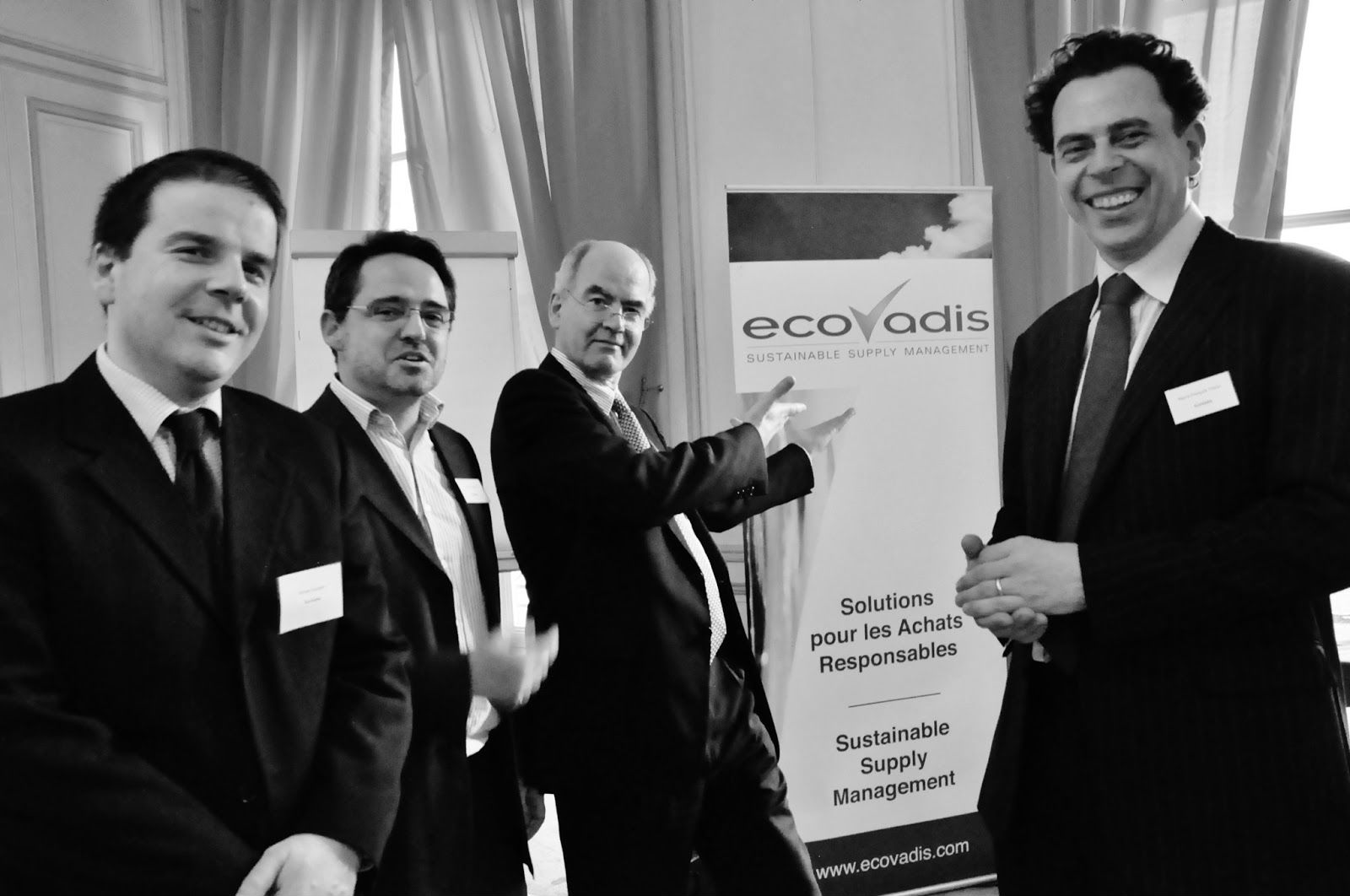
Paris-based EcoVadis, one of many businesses and NGOs I have served as Board or Advisory Board member (left to right: co-founders Sylvain Guyoton, Frederic Trinel, me, Pierre-Francois Thaler)

It is an immense privilege—and a blessing for anyone born as curious as I was—to be invited to join Boards and Advisory Boards. But it is also crucial to keep an eye on the impacts you produce in the process—and to continually question whether particular roles really do have the potential to drive meaningful change in the relevant organizations.

Early in 2014, for example, I resigned from two company advisory boards, in both cases because I felt they were not living up to their original potential. Although it was not remotely my intention, in one case the company promptly decided to shut the advisory board down, while in the second case the other members all decided to resign, too. Happily, these were exceptional cases, and in the second case discussions were soon under way to see how the process could be reactivated under different rules, but they underscore the semi-political nature of some of these roles.

I am hugely grateful to my colleagues over the years for supporting me in this work, most of which has been pro bono. All such engagements are run through Volans, where Sam Lakha holds the reins as our Director of Outreach (sam@volans.com).

Despite continuous efforts to prune the number of memberships, invitations continue to come in. At the time of writing, in mid-2014, for example, I am involved in over 20 Boards and Advisory Boards, many mentioned here. To give some sense of how this side of my work has evolved over time, here are some of the places where I have played the role of Chairman: 

  • Export Credits Guarantee Department (ECGD) Advisory Council, UK.
  • Environment Department, Herning Institute of Business Administration & Technology, Denmark.
  • Environment Foundation, UK.
  • Foundation for Democracy and Sustainable Development, UK.
  • Social and Environmental Committee, Association of Chartered and Certified Accountants, UK.
  • SustainAbility, UK/USA.
  • Volans Ventures, UK/Singapore.

In addition to the organizations listed above, I have served on Boards, Advisory Boards and committees for, among others:

  • 2degrees Network.
  • AccountAbility, see ISEA.
  • Aflatoun.
  • Anglian Water (Board Sustainability Committee, 1996-2003).
  • Association of Environmental Consultancies (AEC) from 1993-1995.
  • Biomimicry 3.8 Institute (now the Biomimicry Institute).
  • Bioresources.
  • BP.
  • Business & Human Rights Resource Centre (B&HRRC).
  • Central Electricity Generating Board (CEGB).
  • Centre for Social and Environmental Accounting Research (CSEAR)
  • Climate Group.
  • Dow Jones Sustainability Indexes (DJSI).
  • Earthlife.
  • EcoVadis.
  • Environmental Data Services (ENDS).
  • European Union Consultative Forum on the Environment and Sustainable Development (1994-2001).
  • European Partners for the Environment (EPE).
  • Evian Group Brains Trust.
  • F&C Committee of Reference.
  • Friends of the Earth (FoE).
  • Gaia Energy.
  • Global Reporting Initiative (GRI).
  • Haller Foundation.
  • HP.
  • ICI Polyurethanes.
  • ING Sustainability Investment Fund Advisory Board (ING).
  • Institute for Social and Ethical Accountability (ISEA).
  • Institute of Environmental Management (IEM).
  • Instituo Ethos.
  • International Integrated Reporting Council (IIRC).
  • Kering (originally as PPR).
  • Merlin Ecology Fund.
  • National Provident Institution (NPI).
  • National Wildlife Federation’s Corporate Conservation Council (NWF, US).
  • Nature Conservancy Council (NCC).
  • Nestlé.
  • New Economics Foundation (NEF).
  • Newsweek.
  • Physic Ventures.
  • Polecat.
  • Recyclebank.
  • Royal Society of Arts.
  • State of the World Commission on Globalization.
  • Storebrand.
  • Tesco.
  • The Other Economic Summit (TOES).
  • Tioxide.
  • Tomorrow’s Global Company Inquiry Team.
  • Turntoo Foundation
  • World Business Awards, in support of the Millennium Development Goals. 
  • World Resources Institute (WRI).
  • World Wildlife Fund for Nature (WWF).
  • Zouk Capital.

In addition, it has been my privilege and pleasure to serve as a Visiting Professor at:

  • Doughty Centre for Corporate Responsibility, Cranfield School of Management
  • Imperial College London
  • University College London (UCL)

CounterCurrent

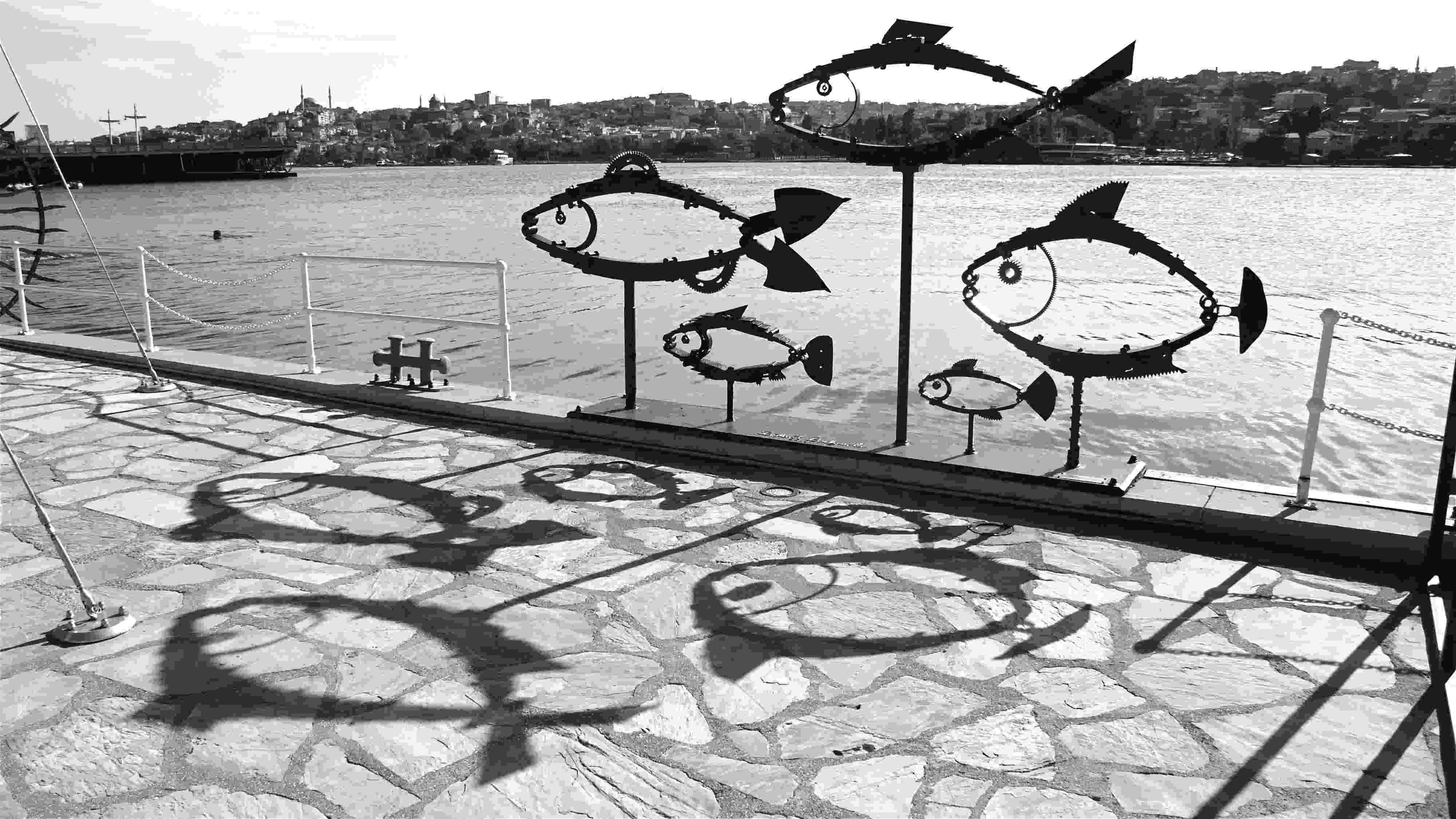
JE fish is Istanbul 2

I have always been fascinated by fish and water: these were in Istanbul 

Like it or not, much of what I have done over the years has involved swimming upstream, against the current.

Much of this has been expressed in writing. And CounterCurrent is a vehicle I developed, to replace the original John Elkington Associates, eventually mainly absorbed into SustainAbility, as a largely virtual platform for those aspects of my working life that involved book writing. Or were in some way more speculative than my mainstream organisations quite knew what to do with. A key part of the work here has been a series of book projects, the latest, The Breakthrough Challenge: 10 Ways to Connect Today’s Profits With Tomorrow’s Bottom Line, being co-authored with Jochen Zeitz.

So how do you assess the impact of books? True, I have been told by several highly influential people (including Jane Nelson of Harvard’s Kennedy School and Cleantech Group founder Nick Parker) that my 1987 book The Green Capitalists (with a final chapter from Tom Burke) helped spur them to move out of the mainstream and into the emerging sustainability area. Yes, our Green Consumer Guide went into 20 foreign editions and sold around 1 million copies. And, yes, Cannibals With Forks spread the concept of the triple bottom line around the world.

But often it’s the weirder, around-the-houses connections that suggest the significance of some of the ripple effects.

Here’s an example. One of the odder experiences of my life was seeing my book The Poisoned Womb (Pelican Books, 1985) book referenced in a poem by Ted Hughes published in The Times (see ‘from Under the Carpet,’ page 837 in Ted Hughes, ‘Collected Poems,’ Faber & Faber, 2003) and also on pages 538-9 in his collected letters (‘Letters of Ted Hughes,’ collected and edited by Christopher Reid, Faber & Faber, 2007). To add spice to the story, Hughes noted in the poem that he had sent a copy of the book to Margaret Thatcher when she was Prime Minister.

JohnElkington_handonchin_June07_green copy 2

Tom Delfgaauw, when at Shell, saw a key part of what we brought to the table as “constructive discomfort”

There are many examples of our impact over the decades, but some are hard to see, at least initially. I have sometimes described part of my role inside business as serving as “grit in the corporate oyster.” Managing the tension between challenge and support is a complex task, but one I seem to have acquired over time. But how do you measure the impact of such work? Stop the clock at one moment at in the process and you are likely to find a certain amount of client unease. Stop it later and you may well find that real value has been created, just as that grit in the oyster becomes the seed of the future pearl.

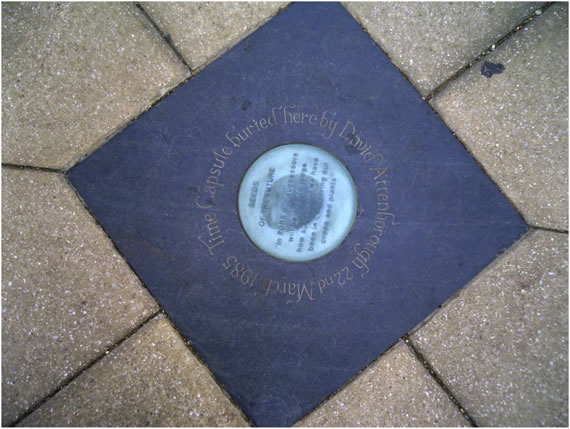
And the provocations have come in many forms. Take the time capsule in the Princess of Wales Conservatory at Kew Gardens, for example. The idea of the capsule was Elaine’s, during a dinner with Joss and David Pearson of Gaia Books. I had been part of the Gaia Atlas of Planet Management team, serving as  a Contributing Editor. The capsule (see below) went into the floor of the new greenhouse in 1985. Gaia and Hania sat on David Attenborough’s knees as he prepared to lower the capsule into the ground, containing a copy of the Gaia Atlas of Planet Management and seeds of plants thought likely to go extinct in the coming decades.

Our task over the coming decades is to push upstream against that flood tide of extinction, until (unlikely though it may seem today) the tide turns. And forty years after coming up with the idea, I still think that the idea of creating ‘blended value’ (Jed Emerson’s term) or ‘shared value’ (Michael Porter and Mark Kramer’s term) right across the ‘triple bottom line‘ agenda is a helpful way of thinking about all of this.

But pushing counter-current against my own biases is going to be a critical part of what we call the ‘Breakthrough Decade’ (see ‘About’ page), so I hope I’ll be around to see how all of this has worked out in 2025, which would be my fiftieth year in the field. (The time capsule isn’t to be opened until 2085, incidentally.)

In situ: Time capsule, 1985


Music

The cover of the first Byrds album: I can still remember hearing the opening chords of Mr Tambourine Man

Once forged, your musical tastes tend to stay remarkably constant over time, if my experience is anything to go by. But one of the nice things about the music playing Volans in recent years is that I have not only rediscovered The Beatles, but have also found myself immersed in the music of people like Elbow, Paolo Nuttini and Rufus Wainwright.

Among CDs I play fairly continuously, both at home and as I travel, are: albums of popular music from the ’30s, ’40s, ’50s and ’60s; Bob Dylan’s Tempest and Modern Times (the sort of music he was playing when Steve Warshal and I went to see him in concert some years back); Madeline Peyroux’s Careless Love and, with William Galison, Got You On My Mind; Raising Sand by Robert Plant and Alison Krauss; anything by Jools Holland and His Rhythm & Blues Orchestra, including Rockinghorse, large parts of which which we saw them play in Kew Gardens; Martin Taylor’s Gypsy Journey (we saw him at Ronnie Scott’s on Elaine’s 60th birthday); and Hugh Laurie’s Let Them Talk.

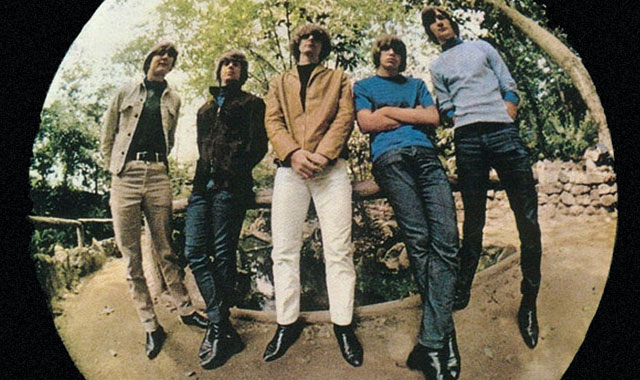
Finally, oddly, given that when sharing a study at Bryanston I liked The Beach Boys while my study-mate preferred The Who, the Sixties band whose music I continue to find surprisingly engaging after all this time is The Who.

JE John Lennon 2 But if I had to name two people that had the biggest impact on me, they’re John Lennon and Brian Wilson

Music was there when we were children, but we weren’t drenched in it as we are today. Tim, my father, had a fairly eclectic taste in music, including Django Reinhardt and Stephane Grapelli, Wilbur de Paris, The Temperance Seven and various Polynesian albums he brought back in the mid-50s from his stint in Christmas Island – monitoring fallout from British H-bomb tests. Many of the tracks were written or arranged by Eddie Lund, and a fair few sung by Marie Mariteragi.

Looking back, those exotic albums whetted my appetite for what later was dubbed ‘world music’ – fed, too, by the experiments of people like George Harrison, Brian Jones, The Hollies (who played the first pop concert I ever went to) and Ry Cooder.

Much later, around 2013, I would stumble across Cesária Évora, and often listened to her album Mãe Carinhosa, and much later still on Amália Rodrigues – and her heart-rending song Barco Negro. See and hear it here: https://www.youtube.com/watch?v=8fZD5ol3rxI.

As the Elkington family travelled around in the 1950s, I recall various songs: for example, Davy Crockett, heard on a radio in the next door farm’s cow barn in Northern Ireland: “Born on a mountain top in Tennessee, Greenest state in the land of the free. in the woods so he knew every tree Killed him a ‘bar’ when he was only three. Davey, Davey Crockett, king of the wild frontier. Fought single handed through the Indian war, Till’ the Creeks were whipped and peace was in store, While he was handling this risky chore, made himself a legend forever more. Davey, Davey Crockett, the man who don’t know fear.”

And so martially on.

In the 1960s, I became much more interested in the history and cultures of North American Indian tribes, which is why both our daughters ended up with Indian names. No doubt some of that interest in other cultures, other sides of stories, came from living in places like Ireland and Cyprus, and visiting Israel.

For better or worse, my tastes in music were profoundly influenced by rock’n’roll. That said, through Tim’s mother Isabel and others, I also early on developed a taste for the popular music of the 1920s, 1930s and 1940s. Luckily, the bulk of my musical tastes I share with Elaine – including The Rolling Stones, who we first saw live in 2003. Their story embraces almost exactly the same years as the paradigm shift sketched by our waves analysis (see ‘About’ section). And that’s no accident, as the late Ian McDonald notes in his brilliant book, The People’s Music (Pimlico, ISBN: 1844130932).

The first single (45) I owned, Tim bought me: 1962’s smash hit, Telstar by The Tornadoes. They were the first British band to top the US charts, a full year before The Beatles and the rest of the British Invasion. The track featured an odd instrument, the clavioline, and the sound of a rocket taking off was apparently achieved by playing the sound of a toilet flushing backwards. Interestingly, given what Tim had been doing in the Pacific, the real Telstar satellite soon went silent: it is reputed to have had its circuitry destroyed by a nuclear test!

The first 45 I bought myself was 1964’s Not Fade Away by The Rolling Stones, backed with Little By Little. And the first LP I bought was Surfin’ USA by The Beach Boys. I remember listening to Radio Luxembourg on a tiny transistor radio under my dormitory pillow while at Bryanston. Apart from The Beatles, tracks that stick in my mind from that period are California Dreamin’ by the Mamas & Papas and Keep on Running by the Spencer Davis Group.

Almost 40 years later, in December 2002, to celebrate SustainAbility’s fifteenth anniversary, we had an away day in Regent’s Park College. One thing everyone was asked to do was to bring along a CD with the song that meant most to them. Before dinner, as a special surprise for me, a two-man group I had first heard in the subway at Hyde Park tube station played. With harmonies like those of The Everly Brothers, these were The Archers, two French brothers. Elaine had tracked them down and booked them: they sang mainly Beatles songs. Appropriate, since my chosen track was The Beatles’ Revolution.

While trying to work out my favourite track, I tried to whittle my favourites down to just eight, as for the BBC’s Desert Island Discs. I failed. So, for what it’s worth, my Top 16 at the time of writing are listed here.

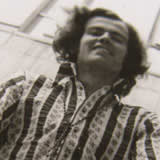
John in 1969

John in 1969

The Beach Boys

The Beach Boys

Cover of Fairport Convention's What We Did On Our Holidays album features chalk drawing done by Fairport while waiting to play at Essex University, whose towers appear in the background with Martin Lindsay and Paul Flowers behind battlements.

Cover of Fairport Convention’s What We Did On Our Holidays album features chalk drawing done by Fairport while waiting to play at Essex University, whose towers appear in the background with Martin Lindsay and Paul Flowers behind battlements.
  • « Go to Previous Page
  • Go to page 1
  • Interim pages omitted …
  • Go to page 83
  • Go to page 84
  • Go to page 85
  • Go to page 86
  • Go to page 87
  • Interim pages omitted …
  • Go to page 134
  • Go to Next Page »

Primary Sidebar

Introduction

I began this blog with an entry reporting on a visit to the Woods Hole Oceanographic Institution on Cape Cod, on 30 September 2003. The blog element of the website has gone through several iterations since, with much of the older material still available.

Like so many things in my life, blog entries blur the boundaries between the personal and the professional. As explained on this site’s Home Page, the website and the blog are part platform for ongoing projects, part autobiography, and part accountability mechanism.

In addition, my blogs have appeared on many sites such as: Chinadialogue, CSRWire, Fast Company, GreenBiz, Guardian Sustainable Business, and the Harvard Business Review.

Recent Comments

  • John Elkington on The Hill House Elkingtons
  • sally fitzharris. (Rycroft) on The Hill House Elkingtons
  • Thomas Forster on Reminder of Glencot Years

Journal Archive

About

John Elkington is a world authority on corporate responsibility and sustainable development. He is currently Founding Partner and Executive Chairman of Volans, a future-focused business working at the intersection of the sustainability, entrepreneurship and innovation movements.

Contact

john@johnelkington.com  |  +44 203 701 7550 | Twitter: @volansjohn

John Elkington

Copyright © 2026 John Elkington. All rights reserved. Log in