Wednesday, November 29, 2006
BOLLOCKS, DARLING
I remember, in 1971 or 72, my much-loved, much lamented paternal grandmother Isabel assuring Elaine and I after a cocktail party in her Knightsbridge apartment that when we were grown up we would love cocktail parties. When I assured her I had antibodies to the whole cocktail culture, which were her preferred milieu, her response was blunt: “Bollocks, darling!”
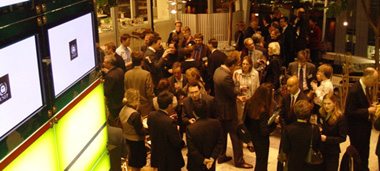
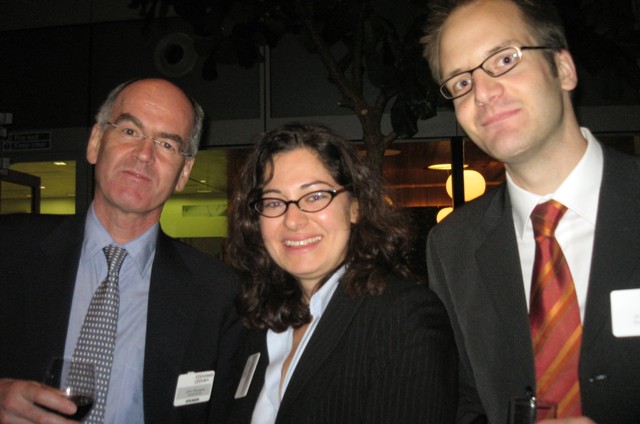
Well, this evening we were at a very interesting party, hosted by Shell, which confirmed me in my long-ago feelings. Yes, Shell CEO Jeroen van der Veer very kindly introduced me to Shell’s new Chairman, Jorma Ollila, previously CEO of Nokia, and I certainly wouldn’t have met him many other places, but I have bat’s ears, where I seem to hear every frequency all at once, and find these events a torment. Indeed, my idea of Purgatory would probably be an eternal cocktail party, with the same guests.
LEAPBLOG
Yesterday evening we launched the new Skoll zone of the SustainAbility website at http://www.sustainability.com/insight/skoll.asp, including a ‘Leapfrog’ blog at http://www.sustainability.com/blogs/skoll/skollblog1.asp?id=914
Thursday, November 23, 2006
EYE WATCHES PARK PELICANS
The Millennium Eye peered at me over Horseguards Parade as I made my way across to the Triodos event this evening – and traffic blurred past. Passing the pelican area, I pondered media coverage of recent pelican-eats-pigeon-in-St-James-Park-shock-horror. The fact that pelicans snack on their cooing neighbours has been known for ages, but no doubt it was news to the children who no doubt watched on in horrified fascination. Made me think of the premieres of Phil Agland’s Korup rainforest film 20 years or so ago, when one bunch of Cameroonians told me that they only liked the bits when animals were eating one another. Tonight it was almost as if the Eye were keeping watch over the unruly parklife.
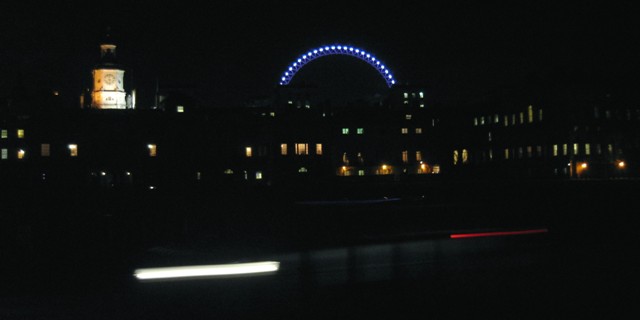
Millennium Eye
A DAY IN THE LIFE
Once I got back home, put on George and Giles Martin’s astounding Love, which I had bought at Virgin in Piccadilly this afternoon. This is the impossibly wonderful reworking of 26 Beatles tracks for the Cirque de Soleil show – which Geoff (Lye) went on to see in Las Vegas after our board meeting in DC. Don’t envy him Las Vegas, but on the strength of this CD I do envy him the show (http://www.cirquedusoleil.com/CirqueDuSoleil/en/showstickets/love/intro/intro.htm?sa_campaign=internal_click/redirect/love).
Rest of day included meetings with a German financial organisation and Nick Parker of Cleantech Venture Network (http://www.cleantech.com), a session on climate change communication hosted by the International Visual Communication Association (IVCA: http://www.ivca.org) and an evening event hosted by Triodos Bank, launching a new report – The Future of Finance.
James Vaccaro of Triodos (http://www.triodos.co.uk) described the bank as a hybrid between a financial institution and a social experiment – and argued that the growing importance of business means that investment is now almost more important than voting. The other Triodos speakers, Charles Middleton and Peter Blom, described the bank’s emerging focus as “conscious investment.” Nice to see them our old 3P formula, which I first used for a SustainAbility brochure in 1995 or 1996: ‘People, Planet and Profit’ (or ‘Prosperity’, if you want to be a little less provocative).
Speakers like Tom Delay of The Carbon Trust gave a number of examples of entrepreneurial efforts to tackle major social and environmental problems. Jonathon Porritt wondered whether we are now approaching a tipping point in the sustainability field – or whether this is simply one more spasm of capitalism as people try to forcefeed new information into existing business models? But he noted that the recent Stern Report had hit the nail on the head by describing the climate challenge as the greatest market failure of all time.
Monday, November 20, 2006
YALE UNLOCKED
Dinner this evening at the Mirabelle in Curzon Street, to celebrate with Dan Esty and guests the launch of his new book, Green to Gold: How Smart Companies Use Environmental Strategy to Innovate, Create Value, and Build Competitive Advantage. Among many other things, Dan is Hillhouse Professor of Environmental Law and Policy at Yale University and Director of the Yale World Fellows Program (http://www.yale.edu/worldfellows), which was also very much on the agenda. Fellows are high achievers, selected from outside the US at an early mid-career point, generally 5-to-15 years into their professional development, and spend 15 weeks designed to jump their careers into overdrive.
Sunday, November 19, 2006
IBRIDO TV
A side-benefit of blogging this week was that a ‘good news’ web-TV team I hadn’t yet heard of tracked me down in New York – and came and interviewed me virtually at the drop of a hat. They are ibrido (http://www.ibrido.tv/welcome.html). I’m green with envy: I want to be able to step out of a door on our home page the way Daniel Belanger does on their site. Their podcast for that day can be found at http://www.ibrido.tv/video_51, trailing the full interview.
I really like the Antoine de Saint Exupery quote they use on their site: “As for the future, your task is not to foresee it, but to enable it.”
THE DESTINY OF LOVE
The Observer today covers the work of Bao Ninh, who wrote the most extraordinary book I have yet read on the Vietnam War, The Sorrow of War (http://www.amazon.com/Sorrow-War-Bao-Ninh/dp/1573225436) – which in Vietnamese was rendered as The Destiny of Love. Utterly horrifying in parts, as the war was, but whole sections remain in my memory, even though I read it many years ago. One reason I was so interested in the war, apart from the fact that I protested against it, was my friendship with the Observer‘s foreign correspondent Gavin Young, who covered the war and its aftermath in books like A Wavering Grace (http://www.amazon.co.uk/Wavering-Grace-Gavin-Young/dp/0140251154).
Friday, November 17, 2006
WORST CASE SCENARIO
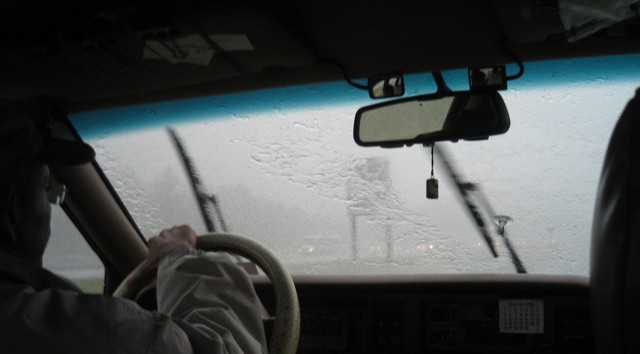
Storm incoming
The lashing rain on the way out to Dulles airport should have been warning enough – but there wasn’t that much I could do in any event. My Northwest flight to Detroit and then on to Lansing was first delayed, then cancelled. After an endless queuing saga, I was diverted to Atlanta on Delta, and then on to Detroit. On the way, I lost my coat – and my pen exploded ink all over my hands as we reached altitude en route to Atlanta.
Worst of all, when I got to Detroit, after midnight, to be picked up by Chris Guenther, we discovered that my large case hadn’t made the trip with me. Given that it had pretty much all my clothes, cables for all my electronic equipment and all the signed forms for the share transfers we have so laboriously been working through at SustainAbility, this was the Worst Case Scenario.
When Chris and I eventually got to Ann Arbor, I had to drop into a convenience store to buy some shaving things, toothbrush and so on. My heart fell when I saw everything was made in China, including the only cold razor on offer. I knew I would end up with a scalped face, as indeed I did this morning.
Still, made it on time – if after precariously little sleep, to see (Professor) Tom Gladwin for an early coffee and then on to a brunch session from 09.00-11.00 with a bunch of students and Andy Hoffman. One person I met for the first time, after a fair time communing by email, was Aparna Sunderam. When she first contacted me, she was a social entrepreneur in Tibet, and is now a student at Michigan. Then on to meeting with Tom Lyons at the Erb Institute, before doing my lecture early afternoon. Introduced by Tom G, I launched forth – and we got into a wonderfully lively discussion. Tom noted that SustainAbility is now the second biggest hirer of Erb Institute students, after the Meridian Institute, I think. And given the quality of the ex-Erb people on our team and the people I met on this trip, I’m not surprised.
Coda on Worst Case Scenario: Annie Oliver in our DC office finally tracked the case down in Detroit, where Northwest were getting ready to project it back to London. Rather than trust them again, we had them store it until I came through after my Ann Arbor trip. And it was there when I arrived late afternoon. Aparna had given me a Tibetan scarf earlier today, saying that my luck was about to change – and, at least with this case, this trip, there seems to have been a local better luck effect.
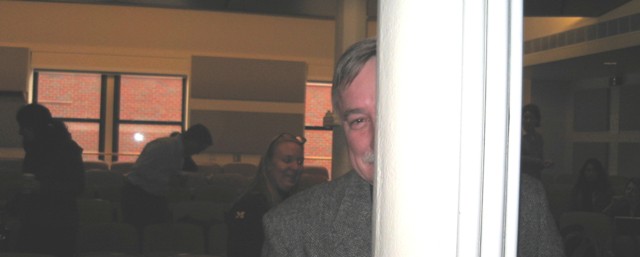
Playing hide-and-seek with Tom Gladwin
Thursday, November 16, 2006
FIRST U.S. BOARD MEETING
Today, we held our first SustainAbility board meeting in the US, at our office in Washington, D.C., following a reception there last night. A bunch of us walked across to the office from the Willard Hotel this morning in spectacular sunshine, soaking in the glorious yellow of the ginkgo trees along the way.
The evolution of our US team really is a wonder to behold, with a real sense that it has reached critical mass. All credit to Jeff Erikson, our US Director. Given how delightful the current brownstone office is, it’s amazing to think back to our previous offices: the tiny one in Brooklyn from which our much smaller team watched with horror as the planes flew into the World Trade Center in 2001, our bigger, smarter and yet not much-loved first office in DC, and now this one. Feels like home – and even they have a couch these days, to ensure the roll-out of our sofa strategy continues. The thinking behind our couch position is that free-flowing conversations are a key ingredient in the rocket fuel that propels us to new heights …
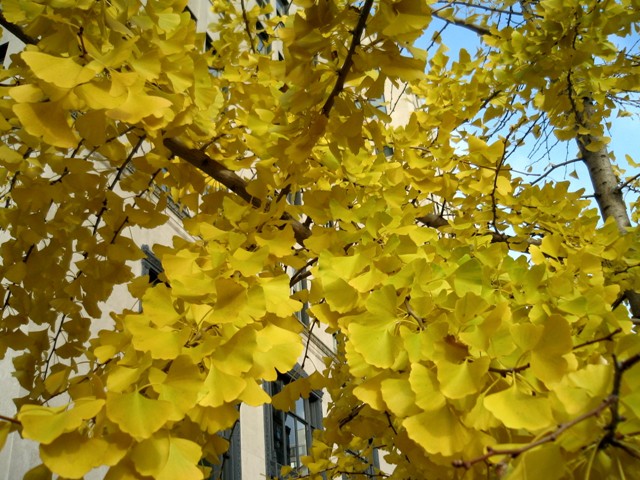
Gingko tree
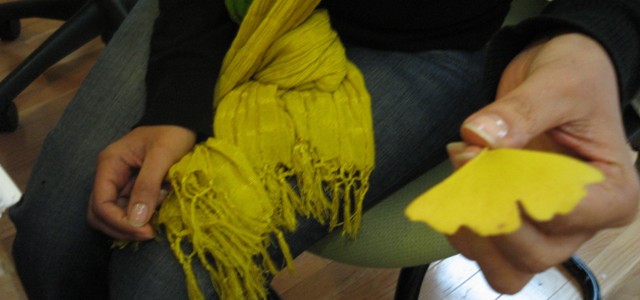
Rescued from the street, a gingko leaf follows us to the office
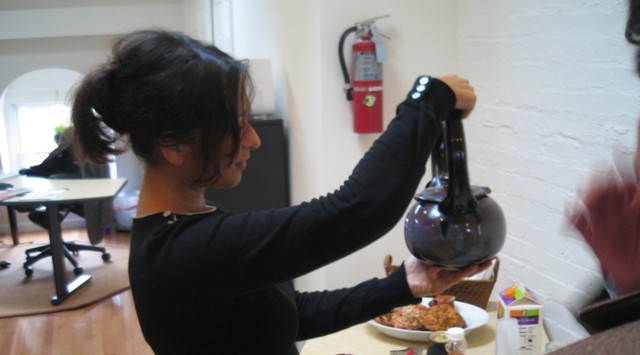
Sam gets a handle on the teapot situation
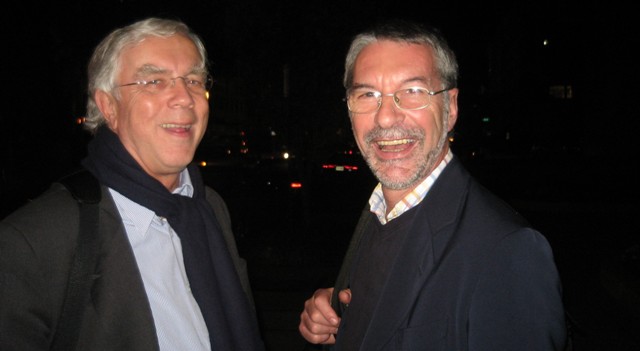
Tom (Delfgaauw) and Geoff (Lye) after board meeting
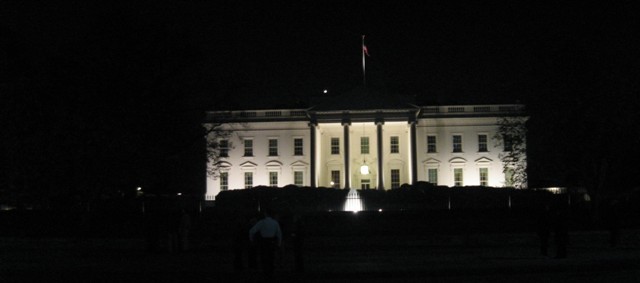
Somewhere else where new thinking may now impact our agenda …
LESTER BROWN
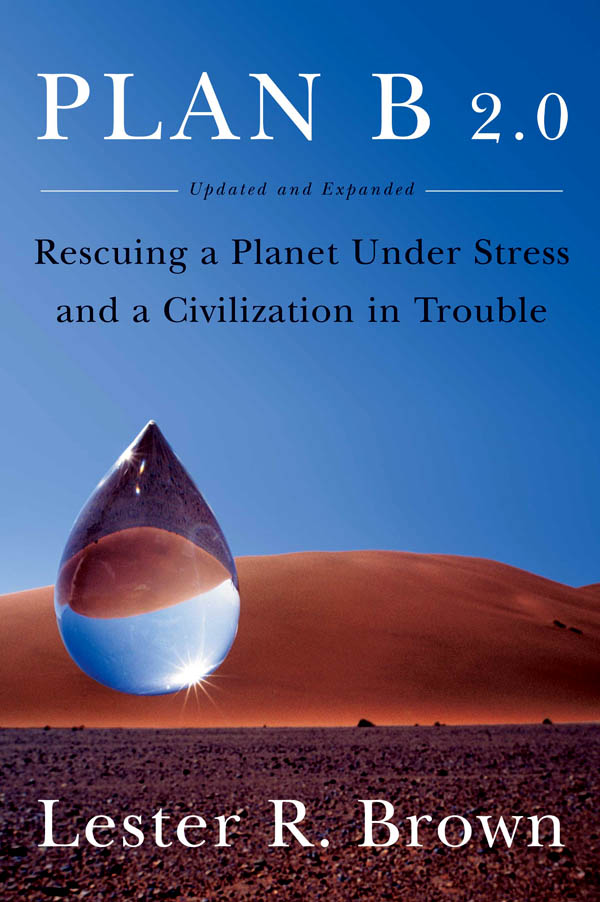
Meghan (Chapple-Brown) and I made our way across this morning to the Earth Policy Institute in driving rain, though luckily we quickly found a yellow cab. Had talked to Lester Brown at the World Economic Forum Davos summit earlier in the year about visiting, but then had to cry off last time when I missed a flight out of Ithaca – after a visit Meghan and I made to Cornell University – and then had to drive seven hours in a rental car to catch a flight from JFK. This time we make it, though, and, boy, I wish I had a direct feed into the Brown brain.
The process is made a little easier, of course, by the fact that he is such a prolific writer. Previously with the Worldwatch Institute, he now runs the Earth Policy Institute (http://www.earth-policy.org/) – and manages to achieve an extraordinary amount of media coverage for his thinking. One recent theme has been the danger that the American Dream will become a nightmare when adopted – or aspired to – by China’s 1.3 billion people. That’s only one of many things we discuss with Brown and his colleague Janet Larsen, EPI’s Director of Research.
One subject that sticks in my mind, though, is his observation that the number of failed states is growing – and with it a wide range of health, environmental and security risks for the rest of the world. But anyone who reads this and begins spiralling into gloom (we talked of the suction effect created by failed states, and the way that we may found ourselves pulled in rather like many of those who jumped from the Titanic were sucked into the vortex the foundering ship created), a useful antidote is Brown’s book Plan B 2.0. (http://www.earth-policy.org/). An essential introduction to the man’s thinking.
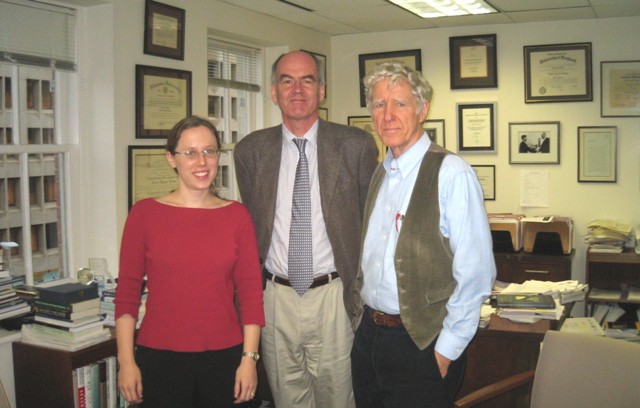
Janet, me, Lester Brown
Tuesday, November 14, 2006
STONE’S THROW FROM WHITE HOUSE
By Amtrak to Washington, DC this afternoon. The four of us arrived at the Willard InterContinental to be met like royalty, because of the relationship SustainAbility’s US team have built with the Willard on our issues. The hotel, which says it is a stone’s throw from the White House, something which I am still tempted to test, is this year celebrating the 20th anniversary of its re-opening.
And what a place this is. The Willard has hosted just about every US President since Franklin Pierce in 1853. Its anniversary brochure also notes that it was “at the Willard that Julia Ward Howe wrote ‘The Battle Hymn of the Republic,’ where Abraham Lincoln lived for a month, where, in the grand lobby, President Ulysses S. Grant coined the term ‘Lobbyist,’ and where Rev. Dr. Martin Luther King finished his famous ‘I Have A Dream’ speech.” Talking to someone earlier today about bribery and corruption, I noted that one of the prominent American inhabitants of my family tree was Grant’s rampantly corrupt Vice President, Schuyler Colfax (http://en.wikipedia.org/wiki/Schuyler_Colfax), who came so spectacularly to grief towards the end of the Gilded Age (http://www.senate.gov/artandhistory/history/resources/pdf/schulyer_colfax.pdf). The widespread corruption of the era helped precipitate a depression.
After shaking off the dust of our travels in the comfortable embrace of the Willard, we sped across to SustainAbility’s offices for a reception, which pulled together old and new friends – ahead of our first-ever board meeting in the US tomorrow.
Monday, November 13, 2006
IMAGINE
The highlight of today – aside from meeting the likes of Linda Rottenberg of Endeavor Global (http://www.endeavor.org) and Alice Tepper Marlin of Social Accountability International (http://www.sai-intl.org), alongside Sam (Lakha) and Sophia (Tickell) – was a long, long walk on my own through Central Park.
My main purpose in Central Park was to visit Strawberry Fields, the black-and-white memorial to John Lennon. The first time I went there, fairly soon after it was opened, I found myself there alone, except for a small, quiet figure that suddenly appeared on the other side of the circle: Yoko Ono. No such luck this time, but the fall colours were exquisite. And the Alice statuary (http://www.centralparknyc.org/virtualpark/thegreatlawn/aliceinwonderland) was strangely moving, the mushrooms linking nicely to the hallucinogenic fuel that drove so much of my favourite music way back then.
At the nearby Tavern on the Green, on my way, I had come across something that reminded me of this year’s 800-pound gorilla (see previous entry), all the tune of Imagine played in the most eggregiously schmalzy way. Later in the day, Sam and I also met up with a couple of TV people planning a series on sustainability pioneers, which would be useful if it came off.
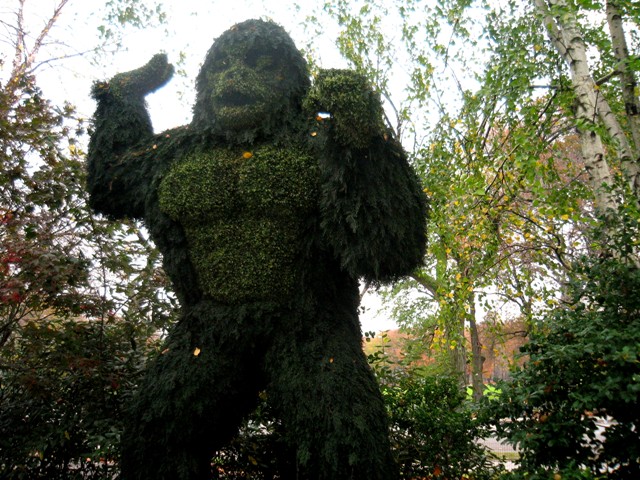
Green gorilla
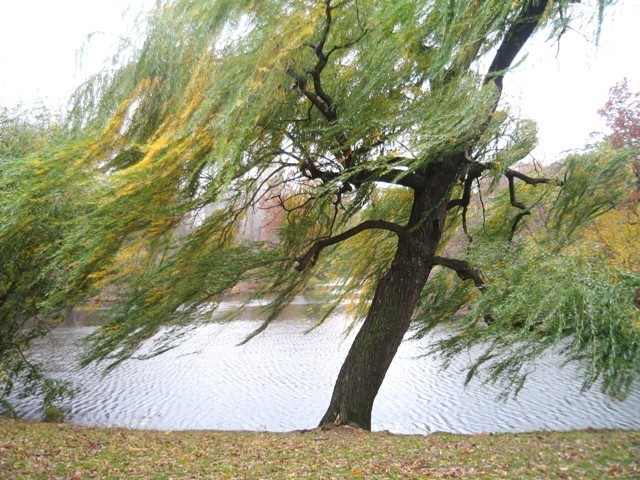
Blowing in the wind
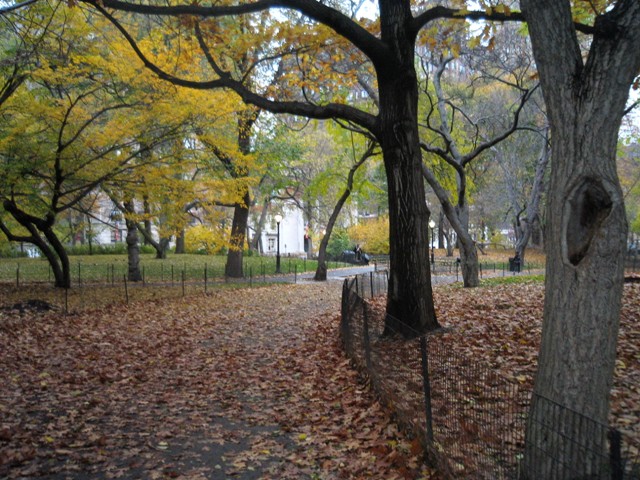
Tried to catch falling leaves, but failed …
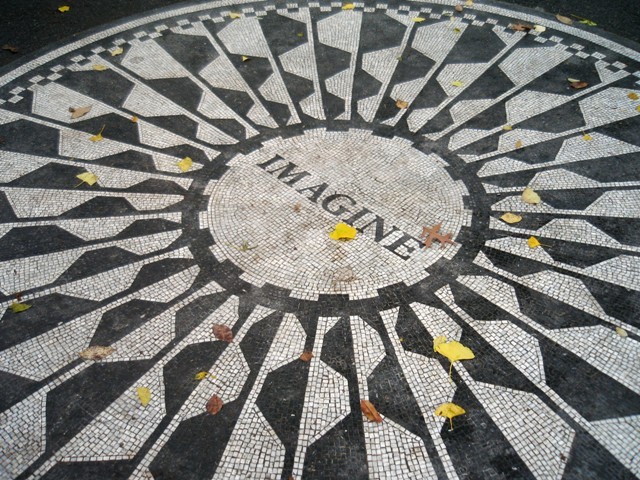
It’s 26 years …

Last of the fall colours
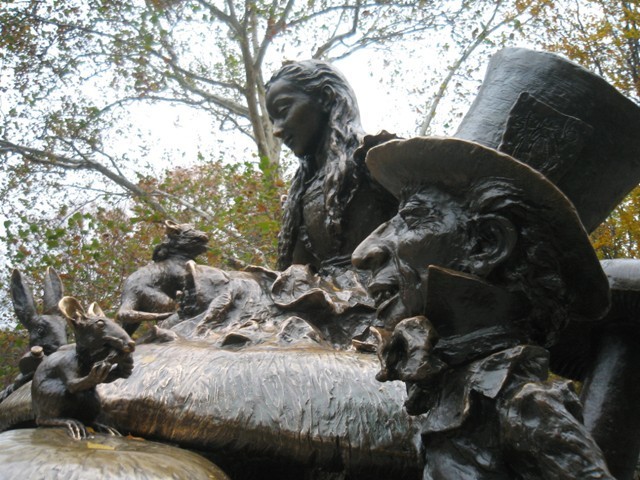
Not far removed from the hat I wore the other evening …
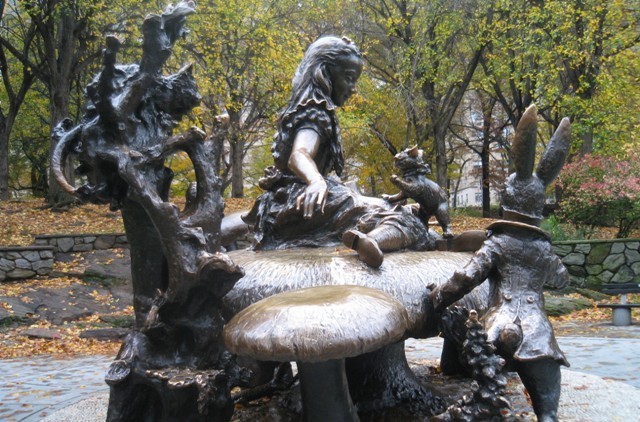
Alice 2
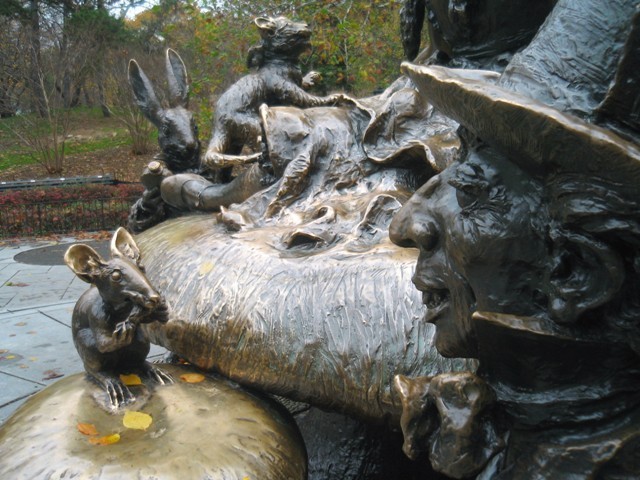
Hatter 2 – with Dormouse
800-POUND GORILLA IN NEW YORK
Arrived in New York a couple of hours ago, to pouring rain. Yellow cabbed to hotel, where I have been trying to do justice to my role as guest editor of an upcoming issue of marketer, which they are dedicating to the triple bottom line and sustainability. In my main article, I note that at a World Economic Forum meeting earlier in the year one of the WEF people had said that the 800-pound gorilla looming in corporate boardrooms this year has been the issue of sustainability. Seems appropriate to recall in the city of King Kong.
Sunday, November 12, 2006
BLUE MAN FALLING
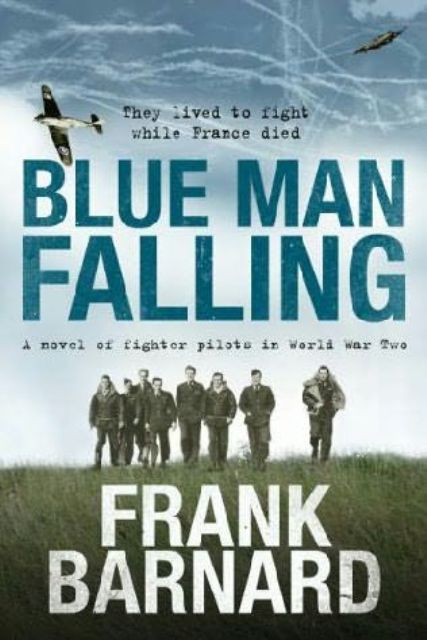
Racing to get ready to fly to New York, but one thing I had to do before heading off was to write a congratulatory note to Frank Barnard, author of Blue Man Falling. Finished this extraordinary novel yesterday morning, and can’t wait to re-read. Covers the RAF’s campaign in France before the retreat across the Channel and the Battle of Britain. One of Barnard’s references was a copy of a book first published in 1941, Fighter Pilot: A Personal Record of the Battle of France. The author was the late Paul Richey, a member of No. 1 squadron – with which my father Tim also flew. Sent him a copy of Blue Man yesterday via Amazon, such a wonderful service. Talking to my mother, Pat, yesterday, she recalled that when they saw Richey last he was late – his pet swan was ill.
The other reason I am interested to engage Barnard is that he features the sinking of the Lancastria towards the end of his book, which I covered in my blog of November 23, 2005. He has Do-17s sinking the ship and escaping, whereas I had understood a Heinkel 111 was involved – and that Flt Sgt Fred Berry, who later saved Tim’s life, had been awarded the DFM partly on the basis that he had shot down the bomber that sank the old Cunard liner. In the midst of such chaos, it must have been very difficult to keep track of who did what to whom, but I’d like to ensure my facts are broadly correct …
Saturday, November 11, 2006
REVIVING BRAND AMERICA
Filed retrospectively on November 13, after reading a letter in the Financial Times in New York under the title: ‘Bush united the world.’ John Arndt from San Anselmo, California, noted that “Many underestimate how successful President George W. Bush was as a uniter. He succeeded in uniting practically the whole world against him!”
Elaine and I had a delightful dinner this evening with Doug and Margot Miller, he of GlobeScan, and Peter Kinder of KLD. At Whits, just off Kensington High Street. One of the areas of discussion, inevitably, was the potential longer-term impact of the Democrat victories in the US Senate and House of Representatives. And one of the eddies in that conversation revolved around the question of how long it would take for the US to reclaim its pre-Bush 2 position in the world, rebuild its tarnished global brand and recover at least some of the soft power lost in the process.
We reflected on companies like Nike and Shell, where top management eventually admitted some degree of fault as a necessary first step to the recovery process. Phil Knight of Nike may have taken a while to get there, but when he recently noted in a foreword to a Nike report that “yours truly” had been responsible for among other things misreading the runes, my phrase, it was a major step forward. It’s virtually impossible to imagine George W., or Tony Blair for that matter, accepting real fault and culpability, but perhaps even here we should say ‘never say never …’
Friday, November 10, 2006
BLOGGER APOLOGISES
Well not really, but my silence for over a week has been because of Blogger problems, which they prefer to leave to users to sort out. Only a technical wizard, or someone with hours of free time on their hands, could resolve. Thanks to the wizard Craig (Ray) for sorting, and as soon as I can find an alternative to Blogger I will switch.
WILD LAW
First thing I see as I leave the house this morning, on my way to Victoria to catch the train to Brighton, is that someone has taken a hammer to our car – with the result that the bonnet has a hole in it worthy of a cannon-shell strike.
Once on the train, I was poring over the bios of the speakers of the conference I was to chair later in the day at the University of Brighton. Organised by the UK Environmental Law Association (UKELA: http://www.ukela.org), the Environmental Law Foundation (ELF: http://www.elflaw.org) and The Gaia Foundation (http://www.gaiafoundation.org), the event was due to spotlight the ‘Wild Law’ movement, led by Cormac Cullinan. Read his fascinating book, Wild Law: A Manifesto for Earth Justice (Green Books, 2003), as the train rattled south.
Suddenly, a small, dark-haired girl (she turned out to be Romanian) erupted in the opposite seat and asked me, in broken English, what colour my shoes were? What colour was my front door? And what colour my garden? When I asked how old she was, she replied 7. Then she asked me how old I was. When I asked her to guess, she frowned and suggested 8. Then she pointed to a photograph of Satish Kumar, one of the speakers whose bios I was poring over, and asked who he was?
How do you explain someone who at the age of 9, just two years older than my earnest neighbour, had joined the wandering brotherhood of Jain monks, subsequently leaving in his late teens to join India’s land reform movement, then walked 8,000 miles from India to America to meet Bertrand Russell and join the anti-nuclear-weapons movement, handing out tea to world leaders on his way across to London? And, if my memory serves, at the suggestion of women in a weapons factory he had met in Russia, encouraging those leaders he did get to see to brew up a pot before they brewed up the planet? I had missed this year’s fortieth anniversary celebration of Resurgence magazine, which Satish has edited since the early 1970s, because I was in Australia, but hold it and him in great affection. The fortieth anniversay edition of Resurgence (September/October 2006) carried an article of mine on the evolution of the relevant business agendas. Apart from Cormac, other speakers included Norman Baker, who chairs the All Party Environment Group, and Begonia Filgueira of Gaia Law. One of Satish’s lines that sticks with me is, “Let all isms become wasms.” Another: “Long live the worm.”
Also met up before the conference with Fiona Byrne, after many years. Fiona was SustainAbility’s first employee way back in the 1980s, when we were still based at our home in Barnes, and now lives in Brighton with her daughter. Reminded me of just how long we have been hoeing this particular furrow.
At the end of the day, four of us travelled back on the train to London, including Satish and Ed Posey of The Gaia Foundation. Wonderful conversation, palely captured in the somewhat speed-blurred photos below. Alighted from the train at Clapham Junction and looped back to Barnes station. Arrived home to find that Hania had just called in from Madrid (we didn’t even know she was there) to say that she had had her purse and credit cards stolen. Odd to be discussing how to evolve systems of Earth-focused jurisprudence when the waters of criminality lap all around.
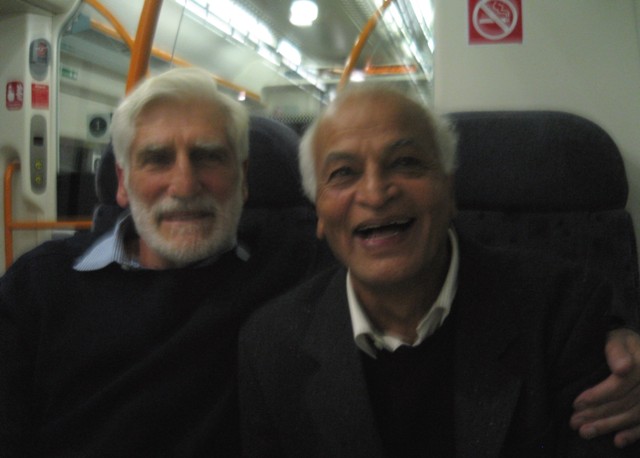
Ed and Satish 1
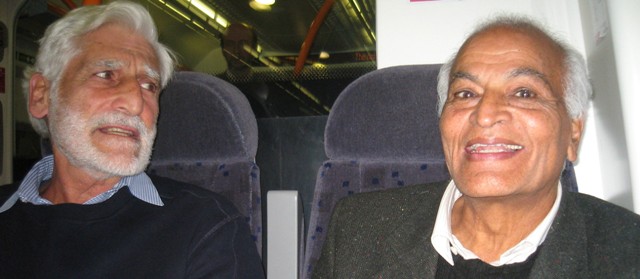
Ed and Satish 2
Ed and Satish 3
Thursday, November 09, 2006
TOMORROW’S VALUE LAUNCH
Today, we launched our latest report, Tomorrow’s Value, at parallel events in London and New York. This is SustainAbility’s fourth international benchmark of corporate sustainability reporting, once again developed in partnership with the United Nations Environment Programme (UNEP) and Standard & Poor’s. This year we introduce a revised methodology, developed in close consultation with experts and leading corporate reporters, and — in line with our sense that the focus also needs to shift beyond disclosure and reporting to communication — we have adopted a portfolio approach. Tomorrow’s Value is the flagship document in a suite of publications that will explore wider aspects of reporting, including communication with financial analysts and the innovation agenda.
I chaired the London event, hosted by Standard & Poor’s in Canary Wharf. Free, downloadable copies of the report are available from http://www.sustainability.com/insight/research-article.asp?id=865, together with a podcast version of highlights of the launch session – and another in which I interview Matt Loose, who ran the 2006 Global Reporters benchmark survey, on the findings. The photos, taken at the reception afterwards, show Sasha Silver of Credit Suisse Securities and Monica Araya, both of whom went through Yale – where Monica organised the event I spoke at (see October 1, 2005 entry). JP Renaut was one of our interns on the Global Reporters project and has since joined the Core Team.
 Me, Sasha Silver, JP Renaut