• Skip to primary navigation
  • Skip to main content
  • Skip to primary sidebar
John Elkington

John Elkington

A world authority on corporate responsibility and sustainable development.

  • About
    • Ambassador from the future
  • Past lives
    • Professional
      • Volans
      • SustainAbility
      • CounterCurrent
      • Boards & Advisory Boards
      • Awards & Listings
    • Personal
      • Family
      • Other Influences
      • Education
      • Photography
      • Music
      • Cycling
    • Website
  • Speaking
    • Media
    • Exhibitions
  • Publications
    • Books
    • Reports
    • Articles & Blogs
    • Contributions
    • Tweets
    • Unpublished Writing
  • Journal
  • Contact
  • Show Search
Hide Search

John Elkington

Exponential Futures

John Elkington · 8 November 2015 · Leave a Comment

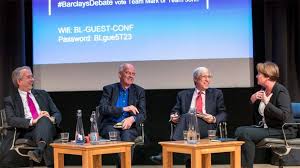
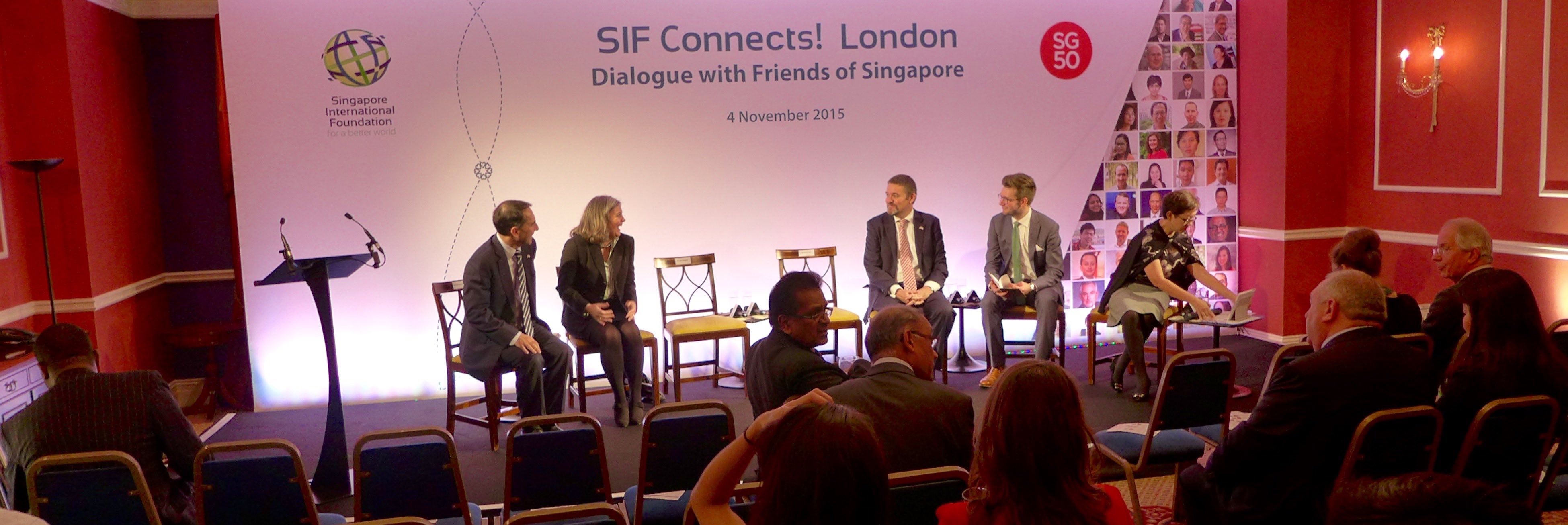
SIF Connects session in preparation - my seat empty
SIF Connects session in preparation – my seat empty
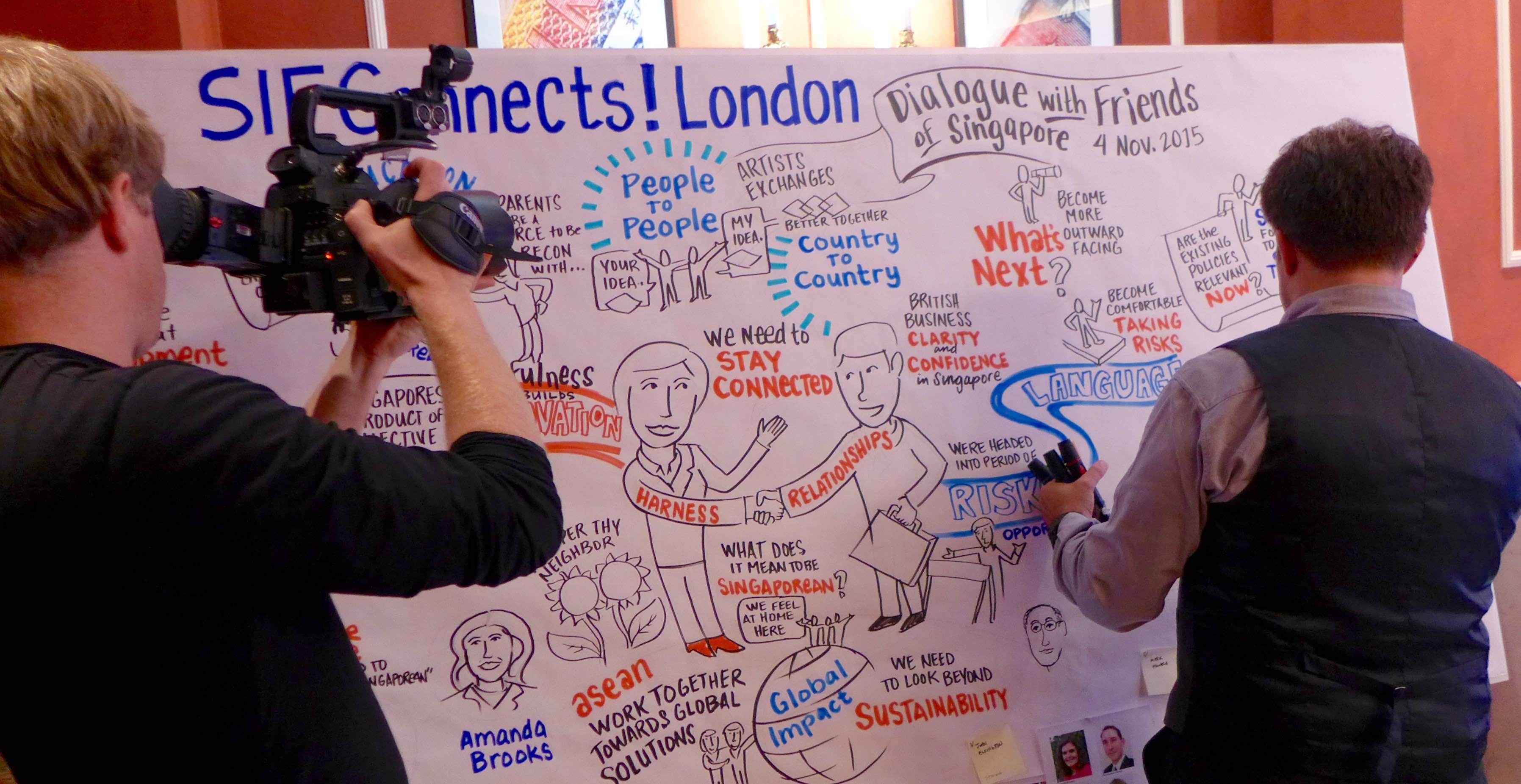
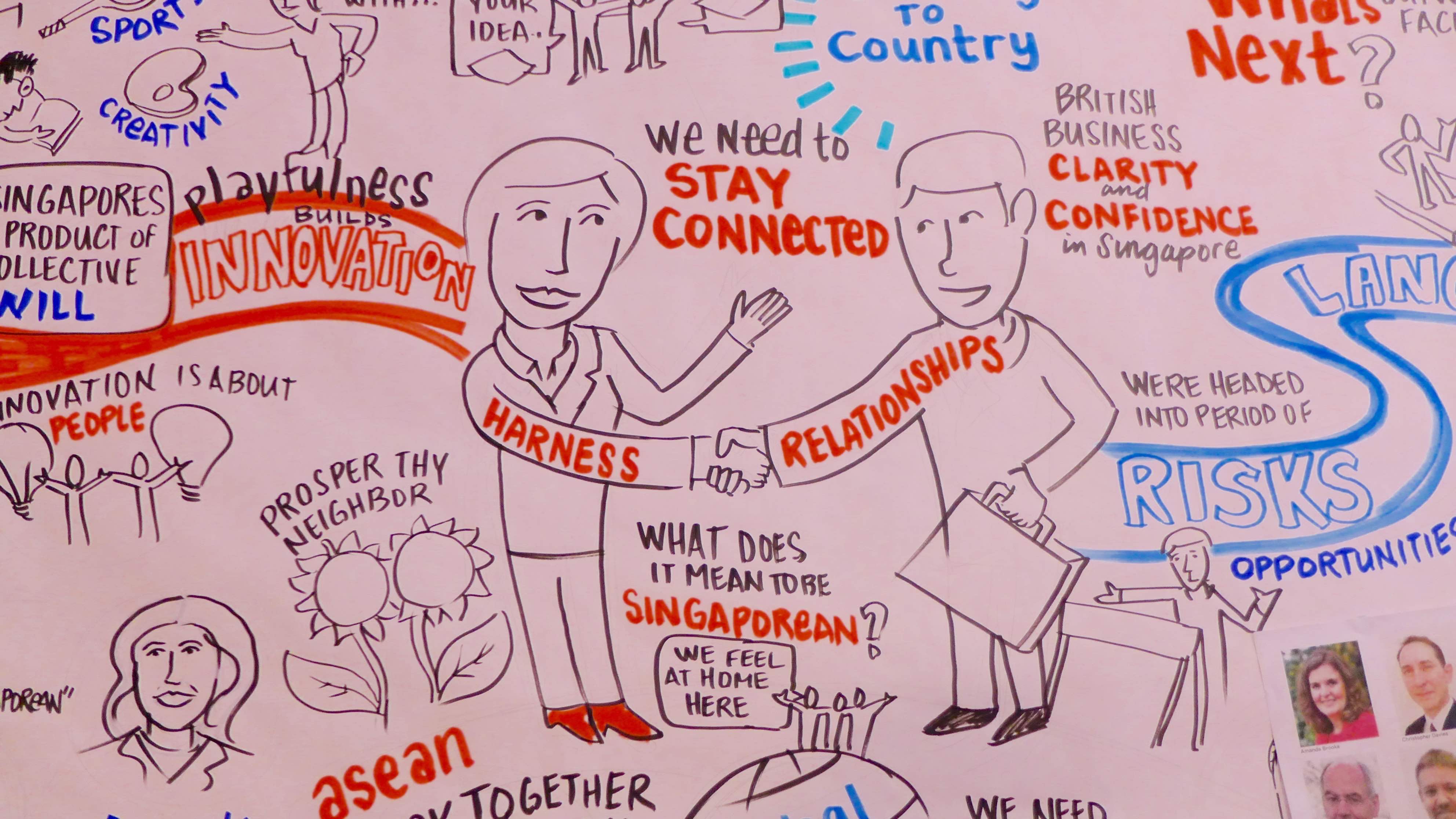
Tim does the visual capture
Playfulness point was one of mine
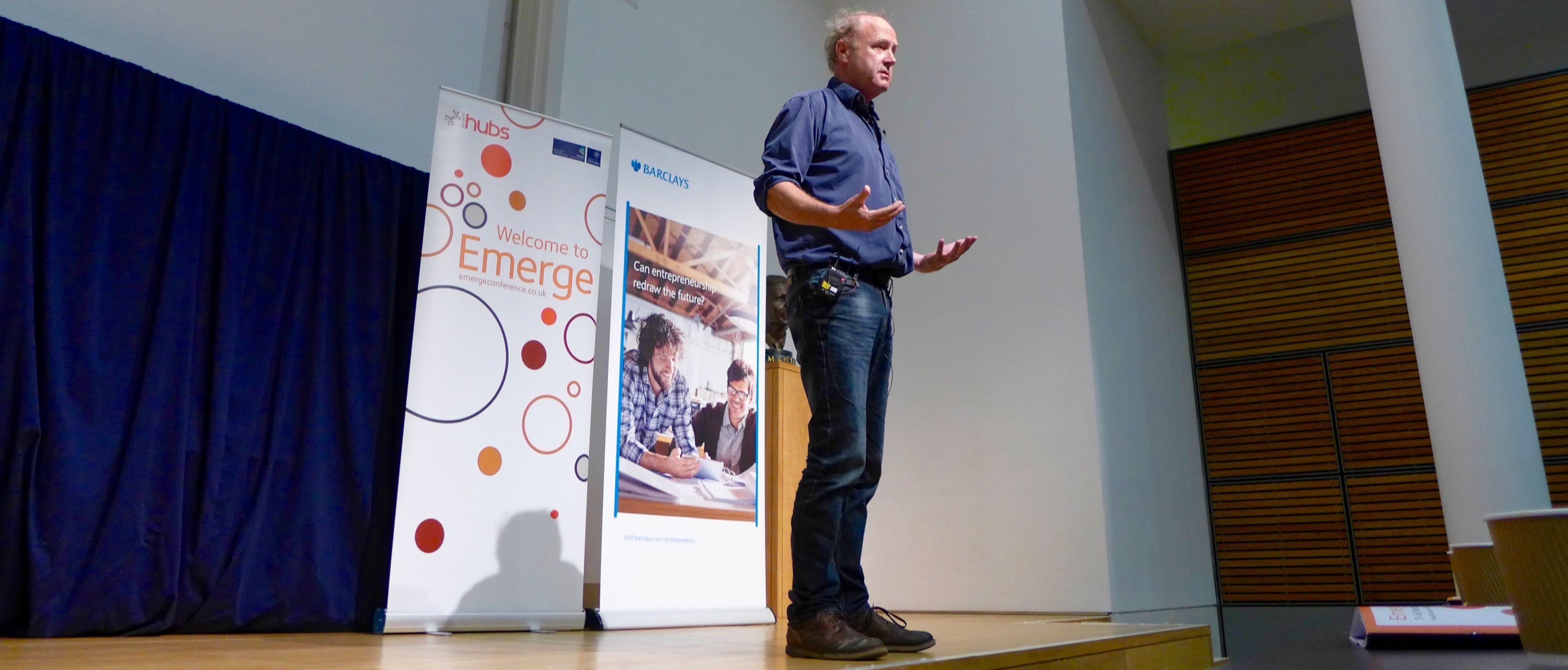
Tim Smit in playful mode at EMERGE 2015
Cloudscape from train back to London

Thought of calling our new program Hammerhead today, because I have been spending so much of my time in recent months seeming to banging my head against a brick wall. Reminds me of the experience when I was trying to develop the triple bottom line concept in the early 1990s.

And weirdly, just today, I was working on the ‘Exponential Futures’ framing for the next stage in our Breakthrough work, and was going back to Alvin Toffler’s work. His 1970 book Future Shock and 1980 sequel The Third Wave, both hugely influential in the development of my own interests and thinking, were still in the shelves upstairs.

Have long had a sense that I had read something on multiple bottom lines long before I came up with the TBL concept – and, reading through Toffler’s books, I came across a reference to multiple bottom lines on page 257 of The Third Wave. I owe the man a huge debt, it seems.

The rest of the week has been typically blurred, with a day off on Monday, which included a visit to the Eskenazi Gallery in Clifford Street, W1. We went to see an exhibition called Transfigured Echoes, featuring recent paintings by Liu Dan. Stunning. My favourite was Taihu Rock of the Shaoyuan Garden. Giuseppe, who I hadn’t met before, came out to say hello and gave me a copy of the exhibition book.

We also went across to the Courtauld at Somerset House to see the Peter Lanyon exhibition. Soaring Flight. By far my favourite painting is the one featured on the Courtaulds website. I had been at Bryanston School with his one of Lanyon’s sons, shortly after his death following a gliding accident.
1428177352993

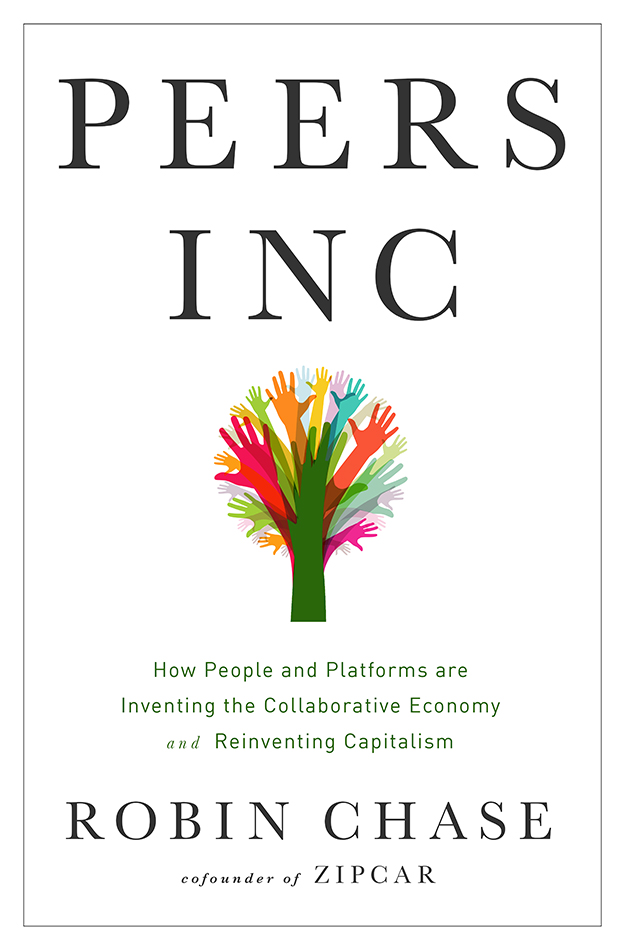
The same evening I went to The Crowd’s event with Robin Chase, co-founder of companies like Zipcar and Buzzcar, and author of Peers Inc. Afterwards on to Smith’s Top Floor at Smithfield with Robin, Jim Woods and other guests, including Jo Bertram of Uber.

Fascinating email exchange afterwards, all helping me work through our next big jump.

On Wednesday, after a busy day, I went across to the Singapore High Commission to speak at a Singapore International Foundation event. On a panel with Amanda Brooks (Director of Innovation, UK Department for Business, Innovation and Skills), Christopher Davies (Director, Pender Communication), Mark Howard (British Council’s Head of Teaching & Blended Learning), Jonathan McClory (Partner at Portland) and Foo Chi Hsia (Singapore High Commissioner), with our moderator being Jennifer Lewis, a Governor with SIF since 2007 – and an MD with the Singapore Investment Corporation. Wonderful to be considered a ‘Friend of Singapore’.

Then on Thursday we had a 5-hour session with Covestro at Futerra’s London offices, at which we made a good deal of progress, I think, followed by a shareholders’ meeting at SustainAbility.

Friday included a great call with Sophia Tickell of Meteos, where I began to test out my thinking around the future of campaigning in an exponential world. Deborah Doane also came in to quiz me on what Greenpeace should be doing over the next decade. An interesting set of questions.

Saturday saw me heading across to Oxford early to be part of a panel session at EMERGE 2015, the annual social innovation conference held at the Saïd Business School. Tim Smit did a barnstorming keynote, and then our session was chaired by Cliff Prior of UnLtd and included David Grayson of Cranfield University and Joanna Hafenmayer of My Impact.

Funny thing on the train down. Got an email from Richard Johnson, who was sitting elsewhere on the same train, and behind some young women also heading down to Oxford. He reported them saying the following:

“John Elkington is doing the opening session!”

“I know, I’m reading his latest book at the moment.”

“Remind me,” he said, “to add that to our next impact report!”
Multicapitalism And Its Scorecards

John Elkington · 2 November 2015 · Leave a Comment

Screen-Shot-2014-08-30-at-11.57.13-AM

A nice email note today from Mark McElroy this morning. He is the founder and Executive Director of the Center for Sustainable Organizations and the original developer of the Context-Based Sustainability method, to draw on his bio on the Sustainable Brands website

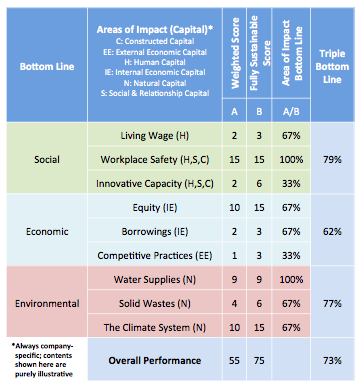
He is also co-founder of Thomas & McElroy LLC, creators of the MultiCapital Scorecard (see above), and a veteran of management consulting including time spent at Price Waterhouse, KPMG and Deloitte Consulting. He teaches in the ‘MBA in Managing for Sustainability’ program at Marlboro College in Vermont.

Hi John:

I’ve been meaning to reach out to you for some time now to essentially acknowledge, pay tribute to and thank you for something you did when you introduced the TBL in the mid-nineties, but which most people may not yet fully appreciate in my view.  And that was to explicitly associate each of the bottom lines with specific vital capitals. 

Most were so caught up with the metaphorical value of the TBL as an organizing principle for performance assessment — nothing wrong with that — that we failed to fully appreciate what you also had to say about how vital capitals correspond to the bottom lines.

Now, in 2015, we’ve managed to make the leap from metaphorical organizing principle to empirical measurement model.  The MultiCapital Scorecard, for example, is nothing if not utterly grounded in the view that TBL performance can and should be interpreted in terms of what an organization’s impacts are on vital capitals relative to sustainability thresholds.  In fact, it is the application of this idea to non-financial capitals that has given rise to the idea that sustainability criteria can and should be applied to financial performance, too.  Thus comes the idea that maximizing profits as a regulative ideal should be replaced with simply providing reasonable returns.  Sufficiency will more than do.

I now routinely call attention to this intellectual contribution of yours twenty years ago, and wanted to let you know that I am.  It’s a very big deal in my view, in the spirit of organizations not being able to manage what they don’t measure.  Sustainability performance in its full TBL form essentially boils down to capital impact performance, and you were perhaps the first to point that out.  So here I am giving credit where credit is due.  As “multicapitalism” now grows in prominence as a new anti-monocapitalism doctrine, your contribution to the transition should not be overlooked.

All the best,

Mark

In A Fog

John Elkington · 1 November 2015 · Leave a Comment

In a fog 1
In a fog 1
In a fog 2, natural light
In a fog, 3
In a fog, 3
In a fog, 4
In a fog, 4
Mad Hatter, after the party
How do bees do in a fog?
Bamboo garden in a fog
Bamboo garden in a (slightly fading) fog
Passing shot
Passing shot

Drove across fairly early to Kew Gardens this morning, in a fairly thick fog. Lovely air and atmosphere as we walked around, though with the aircraft roaring by just above the vapour.

Put me in mind of the Russian Airbus downed over Sinai yesterday. The scenery was also inflected by my reading of Alexander Kluge’s extraordinary book, 30 April 1945, which focuses in on what else happened on the day that Adolf Hitler committed suicide.

Have also been leafing through the second violate of the huge collection of Dalí’s painting by Robert Descharmes and Gilles Néret, which reminds me of just how big an impact he had on my mental landscape in the late 1960s.

Superheroes Say Thank You

John Elkington · 1 November 2015 · Leave a Comment

TheAvengers2012Poster

It’s odd, In recent days, as I winged around Europe speaking to wildly diverse audiences, a surprising number of people (of all ages) came up to say thank you for books and reports of ours that they had read, from The Green Consumer Guide to Cannibals With Forks and The Zeronauts. One or more of these, they would say, at some point had had a significant impact on their thinking.

And that turned up the heat under a question that had been nagging me for quite some time. Stripped to its essence, it is this: When it comes to indicators of success, do I most want to be right – or to be effective?

Having written my first report on climate change way back in 1978, a publication commissioned by the European end of Herman Kahn’s Hudson Institute, I was certainly early into the field. And climate change warnings and solutions featured in pretty much all my 19 books to date. (The one I would have to check was The Poisoned Womb, on reproductive toxicology, though I suspect it popped up even there.) I have also spoken about the challenge – and linked opportunities – in well over 1,000 speeches over the years.

But through all of this the climate situation has got progressively worse, and some scientists now argue that it’s on a bad exponential trend – where the pace and scale of change is already moving well ahead of our capacity to act.

So you might say that, as a global movement, we have been fairly effective in getting growing numbers of people to be aware of the issues, but singularly poor at getting effective and timely political action.

All of this was given a further spin this morning when I woke up to an email from Canada, offering a link to a father-and-son video celebration of climate change ‘superheroes’ in the worlds of science, politics, economics, business and so on.

A charming idea – and a surprisingly moving “belated Thanksgiving.” Interestingly, Sir David Attenborough is on the list, too. And I recall an early conversation with him, at a WWF lunch, probably in the 1980s, when he was still pretty skeptical about climate change. But he too eventually saw the light (or the tunnel) – and has since had a hugely helpful impact in this area.

But change is in the wind. As I travelled these last couple of weeks, I had wonderfully welcome opportunities to talk to long-standing friends – among them Alex Barkawi of the Council on Economic Priorities, Jørgen Randers of The Limits to Growth, BI and 2052, and Peter Zollinger of Globalance. Mercifully, all of them saw roles for me well into the next decade, and they even had specific suggestions.

Just yesterday I was reading Steve Jobs’ line that one of the best predictors of long-term success is sheer stamina. Well, feedback along the lines of that given this morning by Peter G. Watkins of DrivenTV and his son Spencer is surprisingly helpful in that department – and I warmly than them.

Then, later, when Googling for Jobs’ exact words, I came across this blog by Michael Simmons. And deep in its heart there was this diagram, based on the work of network scientist Ron Burt:

Based on work of Ron Burt, sourced from blog by Michael Simmons, 2015

My reading of it is that the more you can bridge between different networks and clusters, the greater the impact you can have. So perhaps this analysis underscores the ‘superpower’ I should be working to develop.

That of cross-pollinating between different clusters, different networks, different worlds and, in a way, different futures.

And all of that leads me to conclude that my job title, which we had been talking about changing, should be ‘Chief Pollinator’. (Not Chief in the world, but in our corner of it.) It would bring a nicely symbolic theory of change with it, and tie in well with our Volans branding, linking back to the Latin for flight and flying things. Something to ponder as we head off to Kew Gardens to walk around in a dense autumnal fog.

Rededicating Rolls-Royce Battle Of Britain Window

John Elkington · 31 October 2015 · 1 Comment

window

Today, my father – Tim Elkington – went up to Derby with my sister Tessa for a dinner hosted by Rolls-Royce as part of the rededication of a Battle of Britain stained glass window (above, from www.the-few.org.uk).

The window was first dedicated in 1949, the year I was born, in the presence of BoB veteran Douglas Bader.

Whisked northwards, and back, in a gleaming Mercedes, Tim was asked to speak at the dinner. Here is what he said:

I’m here today to join with you in remembering those who fought in the Battle of Britain, and your contribution to its outcome.

But more especially, I’ve come to say thank you, Rolls-Royce.

I thank you, first, for the ‘R Type’ engine which powered the Schneider Trophy aircraft and Campbell’s Bluebird, which kick started my career in the Royal Air Force.

And I’m grateful, too, for the hundreds of hours I have flown behind Kestrel, Merlin, Griffon and Derwent engines – in Europe, Russia, on Atlantic Convoys, in India and the Pacific – without a failure.

You have never let me down.

A tribute surely to good design – and the work of your hands?

Thank you.

Slightly ironic that the smoking chimneys shown as background in the Rolls-Royce window symbolise both the effort that went into making the machines that helped win the war, and the damage done to human health and the wider environment by industrial activity – something my own life has been dedicated to flagging and putting to rights.

  • « Go to Previous Page
  • Go to page 1
  • Interim pages omitted …
  • Go to page 133
  • Go to page 134
  • Go to page 135
  • Go to page 136
  • Go to page 137
  • Interim pages omitted …
  • Go to page 283
  • Go to Next Page »

Primary Sidebar

Introduction

I began this blog with an entry reporting on a visit to the Woods Hole Oceanographic Institution on Cape Cod, on 30 September 2003. The blog element of the website has gone through several iterations since, with much of the older material still available.

Like so many things in my life, blog entries blur the boundaries between the personal and the professional. As explained on this site’s Home Page, the website and the blog are part platform for ongoing projects, part autobiography, and part accountability mechanism.

In addition, my blogs have appeared on many sites such as: Chinadialogue, CSRWire, Fast Company, GreenBiz, Guardian Sustainable Business, and the Harvard Business Review.

Recent Comments

  • John Elkington on The Hill House Elkingtons
  • sally fitzharris. (Rycroft) on The Hill House Elkingtons
  • Thomas Forster on Reminder of Glencot Years

Journal Archive

About

John Elkington is a world authority on corporate responsibility and sustainable development. He is currently Founding Partner and Executive Chairman of Volans, a future-focused business working at the intersection of the sustainability, entrepreneurship and innovation movements.

Contact

john@johnelkington.com  |  +44 203 701 7550 | Twitter: @volansjohn

John Elkington

Copyright © 2026 John Elkington. All rights reserved. Log in