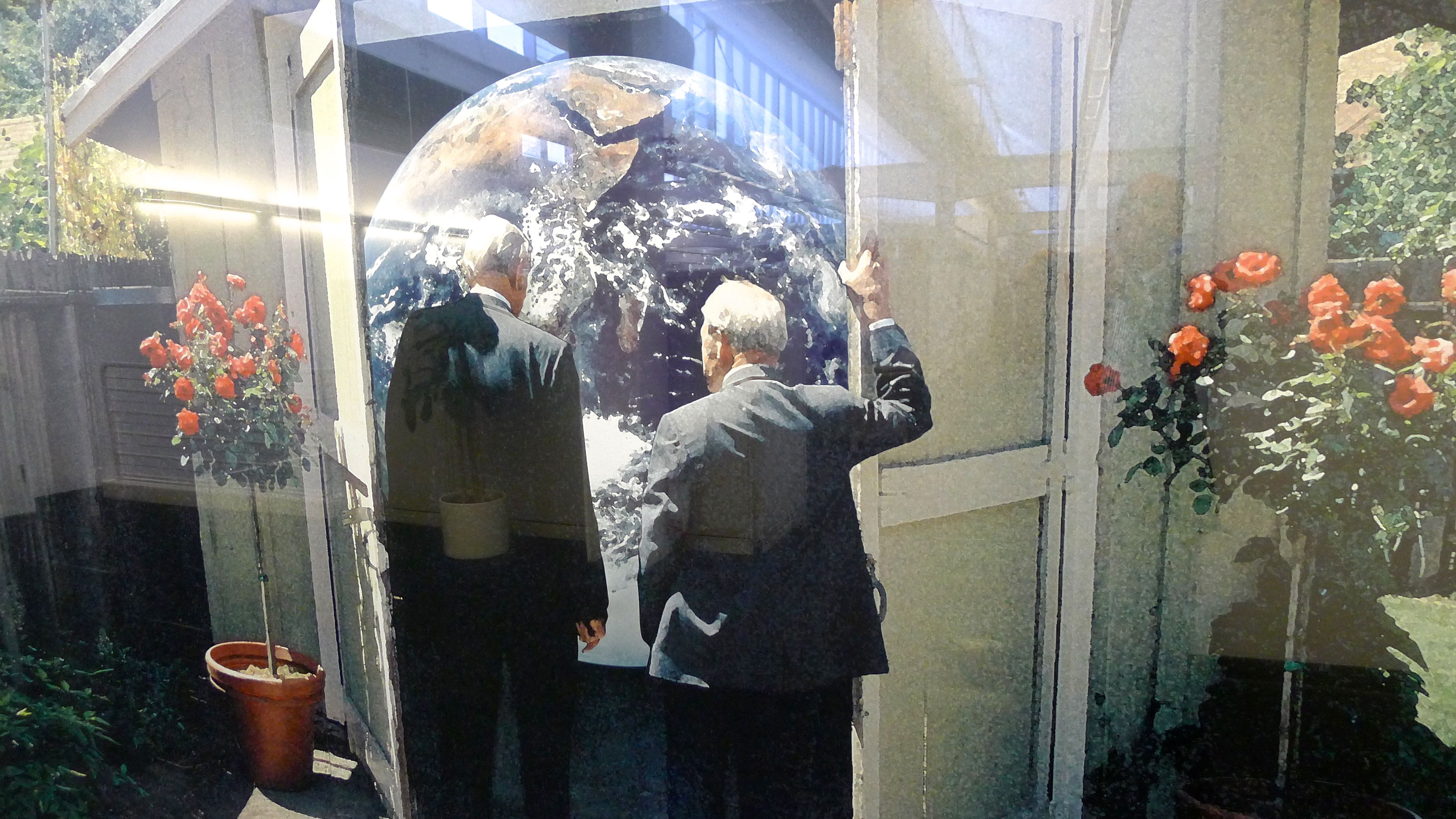
Thrilled that our Breakthrough Forecast has made it into the new Atlas of the Future.

John Elkington
A world authority on corporate responsibility and sustainable development.
Thrilled that our Breakthrough Forecast has made it into the new Atlas of the Future.
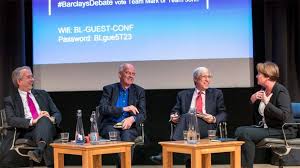
For CSR or Shared Value fetishists, the video of the full Barclays debate on ‘Is CSR Dead?’ is available here. Starring Patrick Thomas, me, Mark Kramer and Janet Voûte.

Thought of calling our new program Hammerhead today, because I have been spending so much of my time in recent months seeming to banging my head against a brick wall. Reminds me of the experience when I was trying to develop the triple bottom line concept in the early 1990s.
And weirdly, just today, I was working on the ‘Exponential Futures’ framing for the next stage in our Breakthrough work, and was going back to Alvin Toffler’s work. His 1970 book Future Shock and 1980 sequel The Third Wave, both hugely influential in the development of my own interests and thinking, were still in the shelves upstairs.
Have long had a sense that I had read something on multiple bottom lines long before I came up with the TBL concept – and, reading through Toffler’s books, I came across a reference to multiple bottom lines on page 257 of The Third Wave. I owe the man a huge debt, it seems.
The rest of the week has been typically blurred, with a day off on Monday, which included a visit to the Eskenazi Gallery in Clifford Street, W1. We went to see an exhibition called Transfigured Echoes, featuring recent paintings by Liu Dan. Stunning. My favourite was Taihu Rock of the Shaoyuan Garden. Giuseppe, who I hadn’t met before, came out to say hello and gave me a copy of the exhibition book.
We also went across to the Courtauld at Somerset House to see the Peter Lanyon exhibition. Soaring Flight. By far my favourite painting is the one featured on the Courtaulds website. I had been at Bryanston School with his one of Lanyon’s sons, shortly after his death following a gliding accident.
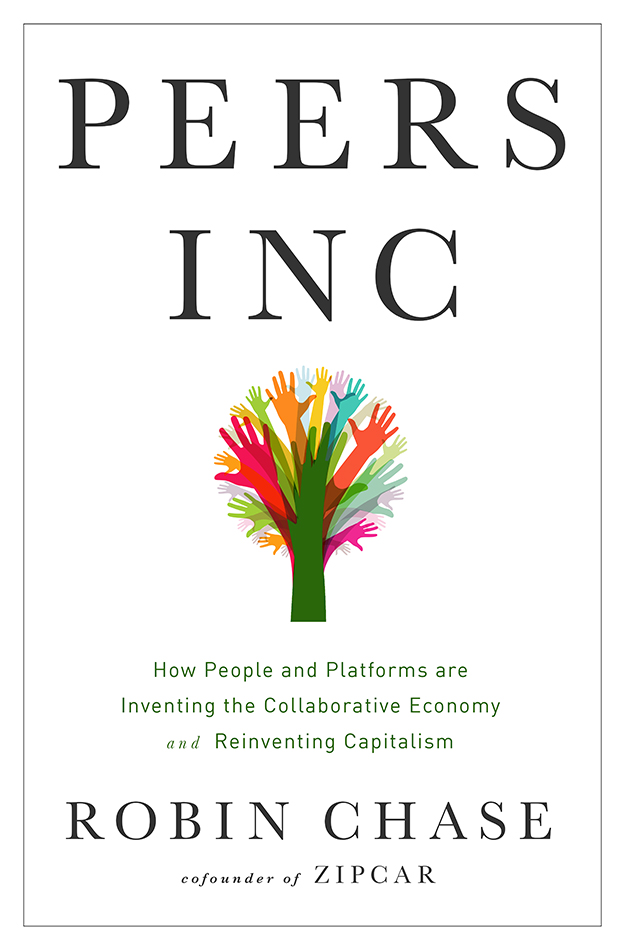
The same evening I went to The Crowd’s event with Robin Chase, co-founder of companies like Zipcar and Buzzcar, and author of Peers Inc. Afterwards on to Smith’s Top Floor at Smithfield with Robin, Jim Woods and other guests, including Jo Bertram of Uber.
Fascinating email exchange afterwards, all helping me work through our next big jump.
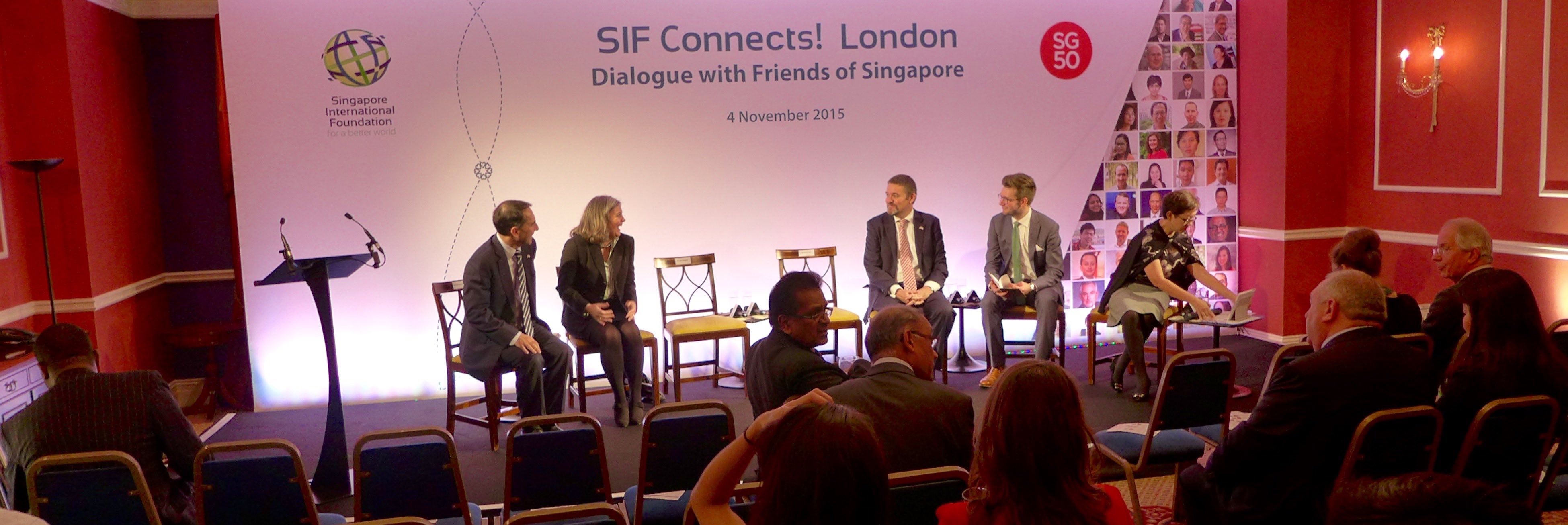
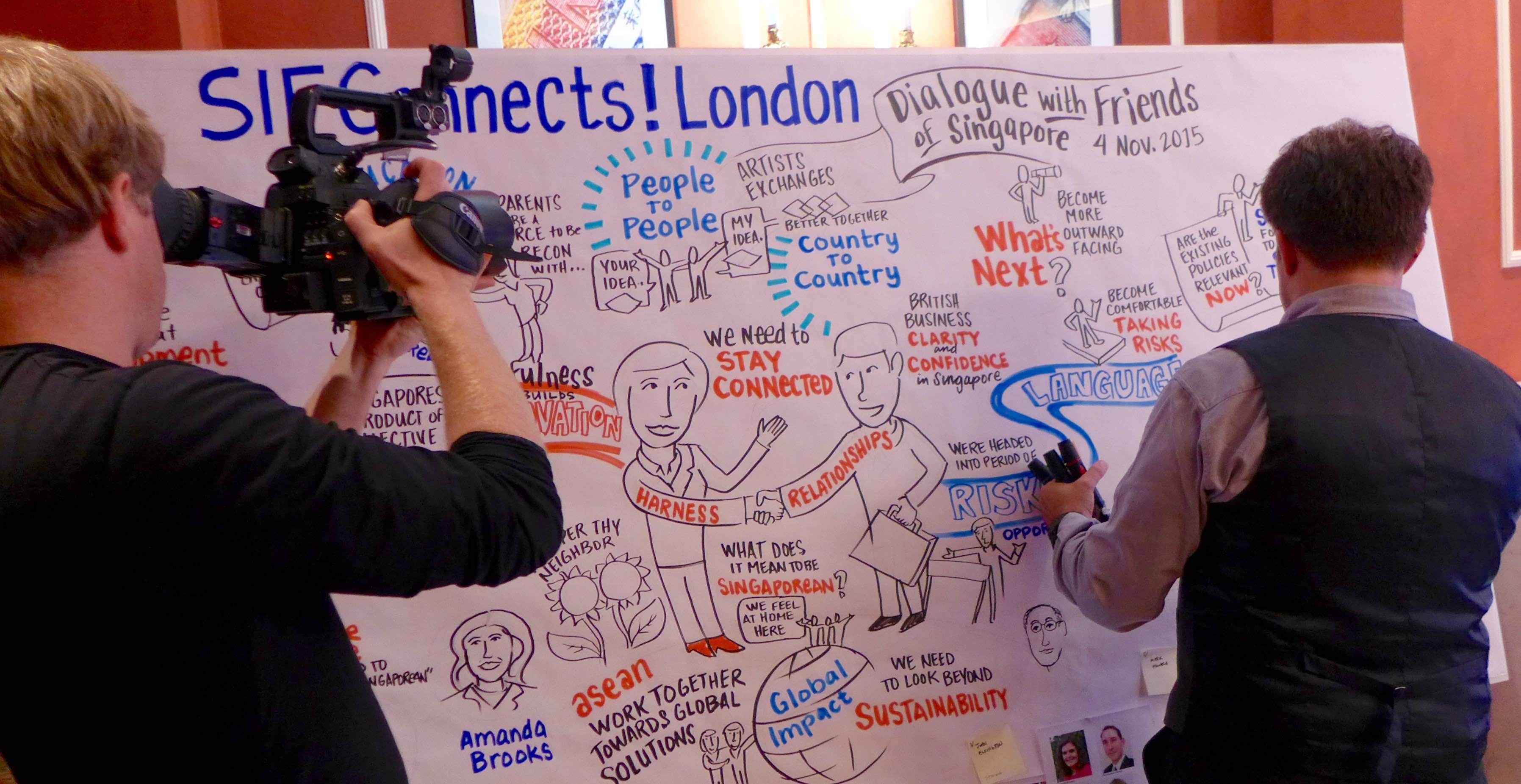
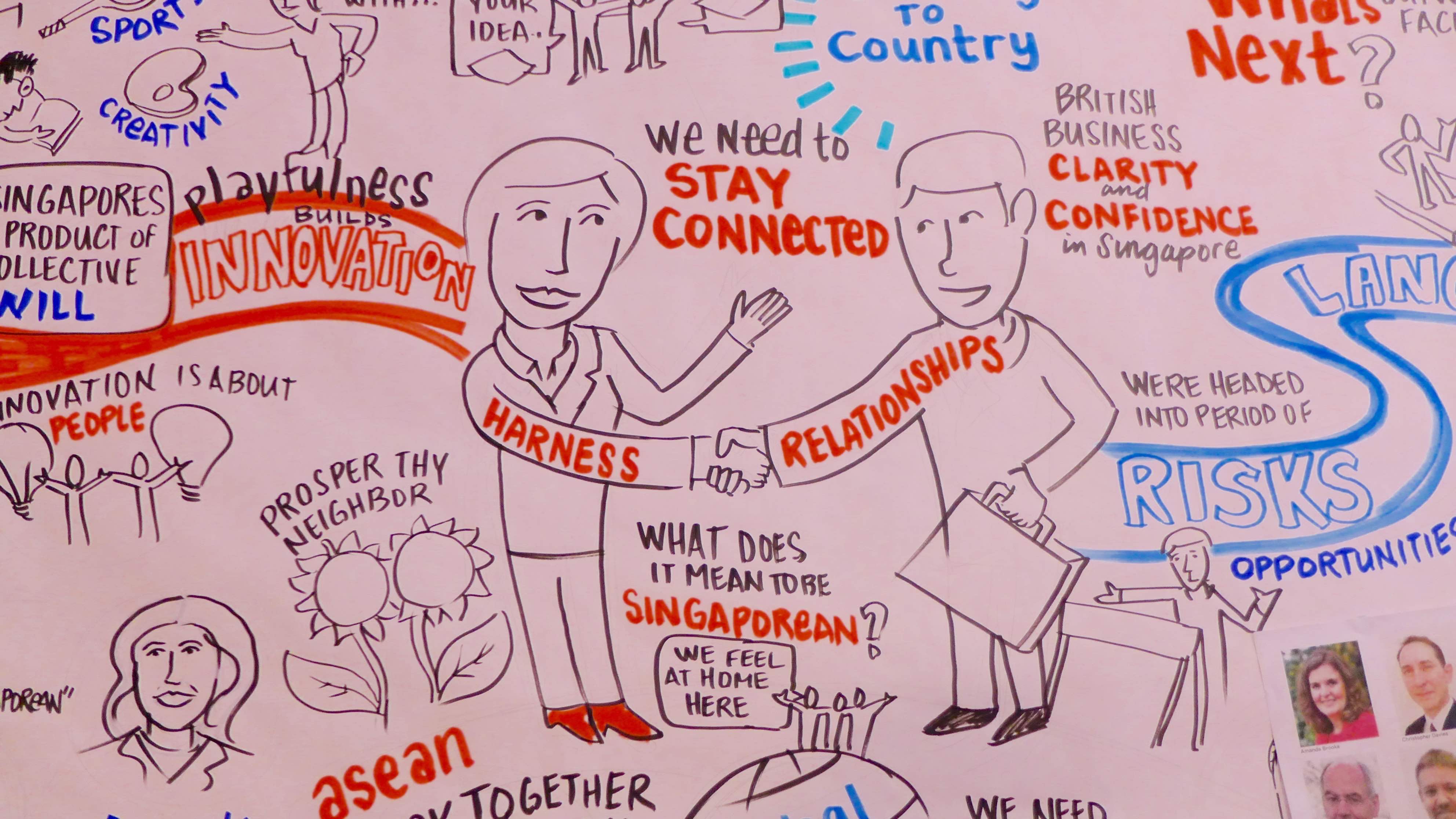
On Wednesday, after a busy day, I went across to the Singapore High Commission to speak at a Singapore International Foundation event. On a panel with Amanda Brooks (Director of Innovation, UK Department for Business, Innovation and Skills), Christopher Davies (Director, Pender Communication), Mark Howard (British Council’s Head of Teaching & Blended Learning), Jonathan McClory (Partner at Portland) and Foo Chi Hsia (Singapore High Commissioner), with our moderator being Jennifer Lewis, a Governor with SIF since 2007 – and an MD with the Singapore Investment Corporation. Wonderful to be considered a ‘Friend of Singapore’.
Then on Thursday we had a 5-hour session with Covestro at Futerra’s London offices, at which we made a good deal of progress, I think, followed by a shareholders’ meeting at SustainAbility.
Friday included a great call with Sophia Tickell of Meteos, where I began to test out my thinking around the future of campaigning in an exponential world. Deborah Doane also came in to quiz me on what Greenpeace should be doing over the next decade. An interesting set of questions.
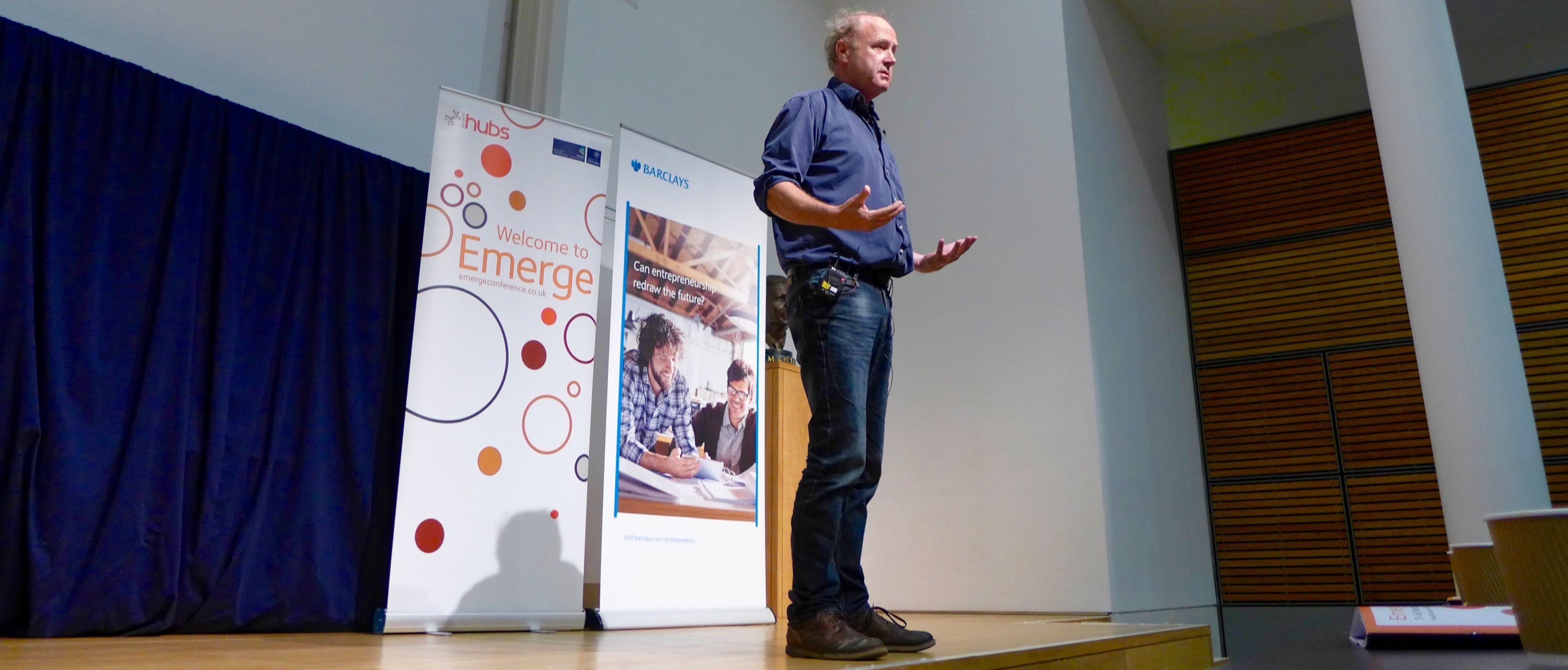
Saturday saw me heading across to Oxford early to be part of a panel session at EMERGE 2015, the annual social innovation conference held at the Saïd Business School. Tim Smit did a barnstorming keynote, and then our session was chaired by Cliff Prior of UnLtd and included David Grayson of Cranfield University and Joanna Hafenmayer of My Impact.
Funny thing on the train down. Got an email from Richard Johnson, who was sitting elsewhere on the same train, and behind some young women also heading down to Oxford. He reported them saying the following:
“John Elkington is doing the opening session!”
“I know, I’m reading his latest book at the moment.”
“Remind me,” he said, “to add that to our next impact report!”
A nice email note today from Mark McElroy this morning. He is the founder and Executive Director of the Center for Sustainable Organizations and the original developer of the Context-Based Sustainability method, to draw on his bio on the Sustainable Brands website
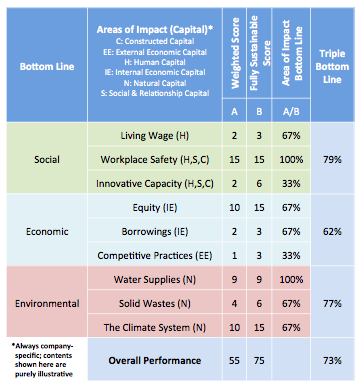
He is also co-founder of Thomas & McElroy LLC, creators of the MultiCapital Scorecard (see above), and a veteran of management consulting including time spent at Price Waterhouse, KPMG and Deloitte Consulting. He teaches in the ‘MBA in Managing for Sustainability’ program at Marlboro College in Vermont.
Hi John:
I’ve been meaning to reach out to you for some time now to essentially acknowledge, pay tribute to and thank you for something you did when you introduced the TBL in the mid-nineties, but which most people may not yet fully appreciate in my view. And that was to explicitly associate each of the bottom lines with specific vital capitals.
Most were so caught up with the metaphorical value of the TBL as an organizing principle for performance assessment — nothing wrong with that — that we failed to fully appreciate what you also had to say about how vital capitals correspond to the bottom lines.
Now, in 2015, we’ve managed to make the leap from metaphorical organizing principle to empirical measurement model. The MultiCapital Scorecard, for example, is nothing if not utterly grounded in the view that TBL performance can and should be interpreted in terms of what an organization’s impacts are on vital capitals relative to sustainability thresholds. In fact, it is the application of this idea to non-financial capitals that has given rise to the idea that sustainability criteria can and should be applied to financial performance, too. Thus comes the idea that maximizing profits as a regulative ideal should be replaced with simply providing reasonable returns. Sufficiency will more than do.
I now routinely call attention to this intellectual contribution of yours twenty years ago, and wanted to let you know that I am. It’s a very big deal in my view, in the spirit of organizations not being able to manage what they don’t measure. Sustainability performance in its full TBL form essentially boils down to capital impact performance, and you were perhaps the first to point that out. So here I am giving credit where credit is due. As “multicapitalism” now grows in prominence as a new anti-monocapitalism doctrine, your contribution to the transition should not be overlooked.
All the best,
Mark








Drove across fairly early to Kew Gardens this morning, in a fairly thick fog. Lovely air and atmosphere as we walked around, though with the aircraft roaring by just above the vapour.
Put me in mind of the Russian Airbus downed over Sinai yesterday. The scenery was also inflected by my reading of Alexander Kluge’s extraordinary book, 30 April 1945, which focuses in on what else happened on the day that Adolf Hitler committed suicide.
Have also been leafing through the second violate of the huge collection of Dalí’s painting by Robert Descharmes and Gilles Néret, which reminds me of just how big an impact he had on my mental landscape in the late 1960s.