Geoff Lye and Gary Kendall are filing regular blogs from COP15 in Copenhagen on the SustainAbility website.
Journal
Whale of a Time at MOMA
As I prepare 5th Avenue to the Apple Store
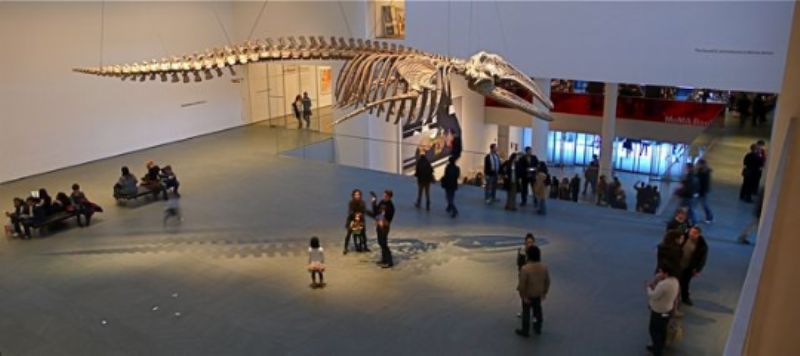
Whale skeleton in MOMA
Brigitte
Mechanical dragonfly
MOMA view 1
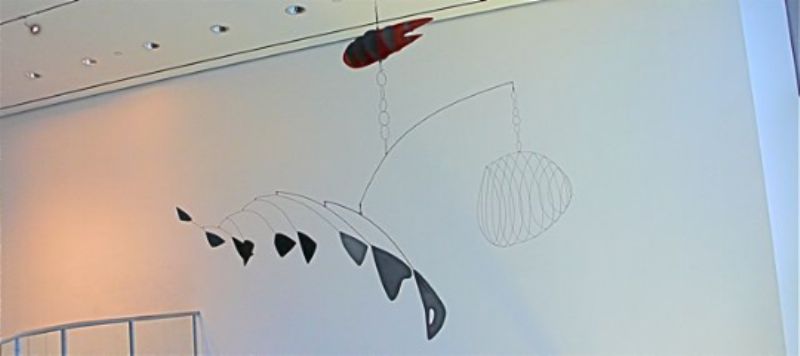
Calder mobile
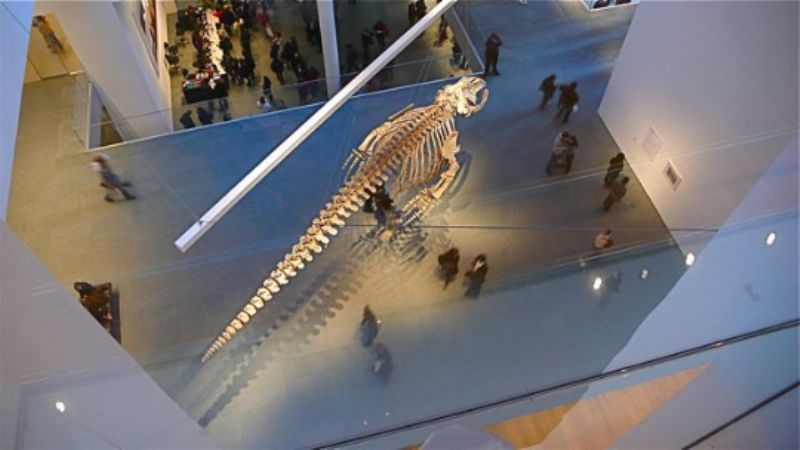
Whale, again
Reminiscent of Star Wars
Giamcometti shadow
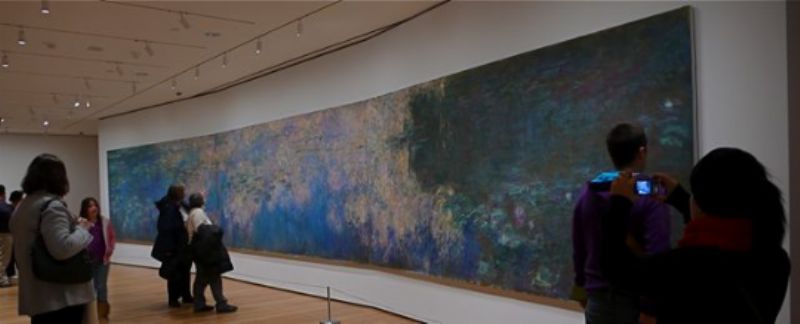
Monet 1
Monet 10
MOMA view 2
Back this morning from New York, where I had spent Friday with the Nestle Creating Shared Value Advisory Board. Some of the time was spent on developing a CSV paper by Michael Porter and Mark Kramer, some on a new CSV Prize, to be announced next year, and part on a major CSV event, again for next year. Yesterday, I spent a fair few hours out and about, including a visit to MOMA, where I loved the Gabriel Orozco whale. But, for me at least, the runaway highlight was spending time in the Monet gallery, where the sheer scale and ambition of his water lily paintings really drew me in. Wonderful how the fingerlings and larger fish flit below the surface of the paint.
Jim et Jed
Part of lunch snapped as I passed
Delightful weekend, with Jim Salzman staying over the weekend and Jed Emerson coming to lunch today. The two of them hadn’t met before. Magic moment when I – rather belatedly – realised that Jim would be a wonderful resource for the new Volans project on ecosystem services, newly funded by Tellus Mater, given that this has been his field since the late 1990s. I may be slow, but I get there in the end.
One Facet Missed By Jared Diamond
One of my favourite writers on environmental themes, particularly with his book Collapse, is Jared Diamond. He has an interesting Op-Ed in today’s New York Times, on the question whether big business can save the Earth? “There is a widespread view, he begins, “particularly among environmentalists and liberals, that big businesses are environmentally destructive, greedy, evil and driven by short-term profits. I know – because I used to share that view.”
But, having worked on the boards of WWF and Conservation International, he says, “I’ve … worked with executives of mining, retail, logging and financial services companies. In the process, I’ve discovered that while some businesses are indeed as destructive as many suspect, others are among the world’s strongest positive forces for environmental sustainability.”
He continues: The embrace of environmental concerns by chief executives accelerated recently for several reasons. “Lower consumption of environmental resources saves money in the short run. Maintaining sustainable resource levels and not polluting saves money in the long run. And a clean image – one attained by, say, avoiding oil spills and other environmental disasters – reduces criticism from employees, consumers and government.
Interestingly, though, I got an email earlier today from Steve Brant in New York, welcoming the piece but noting that Diamond had failed to celebrate the work of the catalytic organisations that help companies get onto the beyond compliance track – among them BSR, WBCSD and – it struck me – SustainAbility.
It also struck me that as leading companies continue to push the boundaries, the work of such catalytic, intermediary organisations will not only grow, but also mutate and evolve furiously. Finally, it struck me that – as SustainAbility heads towards its twenty-fifth anniversary in 2012 – I should take another a look at the work and agendas of what we called the ‘Green Keiretsus’ in an article in Tomorrow magazine way back in the 1990s.
Left to their own devices, companies – particularly from the BRIC nations – cannot be relied on to do all of this on their own. They also will need activist pressure, media scrutiny, government regulation and incentives, business-to-business pressures and the mutual support provided by organisations like BSR, WBCSD and, in different ways, by organisations like SustainAbility.
Thinking globally, acting virally
The ‘Think globally, act locally’ was the mantra of my early years in the environmental and sustainability movements – but I always had a slight unease with the second bit. Partly, perhaps, because I got involved in some of the early alternative technology communities that attempted to practice a grassroots approach to global challenges.
Most imploded.
Later, I quite liked it when the phrase was spun to ‘Think locally, act globally’, but couldn’t quite work out what that meant.
Now this morning, sitting around the table with Elaine and Jim Salzman, I was ploughing my way through a slightly rain-soaked heap of papers hen, in the New York Times section of The Observer, I came across Guy Trebay’s article on the way hip-hop is morphing into a new dance trend, ‘jerking’.
His first line: Think globally, act virally.
Eureka! You know a great catch-phrase when you see it.
So I was slightly shocked to see that the phrase dates back at least a couple of years, being attributed – in the form ‘Think global, act viral’ – to Rudy De Waele of mTrend. The original context was mobile telephony, but, boy, can this mantra serve us across a wider front.
With COP15 looming, this spirit ought to apply to everything we do in tackling the climate – and wider sustainability – challenges.