
• Skip to primary navigation
  • Skip to main content
  • Skip to primary sidebar
John Elkington

John Elkington

A world authority on corporate responsibility and sustainable development.

  • About
    • Ambassador from the future
  • Past lives
    • Professional
      • Volans
      • SustainAbility
      • CounterCurrent
      • Boards & Advisory Boards
      • Awards & Listings
    • Personal
      • Family
      • Other Influences
      • Education
      • Photography
      • Music
      • Cycling
    • Website
  • Speaking
    • Media
    • Exhibitions
  • Publications
    • Books
    • Reports
    • Articles & Blogs
    • Contributions
    • Tweets
    • Unpublished Writing
  • Journal
  • Contact
  • Show Search
Hide Search

Search Results for: Tim elkington

Fighting My Way Back Into 2026

John Elkington · 15 January 2026 · Leave a Comment

Having been locked out of this site for several months, I thank Chris Wolf and Carlo Schifano for handing me back the keys.

With Gaia and family were in Canada, Hania and family in Tenerife, Christmas and the New Year were fairly quiet, though we saw various friends at different points. I found the long break liberating, plowing my way through several stacks of books, but also working on the new book I am developing with Charmian Love.

And, by way of a catch-up, here are some of the Substack articles I have posted in the meantime:

1. A kaleidoscopic survey of some of the things I was doing as 2025 wound down, including a trip to Florianópolis in Brazil and another session with AIRMIC and insurers and reinsurers.

2. A well-received piece on where to channel our energy in 2026.

3. An even more warmly received post welcoming the New Year and discussing Trump’s entirely unintended gift to the sustainability world.

4. A piece inspired by the World Future Energy Summit in Abu Dhabi.

5. An exploration of some of the ways in which copper has underpinned our civilisations – and why it is now critical to the transition to greener economies.
Samarkand And The Legacy Of Ulugh Beg

John Elkington · 27 October 2025 · Leave a Comment

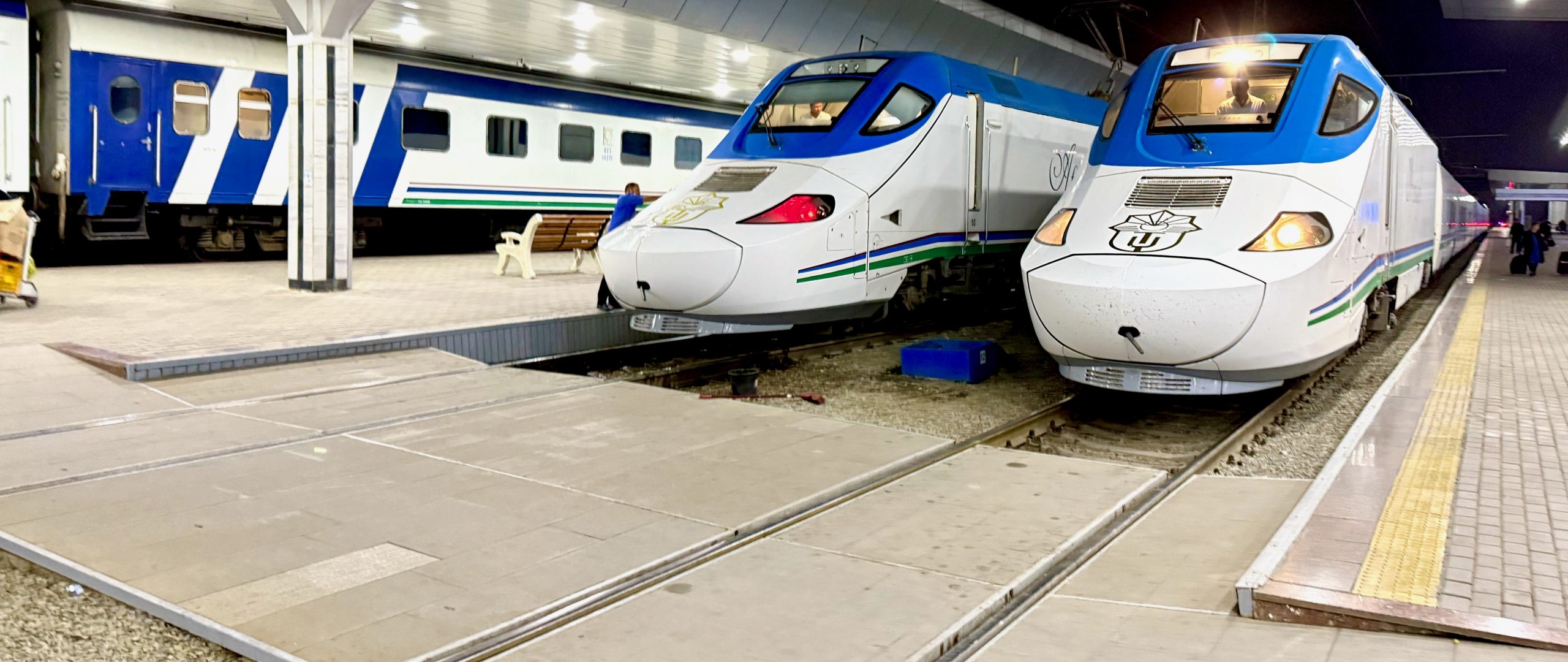
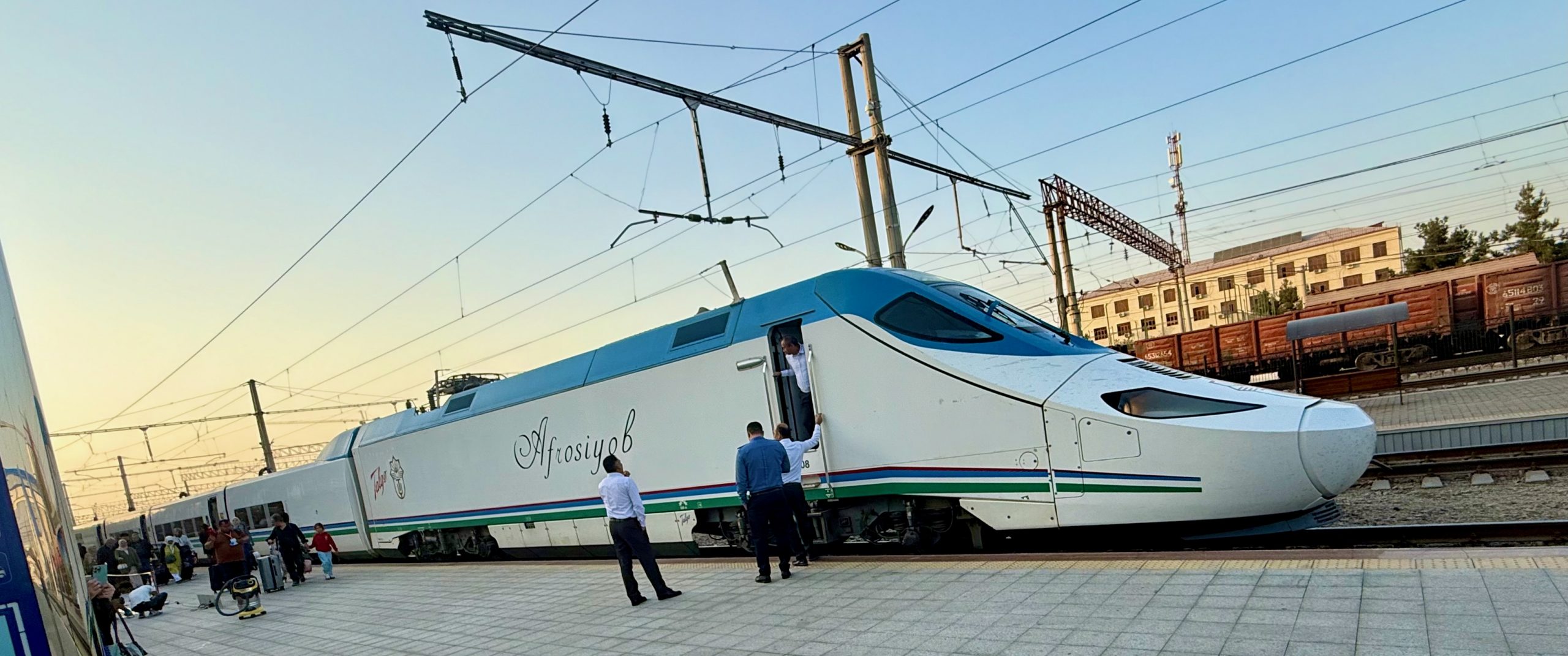
The train that took us to Samarkand
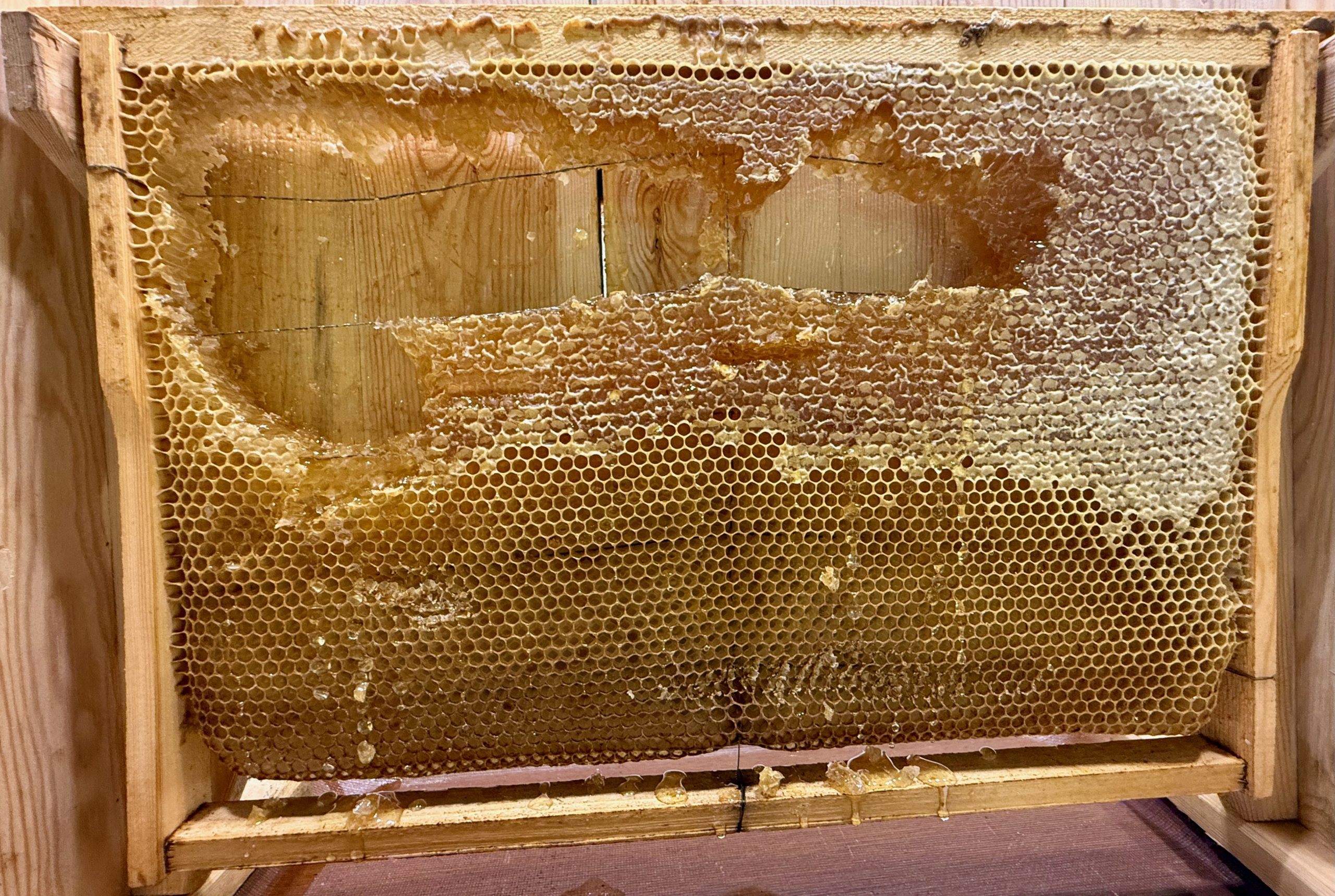
Honeycomb for breakfast
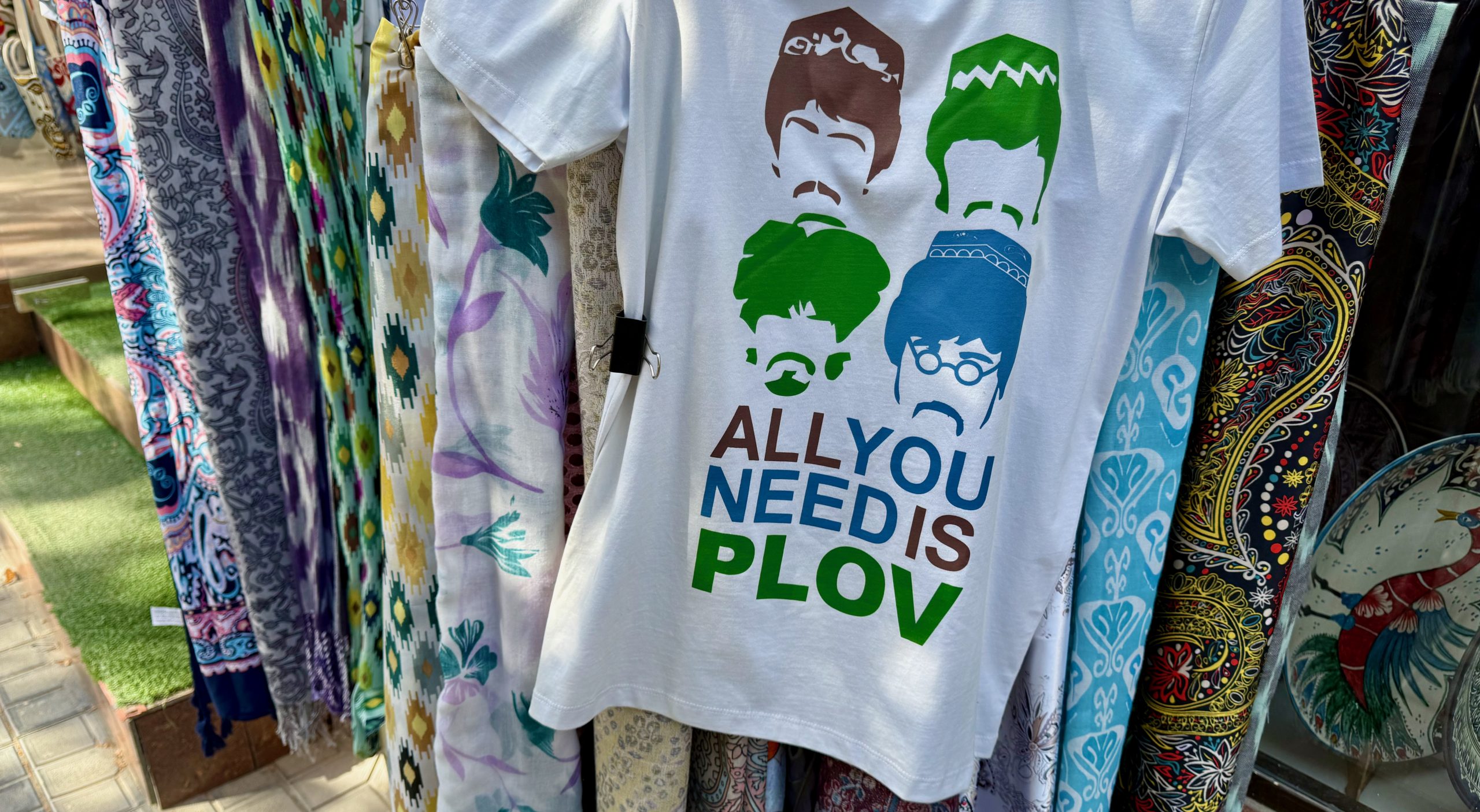
Now there’s a cultural reference I recognise (plot being a local dish, aka pilar or pilau)
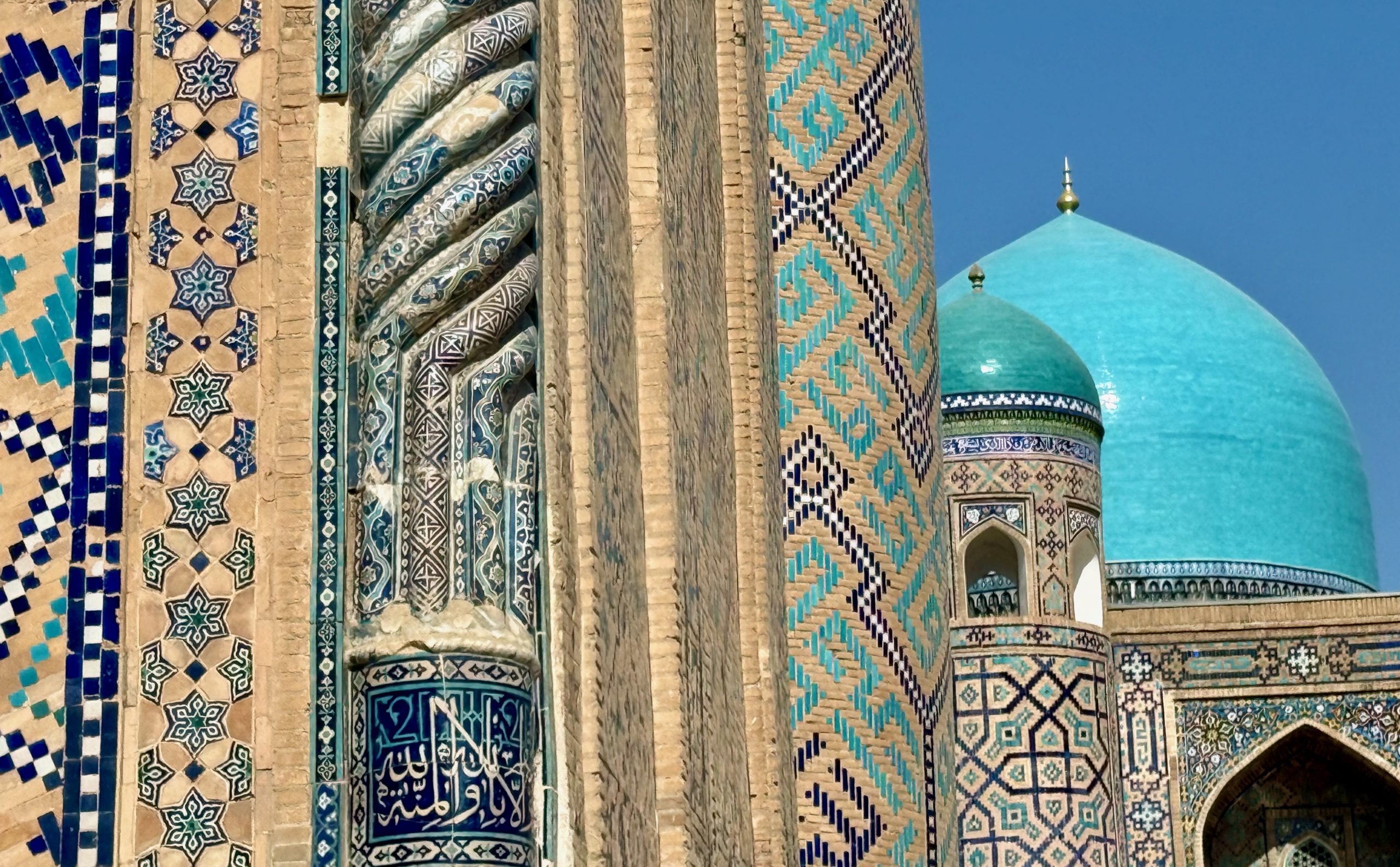
The blues entrance
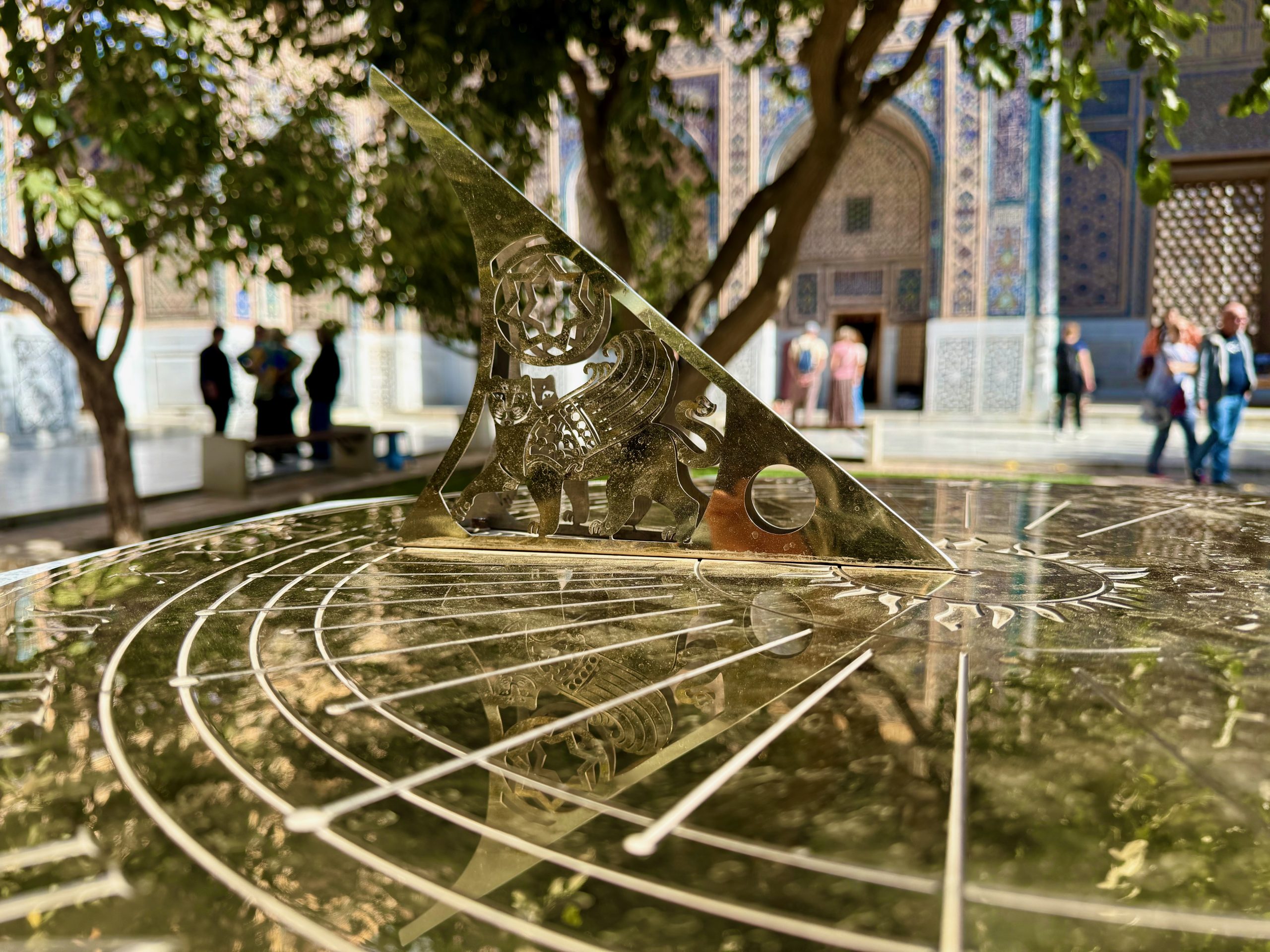
A (modern) golden compass
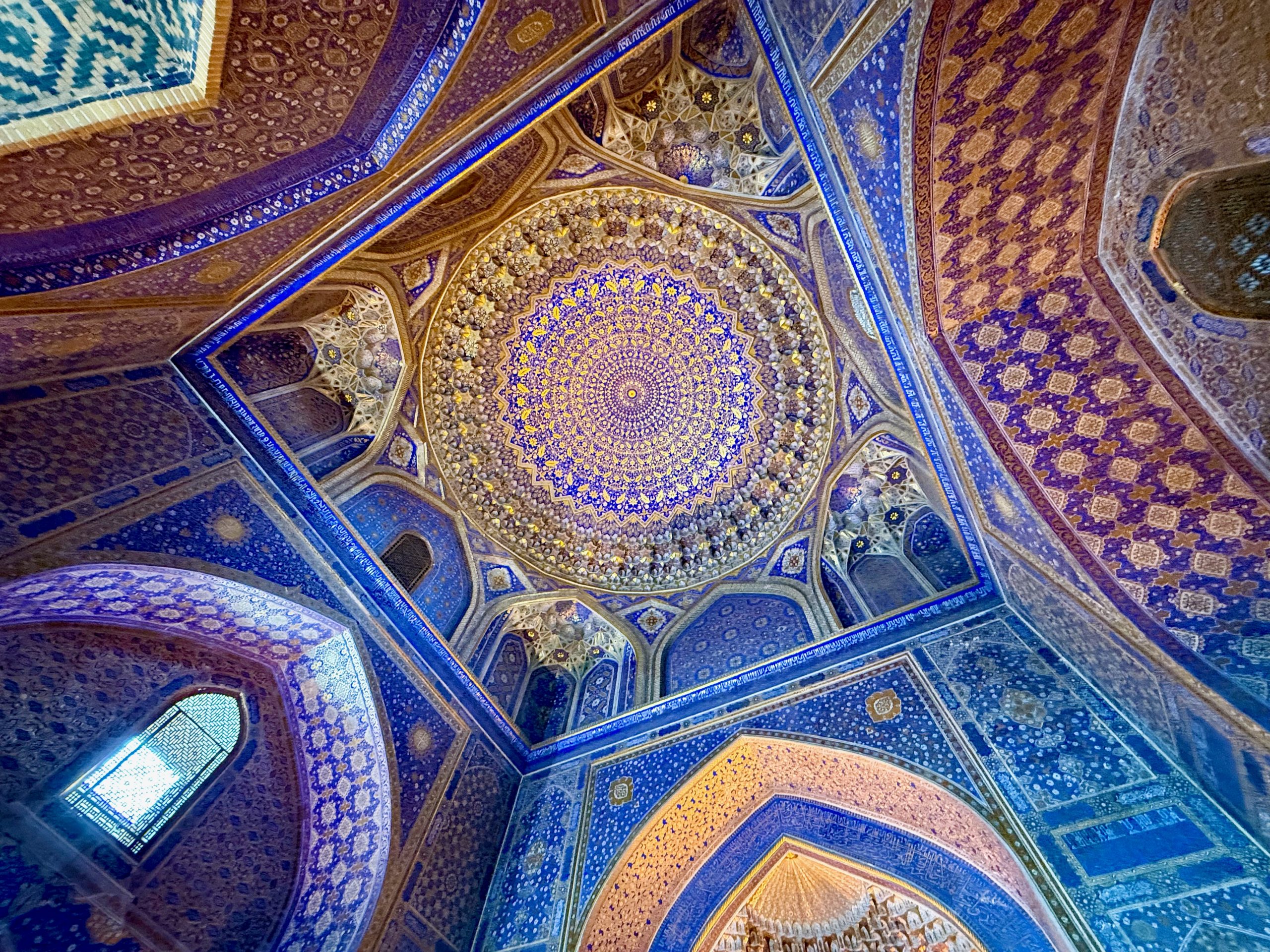
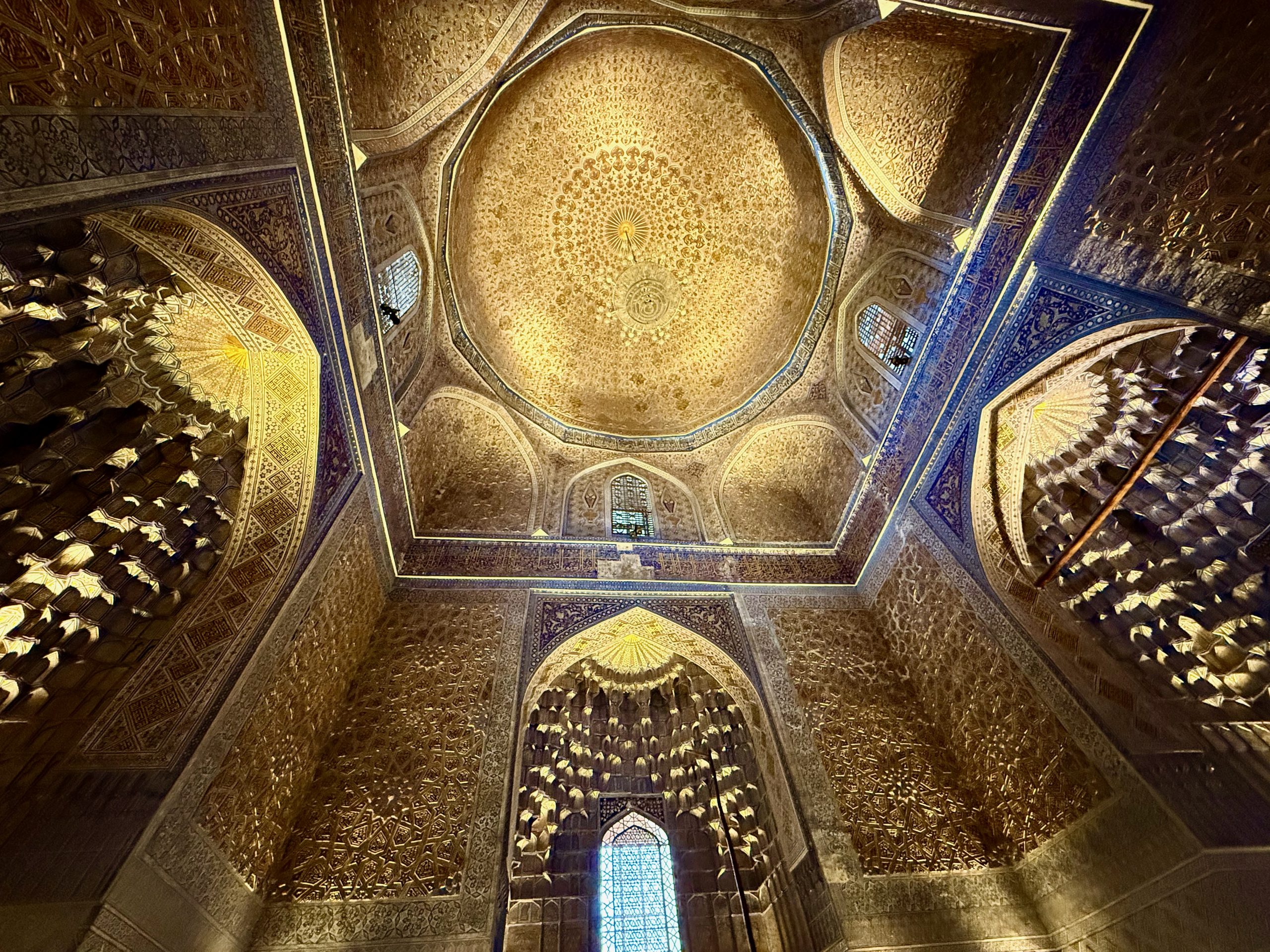
Overhead 1
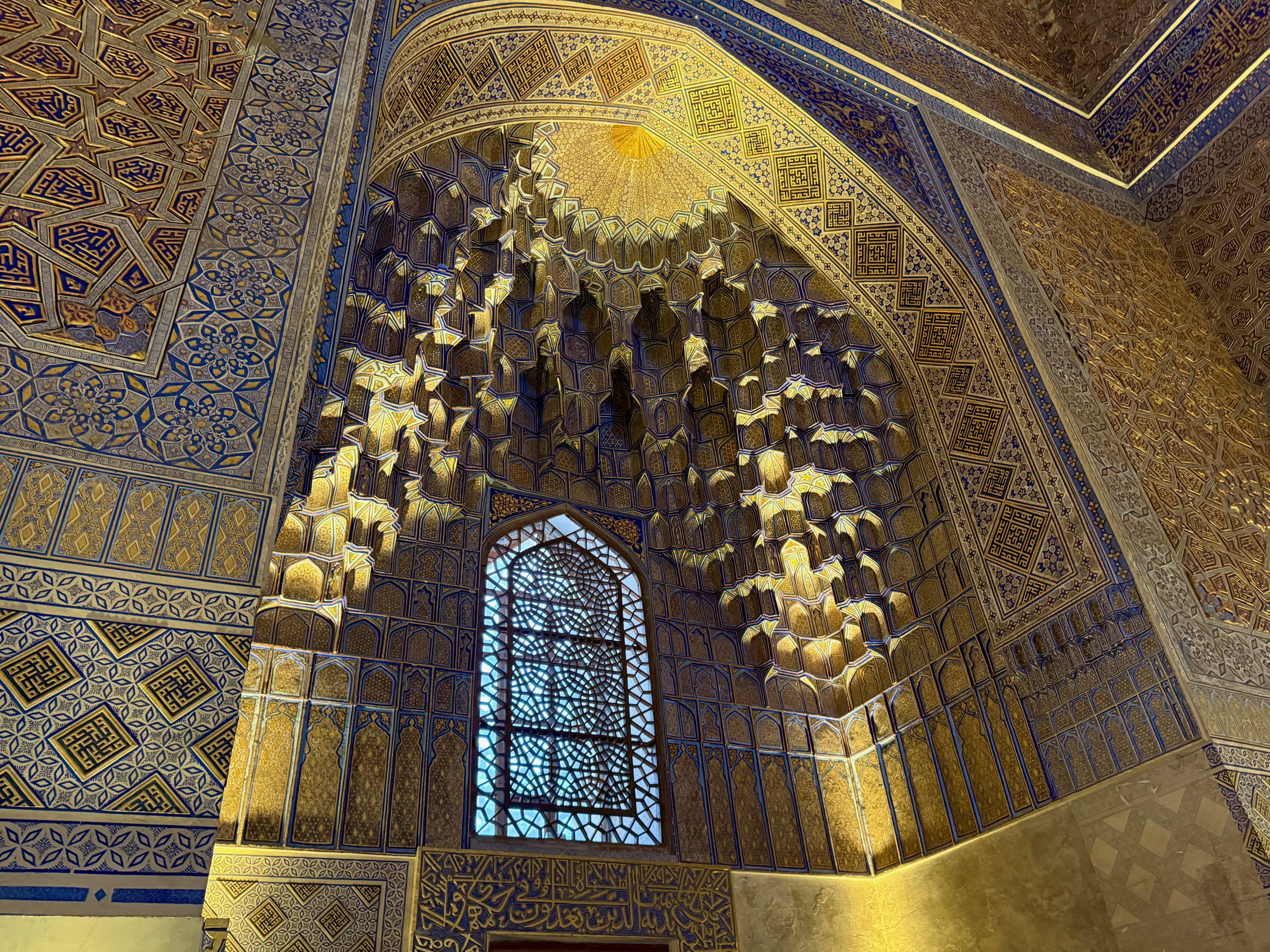
Overhead 2
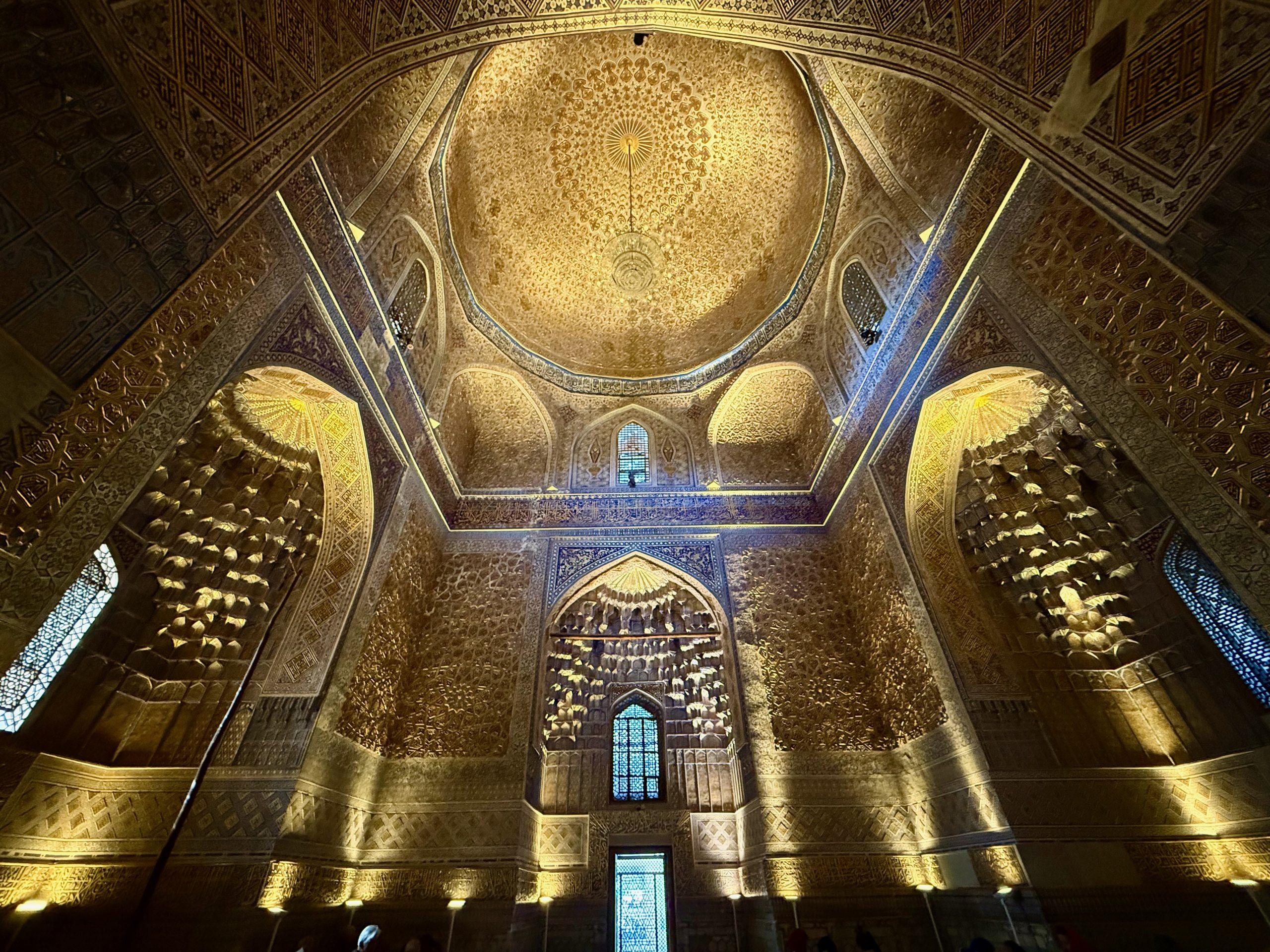
Overhead 3
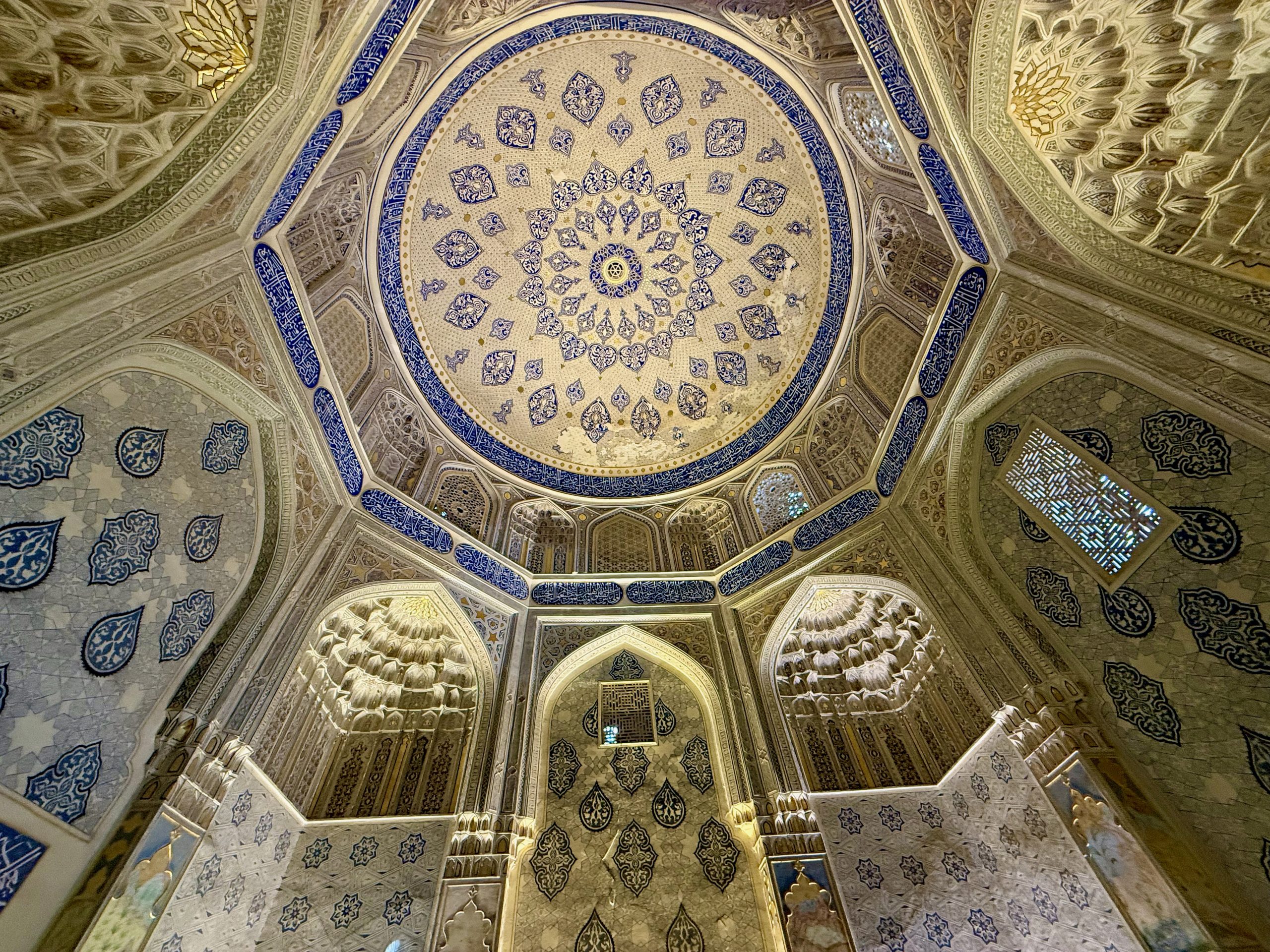
Overhead 4
Overhead 5
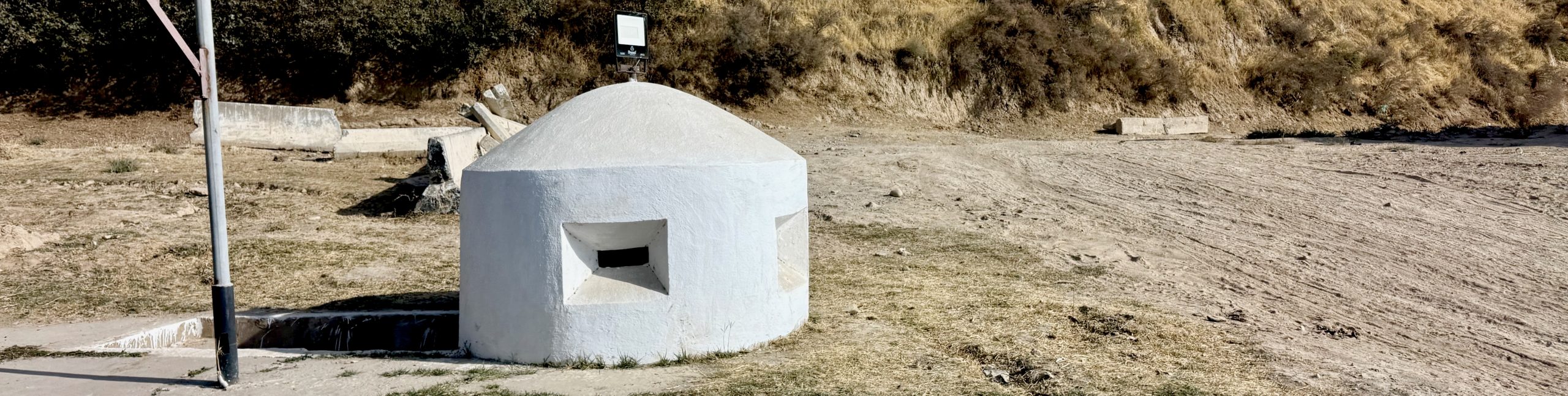
An old pillbox as we head into the mountains
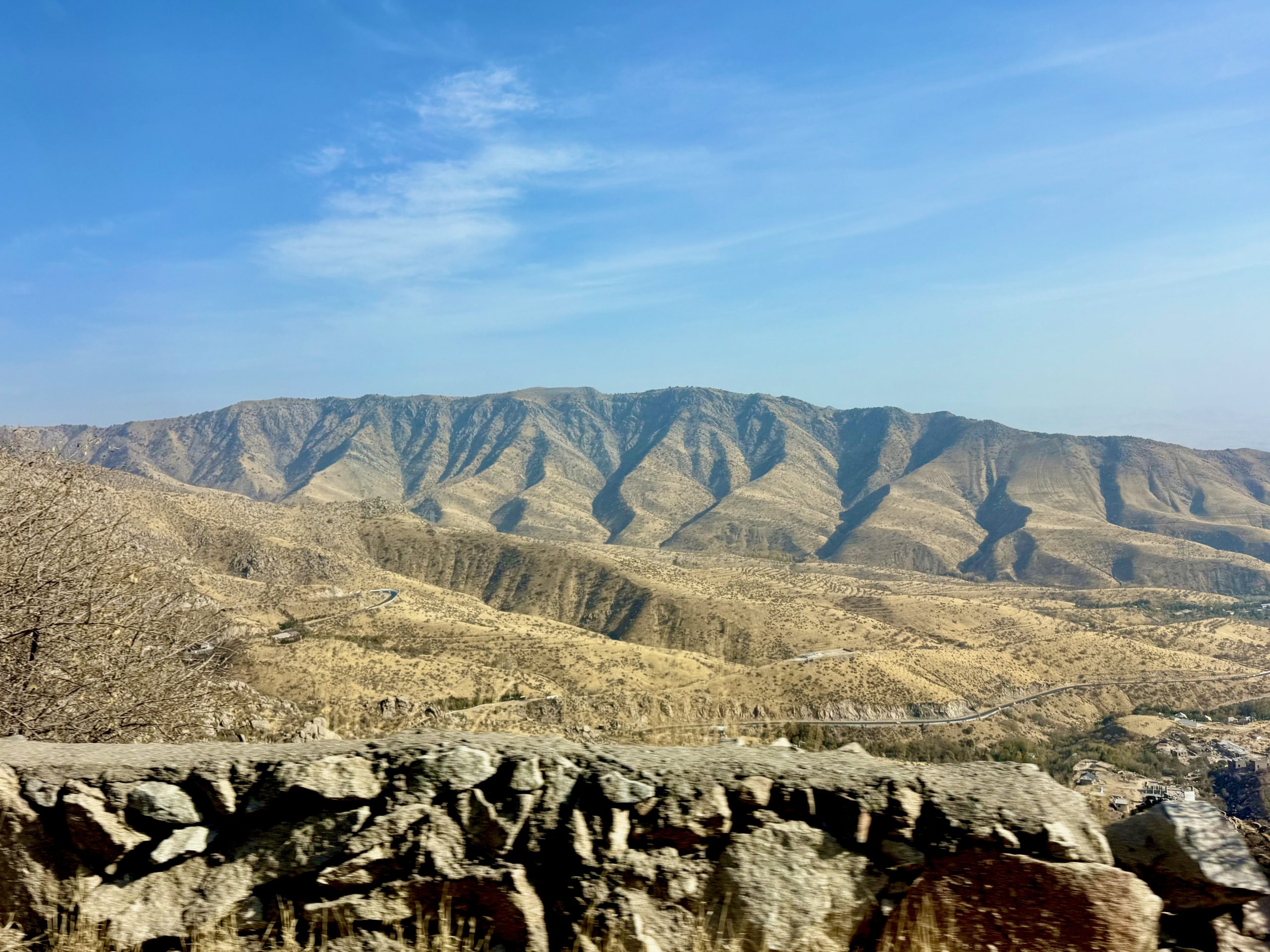
Mountainous view
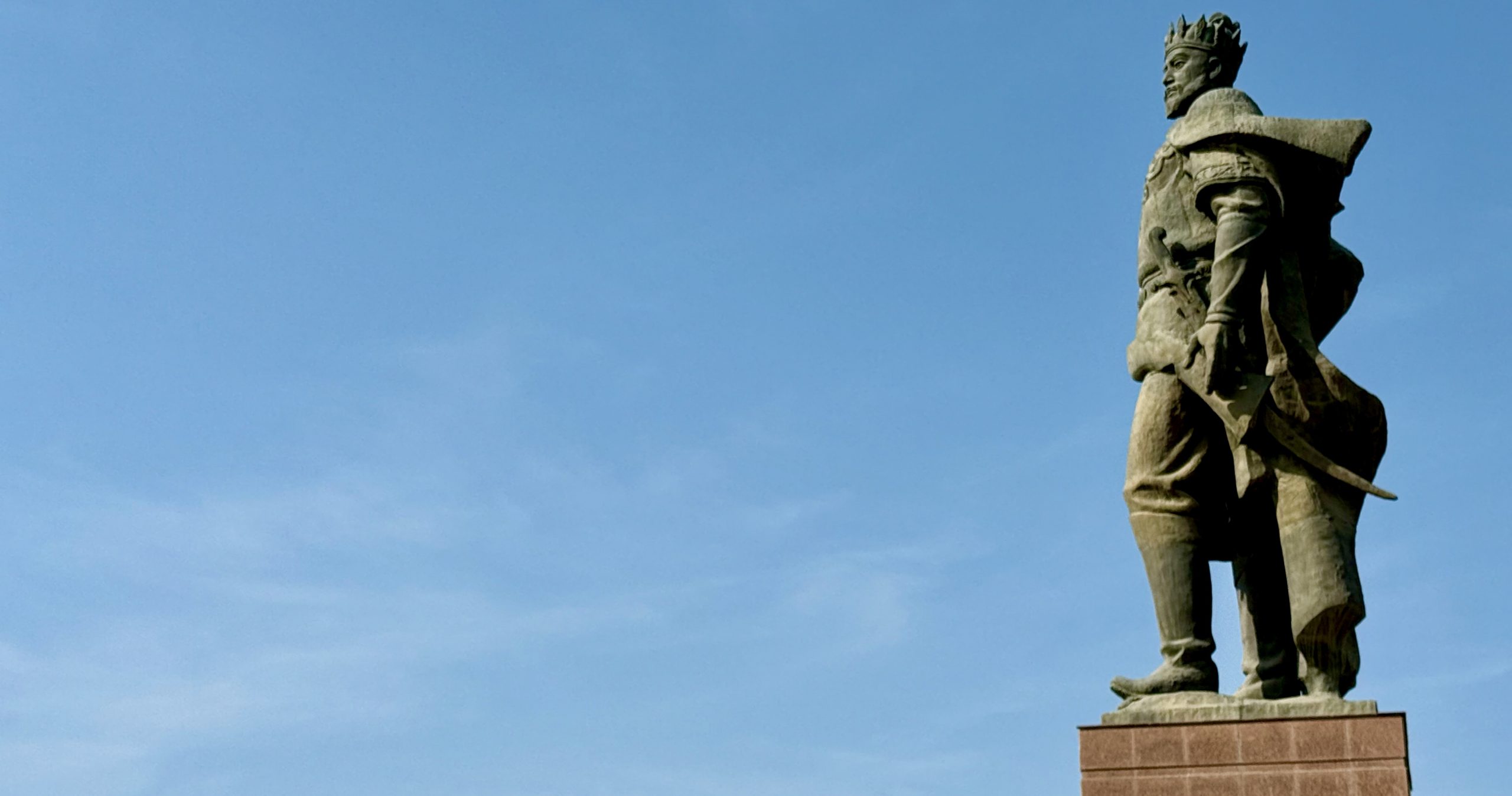
Timur
Can’t remember where this was, the necropolis perhaps, but caught me eye
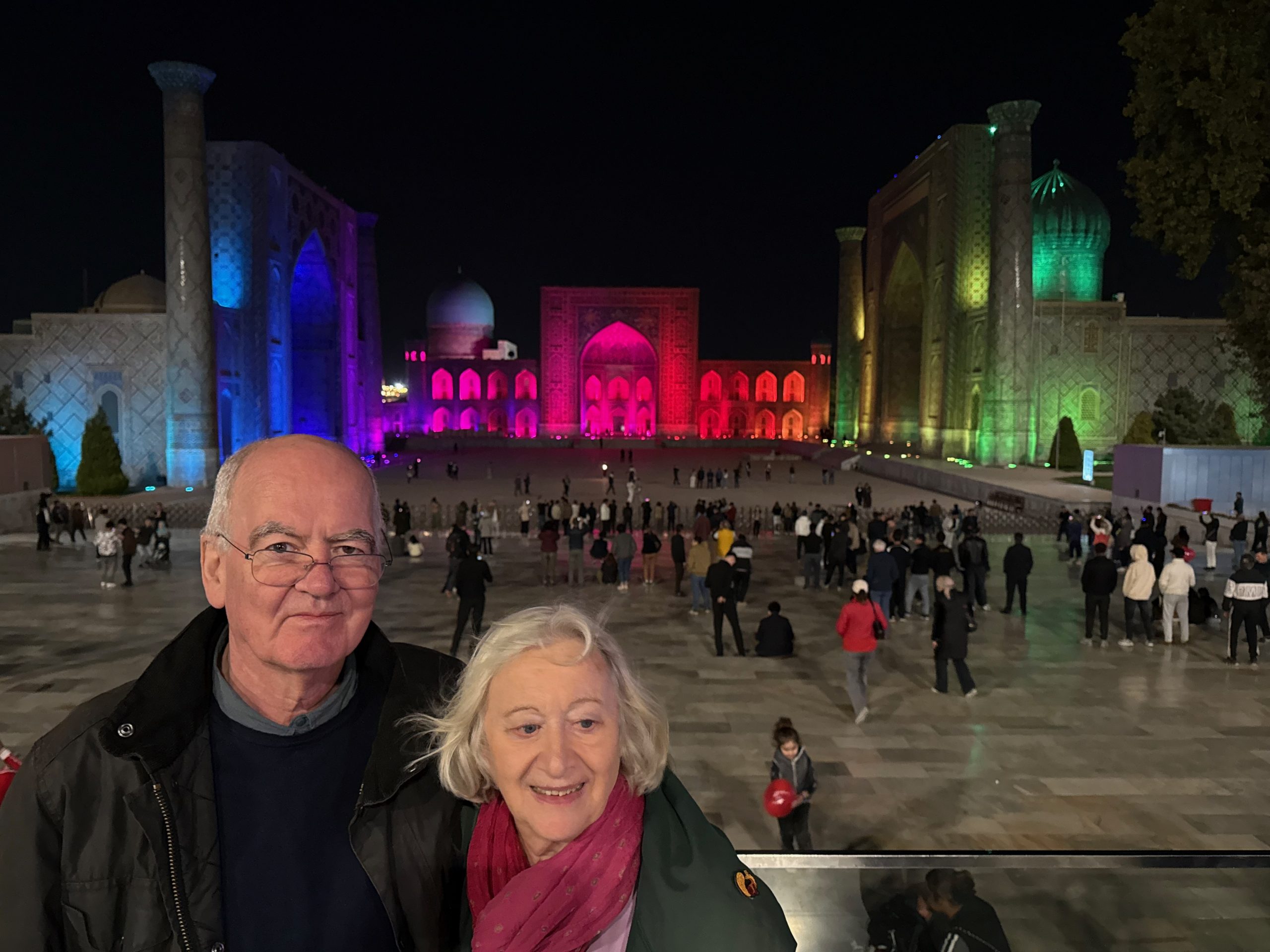
Elaine and I in the Registan Square, seemingly disco-lighted
Ancient, old and modern
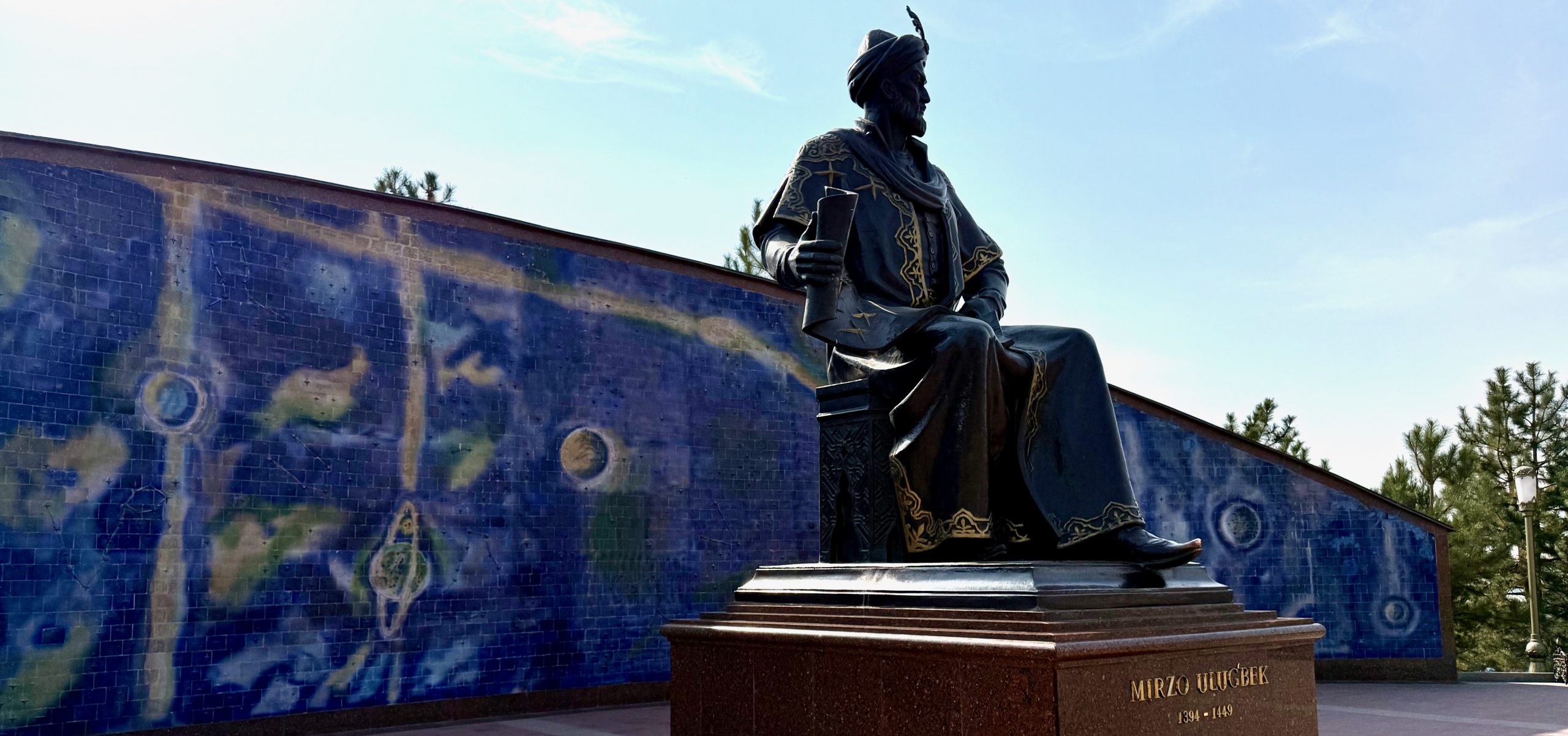
Ulugh Beg, king-astronomer
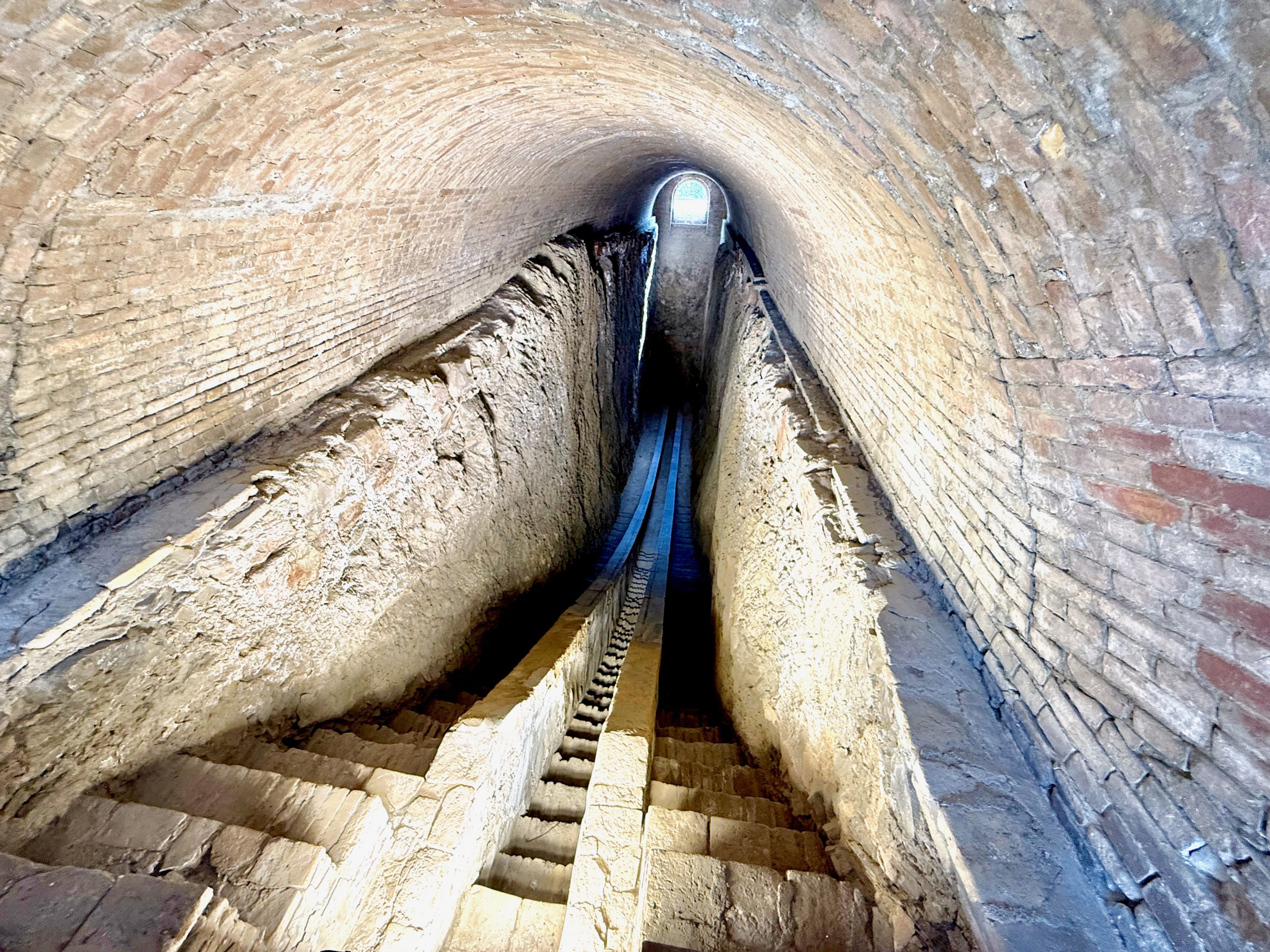
His giant (and largely) underground sextant
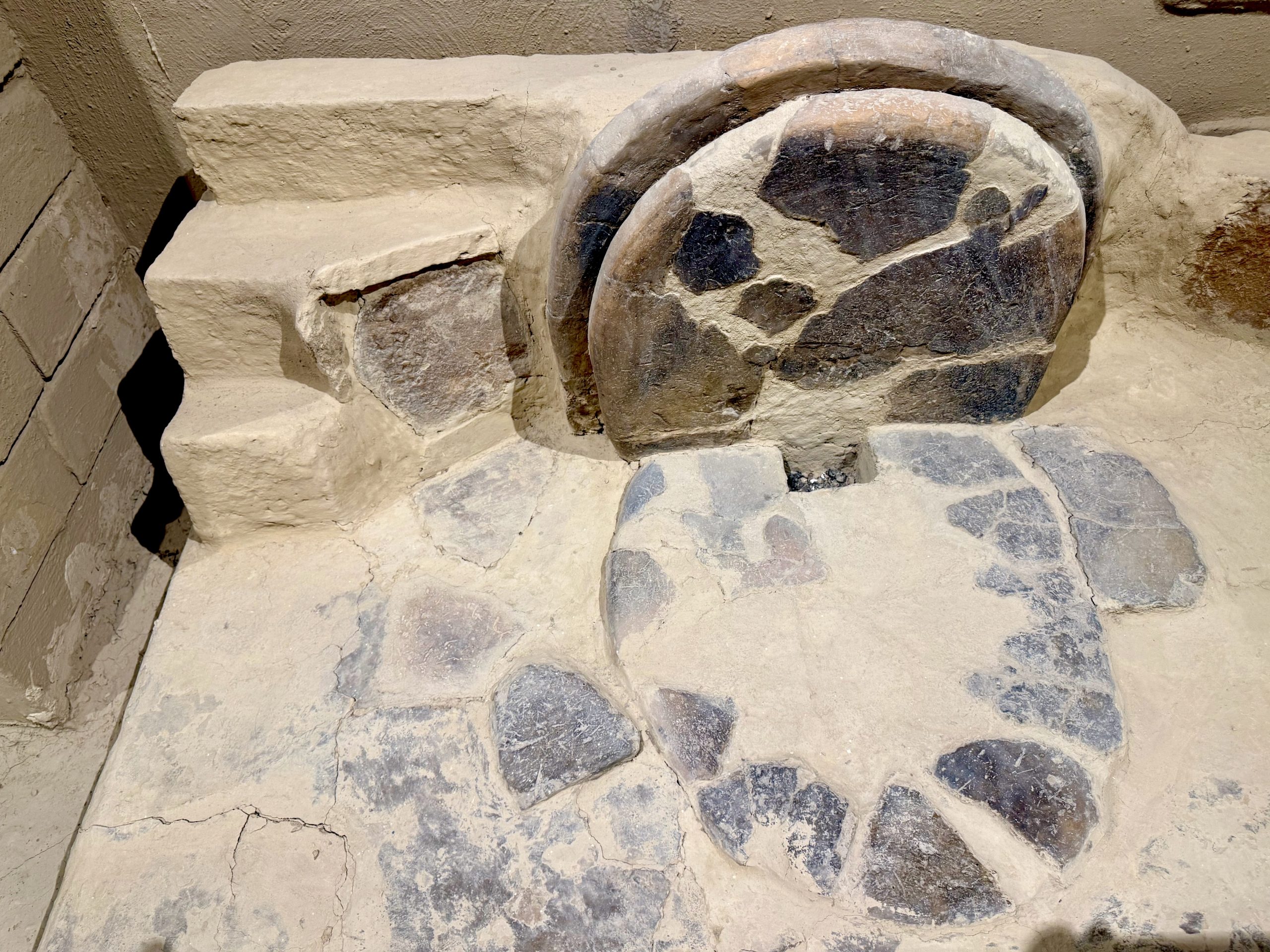
A Zoroastrian fireplace, apparently, though reminiscent of a modern WC
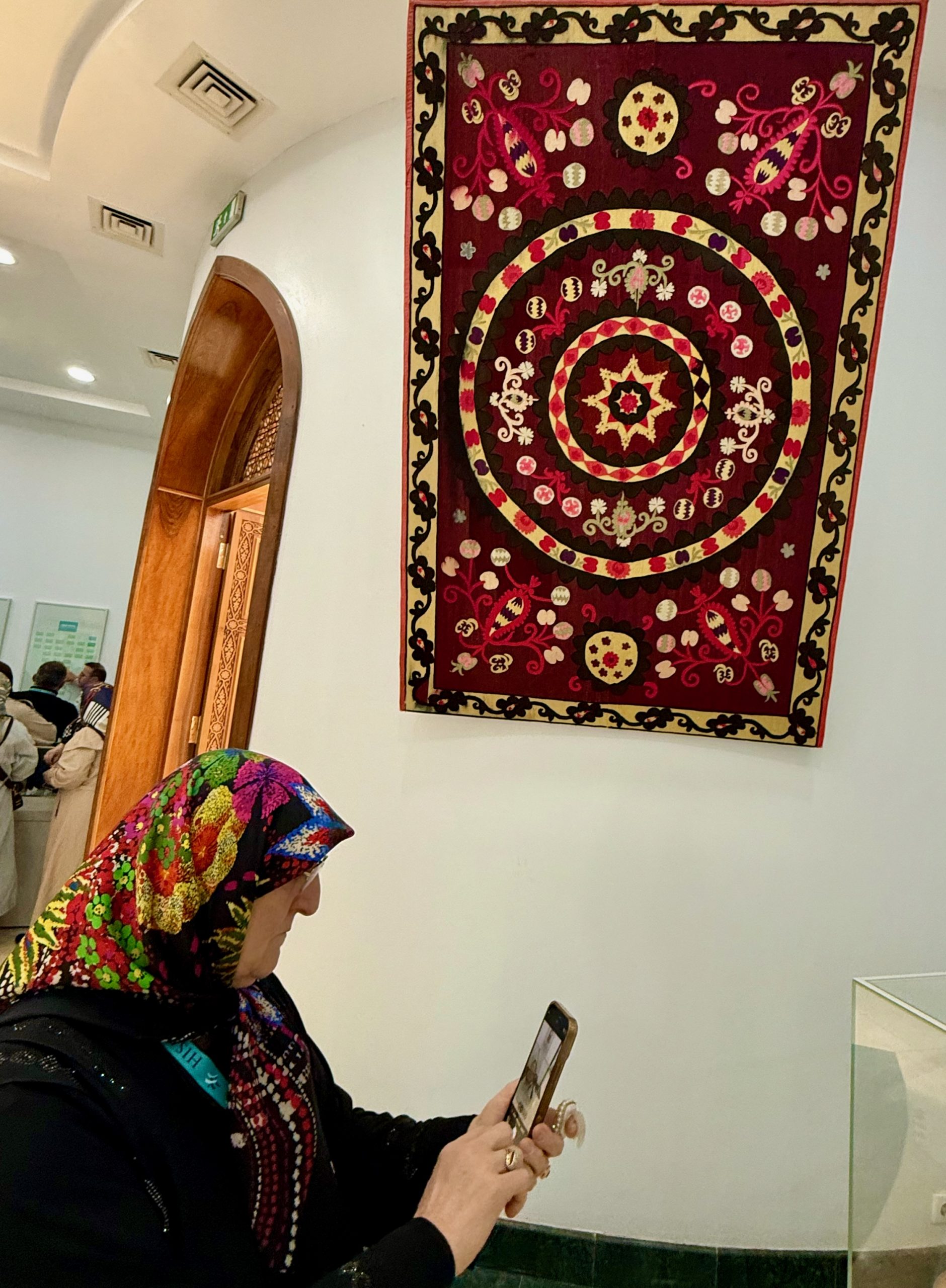
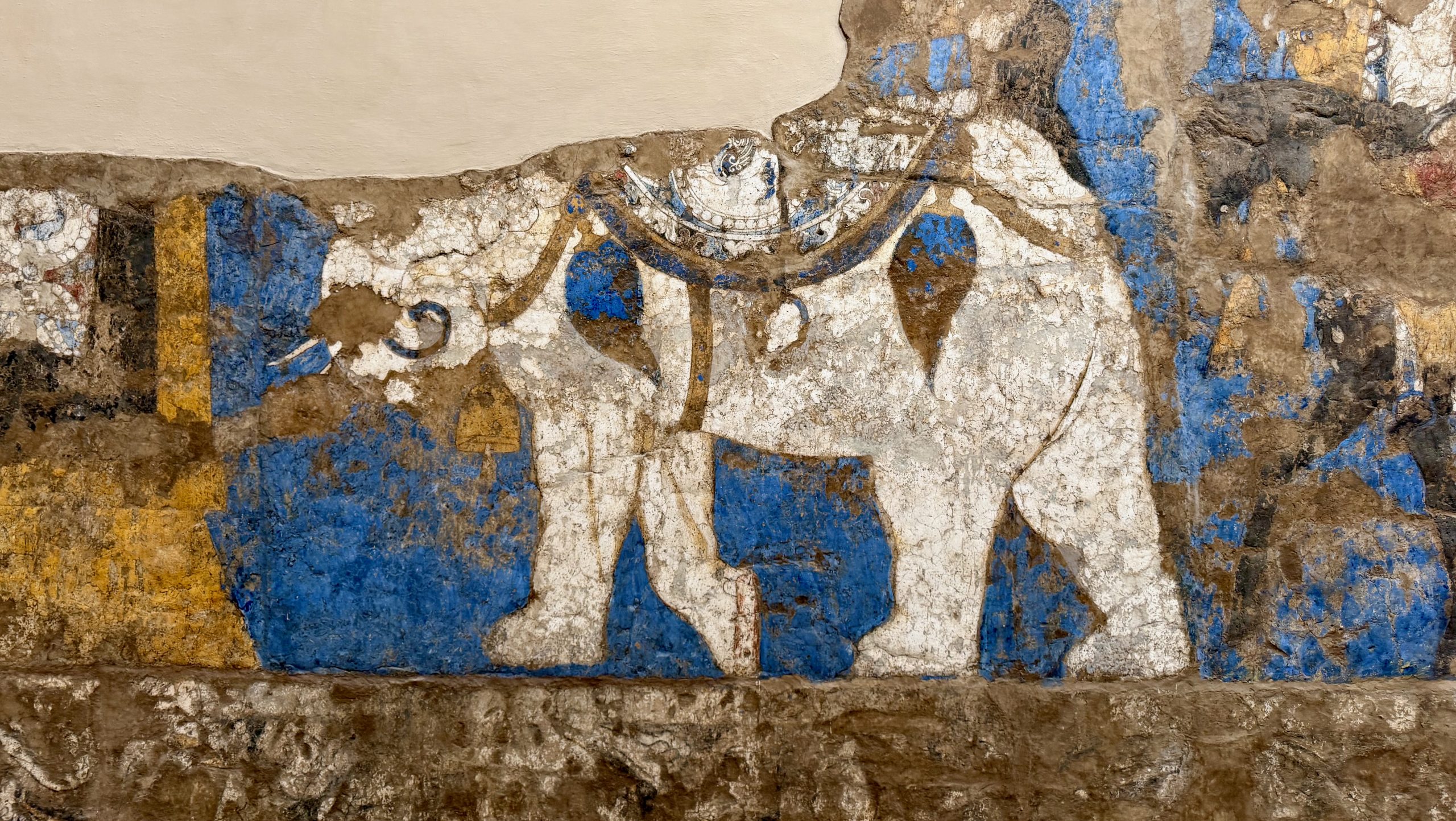
Part of a mural
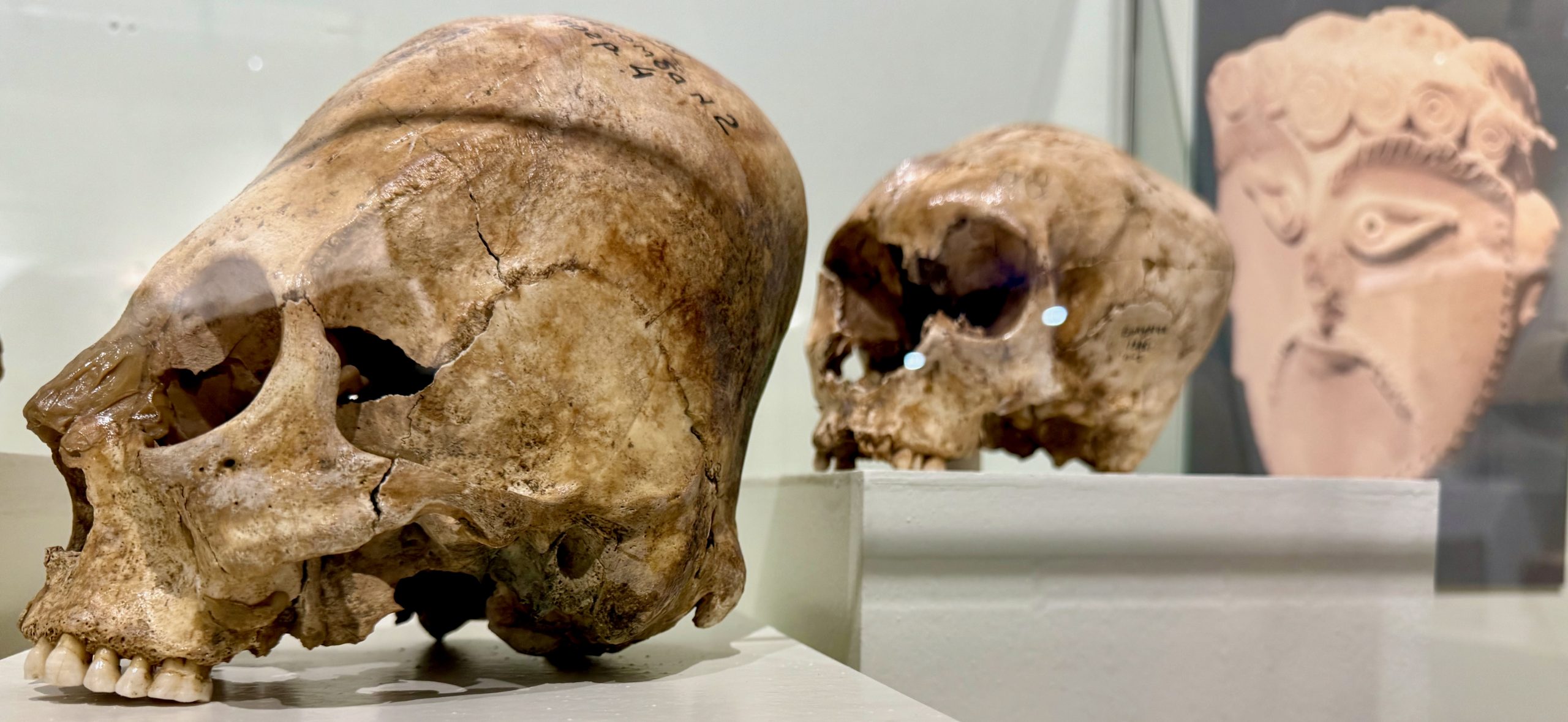
The lengths to which humans will go: a skull distorted to display social position
Today’s version of the magic carpet as we head back to Tashkent

One of the most memorable things I saw in Samarkand was a skull showing intentional distortion, presumably as a display of status, dating from the 7th–8th century. It was on display at the Afrasiab Museum – and was found at the ancient settlement of Afrasiab, once the location of ancient Samarkand. I confess, Indiana Jones and The Kingdom of the Crystal Skull sprang to mind.

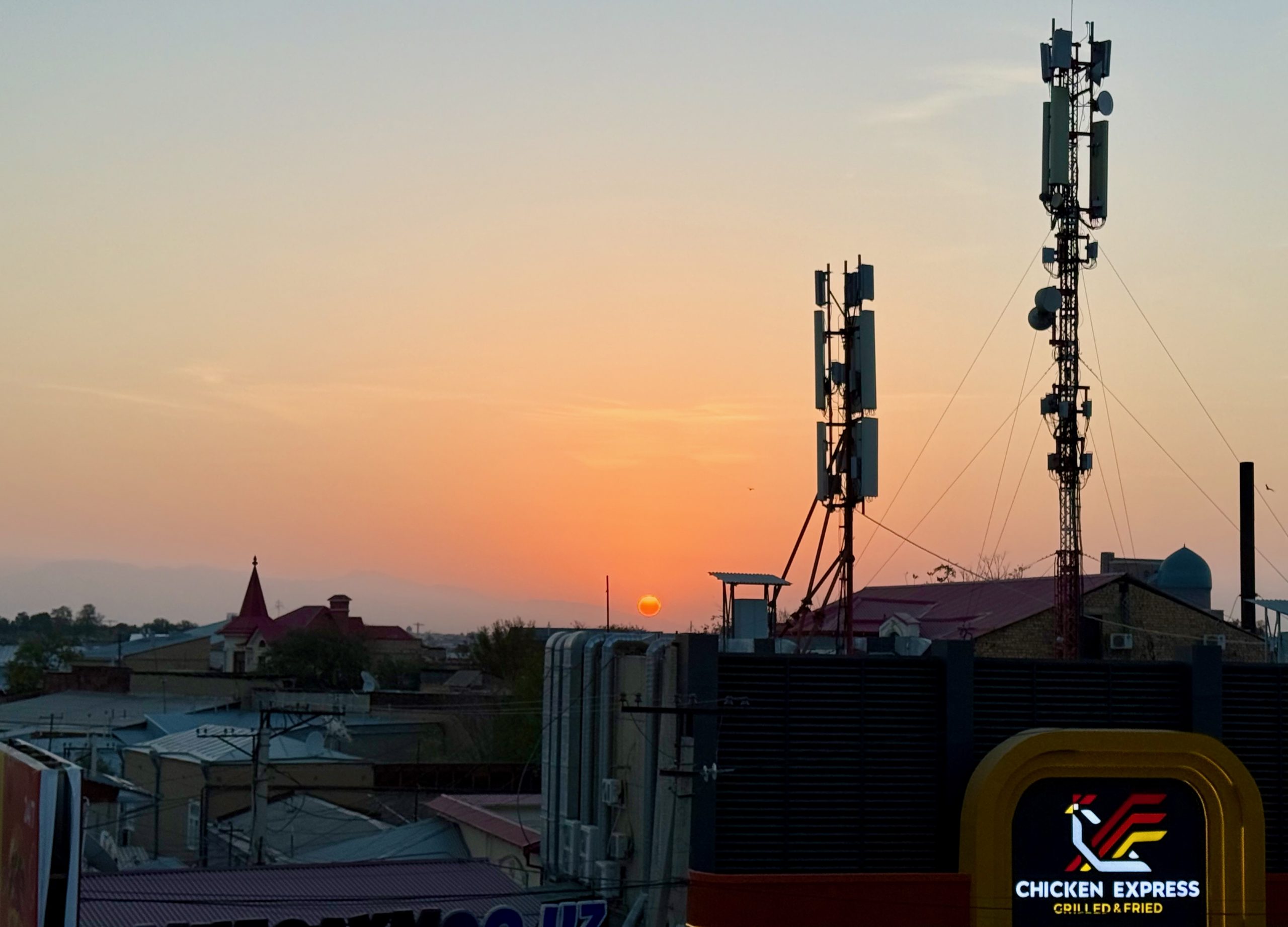
The magic of Samarkand was only slightly dented by the fact that our hotel bedroom looked onto radio antennae and a Chicken Express restaurant’s neon sign. The Hotel Emirkan was a gilder’s delight, with gold, or at least gilt, everywhere. But it also gave us our first taste of power cuts and water outages.

We got a chance to see something of the mountains when we went out to visit Timur’s intended tomb in Shakhribaz, his birthplace, though his body never arrived. Once again, life was a fascinating blur of mosques, madrasa, palaces, mausoleums and necropolises. Though, to Elaine’s displeasure, the Siyob bazaar remained stubbornly closed for repairs.

Still, the absolute highlight of the entire Samarkand visit, at least for me, was the one to the observatory founded by Ulugh Beg (1394–1449). He was a truly remarkable figure – a prince, astronomer, and mathematician who ruled over Samarkand in Central Asia. His story is a blend of science, power, and tragedy, the tale of a ruler more interested in the stars than in conquest.

He was a grandson of the legendary conqueror Timur, or Tamerlane, who established the vast Timurid Empire. After Timur’s death, Ulugh Beg’s father, Shāhrukh, ruled from Herat, while Ulugh Beg governed Samarkand, one of the empire’s most important cities.

Unlike his warlike ancestors, though, Ulugh Beg was passionate about learning and knowledge, especially astronomy, mathematics and philosophy. Under his rule, Samarkand became on the great intellectual centres of the Islamic world.

He founded the Ulugh Beg Madrasa (1417–1420), or university, in Samarkand’s Registan Square, where mathematics and astronomy were central to education – a rarity at the time.

And then, around 1420–1424, he also built a massive observatory, the Gurkhani Zij (aka Ulugh Beg Observatory) – one of the most advanced in the world before the invention of the telescope. (I will cover more of his story in my third Substack post, published on Friday.)

Sadly, Ulugh Beg’s devotion to science made him a poor politician and warlord. After his father’s death, rival princes and religious conservatives turned against him. His own son, ʿAbd al-Laṭīf, rebelled – likely under the malign influence of clerics who viewed Ulugh Beg’s secular and scientific interests as impious, akin to black magic.

In 1449, he was captured and executed on his son’s orders while on pilgrimage to Mecca. No wonder so many of the emirs and khans whose images we saw as we travelled the old Silk Road cities looked so haggard and haunted. But his legacy liveds on. Even if his observatory was destroyed soon after his death, his star catalog spread through Persia, India, and eventually Europe.

I returned to London feeling as though I had been on a pilgrimage, something that I will explore in my fourth Substack piece, to be posted on Saturday, 1st November. Will drop the link in here when the post is live. But this trip sparked a line of thinking that has also given a radically new slant to the book I have been working on this past year. More on that, I hope, anon.

Khiva And Across The Kyzylkum Desert

John Elkington · 27 October 2025 · Leave a Comment

I loved Khiva, but much of it was a bit like a film set
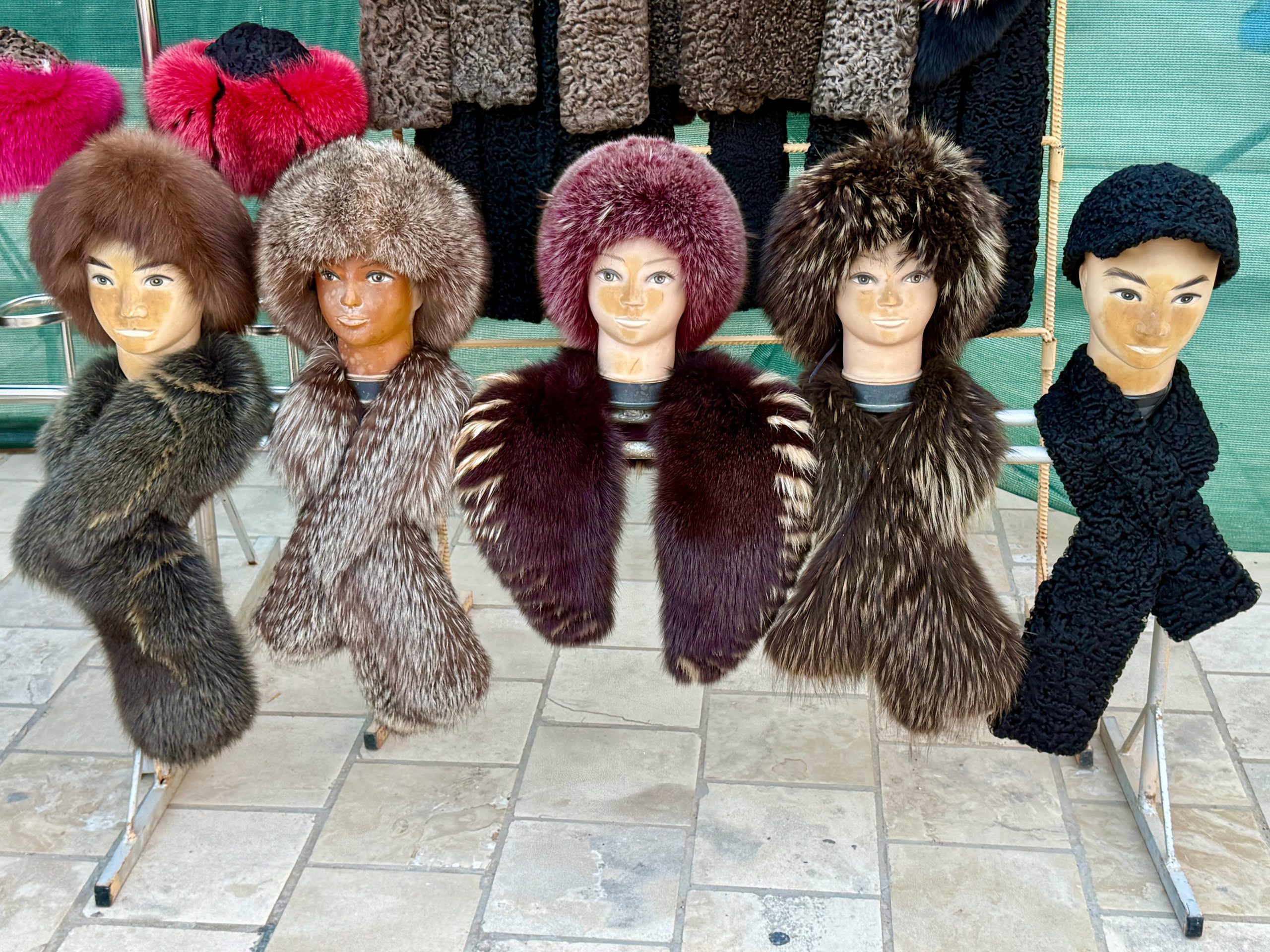
I saw little I wanted to buy
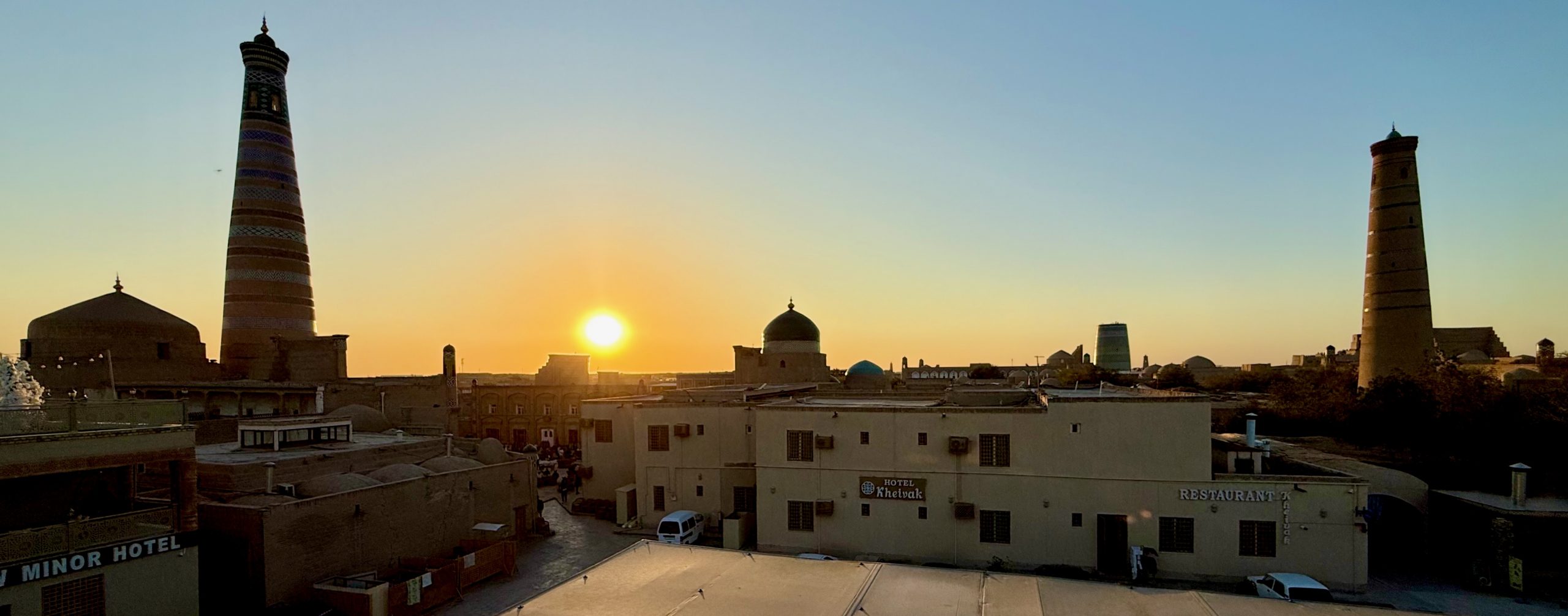
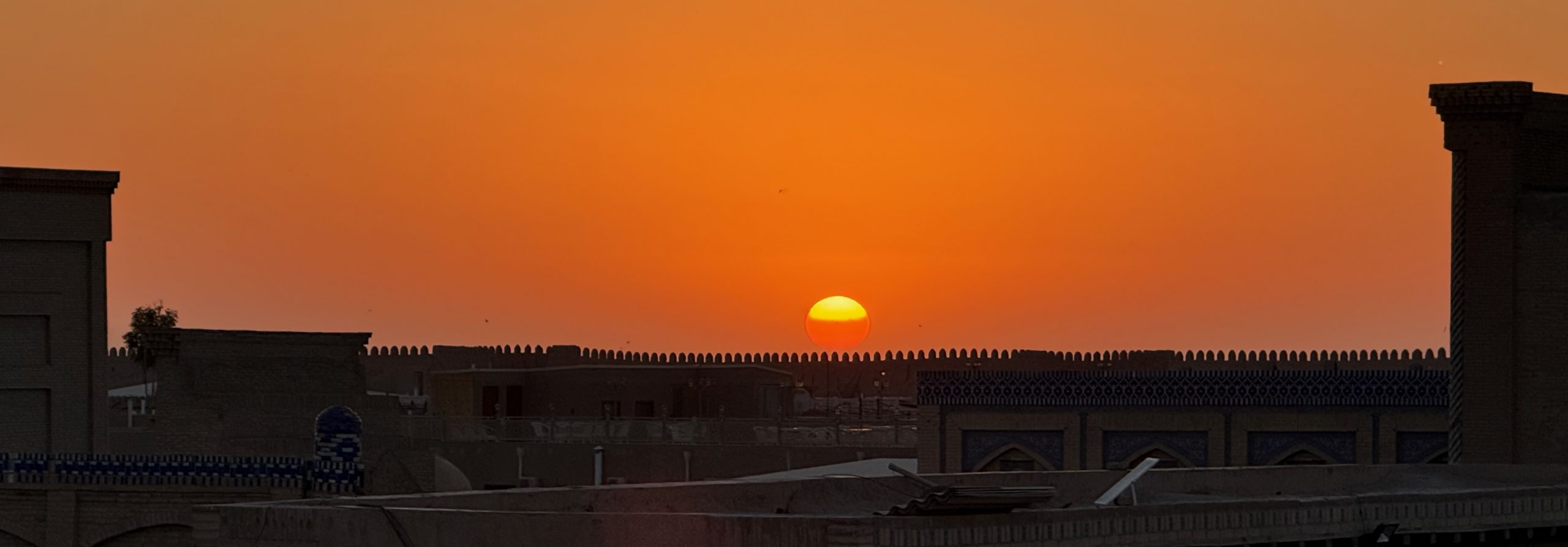
But the sun setting, seen from our hotel’s roof, was wonderful, cinematic
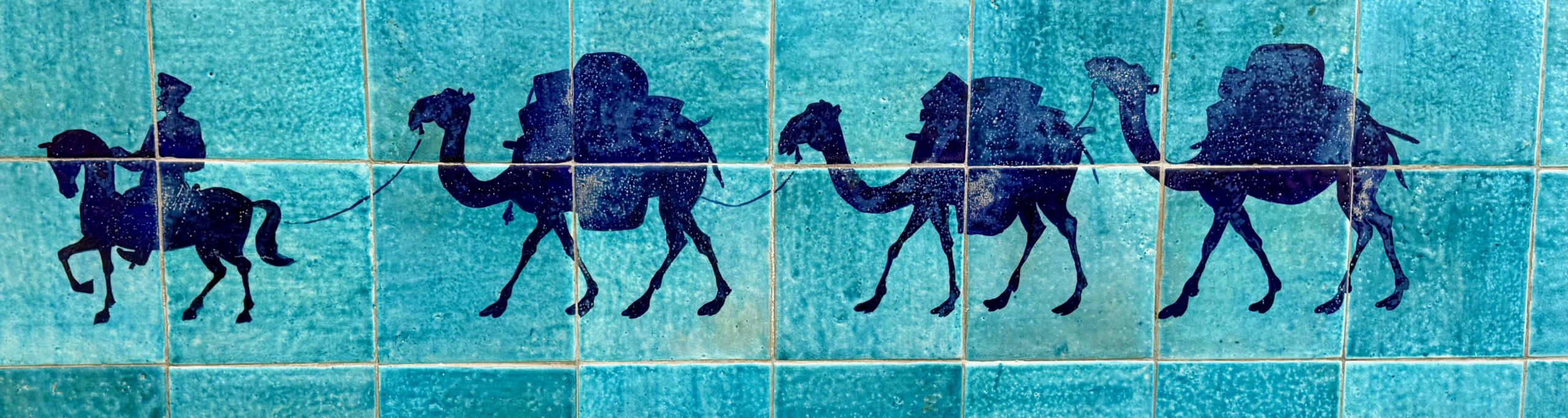
A camel train passing by on a wall of tiles
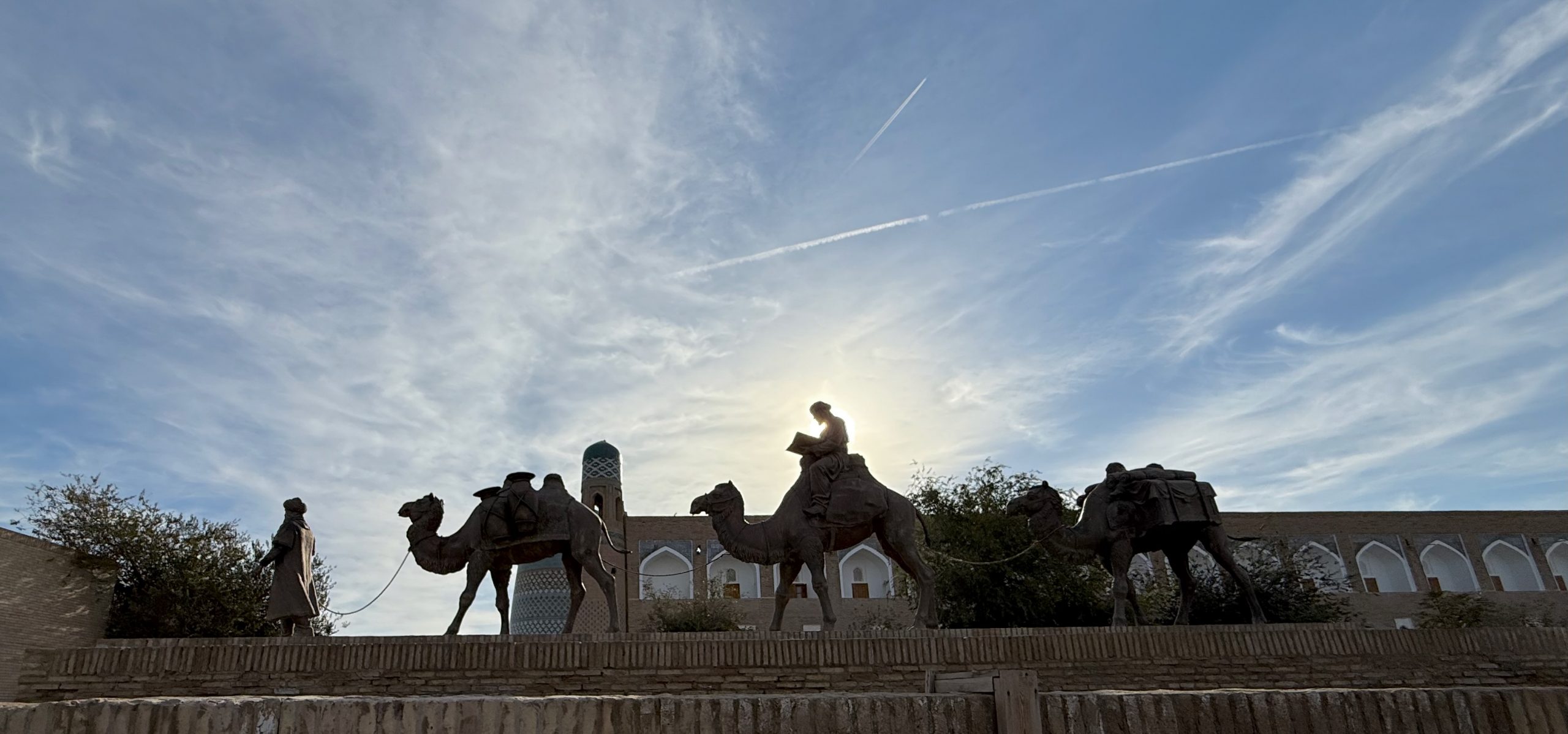
A man of the book reads on the back of a bronze camel
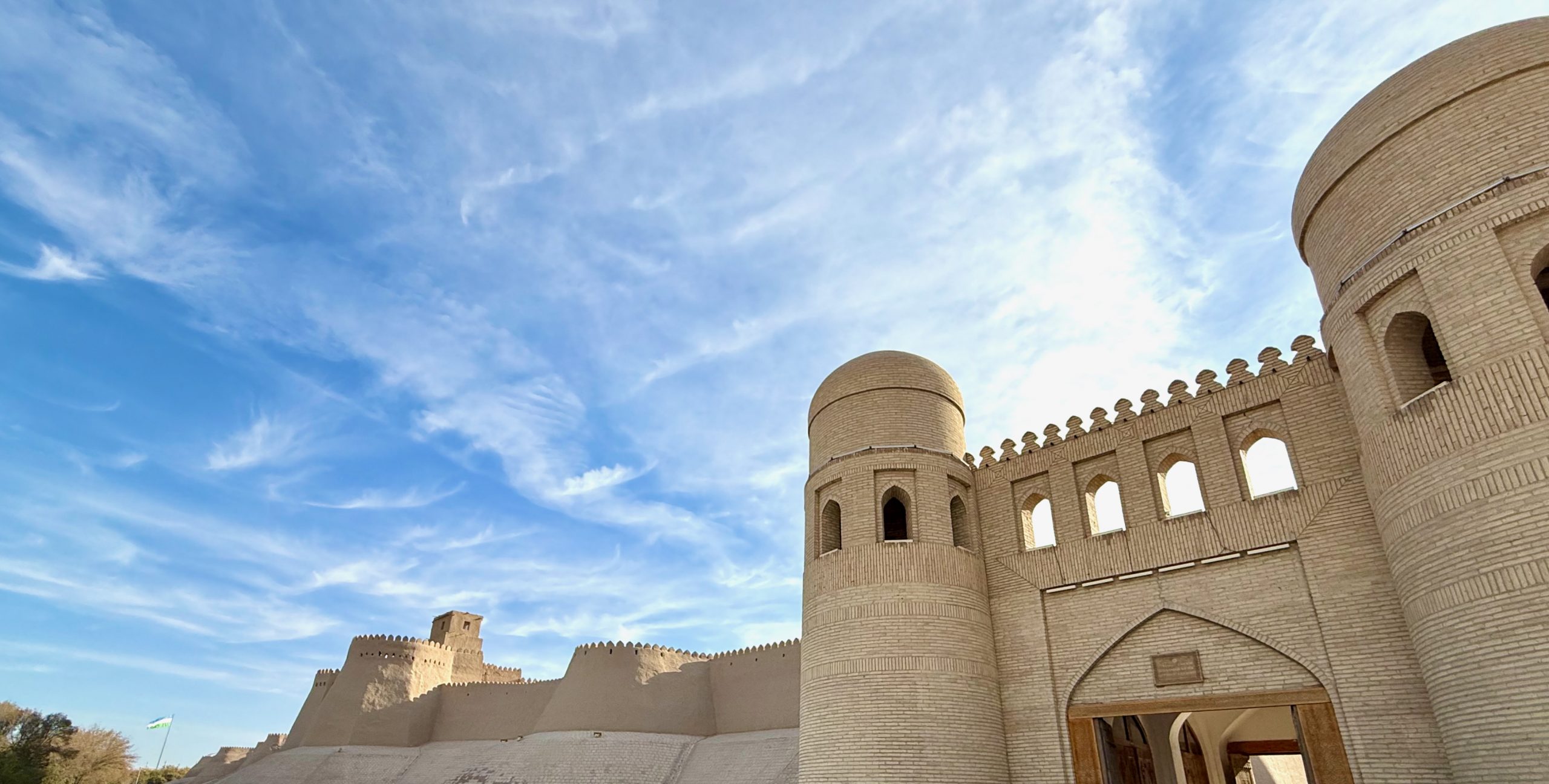
Part of the citadel
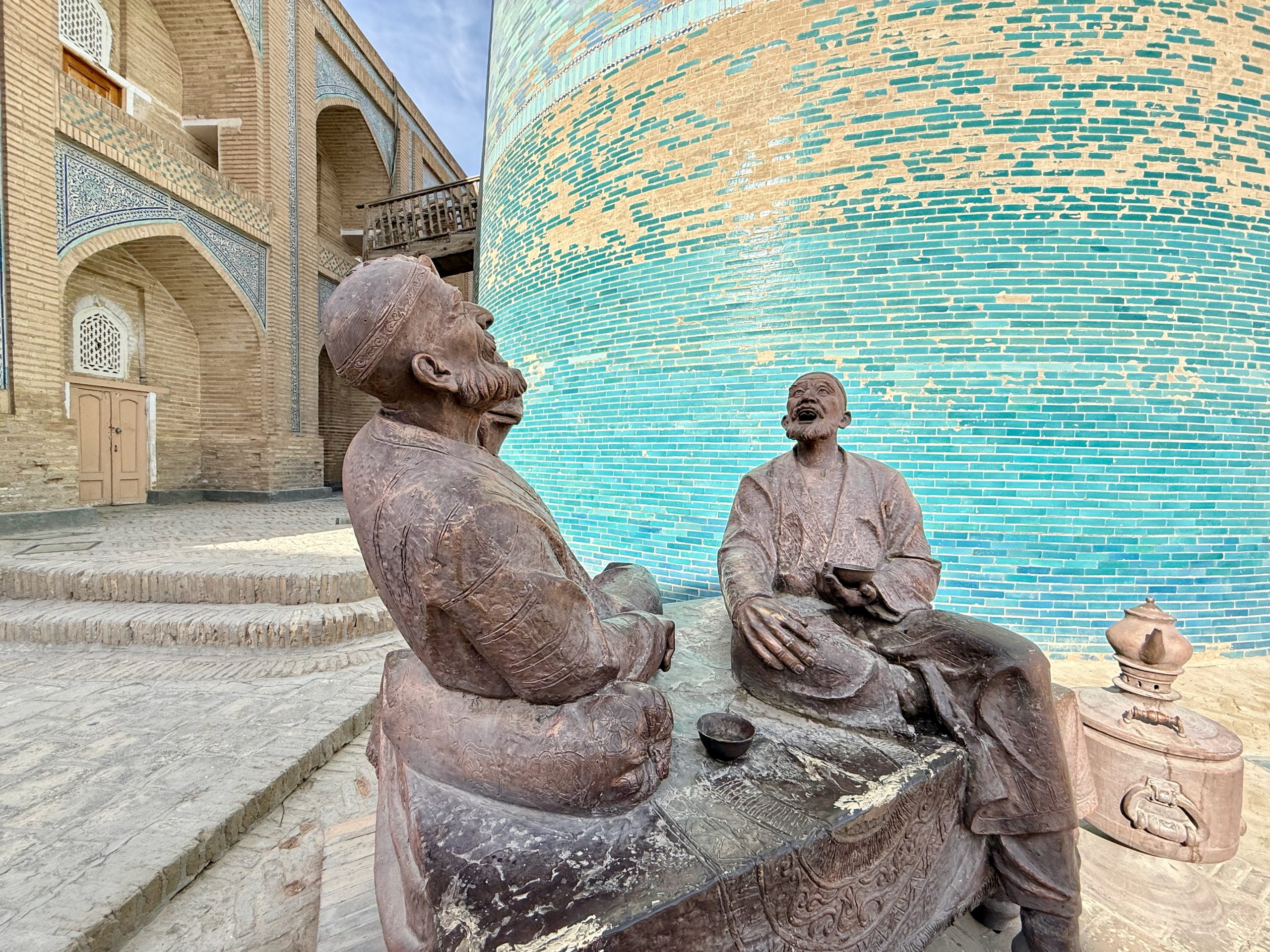
The joys of companionship
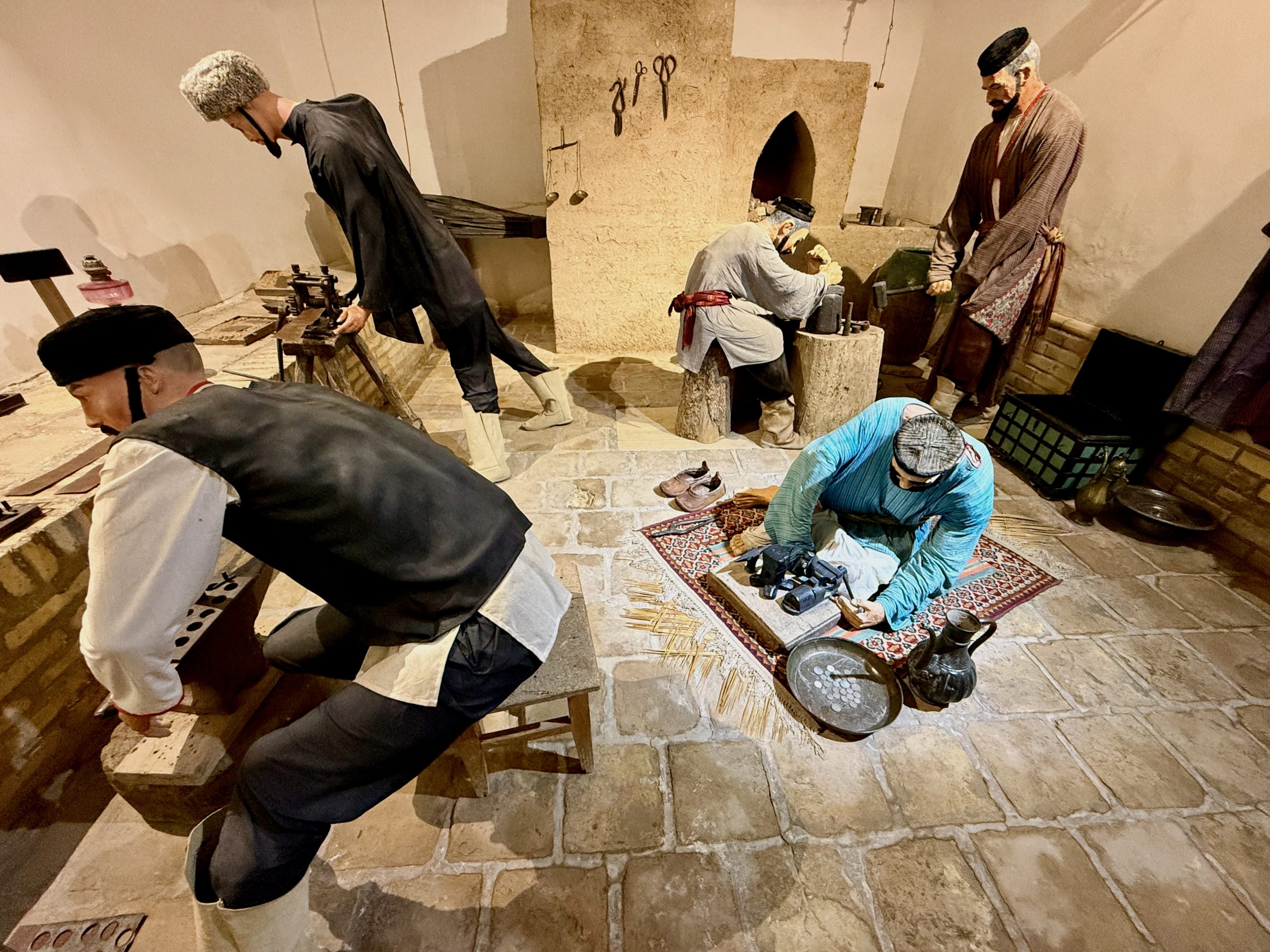
A museum exhibit shows a traditional coin mint
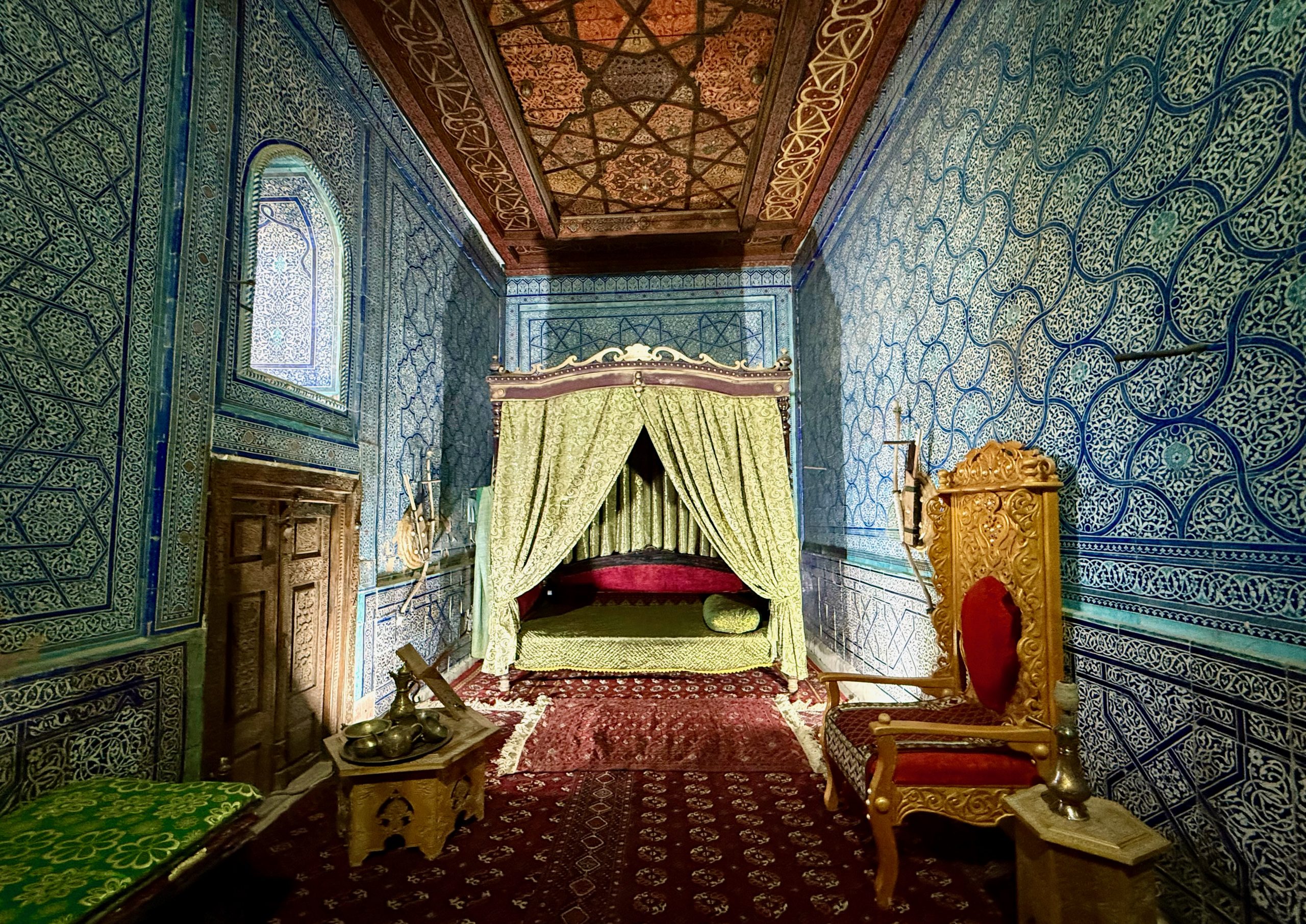
In the harem, a somewhat palatial bed – but, then, they didn’t have Netflix
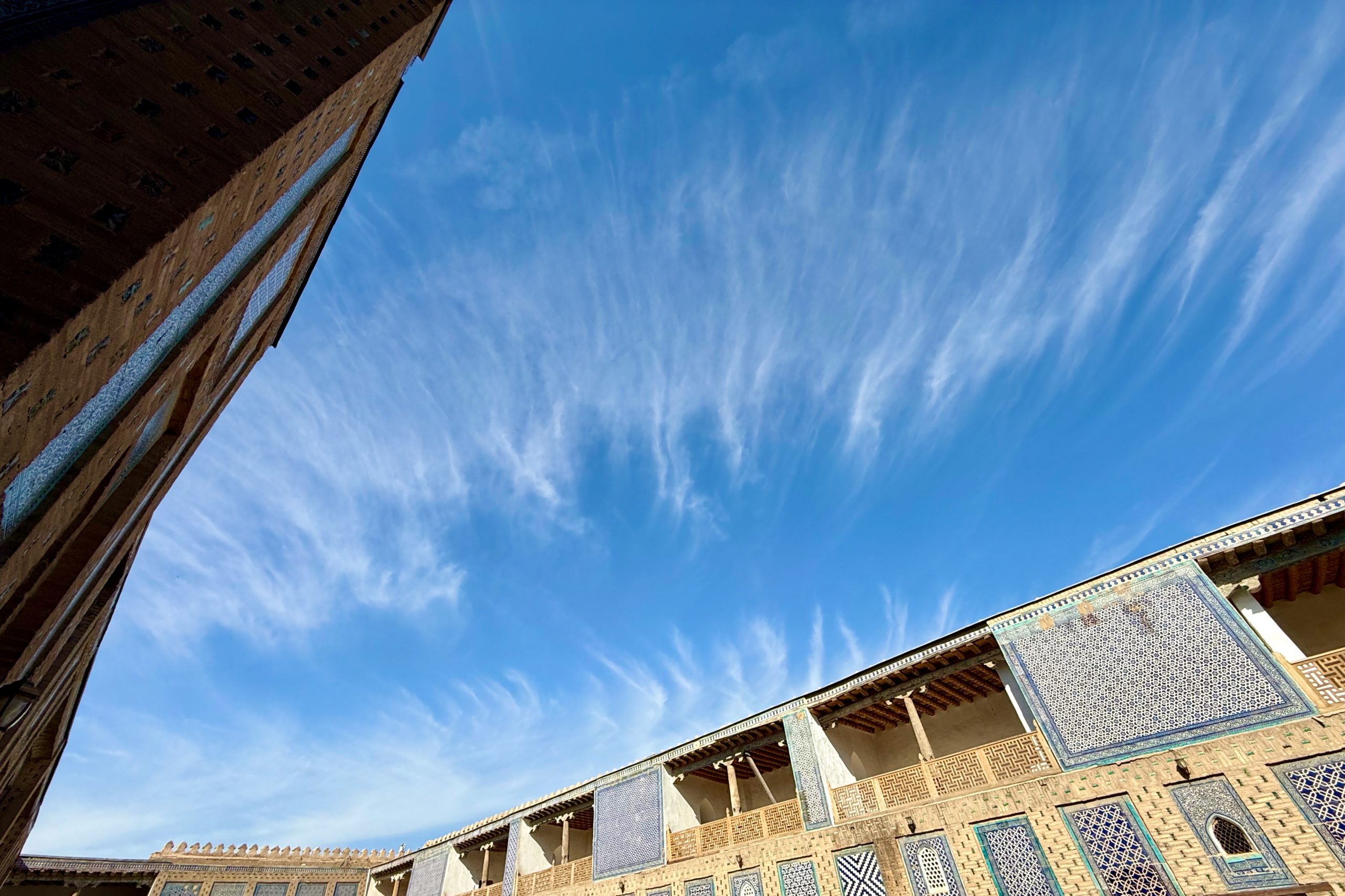
A wide-open sky above the harem – where women and girls were confined
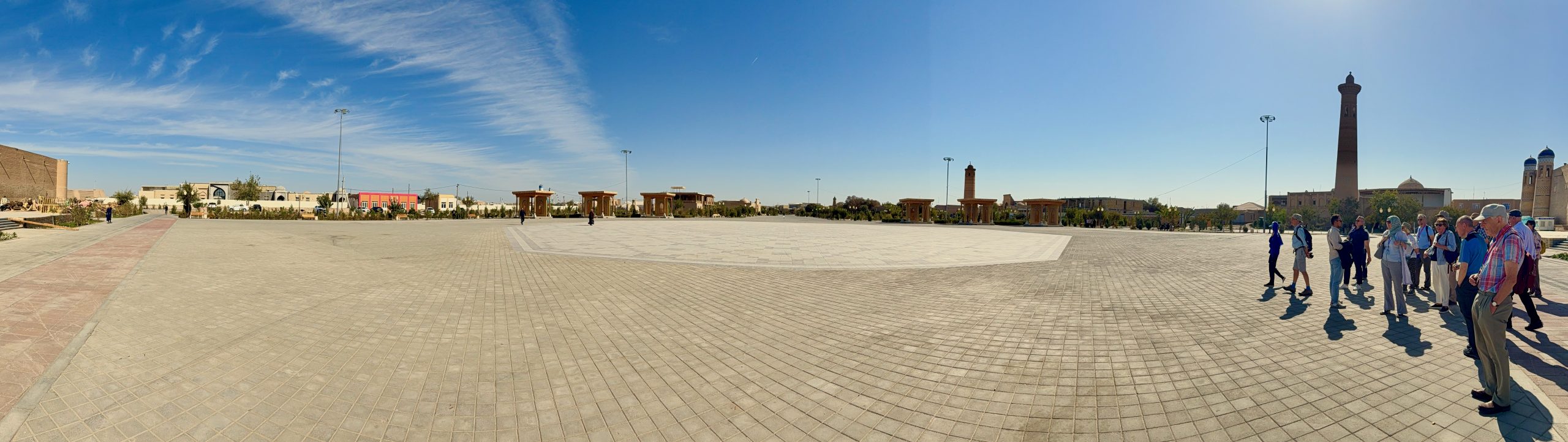
The Registan Square, where slave markets were once held
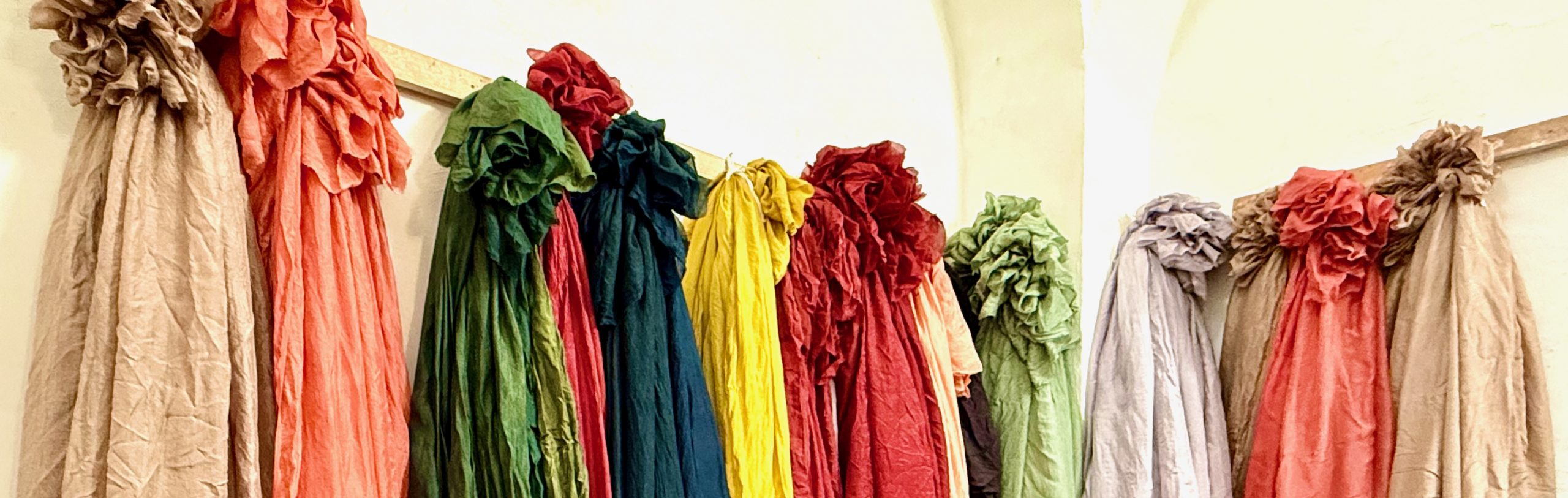
Samples of dyed silks in a silk workshop
The sun sets again
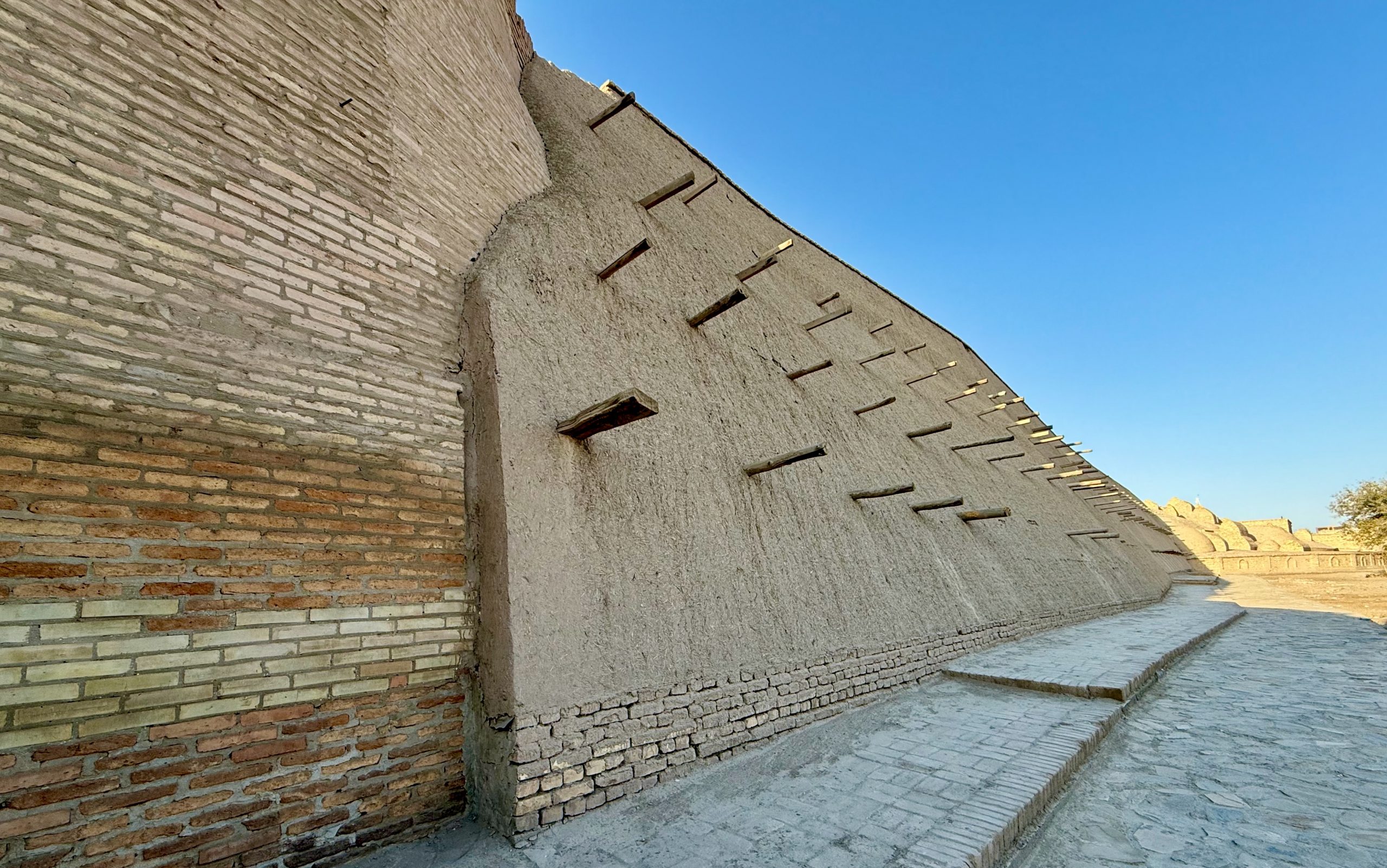
City walls as we prepare to leave for Bukhara
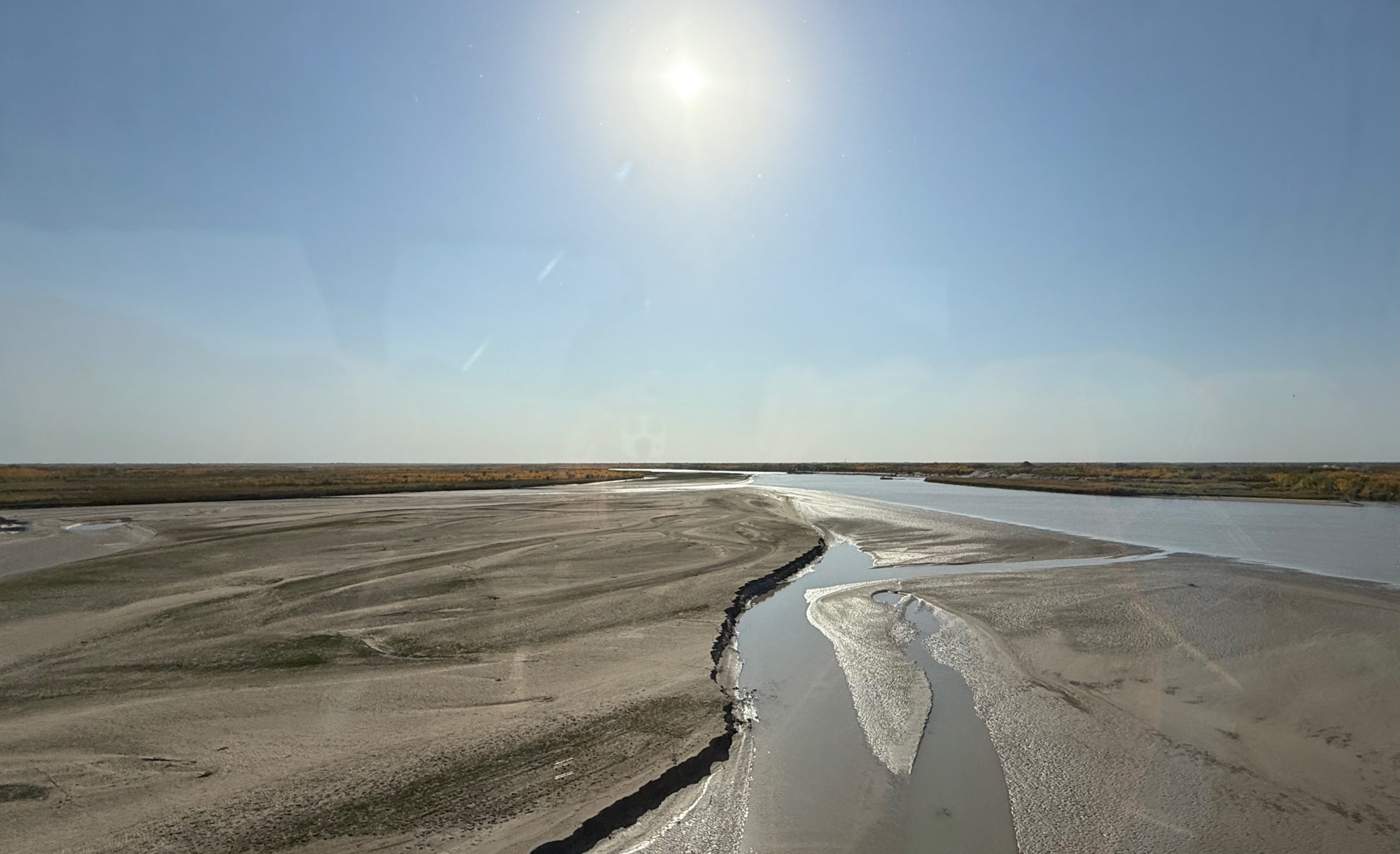
We cross the Oxus River, now the Amu-Darya, more easily than Alexander the Great did
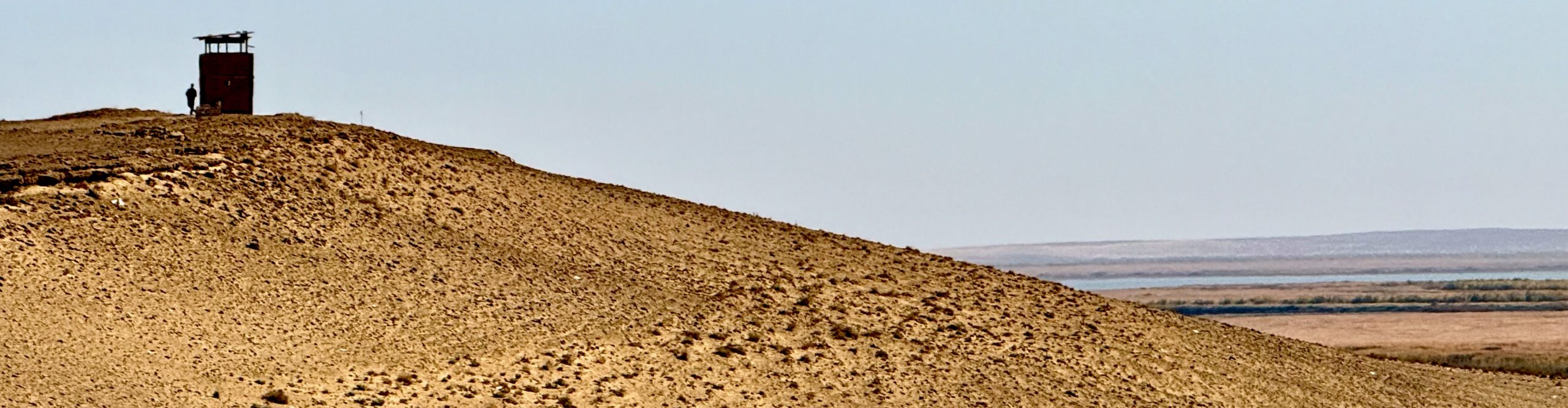
A guard post overlooking the Amu-Darya basin
The road ahead

As we walked into Khiva, there was a palpable sense of entering a trading hub in a vast desert. These was a taste of dust on the air. This is now a UNESCO World Heritage Site. That said, much of the city now feels a bit like a film set, beautiful, but there to impress outsiders. Still, maybe that was always part of the game.

Once in Khiva, we visited a wide range of attractions, including the Ichan Qal’a, the ancient citadel surrounded by crenellated walls, the Juma Mosque, the Muhammad Amin-Khan Madrasa, the Mausoleums of Pahlavan Mahmud and Sayid all-Uddin, and the Madrasas of Islam-Khodja and Alla-Kuli, and the Tash-Kauli Palace.

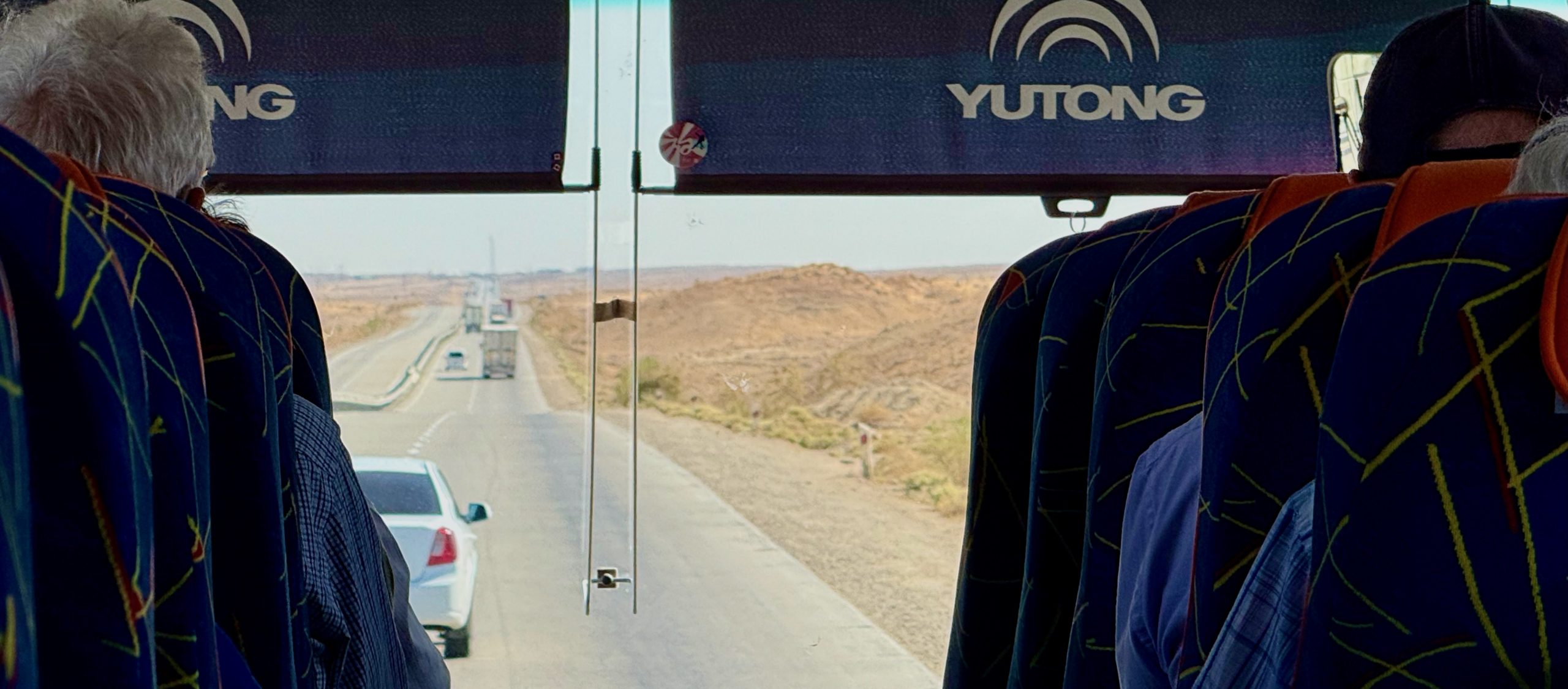
For me, at least, there came a point where the architecture and decoration began to blur a bit, but the city is certainly impressive. Then, on the morning of Tuesday, 14th October, we walked through the city walls for the last time to head off across the Kyzylkum Desert – said to have red sands, though we reflected that they mainly seemed to be various shades of khaki.

Along the way, we crossed the River Oxus, aka the Amu-Darya, whose still vast expanse brought home the scale of the challenge Alexander the Great faced back in 329 BC when in pursuit of his enemies. But I tell the tale of what is happening in the second of my Substack posts, to be posted on Wednesday, 29th October.
Happily, we got to Bukhara with few losses along the way – but that is a story for the next post in this series.
Uzbekistan: We Arrive In Tashkent

John Elkington · 27 October 2025 · Leave a Comment

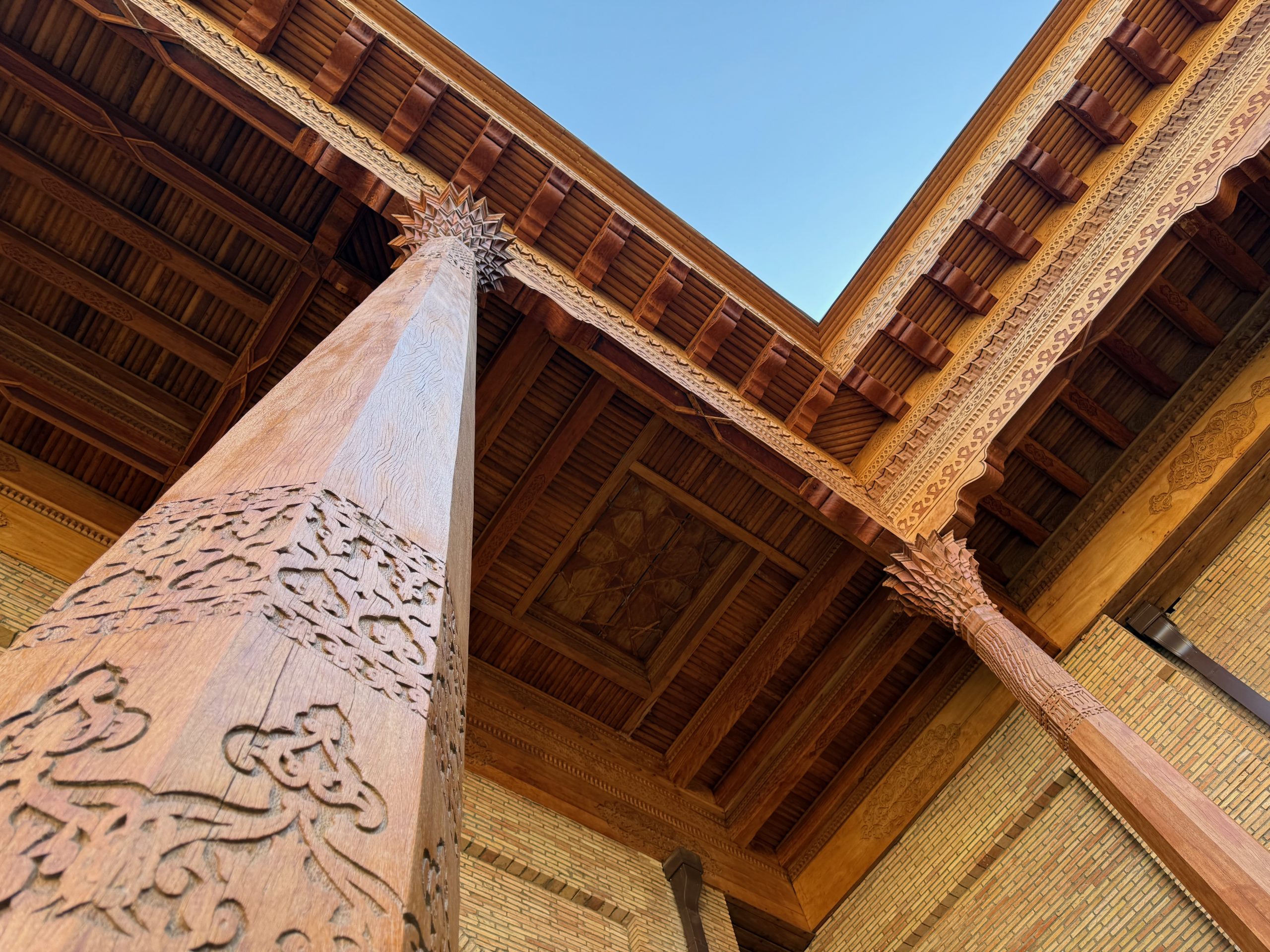
These cypress pillars, in the Khast-i-Imam complex, give a sense of the uplift in the architecture
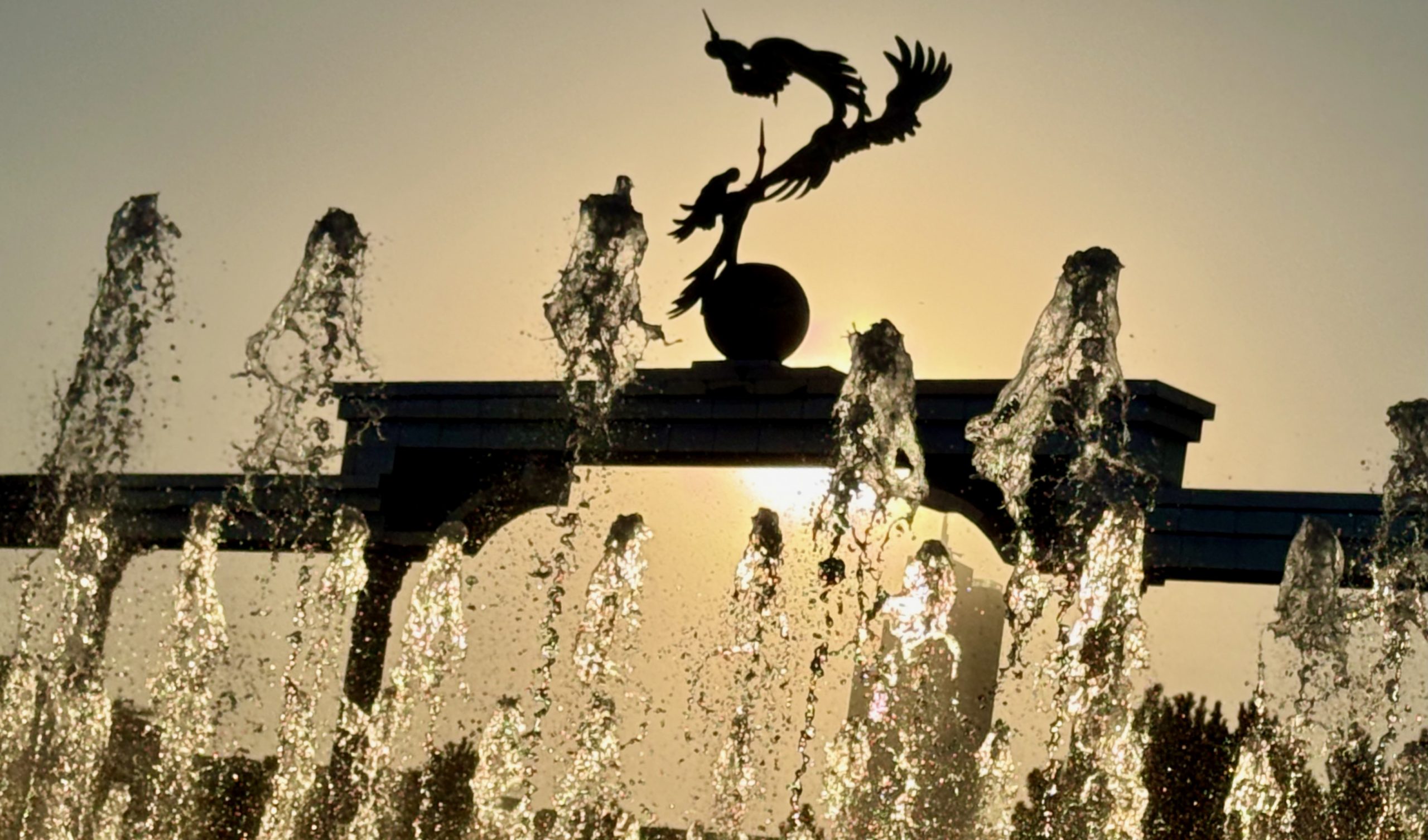
Fountains add a splash of excitement to an already energetic sculpture
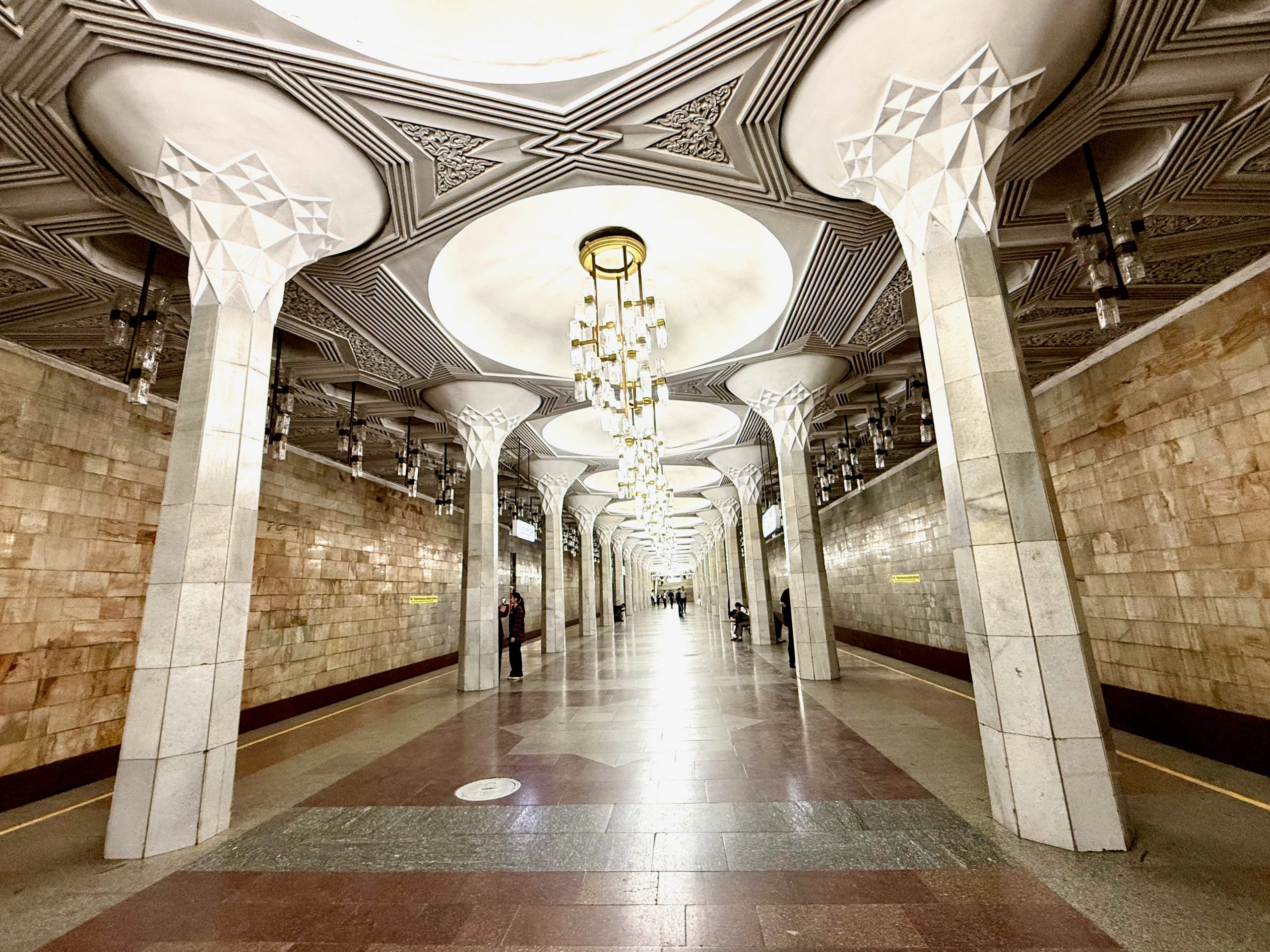
Down in the subway, where the train we boarded would have tested even sardines
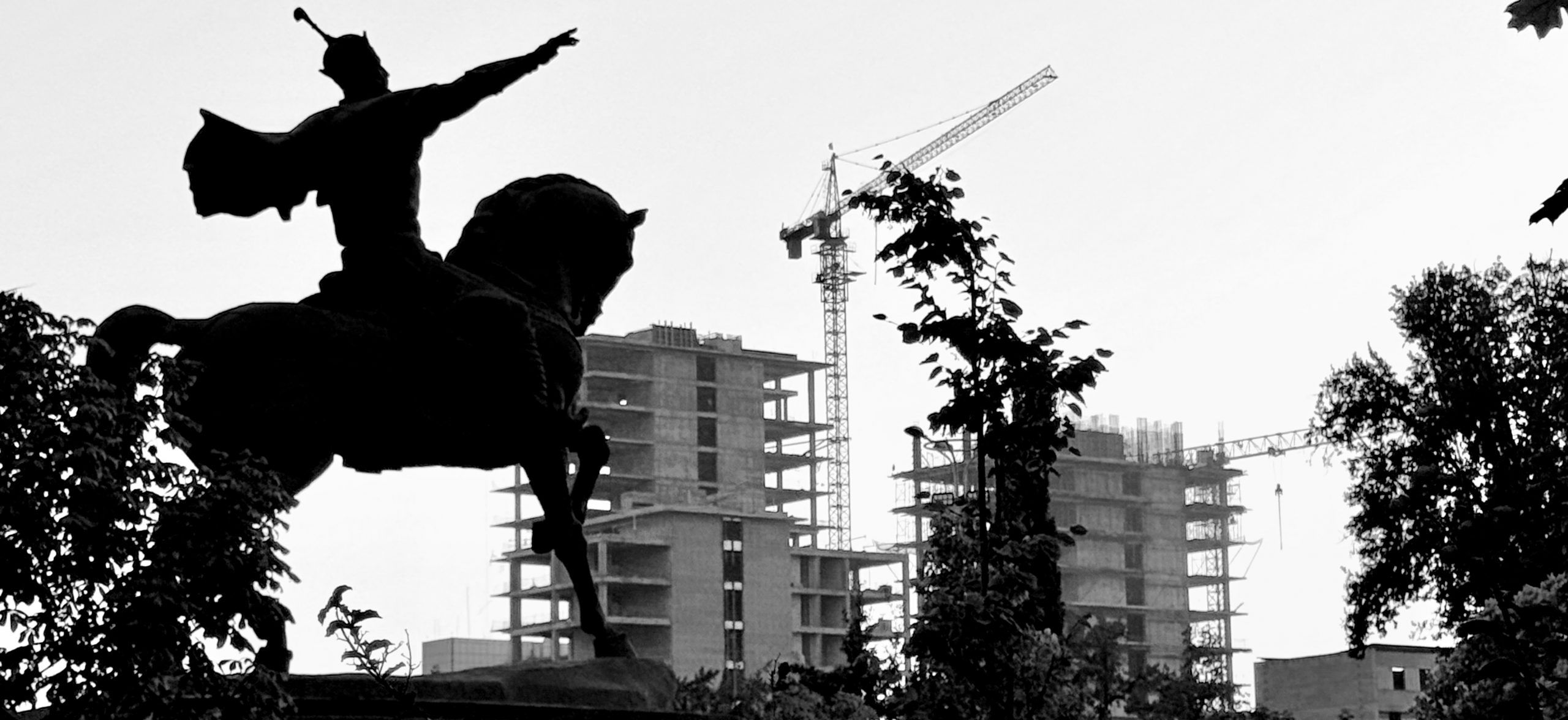
Timur is still lord of the horizons
When there’s something going on, but you don’t know what it is…
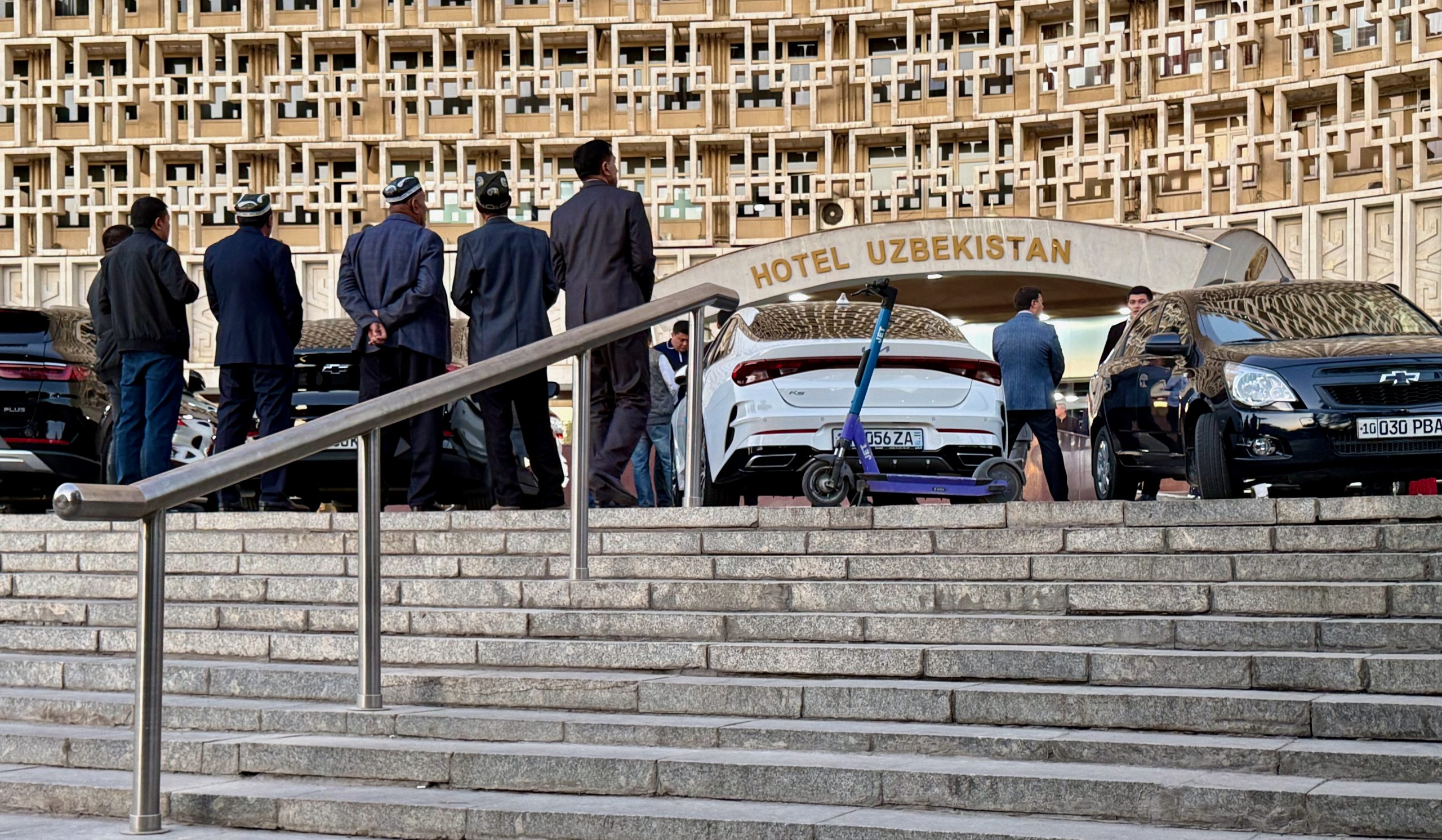
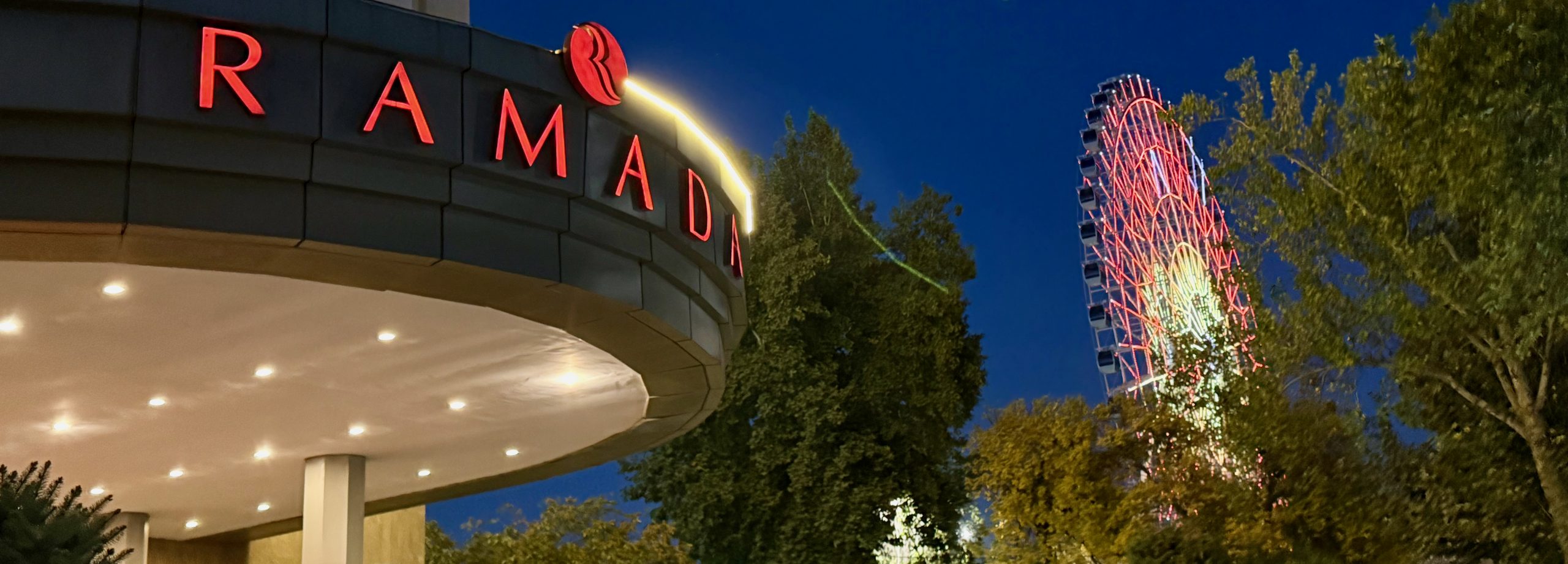
Splashes of modernity, with our first (and last) hotel and one of two Ferris wheels
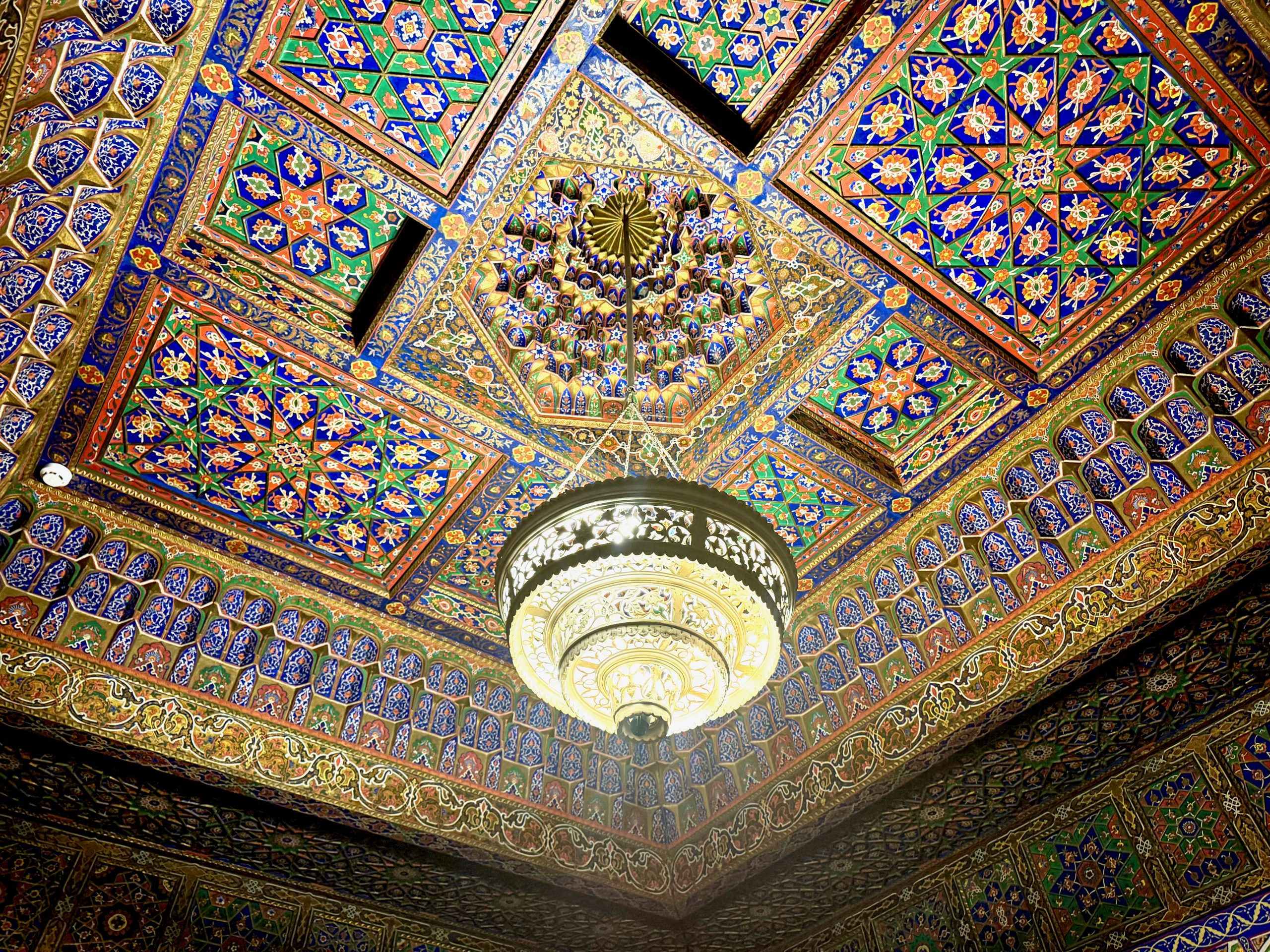
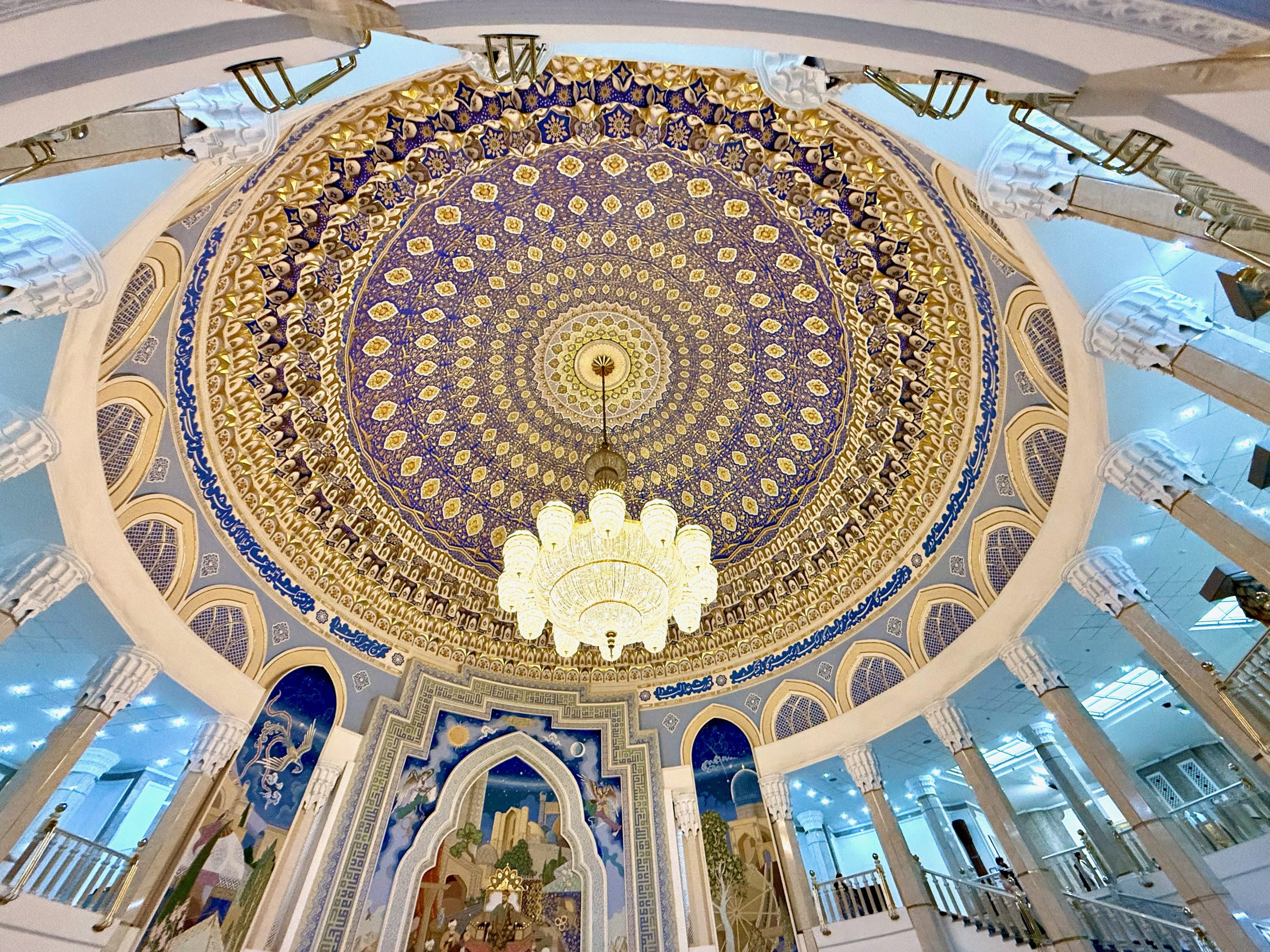
A ceiling in the Museum of Applied Arts
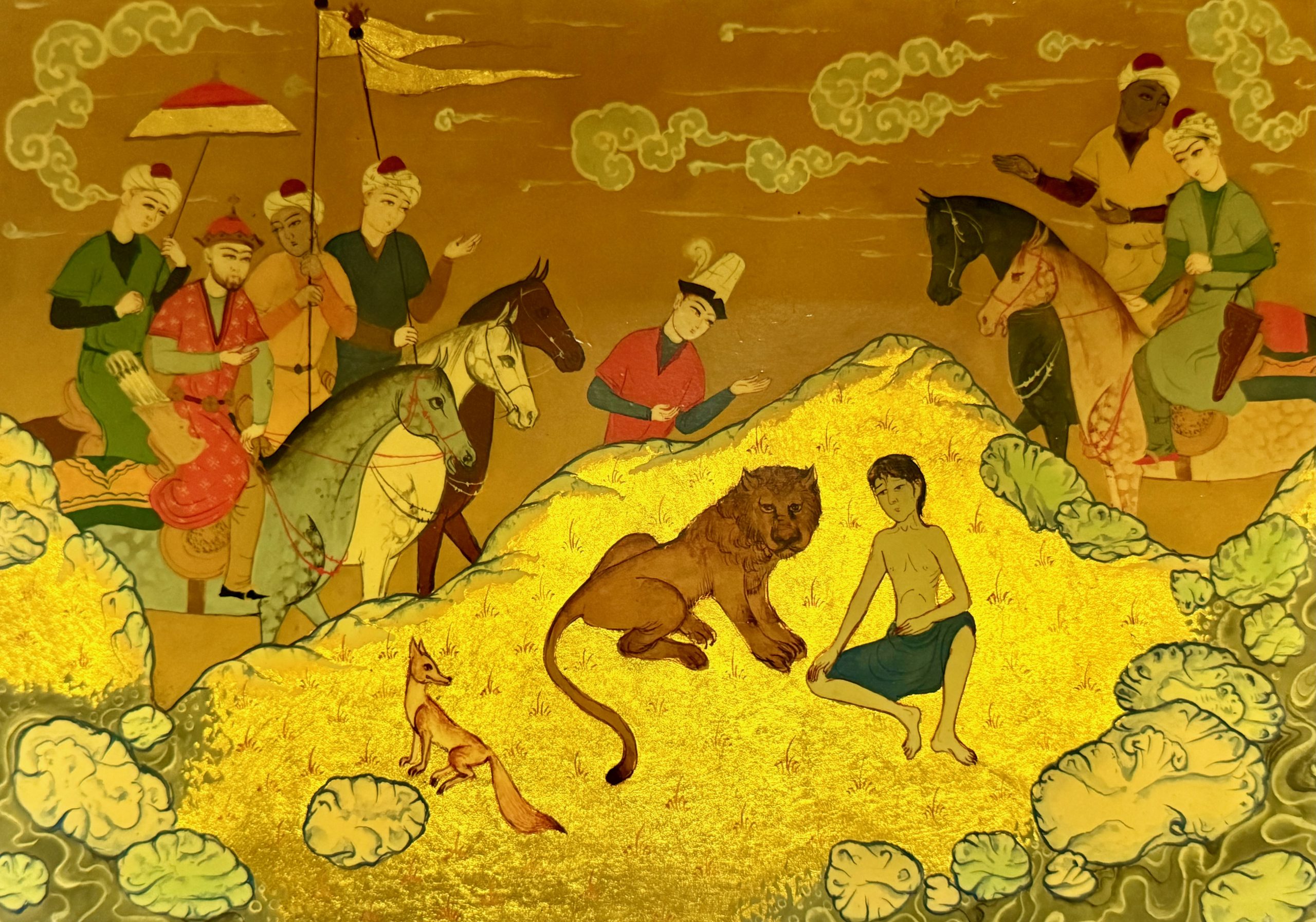
One of several miniature paintings that caught me eye – they do love their gold
An impression of the Timur Museum (or state Museum of the Timurids) in Tashkent

I had long been fascinated by the history of the Silk Roads and the stories of the people who travelled along them, from Marco Polo to (more balefully) Genghis Khan. I had read books like Peter Hopkirk’s The Great Game and much of Peter Frankopan’s magisterial The Silk Roads. All of which had whetted my appetite to learn (and see) more.

So joining an ACE Cultural Tours trip to the Silk Road cities in Uzbekistan seemed like a good idea. And a timely one, given the way that China’s President Xi is playing up Silk Road branding in relation to the digital, infrastructure and health aspects of his country’s Belt & Bridge initiative. These are themes I plan to cover this week in my Rewilding Markets channel on Substack.

In addition, I plan to do four posts on this site as a more personal (and briefer) series of blogs, one each on Tashkent (where our journey began) Khiva, Bukhara and Samarkand. We arrived in Tashkent, via Istanbul, on Saturday, 11th October, and then departed for Istanbul and London again on Tuesday, 21st October. What follows in these four posts is brief summary of what happened in between, as we travelled the length and breadth of the country.

As I began to process the images of the trip, however, it strikes me that the overall impression given will be a bit glitzier than the reality sometimes was. So this seems like a good time – and place – to than our British and Uzbek guides, Steve Mastin, the tour director, and Muminov (said) Saijon, our local guide, who accompanied us throughout, but is normally based in Samarkand.

Before we set off, I knew little about Tashkent, I confess, though I do remember reading, as a teenager, the news of the massive earthquake back in 1966 – which destroyed some 80% of the city. It has certainly recovered, though the Soviet influence is still evident in various parts of the city.

We flew from Tashkent International airport to Urgench integration airport, en route to Khiva. And that’s the subject of the next post.

Gaia’s Strawberry Hill House Flowering

John Elkington · 15 September 2025 · 1 Comment

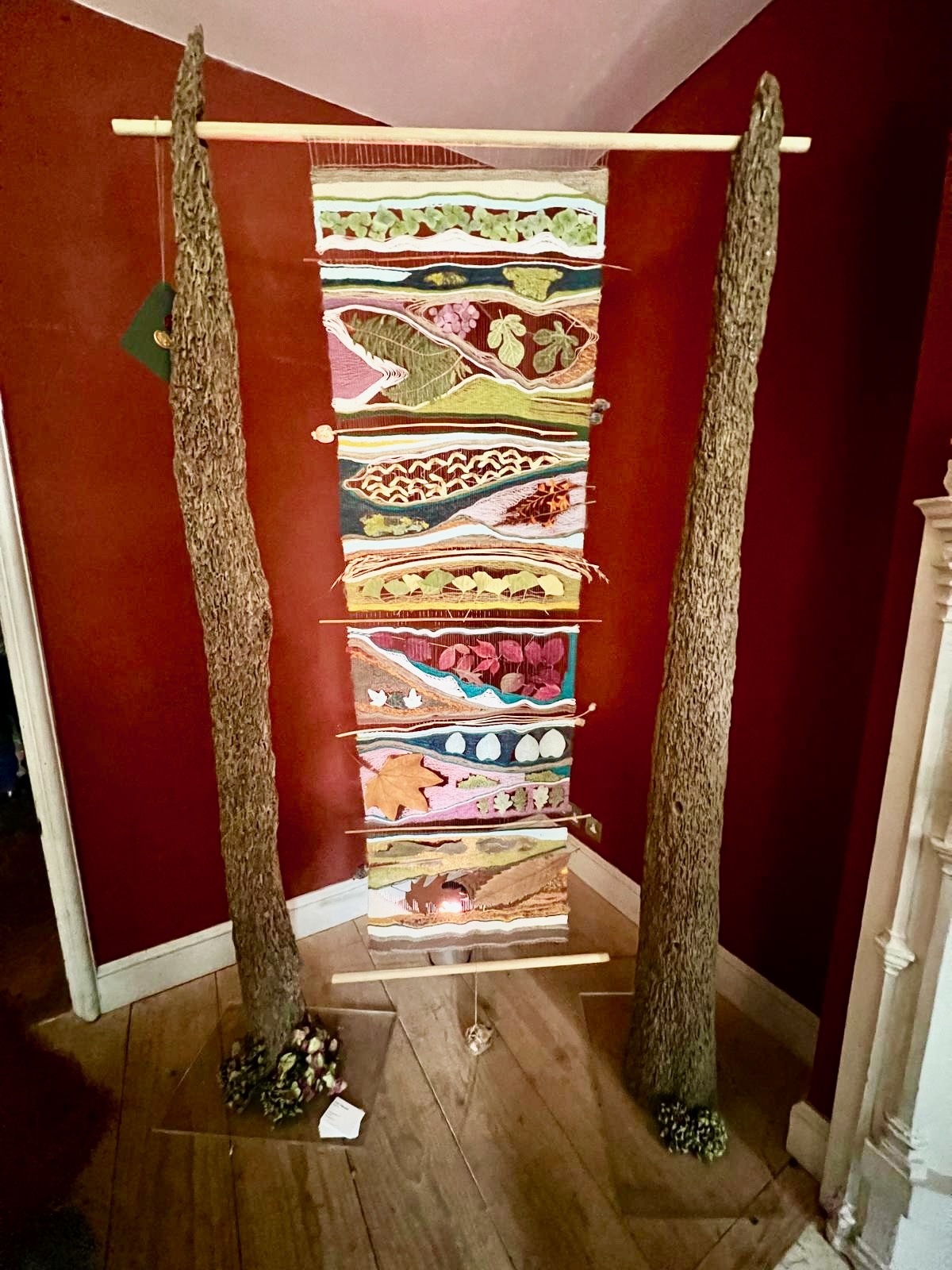
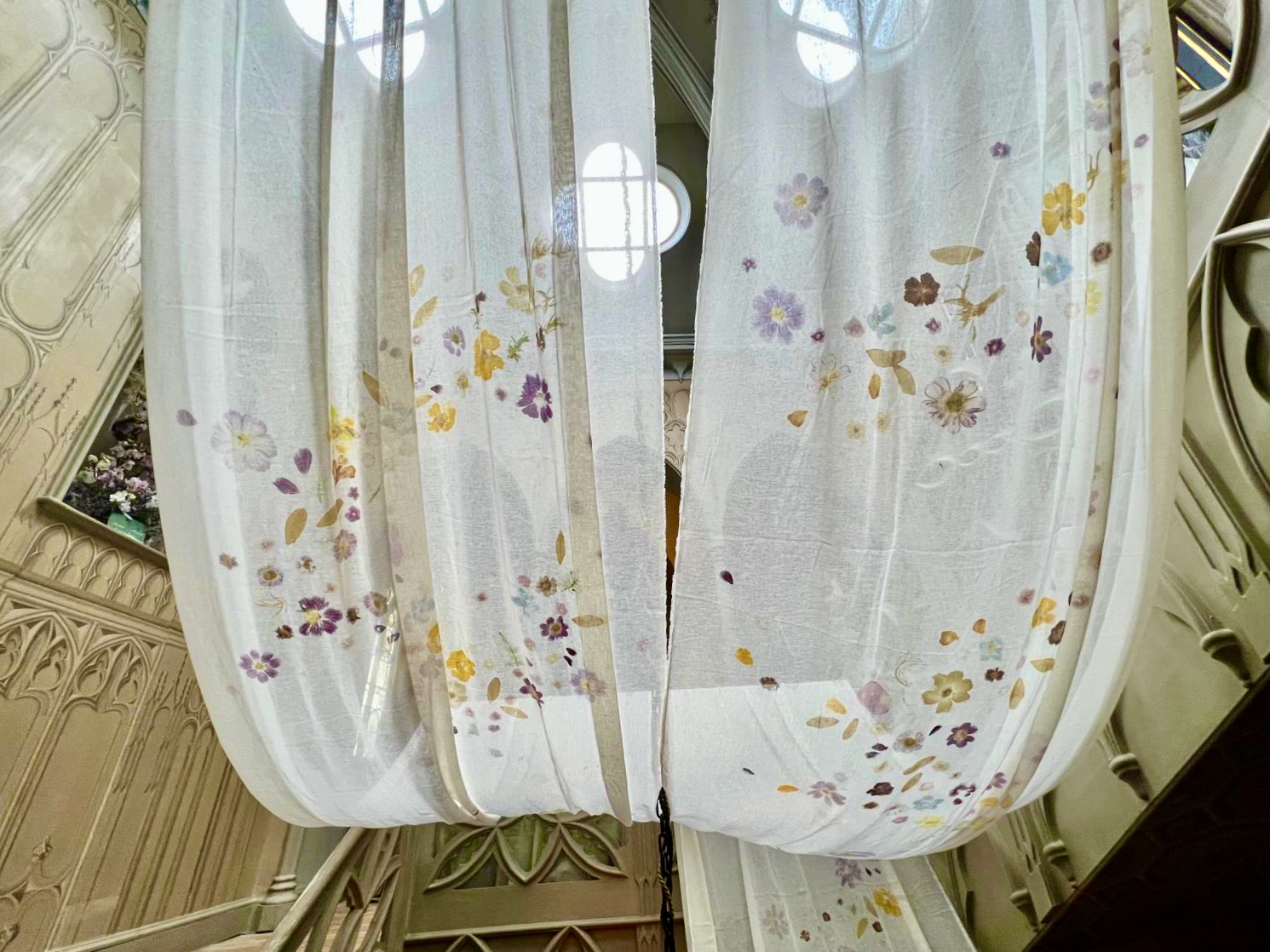
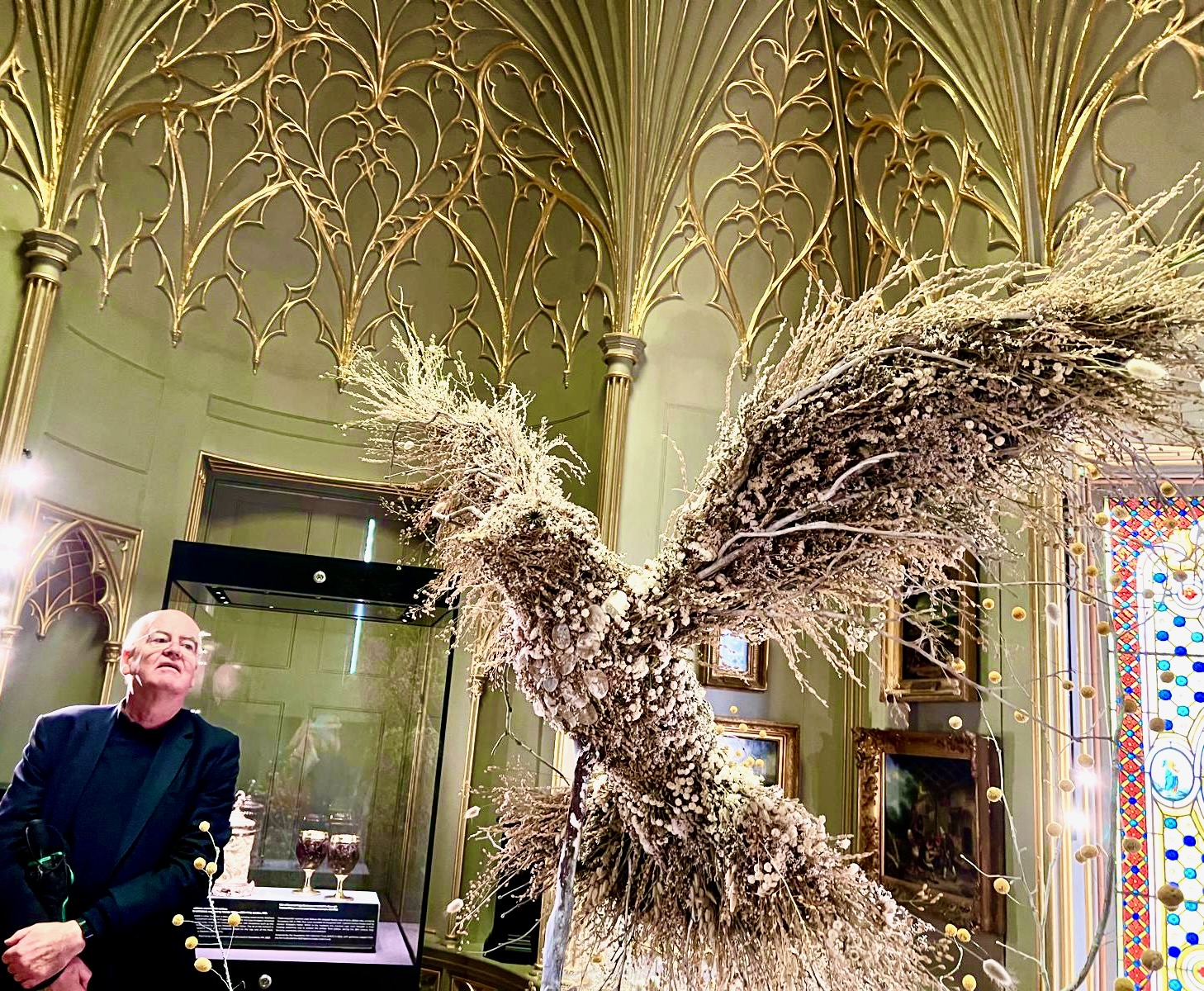
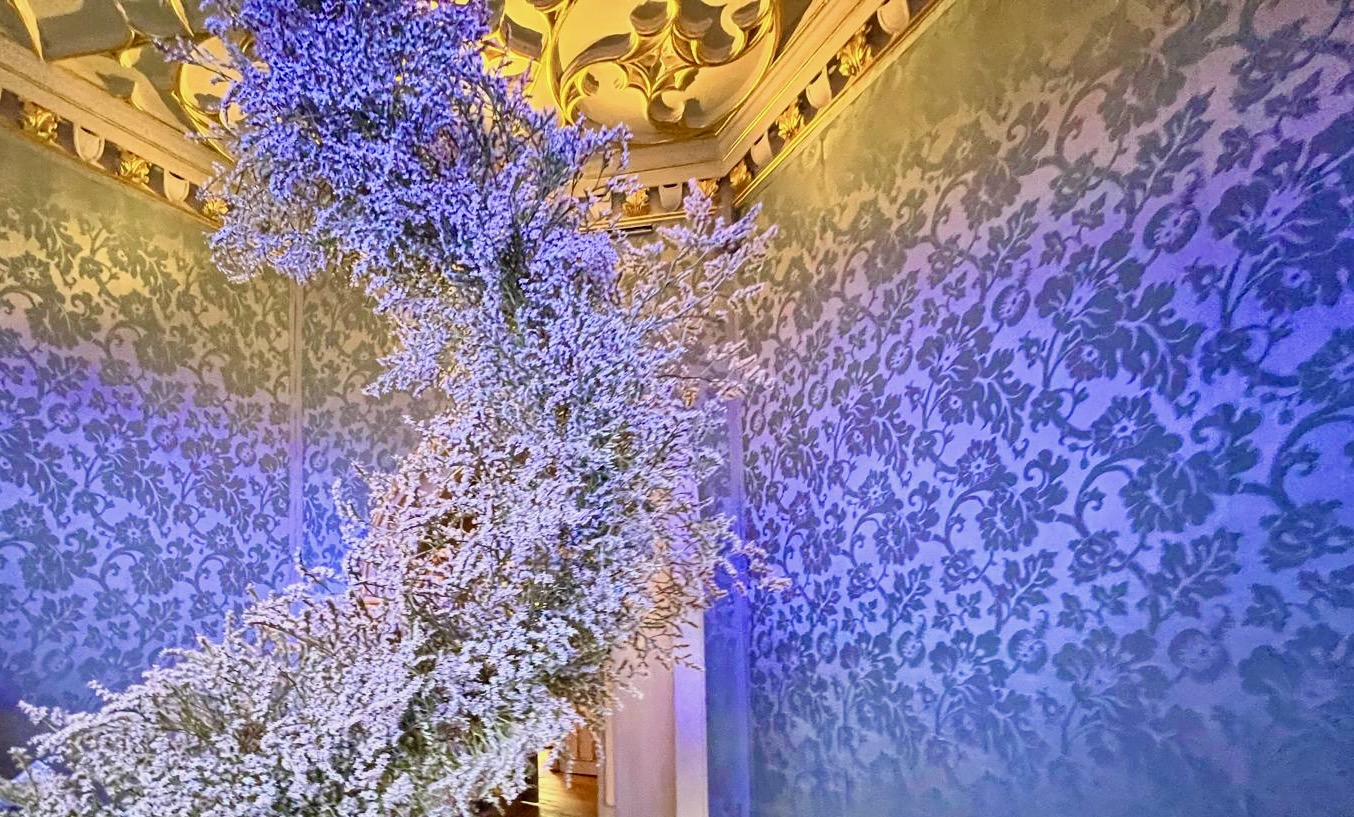
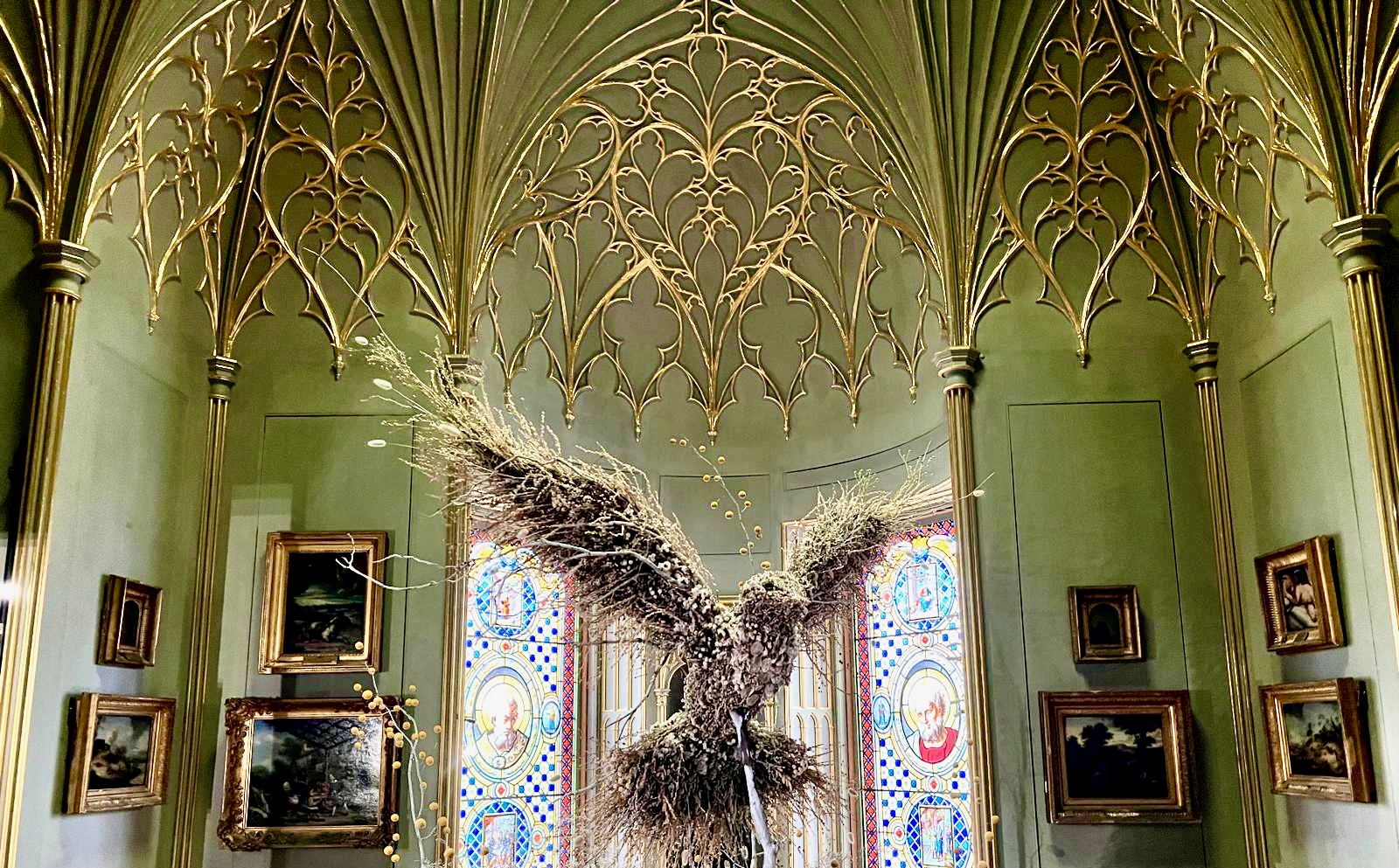
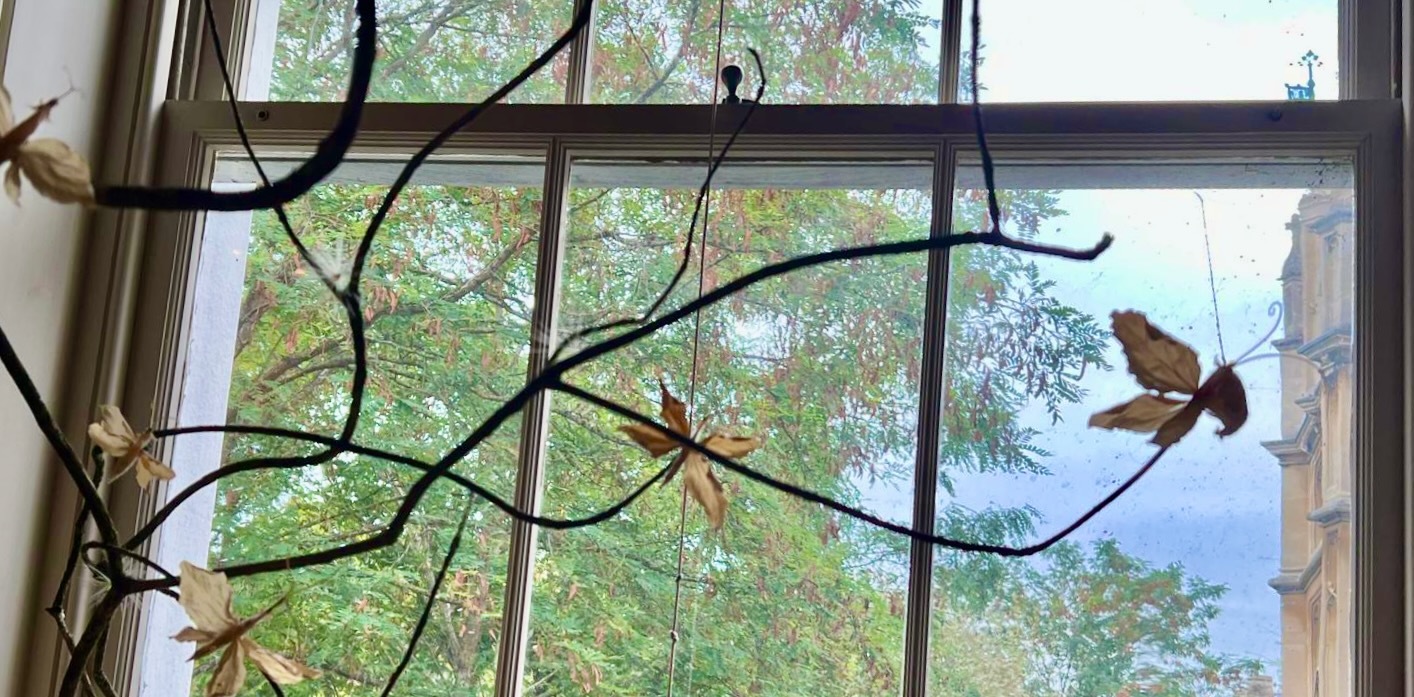
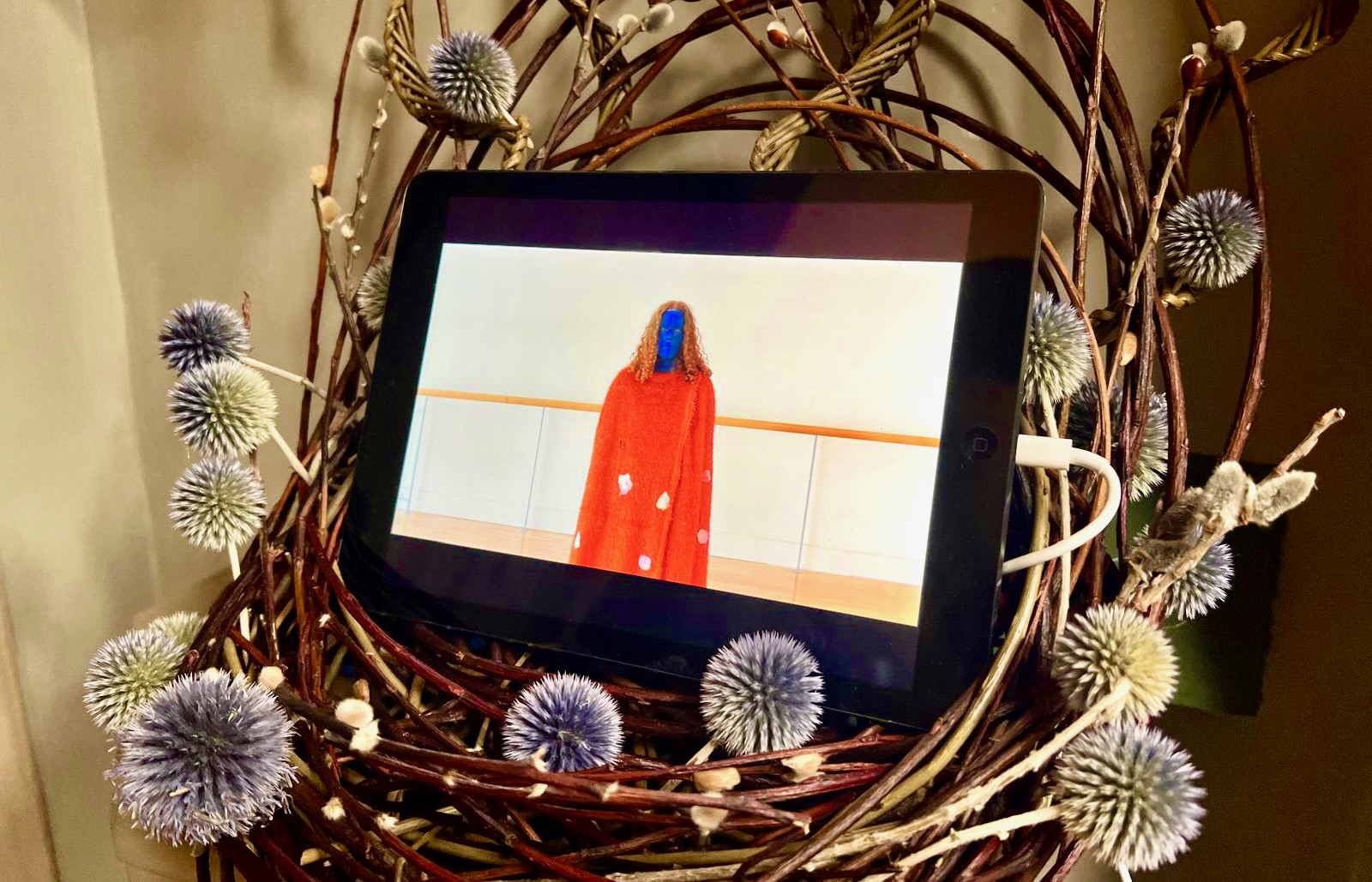
Because of intermittent rain, an artwork created by Holly Hallawell – who I had introduced to Gaia after she did an installation for Volans in Somerset House during London Climate Action Week – met Elaine and I as we entered Strawberry Hill House for the 2025 Flower Festival on 14th September. And this year, for the first time, Gaia had guest curated the festival.

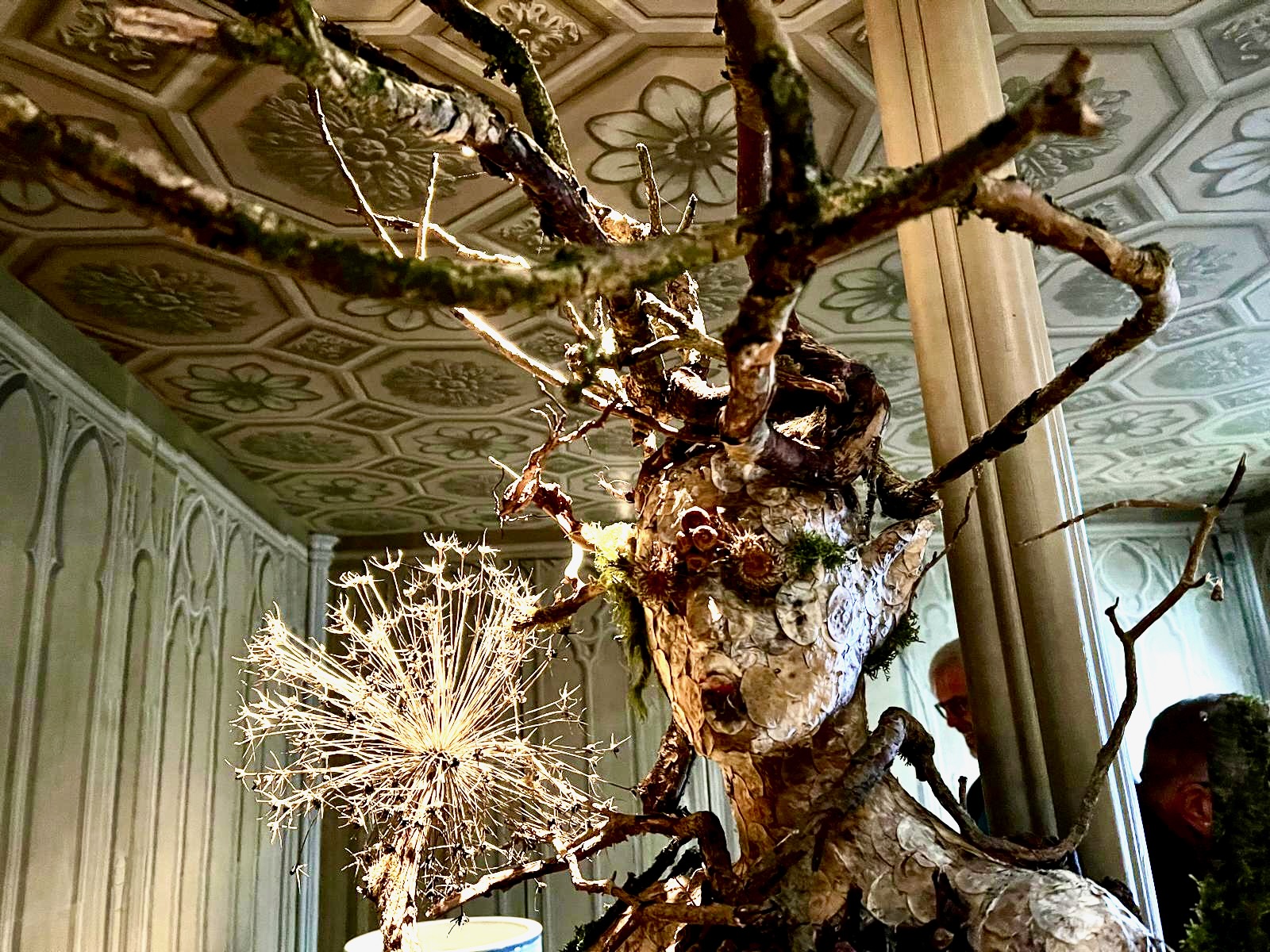
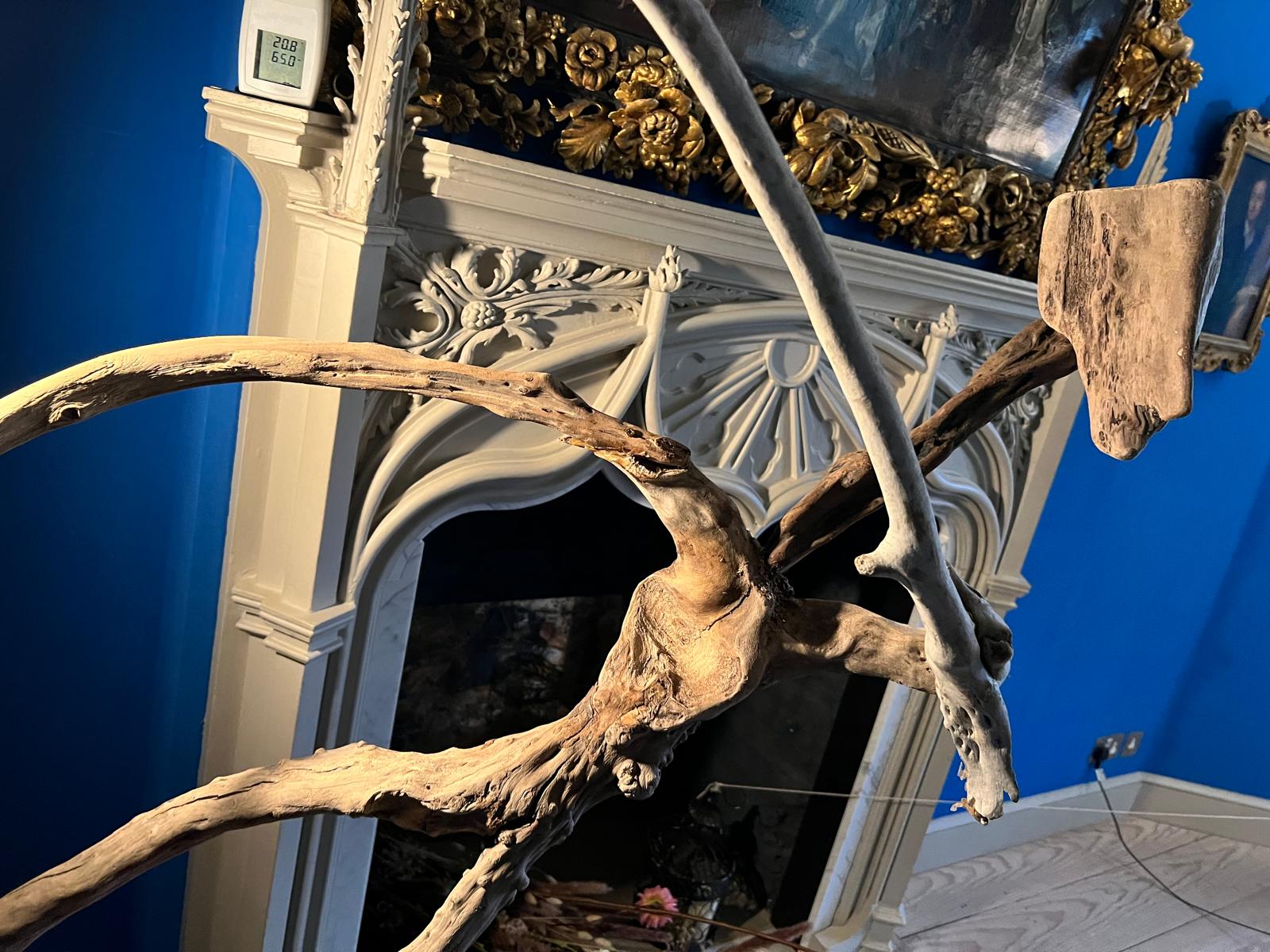
Holly’s piece, shown above, was strung between two mangrove stumps, or pneumatophores. And driftwood – supplied by Gaia’s friend Adam (of Woodenzone) – appeared in many of the exhibits around the house and garden.
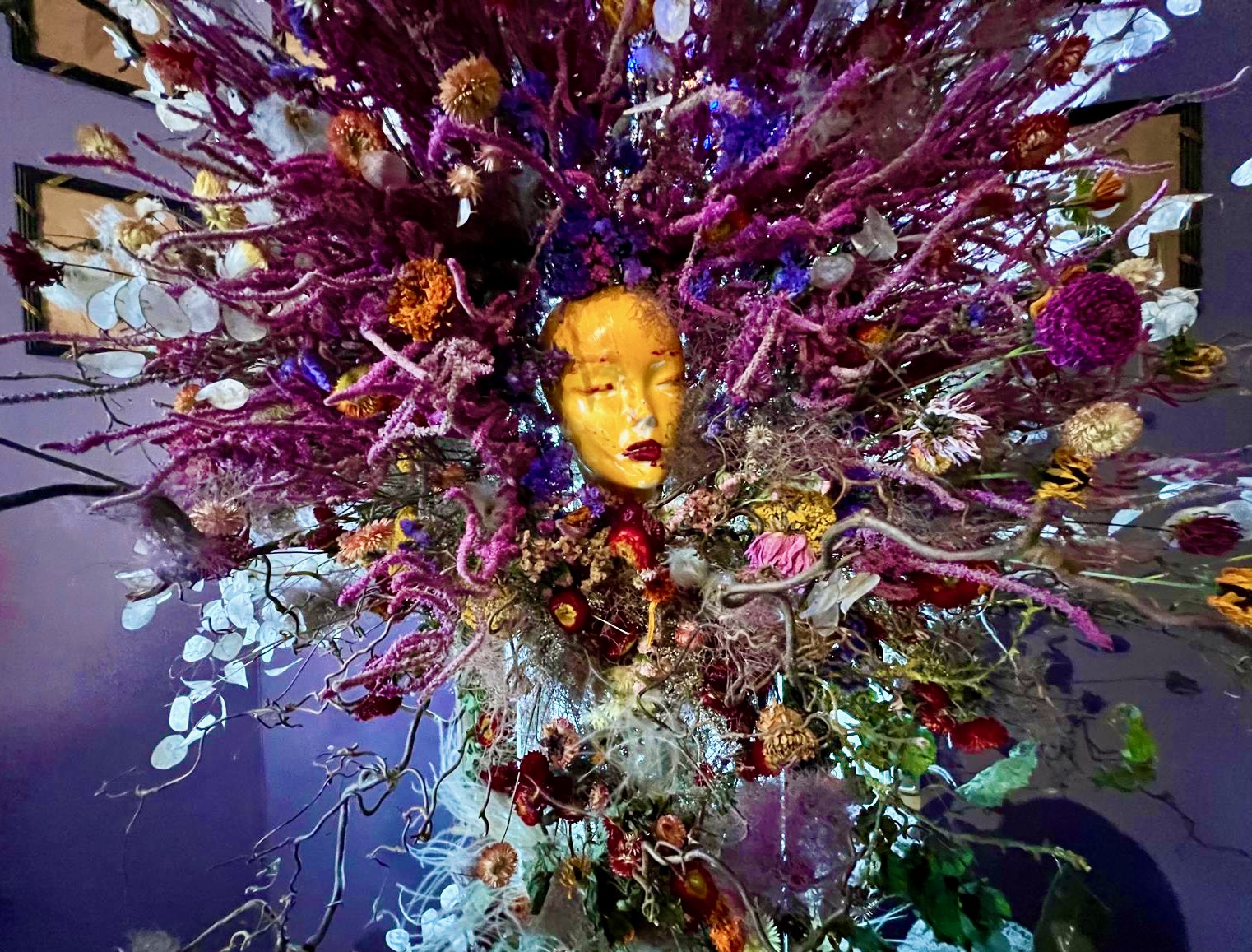
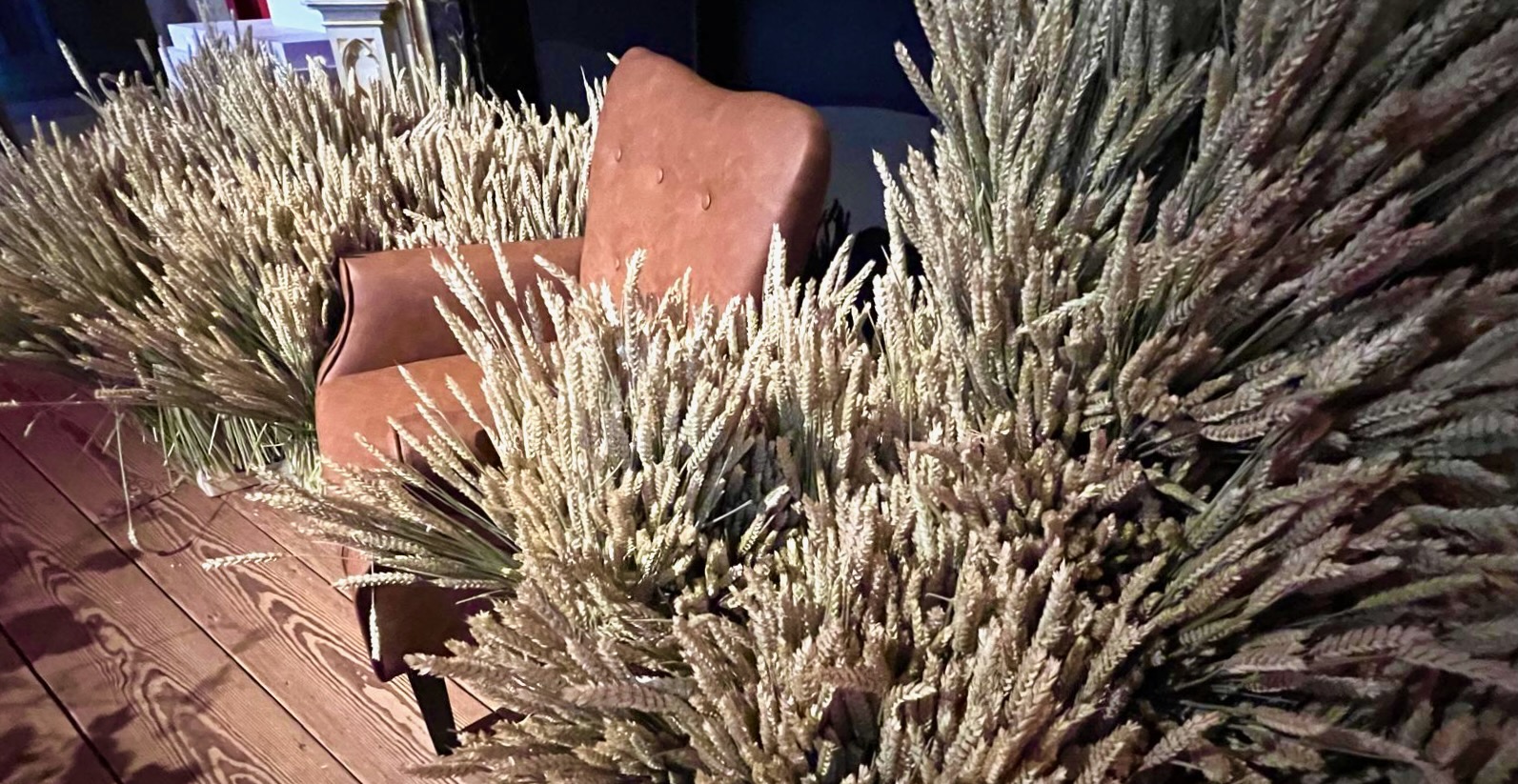
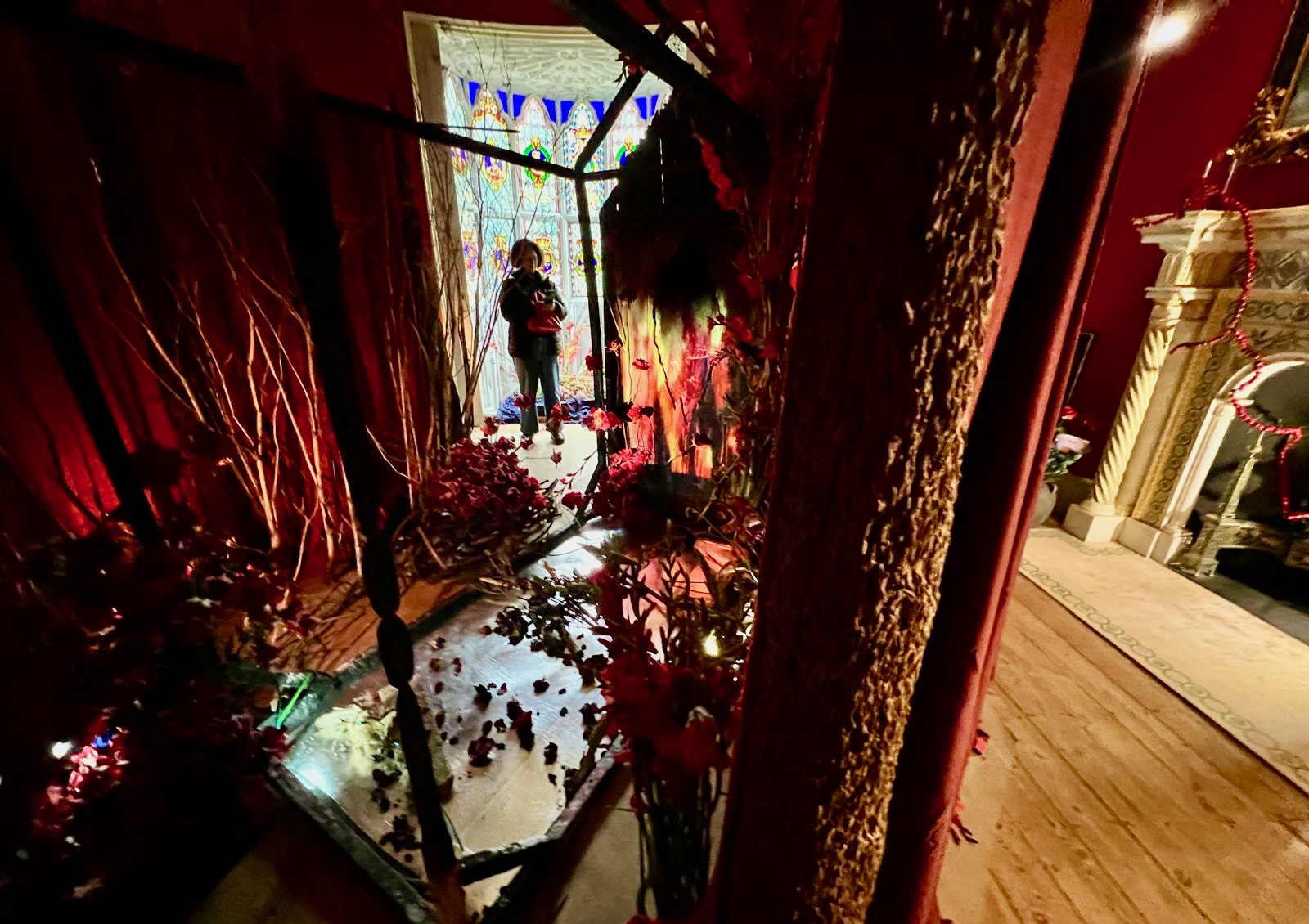
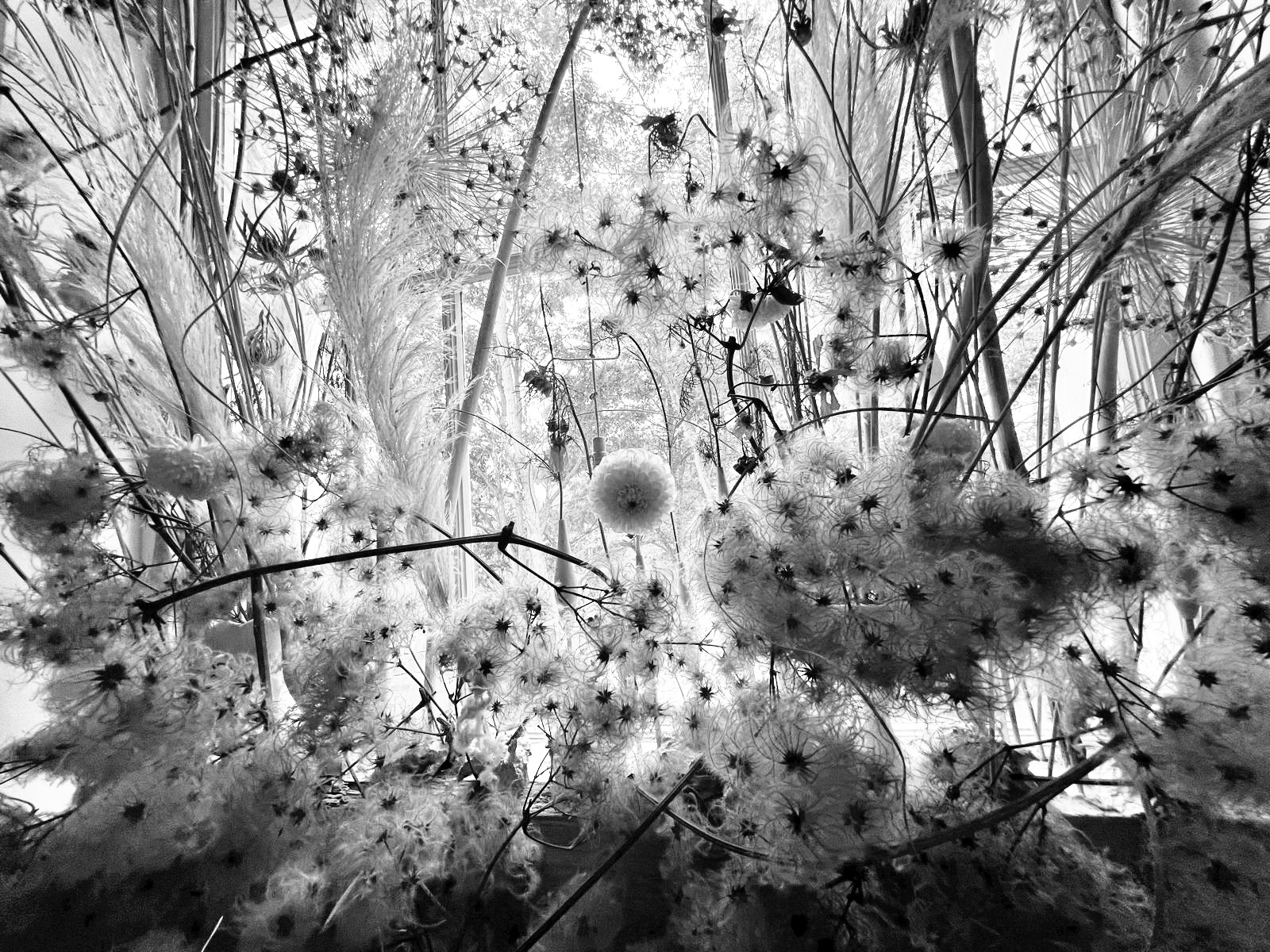
A bad workman blames his tools, so much we know, or have been told. In any event, I left my iPhone camera in the car, and assumed I had left it at home. So borrowed Elaine’s rather antiquated phone (one of my old ones) to take images as we went around – slightly agog. The calibre of the exhibits this year was remarkable, astounding even. But the quality of my images was somewhat reduced.

Still, wonderful to see the room that once houses the giant driftwood spider, Arachne, made by Gaia and Adam, now occupied by an exhibit celebrating David Lynch’s Twin Peaks – with the theme tune playing eerily in the background. Overall, the effect of the festival was whatever the positive version of haunting might be.

  • « Go to Previous Page
  • Go to page 1
  • Interim pages omitted …
  • Go to page 8
  • Go to page 9
  • Go to page 10
  • Go to page 11
  • Go to page 12
  • Interim pages omitted …
  • Go to page 134
  • Go to Next Page »

Primary Sidebar

Introduction

I began this blog with an entry reporting on a visit to the Woods Hole Oceanographic Institution on Cape Cod, on 30 September 2003. The blog element of the website has gone through several iterations since, with much of the older material still available.

Like so many things in my life, blog entries blur the boundaries between the personal and the professional. As explained on this site’s Home Page, the website and the blog are part platform for ongoing projects, part autobiography, and part accountability mechanism.

In addition, my blogs have appeared on many sites such as: Chinadialogue, CSRWire, Fast Company, GreenBiz, Guardian Sustainable Business, and the Harvard Business Review.

Recent Comments

  • John Elkington on The Hill House Elkingtons
  • sally fitzharris. (Rycroft) on The Hill House Elkingtons
  • Thomas Forster on Reminder of Glencot Years

Journal Archive

About

John Elkington is a world authority on corporate responsibility and sustainable development. He is currently Founding Partner and Executive Chairman of Volans, a future-focused business working at the intersection of the sustainability, entrepreneurship and innovation movements.
Contact

john@johnelkington.com  |  +44 203 701 7550 | Twitter: @volansjohn

John Elkington

Copyright © 2026 John Elkington. All rights reserved. Log in