• Skip to primary navigation
  • Skip to main content
  • Skip to primary sidebar
John Elkington

John Elkington

A world authority on corporate responsibility and sustainable development.

  • About
    • Ambassador from the future
  • Past lives
    • Professional
      • Volans
      • SustainAbility
      • CounterCurrent
      • Boards & Advisory Boards
      • Awards & Listings
    • Personal
      • Family
      • Other Influences
      • Education
      • Photography
      • Music
      • Cycling
    • Website
  • Speaking
    • Media
    • Exhibitions
  • Publications
    • Books
    • Reports
    • Articles & Blogs
    • Contributions
    • Tweets
    • Unpublished Writing
  • Journal
  • Contact
  • Show Search
Hide Search

Search Results for: Tim elkington

Of Triremes and Helicopters

John Elkington · 7 January 2010 · Leave a Comment


Having been stranded in Zurich last night by snow blanketing Heathrow, I stayed overnight at a hotel near the airport, spending a couple of hours working on ideas for the new book. Then, as I was leaving for the airport again this morning, I was offered a lift by an attractive woman, her daughter and granddaughter. Although I tried to politely decline, ordering my own taxi, theirs turned out to be big enough for all – so I travelled to the airport with them.

When it transpired that I was leaving a couple of hours to catch my plane, whereas they were cutting it much closer, we began talking about the times we had missed planes. I mentioned tthat I had missed a flight to San Francisco where I was meant to be doing a speech and, another time, from Cornell to New York, so that I had to drive seven hours south to catch a flight. It turned out that my hostess had missed a flight from San Diego, where she had also been doing a speech. I asked on what? Helicopters, she explained. So, did she work for Sikorsky, I asked? No, she said, she had been the first woman to fly a helicopter around the world – from Pole to Pole, and back.

Turned out that she was Jennifer Murray, described by the Telegraph as a death-defying, globe-circling grandmother. A glorious conversation as we sped through the snowy fields – well worth having a flight cancelled under one for. Among other things, we talked of climate change and other forms of environmental destruction.

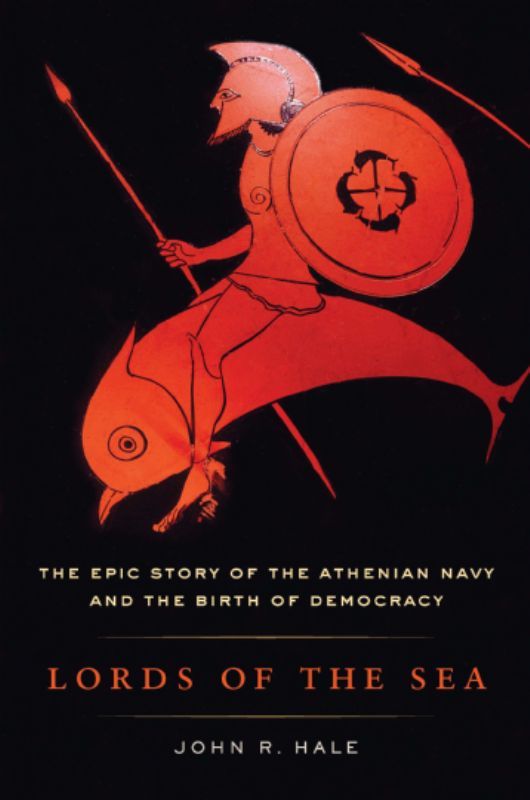
On the flight back, I finished Lords of the Sea, John Hale’s unbelievably wonderful account of the the Athenian navy and the birth of democracy. Utterly fascinating, but at times profoundly upsetting, as the Athenians energetically cut their own throats by forcing some of their greatest trireme experts into exile or to take their own lives through drinking hemlock.

Found myself reading out sections of the book to people as I travelled, including a section on page 287, where the environmental devastation effected by the construction and maintenance of the navy was described – coupled with the deadly (and linked) rise of King Philip’s Macedonia, which would ultimately end the independence of Athens:

Macedon’s rise had been fueled in part by Athens itself, for the navy required constant supplies of timber. Plato had already described the deforestation of Attica and its devastating effects on the Athenian countryside. With the trees cleared from the hillsides, the soil had eroded to the sea. Athens’ loss had been Macedon’s gain. Over many years Athenian silver had been enriching the northern kingdom through purchases of oak, fir, and pine for ships and oars. Philip could now cut off this resource at will …

Rings more than a few bells in today’s world.

Christmas at Hill House

John Elkington · 25 December 2009 · Leave a Comment

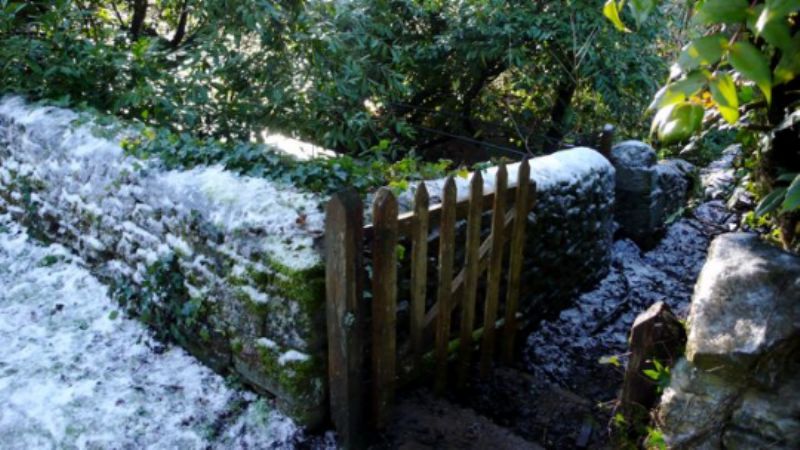
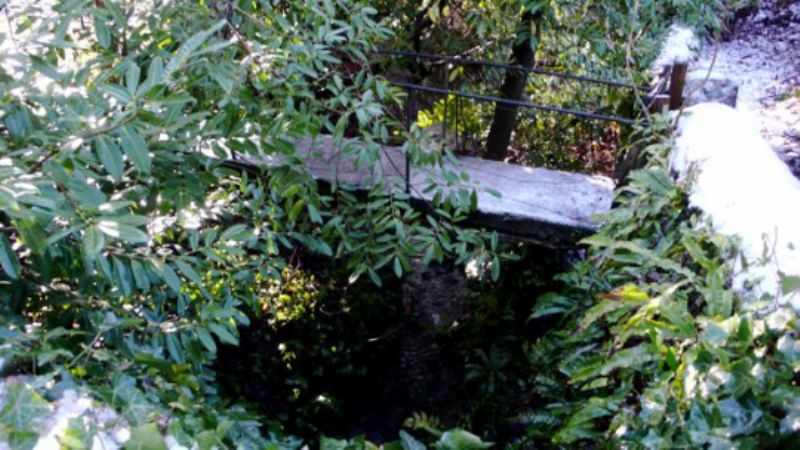
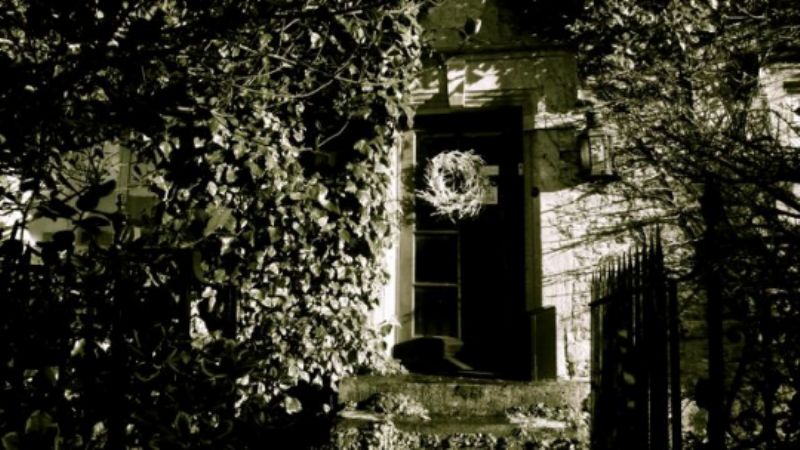
Wreath 1 Wreath 1 Path by stream Path by stream Bridge on which a memorable battle was fought Bridge on which a memorable battle was fought Church Church Shadow 1 Shadow 1 Gravestones 1 Gravestones 1 Shadow 2 Shadow 2 Church 2 Church 2 Gravestones 2 Gravestones 2 Cuckoo Pen Cuckoo Pen Hill House wreath Hill House wreath

We drove down to Little Rissington this morning, early, with very little traffic on the road – for Christmas Day at Hill House. The countryside beyond Oxford was still white with snow and illuminated by a low sun in the most spectacular way. Elaine and I took a walk up to St Peter’s Church before lunch, passing the tiny bridge across which almost 50 years ago a legendary battle was fought out – between one of our young friends with a branch and one of the Misses Le Marchant, whose garden I suspect we had somewhat invaded, who was armed with her walking stick – and who must have been well into her eighties at the time. I think honour was maintained on both sides.

Very aware of the gift of being rooted in this house and this village. Odd mixture of emotions as we headed towards the church, the scene of so many christenings, marriages and funerals in the more-than-50 years we have been in Little Rissington. Particularly sad to walk around the RAF graves, particularly after looking through a number of Tim’s books, including the sixth volume of Robert Taylor’s Air Combat Paintings – which are quite extraordinary. Interesting, too, to read quickly through a new book on No. 1 Squadron, In All Things First, which features both my parents – Tim as No 1 Squadron pilot, Pat as the target of a trio of Focke-Wulf 190 fighter-bombers in 1943.

Last night, I had watched The Tuskegee Airmen, a moving film on the first African American fighter pilots. Sent an email afterwards to Dianne Dillon Ridgly, whose father was one of the “round two” Tuskegee airmen, and who I last saw a month or so ago at the Ecotopia event in London.

Loved the new landscape Caroline is painting up in her studio. And when we were leaving, much later, the frost shone on the car’s roof – and the stars shone brilliantly overhead, a smudged shooting star arcing over the barns towards Burford. A great skein of stars, including the Big Dipper and a brilliant planet, hung overhead, with a half Moon. Magical.

COP15: The Politics of the Liferaft

John Elkington · 20 December 2009 · Leave a Comment

COP15 in progress COP15 in progress

“Copenhagen is a crime scene tonight,” said John Sauven, executive director of Greenpeace UK, “with the guilty men and women fleeing to the airport.” Increasingly, the take on COP15 is that it failed in almost every department, aside from the rhetoric about keeping the rise in average temperatures below 2 degrees C.

God knows how the delegates put up with it, from (1) the leak of the “Danish text” of a set of proposals prepared in advance of COP15 by a group of rich countries through (2) to Sudan lecturing the world on human rights and (3) to the number of observer passes being cut from 15,000 to just 90. people made the best of it: One entrepreneurial colleague, for example, ended up sleeping behind a temporary wall in the conference centre, to avoid the cull of observers – and then benefitted from an amnesty, being allowed to stay in.

On the face of it, however, this has been one of the most shambolic exercises in UN-led global governance for quite some time. Still, even though I have always avoided such events, finding the endless horse-trading profoundly wildly inappropriate to the nature and scale of the challenges we face, COP15 did at least illuminate the fault-lines in emergent twenty-first century politics – very much like an X-ray shows the invisible weaknesses in metals and ceramics.

I’m not sure the image will play well outside the UK, but the Sunday Times today has Obama’s face dropped into a photograph of Neville Chamberain returning from his meeting with “Mr. Hitler”, brandishing his meaningless piece of paper. Obama, who I admire enormously, now seems to have been wrong-footed twice in Copenhagen – and it is tempting to agree that he shouldn’t have turned up for COP15, given his profound distraction from the climate agenda because of US health care politics. America is divided on climate, as on so many issues, and the sense of a country adrift grows apace.

In many ways, it is unfair to heap the blame onto China, as Obama and others have tried to do – but the giant country clearly has much to learn about how to operate diplomatically on the world scene. Meanwhile, there is plenty of blame to go around, with fractious internal politics during the conference within Denmark, the host country, within the EU, and pretty much in most other directions you care to point out. What we saw was what I am tempted to call ‘Liferaft Politics’, with endless squabbles for the tiller, water and food – and desperate struggles to determine who’s in and who’s out.

Once again, I’m glad not to have been involved. But this is a desperately sad – and (not to put too fine a point on it) potentially civilisation-threatening – outcome. Many eyes will now switch to the ‘Road to Mexico’, and COP16, but I am tempted to agree with Julian (Lord) Hunt, a former Director-General of the UK Meteorological Office. Writing in today’s Observer, he warns that we may be heading towards a future in which no comprehensive successor to the Kyoto regime is possible. “It is therefore crucial,” he says, “that the centre of gravity of decision-making on how we respond to climate change moves towards the sub-national level. The need for such a shift from ‘top down’ to ‘bottom up’ is becoming clearer by the day.”

Business organisations are already lamenting the failure to agree on a clear, predictable framework to regulate and drive down greenhouse emission – an analysis which is understandable, as far as it goes. But, at the same time, the spotlight is likely to shift from the muscle-bound, strangulated, sclerotic world of mainstream public and private sector leadership to new generations of innovators, entrepreneurs and investors who plunge in and create the future in the face of seemingly impossible odds.

That’s where we are focusing our efforts at Volans – and i head towards 2010 not so much angry with the short-sightedness and self-interest of today’s political incumbents (I may be politically naive and a little romantic, but I’m not completely stupid) as determined to do our damnedest to answer the question, “If not COP, what?”

Up We Went

John Elkington · 14 December 2009 · Leave a Comment

The journey begins The journey begins

Elaine, Sam and I went to see Pixar’s Up in 3-D this afternoon, Elaine for the second time in a week. Can’t recall when I last enjoyed a film so much – probably it was either Raiders of the Lost Ark or Star Wars, way back in the mists of time. Uplifting and moving, in almost equal measure.

Weirdly, we were among less than a dozen people in the Odeon Covent Garden – would have loved to have transported in street urchins from around the world to share the spectacle(s), including from Phnom Penh, where I was talking to someone today – and he broke off, mid-sentence, to comment on an elephant that was coming along the street towards him. Could even imagine the elephant enjoying much of the film, though the 3-D glasses would be a bit of a squeeze. An elephantine version of Roy Orbison.

The Road to Ecotopia

John Elkington · 4 December 2009 · Leave a Comment

Alejandro interviewed Alejandro interviewed Cineforum 2 Cineforum mapping of the Road to Ecotopia 

Spent the day at Cineforum’s ‘Road to Ecotopia’ event at the old St Luke’s office building, 22 Duke’s Road, just across the road from Euston Station – and literally round the corner from where, pretty much exactly 35 years ago, I walked out of the UCL School of Environmental Studies, having completed my M.Phil., and into my first real job, with TEST. Wonderful gathering of tribes – and a strange sense of more great wheels of fortune turning and starting out on new cycles.

With around 150 people, this was one of the most enjoyable events I have been to in a long time, organised by Jobeda Ali and James Parr – and with the backing of organisations like Tomorrow’s Company, IDEO, SustainAbility and Volans. Alejandro (Litovsky) led an all-day session on the biosphere, which I kicked off in – but then flitted from session to session as a ‘Honeybee’, my duty to cross-pollinate. Wonderful to see people like Hunter Lovins again, though kissing her hat is a navigational challenge.

Among the initiatives spotlighted was Hopenhagen, which I joined up with a while back – and whose passport idea was dreamed up by Alejandro’s sister. One of my favourite sessions was up in Nest 3, led by Louis Savy of Sci-Fi-London, which organises the London International Festival of Science Fiction and Fantastic Film. Also very struck by the visualization work of Jonathan Arnold – and by a session on China led by Andrew Leung.

The day ended with a session in which Hazel Henderson and Fritjof Capra beamed in from the US, with Hazel using the opportunity to launch a new Global Climate Prosperity Scoreboard, which tracks private investment in companies growing the green economy globally. “This new, never before reported number, showing $1,248,740,645,993.00 (over $1.248 trillion) in total investment since 2007, indicates how investors and entrepreneurs are leading governments in promoting sustainable growth,” she noted.  

The scoreboard totals investments in solar, wind, geothermal, ocean/hydro, energy efficiency and storage, and agriculture. It purposefully omits nuclear, “clean coal,” carbon capture and sequestration, and biofuels.  It indicates which investments have been publically announced and committed by major companies for 2010 and beyond.

Niels Peter Flint Niels Peter Flint Louis Savy Louis Savy Biosphere session Biosphere session Ideacomb 2 Ideacomb

  • « Go to Previous Page
  • Go to page 1
  • Interim pages omitted …
  • Go to page 104
  • Go to page 105
  • Go to page 106
  • Go to page 107
  • Go to page 108
  • Interim pages omitted …
  • Go to page 134
  • Go to Next Page »

Primary Sidebar

Introduction

I began this blog with an entry reporting on a visit to the Woods Hole Oceanographic Institution on Cape Cod, on 30 September 2003. The blog element of the website has gone through several iterations since, with much of the older material still available.

Like so many things in my life, blog entries blur the boundaries between the personal and the professional. As explained on this site’s Home Page, the website and the blog are part platform for ongoing projects, part autobiography, and part accountability mechanism.

In addition, my blogs have appeared on many sites such as: Chinadialogue, CSRWire, Fast Company, GreenBiz, Guardian Sustainable Business, and the Harvard Business Review.

Recent Comments

  • John Elkington on The Hill House Elkingtons
  • sally fitzharris. (Rycroft) on The Hill House Elkingtons
  • Thomas Forster on Reminder of Glencot Years

Journal Archive

About

John Elkington is a world authority on corporate responsibility and sustainable development. He is currently Founding Partner and Executive Chairman of Volans, a future-focused business working at the intersection of the sustainability, entrepreneurship and innovation movements.

Contact

john@johnelkington.com  |  +44 203 701 7550 | Twitter: @volansjohn

John Elkington

Copyright © 2026 John Elkington. All rights reserved. Log in