• Skip to primary navigation
  • Skip to main content
  • Skip to primary sidebar
John Elkington

John Elkington

A world authority on corporate responsibility and sustainable development.

  • About
    • Ambassador from the future
  • Past lives
    • Professional
      • Volans
      • SustainAbility
      • CounterCurrent
      • Boards & Advisory Boards
      • Awards & Listings
    • Personal
      • Family
      • Other Influences
      • Education
      • Photography
      • Music
      • Cycling
    • Website
  • Speaking
    • Media
    • Exhibitions
  • Publications
    • Books
    • Reports
    • Articles & Blogs
    • Contributions
    • Tweets
    • Unpublished Writing
  • Journal
  • Contact
  • Show Search
Hide Search

Search Results for: Tim elkington

44

John Elkington · 5 November 2008 · Leave a Comment

Extraordinary day spent at annual Environmental Advisory Meeting of Nissan, with many of the top brass in attendance, but with we visitors – and many of the younger Nissan people – barely able to keep our minds off the results of the US election.  Cell phones and laptops were being passed around at various junctures, with people debating the signifciance of the mapped results.  When the news finally went solid, there was applause across the room, twice. 

A strong sense that a dark, misguided, benighted, mean-spirited period in America’s history may finally be drawing end, with at least the hope of something better. Like many people, I suspect, I found my mind turning back to the even darker days of slavery.  Am currently reading Janis Cooke Newman’s extraordinary novelised life of Mrs Lincoln.  And then Mark (Lee) at SustainAbility sent out a link to the latest Tom Friedman op-ed from the New York Times.  Caught the spirit to the nth degree.  What a race it has been – and the first US election where I actually dreamed of the outcome on election night.  No-one can envy Obama the Augean task he now faces, but he certainly won my (non-existent) vote.

Driven to Nissan’s R&D Center outside Tokyo in a fuel-cell vehicle, for a session I did head-to-head with one of Japan’s leading environmentalists, Junko Edahiro.  Great fun – and someone I’m keen to build a deeper connection with.
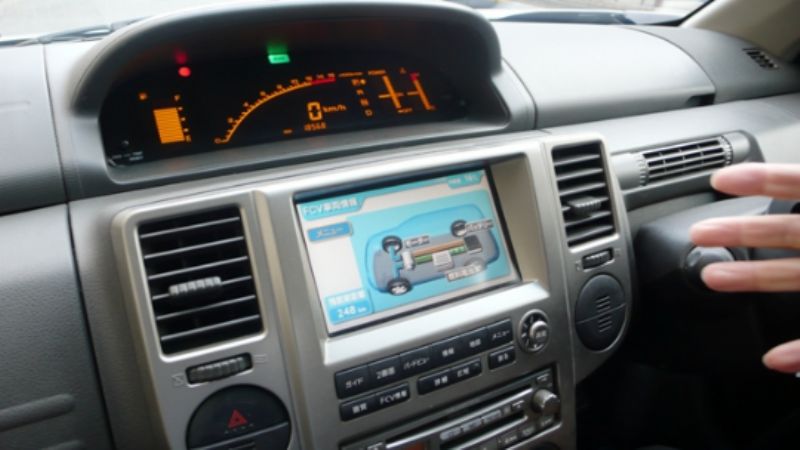
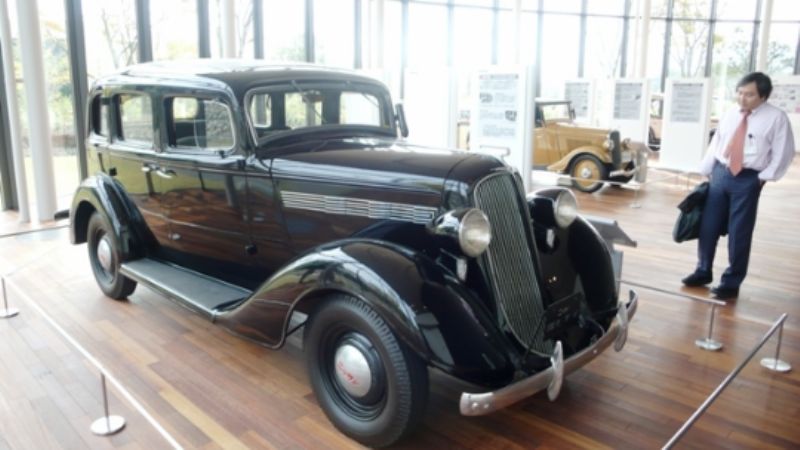
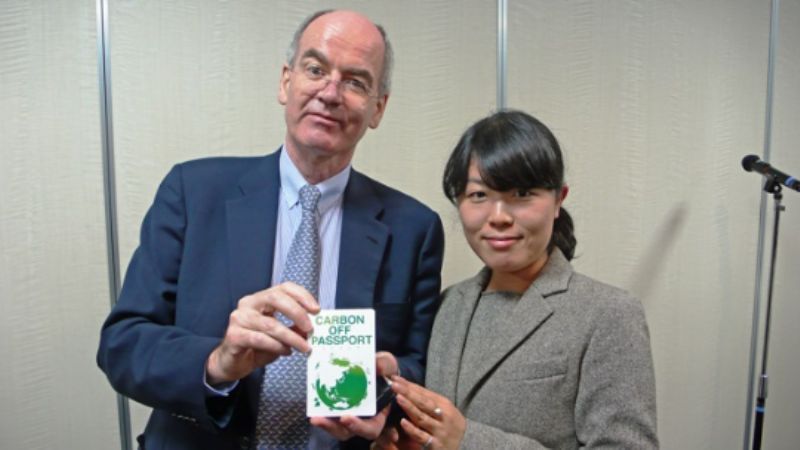
Dashboard of Fuel Cell Vehicle I was driven out of the city in Dashboard of Fuel Cell Vehicle I was driven out of the city in   Solar roofing at Nissan R&D Center Solar roofing at Nissan R&D Center   After the session After the session – Junko in the middle   Any colour as long as it's ... Any colour as long as it’s …   Electric car 1 Electric car 1   Electric car 2 Electric car 2   Carbon Off Passport Now I have my Carbon Off Passport, what mobility option to choose?



Happy Birthday, Land Rover

John Elkington · 12 October 2008 · Leave a Comment

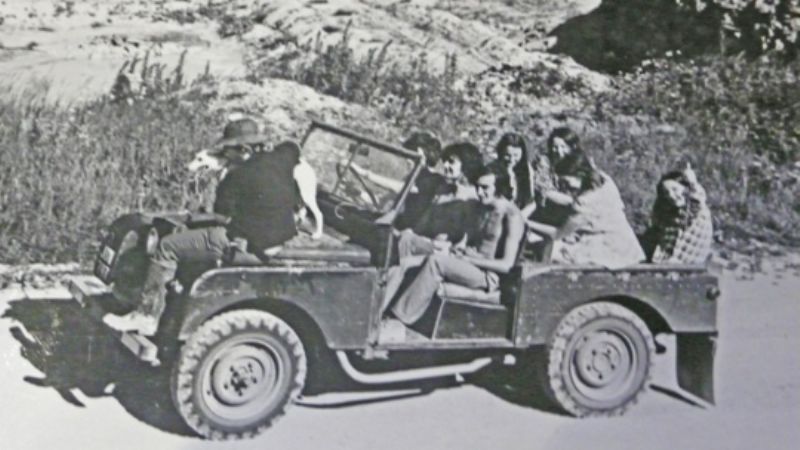
Our Land Rover with Blue, the whippet, as bonnet mascot Our Land Rover with Blue, the whippet, as bonnet mascot

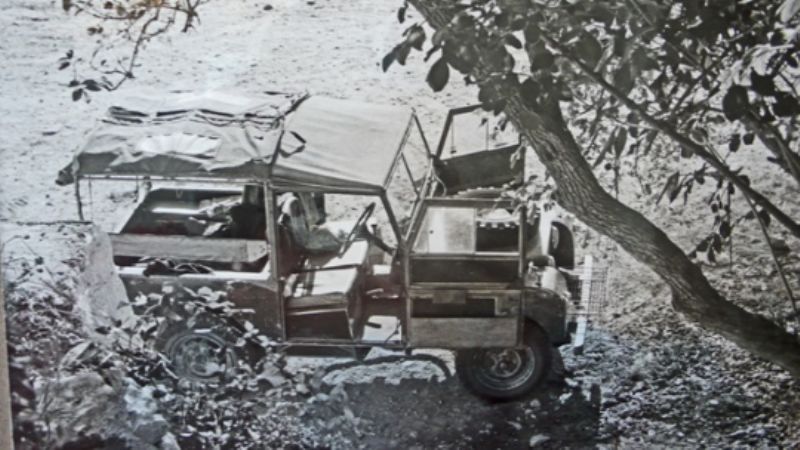
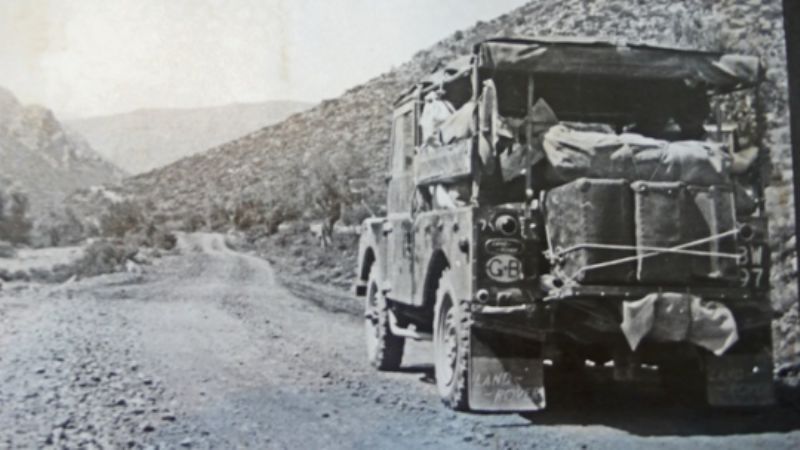
It’s sixty years since the first Land Rover took to the road, in 1948 – the year before I was born.  Its registration number was HUE 166.  For close on 20 years in the 60s and 70s, my family had a vehicle which didn’t look much different, JBW 797.  It was old even when we got it, the story being that it had been twice around the world already and at one stage had served as a logging vehicle.

Whatever its family tree and previous exploits, it became a centre plank of our younger years, a porch on wheels, a rough-and-tumble covered wagon.  We would put it in the lowest gear as we drove across Little Rissington airfield, leaving it to its own devices as we all dived off to find and pick mushrooms.   We treated it to excursions in a nearby quarry, in the days when we still shot things – and I recall one time, with the canvas top removed, when we drove back through Bourton-on-the-Water in the rain, with at least one of our party wearing a huge snorkel mask and another plucking something, with the feathers strewing out in our wake.

In 1970, Elaine and I took it – and four friends from university, ian, Jan, Martin and Rex – to Greece for two months, taking the ferry to Skiathos and then on around the Pelopennes.  During that trip, it turns out, we bumped into Geoff Lye, much later a colleague at SustainAbility and Volans, who was driving around the Greece with friends in a London black cab. 

It was a wrench when the family finally sold JBW 797, but by then its alumium body was corroding fairly badly – and its paintwork had worn down to silver on the wings and bonnet, where we seemed to spend much of our time – as shown in the photo above.

So happy birthday to HUE 166, to whatever is left of JBW 797 and to Land Rover. That said, I do wonder whether a decade hence we will look back and see that Land Rover – like many other automakers – took a dangerous detour in plunging so wholeheartedly into the SUV era.  True, as Land Rover insists, the vehicle has served brilliantly in an endless number of scientific and environmental projects, but the marque has become much more closely identified in recent years with the 4×4 plague of Chelsea Tractors.  If conspicuous consumption becomes less socially acceptable, it will be fascinating to watch the Land Rover mutate back closer towards its original functions.

JBW 797 in Greece JBW 797 in Greece   JBW 797 in the Pelopennes JBW 797 in the Pelopennes

In the eye of the storm

John Elkington · 11 October 2008 · Leave a Comment

En route to the London Accord En route to the London Accord

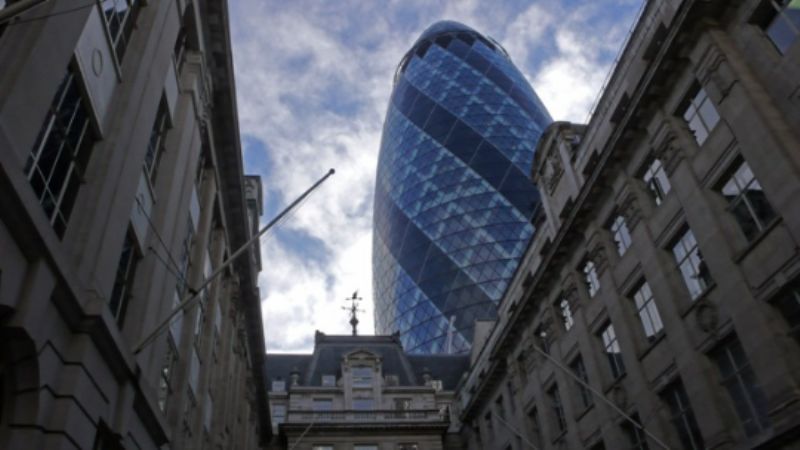
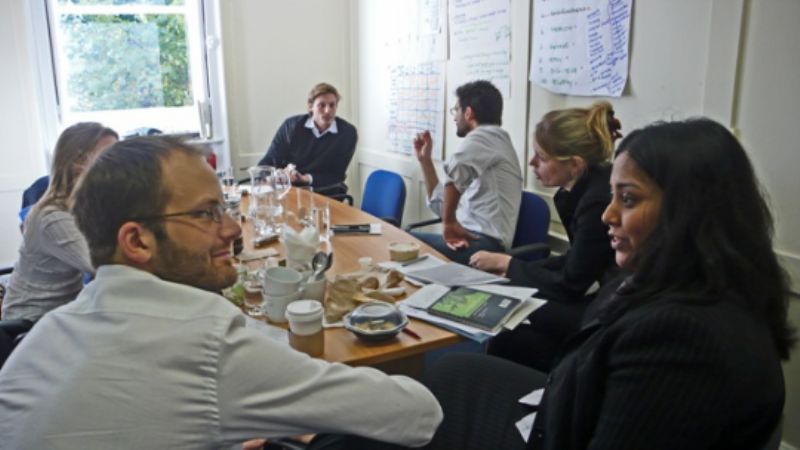
With the financial world tumbling around our ears, Charmian and I went early in the week to find out more about the London Accord from Michael Mainelli of the Z/Yen Group.  A fascinating initiative which aims to blend social, environmental and financial agendas and that deserves to be even more widely known.  A little later in the week, Doug Miller of the European Venture Philathropy Association kindly came in and did a 101 session for a group from Volans and SustainAbility.  Spent a fair amount of the week doing client work, writing articles and preparing presentations, all of which are tending to refer back to the work of Nikolai Kondratiev and Joseph Schumpeter, two economists whose work had a profound influence on the way I see the world.

London’s future as a financial centre is being questioned by some as the market turmoil continues, but the current crisis and suffering is put in perspective by something Elaine told me today.  I have always wondered why the Piccadilly Line jinks about and makes such a screeching noise between South Kensington and Knightsbridge stations.  The reason, according to Catherine Arnold’s book Necropolis, is that the line had to be routed around huge numbers of corpses that had been buried near Rotten Row during the Great Plague.  Something else to think about as I cycle nearby on my way to and from work.

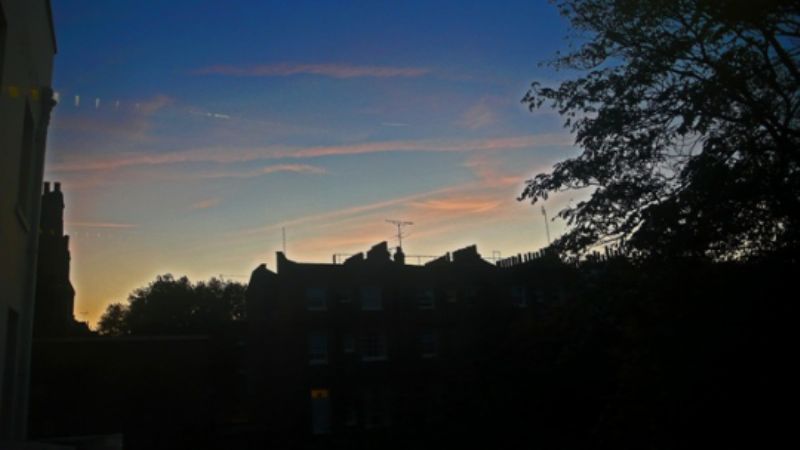
The conversation continues after Doug Miller has gone The conversation continues after Doug Miller has gone   Charmian and I ... Charmian and I …   ... are among those celebrating Smita's joining full-time … are among those celebrating Smita’s joining full-time   Sam reclines Sam reclines towards the end of another frenetic day   Am I turning into a silver-back gorilla? With Sam, Astrid and Smita: am I turning into a silver-back gorilla?   The sun sets over London at the end of another day of financial carnage Deceptive: the sun sets over London – after another day of financial carnage

Ghost bikes

John Elkington · 5 October 2008 · Leave a Comment

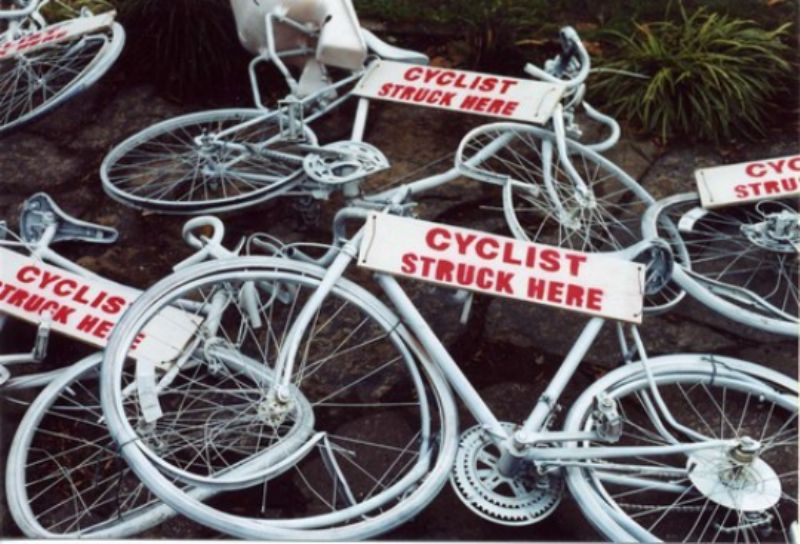
In St. Louis, Patrick Van Der Tuin began memorializing bicyclists killed or injured by motorists with painted white bikes in 2002. He called his project Broken Bikes Broken Lives. (Courtesy of Carrie Zukoski) In St. Louis, during 2002, Patrick Van Der Tuin began memorializing bicyclists killed or injured by motorists with white-painted bikes. He dubbed his project ‘Broken Bikes Broken Lives’. (Photograph courtesy of Carrie Zukoski)

Haven’t yet seen one in the flesh, but am mightily impressed by a very different take on white bicycles, the viral campaign splashed over two pages in today’s Observer.  Starting off in the US, it uses skeletally white-painted cycles to mark the spots where cyclists have been killed or injured.  Given that a young woman cyclist was killed by a bendy bus just around the corner from our London office a week or two ago, and having been left three times unconscious over 35 years of cycling in London, twice with three broken ribs, the ghost bike movement is one I whole-heartedly support. 

The aphrodisiac effects of Zeppelins

John Elkington · 4 October 2008 · Leave a Comment

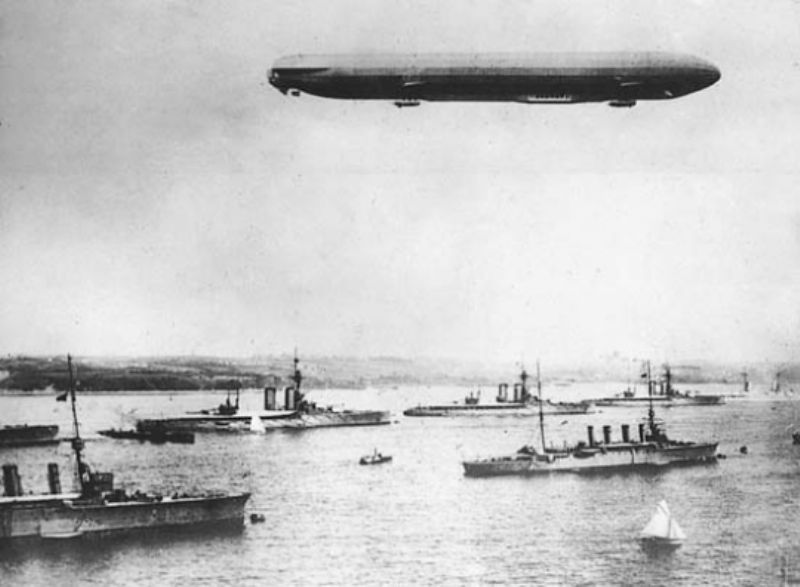
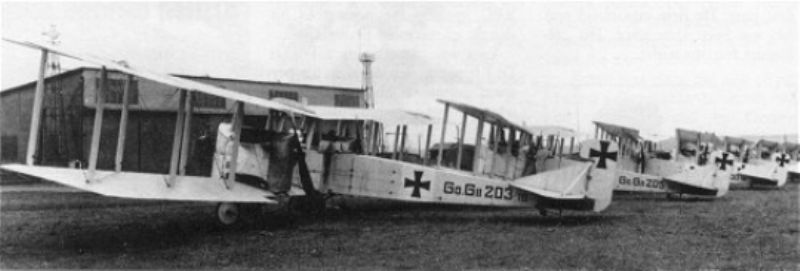
Zeppelin over fleet Zeppelin over fleet

One of the things my father’s mother Isabel left us was a collection of diaries – and a couple of weeks back I was reading one from late 1916.  At the time she was working as some sort of designer at the Admiralty, so it is written in a pale covered notebook, standard Admiralty issue she admits part way through. 

Among many things that leapt out for me was her diary entry for Thursday, October 5.  “Where can I begin?” she began – and the tale she told led me to an exploration of Britain’s ‘First Blitz’, a story told in the book I subsequently bought and read while flying to and from the US this week, Neil Hanson’s extraordinary First Blitz: The Never-Before-Told Story of the German Plan to Raze London to the Ground in 1918 (Doubleday, 2008).

The day began, once she was at work, with the sight of the French Republican Band playing in Horse Guards.  Then she had lunch with her Aunt Jess and Vera (unknown) at the Lyceum, later seeing a concert featuring Tchaikovsky’s Fifth Symphony.  Then dinner at Pinoli’s, after which one of her stable of boyfriends – the one she dubbed ’17’, a lieutenant in the Royal Navy – took her home.  “The Zepps were on the way,” she recalled, “and the trains were dark and unreliable, and we found everyone on the doorsteps looking for Zepps, so we went through to the garden to see them better.”

The airships seemed to work a strange aphrodisiac effect.  “And then he made love to me – what could you expect? – most unreasonable – time – place – everything – but then when was love reasonable – and such love too.”  The tale goes less well from there, but that’s another story.  What struck me was her account of those bombed out of their homes – and her outrage at the looting that sometimes followed raids.

That led me to First Blitz.  I knew that there had been Zeppelin raids over the southern parts of the country, particularly over London.  I also knew that there had been raids by Gotha and Giant bombers, but I simply had no idea of the scale of those raids, nor of the physical, psychological and social impact they had.  Substantial elements of the population teetered on the edge of panic as the raids built during ‘The Blitz of the Harvest Moon’.

Hanson’s book was an eye-opener in multiple dimensions, not least in terms of the lessons learned by England in terms of air defence, lessons that stood us in good stead when the second Blitz hit.  Isabel, my favourite grandmother and a woman I always associate with London (where she lived in Pont Street and Lennox Gardens during the time when I knew her best, although I first remember seeing at her home in Dulverton), was in the city for the second time round during WWII, though I haven’t seen diaries from that era.  One thing I do remember, though, is that once when she went down to stay on the south coast, at Hayling Island in 1940, she contrived to see my father, her only son Tim, shot down, but that’s a story I’ve told elsewhere.

In any event, the Zeppelin raids of October and November 1916 persuaded the Germans that the losses would be too great – and they then switched to winged aircraft, particularly the Gothas, whose exploits form the core of Hanson’s book.  But one of the most interesting sections of the book deals with the use of fire in warfare, from the time when the Syrian Kallinicus came up with ‘Greek Fire’ in AD 660, a deadly weapon said to have saved Constantinople on many ocasions.  It was squirted from siphons, as in modern flamethrowers.  And the tale then goes on to the German plans to destroy as much of London as possible by triggering a successor to the Great Fire of 1666.

Those who feel Germany were complete innocents in the art of putting cities to the torch, that the WWII raids on cities like Hamburg and Dresden came literally out of the blue, should read the story of the ‘Fire Plan’ – and of just how hard the Germans tried to get the jump on Britain in the WWI fire department.  Thank the heavens, or whomever, that by the time the Germans found an effective incendiary weapon, the Elektron, the war was in its closing stages.  Indeed, the description of the last-minute interruption of the England Squadron’s first mass use of the Elektron is like something from a Buchan novel. 

The Startoffizier is just about to wave the squadron’s aircraft into the night sky for the raid when suddenly, “through the darkness a car came racing … It was as black as night, its paintwork shining softly in the starlight, but the fluttering pennants it carried showed it bore an emissary of the High Command.  It sped across the airfield, bumping and rattling over the rutted ground, driven flat out.  Each Gotha, momentarily caught in the glare of its lights, loomed ghostly grey out of the darkness, then faded to a shadow as the car roared on.”

London and Paris were spared untold grief when Ludendorff cancelled the mission – and tens of thousands of Elektron bombs ended up being dumped into the River Scheldt.  But incendiary bombs went from strength to strength in the following decades.  Happily, just as in WWI, some WWII incendiaries failed to explode.  We discovered that some years back when Elaine was ordered by a somewhat panicked policeman to get out of the house – without stopping for anything.  It turned out that a stick of bombs had stalked down our road, in search of a nearby munitions plant, and that one had been sitting unexploded and undetected in a neighbour’s garden for some 60 years, about eight feet from where we still do the washing up.

And the truly extraordinary thing about Isabel’s diary?  As I said to Gaia earlier today, it is as if she is talking to you, from 92 years ago, a modern voice, very self-aware, inquisitive, someone I often devoutly wish was still here to continue the conversations we had about so many things, but, sadly, never once about the aphrodisiac effects of danger and of Zeppelins.

Gothas Gothas

  • « Go to Previous Page
  • Go to page 1
  • Interim pages omitted …
  • Go to page 115
  • Go to page 116
  • Go to page 117
  • Go to page 118
  • Go to page 119
  • Interim pages omitted …
  • Go to page 134
  • Go to Next Page »

Primary Sidebar

Introduction

I began this blog with an entry reporting on a visit to the Woods Hole Oceanographic Institution on Cape Cod, on 30 September 2003. The blog element of the website has gone through several iterations since, with much of the older material still available.

Like so many things in my life, blog entries blur the boundaries between the personal and the professional. As explained on this site’s Home Page, the website and the blog are part platform for ongoing projects, part autobiography, and part accountability mechanism.

In addition, my blogs have appeared on many sites such as: Chinadialogue, CSRWire, Fast Company, GreenBiz, Guardian Sustainable Business, and the Harvard Business Review.

Recent Comments

  • John Elkington on The Hill House Elkingtons
  • sally fitzharris. (Rycroft) on The Hill House Elkingtons
  • Thomas Forster on Reminder of Glencot Years

Journal Archive

About

John Elkington is a world authority on corporate responsibility and sustainable development. He is currently Founding Partner and Executive Chairman of Volans, a future-focused business working at the intersection of the sustainability, entrepreneurship and innovation movements.

Contact

john@johnelkington.com  |  +44 203 701 7550 | Twitter: @volansjohn

John Elkington

Copyright © 2026 John Elkington. All rights reserved. Log in