• Skip to primary navigation
  • Skip to main content
  • Skip to primary sidebar
John Elkington

John Elkington

A world authority on corporate responsibility and sustainable development.

  • About
    • Ambassador from the future
  • Past lives
    • Professional
      • Volans
      • SustainAbility
      • CounterCurrent
      • Boards & Advisory Boards
      • Awards & Listings
    • Personal
      • Family
      • Other Influences
      • Education
      • Photography
      • Music
      • Cycling
    • Website
  • Speaking
    • Media
    • Exhibitions
  • Publications
    • Books
    • Reports
    • Articles & Blogs
    • Contributions
    • Tweets
    • Unpublished Writing
  • Journal
  • Contact
  • Show Search
Hide Search

Search Results for: Tim elkington

Our Magic Garden

John Elkington · 19 June 2008 · Leave a Comment

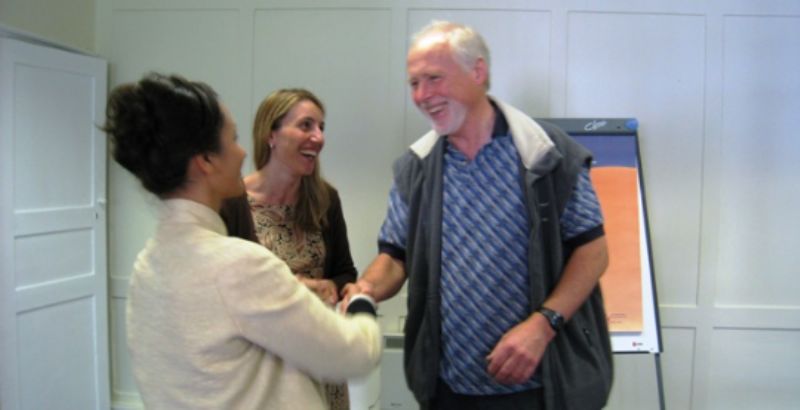
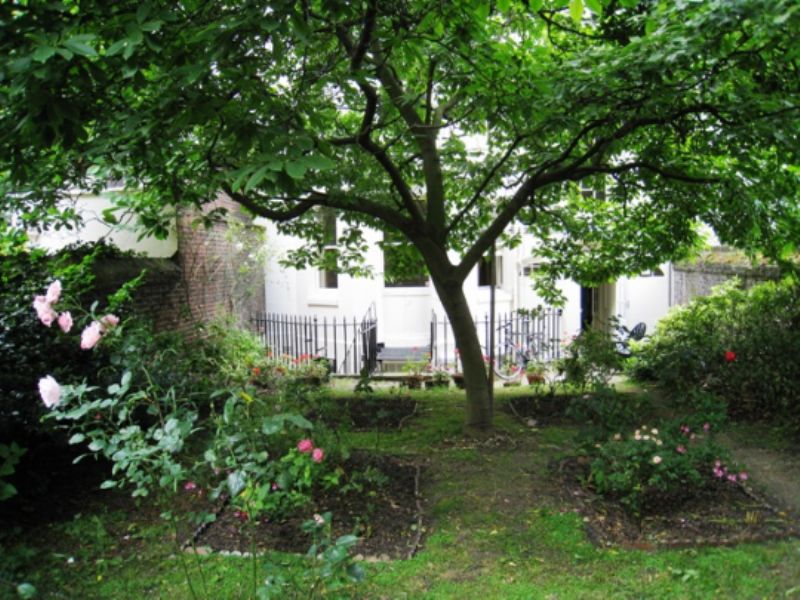
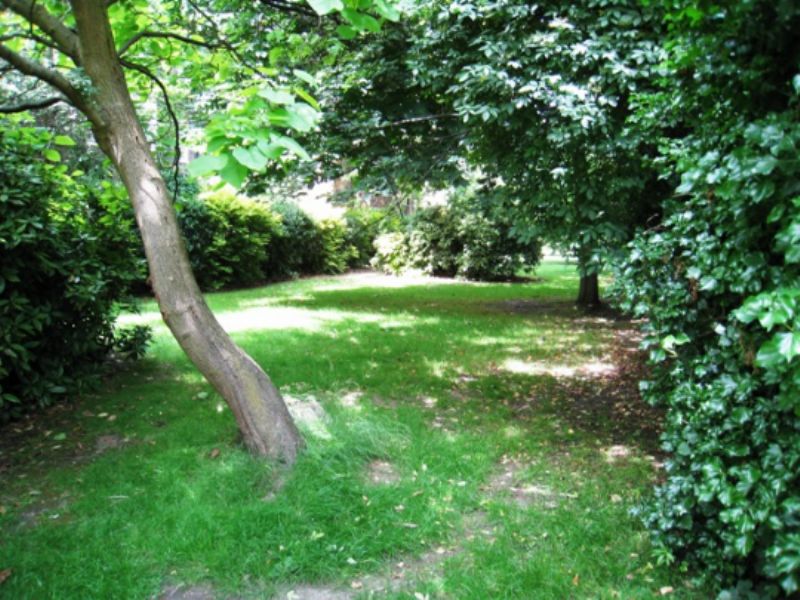
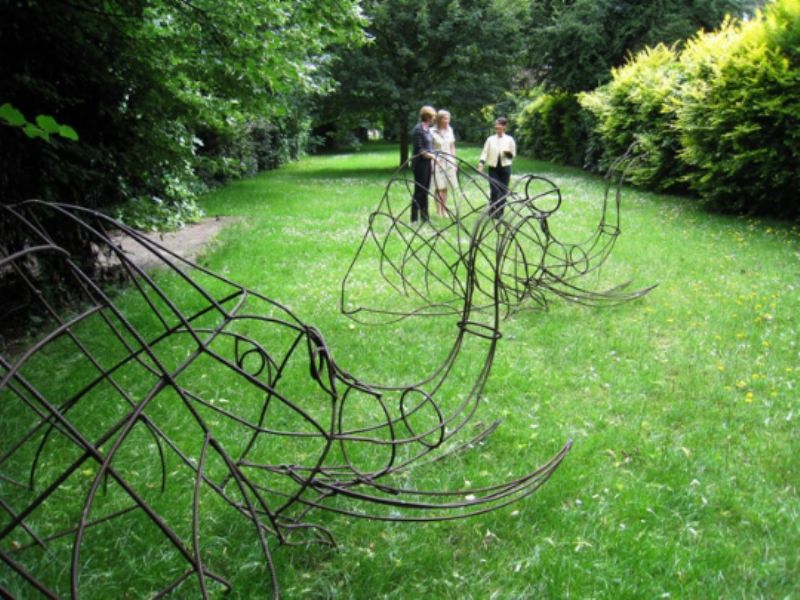
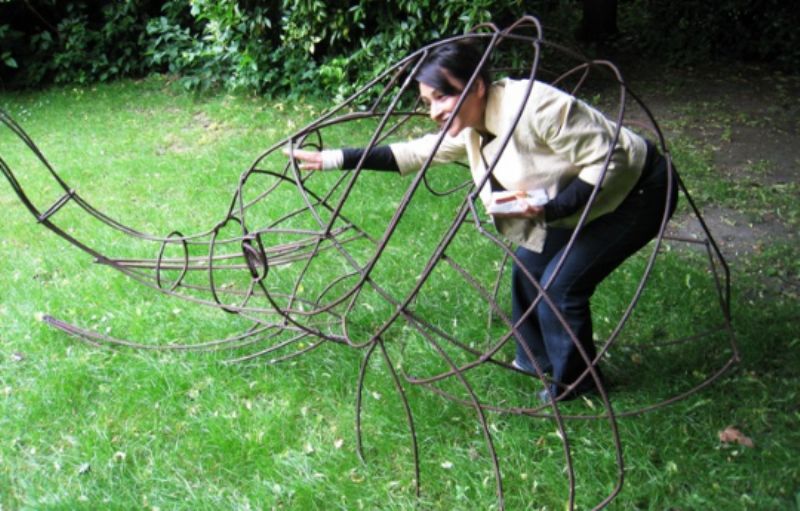
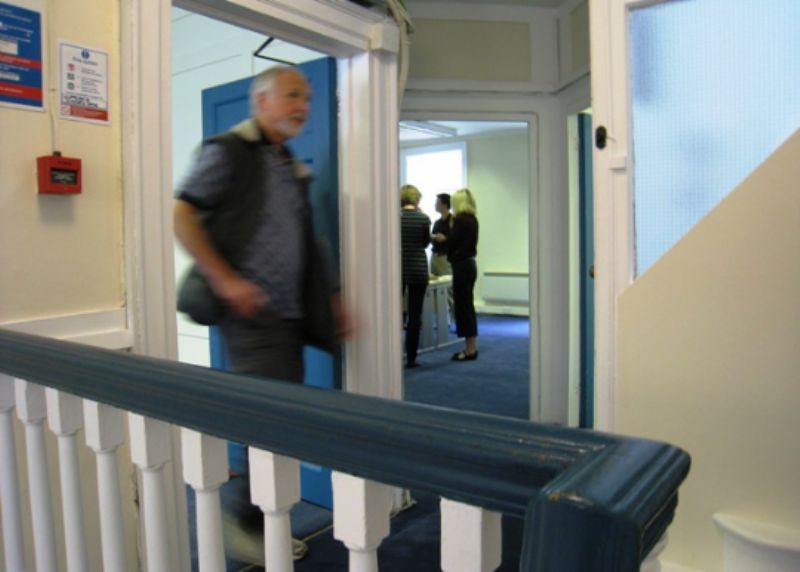
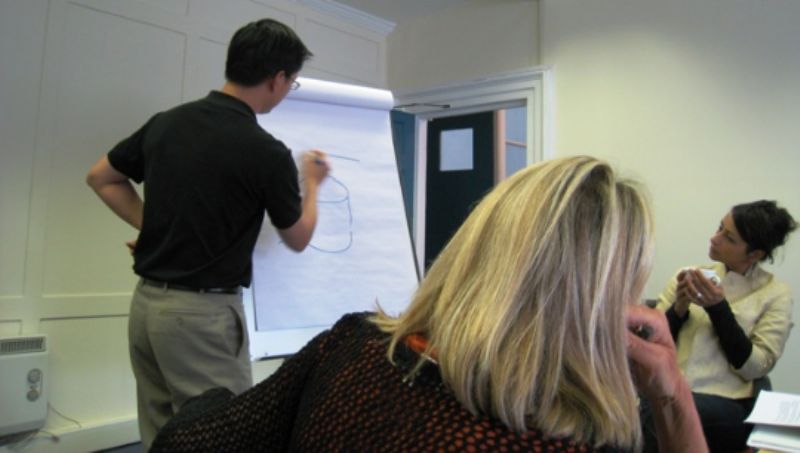
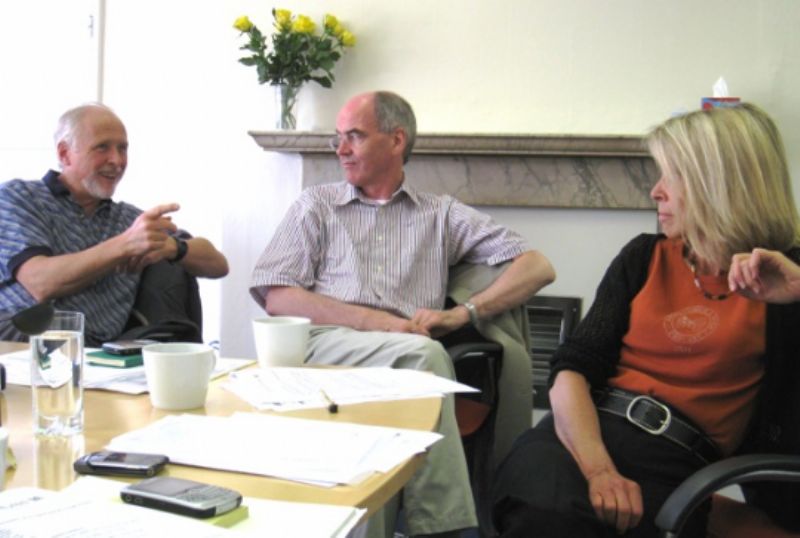
A dozen of us (Charmian Love, Sam Gray, Martin Hartigan, Pamela Hartigan, Sam Lakha, Mark Lee, Geoff Lye, Astrid Sandoval, Kevin Teo, Sophia Tickell, Elaine and I) spent the day at 2 Bloomsbury Place, our new Volans office, the first of two Away Days. Part way through, Elaine spoke to someone from the Prospect office on the floor below – and discovered that, in addition to the building’s own garden, we have access to a quite extraordinary magic garden at the back, which – among many other delights – contains two elephant sculptures, presumably left by the people who were in our space before us, The Elephant Family.

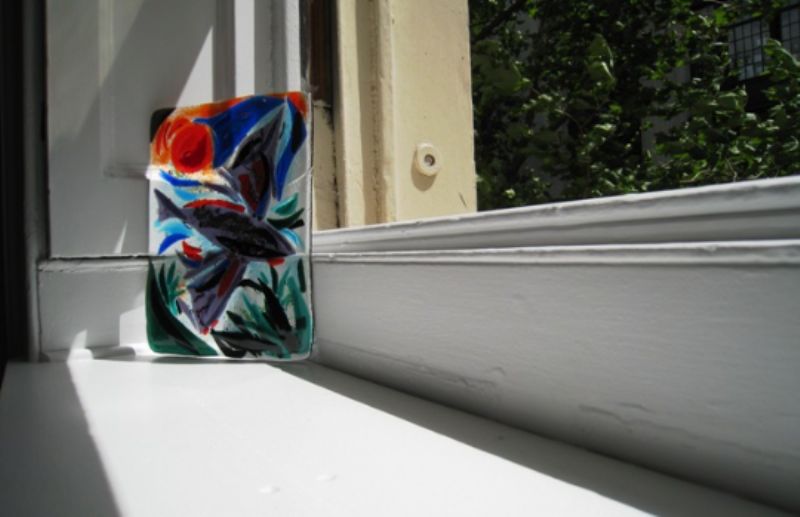
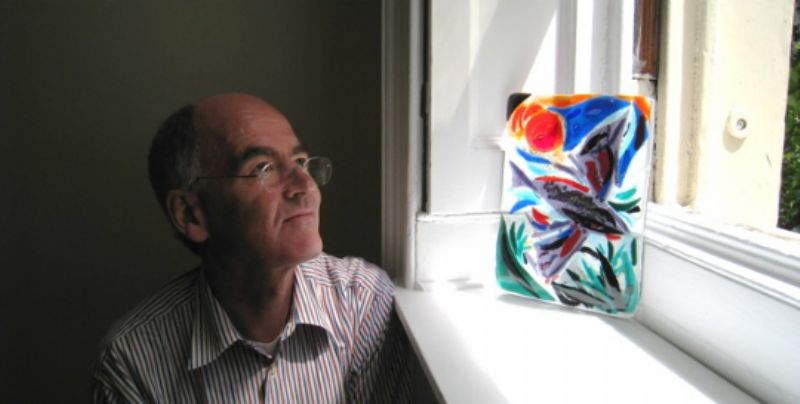
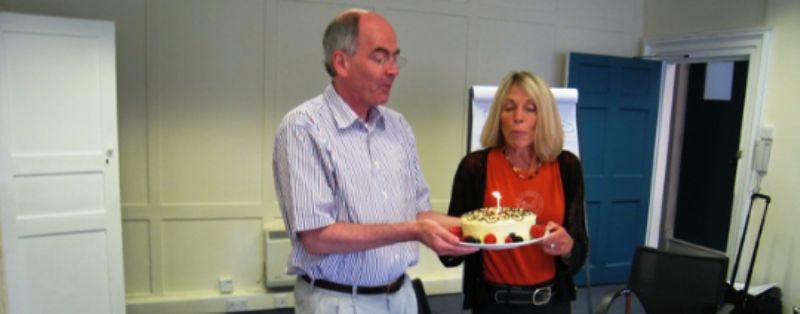
Among many other memorable aspects of the day, and part from the Magic Garden, three stand out for me: the beautiful ‘stained glass’ version of our flying fish that Kim (Russell) had made for me; the one-candle birthday cake that emerged out of a cupboard late in the day, celebrating my imminent 59th and (in my mind) the birth of Volans Ventures; and the small granddaughter of the people upstairs coming down dressed as Ginger Rogers, one of my all-time favourite screen goddesses. (Flying Down to Rio being one of my Top 16 ‘Desert Island Discs’.)

Oh and then, as Elaine and I walked back home by Barnes Pond, in a setting sun that turned the trees and grass into a a form of sensuround stained glass, a heron (my totemic bird) flew in and and landed in the reed-beds. Apart from one piece of bad family news for one of our number during the day, this was virtual perfection.
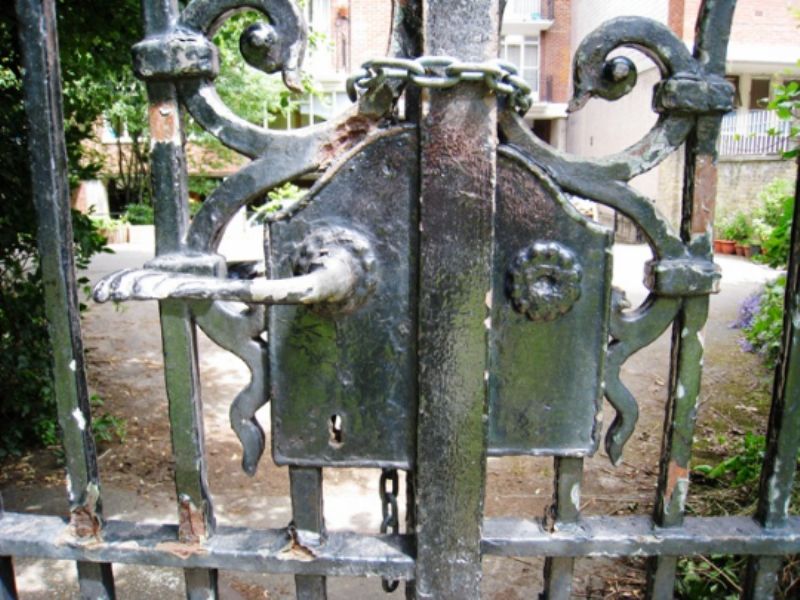
Still life Still life Sam, Astrid, Martin Sam, Astrid, Martin Flying fish 2 Flying fish 2 Flying fish 3 Flying fish 3 Elaine Elaine Garden Garden Further in Further in Elephants - with Sophia, Charmian and Sam Elephants – with Sophia, Charmian and Sam Trunk fondling Trunk fondling Sam in the belly of the beast Sam in the belly of the beast Lock Lock Wildflowers Wildflowers Martin emerges Martin emerges Kevin demonstrates Kevin demonstrates Martin, me, Pamela Martin, me, Pamela Blowing out the candle Blowing out the candle Unused to cameras as I am ... Unused to cameras as I am …



Kurzweil, Wolf and Stern surf Wave 4

John Elkington · 15 June 2008 · Leave a Comment

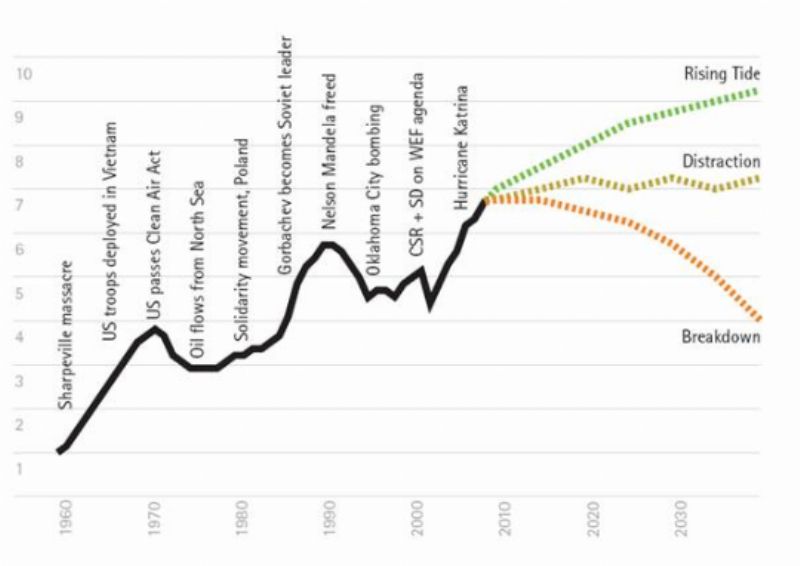
Ahead of a Volans team session at the end of this coming week, I have been trying to clarify my thinking on how I want to spend the next couple of years.  Yesterday, in ongoing conversation with the wider Volans team, I concluded that central to my mission and vision is the notion of mapping, connecting with and supporting the innovators and entrepreneurs who are at – or who are moving towards – the leading edge of the fourth wave in the model of change I began to map out in 1994 (see below for latest, summary version).

 The characteristics of Wave 4, at least in my mind, are – among many other things – a growing focus on disruptive innovation and scalable entrepreneurial solutions to the world’s great governance, economic, social and environmental challenges.

So two stories from today’s papers struck home as I read the papers today.  The first, from the New York Times supplement in The Observer, featured the thinking of Ray Kurzweil – and his notion that the Law of Accelerating Returns will mean that the solutions will emerge far faster than we might currently imagine.  The key point he makes, whether in relation to human genomics, life extension or solar solutions for climate change, is that: “Scientists imagine they’ll keep working at the present pace.  They make linear extrapolations from the past.  When it took years to sequence the first 1 percent of the human genome, they worried they’d never finish, but they were right on schedule for an exponential curve.  If you reach 1 percent and keep doubling your growth every year, you’ll hit 100 percent in just seven years.”

Of course, what goes up can also come down, and exponential curves can take us places we absolutely don’t want to be. Waves can develop vicious undertows that drag would-be surfers into the depths, or or civilizations into a vortex of ecological decline.  This point was underscored earlier in the week by probably my favourite contrarian, Martin Wolf of the Financial Times.  He began: “Is it possible for the vast mass of humanity to enjoy the living standards of today’s high-income countries?”  Then he continued:  “This is, arguably, the biggest question confronting humanity in the 21st century.  It is today’s version of the doubts expressed by Thomas Malthus, two centuries ago, about the possibility of enduring rises in living standards. On the answer depends the destiny of our progeny. It will determine whether this will be a world of hope rather than despair and of peace rather than conflict.”

Wolf was drawing on a new book by Jeffrey Sachs, Common Wealth.  “The most illuminating concept,” Wolf note of the book, “is that of the ‘anthropocene’ – the era in which human activities dominate the world.  Peter Vitousek of Stanford University has documented the ways in which humanity has appropriated the bounty of the earth for its own use: human beings now exploit 50 per cent of the terrestrial photosynthetic potential; they have put up a quarter of the carbon di-oxide now in the atmosphere; they use 60 per cent of the accessible river run-off; they are responsible for 60 per cent of the earth’s nitrogen fixation; they are responsible for a fifth of all plant invasions; over the past two millennia they have made extinct a quarter of all bird species; and they have exploited or over-exploited more than half of the world’s fisheries.”

For entrepreneurial solutions to work, however, they have to be regulated, at least to a degree.  That’s where the governance element becomes crucial.  And that, in turn, is where the second piece of new today fitted in, at least in my mind.  Nick (now Lord) Stern is proposing the world’s first credit rating system for carbon offset in the developing world.  Given that it is estimated that perhaps two-thirds of some 3,000 offset projects being developed under the UN’s programme are, according to The Observer, “either late or will fail to deliver the promised carbon savings,” this idea (promoted by IDEAcarbon) is precisely the sort of market mechanism that I suspect will need to become much more common as the peak of Wave 4 eventually subsides and we move into the fourth downwave. Downwaves, as I often stress, is where the really useful work tends to get done.


Human Smoke

John Elkington · 15 June 2008 · Leave a Comment

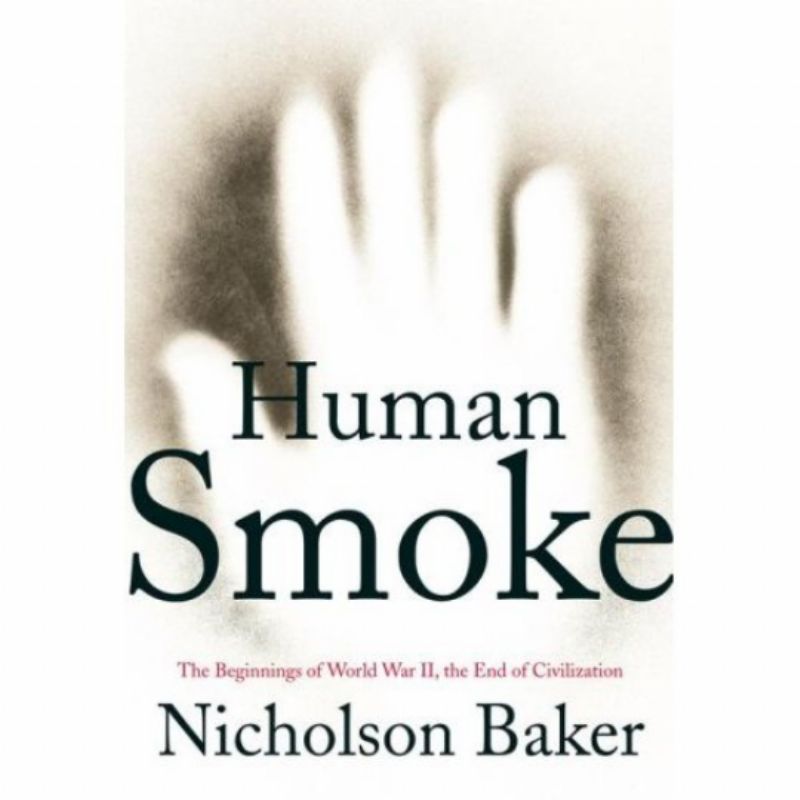
One of the books I bought in San Francisco recently was Human Smoke by Nicholson Baker, subtitled ‘The Beginnings of World War II, the End of Civilization.’  When one of the venture capitalists I was working with in Palo Alto asked me what the heap of books I was carrying included (I had turned down a bag) and heard this title and the book’s theme, he asked why on earth I would want to read another book on WWII?  Because, I said, it’s healthy to explore different perspectives on a period of history you think you know quite well.  

The title came from something one of Hitler’s generals, Franz Halder, told an interrogator – that when he had been imprisoned in Auschwitz towards the end of the war, “he saw flakes of smoke blow into his cell.”  He called it “human smoke.”

And how different Baker’s perspective proved to be, steeped in a pacifism that was largely boiled off in the white heat of war.  But full of sorts of things that were totally new to me.  A fascinating corrective to jingoistic interpretations of what happened, though I did fret at times that Baker’s dice were heavily loaded and that the reader could almost end up feeling sorry for poor Mr. Hitler.   


Skyscapes

John Elkington · 8 June 2008 · Leave a Comment

There’s no question that contrails are implicated in climate change, in various ways, but sometimes the skyscapes they create are wondrous things. Watched the male contrails unfurl across female clouds this weekend – and felt at peace with the world.


Camargo Correa

John Elkington · 30 May 2008 · Leave a Comment


Spoke at a lunch today hosted by Camargo Correa, a complex Brazilian group straddling areas like cement, construction, environmental engineering, textiles and footwear. Had met one of the shareholders, Renata Camargo Nascimento, a while back at an Alcoa Foundation event. With the aid of people like Carla Duprat and Ciro Fleury, she is encouraging the group down (or is it up?) the sustainability path. Among others, also met her daughter Luiza.

One of our challenges going forward, and particularly as SustainAbility does more work in countries like Brazil and India, will be to explore how best to help family-owned businesses like this. At least potentially, some of them could prove to have longer term time horizons than publicly listed companies.

As I left, Renata gave me a pack of information on Camago Correa – all contained in a large transparent bag, into which were inset a set of 12 flip-flops in different colours, symbolising one of their other businesses. And because the bag didn’t fit into my case, I carried it on top of my bags as I went through the airport later in the day. Remarkable how many people followed m pointing at the bag – and one very attractive woman even came up to me as I was about to go through security to ask me where I had got the bag? She wanted one, if at all possible. Felt as if I was trawling a succulently baited hook through the waters.

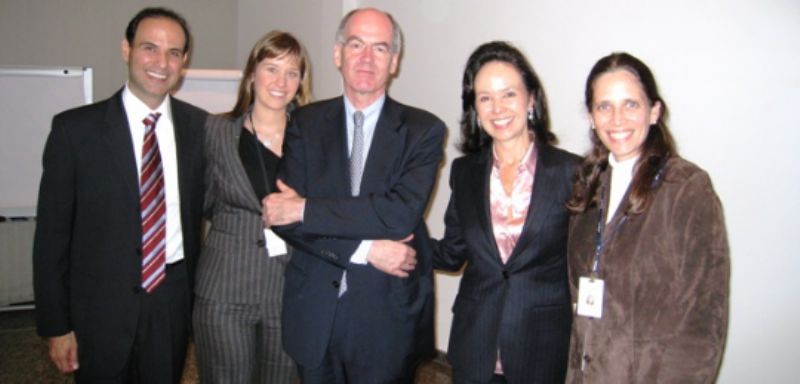
Ciro Fleury, Luiza Nascimento Marques da Cruz, me, Renata Camargo Nascimento, Carla Duprat Ciro Fleury, Luiza Nascimento Marques da Cruz, me, Renata Camargo Nascimento, Carla Duprat Bait Bait

One thing I signally failed to do in the speech, however, was to refer to a key project SustainAbility did recently for IFC. This report made the point that companies from emerging economies are increasingly making their presence felt in the global business community. Not only are they acquiring more and more companies in the developed world, but they are also pursuing strategies that are highly competitive with those of established businesses in western markets.

Market Movers: Lessons from a Frontier of Innovation explores whether such emerging economy firms are also managing to embed sustainability in their business strategies in ways that stand comparison with companies anywhere else in the world. It tells the stories of four firms ranging across the globe from Beijing to Sao Paulo – in many cases operating in some of the most challenging environments in which to foster commercial success – and how they have found business value in strategies based on sustainability.

The companies are: Amanco, a Latin American water pipe manufacturer that decided to develop a new water-tight technology and cater to low-income customers; Deqingyuan, an ambitious Chinese enterprise which supplies high-quality eggs in Beijing; Jubilant Organosys, an Indian chemical producer that has been able to reassure and attract investors with its high environmental, health, and safety record and efficient sustainability reporting; and MAS Holdings, a Sri Lankan apparel manufacturer that increased the retention of its mostly female employees by offering them benefits, including training courses in information technology. The company is now a supplier to some of the world’s leading retailers.

The report identifies a number of ‘ingredients of success’ – factors that contributed to the strong results in all four case studies and helped them overcome some of the constraints that many emerging-economy companies face. The five ingredients are :Leadership: the role of the chief executive or chairman in pushing through a strategy based on sustainability. Integration: the embedding of sustainability elements in corporate strategies from the very beginning. Innovation: using sustainability as a source of innovation. Differentiation: having the courage to be different. Quality of relationships: business benefits from strong relationships with stakeholders – suppliers, customers, employees.

  • « Go to Previous Page
  • Go to page 1
  • Interim pages omitted …
  • Go to page 120
  • Go to page 121
  • Go to page 122
  • Go to page 123
  • Go to page 124
  • Interim pages omitted …
  • Go to page 134
  • Go to Next Page »

Primary Sidebar

Introduction

I began this blog with an entry reporting on a visit to the Woods Hole Oceanographic Institution on Cape Cod, on 30 September 2003. The blog element of the website has gone through several iterations since, with much of the older material still available.

Like so many things in my life, blog entries blur the boundaries between the personal and the professional. As explained on this site’s Home Page, the website and the blog are part platform for ongoing projects, part autobiography, and part accountability mechanism.

In addition, my blogs have appeared on many sites such as: Chinadialogue, CSRWire, Fast Company, GreenBiz, Guardian Sustainable Business, and the Harvard Business Review.

Recent Comments

  • John Elkington on The Hill House Elkingtons
  • sally fitzharris. (Rycroft) on The Hill House Elkingtons
  • Thomas Forster on Reminder of Glencot Years

Journal Archive

About

John Elkington is a world authority on corporate responsibility and sustainable development. He is currently Founding Partner and Executive Chairman of Volans, a future-focused business working at the intersection of the sustainability, entrepreneurship and innovation movements.

Contact

john@johnelkington.com  |  +44 203 701 7550 | Twitter: @volansjohn

John Elkington

Copyright © 2026 John Elkington. All rights reserved. Log in