• Skip to primary navigation
  • Skip to main content
  • Skip to primary sidebar
John Elkington

John Elkington

A world authority on corporate responsibility and sustainable development.

  • About
    • Ambassador from the future
  • Past lives
    • Professional
      • Volans
      • SustainAbility
      • CounterCurrent
      • Boards & Advisory Boards
      • Awards & Listings
    • Personal
      • Family
      • Other Influences
      • Education
      • Photography
      • Music
      • Cycling
    • Website
  • Speaking
    • Media
    • Exhibitions
  • Publications
    • Books
    • Reports
    • Articles & Blogs
    • Contributions
    • Tweets
    • Unpublished Writing
  • Journal
  • Contact
  • Show Search
Hide Search

Search Results for: Tim elkington

Red Carpet For Steve Jobs

John Elkington · 19 October 2015 · Leave a Comment

steve-jobs-cartel-oficial-640x336

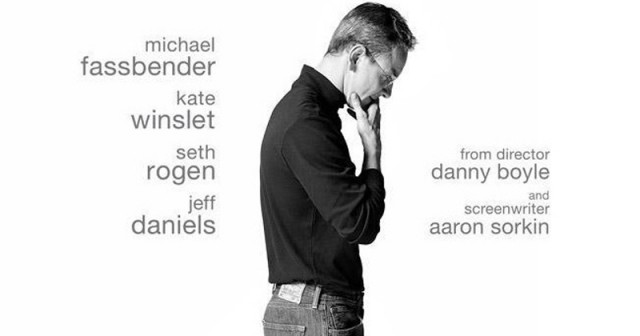
There’s a first time for everything, and tonight was the first time I had trod the fabled red carpet – as we made our way into the Leicester Odeon for the Closing Gala of the BFI London Film Festival. The film that closed out the Festival: Steve Jobs. And this was a hat-trick for film-maker Danny Boyle, in that his earlier films Slumdog Millionaire and 127 Hours had closed in previous years.

The stars were out in force this evening, including film-maker Danny Boyle, screenwriter Aaron Sorkin, and the big name actors like Michael Fassbender and Kate Winslet. And it was wonderful to watch them – Kate Winslet in particular – engage their audiences from the red carpet.

Result? Red carpet or no, Steve Jobs made it into my Top 5 films, ever.

Full disclosure: the tickets came via our eldest daughter Gaia and her boss, Christian Colson. She has worked with Christian and Danny more or less since the outset of the Slumdog Millionaire project. So interest declared, but I wouldn’t have said the same about Slumdog or 127 Hours. Loved both of them, but for me Steve Jobs was a stand-out production.

I was amazed how many people, including some of the cast, said they hadn’t known much about Jobs. I have bought Apple computers since the first Macintosh, which was the second computer Gaia and her sister Hania owned, after an Amstrad. The difference between the two machines was beyond measure, something delightfully captured in an early sequence with Jobs’s daughter Lisa, who unwittingly uses the machine to begin the long, Himalayan climb into her father’s heart.

The relationship between Jobs and his muse Joanna (Kate Winslet) is tough, challenging, loving, magical. Sir Jony Ive may say he doesn’t recognise Michael Fassbender’s version of Jobs, but hey, this is like a painting – a metaphor Jobs himself was apparently inclined to use.

And as a painting it’s a work of art, a work of collective genius.

As it happens, the only time I came across Sir Jony was at a conference where he was being interviewed by Al Gore, an Apple Board member. I asked a question about Apple’s problems with Foxconn in China – and I can only describe his reply as tetchy.

On the other hand, I recall, many moons ago, being alongside Steve Wozniak (played in the film by Seth Rogen) as our bags came off a flight at Heathrow, and he radiated warmth. In fact, he reminded me of Ben Cohen of Ben & Jerry’s, who I like and admire greatly.

I have no idea if the central collision between Jobs and Woz in this film was fiction or reality, but it rang true – and my sympathies were pretty much entirely with Woz.

But eggs and omelettes. Omelettes and chips. Jobs was a true, if flawed genius – in the film he admits that in certain respects he is “ill-made.” But that’s a key part of what makes him – and Danny Boyle’s film – so riveting. Red carpet or no, go.
 

Covestro, Giacometti, China, SSX And Steve Jobs

John Elkington · 18 October 2015 · Leave a Comment

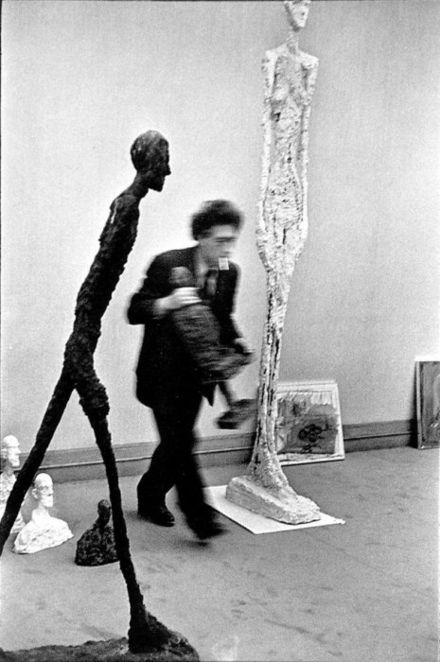
Photo of Alberto Giacometti by Henri Cartier-Bresson (via Wikipedia)
Shell Foundation 'mural'
Shell Foundation ‘mural’
Sun sets over London town

Quite a week, though not quite up to the one to come. Great Shell Foundation conference in Docklands on Monday. Theme: ‘Accelerating the Growth of “High-Impact” Markets to Serve Low-Income Communities.’ Caught up with a number of people I hadn’t seen for ages, but also met some fascinating new folk, including some at the reception later in the evening on the 30-somethingth floor of their Canary wharf tower, overlooking the wonders of London, the Thames and a setting sun almost worthy of the Impressionists.

Richard Northcote, who will play a pirate in  his daughter's end-of-term pantomime - against skull-and-crossbones wallpaper in Workshop Coffee, Clerkenwell
Richard Northcote, who will play a pirate in his daughter’s end-of-term pantomime – against skull-and-crossbones wallpaper in Workshop Coffee, Clerkenwell
A Futerra blackboard making its mind up

Wednesday included a great session with Richard Northcote and Stefan Koch of Covestro, c/o Futerra. Then, later in the day, a trip across to the National Portrait Gallery for an exhibition of the work of Alberto Giacometti, always one of my favourite artists. Invitation followed on from a conversation I had had in a car home (after the Crowd event dinner covered earlier) with Andrea Sullivan of Bank America Merrill Lynch, who are sponsoring the exhibition.

Elaine and I had to race around the exhibits after the speeches, though am utterly determined to go back, in order to be away in time to get to Notting Hill and a quite stunning dinner hosted by Peter Wheeler, now of the Nature Conservancy. It featured readings by a long-time friend, Jeanne-Marie Gescher, from her new book, All Under Heaven: China’s Dreams of Order (Kaduna House, 2015).

On Thursday I chaired an ‘away day’ session with the Admissions Panel of the Social Stock Exchange, working through how we best manage the growing number of applications to SSX. Then a dinner with SSXAP members around the corner from the Royal Exchange.

Yesterday, Saturday, was flat out getting speeches done for next week, when I give 6, and my diary takes me to places as diverse as Ely, Rome and Bristol.

Today, am just off a Skype call with Peter-David Pedersen, a conversation beamed directly into a Tokyo conference of next generation leaders who are now part of NELIS – which stands for Next Leaders’ Initiative for Sustainability. In my comments, I drew on some of the work we did some years back around the idea of a Future Quotient.

And then, this evening, thanks to an invitation from Gaia, it’s off to a premiere of Danny Boyle’s new Steve Jobs film, ahead of a week that I can hardly bring myself to think about …

Jieying's lilies bloom
Jieying’s lilies bloom

Sustainability’s ‘Super Sleuth’

John Elkington · 16 October 2015 · Leave a Comment

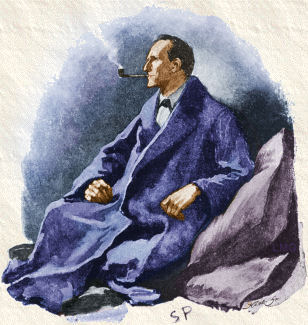
Sydney Paget illustration for The Man With The Twisted Lip, source Wikipedia
Sidney Paget image in The Man With The Twisted Lip: Wikipedia

It’s intriguing to see your life through someone else’s lens. Ethical Corporation has just published a profile of me by Oliver Balch, in the wake of their Lifetime Achievement Award. The article is behind a pay wall, but here are some highlights to suggest the tenor of the piece.

“Author, adviser, thinker, speaker: John Elkington has worn a variety of hats during his 40-year career,” the headline runs. “Linking them all is a quiet yet irrepressible passion for positive change

It continues: “Consultants come in many guises. The big shots with their swagger. The technocrats with their spreadsheets. The charlatans with their sweet talk. John Elkington, the 66-year-old founder of boutique consultancy firm Volans, is none of those things. In fact, there’s little initially that would suggest this softly spoken urban planning graduate has spent the best part of three decades visiting corporate boardrooms around the world (he previously co-founded and led the advisory firm SustainAbility).”

*****

Here are some other extracts:

“My theory of change is partly experimental,” Elkington says, admitting that he often finds himself in boardrooms not knowing “which buttons to press”. He’s also determined not to cast himself as a “missionary” consultant. He tells his clients explicitly to listen to other voices in addition to his: campaign groups, educators, activists: whoever out there is driving the agenda. Go speak to them, he says.

Unorthodox though his approach may be, it clearly works. Elkington has been invited to sit on some 30 advisory boards, including the likes of Nestlé and the UN-backed Global Reporting Initiative. His current client list includes corporate giants such as UK retailer Tesco and the Mexican bakery group Bimbo. There’s two other characteristics to his consultancy work. First, he has an aversion to quick fixes. Many of those on his client list – Novo Nordisk, Allianz, Covestro (formerly Bayer MaterialScience) to name a few – he has worked with for years.

*****

So what makes him in such demand? It’s not just that he has devoted his considerable energies and intelligence to the question of big business and its role in society for 40-plus years – although the accumulated wisdom and experience that this brings certainly helps.

It’s not even that he’s written 19 books, including Cannibals with Forks (which has spawned thousands of annual Sustainability Reports thanks to its promotion of the Triple Bottom Line concept) or The Green Consumer Guide (co-written with Julia Haines), which sold in its millions – although that helps too.

The reason that so many global business leaders have Elkington’s number in their phones is simple: he has an uncanny knack of cutting through the noise and seeing what’s important, why it matters and what – within reason – progressive businesses can do about it.

*****

The son of a British Second World War fighter pilot, Elkington speaks of “waves of pressure” facing the private sector. In the late 1960s, it was environmental legislation. Next came consumer and investor activism in the late 1980s. Globalisation (and its sidekick, anti-globalisation) followed a decade later. And finally came an era of “sustainability” ushered in by the threats highlighted by the 2007-8 financial crisis.

“One of the things that has spooked me over the decades has been when company people say, ‘We didn’t see ‘X’ coming until you flagged it up for us’.” He calls this gift his “waggle dance”, a reference to how honeybees indicate to the hive where to find food after returning from foraging. Elkington is sustainability’s ace forager.

He’s not about to stop now, despite having every reason to do so. No longer the “nearly communist” agenda it was seen as when he first started out, sustainability is now on every right-thinking business leader’s lips. Today, Elkington’s books are being read on core business courses and are night-time reading for many executives (The Power of Unreasonable People, published in 2008, was given to 3,000 delegates at the World Economic Forum’s Davos summit).

*****


He draws on a biological analogy. Consider a chrysalis (a metaphor Elkington explores in his 2001 book, The Chrysalis Economy). When a caterpillar enters its metamorphic stage, all its organs break down. In the consequent “slurry” are imaginal cells, which are “almost like floating blueprints” of the butterfly into which the caterpillar will transform.

*****

With this in mind, Elkington has big plans for his small team at Volans in the coming years. Engaging with those driving change is top of his list. They won’t be found in corporate boardrooms, he admits (although he’ll continue with C-suite consultancy work). It’s those positioned “to the side of these incumbents” where the action is: the R&D labs of synthetic biology start-ups, the entrepreneurs driving big and little data, the fringe businesses experimenting with cutting-edge digitalisation, and so forth.

The question he’s currently posing to himself and his team is how to distinguish between “change as usual” and change that is genuinely “breakthrough”. To facilitate that thought process, he encourages his colleagues to think of themselves as “ambassadors of the future”. Imagine travelling back to today from 2050, say: what has driven change between now and then, and where therefore can they best invest their energies now to promote that change?

*****

As a taster of what might be to come, Volans is planning to dramatise its latest report, called The Stretch Agenda. Whether it will take the shape of a play or another form of theatre, Elkington isn’t sure yet. Another possible direction for the project is as a framework for business role-playing exercises. Elkington’s contribution over the past four decades in challenging and shaping the role of business in society cannot be overstated.

*****

Nor is his input over by any means. For this remarkable writer, adviser and thinker, the process of change is open-ended. “I don’t think at any point I’ve thought, ‘If we get to ‘X’ in 10 years from now, the problem will be solved’. I’ve always felt that this is something that is massively evolutionary and that where some of the solutions will come from is totally unexpected.”

There are many adjectives to describe Elkington: humble, insightful, dogged, imaginative and principled are just a few. Perhaps the best descriptor of all, however, is “open” – open to ideas, open to the possibility of failure, open to others and, most importantly, open to the unexpected.

*****

For the full interview, see here.

Novo Nordisk CEO Carries TBL To Very Top

John Elkington · 13 October 2015 · Leave a Comment

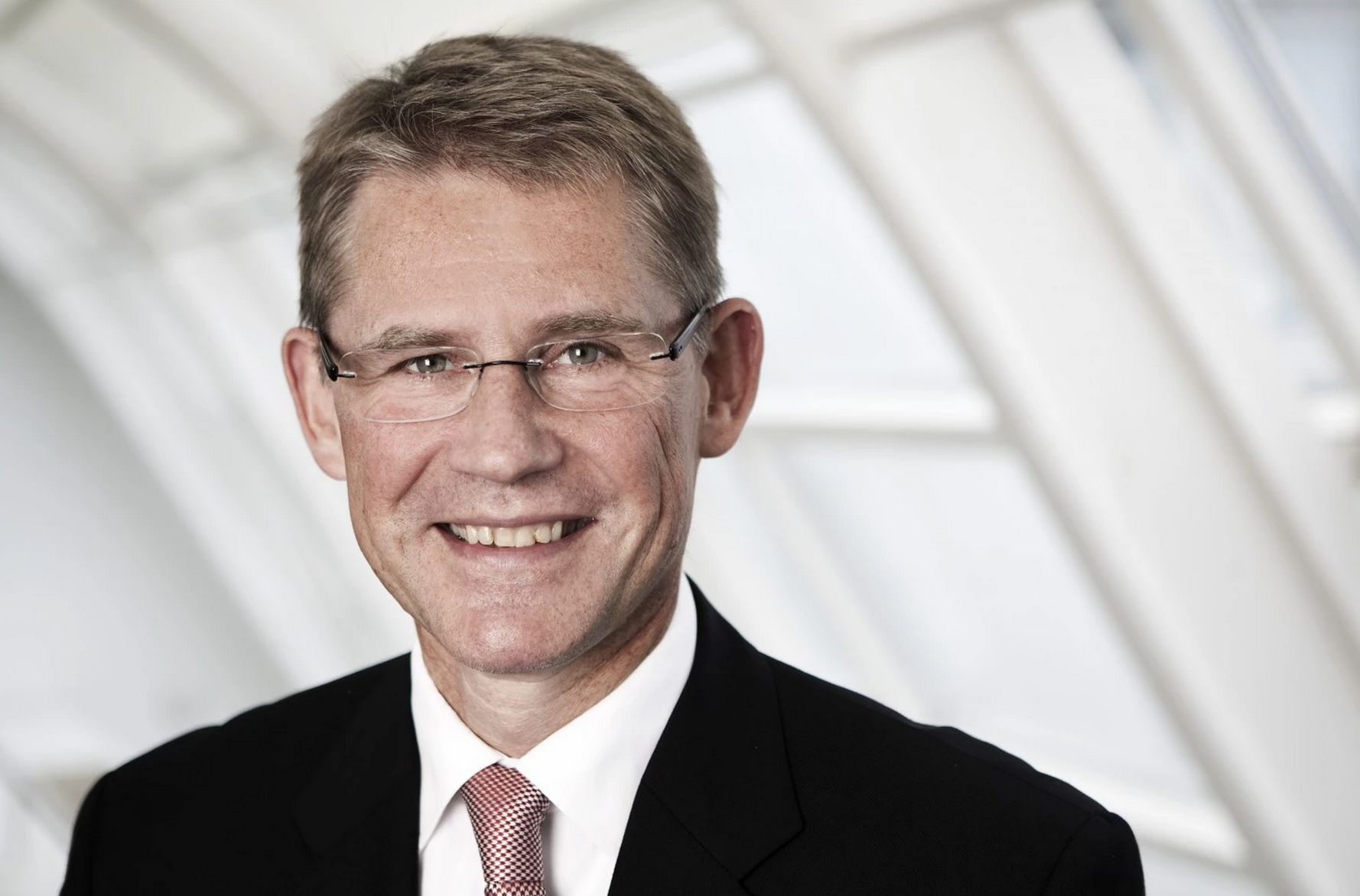
Lars Rebien Sørensen, courtesy of Novo Nordisk

Thrilled to see Lars Rebien Sørensen, CEO of Novo Nordisk, listed as the world’s best-performing CEO in today’s Financial Times – and mentioning the triple bottom line as central to the company’s credo and ethos.

As it happens, I had a call today with Steffen Nielsen of Novo Nordisk on the work they are doing with Cities Changing Diabetes to get cities around the world to tackle the diabetes time-bomb, ahead of a couple of city-oriented conferences I have to speak at, and it provided yet more evidence of how hard-wired all of this is into the company.

Full Stops By Primo Levi And Ted Hughes

John Elkington · 10 October 2015 · Leave a Comment

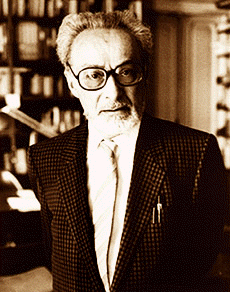
Primo_Levi

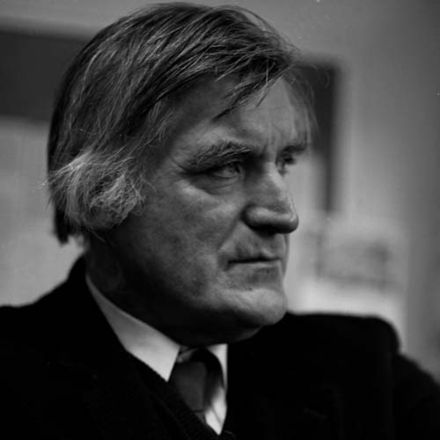
440px-Ted-Hughes-March1993


Just watched the BBC2 programme, Ted Hughes: Stronger Than Death. Stunning. Frieda Hughes wonderfully engaging. Have always felt profoundly privileged to have been mentioned in one of his poems, written as Poet Laureate.

In The Letters of Ted Hughes (Faber & Faber, 2007) , edited by Christopher Reid, Hughes writes to Michael Hamburger on 12 September 1987 (page 538). He mentions reading my book, The Poisonned Womb (sic, his misspelling). “Read it,” he suggests, “& gain a head of perfectly white hair.”

Then an odd concatenation this week. Talking with Covestro CEO Patrick Thomas yesterday, we were exploring the carbon cycle, and he explained the last essay in Primo Levi’s book The Periodic Table. He noted that chapter 21 of the book was on Carbon, and ends with the carbon atom in question contained in the full stop at the end of some text.

And that reminded me of the trick Ted Hughes played in writing about The Poisoned Womb. In dropping a comma and full-stop at key points, he slyly referenced the sperm and the egg.

I wonder how many readers of The Times  noticed that about the poem when the newspaper published it? (I think I only spotted it when I read the poem later in his 2003 Collected Poems.)

Not one of his finer pieces, but how extraordinary to be trapped like a fly in the amber of his otherwise genius.

(Both images courtesy of Wikipedia.)

  • « Go to Previous Page
  • Go to page 1
  • Interim pages omitted …
  • Go to page 63
  • Go to page 64
  • Go to page 65
  • Go to page 66
  • Go to page 67
  • Interim pages omitted …
  • Go to page 134
  • Go to Next Page »

Primary Sidebar

Introduction

I began this blog with an entry reporting on a visit to the Woods Hole Oceanographic Institution on Cape Cod, on 30 September 2003. The blog element of the website has gone through several iterations since, with much of the older material still available.

Like so many things in my life, blog entries blur the boundaries between the personal and the professional. As explained on this site’s Home Page, the website and the blog are part platform for ongoing projects, part autobiography, and part accountability mechanism.

In addition, my blogs have appeared on many sites such as: Chinadialogue, CSRWire, Fast Company, GreenBiz, Guardian Sustainable Business, and the Harvard Business Review.

Recent Comments

  • John Elkington on The Hill House Elkingtons
  • sally fitzharris. (Rycroft) on The Hill House Elkingtons
  • Thomas Forster on Reminder of Glencot Years

Journal Archive

About

John Elkington is a world authority on corporate responsibility and sustainable development. He is currently Founding Partner and Executive Chairman of Volans, a future-focused business working at the intersection of the sustainability, entrepreneurship and innovation movements.

Contact

john@johnelkington.com  |  +44 203 701 7550 | Twitter: @volansjohn

John Elkington

Copyright © 2026 John Elkington. All rights reserved. Log in