Thursday, September 29, 2005
YALE
Walked off the red-eye at JFK in surprisingly good fettle, after a couple of hours of sleep at best, and was sped north to New Haven and Yale in a Lincoln Town Car. Picked up from the hotel by Monica Araya, who is doing a PhD on corporate transparency and accountability – and played a key role in organising the event I am due to speak at later in the day.
Then was shuttled – on occasion in heavy rain driving almost horizontally – between sessions with James Gustave Speth (Dean of the Yale School of Forestry & Environmental Studies), Daniel Esty, who runs the School’s Center for Environmental Law and Policy (http://www.yale.edu/envirocenter/) and a group of Faculty members and students, over lunch. Among them Reid Lifset, editor of The Journal of Industrial Ecology (see http://mitpress.mit.edu/jie).
Have known Gus since 1984, when we met at a UN Environment Programme conference in Versailles. In the mid-1980s, when he was still at WRI, he commissioned three reports from me between 1986 and 1989. These were all focused on the implications of a range of technologies for – and potential applications in – sustainable development: Double Dividends focused on genetic engineering and wider forms of biotechnology, The Shrinking Planet on computing and remote sensing technologies, and Cleaning Up on waste management technology (http://johnelkington.com/pubs-reports.htm).
One of the things we talked about was the School’s planned new building project, the Kroon Building. This is being designed by Britain’s Hopkins Architects (http://www.hopkins.co.uk), who also designed London’s new Parliamentary Building. But why didn’t a US firm get the prestigious project? The asnwer is that the EU – and UK – are seen as taking the Kyoto Protocol on climate change much more seriously, with the result that levels of energy efficiency and building sustainability are higher than in the US. A US firm that had competed for the project, Centerbrook Architects and Planners, agreed to take on the role of executive architects instead of designers, something they had never done before. “We really felt there was a lot to be learned here,” explains Centerbrook partner Mark Simon (see Environment Yale, Spring 2005).
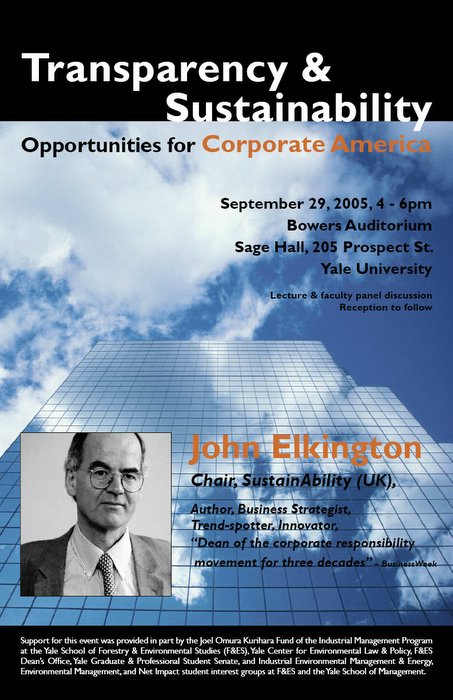
Then later the same afternoon I spoke at the 2-hour, standing-room-only session in the Bowers Auditorium, advertised in the poster below. It was kicked off by Dan Esty (who I first some years back through the World Economic Forum) and ended with a panel discusion with three key Yale people in this area: Marian Chertow, Director of the Industrial Environmental Management Program (http://www.yale.edu/environment), Brad Gentry, Project Director, Private International Finance and the Environment Project (http://www.yale.edu/forestry/bios/gentry.html) and Nat Keohane (Assistant Professor in economics at the School of Management). The debate was astonishingly polite and supportive, and I very much enjoyed the conversations afterwards with students from various departments. Then off to dinner at Zinc.
One of the most interesting things going on at Yale is Dan’s Environmental Sustainability Index (http://www.yale.edu/esi/). The 2005 Index, Benchmarking National Environmental Stewardship:The Environmental Sustainability Index, was released in Davos, Switzerland, at the annual meeting of the World Economic Forum on Friday, 28 January 2005. And now they are working on the 2006 Environmental Performance Index (emphasis is mine). For more, see http://www.yale.edu/epm. We shall be keeping a much closer eye on Yale, for this and many other reasons.
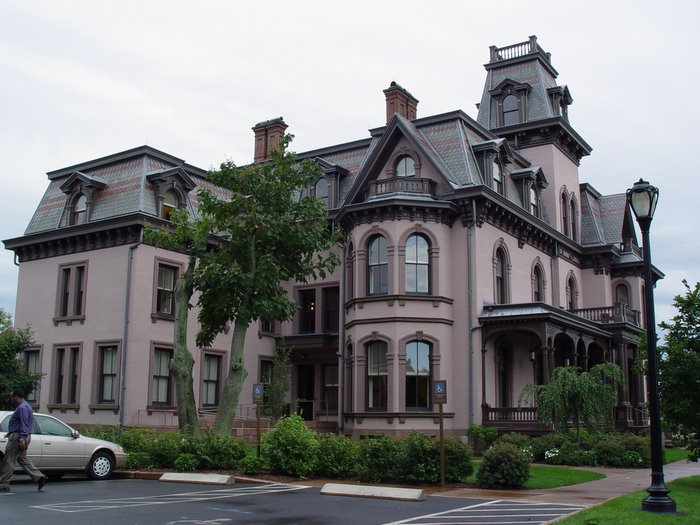
The building in which we visited Dan Esty, originally owned by the Winchester rifle family – and, when abandoned for some time, apparently known as ‘The Frankenstein House’.
Wednesday, September 28, 2005
POST NIKE, JETBLUE RED-EYE
Waiting for the red-eye jetBlue flight from Portland to New York, at around midnight. Having flown out to Oregon on Monday, I have spent two days with Nike’s corporate responsibility team, their first offsite meeting (of over 100 people) for some years. Wonderful opportunity to catch up with the likes of Hannah Jones and Sarah Severn, who have been key in driving the corporate responsibility agenda within the company. Fantastic atmosphere and a growing sense that Nike has turned the corner with their 2004 corporate responsibility report, which I read again on the flight out (http://www.nike.com/nikebiz/nikebiz.jhtml?page=24). Extraordinary, particularly if you think what even leading companies were proeared to reveal (very little) when we started off on the reporting beat back in the early 1990s.
But one of the most interesting things for me was to hear more about Nike’s ‘Considered’ product line, which aims to embed sustainability factors from the outset and throughout the product life cycle (http://www.nike.com/nikebiz/nikeconsidered/). Had a great lunch with John Hoke, Vice-President for Footwear Design, whose interest in sustainable design could well hold the seeds of a very different Nike. In terms of life cycles, one of the outside exercises included everyone being instructed to form a line from those born longest ago to those born most recently. I was No. 3 at the grey/gray end of the line. As someone kindly (but accurately) pointed out, the only thing beyond us was a grave-shaped heap of earth.
The off-site was held in one of an extraordinary chain of hotels, the McMenamin Historic Hotels – specifically, in the McMenamin Edgefield (http://www.mcmenamins.com/index.php?loc=3&id=44). For the US, this was seriously eccentric. Originally a ‘poor farm’ for distressed people during the Depression and an insane asylum. In the grounds was a giant orange-red water tank on stilts and my favourite of many murals inside the main building was a vast painting around a staircase of two old ladies in their nighties, sitting astride the water tower as it turns into a rocket and blasts into the starry night sky. Slight shock to find that the facilities were somewhat remote from the bedrooms and shared, but nothing to what people went through in the 1930s!
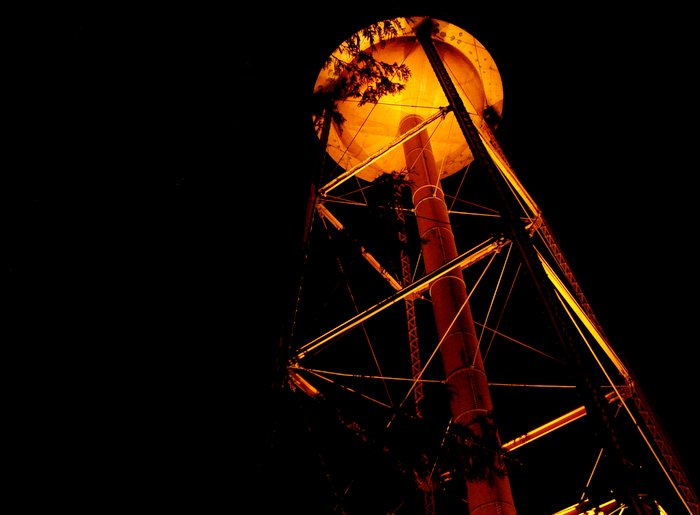
Water tower
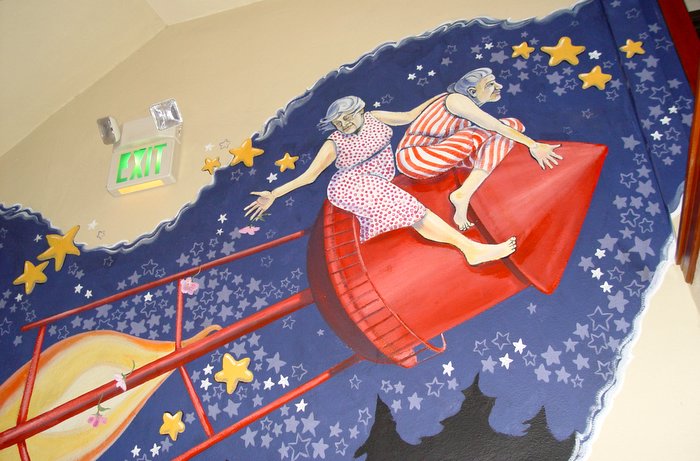
Rocketing up
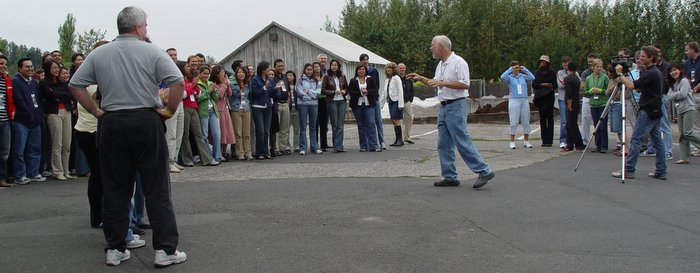
Dusty Kidd orchestrates a session voting on likely outcome of World Cup football
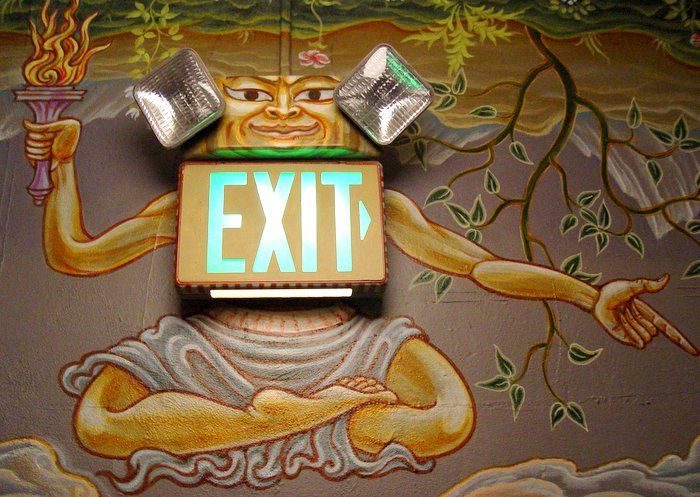
Exit

Detail of painting on my bedroom door!
Saturday, September 24, 2005
JEREMY CLARKSON’S LOATHING
Well, at least it’s mutual. Jeremy Clarkson – of BBC’s Top Gear motoring programme – confessed this evening to a “deep-seated loathing of environmentalists.” If you haven’t come across him, try http://www.bbcworld.com/content/template_clickpage.asp?pageid=2231. He’s the one who has declared that he wants to run over cyclists who run red lights. I think that cyclists should have lights and obey the Highway Code, but his boorishness is increasingly shading into the area of generational war-crimes. His stance on issues like SUVs and climate change, for example, is several light-years to the right of George W. Bush.
This evening, while looking for a programme on the Waffen SS, we accidentally switched into a Clarkson program that wasn’t billed in the listings, and it turned out to be surprisingly interesting. He was tracing his ancestors and discovered that the inventor of the Kilner Jar was among them.
He drove around the country in his RangeRover SUV, archly wondering what had happened to the billions that “should have been his.” Ironically, he found that the Kilners (who pumped out smoke 24 hours a day, 7 days a week, because they couldn’t shut down their furnaces) had lost a major pollution battle with a neighbour, the Earl of Scarborough. The judge (who Clarkson groaned must have been related to UK environmentalist Jonathon Porritt) ruled that “no man has the right to interfere with the supply of clean air.” And the final irony? Clarkson found that the site of one of the key Kilner factories was later home to the (now defunct) Earth Centre, a self-styled Mecca for environmentalists which failed to attract enough to make a go of things.
It was somewhat surprising that Clarkson didn’t make more of that failure. The sad history of the Centre is summarised by Wikipedia (http://en.wikipedia.org/wiki/Earth_Centre,_Doncaster). I remember the days when Jonathan Smales, the driving force behind the Centre, came around to SustainAbility’s offices in The People’s Hall, near Latimer Road, looking for help. And it’s interesting that the Eden Project, founded by Tim Smit and crew, has done much better – largely because it has been much more commercially minded.
It’s genuinely sad that in Clarkson’s brain it seems to be a Manichean universe, in which it’s a battle to eternity between enterprise and environment. Particularly since that’s what seems to have killed his ancestors’ business. Maybe the incapacity to spot what is going on in the wider world is genetic, a function of the inbreeding he implicitly referred to when he said that all his ancestors on one side of the family seem to come from the same village? The programme ended with a flashover between a photo of the ancestor most directly implicated in the failure of the family business, who looked as if he had been born and bred in the Appalachians, and a picture of a youthful Clarkson, with long curly hair – and looking as if he had jumped a century. Maybe one of his glass-making ancestors stumbled on a recipe for time travel? If so, future generations must hope that the Clarksons have lost the keys.
AMBELOPOULIA
As I sat in the garden this afternoon, enjoying the waning days of the British summer, and catching a breath between writing tasks, one of our two robins came and sat alongside, singing its heart out. Which reminded me of the photo in an article in today’s Independent covering the illegal ambelopoulia trade in Cyprus. It showed a robin dangling upside down from a ‘lime stick’ in Cyprus.
According to the RSPB (http://www.rspb.org.uk/international/illegal_hunting/cyprus/index.asp) , around 3.7 million birds are shot every year, of which some 750,000 are shot illegally. Small birds, and especially blackcaps, migrating through Cyprus are trapped for sale nationally as the Cypriot food delicacy, ambelopoulia. When Elaine and I were in Northern Cyprus earlier in the year, we were struck by the absence of bird-song in many areas.
The technique used to catch the birds is particularly repulsive. The preparation of ‘lime sticks’ involves coating a pomegranate branch with a sticky resin. The birds land on the branch, become stuck and many gnaw off their own legs in their efforts to escape. The numbers of bird deaths caused in this way have been cut dramatically in recent years, but RSPB-funded BirdLife Cyprus (http://www.birdlifecyprus.org/) stresses that the trade still operates in high gear – hardly surprising given that a dozen of these small birds now sells for £22.
Wednesday, September 21, 2005
WEEE ARE THE WORLD
Slightly odd concatenation of circumstances today. After a morning spent planning future issues of SustainAbility’s newsletter, Radar (http://www.sustainability.com/insight/radar.asp), I travelled across to Docklands for the latest meeting of the ECGD Advisory Council. Then back to John Adam Street for the Royal Society of Art’s evening debate on enterprise and the Society’s five Manifesto Challenges (http://www.rsa.org.uk/events/detail.asp?eventID=1739). On a panel with Baroness Glenys Thornton, (Chair, Social Enterprise Coalition), Valerie Bayliss (Director, RSA Opening Minds Project), Richard Murphy (founder, Tax Justice Network) and, in the chair, John Knell (Director of the Intelligence Agency).
At one point, I used a slide of the WEEE Man (http://www.thersa.org/projects/weee_man.asp), which the RSA has organised to dramatise the volumes of electrical and electronic waste each of us produces over a lifetime. Then home, where I discovered that the second of the columns that I do with Mark Lee for Grist has just been posted (http://www.grist.org/biz/fd/2005/09/20/weee/). And the subject is the WEEE Directive and various other EU laws that are helping shape international markets – though the press today carried the story that the EU’s new air quality proposals have just been watered down following industry pressure.
Tuesday, September 20, 2005
CLEANTECH
Among a blizzard of meetings today, had a fascinating session with Nick Parker of Cleantech Ventures (http://www.cleantech.com/), who I have known for years. Have been getting a number of invitrations from this sector recently, which is erupting in the sustainability space. It’s fascinating how the ‘cleantech’ language is coming up the curve, very much like biotech in the 1970s and 1980s. One of the concerns must be another ‘tech bubble’, but cleantech potentially represents a big jump forward from the more traditional slow growth, engineering dominated markets (e.g. waste management) to a whole raft of new, potentially much higher growth opportunity spaces ( he instances solar). Nick sees all of this as reflecting a switch from regulatory drivers to market drivers, from concerns about compliance to growing interest in productivity, and from end-of-pipe to front-of-pipe.
Saturday, September 17, 2005
DAVID PEARCE
Very sorry to read today in The Independent of the sudden death of Professor David Pearce (http://www.econ.ucl.ac.uk/davidpearce.php), someone I had known since the early 1970s. His work on environmental economics and insistence on the primacy of markets in dealing with environmental problems had a major influence on my own thinking. His Blueprint for a Green Economy, written with Anil Markandya and Ed Barbier, was published in 1989, the year after our own Green Consumer Guide appeared. We shared membership of the UN Global 500. At a time when I’m trying to get SustainAbility to focus more on economics, he’s someone I’d have tried get to help us, yet another reason to regret his passing.
CANCER ARMADA
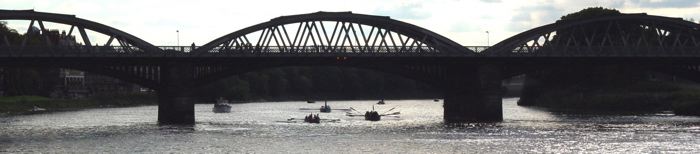
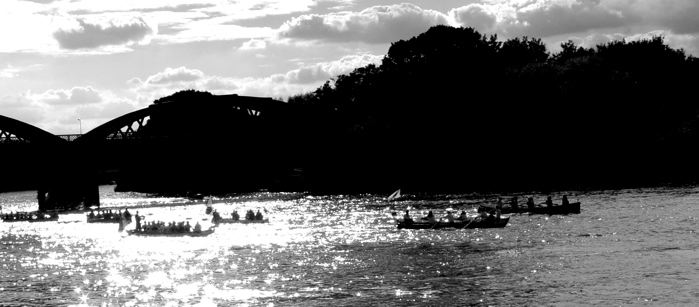
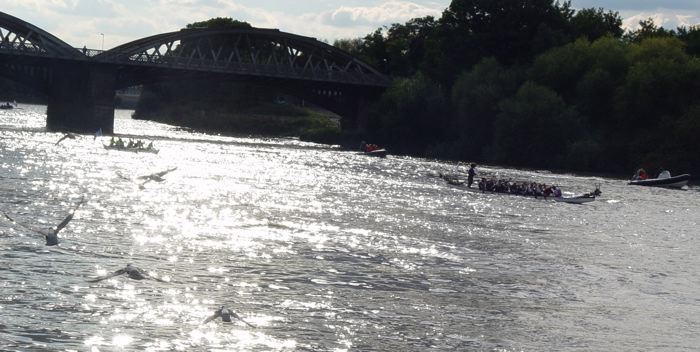
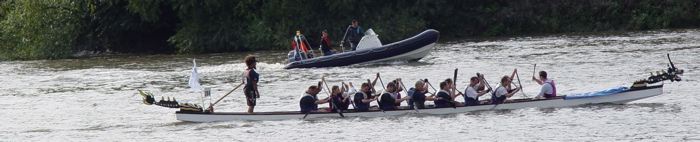
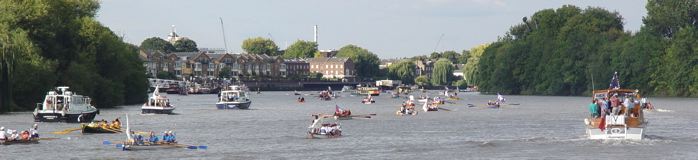
We had read that today would see a Richmond-to-Greenwich armada of boats, but thought we had missed it. Then Elaine and Gaia called as they headed across to Waitrose to say that the tail end was still passing on the Thames, a block or two away. I cycled over to the river wall and caught a few last boats making their way east. This was the 22-mile Trafalgar Great River Race along the Thames – to help people living with cancer. The event is now in its eighteenth year (http://www.macmillan.org.uk/news/news.asp?nid=1758).
Hania also called this morning to say she was on her way home after completing the 17-mile through-the-night walk around London to raise money for the Maggie’s Centre movement (http://www.maggiescentres.org/). The walkers were treated to visits to a number of key buildings as they wended their way, including City Hall. Belatedly, wish I had gone. A new Maggie’s Centre, designed by Sir Richard Rogers, has now got planning permission (http://www.richardrogers.co.uk/render.aspx?siteID=1&navIDs=1,6,12,1156). As I cycled back across Hammersmith Bridge last night, a stunningly beautiful moon was dropping out of the bottom of a plum-coloured cloud hanging over the Richard Rogers complex just to the east.
Friday, September 16, 2005
CNOOC VERSION OF HUMAN RIGHTS
According to FT.com, a senior executive at Cnooc, the Chinese oil company that failed to win buy Unocal earlier in 2005–which Mark Lee and I discussed in a recent Grist column (http://www.sustainability.com/news-media/news-resource.asp?id=349)–said political pressure to block China’s access to oil and gas abroad was a serious infringement of human rights. Yang Hua, the company’s chief financial officer and main negotiator with Unocal, said it was important for the world to grant both China and India, which are now major consumers of oil and gas, long-term energy security. “What is ‘human rights’? I’ll tell you what it means. It means having guaranteed access to energy. It means having petroleum to run your car.”
Thursday, September 15, 2005
DRAMA AT PERSIAN EXHIBITION
After lunch with triple bottom line expert Mark McElroy, I headed across to the British Museum to meet Elaine and see the Persian Exhibition. If I had paid to get in, I think I would have been disappointed, but dramatic events ensured we got in for free. The exhibits – some really extraordinary – were packed into a space that was extremely dark and seemed about the size of a modest London flat.
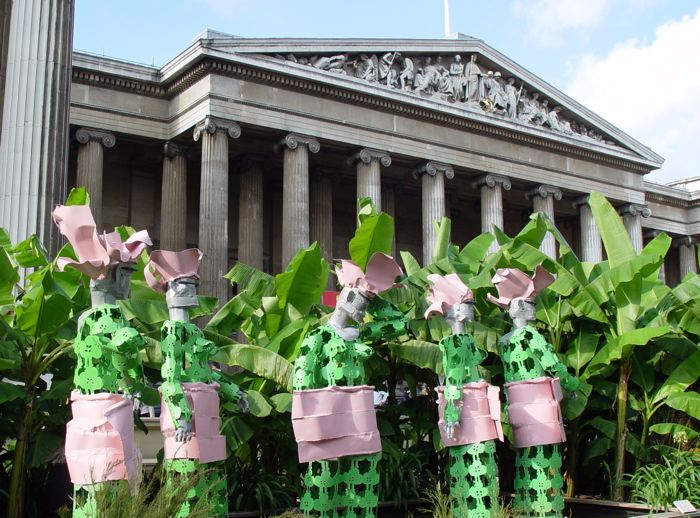
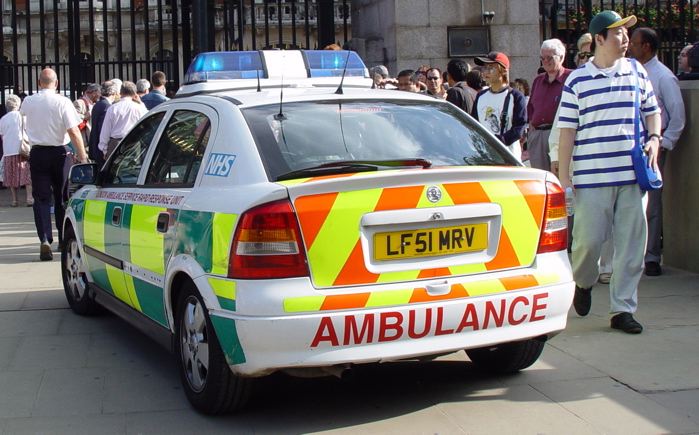
And the events? In a development worthy of Agatha Christie, someone either fell or was pushed from a great height inside the Museum and the whole place went into seizure as police cars and ambulances (van, car and motorcyle versions) began to arrive. Not sure whether the person died, but the gates were all closed and hundreds of people were trapped inside wanting to get out – and outside, still wanting to get in. Elaine and I wandered around the odd sculpture garden in front of the Museum, with its pink and green figures that also seem to have dropped from a height and then reassembled.
Various people then addressed the confused hordes, and from one of them I thought I gathered that someone had thrown a germ warfare weapon and that we were going to be held in quarantine. (True, I had been reading the September 19 edition of BusinessWeek earlier in the day, which explores the various crises that could further overwhelm US security processes, from a homemade nuke to terrorists pumping smallpox or Ebola into a subway or airport, so maybe my neurons were over-inflamed.) But God knows what non-English-speakers made of it all. In the end, we were all eventually released into the afternoon, with no further explanation.
Wednesday, September 14, 2005
HURRICANE JX-O
With Hurricane Katrina uppermost in many people’s minds, a different sort of Hurricane was in ours over the weekend, the Hawker Hurricane. Parts of my father’s Hurricane have been sent through to us over the years by archaeologists who found its wreckage deeply embedded in West Sussex farmland. And now WWII aviation simulators have been toying around with his machine and film-makers have been recording his experiences when he and his colleagues were involved in the Battle of Britain and, later, when they were transferring Hurricanes to the Russians via Murmansk and Archangel – and training Soviet pilots to fly them.
I hadn’t realised that pilots had their own identifiers painted on their aircraft. The one in which he was shot down on 16 August 1940 was JX-O, as was the subsequent machine he is pictured alongside (see below) when he returned to No. 1 squadron in October that year. And the same identifier now shows up on a virtual version of his original machine (see below) in a Battle of Britain game, thanks to American simulators.
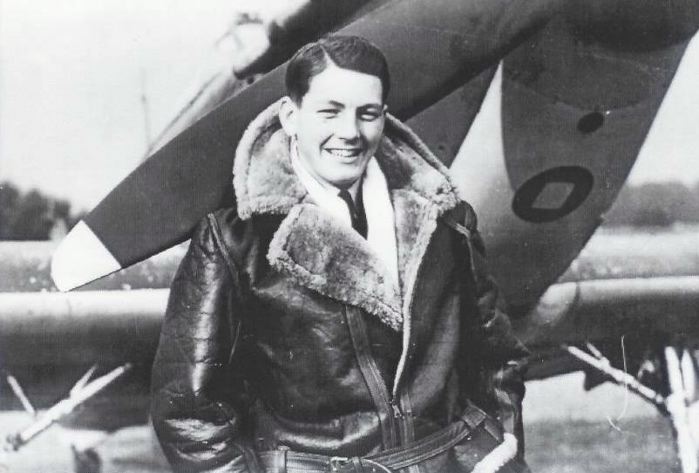
Tim Elkington and JX-O the second
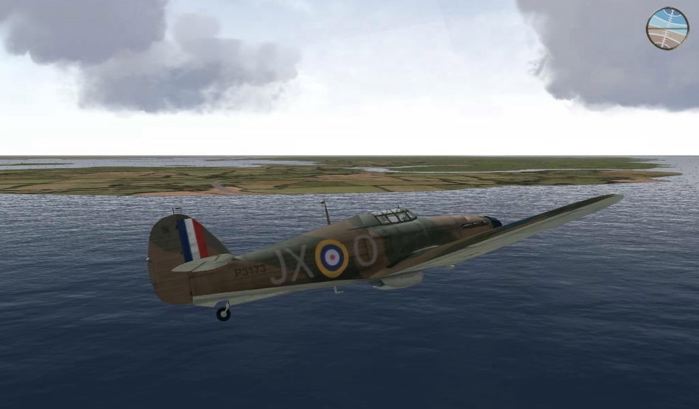
Computer simulation of JX-O in Russia, by Kevin Moffat
BA + BG OFFER CLIMATE OPTIONS
SustainAbility has long offset its carbon emissions, both directly and through a small surcharge on contracts. So it’s good to see two more UK companies offering customers the option of offsetting their carbon emissions, in this case via Climate Care. They are:
British Airways, which has launched a carbon offset scheme to enable their customers to offset the carbon emissions from their flights through Climate Care. Customers that book British Airways flights at www.ba.com can offset their carbon emissions via the booking confirmation form or at www.ba.com/offsetyouremissions.
British Gas, which has launched an initiative that gives their customers the chance to offset the carbon emissions from their gas and electricity use. The initiative, called ‘Climate Aware’, enables British Gas customers to offset their emissions using an online calculator. Customers who sign-up are also offered an energy efficiency audit to help them reduce emissions in the year ahead. British Gas customers can sign up to Climate Aware online at www.house.co.uk/climate
Monday, September 12, 2005
ASHES, BAILS, BALES & GRAVES
My mother Pat’s 83rd birthday, so Elaine and I had headed west last night to Little Rissington, to celebrate. During the morning, the three of us drove across to Burford, to buy her some birthday plants, and came back with a car-full.
Striking how much road-kill there is on the highways and byways: among other things, I saw dead representatives of the pheasant, fox, rabbit, rat and squirrel families. Not sure I wouldn’t prefer to be back in the pony-and-trap era: Pat remembers riding through country lanes in such a conveyance and having time to see and smell the wildflowers. Managed to slam the car into a shuddering stop on the way home, just past Burford’s old woolpack bridge, by shifting from third gear into Drive, something I don’t normally do, but had been experimenting down Burford’s steeply inclined main drag, conditions in which automatic Volvos seem to run away with themselves. The SUV behind me managed to avoid a metallic coupling with our rear end. I think I’ll be staying in automatic from now on.
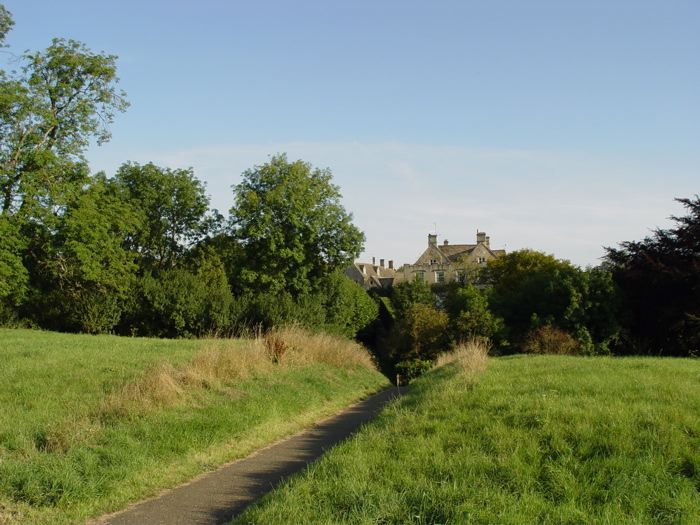
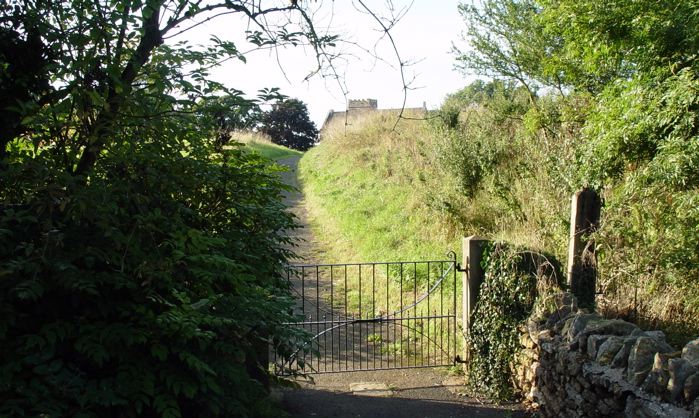
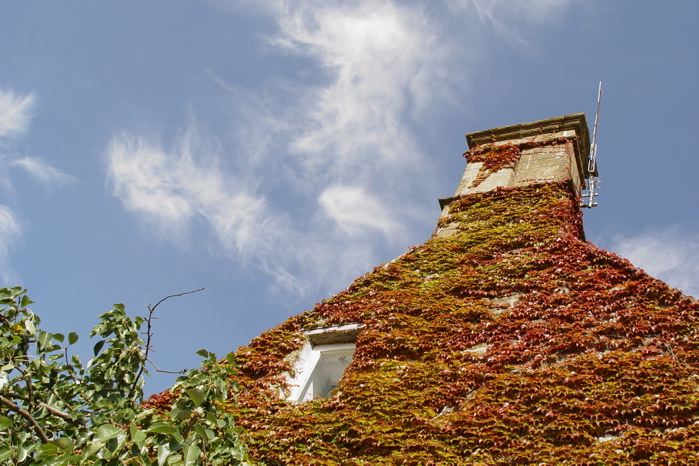
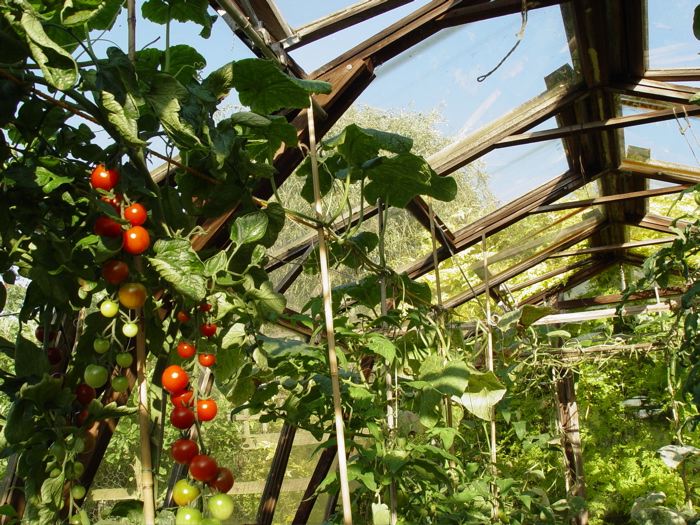
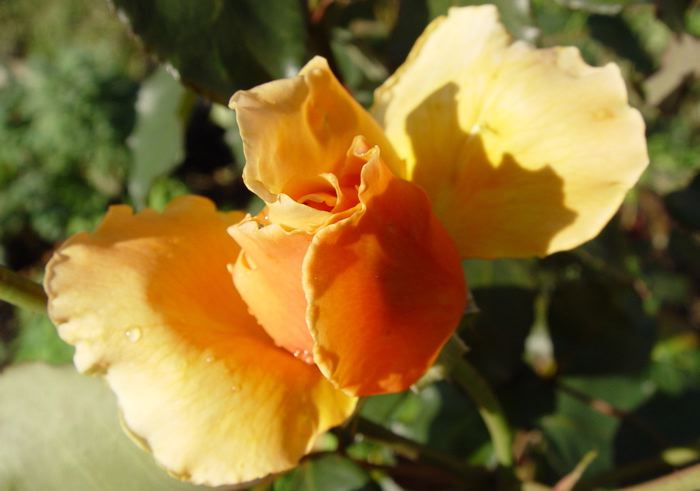
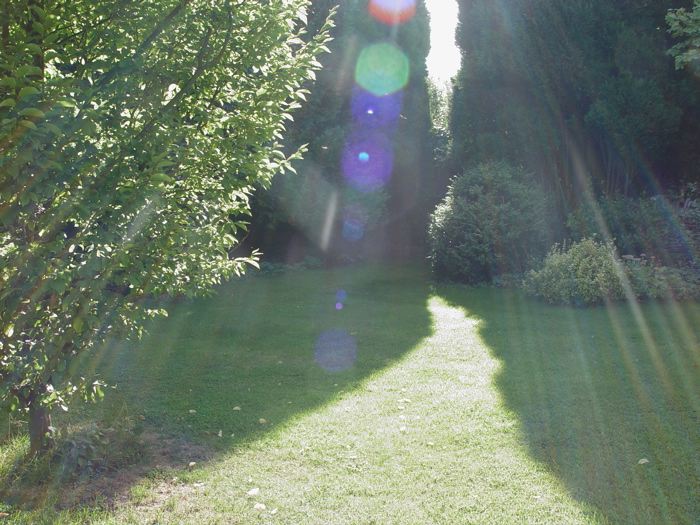
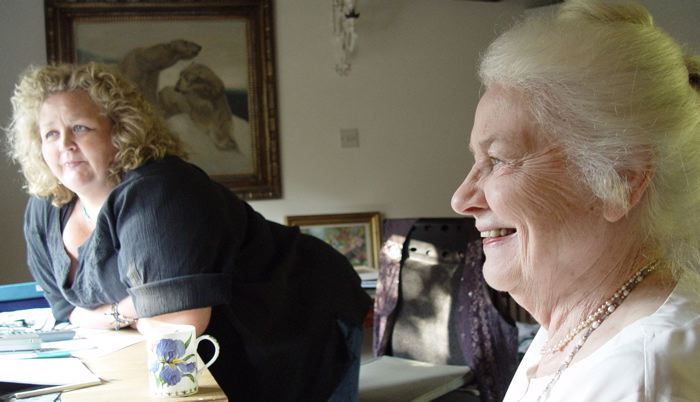
In the afternoon, Elaine and I walked out past the church, and then around the fields overlooking the Windrush valley as the sun inclined towards the horizon. Hedges are full of blackberries and sloes. The sequence of photos below take the viewer from beyond the church, through the graveyard, down the path through Church Field (with Hill House visible in the distance), through the gate, and then around the end of Hill House and into the garden. Often strikes me that you could walk through the same landscape and take images that were either idyllic or grotesque. I was in somewhat mellow, autumnal mood, and it probably shows. Inside, Caroline and Pat – alongside much of the nation – were watching England somewhat erratically win the Ashes. Reminded me of how much I like the Australians.
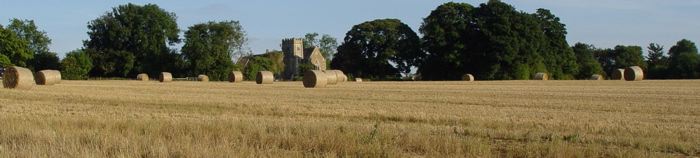
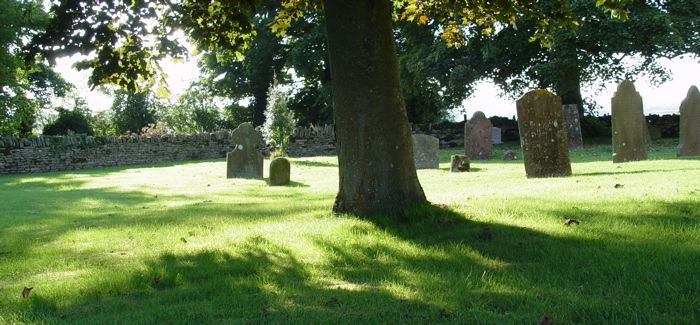
Saturday, September 10, 2005
POSH PIGEONS
The Times today contains two items that link, in my mind at least. The first is an obituary of Richard Fitter, naturalist and author of books like Collins’ much-loved Pocket Guide to British Birds and The Pocket Guide to Wild Flowers. I met him in the 1970s through Max Nicholson, who I was working with in setting up Environmental Data Services (ENDS). But I wonder what he thought–and what Max, one of the country’s leading ornithologists, would have thought–of the astounding invasion of parakeets which is also covered in the newspaper today. We have watched them move into Barnes and the surrounding region over the years with a sense of wonder progressively shading into alarm.
The parakeets (apparently known in some parts of London as “posh pigeons”) are raucously present behind the house most days, and apparently are competing with a whole raft of native species, among them kestrels, little owls, nightingales and kingfishers. Ben Macintyre’s piece notes that people are losing patience with the gorgeously coloured birds and, among other things, shouting abuse at them. Given that parakeets are among the best mimics in the parrot world, I wonder how long it will be before the dawn chorus is mainly a matter of four-letter words?
Friday, September 09, 2005
SUSTAINABILITY FORUM ZURICH

Last couple of days spent in Zurich, at the Swiss Re Ruschlikon Centre for Global Dialogue, for the sixth International Sustainability Leadership Symposium. This year, the focus was on ‘The Market Value of Reputation’. I chaired a plenary panel session on the first day, with four speakers: Peter Forstmoser (Chairman, Swiss Re – they are more than a little embroiled in the aftermath of Hurricane Katrina at the moment), Achim Steiner (Director General, IUCN – The World Conservation Union: he argued that the “Houston, we have a problem!” line is also true of economics, which is fundamentally flawed), Thierry Lombard (seventh generation private banker: “We are not good because we are old; we are old because we are good”) and Peter Quadri (Chairman, IBM Switzerland).
Good session and interesting event, but I came away feeling that much of the interest in corporate reputations is akin to navel-gazing, and that what we really need is a few more gales of creative destruction coupled with a much greater focus on entrepreneurial, disruptive solutions to the world’s great problems.
Wednesday, September 07, 2005
DOW JONES SUSTAINABILITY INDEXES
57 companies have been added–and 54 deleted–from the latest round of the Dow Jones Sustainability Indexes, where I am on the Advisory Board (http://www.sustainability-indexes.com). The assessments take account of such issues as corporate governance, climate change, supply chain standards and labour practices. Total assets under management in DJSI-based investment vehicles now amount to 3.3 billion euros ($4.1 billion). Among the key trends identified:
(1) Sustainability is continuing its move from corporate strategy and operations into product and service offerings. Advanced integration of eco-design requirements in the electronics industry, increasing implementation of environmental criteria in project financing and wider use of life cycle analysis in the chemcial industry are examples of this trend, say the DJSI team.
(2) Companies are converging around ‘first generation’ sustainability themes, such as corporate governance and environmental reporting. (Not sure I’d call corporate governance issues ‘first generation’, but let that pass.) The gap between leaders and laggards is opening out as the spotlight shifts to sector-specific issues such as healthy nutrition in the food industry, business opportunities for consumer goods in emerging markets, and anti-crime prevention in the financial sector.
(3) Transparency and accountability are spreading along supply chains, with greater use of environmental and social auditing processes.
(4) Sustainability indicators are increasingly linked to financial value drivers and integrated into Annual Reports, with new regulations, such as the UK’s Operating & Financial Review (OFR) requirement, helping to drive the trend.
(5) Corporations increasingly recognise the importance of human capital management for their success, although there is still felt to be great potential for improvement in areas like talent attraction, organizational learning and employee performance indicators.
Thursday, September 01, 2005
A DAY IN THE ONTWERPFABRIEK
Spent the day in Rotterdam, giving a keynote for the 50th birthday celebration for Dow Benelux. Amazing to think back – as I did in my speech – to 1955, when I was 6 and 8 communist nations (including the USSR) signed the Warsaw Pact, when Churchill resigned as UK PM, and when Rosa Parks refused to give up her seat on a bus to a white man, was arrested, and triggered the Mongomery Bus Boycott.
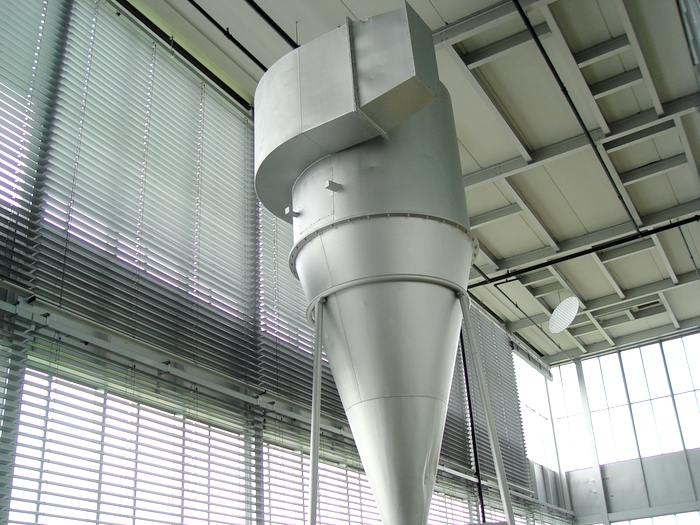
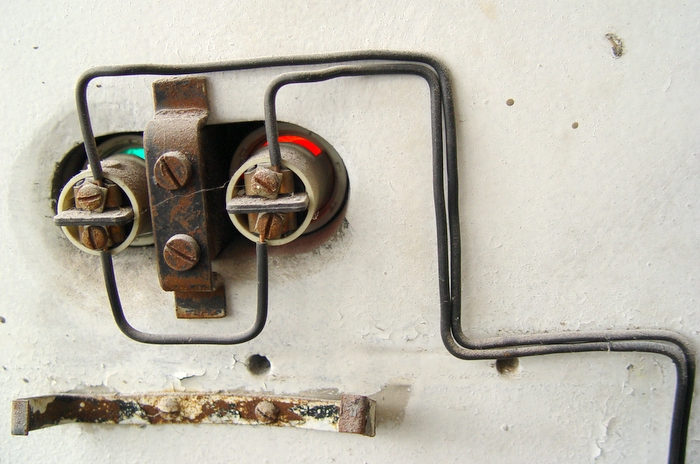
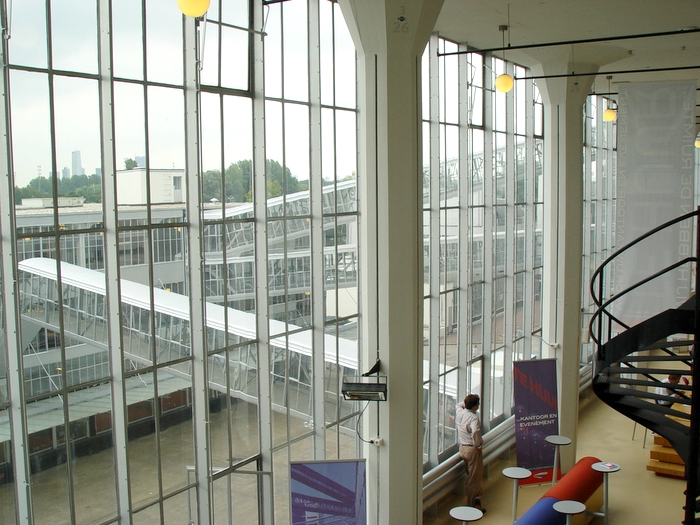
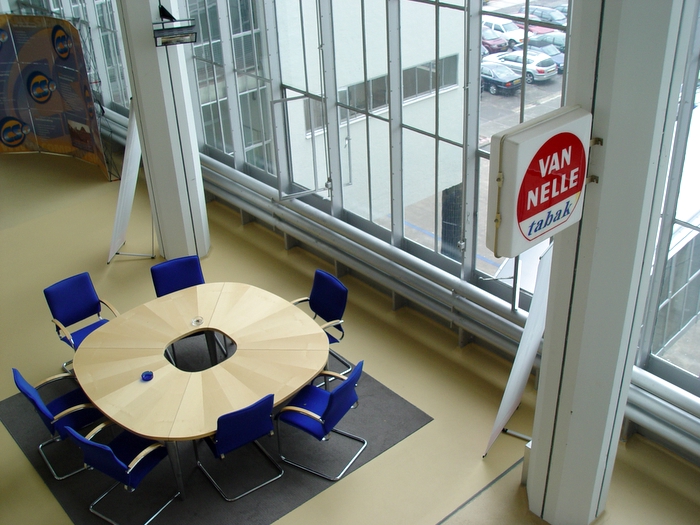
The Dow event was held in the Ontwerpfabriek, now a UNESCO World Heritage site (http://www.ontwerpfabriek.nl/index.asp?pageid=259a31f7b82841bc9744b474b072fb66). Built between 1925 and 1931, it was once the highest of high tech. It used to house the Van Nelle tobacco, tea and coffee works, but now acts as an incubator for businesses in the world of design and similar. So we would have sessions in rooms with names like Havana, which is romantic but slightly edgy for a passionate non-smoker. The photos below give some sense of the space, style and environs. Stimulating in other ways, too, given that I’m thinking around the EU as an incubator of new global rules for our next Grist column.
When we later had dinner at a wonderful restaurant overlooking the harbour, or at least overlooking the back of an enormous naval auxiliary ship, I noticed that the vile maggot (or Macedonian leaf-miner, see 31 August entry) is abroad here, too.