
Julia Hailes sent me a link this morning to the CSR International survey of leaders in the field of corporate social responsibility, in which I appear in fourth place tied with Muhammad Yunus, and behind Al Gore, Barack Obama and Anita Roddick. If I learned anything from statistics courses 40 years back, it was how easy it is to use them to provide a distorted lens on the world – but it’s a wonderful start to the New Year to find that, at least in 2009, I was in such august company.
Journal
Democracy: Not yet a killer app for China
Democracy is at the heart of the new agenda of the Foundation for Democracy and Sustainable Development (FDSD), which I chair, previously The Environment Foundation. In this context, a reflection by Niall Ferguson in today’s Financial Times on the meaning of the past decade struck me as particularly apt and insightful. He explores the reasons behind the astonishing – and accelerating – shift to the east in the world’s economic (and, ultimately, political) centre of gravity. In the process, he asks what it was that gave the West its “ascendancy”, through the Renaissance, the Reformation, the Enlightenment and the ensuing race around the world, as far as the Antipodes?
His answer is that the West benefited from six “killer apps”. These were: “the capitalist enterprise, the scientific method, a legal and political system based on private property rights and individual freedom, traditional imperialism, the consumer society and what Weber probably misnamed the ‘Protestant’ ethic of work and capital accumulation as ends in themselves.”
Some of these, Ferguson argues, particularly numbers one and two, China has already replicated. Other, and among these he includes imperialism, consumption and the work ethic, it is making headway on. “Only number three,” he notes, “the Western way of law and politics – shows little sign of emerging in the one-party state that is the People’s Republic.” But, he muses, “does China need dear old democracy to achieve enduring prosperity?”
Those two words, enduring and prosperity, put the question slap-bang into the heartland of the territory that the FDSD team is beginning to map out. As we wrestle with the question of how to shift paradigms in ways that we want, we also have to be aware that paradigms often shift under their own steam. As we reflect on future pathways to scale for solutions we find exciting, the ways in which those solutions will play out will be powerfully influenced by paradigmatic and civilisational trends of the sort discussed here.
Read Niall Ferguson’s fascinating article and ponder our collective future trajectories – as I did. Then join us at the Foundation for Democracy and Sustainable Development, in 2010 and beyond, in the quest to find out how to marry the best of West and East in pursuit of sustainability.
Christmas at Hill House
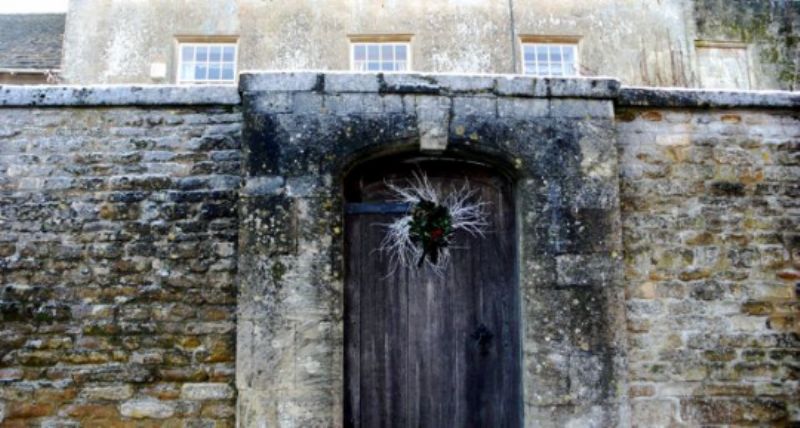 Wreath 1
 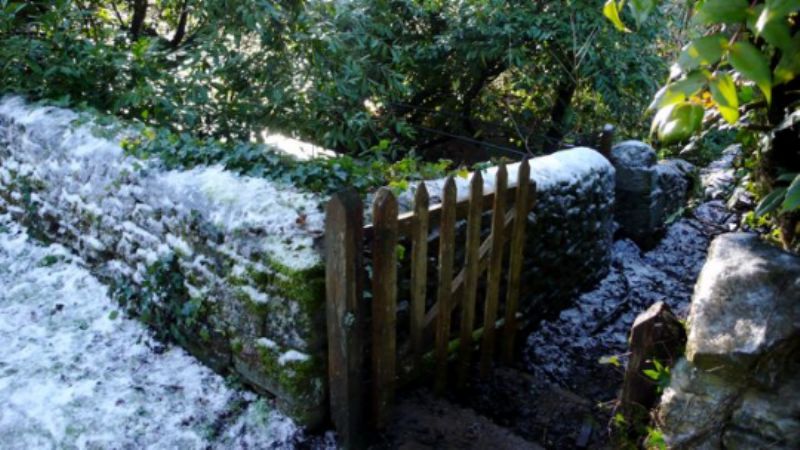 Path by stream
 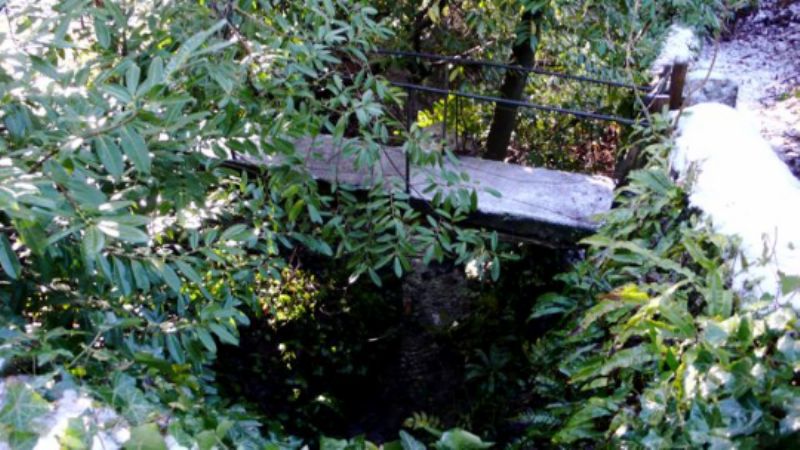 Bridge on which a memorable battle was fought
  Church
 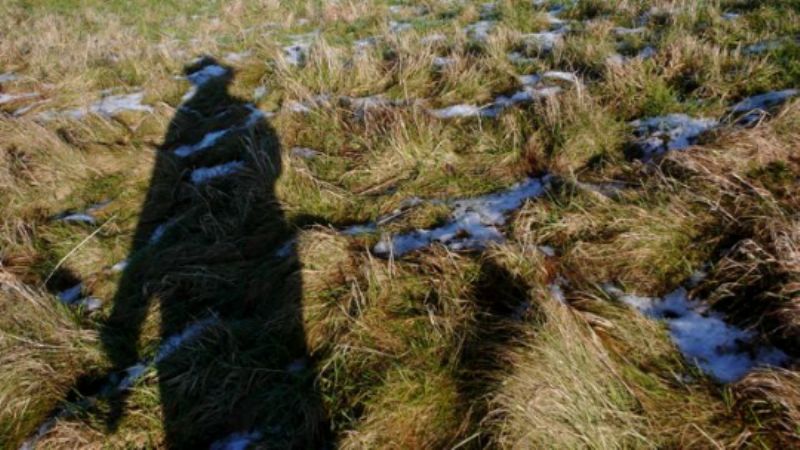 Shadow 1
  Gravestones 1
  Shadow 2
  Church 2
 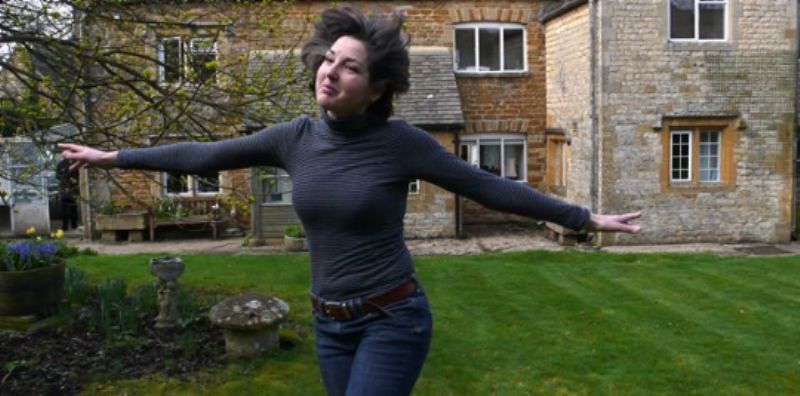 Gravestones 2
 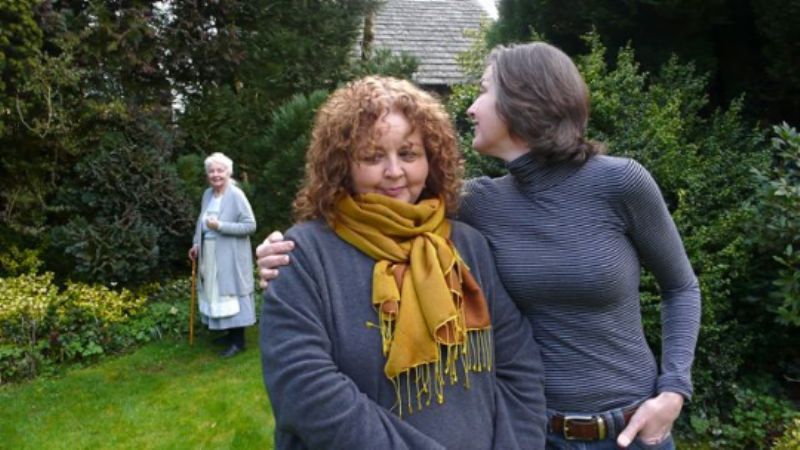 Cuckoo Pen
 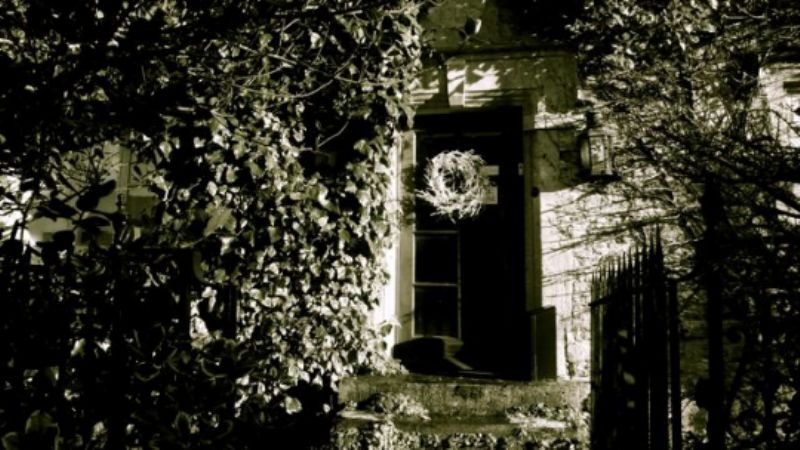 Hill House wreath
We drove down to Little Rissington this morning, early, with very little traffic on the road – for Christmas Day at Hill House. The countryside beyond Oxford was still white with snow and illuminated by a low sun in the most spectacular way. Elaine and I took a walk up to St Peter’s Church before lunch, passing the tiny bridge across which almost 50 years ago a legendary battle was fought out – between one of our young friends with a branch and one of the Misses Le Marchant, whose garden I suspect we had somewhat invaded, who was armed with her walking stick – and who must have been well into her eighties at the time. I think honour was maintained on both sides.
Very aware of the gift of being rooted in this house and this village. Odd mixture of emotions as we headed towards the church, the scene of so many christenings, marriages and funerals in the more-than-50 years we have been in Little Rissington. Particularly sad to walk around the RAF graves, particularly after looking through a number of Tim’s books, including the sixth volume of Robert Taylor’s Air Combat Paintings – which are quite extraordinary. Interesting, too, to read quickly through a new book on No. 1 Squadron, In All Things First, which features both my parents – Tim as No 1 Squadron pilot, Pat as the target of a trio of Focke-Wulf 190 fighter-bombers in 1943.
Last night, I had watched The Tuskegee Airmen, a moving film on the first African American fighter pilots. Sent an email afterwards to Dianne Dillon Ridgly, whose father was one of the “round two” Tuskegee airmen, and who I last saw a month or so ago at the Ecotopia event in London.
Loved the new landscape Caroline is painting up in her studio. And when we were leaving, much later, the frost shone on the car’s roof – and the stars shone brilliantly overhead, a smudged shooting star arcing over the barns towards Burford. A great skein of stars, including the Big Dipper and a brilliant planet, hung overhead, with a half Moon. Magical.
SustainAbility and Volans Christmas Lunch
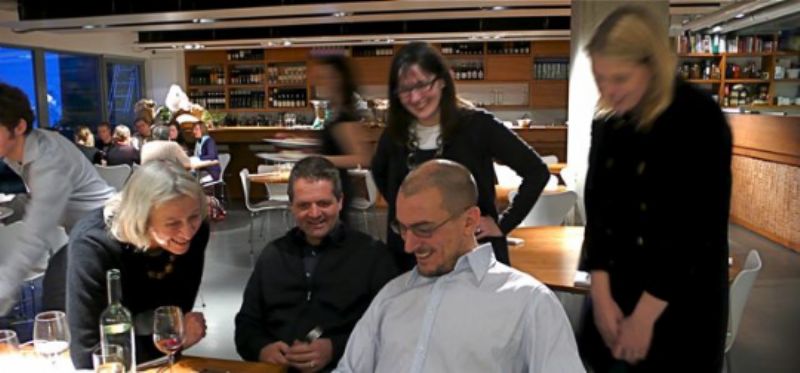 Elaine, Peter, Coreen, Gary and Charmian
A delightful gathering of the London ends (plus Peter Zollinger from Zurich) of the SustainAbility and Volans tribes at The Waterhouse Restaurant today, though with one of my dishes turning out to be disconcertingly full of human hair. The restaurant provided some sort of alcoholic compensation, which four of us then plunged into with multi-coloured straws. Later, as we were leaving, a snowball fight broke out in the courtyard and then spilled into the street, eventually involving local boys. I may have started it. Great fun, perfect snowball snow.
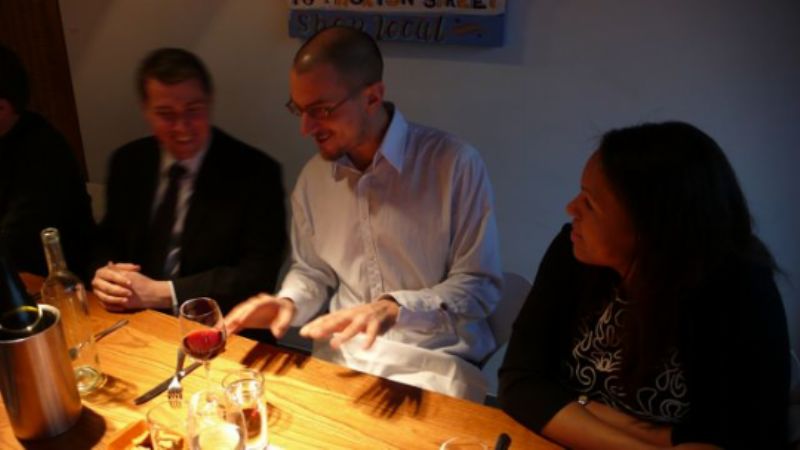 Mark, Gary and Nadine
 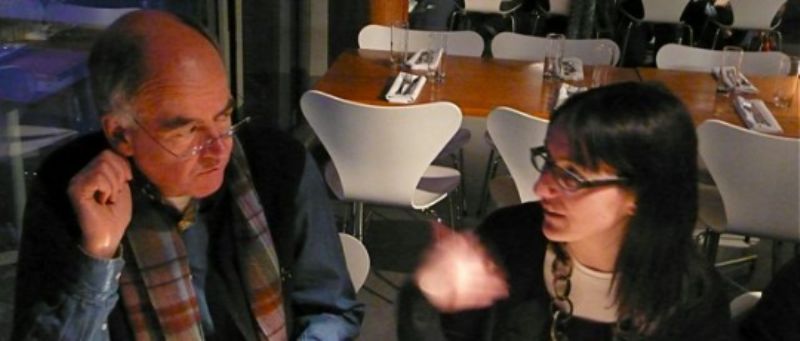 Coreen and I
 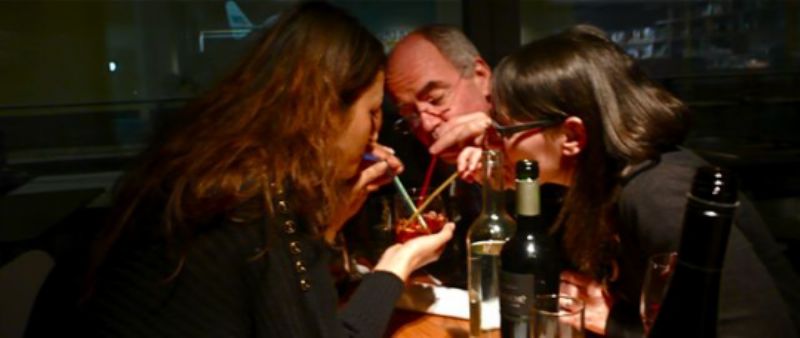 Four straws: Sam had one, but has her finger on the button
COP15: The Politics of the Liferaft
 COP15 in progress
“Copenhagen is a crime scene tonight,” said John Sauven, executive director of Greenpeace UK, “with the guilty men and women fleeing to the airport.” Increasingly, the take on COP15 is that it failed in almost every department, aside from the rhetoric about keeping the rise in average temperatures below 2 degrees C.
God knows how the delegates put up with it, from (1) the leak of the “Danish text” of a set of proposals prepared in advance of COP15 by a group of rich countries through (2) to Sudan lecturing the world on human rights and (3) to the number of observer passes being cut from 15,000 to just 90. people made the best of it: One entrepreneurial colleague, for example, ended up sleeping behind a temporary wall in the conference centre, to avoid the cull of observers – and then benefitted from an amnesty, being allowed to stay in.
On the face of it, however, this has been one of the most shambolic exercises in UN-led global governance for quite some time. Still, even though I have always avoided such events, finding the endless horse-trading profoundly wildly inappropriate to the nature and scale of the challenges we face, COP15 did at least illuminate the fault-lines in emergent twenty-first century politics – very much like an X-ray shows the invisible weaknesses in metals and ceramics.
I’m not sure the image will play well outside the UK, but the Sunday Times today has Obama’s face dropped into a photograph of Neville Chamberain returning from his meeting with “Mr. Hitler”, brandishing his meaningless piece of paper. Obama, who I admire enormously, now seems to have been wrong-footed twice in Copenhagen – and it is tempting to agree that he shouldn’t have turned up for COP15, given his profound distraction from the climate agenda because of US health care politics. America is divided on climate, as on so many issues, and the sense of a country adrift grows apace.
In many ways, it is unfair to heap the blame onto China, as Obama and others have tried to do – but the giant country clearly has much to learn about how to operate diplomatically on the world scene. Meanwhile, there is plenty of blame to go around, with fractious internal politics during the conference within Denmark, the host country, within the EU, and pretty much in most other directions you care to point out. What we saw was what I am tempted to call ‘Liferaft Politics’, with endless squabbles for the tiller, water and food – and desperate struggles to determine who’s in and who’s out.
Once again, I’m glad not to have been involved. But this is a desperately sad – and (not to put too fine a point on it) potentially civilisation-threatening – outcome. Many eyes will now switch to the ‘Road to Mexico’, and COP16, but I am tempted to agree with Julian (Lord) Hunt, a former Director-General of the UK Meteorological Office. Writing in today’s Observer, he warns that we may be heading towards a future in which no comprehensive successor to the Kyoto regime is possible. “It is therefore crucial,” he says, “that the centre of gravity of decision-making on how we respond to climate change moves towards the sub-national level. The need for such a shift from ‘top down’ to ‘bottom up’ is becoming clearer by the day.”
Business organisations are already lamenting the failure to agree on a clear, predictable framework to regulate and drive down greenhouse emission – an analysis which is understandable, as far as it goes. But, at the same time, the spotlight is likely to shift from the muscle-bound, strangulated, sclerotic world of mainstream public and private sector leadership to new generations of innovators, entrepreneurs and investors who plunge in and create the future in the face of seemingly impossible odds.
That’s where we are focusing our efforts at Volans – and i head towards 2010 not so much angry with the short-sightedness and self-interest of today’s political incumbents (I may be politically naive and a little romantic, but I’m not completely stupid) as determined to do our damnedest to answer the question, “If not COP, what?”