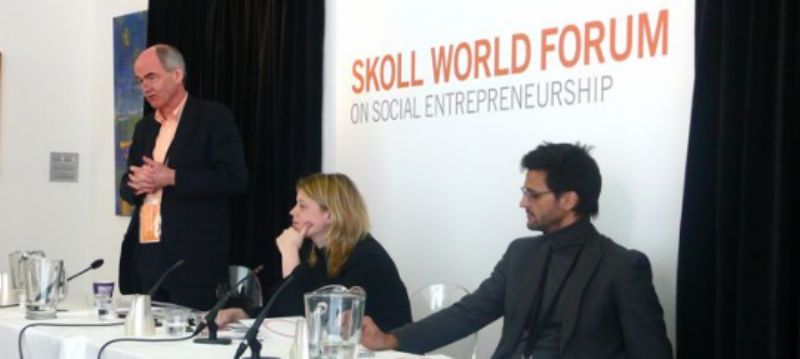
 Media session at Skoll World Forum
 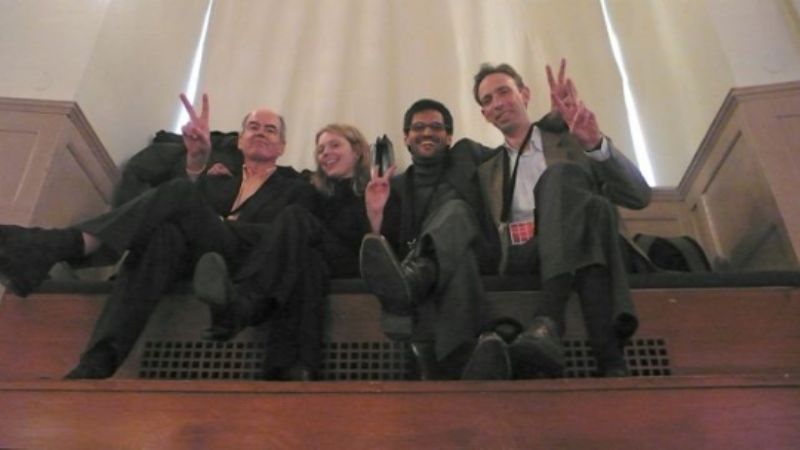 The Volans salute in the Sheldonian
 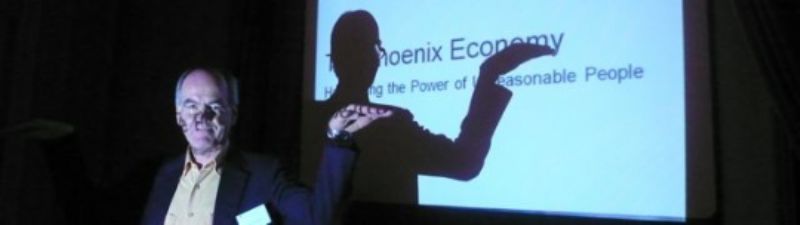 The Phoenix at Home House

John Elkington
A world authority on corporate responsibility and sustainable development.
Media session at Skoll World Forum The Volans salute in the Sheldonian The Phoenix at Home House
 Getting ready to fly
 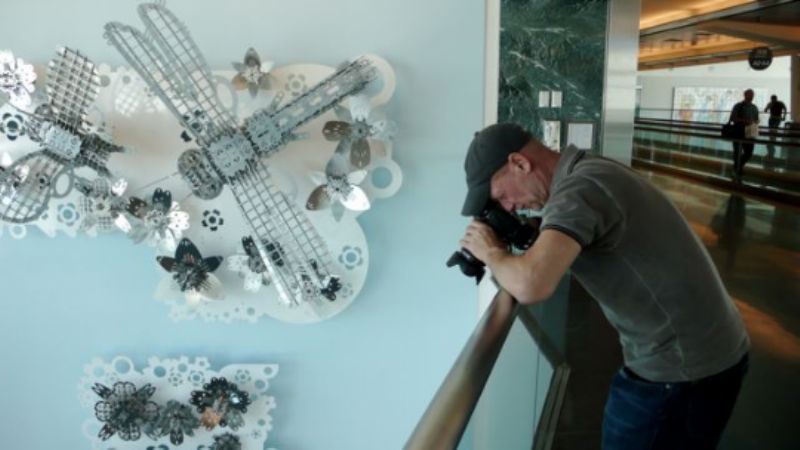 San Francisco airport cameo
  Home House
 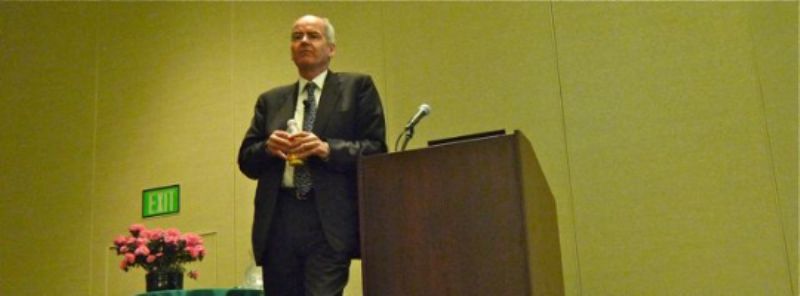 Birthday cake – one of three
 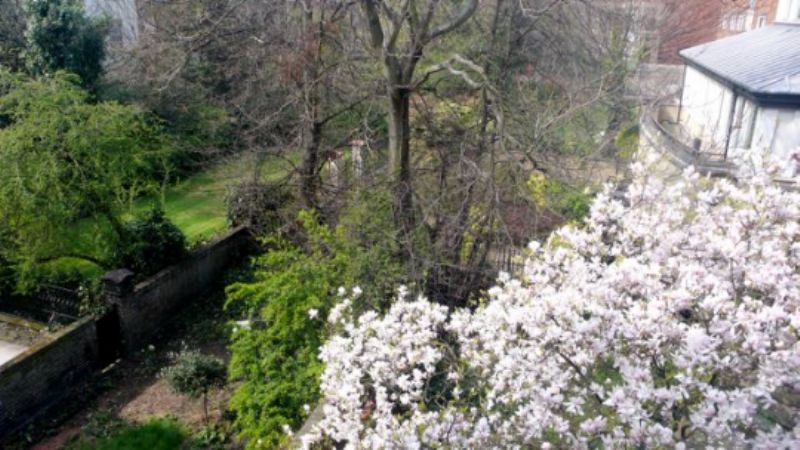 2BP view
 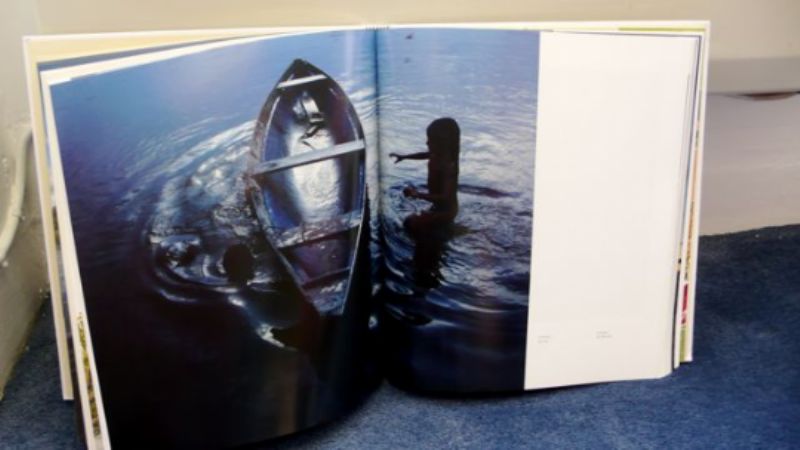 Brazilian river scene
 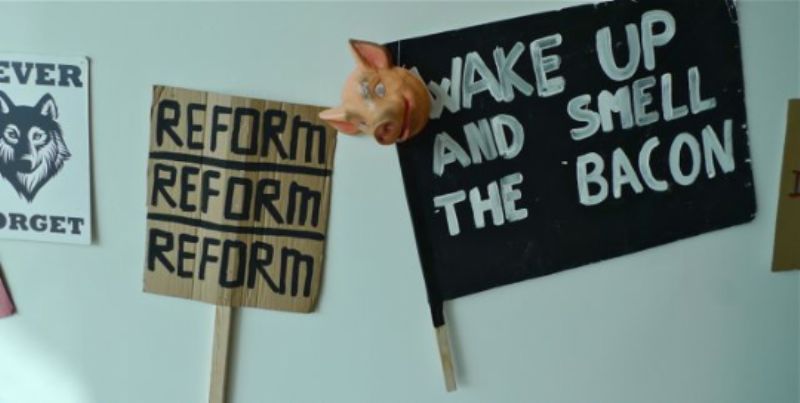 Outside Accenture
Haven’t often missed planes, but missed one to San Francisco on Sunday. Quite a shock. Had to upgrade to first class to catch one on Monday, arriving on Tuesday in time to take a shower and then go on stage at the Boston College Center for Corporate Citizenship conference, where they had very kindly turned their agenda inside out to accommodate my non-arrival. They switched me with Adam Werbach, but that meant that I missed both him and Van Jones, who recently left Green for All to go to the White House. Still, a great trip and many fascinating conversations with Brad Googins and a range of old and new friends.
Interesting how audiences are picking up on the “it’s going to get worse before it gets better” part of my message much more than the Phoenix part. When I first started talking about the impending downturn a few years back there was total denial, now there is still resistance, but I think people are getting ready to accept that this is going to be around for a while.
I generally give a public health warning, in that I spoke in The Chrysalis Economy as long ago as 2001 of the likelihood that the first three decades of the twenty-first century would see a global economic meltdown, concentrated in the second decade. Just as the organs of the caterpillar melt down inside the chrysalis, before before the resulting nutrients are reassembled as the organs of the butterfly, so the old economic order – I believe – has to decompose before the new one can find space to evolve.
Was very struck by a presentation done on Tuesday morning by Dev Patnaik – and picked up a copy of his new book, WIred to Care: How Companies Prosper When They Create Widespread Empathy (FT Press, 2009).
Stayed in the Fairmont Hotel, built by the daughters of ‘Bonanza Jim’, who had struck it rich in a Nevada silver mine. The Fair sisters had been forced to sell the still-in-construction building to the Law brothers a few days before the San Francisco earthquake of 1906 hit. As the fires raced across the city, the hotel’s new windows began to crack in the heat around 5.30 am.
Fascinating to read the comments of writer Gertrude Atherton, who was crossing the Bay at the time: “I forgot the doomed city as I gazed at The Fairmont, a tremendous volume of white smoke pouring from the roof, every window a shimmering sheet of gold; not a flame, nor a spark shot forth. The Fairmont will never be as demonic in its beauty again.”
In the context of our new report, The Phoenix Economy, I felt profoundly moved as I read the following description of the hotel’s rise from the ashes – a trick it would be forced to repeat the end of WWII: “Time, as they say, is a gentleman. Exactly a year after the earthquake, a grand banquet celebrating the opening was held at The Fairmont, with 600 pounds of turtle, 13,000 oysters and $5,000 worth of California and French wines. At precisely 9 pm, fireworks began, illuminating the beautiful new Fairmont, the thousand ships at anchor in the Bay, City Hall and all the buildings that had risen up, phoenix like, in defiance of nature’s wrath.”
Sorry about those turtles, one of the most beautiful animals on this Earth. Among many things, the hotel is known as the first place where Tony Bennett sang ‘I Left My Heart in San Francisco’. It truly is one of my very favourite cities. Before flying back, I took a walk around Union Square, though I was devastated to to find that one of my favourite SF bookstores, Stacey’s, had just closed. Stupefyingly sad, bringing to a close a story that started in 1923. There were a fair few shuttered stores as I walked through the streets.
Then back to London, arriving at 11.00 on Wednesday, 1 April, followed by a shower and on to speak to a study tour of Canadian policy-makers organised by Charmian (Love). Having put my back out during my travels, I was on painkillers kindly handed to me by the handful by a colleague in San Francisco. Did the session with Maggie Brenneke of SustainAbility.
Then briefly back to the office, before going on to Home House to speak at a gathering of some 80 Harvard Business School alumni and guests. Am featuring the Phoenix Economy in all these speeches. This time I was on both painkillers and (because I didn’t think) red wine. But it seemed to go rather well, nonetheless. The Canadians seemed to have thoroughly enjoyed their visits to leading policy-makers and practitioners in the field of UK social entrepreneurship.
At the end of the Home House session, Charmian (herself a Harvard Business School alumnus) gave a signal, the lights went down and a cake was borne in, flaming with candles and a ‘1’, symbolising Volans’ first birthday. Sam (whose birthday it also was) and I listened in wonder while everyone sang Happy Birthday.
Did a big Spring clean of my desk area – which had become a complete disaster area during the writing of The Phoenix Economy. Have been enjoying the weather considerably, particularly when walking out into the day from air-conditioned office buildings, as Charmian and I did after a meeting with Accenture on Thursday morning. Visitors to our Bloomsbury Place office, like the team, have been reveling in the riotous blossoms of the magnolia tree outside our back window.
Finally, the picture of the boat, which features my favourite colour, indigo, is from a book of photographs I was given recently in Brazil – and which Sam and I regularly flip to images we like, though I was ticked off for leaving it open a day or two ago at a beautiful picture of two naked boys climbing a tree. All I can say in my defence was that it reminded me of the feel of bark against bare skin.
The Skoll Foundation has recently completed a short, 9-minute film about the field of social entrepreneurship. It provides a useful overview of the progress made over the past three decades. It starts with Mohammad Yunus and includes interviews with a number of social entrepreneurs and others in the field, including Sally Osberg of the Skoll Foundation, Bill Drayton of Ashoka, Jacqueline Novogratz of the Acumen Fund, author David Bornstein and myself. For more information on these and other social entrepreneurs, visit www.skollfoundation.org.
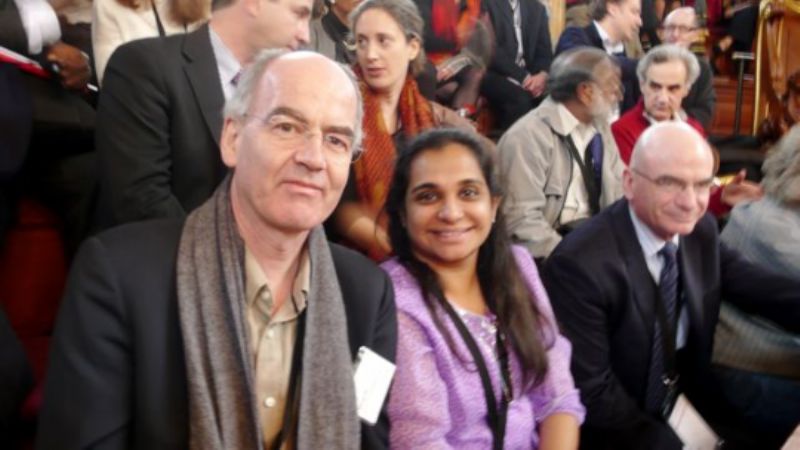 With Jeroo Billimoria in the Sheldonian Theatre
Several members of the Volans team spent 2-3 energetic days at the Skoll World Forum in Oxford this week – Alejandro (Litovsky), Charmian (Love), Sam (Lakha) and I, with Geoff (Lye) dropping in for the session I moderated on sustainable transport and electric vehicles. The focus of my ‘Evergreen’ session was on scaling, exploring the macro level of change. My panelists were Nancy Kete of EMBARQ, Josh Steinmann of Better Place, Peter Head of Arup and Ion Yadigaroglu of Capricorn Investment Group. A great panel.
I also did a session on the first day with the social entrepreneurs, introducing them to some of the thinking on The Phoenix Economy. A number of entrepreneurs have already asked us to brief their boards and trustees on our conclusions and recommendations.
Had planned to blog while there, but the pace was too frenetic – and now that I’m home, I’m packing for San Francisco. The overall mood of the Forum was typically upbeat, exemplified by a great set by KT Tunstall, who I hadn’t heard before and who did a version of ‘Black Horse & The Cherry Tree‘, but with a sense of darkening clouds as a backdrop. My suggestion that the economic downturn could cause social problems many orders of magnitude greater than the capacity of current social enterprises to counter went unremarked, but it’s bound to be true.
One key question is how fast we can organise ourselves to influence politicians and public policy-makers, to ensure a greater proportion of any bail-out packages go to enterprises that are creating value for the twenty-first century rather than providing life-support for those that did so in the last century. Another surrounds the pathways to scale that will take at least some of the solutions on display here to the point where they become endemic.
My own sense is that we will return to Oxford in 2010 with plenty of new entrepreneurial activity to report and celebrate, but in a profoundly chastened mood. More on the 2009 Forum from their website.
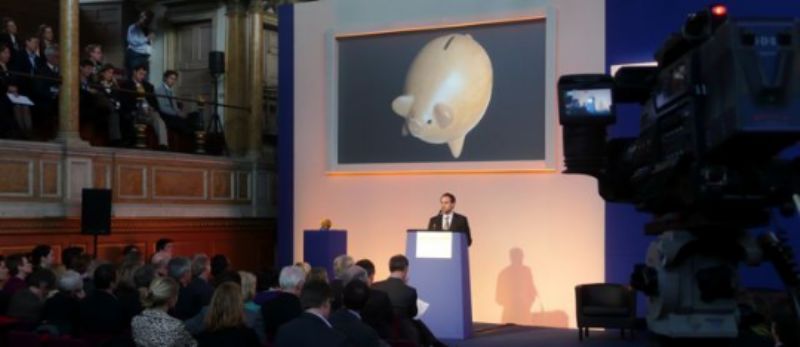 Jeff Skoll with piggy bank: Jeroo and I nudged each other because she features piggy banks, too
 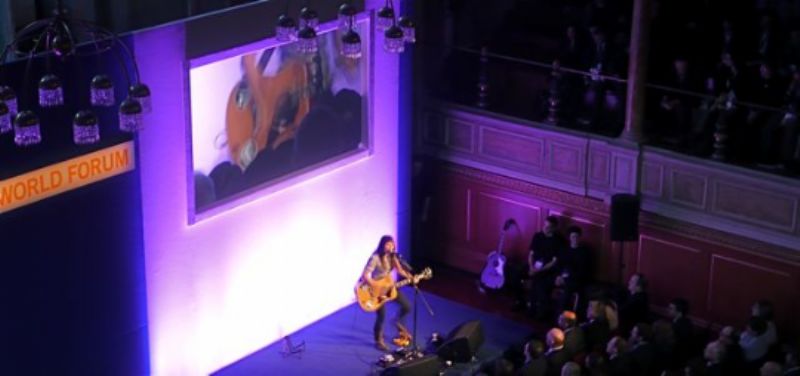 KT Tunstall serenades
 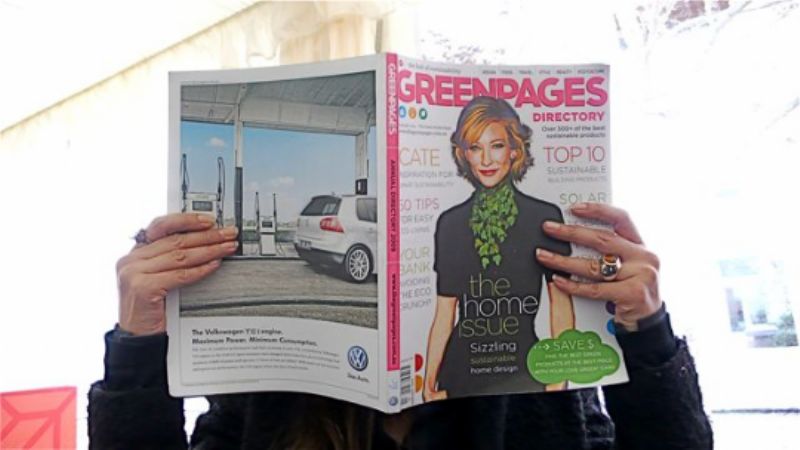 Sam and Green Pages: what goes around … we did a version in 1987
Many moons ago, while working for the Groundwork Foundation in the mid-1980s, I coined the term ‘environmental entrepreneur’ – a consumate, if somewhat quirky, example of which died on 2 March. As his obituary in The Times today reports, Gerard Morgan-Grenville, an Old Etonian, co-created the Centre for Alternative Technology in a slate quarry near Machynlleth, Mid-Wales, to demonstrate a range of alternative technologies. Sadly, I have still to make the pilgrimage, though CAT today has a staff of 150 and attracts some 65,000 visitors a year.
This was at exactly the time, 1973, when I was at UCL and had been working briefly on alternative technology farms like BRAD (Biotechnic Research & Development), developed by Robin Clarke, and visiting other hot-spots of the counter-culture, among them Paolo Soleri’s Arcosanti in Arizona. These visits were what basically switched me on to a very different set of rails, exploring how governments (when with TEST) and mainstream business (with ENDS and SustainAbility) could play a part in the drive towards more sustainable forms of development.
The picture of Gerard in The Times is almost exactly as I remember from the last time we met, at an event hosted by IMSA in Holland. Only met him a couple of times, but he was very much part of the older generation who gave my generation air cover, with others prominent in my memory including Max Nicholson, Peter Scott and Teddy Goldsmith. The older I get, the more I appreciate what they did – in times which were much less supportive.