• Skip to primary navigation
  • Skip to main content
  • Skip to primary sidebar
John Elkington

John Elkington

A world authority on corporate responsibility and sustainable development.

  • About
    • Ambassador from the future
  • Past lives
    • Professional
      • Volans
      • SustainAbility
      • CounterCurrent
      • Boards & Advisory Boards
      • Awards & Listings
    • Personal
      • Family
      • Other Influences
      • Education
      • Photography
      • Music
      • Cycling
    • Website
  • Speaking
    • Media
    • Exhibitions
  • Publications
    • Books
    • Reports
    • Articles & Blogs
    • Contributions
    • Tweets
    • Unpublished Writing
  • Journal
  • Contact
  • Show Search
Hide Search

Search Results for: Tim elkington

Lady Scott

John Elkington · 18 January 2010 · Leave a Comment

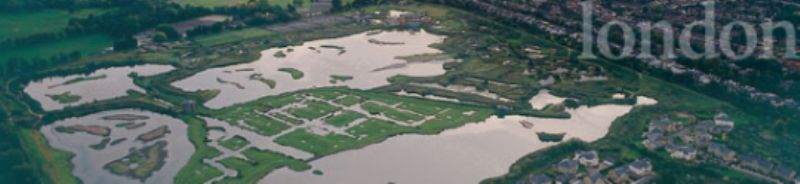
Image of the Barnes wetland centre Image of the Barnes wetland centre

I always loved grandparents – and engaging with their generation of friends. So when it came to environmentalism, which I fell backwards into in the early 1960s, raising funds for the embryonic WWF in 1961, it was perhaps only natural that the likes of Gerald Durrell, Max Nicholson and Peter Scott felt like adoptive (but distant) grandparents. I recall reading Durrell’s books when very young and impressionable (coincidentally, BBC4 re-ran a film version of My Family & Other Animals last night, after a stunning film by Professor Armand Leroi exploring the lagoon off Lesvos where Aristotle practically invented biology) and visiting the Scotts’ Slimbridge wildlife reserve when at prep school at Glencot in Somerset.

Much, much later, I came to work with Max in founding Environmental Data Services (ENDS) in 1978, with the late David Layton. I met Durrell at a preview of one of Phil Agland’s films sometime in the mid-1980s – and found him delightful. Sir Peter I had met when he was one of the judges for the Sir Winston Churchill Memorial Fellowships, one of which I was awarded in 1981. He was wonderfully supportive. I met him again in Guiting Power, shortly before he died, with Lady Scott – who was enchanting. I remember her telling me that my presentation had left her “fizzing with energy”, but then I suspect that was her default setting.

Her obituary appears in The Times today, along with a couple of tremendously evocative photographs. This mentions the book, The Art of Peter Scott, a copy of which I was recently sent by WWF, which he co-founded with Max and others in 1961, and where I am now a member of the Council of Ambassadors. The book has been in the Volans office for a month or so, on one of our new book stands, open on a double-page spread that features a glider – which, alongside all those graceful wildfowl winging through Scott-rendered skies, nicely captures the sense of uplift and possibility that we stretch towards at Volans.

Apart from the book, I think of the Scotts every time we wander round the corner in Barnes to the wetland wildlife reserve that he played such a key role in creating. What an extraordinary couple they were!

Avatar

John Elkington · 16 January 2010 · Leave a Comment

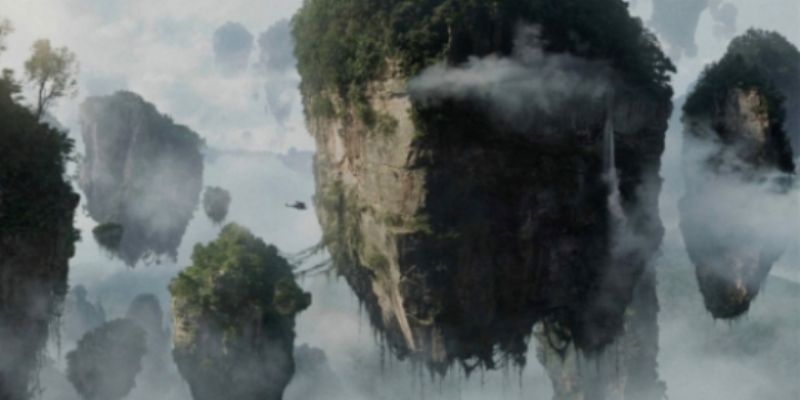
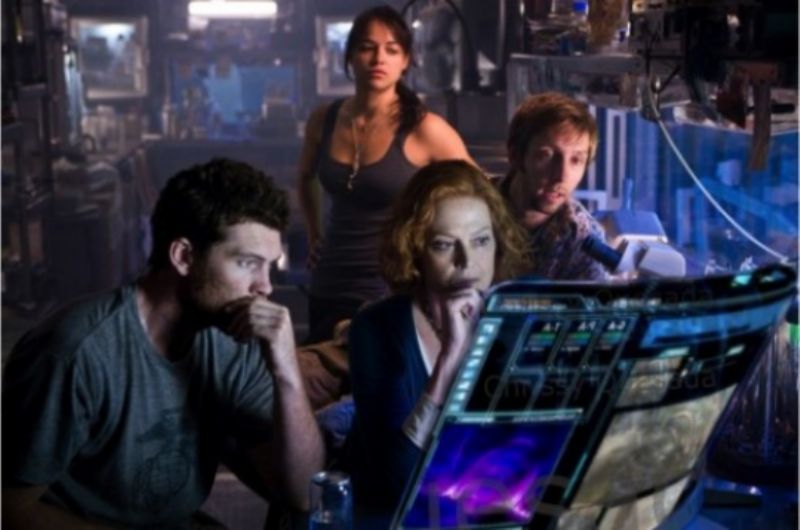
Control room Control room Avatar eye Avatar eye Romantic interest Neytiri Roger-Dean-like landscape of floating mountains Roger-Dean-like landscape of floating mountains

Although I adored Up, for me Avatar has been the ultimate in 3-D experiences. Elaine, Gaia and I went to see it on Thursday evening – and I haven’t been able to get it out of mind since. And Sigourney Weaver, one of my all-time favourite actresses, is only part of the story. For more, see here and here.

Like Star Wars (1977) or Raiders of the Lost Ark (1981), the film broke through to the treasure store of storylines and images I had accumulated through childhood and younger years, not least from reading science fiction books like Dune. Indeed, there was much of the film that forcefully reminded me of Dune‘s author, Frank Herbert, who I met in the 1980s. The tanks in which the avatars are grown are straight-line descendants of the axolotl tanks in which mentats were grown in the Dune series.

The landscape of floating mountains in which the final battle is fought reminded me inexorably of the work of Roger Dean, whose painting I have long loved and had about the house–and who I met way back in the early 1990s at a Green exhibition where we were both involved.

The control room on the planet of Pandora is exactly the way I’d like the Volans offices to look like a year or two hence, with the addition of a bunch of comfy sofas and bookshelves. The entrepreneurial way in which a small group of principled heroes adapts the problem technology to new, positive uses is a wonderful illustration of the Power of Unreasonable People.

And the eyes have it: I loved the eyes of the Na’vi–and, also, the bio-botanical neural network. The social variant of that is what Paul Hawken has been monitoring and championing in his book Blessed Unrest and in the work of WiserEarth.

Can’t wait to see the film again.

Tsutomu Yamaguchi

John Elkington · 7 January 2010 · Leave a Comment

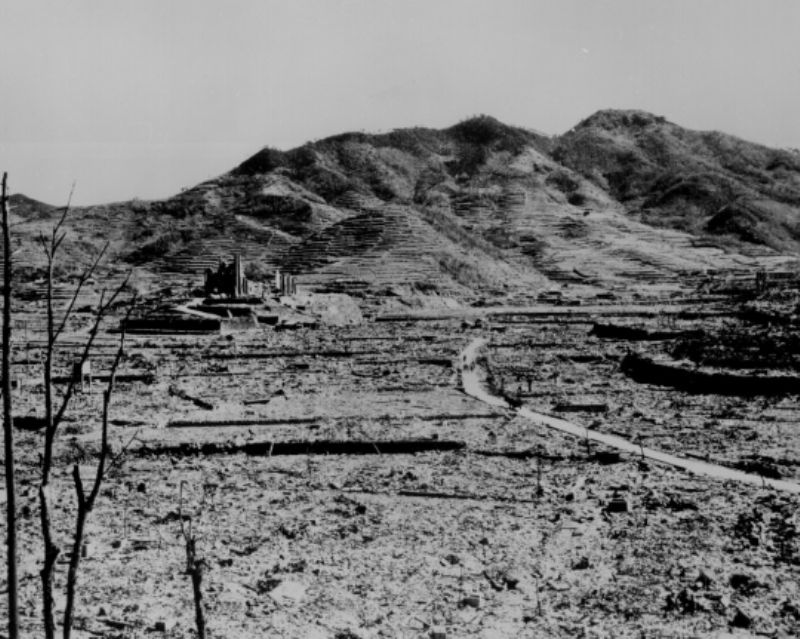
Nagasaki after Fat Man Nagasaki after Fat Man

Although I was shocked at the lack of honesty in the Japanese A-bomb museum in Hiroshima when I visited it in the early 1980s, with the sense being given that poor Japan was bombed with no provocation, there is no denying the utter horror of the devastation wreaked on Hiroshima by Little Boy on August 6,1945, and by Fat Man on Nagasaki on August 9. But what were the chances of someone being in both places at the time of the two bombs detonating?

Well Tsutomu Yamaguchi was. Having fled from the ruins of Hiroshima to his home town of Nagasaki, he found it impossible to persuade people there of what had happened a few days before. Then the second bomb went off and it was too late. Now he is dead, at the age of 93. He wasn’t the only person to experience both calamities, but was the only one to be officially registered as a hibakusha, or atomic bomb victim. Unlike other victims, he spoke out, bore witness. An impressive man.

Of Triremes and Helicopters

John Elkington · 7 January 2010 · Leave a Comment


Having been stranded in Zurich last night by snow blanketing Heathrow, I stayed overnight at a hotel near the airport, spending a couple of hours working on ideas for the new book. Then, as I was leaving for the airport again this morning, I was offered a lift by an attractive woman, her daughter and granddaughter. Although I tried to politely decline, ordering my own taxi, theirs turned out to be big enough for all – so I travelled to the airport with them.

When it transpired that I was leaving a couple of hours to catch my plane, whereas they were cutting it much closer, we began talking about the times we had missed planes. I mentioned tthat I had missed a flight to San Francisco where I was meant to be doing a speech and, another time, from Cornell to New York, so that I had to drive seven hours south to catch a flight. It turned out that my hostess had missed a flight from San Diego, where she had also been doing a speech. I asked on what? Helicopters, she explained. So, did she work for Sikorsky, I asked? No, she said, she had been the first woman to fly a helicopter around the world – from Pole to Pole, and back.

Turned out that she was Jennifer Murray, described by the Telegraph as a death-defying, globe-circling grandmother. A glorious conversation as we sped through the snowy fields – well worth having a flight cancelled under one for. Among other things, we talked of climate change and other forms of environmental destruction.

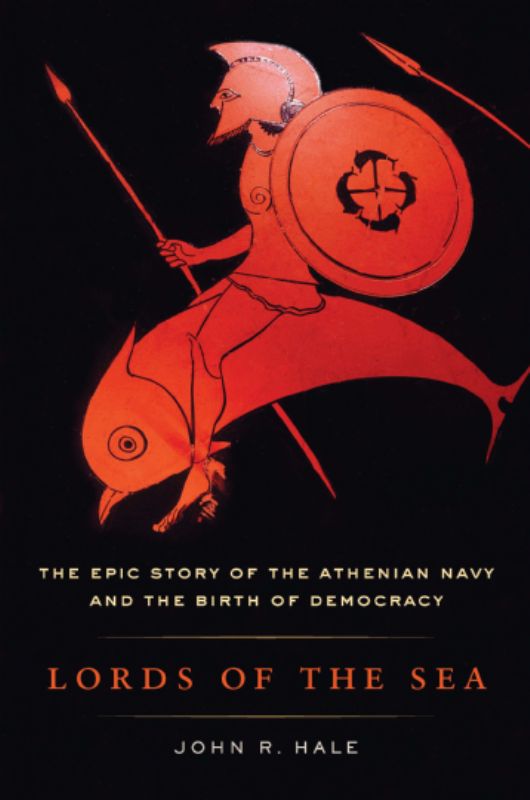
On the flight back, I finished Lords of the Sea, John Hale’s unbelievably wonderful account of the the Athenian navy and the birth of democracy. Utterly fascinating, but at times profoundly upsetting, as the Athenians energetically cut their own throats by forcing some of their greatest trireme experts into exile or to take their own lives through drinking hemlock.

Found myself reading out sections of the book to people as I travelled, including a section on page 287, where the environmental devastation effected by the construction and maintenance of the navy was described – coupled with the deadly (and linked) rise of King Philip’s Macedonia, which would ultimately end the independence of Athens:

Macedon’s rise had been fueled in part by Athens itself, for the navy required constant supplies of timber. Plato had already described the deforestation of Attica and its devastating effects on the Athenian countryside. With the trees cleared from the hillsides, the soil had eroded to the sea. Athens’ loss had been Macedon’s gain. Over many years Athenian silver had been enriching the northern kingdom through purchases of oak, fir, and pine for ships and oars. Philip could now cut off this resource at will …

Rings more than a few bells in today’s world.

Christmas at Hill House

John Elkington · 25 December 2009 · Leave a Comment

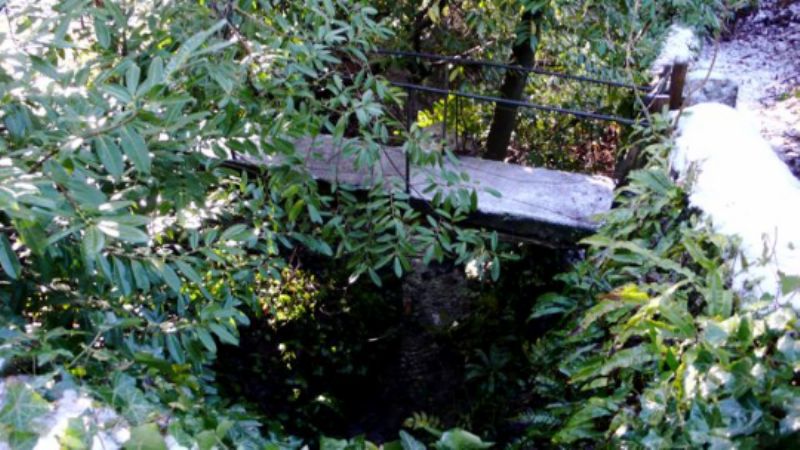
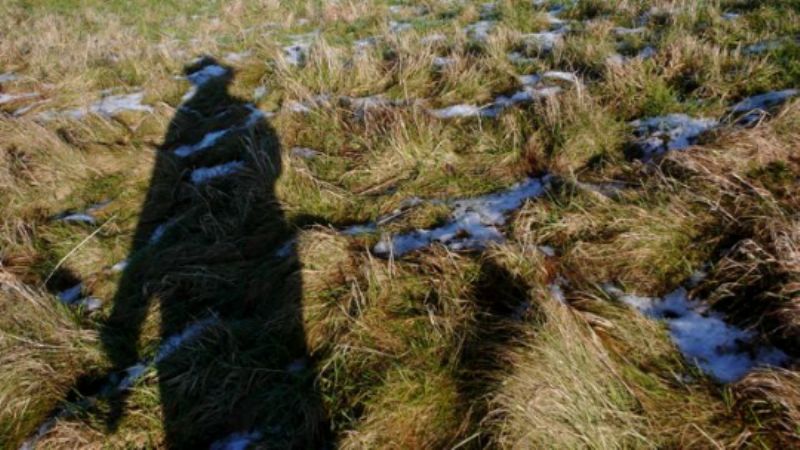
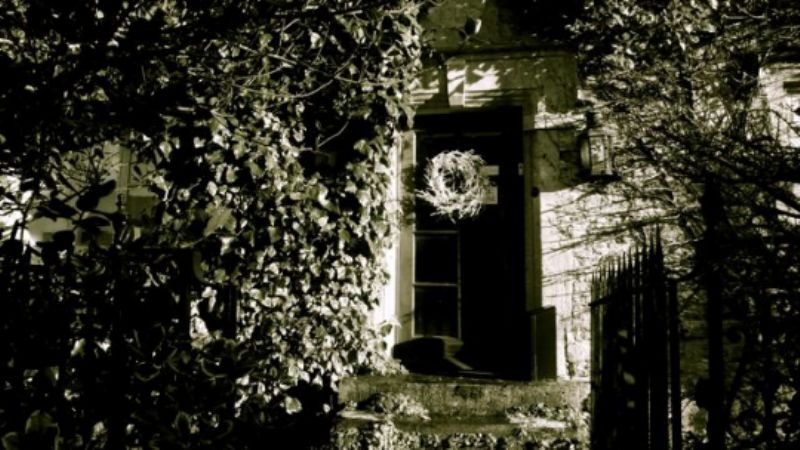
Wreath 1 Wreath 1 Path by stream Path by stream Bridge on which a memorable battle was fought Bridge on which a memorable battle was fought Church Church Shadow 1 Shadow 1 Gravestones 1 Gravestones 1 Shadow 2 Shadow 2 Church 2 Church 2 Gravestones 2 Gravestones 2 Cuckoo Pen Cuckoo Pen Hill House wreath Hill House wreath

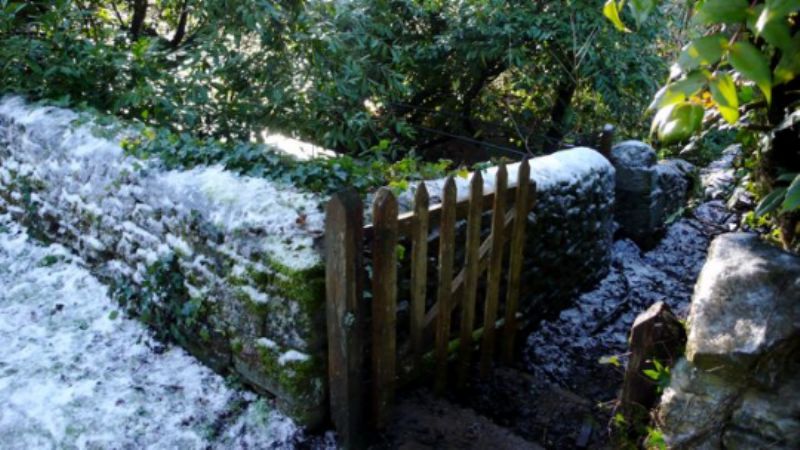
We drove down to Little Rissington this morning, early, with very little traffic on the road – for Christmas Day at Hill House. The countryside beyond Oxford was still white with snow and illuminated by a low sun in the most spectacular way. Elaine and I took a walk up to St Peter’s Church before lunch, passing the tiny bridge across which almost 50 years ago a legendary battle was fought out – between one of our young friends with a branch and one of the Misses Le Marchant, whose garden I suspect we had somewhat invaded, who was armed with her walking stick – and who must have been well into her eighties at the time. I think honour was maintained on both sides.

Very aware of the gift of being rooted in this house and this village. Odd mixture of emotions as we headed towards the church, the scene of so many christenings, marriages and funerals in the more-than-50 years we have been in Little Rissington. Particularly sad to walk around the RAF graves, particularly after looking through a number of Tim’s books, including the sixth volume of Robert Taylor’s Air Combat Paintings – which are quite extraordinary. Interesting, too, to read quickly through a new book on No. 1 Squadron, In All Things First, which features both my parents – Tim as No 1 Squadron pilot, Pat as the target of a trio of Focke-Wulf 190 fighter-bombers in 1943.

Last night, I had watched The Tuskegee Airmen, a moving film on the first African American fighter pilots. Sent an email afterwards to Dianne Dillon Ridgly, whose father was one of the “round two” Tuskegee airmen, and who I last saw a month or so ago at the Ecotopia event in London.

Loved the new landscape Caroline is painting up in her studio. And when we were leaving, much later, the frost shone on the car’s roof – and the stars shone brilliantly overhead, a smudged shooting star arcing over the barns towards Burford. A great skein of stars, including the Big Dipper and a brilliant planet, hung overhead, with a half Moon. Magical.

  • « Go to Previous Page
  • Go to page 1
  • Interim pages omitted …
  • Go to page 103
  • Go to page 104
  • Go to page 105
  • Go to page 106
  • Go to page 107
  • Interim pages omitted …
  • Go to page 134
  • Go to Next Page »

Primary Sidebar

Introduction

I began this blog with an entry reporting on a visit to the Woods Hole Oceanographic Institution on Cape Cod, on 30 September 2003. The blog element of the website has gone through several iterations since, with much of the older material still available.

Like so many things in my life, blog entries blur the boundaries between the personal and the professional. As explained on this site’s Home Page, the website and the blog are part platform for ongoing projects, part autobiography, and part accountability mechanism.

In addition, my blogs have appeared on many sites such as: Chinadialogue, CSRWire, Fast Company, GreenBiz, Guardian Sustainable Business, and the Harvard Business Review.

Recent Comments

  • John Elkington on The Hill House Elkingtons
  • sally fitzharris. (Rycroft) on The Hill House Elkingtons
  • Thomas Forster on Reminder of Glencot Years

Journal Archive

About

John Elkington is a world authority on corporate responsibility and sustainable development. He is currently Founding Partner and Executive Chairman of Volans, a future-focused business working at the intersection of the sustainability, entrepreneurship and innovation movements.

Contact

john@johnelkington.com  |  +44 203 701 7550 | Twitter: @volansjohn

John Elkington

Copyright © 2026 John Elkington. All rights reserved. Log in