• Skip to primary navigation
  • Skip to main content
  • Skip to primary sidebar
John Elkington

John Elkington

A world authority on corporate responsibility and sustainable development.

  • About
    • Ambassador from the future
  • Past lives
    • Professional
      • Volans
      • SustainAbility
      • CounterCurrent
      • Boards & Advisory Boards
      • Awards & Listings
    • Personal
      • Family
      • Other Influences
      • Education
      • Photography
      • Music
      • Cycling
    • Website
  • Speaking
    • Media
    • Exhibitions
  • Publications
    • Books
    • Reports
    • Articles & Blogs
    • Contributions
    • Tweets
    • Unpublished Writing
  • Journal
  • Contact
  • Show Search
Hide Search

Search Results for: Tim elkington

&samhoud

John Elkington · 19 October 2009 · Leave a Comment

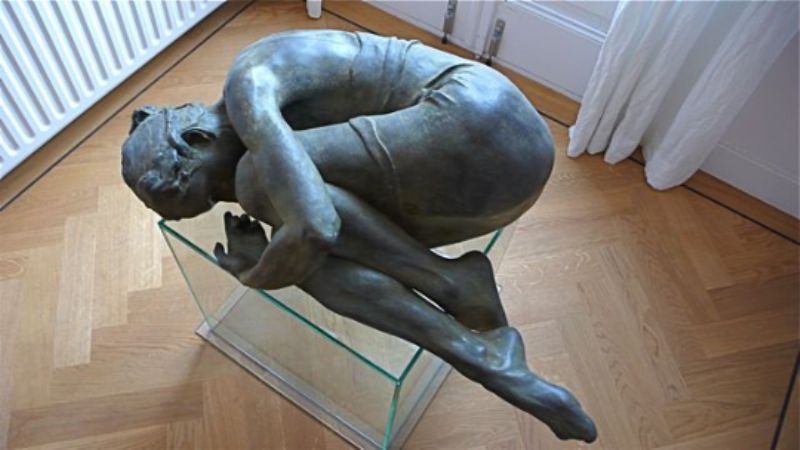
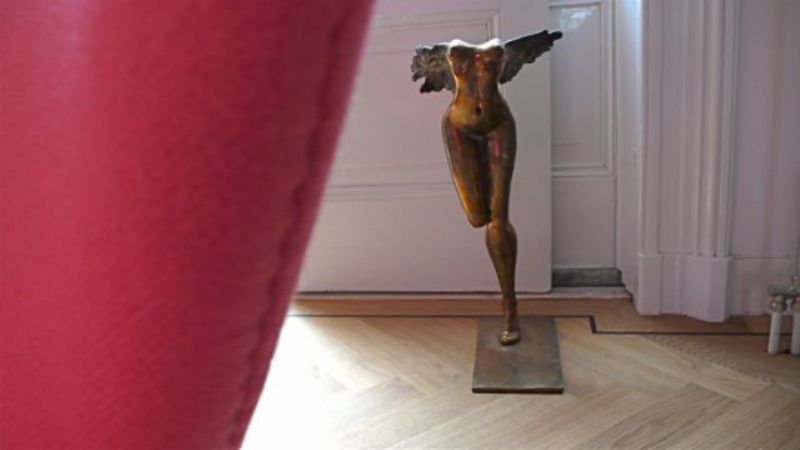
Sculpture asleep Sculpture asleep Winged sculpture Winged sculpture Chair Chair Feedback on my session Feedback on my session
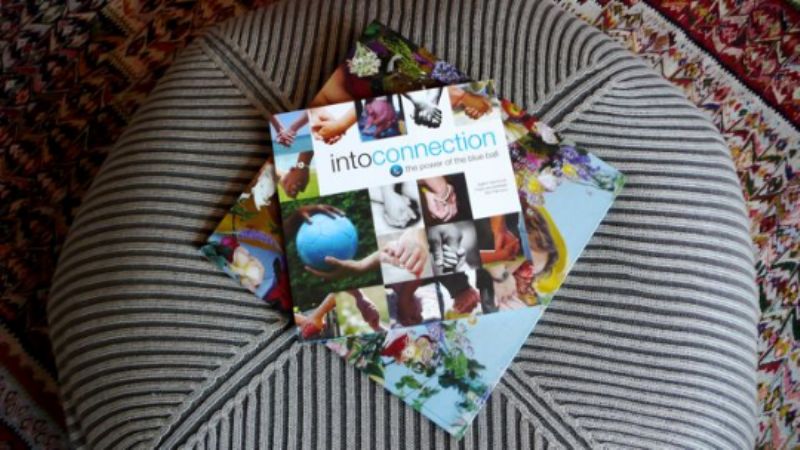
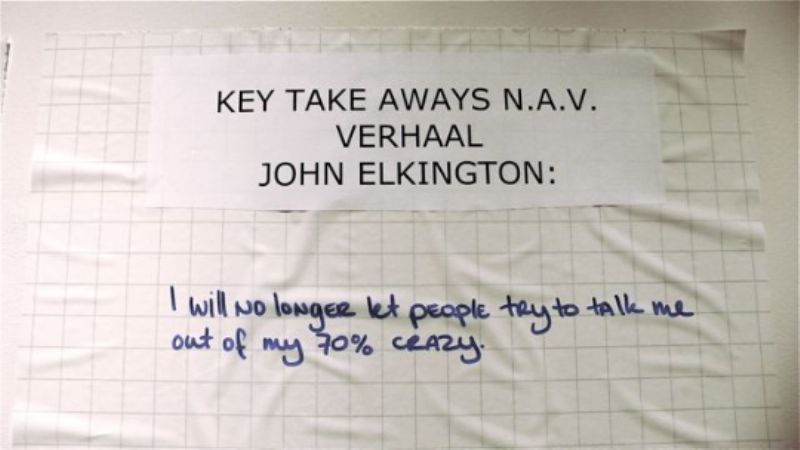
Did a flying visit to Utrecht today to keynote a entrepreneurship session at &samhoud. Great fun – and met a fair few people I knew from around Holland. Nice to be celebrated as the ‘Father of the 3Ps’, People, Planet & Profit, even if it seems a lifetime or two ago.

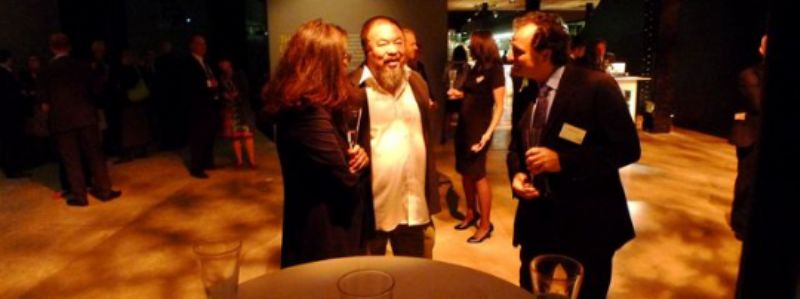
Sri Lankan campaign gains traction

John Elkington · 17 October 2009 · Leave a Comment


There are moments when history shows that a failure to protest human rights abuses led on to worse abuses on a much greater scale. This was true of the treatment of many groups of people in Germany and the USSR ahead of WWII, for example. And with two emerging 21st century superpowers currently deeply involved in the Sri Lankan crisis, I believe that it is crucial that we signal international disapproval and rejection of what is happening there in the wake of the defeat of the Tamil Tigers.

To declare a personal interest, a long-standing friend and colleague is closely involved in the Sri Lankan Campaign for Peace & Justice. He has asked me to help spread the word – and I am glad to do so.

The latest news on the Campaign is that three leading US human rights advocates have joined forces to urge UN Secretary General Ban Ki-moon, President Obama and other world leaders to put an immediate end to what they see as an imminent humanitarian catastrophe in Sri Lanka.   Professors Noam Chomsky, Rajan Menon and Michael Grodin are the latest prominent world figures to lend their support to the Sri Lanka Campaign for Peace & Justice.

The three award-winning professors come from very different academic and professional backgrounds but are united in calling world leaders to act. Announcing his support, Dr Grodin said: “At the Nuremberg Trials following the Nazi Holocaust, Justice Robert Jackson exclaimed, ‘The wrongs which we seek to condemn and punish have been so calculated, so malignant, and so devastating, that civilization cannot tolerate their being ignored because it cannot survive their being repeated.’ These words echo and reverberate as we witness the crimes against humanity perpetrated in Sri Lanka.

According to Professor Menon: “Now is the time to settle the civil conflict in Sri Lanka, which has consumed thousands of life and brought severe misery to countless others. In the short term, access should be provided to the UN and international relief agencies to deal with the humanitarian problems facing refugees and lists of detainees should be made available. In the long run, economic development in the war torn areas must proceed hand in hand with political measures aimed at reconciliation and empowerment.”

Professor Chomsky added: “The fate of Tamils in Sri Lanka has been a shocking story of mounting horrors. It would be unconscionable to stand by in silence as the remnants face still more torture and disaster. Every effort must be expended to bring this tragedy to an end while there is still time.”

Amnesty International, Human Rights Watch, the International Crisis Group – who have all criticised the Tamil Tigers (LTTE) in the past – have also called for immediate action to deal with the imminent crisis affecting at least 50,000 children.

The Sri Lanka Campaign is chaired by Edward Mortimer, journalist and former Communications Director to Kofi Annan. Other members of the Advisory Council include Lakhdar Brahimi (a former high level UN envoy and member of the Elders – an independent group of global leaders, brought together by Nelson Mandela, to address difficult global challenges), Brahma Chellaney (a senior Indian foreign policy adviser), Charles Glass (the internationally renowned journalist) and Chibli Mallat (the Lebanese legal specialist) and Bianca Jagger, prominent human rights advocate, a member of the Executive Directors Leadership Council of Amnesty International USA, and a Council of Europe Goodwill Ambassador).

The Campaign calls for the following:

1. The UN, international Red Cross and voluntary agencies must be given full and unrestricted access to care for and protect the civilians in the camps, and help them return to wherever in their own country they choose to live. Meanwhile, these civilians should have their right to freedom of movement restored in time to escape the devastation that the monsoon will otherwise bring.

2. A list of all those still alive and in custody (in internment camps or elsewhere) should be published, so that families can stop searching for loved ones who are dead.

3. Those who continue to be detained as alleged LTTE combatants must be treated in accordance with the Geneva Conventions, and urgently given access to legal representation.

4. Accountability processes must be established to ensure that international aid is not diverted to purposes other than those for which it was given.

5. The Sri Lankan Government should allow conflict reconciliation specialists unhindered access to help rebuild lives and communities.

6. Sri Lanka should request or accept a full UN investigation into war crimes committed by all parties during the war.

7. The UN Secretary General should appoint a Special Envoy to Sri Lanka. For more information, please take a look here.

Into the Void

John Elkington · 13 October 2009 · Leave a Comment

Exhibition of past Unilever Series installations Exhibition of past Unilever Series installations Walking homeward Walking homeward

Thanks to Unilever, Elaine and I have seen a number of the Unilever Series installations at the Tate Modern, including those by Rachel Whiteread (2005), Carsten Holler (2006) and Doris Salcedo (2007) efforts, of which we liked the second and third best. Today, we were invited to see the tenth commission for the series, ‘How It Is’, by Miroslaw Balka. A sense of what it’s like can be had here.

Find myself agreeing that the scale is impressive, but the effect is slightly undermined by the fact that one end of what looks like a gigantic front-loading waste skip is open to the light, so you are never really in the void. I get the links to the Holocaust, but this didn’t feel anything like that – in the sense that there was none of the sense of coercion or forced intimacy of the cattle wagons into which people were herded. The most interesting place to experience the thing, really, was underneath, where you could hear people shuffling around above – and imagine what they were feeling and saying. We talked to an interesting Indonesian diplomat there, about the massacres in his country in the 1960s.

Sat next to some intriguing people at dinner, mainly from the advertising industry, and had found ourselves introduced to Lord (Leon) Brittan and Sir Martin Sorrell when we first arrived. Talked to the former about the restaurant where they serve you in the dark and all the waiters are blind. He didn’t like the idea one bit. We talked about the links between taste, smell and sight. Then Gavin Neath of Unilever mentioned that they had carried out research where perfectly good steaks were coloured green – and people disliked the taste, not just the colour.

Generation A and the Bees

John Elkington · 10 October 2009 · Leave a Comment


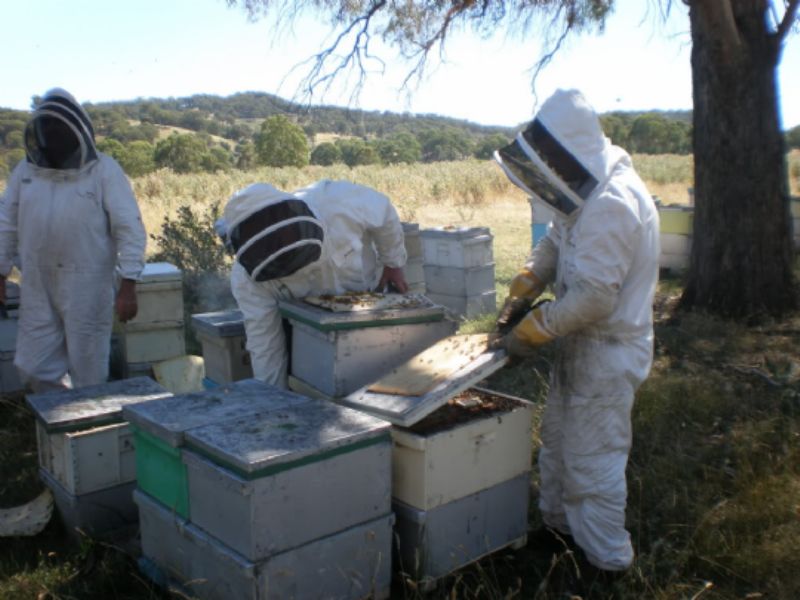
VERY few books keep me abed until I have finished them, but Generation A did this morning. One of the things that held me was the way a sequence of stories told by people who had been stung by bees after these and other insects had disappeared from the planet accumulated to create a spooky bigger picture. Few things have nagged at my worry centres more in recent years than what has been labelled Colony Collapse Disorder.

Time and again, as I read the book, I felt a creepy sense that this was our future. Just as William Gibson’s books have crept back from a far distant future to a mutated present, Coupland – for me – has moved ever closer to home, and here the account of the environmental and social externalities caused by the drug Solon resonated powerfully, echoing (but amplifying) a pattern of corporate exploitation we have seen time and again as the environmental movement has struggled to find its wings.

Then I came downstairs to read the papers, stood by one of the kitchen windows and looked out into the garden through a giant spider web. As I watched a honeybee, illuminated by the morning sun, flew smack into one of the gossamer threads and, before I could get outside to rescue it, it was spun into a cocoon by a blur-legged spider. 

RIP at least this example of Apis mellifera. For more on the broader trend, see the film The Vanishing of the Bees – though I confess I haven’t seen it yet.

Odd to think that when I was in my teens, I wanted to keep bees. I recall visiting a beekeeper in Pembrokeshire who used a black-painted box as a solar heater to melt old honeycombs from his hives. The combs were almost black, but as the sun worked its spell, the wax flowed through a screen into old Fray Bentos tins, turning into golden ingots.

A few years later, Kerry Effingham, a great friend, passed on a pair of hives and a honey separator when one of her uncles died. (I adored the smell when she whipped up beeswax with turpentine to make her furniture polish. Still have the small table she would polish religiously, its top scored by great black raking marks where the men in ages gone used to place their spurred heels.) For many years the hives and honey collector collected dust in an outbuilding at Hill House – and finally disappeared.

But the idea of living closely with bees has persisted, summed up by a sunset-illuminated moment in the film, The Spirit of the Beehive, where – if memory serves – bees fly into a hive inside a home.

There’s a wonderful passage in Generation A where Mother Nature puts in an appearance. Can’t say I saw her the same way Coupland did when he was growing up, when I was young. “Mother Nature was this reasonably hot woman who looked like the actress Glenn Close wearing a pale blue nightie.” (Aside: not what she was wearing when she surprised us by dropping in on us at SustainAbility a few years back.) “When you weren’t looking, she was dancing around the fields and the barns and the yard, patting the squirrels and French kissing the butterflies. After the bees left and the plants started failing, it was like she’d returned from a Mossad boot camp with a shaved head, steel-trap abs and commando boots, and man, was she pissed.”

Have had a growing urge in recent months  to do more in relation to Nature, though not out of any great desire to waltz around the yard with a Bunny Boiler in a blue nightie.

Still from The Vanishing of the Bees, showing beekeepers in Australia

Still from The Vanishing of the Bees, showing beekeepers in Australia

When the Average Age Is 71 …

John Elkington · 30 September 2009 · Leave a Comment

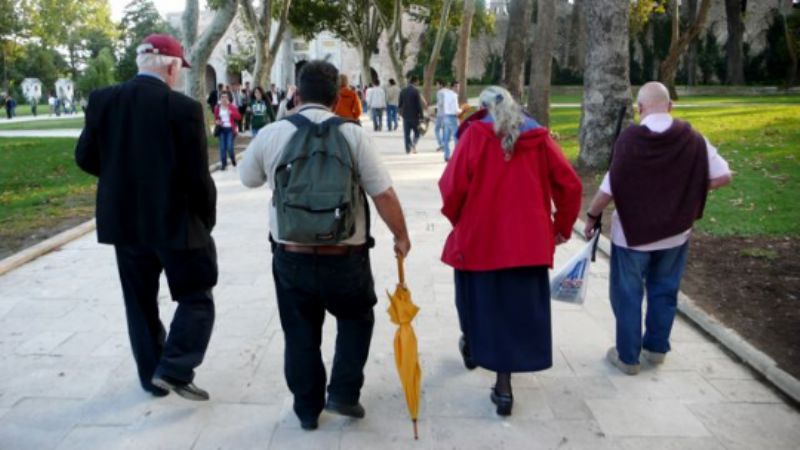
Peter (far left) and Cemil (second left) leaving Topkapi Peter (far left) and Cemil (second left) leaving Topkapi

During the tour I guesstimated the average age of those on this fourth ACE study tour we have done as 70. Peter Clark was to tell me when we arrived back at Heathrow that it was 71, making me the youngest, at 60. After Syria, Northern Cyprus and Crete, I had worried that nothing could match those trips, but this Constantinople/Istanbul tour was really quite exceptional. As the pieces of the jigsaw puzzle progressively came together, the picture of an extraordinary melting pot for cultures and thinking popped into our minds – and we really can’t wait to go back.

  • « Go to Previous Page
  • Go to page 1
  • Interim pages omitted …
  • Go to page 105
  • Go to page 106
  • Go to page 107
  • Go to page 108
  • Go to page 109
  • Interim pages omitted …
  • Go to page 134
  • Go to Next Page »

Primary Sidebar

Introduction

I began this blog with an entry reporting on a visit to the Woods Hole Oceanographic Institution on Cape Cod, on 30 September 2003. The blog element of the website has gone through several iterations since, with much of the older material still available.

Like so many things in my life, blog entries blur the boundaries between the personal and the professional. As explained on this site’s Home Page, the website and the blog are part platform for ongoing projects, part autobiography, and part accountability mechanism.

In addition, my blogs have appeared on many sites such as: Chinadialogue, CSRWire, Fast Company, GreenBiz, Guardian Sustainable Business, and the Harvard Business Review.

Recent Comments

  • John Elkington on The Hill House Elkingtons
  • sally fitzharris. (Rycroft) on The Hill House Elkingtons
  • Thomas Forster on Reminder of Glencot Years

Journal Archive

About

John Elkington is a world authority on corporate responsibility and sustainable development. He is currently Founding Partner and Executive Chairman of Volans, a future-focused business working at the intersection of the sustainability, entrepreneurship and innovation movements.

Contact

john@johnelkington.com  |  +44 203 701 7550 | Twitter: @volansjohn

John Elkington

Copyright © 2026 John Elkington. All rights reserved. Log in