• Skip to primary navigation
  • Skip to main content
  • Skip to primary sidebar
John Elkington

John Elkington

A world authority on corporate responsibility and sustainable development.

  • About
    • Ambassador from the future
  • Past lives
    • Professional
      • Volans
      • SustainAbility
      • CounterCurrent
      • Boards & Advisory Boards
      • Awards & Listings
    • Personal
      • Family
      • Other Influences
      • Education
      • Photography
      • Music
      • Cycling
    • Website
  • Speaking
    • Media
    • Exhibitions
  • Publications
    • Books
    • Reports
    • Articles & Blogs
    • Contributions
    • Tweets
    • Unpublished Writing
  • Journal
  • Contact
  • Show Search
Hide Search

Search Results for: Tim elkington

The Triple Bottom Line = “a very neat idea”

John Elkington · 25 January 2015 · Leave a Comment

Source: wwarby and The Conversation, 2015

Great to see an old friend, Professor Rob Gray, joining forces with Professor Markus Milne to take a closer look at the triple bottom line agenda, 20 years after I first came up with the notion.

As I comment on The Conversation platform:

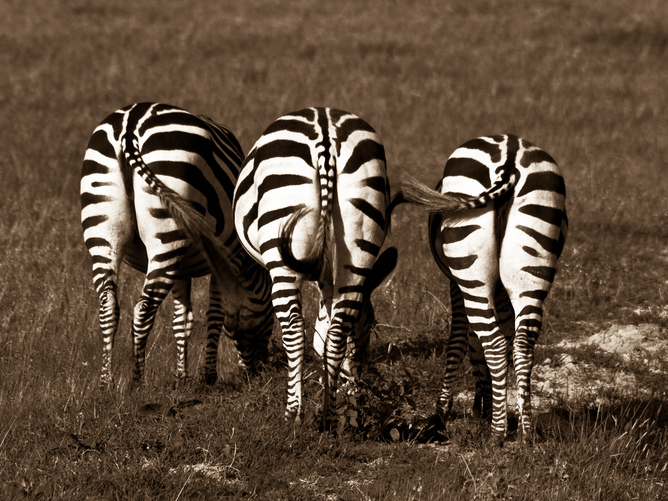
Many thanks to professors Rob Gray and Markus Milne for breathing some further oxygen into this debate. In reading the later stages of their assessment, however, I am reminded of the late Anita Roddick’s comments on the pessimism of the thought — and the optimism of the action. (When The Shop Australia did a triple bottom line report, they didn’t use three zebra hindquarters, but three men’s bums.)

For those new to this area of discussion, The Economist had this to say on the triple bottom line (TBL) a while back: http://www.economist.com/node/14301663

Twenty years on from the first launch of the idea, I have been working with Jochen Zeitz, who pioneered the Environmental Profit & Loss (EP&L) approach while Chairman and CEO of PUMA. He and I have done a book on what we call ‘tomorrow’s bottom line,’ called ‘The Breakthrough Challenge: 10 Ways to Connect Today’s profits with Tomorrow’s Bottom Line’ – see http://eu.wiley.com/WileyCDA/WileyTitle/productCd-1118539699.html.

The spirit of the piece is that business can’s simply account and report itself out of the hole we have collectively dug for ourselves. Integrated reporting is only a small piece of the puzzle. Instead, what we call the ‘Global C-suite,’ the top teams of the world’s most powerful 1,000 companies, are going to have to embrace a ‘Stretch Agenda’ linking their strategies (whether couched as TBL, shared value or whatever) to the wider sustainability context.

This is the theme of a white paper we have just completed at Volans, with support from the Generation Foundation. Called ‘The Stretch Agenda: Targets & Incentives for the Breakthrough Decade,’ this is due for launch in March.

If you’re interested in receiving a copy let me know at john@volans.com.
An Ode to Lawyers

John Elkington · 21 January 2015 · Leave a Comment

Photo credit: Giles Kyte
Photo credit: Giles Keyte

My day began and ended with lawyers. I started the day by attending the memorial service for Stephen Lloyd at St Martin-in-the-Fields. The church was packed to the gills. A wonderful Quaker silence part-way through, interrupted only by a helicopter, a man in paroxysms of coughing and what may have been a grand-child doing what grandchildren do.

Sadly, it struck me that I only seem to go to St Martin-in-the-Fields for memorial services, most memorably for Sir Anthony Parsons and Sir Geoffrey Chandler, the last of whom was very much in my mind today, as a long-standing leader in the field with the likes of NCVO and Amnesty. Geoffrey, like Stephen, was a wonderful ally who was willing to stretch boundaries way beyond the then seemingly possible.

There was glorious music this morning, including Agnus Dei, Jerusalem and Dear Lord and Father of Mankind, and an astonishing cross-section of the multiple universes in which Stephen worked as probably the country’s foremost charity lawyer. Lovely double header from Jonathon Porritt and Tim Smit, another brace of Sirs, with Jonathon describing Stephen as sustainable development embodied, a one-man roundtable.

As I sat listening to the service, I reflected on the lawyers I have encountered over the decades. They include, most notably, my beloved and much lamented cousin Hollister Sprague, a WWI American fighter pilot in France and then Mr Boeing’s lawyer. He was a wonderful host in the Seattle area in the 1970s, with his home Forestledge overlooking Puget Sound and housing what was once the largest organ room in the West.

Speaking on behalf of the City of London, Sir Thomas Gifford said that Stephen was a lawyer who somehow always found a way to say yes. Then I thought of the  lawyers who prosecuted and defended us when we collided with McDonald’s in the Green Consumer Guide era, a battle I recorded in A Year in the Greenhouse, published in 1990.

But I had met Stephen well before that, back in the mid-1980s, when he helped us at the brilliantly ambitious but ultimately ill-fated Earthlife Foundation. Then, years later, he helped The Environment Foundation, of which I was Chairman, to fight a 3-year battle against the Charity Commissioners to establish sustainable development as a charitable objective. We won, entirely due to Stephen’s determination to see right prevail.

A joy to see so many old colleagues and friends at the reception afterwards, among them Colin Hines, Camilla Toulmin, Nick Hurd and Tessa Tennant. And then up popped Steve Warshal, originally a lawyer originally from Seattle who worked with Release back in the day and then was a Director of Greenpeace UK for many a year. I remember Steve coming to dinner at least once brandishing a court injunction from BNFL. he and I had a lovely lunch in the Crypt before I had to race back to Bloomsbury Place.

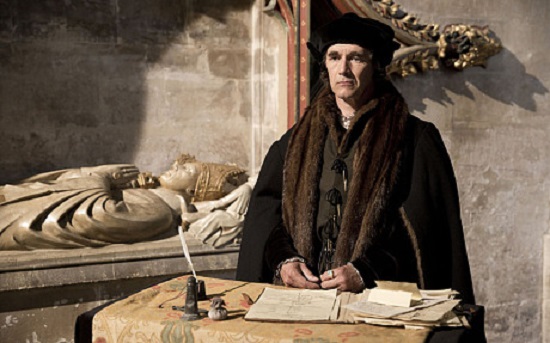
And then this evening there was BBC2’s stunning dramatisation of Hilary Mantel’s Wolf Hall, featuring Mark Ryland as Thomas Cromwell, another lawyer, here defending Cardinal Wolsey. So I ended the day  in a much more positive frame of mind about the legal profession, though in the past most lawyers have tended to bring me out in hives. (Some would consider the many years I spent with SustainAbility in their Bedford Row offices, smack in the heart of London lawyerdom, as the height of poetic justice.)

The day also spurred my ongoing internal debate about what I should do next, as did a call with Andrew Winston this afternoon, and an email exchange with Tim Smit. It is clear that things are changing and that the next decade is going to be very different, profoundly challenging. Our capacity to speak truth to power – and to ourselves – will be vital. Stephen Lloyd was one of those people who did this quite naturally, or so it seemed, and yet did so in ways that left people wanting more. I can’t have been the only wishing that such people didn’t set the benchmarks quite so high.

Eyed Up By A Pufferfish – And Then It Was 2015

John Elkington · 2 January 2015 · Leave a Comment

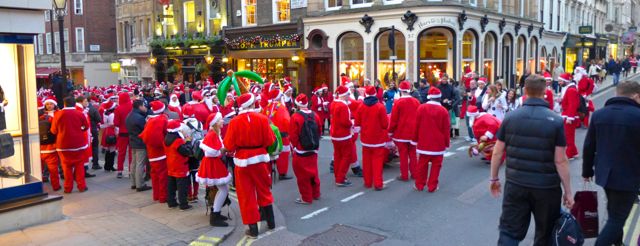
Fathers Christmas, off Jermyn Street
Fathers Christmas, off Jermyn Street, early December
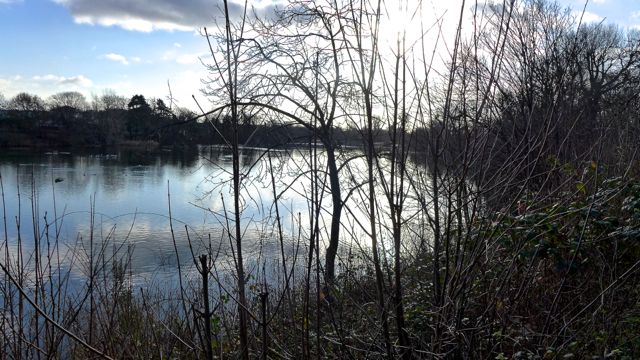
Leg of Mutton reservoir
Leg of Mutton reservoir, Barnes
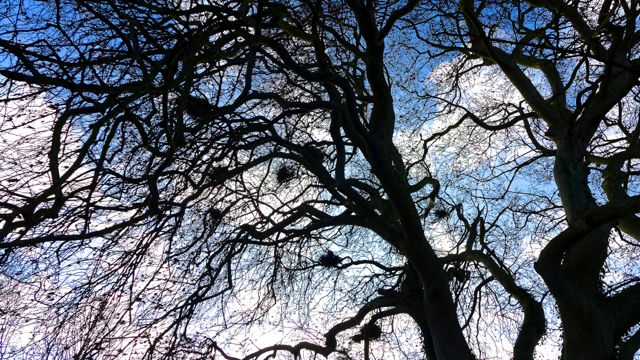
Heronry
Heronry
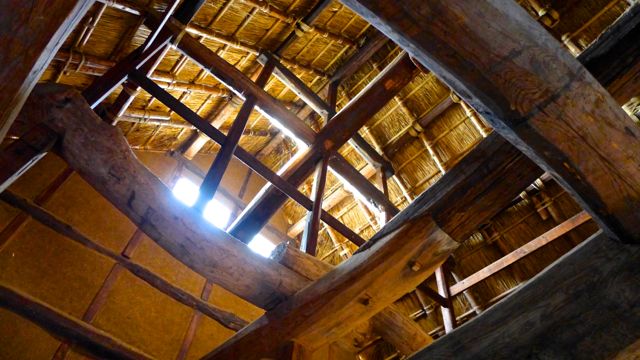
Beams inside Japanese building, Kew Gardens
Beams inside Japanese building, Kew Gardens, 2 January 2015
Arboreal chandelier, Kew Gardens
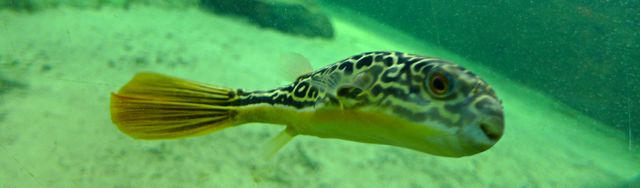
Pufferfish, 1
Pufferfish, 1
Pufferfish, 2
Making eyes: pufferfish, 2
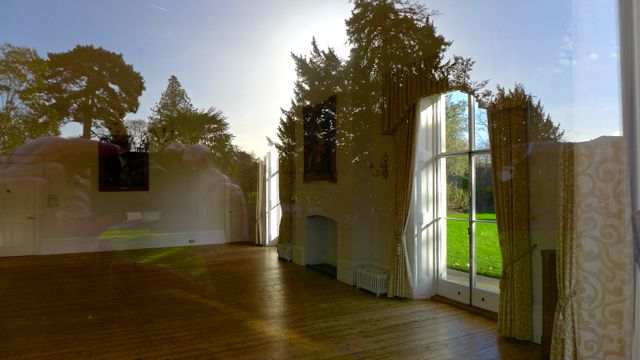
Gently haunted room, 1
Gently haunted room, Cambridge Cottage, 1
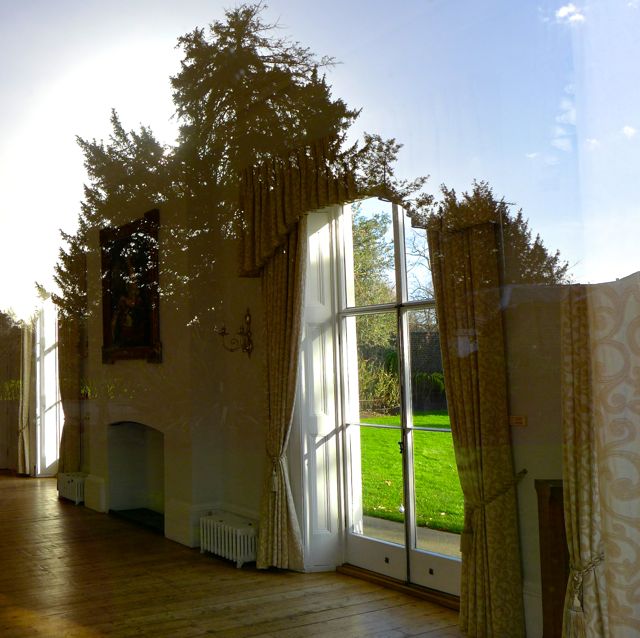
Gently haunted room, 2
Gently haunted room, Cambridge Cottage, 2

Finally coming to the end of the Christmas and New Year holidays, in which much of my times was spent drafting the Volans Breakthrough White Paper. Amazing how long it can take to write short. The draft is now out for comment with Sam and Astrid, with just one section still to do, which will probably be tomorrow.

Apart from a visit to Little Rissington, to see my parents (Tim has been quite ill) and extended family, and a visit yesterday from Gaia, Hania, Jake and Paul for a New Year’s Day lunch, I have been reading somewhat eclectically (books like William Gibson’s The Peripheral, H.E. Bates’ Down the River, Andreas Wagner’s Arrival of the Fittest, Simon Scarrow’s Brothers in Blood, and Alexander Kluge’s Air Raid), writing, walking (including a visit to my favourite heronry) or watching television, in  one form or another. One highlight was watching the original films of The Lady Vanishes and The 39 Steps on the same day. They really don’t make them like they used to.

Elaine has been working away on her immense Lycian Coast travelogue, now posted – and has attracted an encouraging amount of positive comment.

Today we went across to Kew Gardens, to meet up with John Gilbert and take a glorious walk around the gardens. The weather was dazzling – so warm that we could eat outside at The Orangery.

En route, we stopped off at Cambridge Cottage to see the botanical paintings, where I took a couple of images of the room where SustainAbility held its first Council meeting – way back in 1995. A gentle haunting as I looked through the window, a form of of time machine. Thinking back to the 15 or so wonderful people we convened, among them Tom Gladwin, Charles Medawar, Jane Nelson and Ulrich Steger.

One highlight of the Kew visit was making fairly intense eye contact with a pufferfish underneath the lily pond area in the Princess of Wales greenhouse. Interesting to learn later that the big eyes of this fish makes them much loved pets, despite their toxicity.

The fish’s maze markings put me in mind of the complexities ahead in 2015, which looks set to be quite (American sense) challenging. But then the fact that my new friend is related to the box fish family put me in mind of biomimicry, particularly the concept car based on the boxfish, which was uplifting.

When I think of the areas of our work that most engage me these days, they include biomimicry (where I am on Janine Benyus’s Biomimicry Institute board), Gaia Theory (where John Gilbert and I have been working with the Science Museum) and the Sustainable Eel Group, which we were discussing as we walked around the Japanese building in the heart of the gardens. One thing I’m particularly looking forward to in 2015 is releasing the 27,000 eels that SustainAbility gave me to celebrate my 27 years to date with the organisation.

Seeing the pufferfish also put me in mind of the extraordinary, wonderfully complex nests they make. See also here. Nature’s equivalent of the rose window in a cathedral, perhaps.

At this juncture, there’s something about 2015 that feels to me pivotal, out of the ordinary. Interested to see what it might be.

New York Launch of The Breakthrough Challenge

John Elkington · 18 November 2014 · Leave a Comment

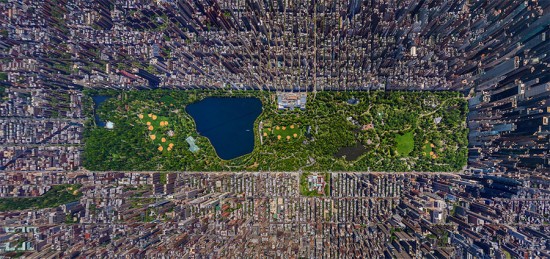
COURTESY AIRPANO This panorama by Russian photographer Sergey Semonov presents Manhattan’s Central Park and its surrounding cityscape with fascinating new detail. The Atlantic reproduced the image, submitted as part of the Epson International Photographic Pano Awards. Created in collaboration with aerial-panorama-makers AirPano, the team photographed the park from a helicopter and later stitched the various images together creating the unique, albeit slightly distorted, view of the city.
COURTESY AIRPANO
This panorama by Russian photographer Sergey Semonov shows Manhattan’s Central Park and its cityscape with extraordinary new detail. The Atlantic reproduced the image, submitted as part of the Epson International Photographic Pano Awards. Created in collaboration with aerial-panorama-makers AirPano, the team photographed Central Park from a helicopter and then stitched the images together into this amazing view.

This evening I’m delighted to be speaking at an event hard by New York’s Central Park that I suspect will be quite (American sense) frustrating … but for the very best of reasons.

The challenge at today’s NYC launch of our book The Breakthrough Challenge will be to talk to even a proportion of the people I want to catch up with.

The audience will be made up of a heady mix of people I have known for ages (people like Alice Tepper Marlin, founder of organisations like the Council on Economic Priorities and Social Accountability International), people that Volans and SustainAbility work with day-to-day, and a score or two people I haven’t yet met.

Still, my aim is to do three things at the event, kindly hosted by Doris Michaels of the DSM Agency—who has been my literary agent for the last three books.

The first is to celebrate Doris’s 20-year stint at DSM, which is now coming to an end as she hands over to Sheree Bykofsky.

The second is to introduce The Breakthrough Challenge as the latest in what increasingly looks like a trilogy:

  • This started with The Power of Unreasonable People, co-authored with Volans co-founder Pamela Hartigan, with copies given to every participant in the 2008 World Economic Forum event in Davos. The focus here was largely on extraordinary change agents operating outside mainstream business, but with plenty to teach mainstream business leaders.
  • Then came The Zeronauts, whose sub-title is ‘Breaking the Sustainability Barrier,’ a book launched in 2012 at our Breakthrough Capitalism Forum. This time the focus was largely on extraordinary people working inside business who are embracing zero-based targets.
  • And now there is The Breakthrough Challenge, co-authored with Jochen Zeitz, which focuses on extraordinary change agents both inside and outside the capitalist mainstream—but all of whom share the conviction that the system must change, that we need to change the rules of the market game.

And the third is to hand over to B Team Managing Director Raj Joshi to provide an update on where the business-leaders-set-to-change-the-world initiative has got to. (Jochen Zeitz is co-Chair with Sir Richard Branson of The B Team and I am a long-standing member of the Advisory Board.)

On the first of these, the celebration of Doris Michaels, I was recalling that when we founded Volans back in 2008 we picked a short-list of values we felt we wanted to embrace—and one of mine that made the final cut was Serendipity. Looking back, serendipity was definitely in play that evening 7-8 years ago when, after I gave a plenary speech at the Haas School of Business at Berkeley, California, Elaine bumped into Doris at the reception afterwards—and she was wearing a label saying ‘Literary Agent’ – at exactly the moment I was looking for a new one.

Given that writers write and authors produce books, it may seem strange that one question I will raise this evening is: Why another book?

This was the question in my mind when Jochen first proposed the idea of writing a book together after we met at a small Virgin Unite roundtable outside Geneva.

And the question will be accentuated for me if Art Kleiner makes it to the launch event. The author of wonderfully provocative book The Age of Heretics, he is also Editor-in-Chief of the magazine strategy + business. And he recently commissioned me to review a barrowload of sustainable business books—and, in the end, to pick just three as the top picks. In the event, my #1 choice was Andrew Winston’s The Big Pivot.

But the very fact that there is now this new book suggests that Jochen and I soon found an answer. It struck us that the combination of my work on the Triple Bottom Line (20 years old in 2014) and Jochen’s work at PUMA on the Environmental Profit & Loss accounting approach, which he has always seen as a key step towards a fully-fledged TBL approach, could create something greater than the sum of the parts.

Our focus is summed up in the book’s sub-title: ‘How to Connect Today’s Profits With Tomorrow’s Bottom Line.’

So: my profound thanks and godspeed to Doris; a warm welcome to Sherree; please do track down a copy of The Breakthrough Challenge if you haven’t already got one; and brace yourselves for a B Team Call to Action when the 2015 World Economic Forum event opens its doors in Davos early in the New Year—focusing in on its theme, The New Global Context.

That, in effect, is what the new book’s about. The challenges, the opportunities and the growing number of solutions being developed and promoted by new generations of innovators, entrepreneurs, intrapreneurs, investors, policy-makers and educators.

Let us know what you think of the book—and its call to breakthrough action. Keep track of developments on the Volans and B Team websites. And let us know how we can help you do more, faster and better.

Science Museum’s Information Age and Rapley Climate Rap

John Elkington · 11 November 2014 · Leave a Comment

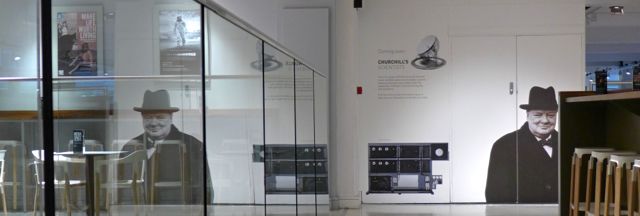
Winston Churchill greets us
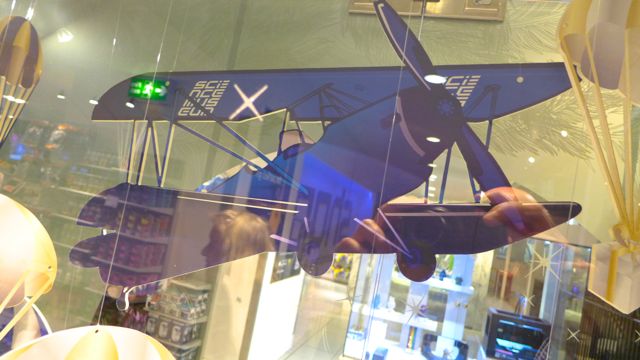
In the store
In store
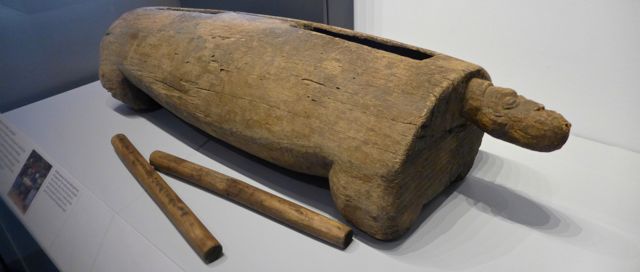
Log drum from Bafut, Cameroon
The Rugby VLF transmitter began work in 1926, destroyed by a fire in 1943
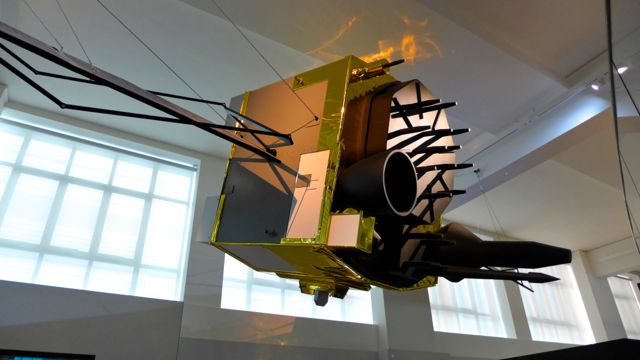
It's amazing what we have been able to loft into space
It’s amazing what we have been able to loft into space
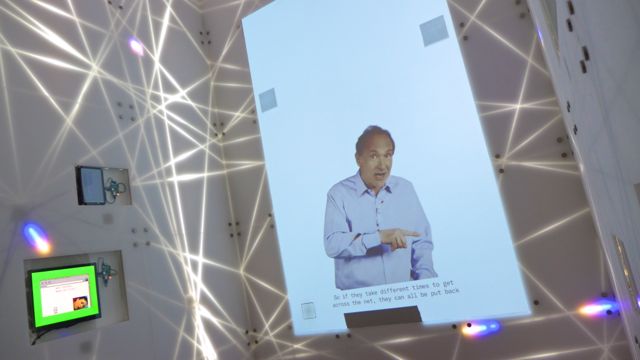
Tom Berners-Lee at the centre of the Web
Tim Berners-Lee at the centre of the Web
USSR and US computers, back to back, that modelled the effects of Nuclear Winter
The IBM computer we used at ENDS
Pre-production version of the Apple Macintosh Gaia and Hania grew up with
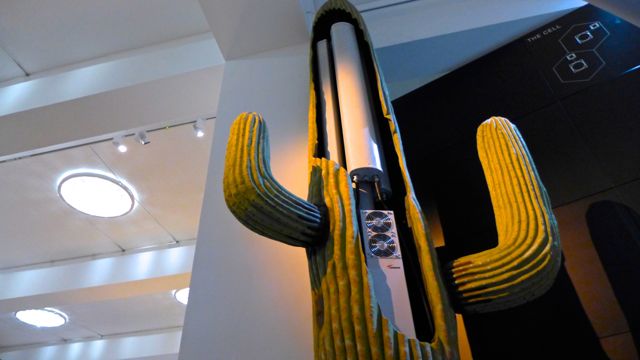
Mock cactus hides cell phone facility
Geodesic shapes in the Maths section

Across early to Science Museum, for a tour around their wonderful new Information Age exhibition – featuring “Six Networks That Changed Our World.” Our guide was the Curator, Tilly Blyth.

One of the most moving features was the story of how African American singer Paul Robeson, banned from travelling during the McCarthy era of anti-Communist insanity in the United States, nonetheless managed to do a concert in London via the magic of a submarine repeater cable. More on that here.

His The Canoe Song made it into my Top 16 pieces of music many moons ago. In other news, he also had an affair with actress Peggy Ashcroft, when she played Desdemona to his Othello. She was later mother-in-law to Molly March, who I grew up with in Cyprus in the 1950s.

Then back to the office for a series of meetings with people like Matt Scott of the Bank of England and a sustainability duo from Schindler Group, who make lifts and escalators. Both sessions fascinating.

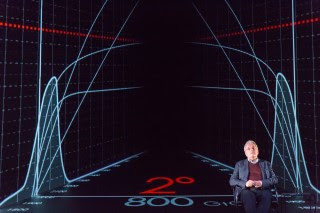
Then with Elaine to 2071, a one-man climate show by Professor Chris Rapley, a former Director for the Science Museum. Sitting right behind us was Greenpeace Director John Sauven, with whom we discussed the frequent LEGO campaign, among other things. And on the way out we said a brief hello to Steve Waygood of AVIVA.

The show, mis-labelled a “play” by some, is impressive in terms of the research findings and statistics, but not the liveliest of shows. Rapley reminded me at various points of a toned down Jim Lovelock, way more temperate in his language and dispassionate in his presentation, though at times you could feel the emotion struggling to break through. Next time, though, more visuals, please.

Chris Rapley on stage 1
Chris Rapley on stage 2
  • « Go to Previous Page
  • Go to page 1
  • Interim pages omitted …
  • Go to page 71
  • Go to page 72
  • Go to page 73
  • Go to page 74
  • Go to page 75
  • Interim pages omitted …
  • Go to page 134
  • Go to Next Page »

Primary Sidebar

Introduction

I began this blog with an entry reporting on a visit to the Woods Hole Oceanographic Institution on Cape Cod, on 30 September 2003. The blog element of the website has gone through several iterations since, with much of the older material still available.

Like so many things in my life, blog entries blur the boundaries between the personal and the professional. As explained on this site’s Home Page, the website and the blog are part platform for ongoing projects, part autobiography, and part accountability mechanism.

In addition, my blogs have appeared on many sites such as: Chinadialogue, CSRWire, Fast Company, GreenBiz, Guardian Sustainable Business, and the Harvard Business Review.

Recent Comments

  • John Elkington on The Hill House Elkingtons
  • sally fitzharris. (Rycroft) on The Hill House Elkingtons
  • Thomas Forster on Reminder of Glencot Years

Journal Archive

About

John Elkington is a world authority on corporate responsibility and sustainable development. He is currently Founding Partner and Executive Chairman of Volans, a future-focused business working at the intersection of the sustainability, entrepreneurship and innovation movements.

Contact

john@johnelkington.com  |  +44 203 701 7550 | Twitter: @volansjohn

John Elkington

Copyright © 2026 John Elkington. All rights reserved. Log in