• Skip to primary navigation
  • Skip to main content
  • Skip to primary sidebar
John Elkington

John Elkington

A world authority on corporate responsibility and sustainable development.

  • About
    • Ambassador from the future
  • Past lives
    • Professional
      • Volans
      • SustainAbility
      • CounterCurrent
      • Boards & Advisory Boards
      • Awards & Listings
    • Personal
      • Family
      • Other Influences
      • Education
      • Photography
      • Music
      • Cycling
    • Website
  • Speaking
    • Media
    • Exhibitions
  • Publications
    • Books
    • Reports
    • Articles & Blogs
    • Contributions
    • Tweets
    • Unpublished Writing
  • Journal
  • Contact
  • Show Search
Hide Search

Search Results for: Tim elkington

Wrestling with labyrinthitis

John Elkington · 13 August 2014 · Leave a Comment

labyrinthitis-1787

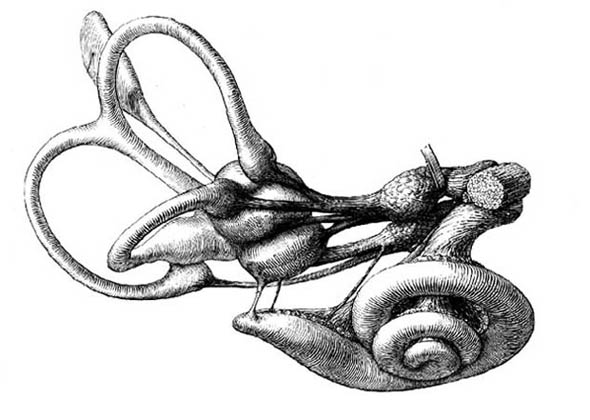
Woke this morning to find myself once again in the indelicate, disorientating embrace of labyrinthitis. Like being on some form of hallucinogen.

This time, though, instead of the world spinning around in line with my body, my head was spinning around, chin over forehead, like a wheel on an axle. A bit like being in a space capsule, spinning out of control.

Have had to cancel a meeting with a bank in Canary Wharf and am working away at home, partly on the latest phase of our Breakthrough Capitalism Program, partly on a new report on progress in Europe with Interface’s Mission Zero.

Discovered that labyrinthitis can come back, though typically (and hopefully) less severe second time around.

The body is a weird and wonderful thing, the ear almost more so. Amazing that we take these things for granted so much of the time.

Have always loved spirals – and rather look forward to this one sorting itself out.

Illustration: 123Tagged
Sketching the Lovelock Paradigm

John Elkington · 27 July 2014 · 1 Comment

Friends and colleagues, I need your help. If you aren’t already wearing them, please find and put on your future-tinted glasses.

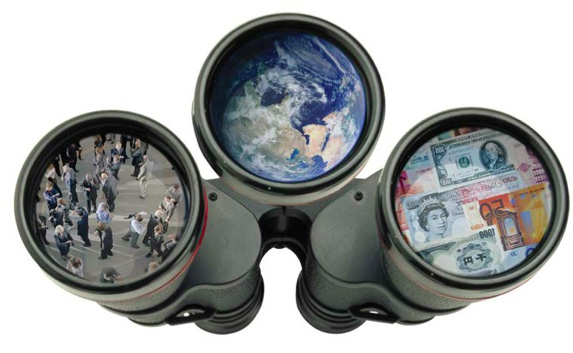
20 years on from the launch of the triple bottom line, long symbolised by the trinoculars shown below, I am head-banging again—working on the early stages of the next phase of the Volans Breakthrough Capitalism program, with core funding now secured from the Generation Foundation.

binoculars 2

The word breakthrough may trip off the tongue, but it begs the question: Breakthrough to what? For us, the Breakthrough Challenge involves capitalist societies embarking on an accelerating market transition to a future powerfully shaped by a new scientific worldview—the Lovelock Paradigm.

Anyone who wants a quick dip into the world of paradigm shifts, would be well advised to at least skim this blog by David Weinberger.

Our emerging scientific paradigm was sparked by the work of James Lovelock, particularly his invention of the electron capture detector, his work for NASA on the detection of life on Mars, and the evolution of his Gaia Hypothesis and Theory. It encourages us to view the Earth as a single, integrated system, to a degree self-regulating—but surprisingly vulnerable to actions that adversely impact critical elements of the system.

Like earlier paradigm shifts (to the Copernican view of cosmology, for example, or the Darwinian view of biology), the new paradigm—evolving since the late 1950s—is already transforming markets, business, finance, government and politics.

My assumption in all of this is that, as Thomas Kuhn argued in The Structure of Scientific Revolutions way back in 1961, paradigm shifts take place on generational timescales. They proceed one death at a time. Time has to remove both those who were deeply infected by the previous paradigm, and all the memes that went with it, and many of those they infected in their teaching careers.

As a result, I have always assumed (I read Kuhn’s book when I was 13 or 14) that a true paradigm shift would take 70-80 years to effect. If that is the case here, and Lovelock’s invention of the crucial piece of technology, the electron capture detector, happened in 1957, then we are talking about a timescale out to the late 2020s or 2030s. In the next phase of our Breakthrough work we are reining ourselves in a little, focusing on what we are dubbing the Breakthrough Decade, from 2015 to 2025.

Among other things, I see the Lovelock Paradigm assuming that:

  1. We are moving into the Anthropocene era, where our economies, technologies and lifestyles have impacts on a geological scale
  2. Everything on Earth is connected, with complex and difficult-to-predict feedback loops
  3. Humankind has already exceeded some planetary boundaries at 7 billion people—and is predicted reach 9-10 billion later in the century
  4. New technologies and transparency processes are making these loops, connections and boundary conditions increasingly visible
  5. Global governance mechanisms struggle to cope, but by the 2050s activities that damage the self-regulatory mechanisms of the planet’s atmosphere, oceans, land surfaces and biosphere must be brought back under control
  6. A core strand in future politics and business will be the reconciliation of environmental, social and governance (ESG) priorities
  7. New types of capitalism and market mechanism will be central
  8. Demand for policies, technologies, products, services and investment that protect and regenerate natural systems will grow exponentially
  9. New types of market research and intelligence will be needed to track the value and wealth created
  10. Core disciplines of business, including accounting and economics, must undergo unprecedented change to adapt to the new paradigm.


These 10 elements of the emerging paradigm are those that occurred to me as I thought all of this through, but I would be fascinated to hear what items you would add to the list – and which you would take away, and why. Answers to me, please, at john [at] volans [dot] com.

Murder in the park

John Elkington · 20 July 2014 · Leave a Comment

RP1

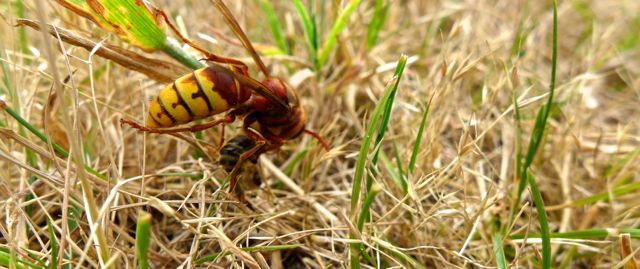
Hornet kills and dismembers a bee

RP5

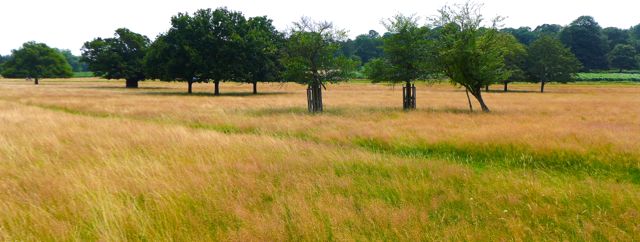
Grass-scape

RP4

Taken by Elaine

RP2

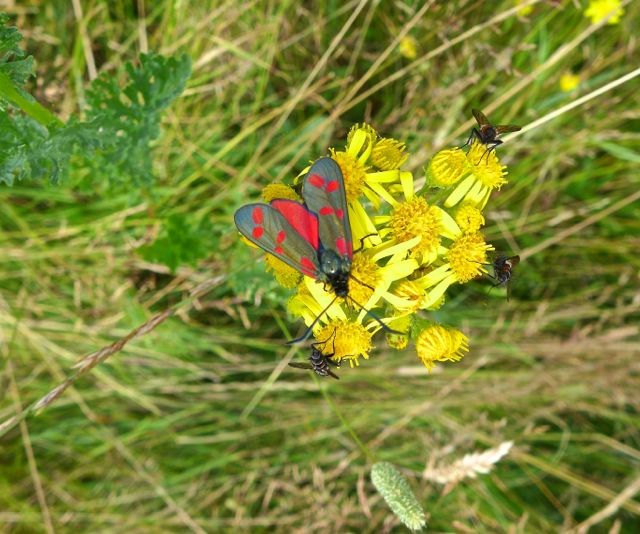
Six-spotted burnet moth

RP0

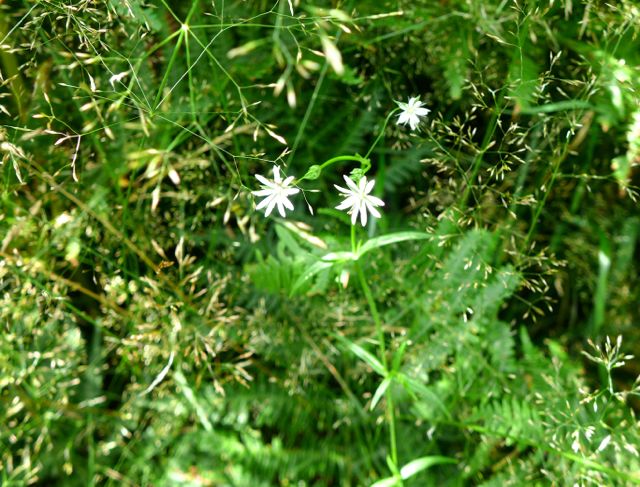
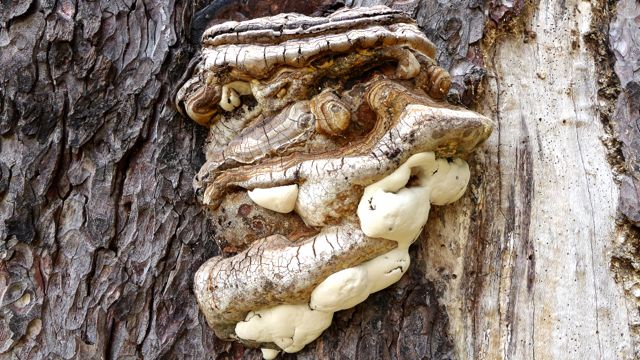
A sculptural growth

A delightful walk in Richmond Park early this afternoon, in bright sun, with particularly vibrant insect life. Passing by a large clump of ragwort, which I hadn’t realised was so toxic to horses (I looked it up when I got back), we stopped to watch the bees and other insects enjoying the blossoms.

I saw a large hornet, quartering the ragwort, inspecting bees and other potential victims. Then it pounced on one and, in short order bore it down to the ground, killing it and stripping off its wings. Soon predator and prey were aloft and away.

I remember allowing a very large hornet to sit on my arm in Turkey a few years back, off the Lycian coast. Somehow I don’t feel threatened by them, but I’m glad I’m not a bee.

Many dragonflies and damselflies about, several mating. And the grasses now have that wonderful reddish hue, which is a glory to see ruffled in the breeze.

As we walked west towards the Richmond Gate, a passing dog put up a beautifully coloured sparrowhawk. Its owner asked whether we thought it was a kestrel and I said I thought not: it was only when I looked it up later that I realised what we had seen.

Have been trying out my new Leica D-Lux 6 in various conditions – and so far very happy with the results. But I suspect I need to spend a lot more time with the manual to get the best results.

Bees, mulberries and frog at Lambeth Palace

John Elkington · 16 July 2014 · Leave a Comment

LP1

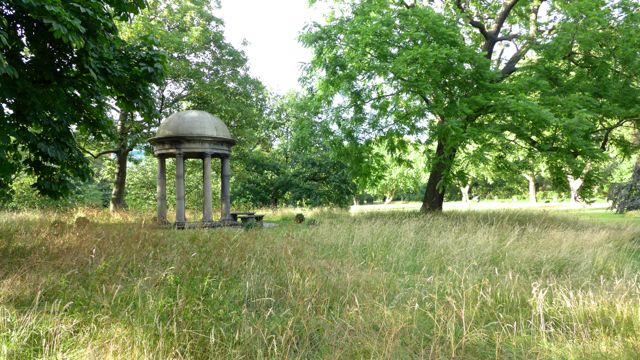
Lambeth Palace gardens, 9 July

LP2

Sculpture, 9 July

LP3VS

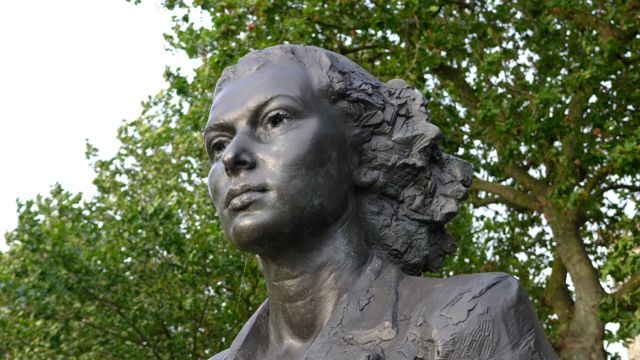
Violette Szabo featured on SOE Memorial, Albert Embankment, 9 July

LP4 bride

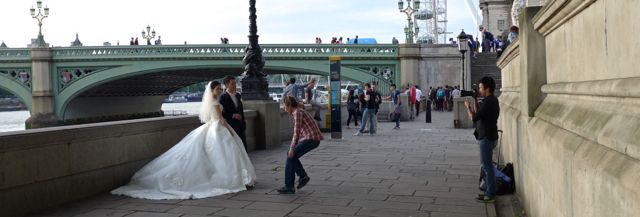
Japanese wedding photo shoot, Westminster Bridge, 9 July

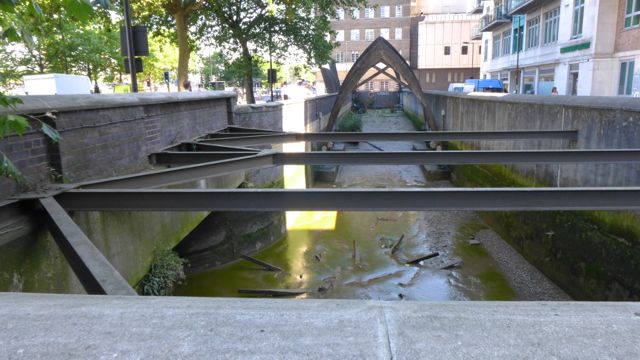
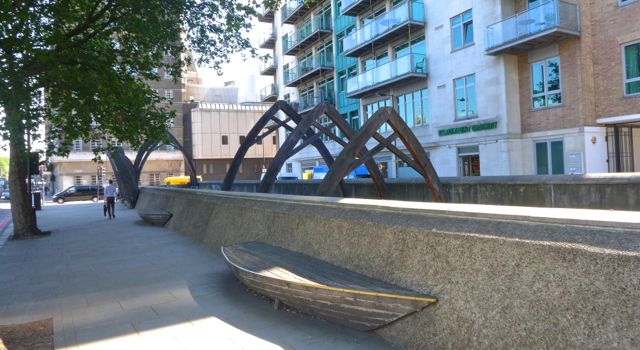
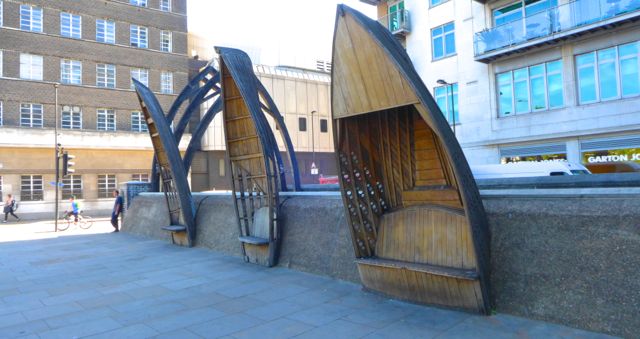
LP dock 1White Hart Dock 1, 16 July (as are all below)

LP dock 2

White Hart Dock 2

LP dock 3

White Hart Dock 3

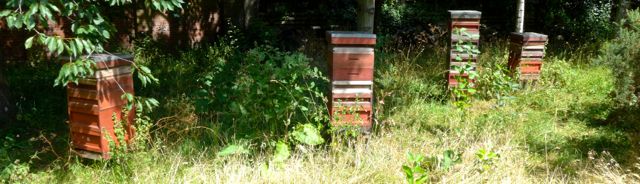
LP hivesLambeth Palace beehives

LP dragonfly

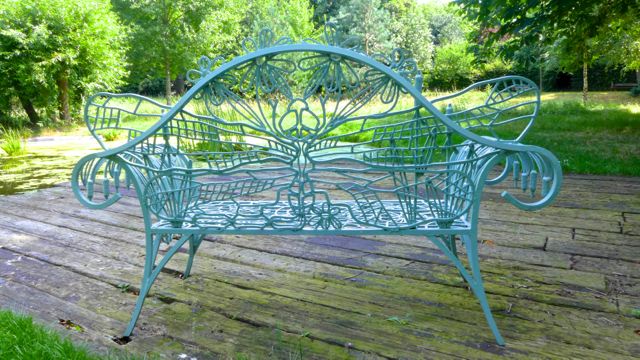
Dragonfly chair by pond

LP rowan

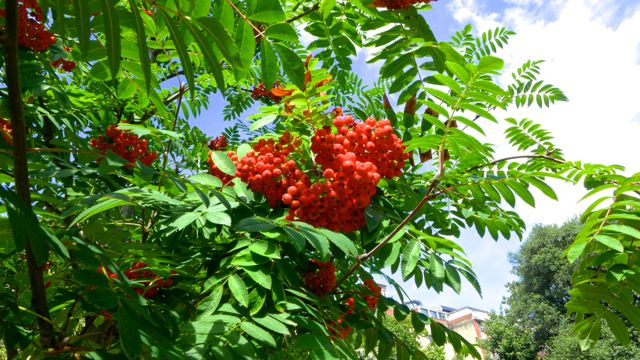
Rowan berries

LP swallows

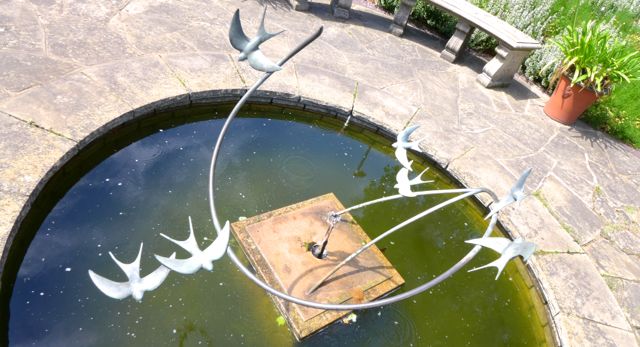
Swallows over pond 1

LP swallows 2

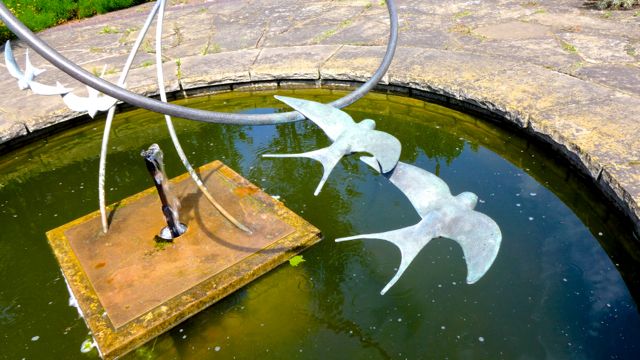
Swallows over pond, 2

One of the loveliest places in London can be found in the gardens of Lambeth Palace. As a member of the Committee of Reference for the Friends Life (originally Friends Provident) stewardship funds, I went there on the evening of 9 July, for a reception celebrating 30 years of Stewardship.

Walking back to Westminster afterwards, I saw for the first time the Special Operations Executive memorial, featuring a wonderful bust of the ill-fated Violette Szabo. Shortly afterwards, I came across a photo shoot for a Japanese couple – poignant, since the key reason why Szabo joined the SOE was that her husband had been killed during the battle of El Alamein in North Africa.

Then back to the Palace today – walking past the evocative White Hart Dock – for a meeting of the Committee of Reference, with the extraordinary Archbishop Justin Welby in the chair.

A very energetic debate ensued, on a range of environmental, social and governance issues related to the investment portfolio managed for the last 10 years by F&C. Afterwards, we had a presentation from the Schroders team who will shortly take over the role.

In the break between the two sessions, a number of us wandered into the gardens, where I ate a number of early ripening mulberries, the sat in the flight paths for the bees from the Palace hives, and finally exchanged the time of day with a delightfully laid-back frog.

Third degree, first graduation ceremony

John Elkington · 15 July 2014 · Leave a Comment

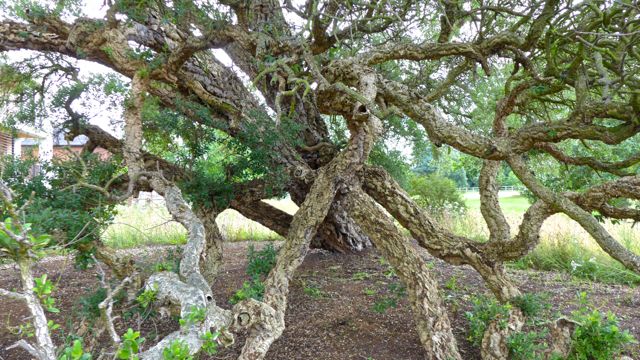
Essex cork

One of the two cork trees

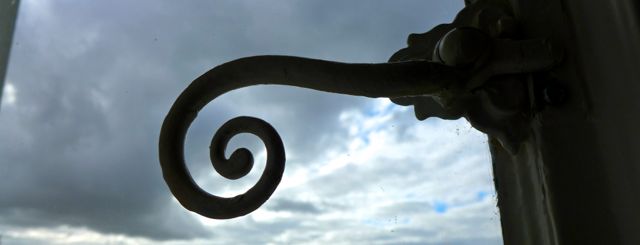
Essex spiral
Window handle in Wivenhoe House

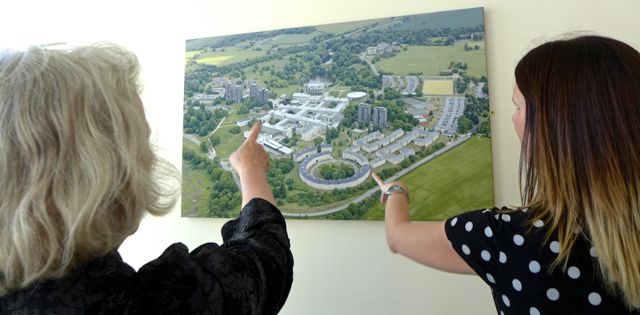
Essex campus map

Elaine and Lynsey (Dawson) get an overview of today’s campus

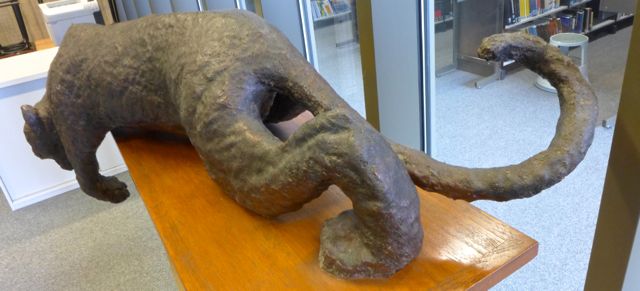
Essex Big CatBig Cat in library

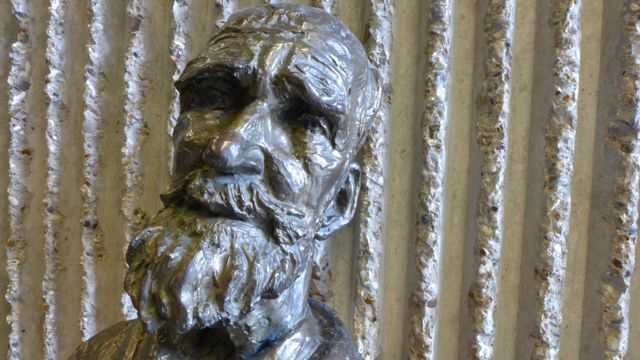
Essex GBSGeorge Bernard Shaw in the library

Essex asleep

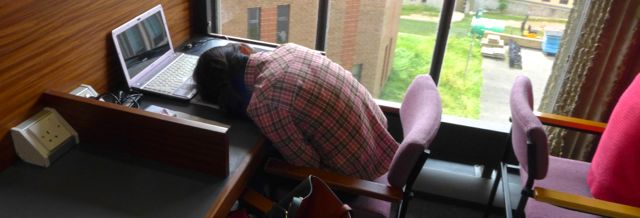
Asleep in library

Essex Ivor Crewe

Ivor Crewe conference centre

Essex 1

Robed

Just back from my first visit to the University of Essex in a very long time. I left in 1970, and went back at least once, to work with a German professor, but otherwise it’s been around 40 years. And what a joy it was.

Elaine, Gaia, Hania and I arrived last night and stayed in Wivenhoe House, basically the guts of  the university when Elaine first arrived in 1965, the university’s second year. But now the House has been converted into a four-star hotel and the Nissen huts that once ranged alongside (the SAS and the Tank Regiment were stationed there during WWII) have long been cleared away.

Today was the graduation ceremony for the School of Biological Sciences, where I had elected to receive my honorary doctorate. In front of an audience of around 1,000, we celebrated the 2014 crop of graduates – and it was wonderful to see their joy (and that of their families) as they emerged full-fledged.

For me it was a case of third time lucky. I had failed to show up for both previous graduation ceremonies, at Essex in 1970 and UCL in 1974, because I have never liked academic robing, and because I each time I did a degree I emerged feeling less qualified (because more aware of the complexity of the subject) than when I went in.

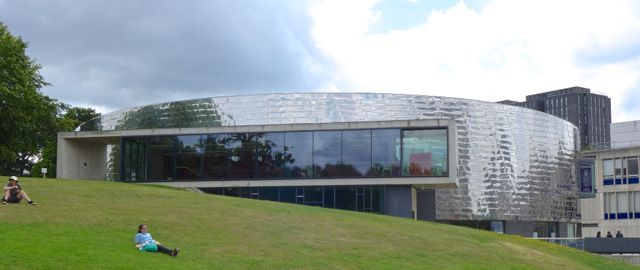
But a wonderful oration from Professor Graham Underwood set the scene, and I enjoyed addressing the audience, which was in great mood. Afterwards, we were guided around the campus by Lynsey Dawson and Gbolahan Faleye, who among other things showed us the new business school building, still emerging, which is apparently set to be the greenest B-school in the country.

What a huge privilege both to receive the honorary degree and to do so in a year when the other honorary ‘graduands’ were: Dr Jan Pinkava (who worked on some of Pixar’s biggest films, and sculpted the Big Cat that we encountered in the library), Dr Shirin Sharmin Chaudhury (the youngest and first ever female speaker of Bangladesh’s supreme legislative body), Dr John Ashdown-Hill (leader of the ‘Looking for Richard’ project, which led to the discovery of the remains of Richard III, to whom I am genetically linked), Martha Lane Fox (co-founder of last minute.com and Chancellor of the Open University), Lord Currie (who served as Chairman of the University’s Council during a critical fund-raising period) and Professor Colin Riordan (who was Vice-Chancellor of the University for five years, before moving to Cardiff University).

I loved the sculpture of George Bernard Shaw in the library, but probably my favourite things of all were the two cork trees beside Wivenhoe House, which General Rebow brought back as cuttings from the Peninsula Wars a very long time ago.

  • « Go to Previous Page
  • Go to page 1
  • Interim pages omitted …
  • Go to page 77
  • Go to page 78
  • Go to page 79
  • Go to page 80
  • Go to page 81
  • Interim pages omitted …
  • Go to page 134
  • Go to Next Page »

Primary Sidebar

Introduction

I began this blog with an entry reporting on a visit to the Woods Hole Oceanographic Institution on Cape Cod, on 30 September 2003. The blog element of the website has gone through several iterations since, with much of the older material still available.

Like so many things in my life, blog entries blur the boundaries between the personal and the professional. As explained on this site’s Home Page, the website and the blog are part platform for ongoing projects, part autobiography, and part accountability mechanism.

In addition, my blogs have appeared on many sites such as: Chinadialogue, CSRWire, Fast Company, GreenBiz, Guardian Sustainable Business, and the Harvard Business Review.

Recent Comments

  • John Elkington on The Hill House Elkingtons
  • sally fitzharris. (Rycroft) on The Hill House Elkingtons
  • Thomas Forster on Reminder of Glencot Years

Journal Archive

About

John Elkington is a world authority on corporate responsibility and sustainable development. He is currently Founding Partner and Executive Chairman of Volans, a future-focused business working at the intersection of the sustainability, entrepreneurship and innovation movements.

Contact

john@johnelkington.com  |  +44 203 701 7550 | Twitter: @volansjohn

John Elkington

Copyright © 2026 John Elkington. All rights reserved. Log in