
• Skip to primary navigation
  • Skip to main content
  • Skip to primary sidebar
John Elkington

John Elkington

A world authority on corporate responsibility and sustainable development.

  • About
    • Ambassador from the future
  • Past lives
    • Professional
      • Volans
      • SustainAbility
      • CounterCurrent
      • Boards & Advisory Boards
      • Awards & Listings
    • Personal
      • Family
      • Other Influences
      • Education
      • Photography
      • Music
      • Cycling
    • Website
  • Speaking
    • Media
    • Exhibitions
  • Publications
    • Books
    • Reports
    • Articles & Blogs
    • Contributions
    • Tweets
    • Unpublished Writing
  • Journal
  • Contact
  • Show Search
Hide Search

Search Results for: Tim elkington

Slum networking in Bloomsbury

John Elkington · 14 August 2014 · Leave a Comment

aboutus-victoriansewersystemOne of my longstanding heroes has been Sir Joseph Bazalgette, the man who designed and built much of today’s London sewerage system. I learned more about him while writing an article, ‘Breathing Life Into the Thames,’ that appeared in New Scientist on 24 March 1977.

As our species increasingly crowds into cities, such skills will be in growing demand. So I headed back into the office today, after a day out with labyrinthitis, in large part because I wanted to honour a commitment to meet Himanshu Parikh, the Indian engineer who has been a leading figure in the field of slum networking.

He was one 50 pioneers in social innovation spotlighted in our report The Phoenix Economy. Today, he was accompanied by his wife Rashmi and their daughter, Dr. Priti Parikh, who is a lecturer in the environmental and geomatic engineering department at UCL. And Bazalgette was one recurrent theme in our conversation. I am pretty sure he would have been fascinated by the approach Himanshu has pioneered.

Slum networking involves a citywide, community-based sanitation system and environmental improvement programme. It seeks to upgrade the infrastructure of a whole city using the network of slum settlements as a starting point. The result has been a dramatic improvement in the city infrastructure, with a piped sanitation system, clean rivers and a much improved road network – at a fraction of the cost of conventional approaches. The improvements in the infrastructure rapidly lead to a significant increase in the quality of housing, as people begin to invest time and money in their homes. Dramatic improvements are also seen in the health and education standards in the slum.

Illustration via Thames Water.
China’s thumbs-down on GDP

John Elkington · 14 August 2014 · Leave a Comment

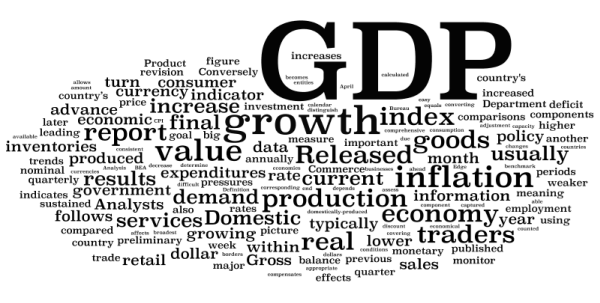
GDP wordle

As we start to crank up for the publicity drive for our new book, The Breakthrough Challenge: 10 Ways to Connect Today’s Profits With Tomorrow’s Bottom Line (John Elkington & Jochen Zeitz, Jossey-Bass, San Francisco, September 2014), our antennae are increasingly sensitive to news indicating that our agenda is engaging.

Given that one of the key arguments in the book is that we need to change not only accounting but also capitalism’s master discipline of economics, it was interesting to see the front page story in today’s Financial Times, headlined ‘China puts quality of life ahead of GDP.’

The FT concludes that the move, “which follows a directive issued by top leaders last year, is among the first concrete signs of China switching its blind pursuit of economic growth at all costs towards measures that encourage better quality of life.”

The logic behind the move is interesting. As the FT reports, “Analysts say that adherence to GDP as a performance metric – thus linking it to local officials’ promotion – has contributed to environmental degradation and urban sprawl as officials encouraged heavy industry and bulldozed agricultural land to build housing developments.” Among others, the FT quotes Xie Yaxuan, head of macroeconomic analysis at China Merchants Securities in Shenzhen. His view: “Using GDP as the main assessment method has caused a lot of problems, like unequal income distribution, problems with the social welfare system and environmental costs.”

The initiatives spotlighted largely relate to smaller cities and counties, and the FT notes that larger cities and regions are still riddled with patronage and other forms of corruption (a subject the paper also covers, this time with a full-page story on page 7). But big things can grow from small seeds – and major breakthroughs often start with Aha! moments that most people would ignore.

Wrestling with labyrinthitis

John Elkington · 13 August 2014 · Leave a Comment

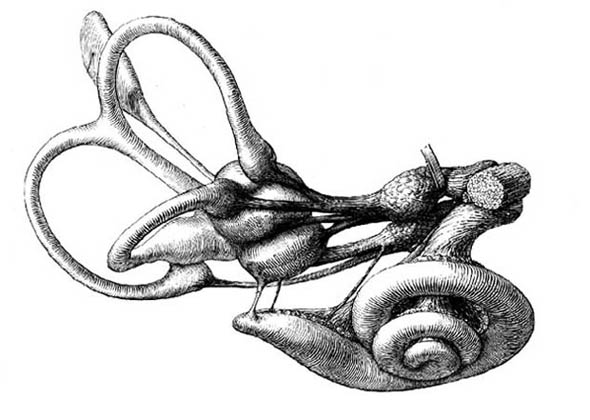
labyrinthitis-1787

Woke this morning to find myself once again in the indelicate, disorientating embrace of labyrinthitis. Like being on some form of hallucinogen.

This time, though, instead of the world spinning around in line with my body, my head was spinning around, chin over forehead, like a wheel on an axle. A bit like being in a space capsule, spinning out of control.

Have had to cancel a meeting with a bank in Canary Wharf and am working away at home, partly on the latest phase of our Breakthrough Capitalism Program, partly on a new report on progress in Europe with Interface’s Mission Zero.

Discovered that labyrinthitis can come back, though typically (and hopefully) less severe second time around.

The body is a weird and wonderful thing, the ear almost more so. Amazing that we take these things for granted so much of the time.

Have always loved spirals – and rather look forward to this one sorting itself out.

Illustration: 123Tagged

Sketching the Lovelock Paradigm

John Elkington · 27 July 2014 · 1 Comment

Friends and colleagues, I need your help. If you aren’t already wearing them, please find and put on your future-tinted glasses.

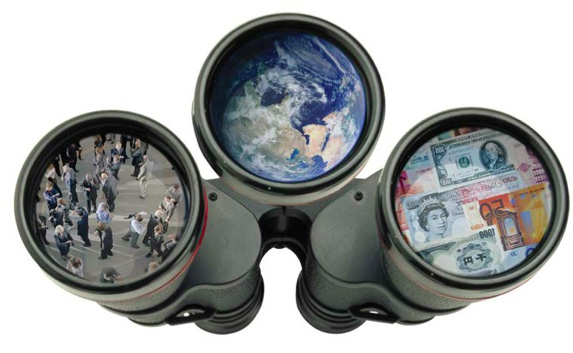
20 years on from the launch of the triple bottom line, long symbolised by the trinoculars shown below, I am head-banging again—working on the early stages of the next phase of the Volans Breakthrough Capitalism program, with core funding now secured from the Generation Foundation.

binoculars 2

The word breakthrough may trip off the tongue, but it begs the question: Breakthrough to what? For us, the Breakthrough Challenge involves capitalist societies embarking on an accelerating market transition to a future powerfully shaped by a new scientific worldview—the Lovelock Paradigm.

Anyone who wants a quick dip into the world of paradigm shifts, would be well advised to at least skim this blog by David Weinberger.

Our emerging scientific paradigm was sparked by the work of James Lovelock, particularly his invention of the electron capture detector, his work for NASA on the detection of life on Mars, and the evolution of his Gaia Hypothesis and Theory. It encourages us to view the Earth as a single, integrated system, to a degree self-regulating—but surprisingly vulnerable to actions that adversely impact critical elements of the system.

Like earlier paradigm shifts (to the Copernican view of cosmology, for example, or the Darwinian view of biology), the new paradigm—evolving since the late 1950s—is already transforming markets, business, finance, government and politics.

My assumption in all of this is that, as Thomas Kuhn argued in The Structure of Scientific Revolutions way back in 1961, paradigm shifts take place on generational timescales. They proceed one death at a time. Time has to remove both those who were deeply infected by the previous paradigm, and all the memes that went with it, and many of those they infected in their teaching careers.

As a result, I have always assumed (I read Kuhn’s book when I was 13 or 14) that a true paradigm shift would take 70-80 years to effect. If that is the case here, and Lovelock’s invention of the crucial piece of technology, the electron capture detector, happened in 1957, then we are talking about a timescale out to the late 2020s or 2030s. In the next phase of our Breakthrough work we are reining ourselves in a little, focusing on what we are dubbing the Breakthrough Decade, from 2015 to 2025.

Among other things, I see the Lovelock Paradigm assuming that:

  1. We are moving into the Anthropocene era, where our economies, technologies and lifestyles have impacts on a geological scale
  2. Everything on Earth is connected, with complex and difficult-to-predict feedback loops
  3. Humankind has already exceeded some planetary boundaries at 7 billion people—and is predicted reach 9-10 billion later in the century
  4. New technologies and transparency processes are making these loops, connections and boundary conditions increasingly visible
  5. Global governance mechanisms struggle to cope, but by the 2050s activities that damage the self-regulatory mechanisms of the planet’s atmosphere, oceans, land surfaces and biosphere must be brought back under control
  6. A core strand in future politics and business will be the reconciliation of environmental, social and governance (ESG) priorities
  7. New types of capitalism and market mechanism will be central
  8. Demand for policies, technologies, products, services and investment that protect and regenerate natural systems will grow exponentially
  9. New types of market research and intelligence will be needed to track the value and wealth created
  10. Core disciplines of business, including accounting and economics, must undergo unprecedented change to adapt to the new paradigm.


These 10 elements of the emerging paradigm are those that occurred to me as I thought all of this through, but I would be fascinated to hear what items you would add to the list – and which you would take away, and why. Answers to me, please, at john [at] volans [dot] com.

Murder in the park

John Elkington · 20 July 2014 · Leave a Comment

RP1

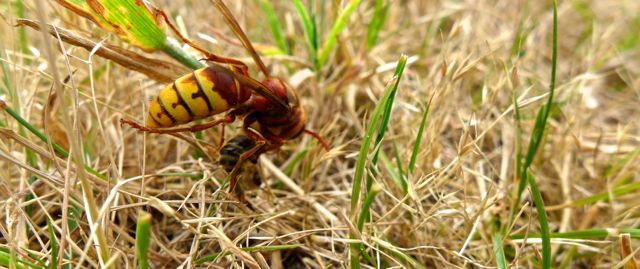
Hornet kills and dismembers a bee

RP5

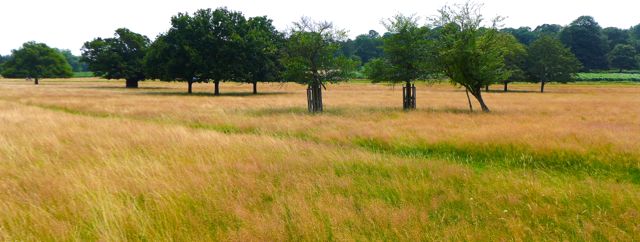
Grass-scape

RP4

Taken by Elaine

RP2

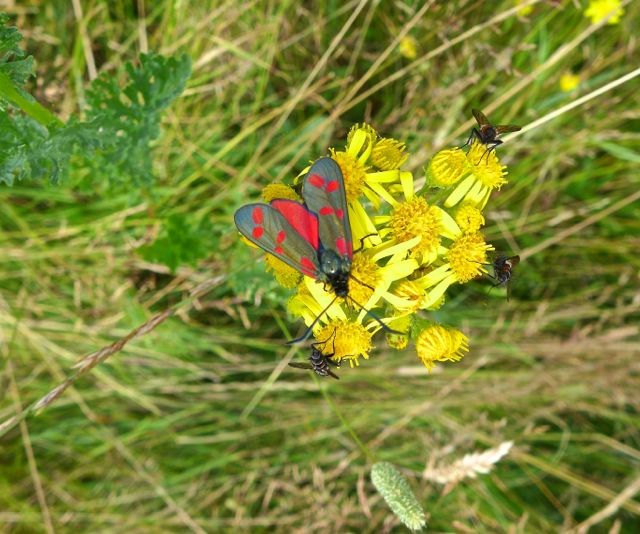
Six-spotted burnet moth

RP0

A sculptural growth

A delightful walk in Richmond Park early this afternoon, in bright sun, with particularly vibrant insect life. Passing by a large clump of ragwort, which I hadn’t realised was so toxic to horses (I looked it up when I got back), we stopped to watch the bees and other insects enjoying the blossoms.

I saw a large hornet, quartering the ragwort, inspecting bees and other potential victims. Then it pounced on one and, in short order bore it down to the ground, killing it and stripping off its wings. Soon predator and prey were aloft and away.

I remember allowing a very large hornet to sit on my arm in Turkey a few years back, off the Lycian coast. Somehow I don’t feel threatened by them, but I’m glad I’m not a bee.

Many dragonflies and damselflies about, several mating. And the grasses now have that wonderful reddish hue, which is a glory to see ruffled in the breeze.

As we walked west towards the Richmond Gate, a passing dog put up a beautifully coloured sparrowhawk. Its owner asked whether we thought it was a kestrel and I said I thought not: it was only when I looked it up later that I realised what we had seen.

Have been trying out my new Leica D-Lux 6 in various conditions – and so far very happy with the results. But I suspect I need to spend a lot more time with the manual to get the best results.

  • « Go to Previous Page
  • Go to page 1
  • Interim pages omitted …
  • Go to page 77
  • Go to page 78
  • Go to page 79
  • Go to page 80
  • Go to page 81
  • Interim pages omitted …
  • Go to page 134
  • Go to Next Page »

Primary Sidebar

Introduction

I began this blog with an entry reporting on a visit to the Woods Hole Oceanographic Institution on Cape Cod, on 30 September 2003. The blog element of the website has gone through several iterations since, with much of the older material still available.

Like so many things in my life, blog entries blur the boundaries between the personal and the professional. As explained on this site’s Home Page, the website and the blog are part platform for ongoing projects, part autobiography, and part accountability mechanism.

In addition, my blogs have appeared on many sites such as: Chinadialogue, CSRWire, Fast Company, GreenBiz, Guardian Sustainable Business, and the Harvard Business Review.

Recent Comments

  • John Elkington on The Hill House Elkingtons
  • sally fitzharris. (Rycroft) on The Hill House Elkingtons
  • Thomas Forster on Reminder of Glencot Years

Journal Archive

About

John Elkington is a world authority on corporate responsibility and sustainable development. He is currently Founding Partner and Executive Chairman of Volans, a future-focused business working at the intersection of the sustainability, entrepreneurship and innovation movements.

Contact

john@johnelkington.com  |  +44 203 701 7550 | Twitter: @volansjohn

John Elkington

Copyright © 2026 John Elkington. All rights reserved. Log in