• Skip to primary navigation
  • Skip to main content
  • Skip to primary sidebar
John Elkington

John Elkington

A world authority on corporate responsibility and sustainable development.

  • About
    • Ambassador from the future
  • Past lives
    • Professional
      • Volans
      • SustainAbility
      • CounterCurrent
      • Boards & Advisory Boards
      • Awards & Listings
    • Personal
      • Family
      • Other Influences
      • Education
      • Photography
      • Music
      • Cycling
    • Website
  • Speaking
    • Media
    • Exhibitions
  • Publications
    • Books
    • Reports
    • Articles & Blogs
    • Contributions
    • Tweets
    • Unpublished Writing
  • Journal
  • Contact
  • Show Search
Hide Search

Search Results for: Tim elkington

Articles Archive

My first article appeared in 1974. Elaine reminds me that I had had so many rejections by that time that I sent the piece off to the Architectural Association Quarterly saying to her that if they didn’t take it I’d give up on writing. The threat, though silent, seems to have worked. Having now written several thousands of articles, it has all become a bit of blur. But digging through the boxes at home, I surfaced a number which were important to me at the time—and they are a key part of the Articles section here.

There is little point in listing the literally thousands of articles I have written for publications likeBiotechnology Bulletin, Earthlife News, The ENDS Report and The Guardian – let alone the many occasional pieces written for the likes of BP Shield, Director Magazine, Glaxo World, ICI Magazine, The International Herald Tribune, Management Today, New Scientist, The Observer, Resurgence, The Sunday Times and so on. Worth mentioning, though, are the columns I wrote for publications like Tomorrow, Nikkei Ecology and The Guardian—notably, in the latter case, ‘From the Top’ (1996-2000).

I used to regularly interview leading figures in the CSR and SD areas for SustainAbility’s newsletter,Radar. Recent interviews have profiled Ed Gibson (Microsoft UK’s Chief Security Advisor), Al Gore(former US vice-president), Kevin Kelly (Chief Maverick, Wired magazine, among many other things),Jed Emerson (originator of the ‘Blended Value Proposition’), Sara Fox (new Building Director for Swiss Re’s London HQ, the ‘Erotic Gherkin’), Paul Rice (President and CEO, TransFair USA), David Stubbs(Head of Environment, London 2012 Olympics bid) and Angela Wilkinson (Joint United Nations Programme on HIV/AIDS). See www.sustainability.com/radar for details. See also the monthly ‘Full Disclosure’ columns I contribute to Grist magazine with Mark Lee (http://www.grist.org/biz/fd).

The first decade: Winding the clock back, pieces that stand out in my memory from the first decade of writing include:

1974: ‘Paolo Soleri: A Flight from Flatness,’ Architectural Association Quarterly, vol 6, no 1. The 6-page article also featured 10 of my photographs of Arcosanti.

1975: ‘Strangers in the Playground,’ New Behaviour, 18 September. A report on some of the school playground greening projects I had been involved in around London.

1975-on: ‘Beware the Wrath of Osiris,’ New Scientist, 11 December 1975. This 3-page article was high-risk, exposing problems with a major development project I had been involved with in Egypt. In the event, however, it led to a restructuring of the work in Egypt—and to New Scientist commissioning dozens of contributions over the next 5 years. One early article in which I switched from international issues like desertification back to UK issues, was ‘Breathing Life into the Thames,’ which appeared in the 24 March

1977 issue of New Scientist. A longer treatment of the subject appears in the book The English Landscape, 2000.

An unusual set of contributions was commissioned by then-Editor Dr Bernard Dixon. It focused on the role and contributions of the ecologists who were increasingly being employed by planning authorities. The 3 articles in this series were co-authored with John Roberts of TEST. They were: ‘Who Needs Ecologists?’, 27 October 1977; ‘Is There an Ecologist in the House?’, 3 November 1977; and ‘The Ecology of Tomorrow’s World,’ 17 November 1977.

These articles, in turn, led to a series of articles in which I explored the ways in which business was adapting to the environmental challenge. One of these was ‘Reclaiming the Cornish Moonscape,’ focusing on English China Clays (5 January 1978). And the New Scientist writing, done while I continued to work with TEST, led directly to my being invited to be a co-founder of Environmental Data Services (ENDS) in 1978 – and the founder-Editor of The ENDS Report.

1977: ‘The Impact of Development Projects on Estuarine and Other Wetland Ecosystems,’ Environmental Conservation, vol 4, no 2, Summer 1977. Commissioned by Professor Nicholas Polunin, this was probably the most widely referenced piece of work of mine in the scientific world. It built on the New Scientist article on Egypt’s Lake Manzala (1975), but went much wider. Among other things, it led to my being invited to Nicholas Polunin’s Second International Conference on the Environmental Future, held in Reykjavik in 1977. I wrote a 3-page article on the conference on the flight back to London, which appeared as ‘The Reykjavik Imperative’ in Is 23 June 1977 issue. This was also the event where I met people like Teddy Goldsmith, Editor of The Ecologist (we platonically shared a bedroom for a number of days) and Buckminster Fuller, a long-time hero.

1978: ‘Red Herrings in the Inner City,’ The New Ecologist, no 3, May/June. A direct follow-on from the meeting with Teddy Goldsmith. Although I have prioritised publication in business media, I have also enormously valued such opportunities to publish in what would once have been viewed as ‘alternative media’. A case in point has been my writing through the 1990s for Resurgence.

1978: A key piece in the development of my own thinking appeared in New Scientist on 7 September 1978, in which I reviewed the various handbooks produced by Social Audit. Much later, in the mid-1990s, Social Audit founder Charles Medawar would become a member of SustainAbility’s Council. The notion of auditing companies was to resurface both at ENDS and in SustainAbility’s work from 1990 on.

1980: ‘The Environmental Pressure,’ Management Today, January. The first of several contributions to the magazine, as part of an effort to mainstream the environmental agenda. Management Today gave a full-page review to my first book, The Ecology of Tomorrow’s World, in its February 1981 edition. Another major piece – ‘Making Money out of Sunshine’—appeared in Management Today in December 1981.

1985: Outside the first decade horizon, but building on earlier work, Director Magazine published my piece ‘Please: No More Bhopals’ (their choice of title) in its March 1985 issue.

The last decade: While continuing to write Biotechnology Bulletin until a few years ago, a project that started in 1983, I also did regular columns for publications like The Guardian, Tomorrow and Nikkei Ecology. In addition, I have been a regular contributor to magazines like Resurgence and to SustainAbility’s own Radar, available on SustainAbility’s website.

As an illustration of the nature and diversity of current articles, here are several pieces written during 2003:

– A column for Forbes magazine’s special issue on sustainable development.

– My second piece of the year for the openDemocracy website (www.opendemocracy,net), this time on biotechnology and sustainable development.

– A profile of Jed Emerson and his Blended Value Project for the October-November issue of Radar.

– My October piece for Nikkei Ecology, which focused on the Woods Hole Oceanographic Institution.
– An obituary of Max Nicholson for Resurgence magazine.

Books Archive

All of my books to date have been written in the back study of our family home in Barnes. At least one, The Green Consumer Guide, was written with builders’ feet crashing through the ceiling above our heads – Julia (Hailes) and I wrote back to back at that point, with desks facing opposing walls. The books listed here have been categorised under four headings: business; consumer and lifestyle; science and technology; and other. I’m not really sure where the latest book would fall. Written with Pamela Hartigan, Managing Director of The Schwab Foundation (www.schwabfound.org), it is published by Harvard Business School Press [http://www.hbsp.harvard.edu]. The focus this time around is on social and environmental entrepreneurs—and on what they can teach mainstream business people and government policy-makers.

Business:

The Ecology of Tomorrow’s World (1980). – More

The Green Capitalists (1987).

Green Pages (1988).

The Green Business Guide (1991).

Cannibals with Forks (1997).

The Chrysalis Economy (2001).

The Power of Unreasonable People (2008).

Consumer and lifestyle:

The Green Consumer Guide (1988).

The Green Consumer’s Supermarket Shopping Guide (1989).

The Young Green Consumer’s Guide (1990).

Holidays That Don’t Cost the Earth (1992).

Manual 2000 (1998).

The New Foods Guide (2001).

Science and technology

(which invariably also has business dimensions):

Sun Traps (1984).

The Poisoned Womb (1985).

The Gene Factory (1985).

Other: To date, there is only one book in this category:

A Year in the Greenhouse (1990)

CounterCurrent Archive

I am often asked what exactly it is that I do, whether at SustainAbility or elsewhere. Difficult. When filling in the ‘Please state profession’ line on passports and other forms I have long been tempted to write ‘Babelfish’, which I’ll explain in a moment.

But for 30 years the question I have been asked most often is what first switched me on to environmentalism and, later, sustainable development? Some answers can be found in my book A Year in the Greenhouse, in the Influences and Timelines sections of this website, and in an article I wrote some time ago for Jain Spirit magazine.

And the website? It’s a fairly natural outflow from work I have done under the guise of John Elkington Associates (JEA), founded by my wife Elaine and I in 1983.

The site in no way diminishes my commitment to SustainAbility, rather it provides a channel for material (some might say flotsam and jetsam) and meandering commentary that would not naturally find a home on the SustainAbility website (www.sustainability.com). Probably the most conspicuous example of that is my ‘blog’, which can be found on the Journal page.

Propellants In compiling this website, with the help of Rupert Bassett and Lynne Elvins, I was forced to plumb my core values, powerfully shaped by pressures and opportunities described elsewhere on the site.

Eight values that bubbled to the surface were:

– Evolution Real change happens over generations

– Sustainability Future generations as stakeholders today

– Diversity Evolution feeds on difference

– Transparency Sustainable economies are see-through

– Conversation Wellspring of insight

– Memory Capture lessons of experience*

– Intuition Facts only get you so far

– Serendipity Learn from mistakes and fortunate accidents.

These values also eddy through the visual aspects of the site, including the logo. Click here for Rupert’s explanation of how the imagery evolved.

And the Babelfish? Here’s the story. My work has often run counter-current, hence the imagery of fish swimming against the flow. At Volans Ventures and SustainAbility, too, we aim to drive the discussion of problems upstream – from symptoms to causes – in pursuit of real cures. But maybe the story runs deeper still. I was born in a mill-house cottage on an island in the Kennet, a tributary of the Thames. Later, as a child, I would find myself surrounded by elvers on a moonless night in Northern Ireland, or communing with wildlife along rivers in Gloucestershire, Somerset and Dorset.

Looking back, you see links. My first major professional project involved fighting to protect part of the Nile Delta wetlands. That, in turn, led to my first article for New Scientist, in 1975. Several years of writing for New Scientist, while working with John Roberts at TEST, led directly to 1978’s invitation from Max Nicholson andDavid Layton to co-found Environmental Data Services (ENDS). And when I left ENDS in 1983, we leveraged my experience with business to launch JEA and then, in 1987, SustainAbility.
Post-1987, JEA served as a flag of convenience for a series of book projects. The website project, however, helped refloat the vessel. And once we had decided to use fish for our new logo, the imagery proved surprisingly apt.

Fish, it turns out, symbolise reproduction, life, freedom, the emotions, our unconscious, the quest for enlightenment, flashes of intuition, prophecy, fertility, plenty, prosperity, good luck, longevity and rebirth. Salmon, the ultimate homing fish and recently returned to the upper Thames, near our London home, symbolise wisdom – vital in a world flooded with data and information.

And that’s where the Babelfish fits in. Brainchild of the late, great sci-fi author Douglas Adams, it was billed as the universal translator. Slip the creature into your ear, we were told, and you could suddenly understand all the Galaxy’s languages. If any one organism symbolises my aspirations, and my work across the turbulent, blurring boundaries between business, financial markets, governments and civil society, this is it.

And, finally One {LOWER CASE O] ingredient that several people missed when I circulated a late draft of the website for comment was Elaine’s view on all of this, on – as Francesca van Dijk put it—’how you, and SustainAbility, have developed over the years’. So Elaine’s perspective is also available on this website. By the time the site launched in 2003, she and I had been together for 35 years and married for 30. Our ongoing conversation has been a crucial wellspring of much of my thinking. Her constant support, in all sorts of ways, has been key through all the ups and downs.

So my profound thanks to Elaine and to our daughters, Gaia and Hania, for their forbearance, support and advice.

John Elkington, March 2004; updated May 2008

* Given our work over the years on such issues as corporate reporting and assurance, some might expect to see some sort of verification statement here. What’s fact, what might be fiction? As a form of verification, we sent out drafts of the website for comment. Changes were made—and in some cases are noted. Interestingly, however, the science of memory suggests that memories are far from static. The process of remembering something can render the memory fluid, open to reinterpretation and embellishment (John McCrone, ‘Not-so total recall,’ New Scientist, 3 May 2003—and www.newscientist.com). So the invitation to comment is ongoing.

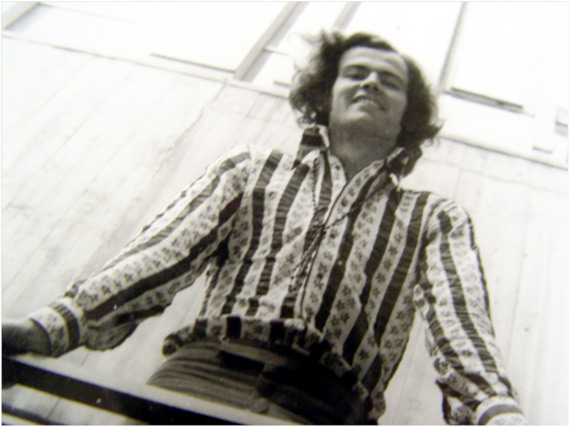
Flower power years: At Essex University in 1969
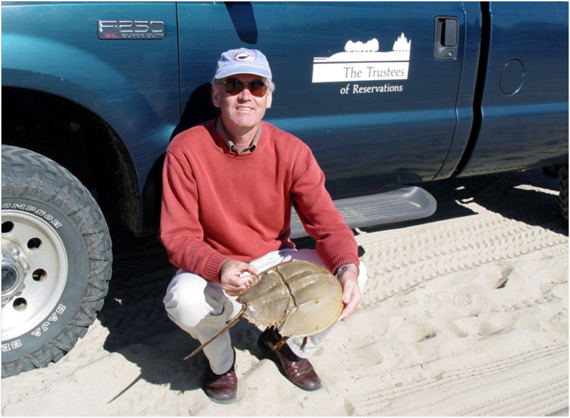
Natural wonder: On Cape Cod with (dead) Horseshoe crab in 2003

SustainAbility Archive

If I had to pick just one thing I was proudest of in my working life, it would be co-founding SustainAbility. When I recall it pretty much started in our kitchen and a couple of back bedrooms, it’s really quite extraordinary to see what the organisation has become. We are now expanding, both in numbers and in the number of offices, but for more than a decade we struggled continuously to keep our size down. We expressed it—in words coined by my co-Director Geoff Lye—by saying we wanted to grow our influence, not our numbers.

A key reason was that we wanted to retain our independence and our strong links with NGOs, which we felt might be compromised if we grew our overheads too fast and were forced to take whatever work came along. We saw a fair few competitors go down this track and implode. In the event, our strategy has worked pretty well, even though some of the ethical dilemmas we have had to tackle have been very challenging.

To help us in the process, we have been extremely lucky to be able to recruit a world-class Council and Faculty. In various ways they—and our Board, with Tom Delfgaauw as our first Non-Executive Director—have helped us tackle such dilemmas—and navigate our way through the complexities of life at the interface between markets and ethics.

A corporate hybrid: When founded in 1987, SustainAbility was the world’s first consultancy operating at the business end of sustainable development. When registered, its founder-directors were Julia Hailes and myself, though Tom Burke had given important early help.

Throughout, SustainAbility has been a hybrid, combining elements of a consultancy, a think-tank and a campaigning group. Its evolution is sketched under Timelines.

In November 2005, I took a new role and title: ‘Founder and Chief Entrepreneur’, having previously been Chairman/Chair from 1995. Simultaneously, Sophia Tickell took over as Chair and Mark Lee as our first CEO. Some thoughts on my new role can be found at http://www.sustainability.com/about/about-article.asp?id=388.

By early 2003, SustainAbility had offices in London and New York (subsequently moved to Washington, DC), with a core team of 22 people, of 10 nationalities, and a Council and Faculty of more than 50 experts worldwide. A Zurich office opened in the autumn of 2003.

Reality Check: The company’s 15-year progress report, Reality Check, can be downloaded as a pdf file from SustainAbility. A sense of what life at SustainAbility was like in the early years can be had from my published diary of 1989, A Year in the Greenhouse (1990).

Publications: Almost all of the reports I have worked on since 1987 have been produced—and most published—by SustainAbility

Exhibitions

This is now historic, given that our role in organising exhibitions is largely a thing of the past. But, for the record, here are some we have been involved in:

JE Crystal 2

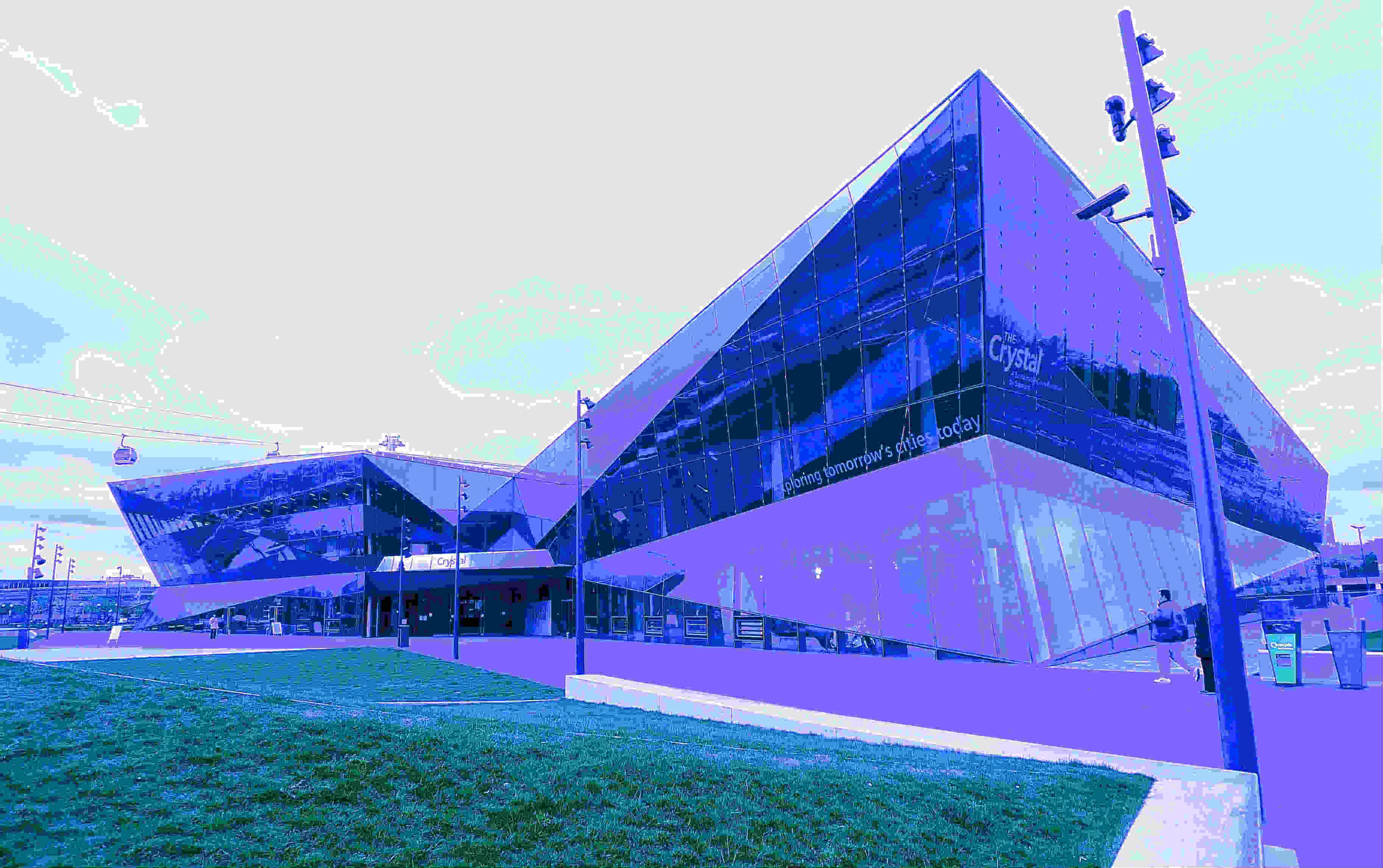
London’s Docklands now feature sustainability exhibition venues like the Siemens Crystal (above), a huge jump forward from the People’s Habitat event I was involved in organizing in Surrey Docks way back in 1976.

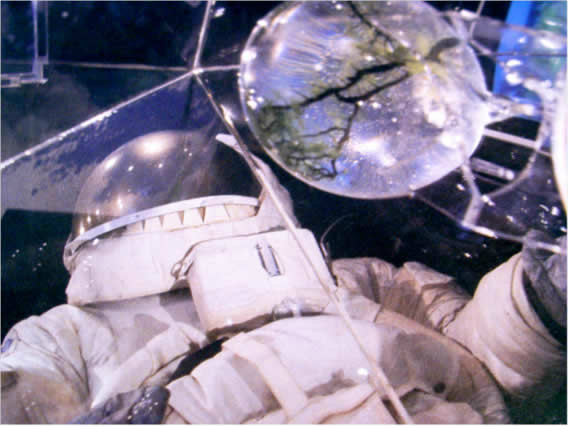
Probably the most effective I have been involved in was 1986’s ‘Green Designer‘ exhibition at the Design Centre. Writing the catalogue led me to raise the question whether the products featured (from NASA space-suits to Rolls-Royce key engines) would appeal to business and, critically, to what I dubbed the ‘Green Consumer’. And that led, a couple of years later, to The Green Consumer Guide.

Rather typically, though, I missed the high-profile launch of the Green Designer exhibition: I was travelling yet again, even then. Such events have been another way of getting our thinking and messages into the minds of ordinary citizens. If a chance to do another of these came along, I would jump at it, despite the extraordinary complexities involved in developing a good exhibition.

Here are some of the exhibitions and similar events we have been involved in:

1992

The Holiday Extravaganza
To launch the book Holiday’s That Don’t Cost the Earth.

1990

Britain’s Greenest School Competition
To build on the success of The Young Green Consumer Guide.

1989

Green Shopping Day
To reinforce the impact of The Green Consumer’s Supermarket Guide.

1989

The Kitchen that Cooks without Roasting the Planet
SustainAbility and Friends of the Earth, at the Daily Mail Ideal Home Exhibition.

1988

Green Consumer Week
To launch The Green Consumer Guide and associated campaigns.

Green Designer 2

Two globes, NASA spacesuit and an EcoSphere at the Green Designer exhibition

1986

The Green Designer 
Exhibition at the Design Council, London – the first time the ‘green consumer’ term, which I coined for the purpose, surfaced.

1976

People’s Habitat
Spread across London’s Surrey docks, this was a counter-blast to the UN Habitat Conference of the same year.

  • « Go to Previous Page
  • Go to page 1
  • Interim pages omitted …
  • Go to page 81
  • Go to page 82
  • Go to page 83
  • Go to page 84
  • Go to page 85
  • Interim pages omitted …
  • Go to page 134
  • Go to Next Page »

Primary Sidebar

Introduction

I began this blog with an entry reporting on a visit to the Woods Hole Oceanographic Institution on Cape Cod, on 30 September 2003. The blog element of the website has gone through several iterations since, with much of the older material still available.

Like so many things in my life, blog entries blur the boundaries between the personal and the professional. As explained on this site’s Home Page, the website and the blog are part platform for ongoing projects, part autobiography, and part accountability mechanism.

In addition, my blogs have appeared on many sites such as: Chinadialogue, CSRWire, Fast Company, GreenBiz, Guardian Sustainable Business, and the Harvard Business Review.

Recent Comments

  • John Elkington on The Hill House Elkingtons
  • sally fitzharris. (Rycroft) on The Hill House Elkingtons
  • Thomas Forster on Reminder of Glencot Years

Journal Archive

About

John Elkington is a world authority on corporate responsibility and sustainable development. He is currently Founding Partner and Executive Chairman of Volans, a future-focused business working at the intersection of the sustainability, entrepreneurship and innovation movements.

Contact

john@johnelkington.com  |  +44 203 701 7550 | Twitter: @volansjohn

John Elkington

Copyright © 2026 John Elkington. All rights reserved. Log in