• Skip to primary navigation
  • Skip to main content
  • Skip to primary sidebar
John Elkington

John Elkington

A world authority on corporate responsibility and sustainable development.

  • About
    • Ambassador from the future
  • Past lives
    • Professional
      • Volans
      • SustainAbility
      • CounterCurrent
      • Boards & Advisory Boards
      • Awards & Listings
    • Personal
      • Family
      • Other Influences
      • Education
      • Photography
      • Music
      • Cycling
    • Website
  • Speaking
    • Media
    • Exhibitions
  • Publications
    • Books
    • Reports
    • Articles & Blogs
    • Contributions
    • Tweets
    • Unpublished Writing
  • Journal
  • Contact
  • Show Search
Hide Search

Uncategorized

Cement looks very different in the greenhouse

John Elkington · 19 June 2014 · Leave a Comment

650,000 years of climate change

I wrote my first report on climate change (among three other emerging environmental issues) for Herman Kahn of the Hudson Institute way back in 1978.

And the first blog in this series recorded a 2003 visit to the Woods Hole Oceanographic Institution on Cape Cod, where we learned just how systemic the crisis we are facing now is.

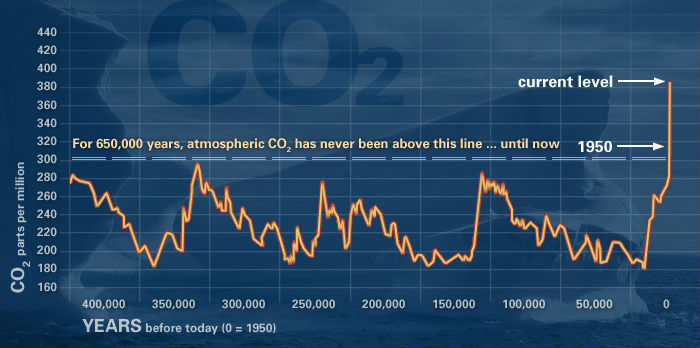
Even so, the way things are headed continuously takes my breath away. So, for example, two images I have come across in the past few days, while convalescing, brought home the sheer scale of what we are facing in the coming decades with climate change – and threw an uncomfortable light on where a growing proportion of the problem is now coming from.

The first image, above is from NASA, and shows that current carbon dioxide trends are, whatever the skeptics may choose to believe, unusual. The second came via Twitter, is equally shocking and shows that China used more cement in the three years from 2011-2013 than the United States did in the entire twentieth century.

This is not so much to point the finger as to underscore the extent to which China has clicked on and dragged across an obsolete industrial model from the West. If I try to put an optimist’s hat on, the best I can come up with is the notion that biomimicry might help inspire novel ways to produce cement and concrete – perhaps based on the way that the world’s coral reefs do it.


CEMENT 2

Vitality Commission flags $300bn health savings for US business

Chris Wolf · 19 June 2014 · Leave a Comment

THE VITALITY INSTITUTE LOGO
For the past year, my friend Will Rosenzweig has served as Chairman of a U.S. national commission focused on health promotion and the prevention of chronic illness. The Vitality Institute’s Commission on Health Promotion and the Prevention of Chronic Diseases in Working-Age Adults has developed evidence linking the health of our nation’s workforce to the long-term competitiveness of our national economy. The recommendations were developed by a diverse group of thought leaders from the fields of public health, public policy, academia and business. Forbes has reported on the findings in an article about potential $300B cost savings opportunity for U.S. corporations.

William-Rosenzweig-2

Will Rosenzweig (photo courtesy of Vitality Institute)

Key recommendations from the report include:

  • Require corporations to integrate health metrics into their annual reporting by 2025
  • Secure commitments from more than 50 percent of Fortune 500 companies to include workforce health as part of their organizational strategy by 2020
  • Increase federal government funding for prevention science research by at least 10 percent by 2017 and create a federal agency to fund efforts that support health and prevention

Additionally, to guide business leaders and policy makers, the report contains nearly 50 examples of chronic disease prevention programs that have been adopted by corporations, local governments and even the US military and are successfully increasing the availability of nutritious food, leading to the development of healthy products and promoting exercise.

Martin Wolf: humanity is making risky bets in the climate casino

John Elkington · 18 June 2014 · Leave a Comment

Martin-Wolf 2

(Photo courtesy of FT)

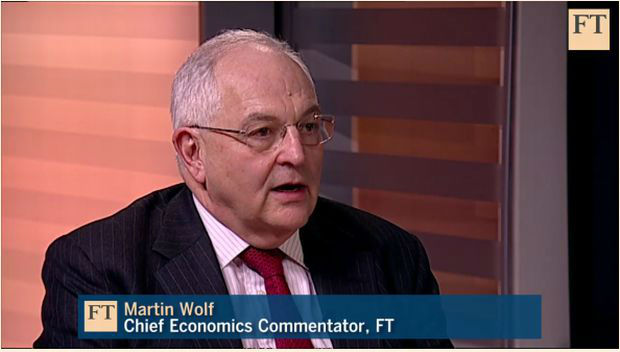
How much of the world’s fossil fuel reserves will eventually be burnt? That is the critical question that Martin Wolf asks in his insightful article in today’s Financial Times. His view is that, on current assumptions, ExxonMobil probably has it right in arguing that the oil industry won’t suffer from stranded assets, because the world won’t act on climate change in time. But one of the most interesting voices in this space is the Carbon Tracker Initiative.

My own bet in the climate casino is that Carbon Tracker are right to argue that investors will be hit – and that means our pensions will be hit – in a shorter timescale than many imagine. As for ExxonMobil, they may be perfectly within their rights to argue as they do. But it is very likely that future generations will treat companies that did the heavy duty anti-climate-change lobbying in recent years in the same way that they have treated the tobacco industry. Anyone investing for the long term should therefore be wary of backing those who produce coal, oil and tracked gas.

A decade or so ago, I had a very energetic exchange on this subject with ExxonMobil CEO Rex Tillerson, over the heads of 300 or so oil industry executives gathered in Stavanger, Norway. He denied his company was lobbying to stall climate change initiatives. I think the record shows different – and the picture will look grimmer still when the deep historical analysis is done.

A medical procedure goes off the rails

John Elkington · 17 June 2014 · Leave a Comment

If you have found me difficult to track down in the past couple of weeks, here’s why.

The fact is that I have always had an allergy to hospitals, but the past couple of weeks took that from bad to worse. Some time back, I had a catscan at Roehampton Hospital, and ran a massive allergic reaction to the iodine in the imaging dye they injected into me. But that proved to be the least of my worries.

When I was referred to Kingston Hospital, the idea was that I would have an exploratory procedure to see what was wrong with my kidneys and the like. I was warned that there was an outside chance of an infection, but hadn’t expected to feel quite so bad immediately after the procedure. Allowed to go home, I felt somewhat better on the following day, Tuesday, so I went in to a dinner with Zouk Capital at Hyde Park Corner. Leaving later in the evening, having had no alcohol, I found my legs giving way beneath me, and could hardly climb into a taxi home. My teeth chattered all the way back to Barnes.

A doctor came out in the middle of the night and I was told in no uncertain terms I needed to be in hospital and on an intravenous drip of antibiotics. Both Elaine and the ambulance team found that I was running a high temperature. But after 5-6 hours at the hospital, during which time a paediatric nurse (“I don’t normally take blood from adults”) managed to sluice my blood over the floor, I was released in the early hours of the morning with a box of laxatives.

Elaine was horrified and rang the GP, where I presently headed for an emergency check-up. I virtually collapsed with pain in her office, at which point she also insisted that I needed to be on an intravenous drip. So back to Kingston Hospital. It took ages to be checked in, then they seemed to forget to insert the drip. The entire  experience left me loving the NHS more in theory than in practice. A small example of the problem: a doctor told me on the second day that I would be going home later in the day, once they had got me the right drugs. After 3-4 hours, I got dressed and went out of the ward to ask how things were going, to find that they had no record that I was being discharged.

Since then I have been at home, on antibiotics. But the cherry on the icing on the cake was that the day after I got home I woke up to find I had labyrinthitis. I don’t recommend it. It was like having 27 energetically malevolent monkeys all pulling away at me from different directions at the end of elastic tethers. I would turn over on the bed and the room would continue revolving around me for quite a while. A different GP came and a different set of drugs were prescribed. After several days, that problem began to recede, thanks heavens.

Yesterday, finally, I was able to go into the office for the first time, which was wonderful. But I still find that my energy levels really aren’t what they should be. It’s as if someone has poked a stick into the dynamo that keeps me rattling along in normal times. And there is still an operation to have. But I won’t be having it at Kingston, having refused to go back there. On Friday I will be heading across to Charing Cross Hospital to meet a surgeon who has been recommended by my sister Tessa and her husband, himself a surgeon.

On the upside, though, this has been an excellent opportunity to catch up with myself ahead of my 65th birthday next week, and to consider how I best use my energies, assuming that they return. It has also proved to be an extraordinarily timely opportunity to edit and update this website, and to begin to get this blog series back on the rails.

My thanks to all the NHS people who have helped me to date. Almost without exception, they have been wonderful. But aspects of the NHS system, at least at Kingston Hospital, seem to be creaking at the seams. I have written a long letter to the CEO of the Hospital, itemising the different things that went wrong, and getting to eleven mishaps with ease.

But then, as Tessa told me, if I had this particular condition 50 years ago it would have been a death sentence, so once again I’m thrilled to have born when I was and to be alive when I am.

Goodbye, Craig Ray

John Elkington · 17 June 2014 · Leave a Comment

I can think of few people who have caused me more grief in life than Craig Ray, of Origin Creative. He was webmaster of this website for some years, then headed off to New Zealand (which is fine) and either had an emotional or professional breakdown (I’m being charitable here). In either case, if you are thinking of working with him, don’t come to me for a recommendation.

One result of his effectively dumping this site late in 2013 is that all the photographs since the beginning have been degraded in quality. That’s the downside. The upside is that from this point forward not only do we have a revamped website, with huge thanks to Geoff Kendall, Sam Lakha  and Chris Wash for making that happen, but also the images from now on should look as we intend them to look.

  • « Go to Previous Page
  • Go to page 1
  • Interim pages omitted …
  • Go to page 165
  • Go to page 166
  • Go to page 167
  • Go to page 168
  • Go to Next Page »

Primary Sidebar

Introduction

I began this blog with an entry reporting on a visit to the Woods Hole Oceanographic Institution on Cape Cod, on 30 September 2003. The blog element of the website has gone through several iterations since, with much of the older material still available.

Like so many things in my life, blog entries blur the boundaries between the personal and the professional. As explained on this site’s Home Page, the website and the blog are part platform for ongoing projects, part autobiography, and part accountability mechanism.

In addition, my blogs have appeared on many sites such as: Chinadialogue, CSRWire, Fast Company, GreenBiz, Guardian Sustainable Business, and the Harvard Business Review.

Recent Comments

  • John Elkington on The Hill House Elkingtons
  • sally fitzharris. (Rycroft) on The Hill House Elkingtons
  • Thomas Forster on Reminder of Glencot Years

Journal Archive

About

John Elkington is a world authority on corporate responsibility and sustainable development. He is currently Founding Partner and Executive Chairman of Volans, a future-focused business working at the intersection of the sustainability, entrepreneurship and innovation movements.

Contact

john@johnelkington.com  |  +44 203 701 7550 | Twitter: @volansjohn

John Elkington

Copyright © 2026 John Elkington. All rights reserved. Log in