• Skip to primary navigation
  • Skip to main content
  • Skip to primary sidebar
John Elkington

John Elkington

A world authority on corporate responsibility and sustainable development.

  • About
    • Ambassador from the future
  • Past lives
    • Professional
      • Volans
      • SustainAbility
      • CounterCurrent
      • Boards & Advisory Boards
      • Awards & Listings
    • Personal
      • Family
      • Other Influences
      • Education
      • Photography
      • Music
      • Cycling
    • Website
  • Speaking
    • Media
    • Exhibitions
  • Publications
    • Books
    • Reports
    • Articles & Blogs
    • Contributions
    • Tweets
    • Unpublished Writing
  • Journal
  • Contact
  • Show Search
Hide Search

Uncategorized

Where Are You From?

John Elkington · 23 October 2023 · Leave a Comment

A question that has become very difficult to ask in the UK recently is asked by everyone you meet here in Jordan: Where are you from? With genuine interest, and no pre-judgement, as I had always asked the question.

At Yarmouk University this morning, we visited the Museum of Jordanian Heritage. A group of girls studying variously anthropology and archaeology interviewed Elaine on camera, clearly revelling in the use of English and engaging with an alien species. Us, not specifically Elaine.

When Elaine and I walked around the campus, we were engaged by young men studying variously archaeology, economics and electronic engineering, most of whom were keen to now how they could come to London to work. We had to say it was increasingly difficult, but gave some suggestions.

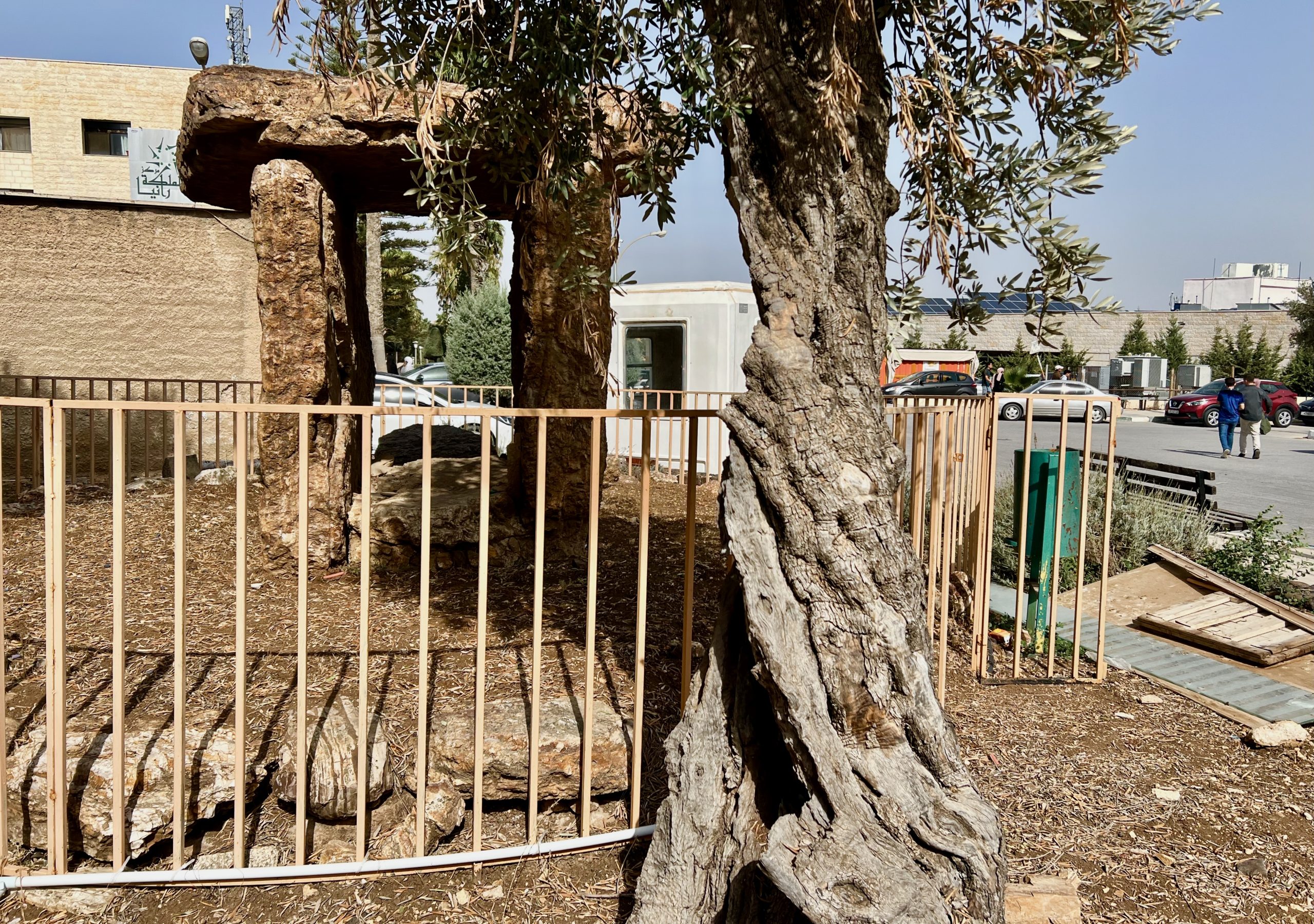
Remnants of a dolmen burial chamber in the midst of the campus

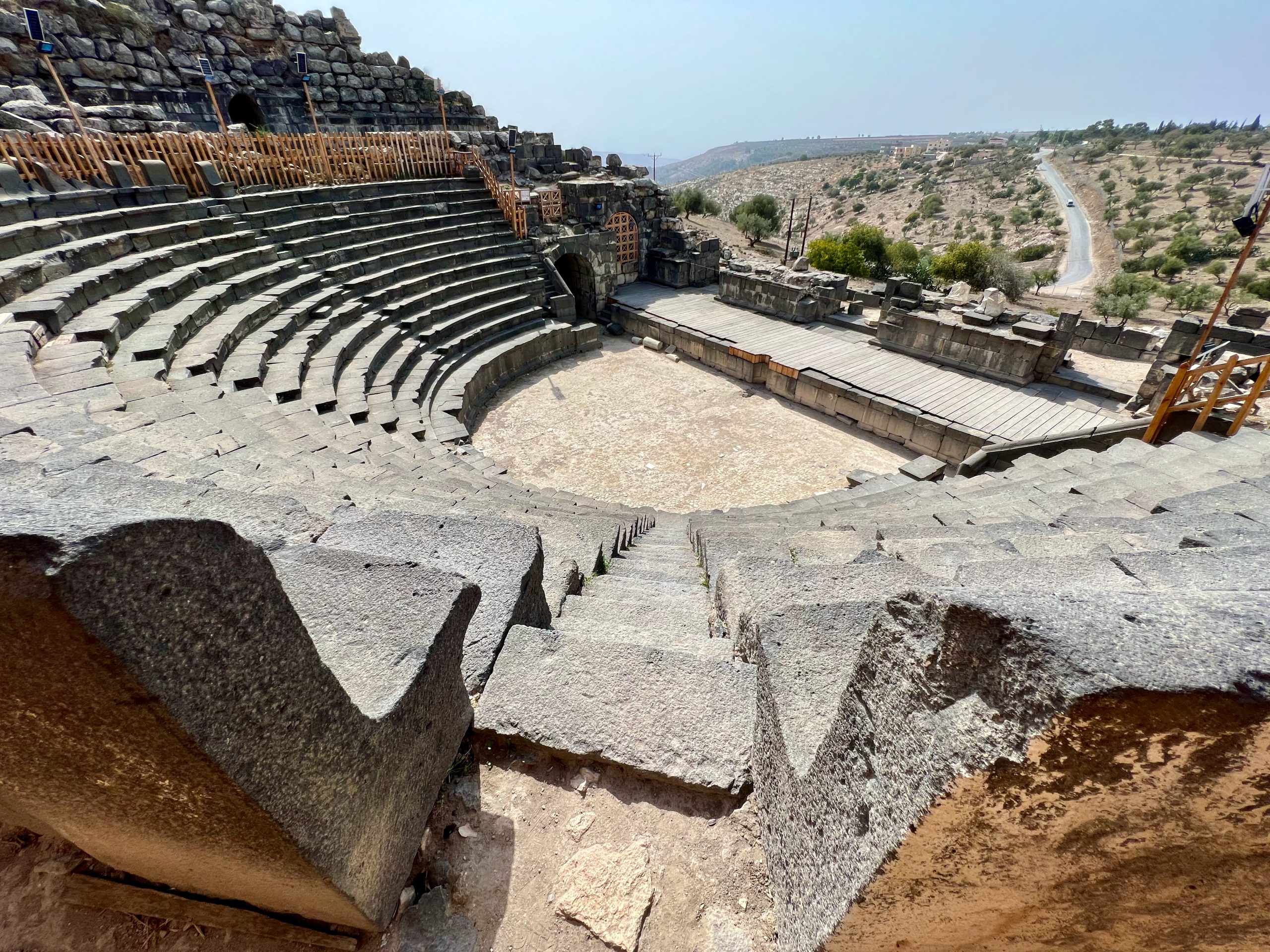
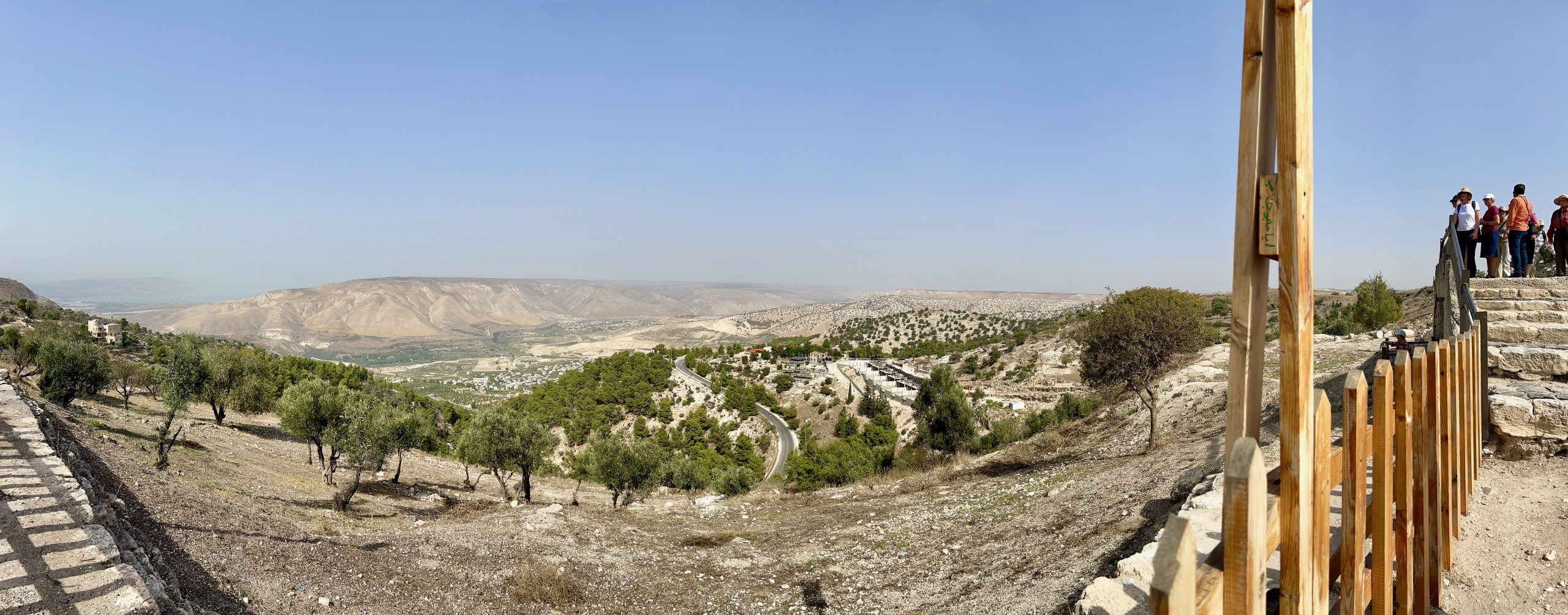
After Irbid, we drove across to Umm Qais and the amazing citadel of Gadara, which is in various stages of dereliction and reconstruction. Black basalt stone is conspicuous everywhere. The views of the Sea of Galilee were glorious, though this week there is a haze over the region, closing in the horizons somewhat.

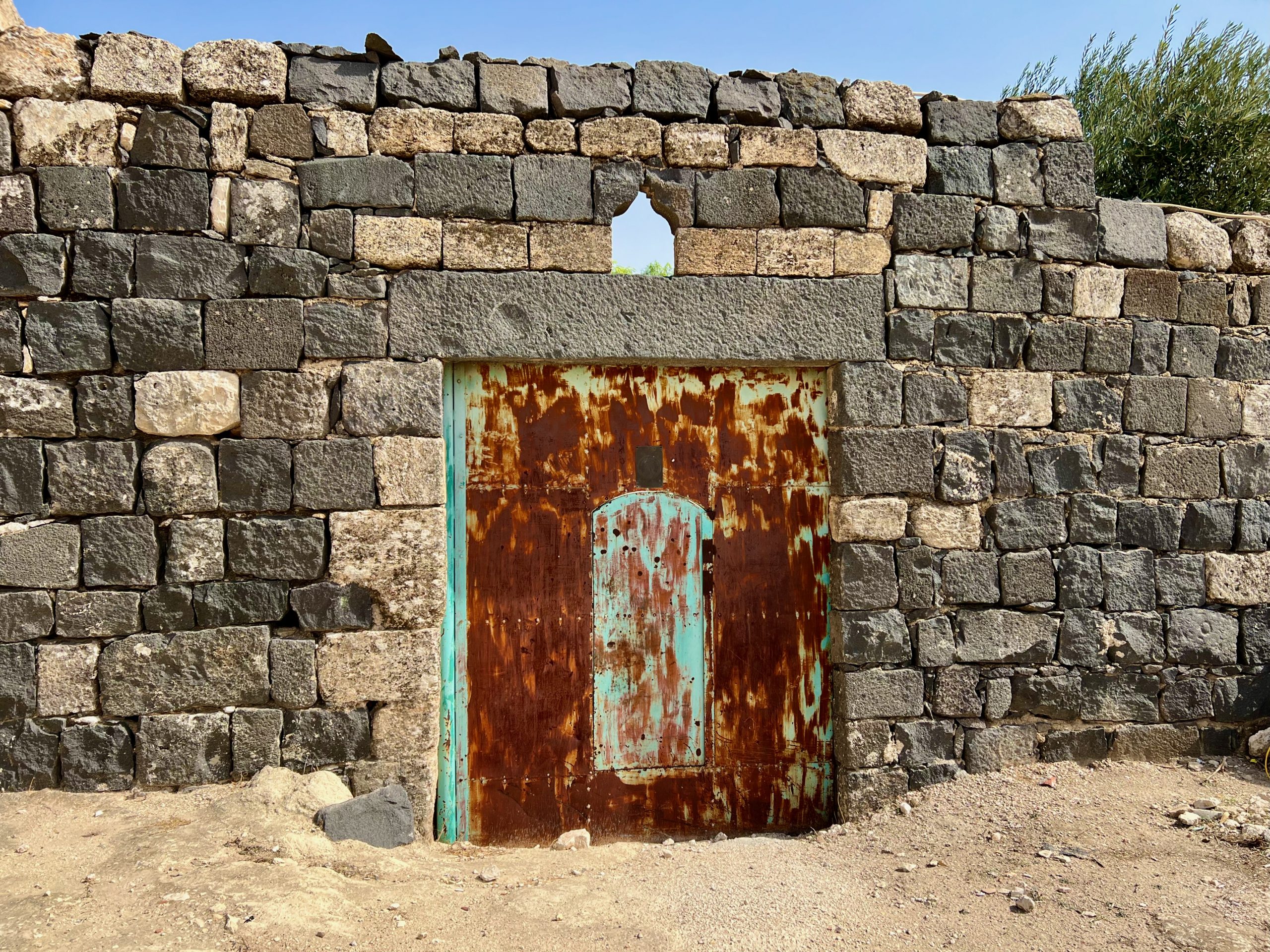
Rusting beneath a basalt lintel
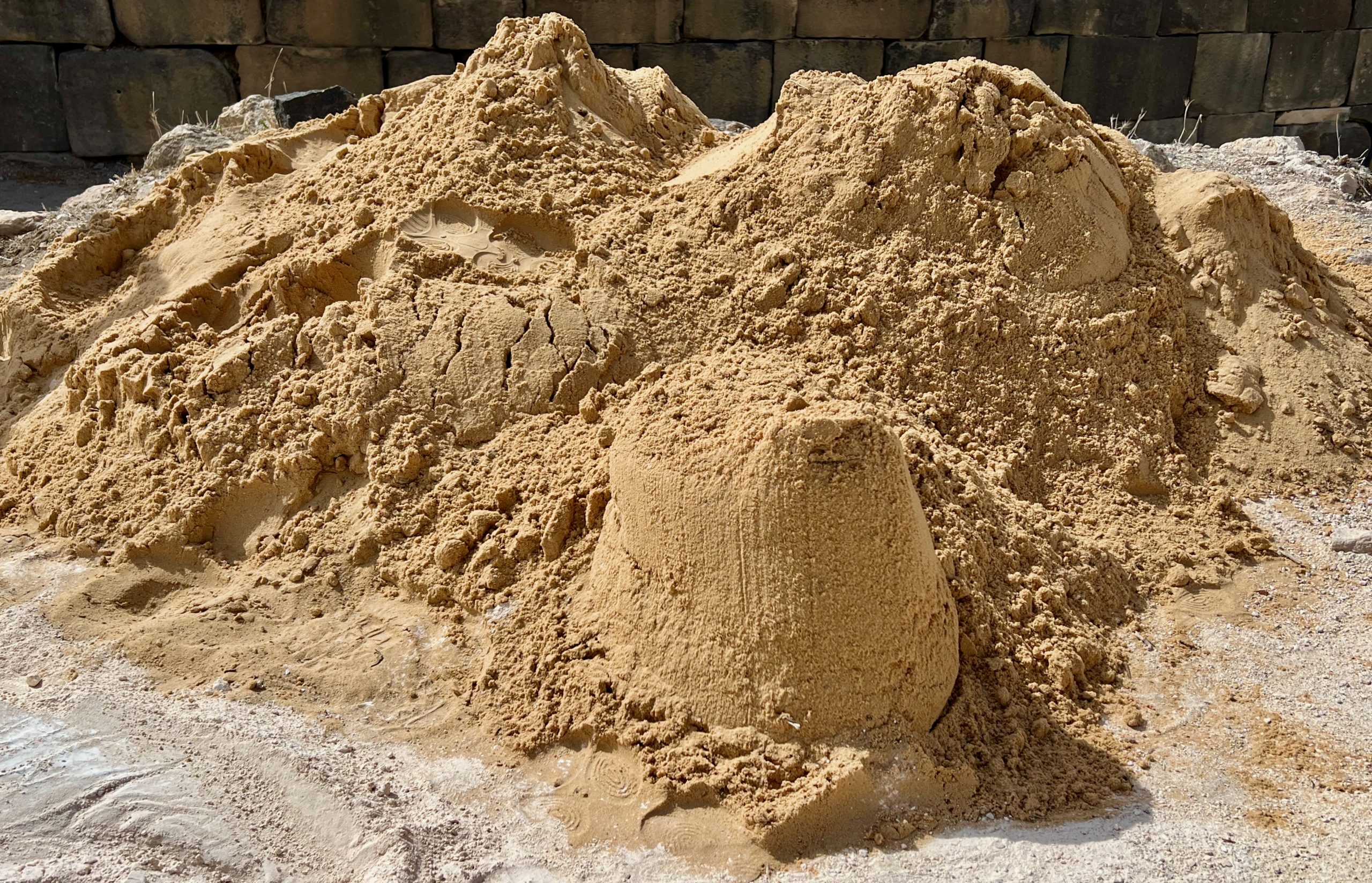
Somebody experimenting with new types of fortification?
I sat in the chair top left in the impressive theatre – surprisingly comfortable, if warm in the sun
A panorama from the citadel
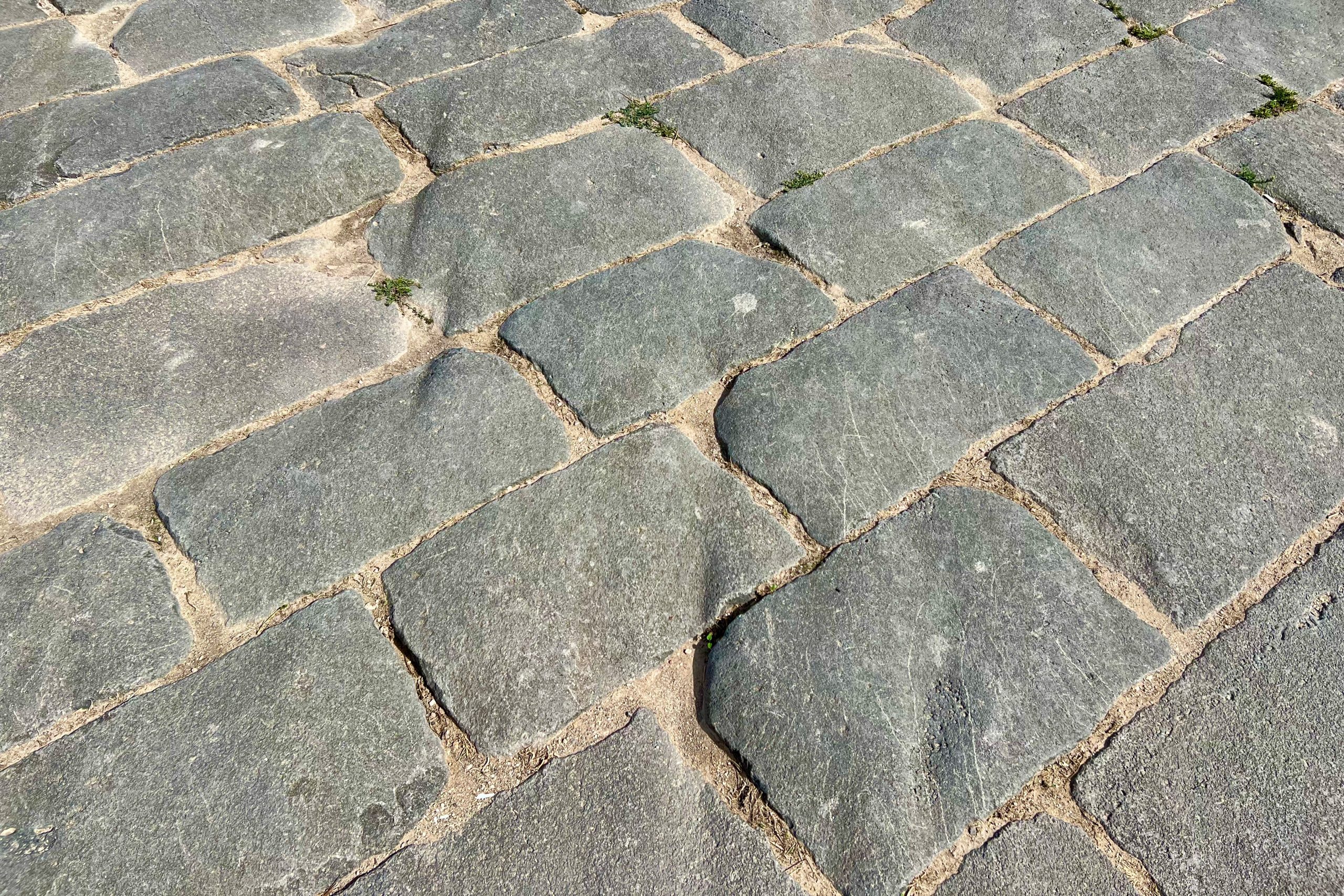
Rutting, of the iron-rimmed wheel variety, from Roman times
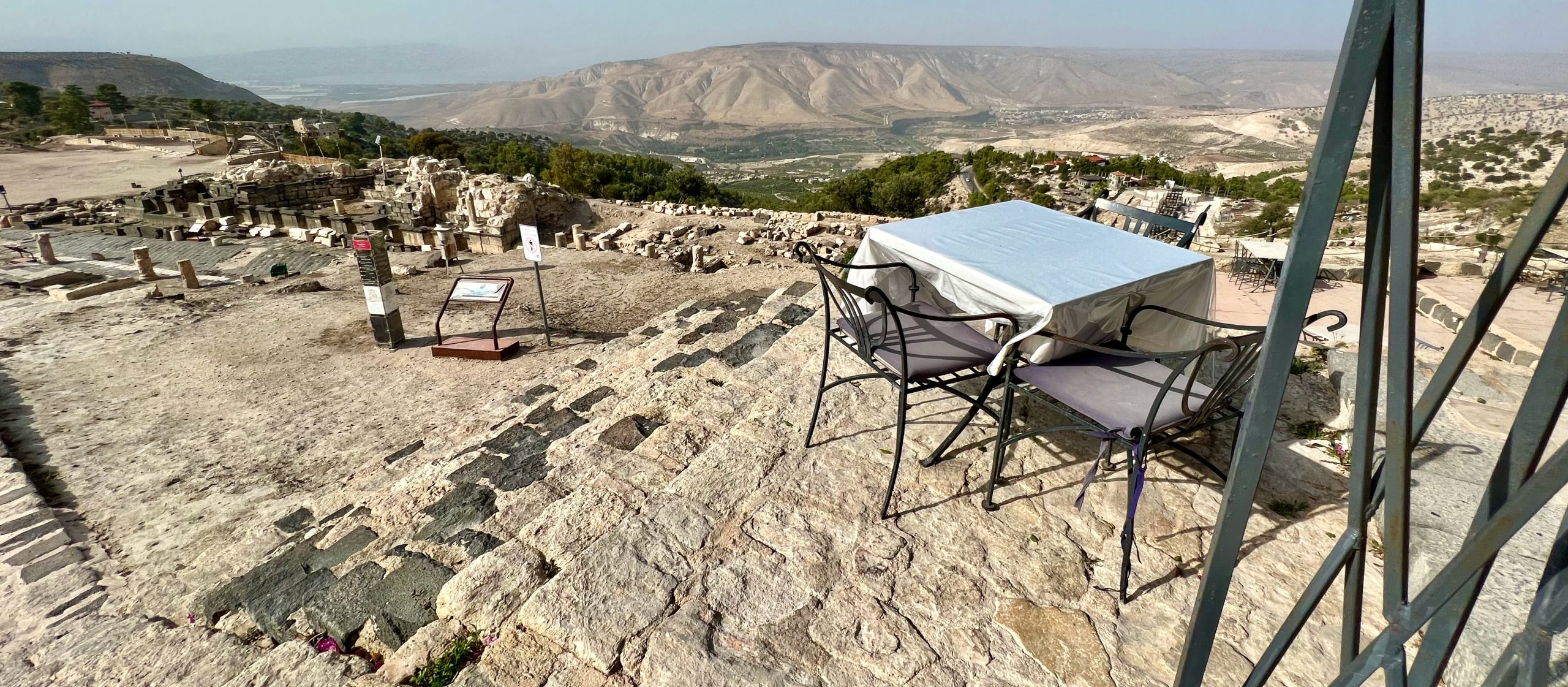
Outer limits of the restaurant where we had lunch
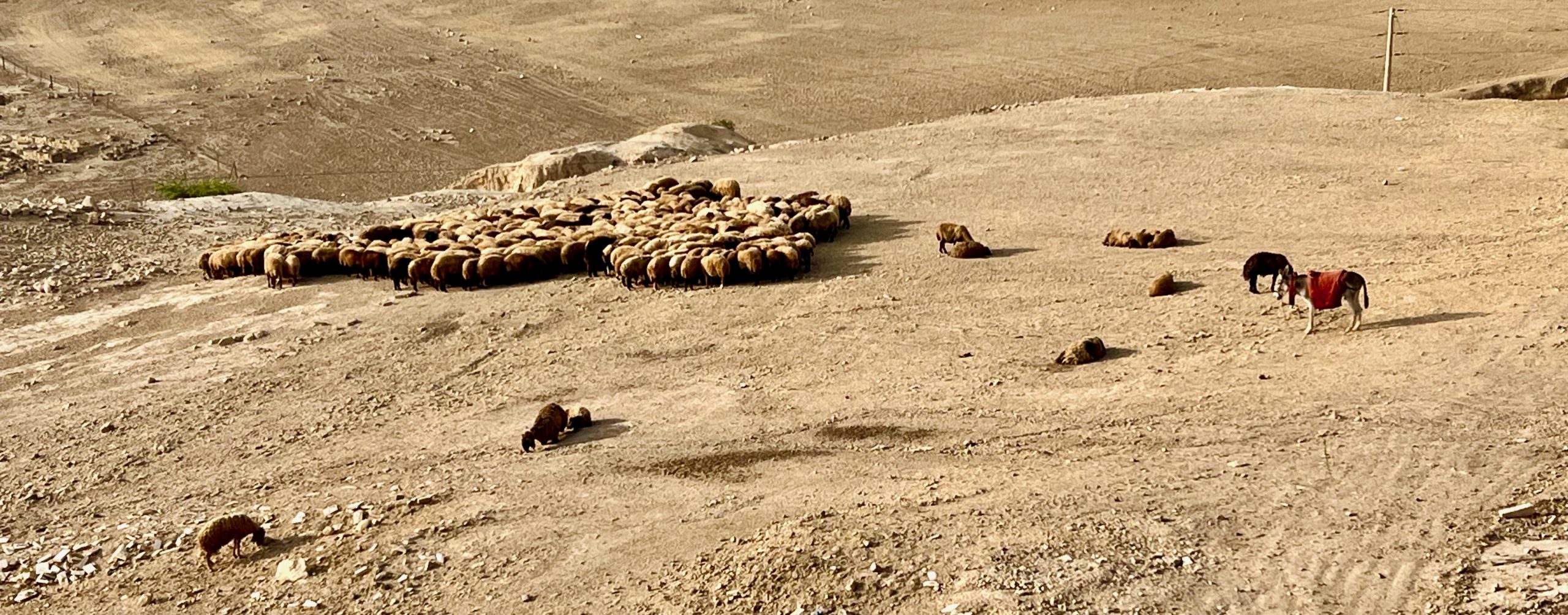
Donkey and sheep in Pella, an important city in Roman times
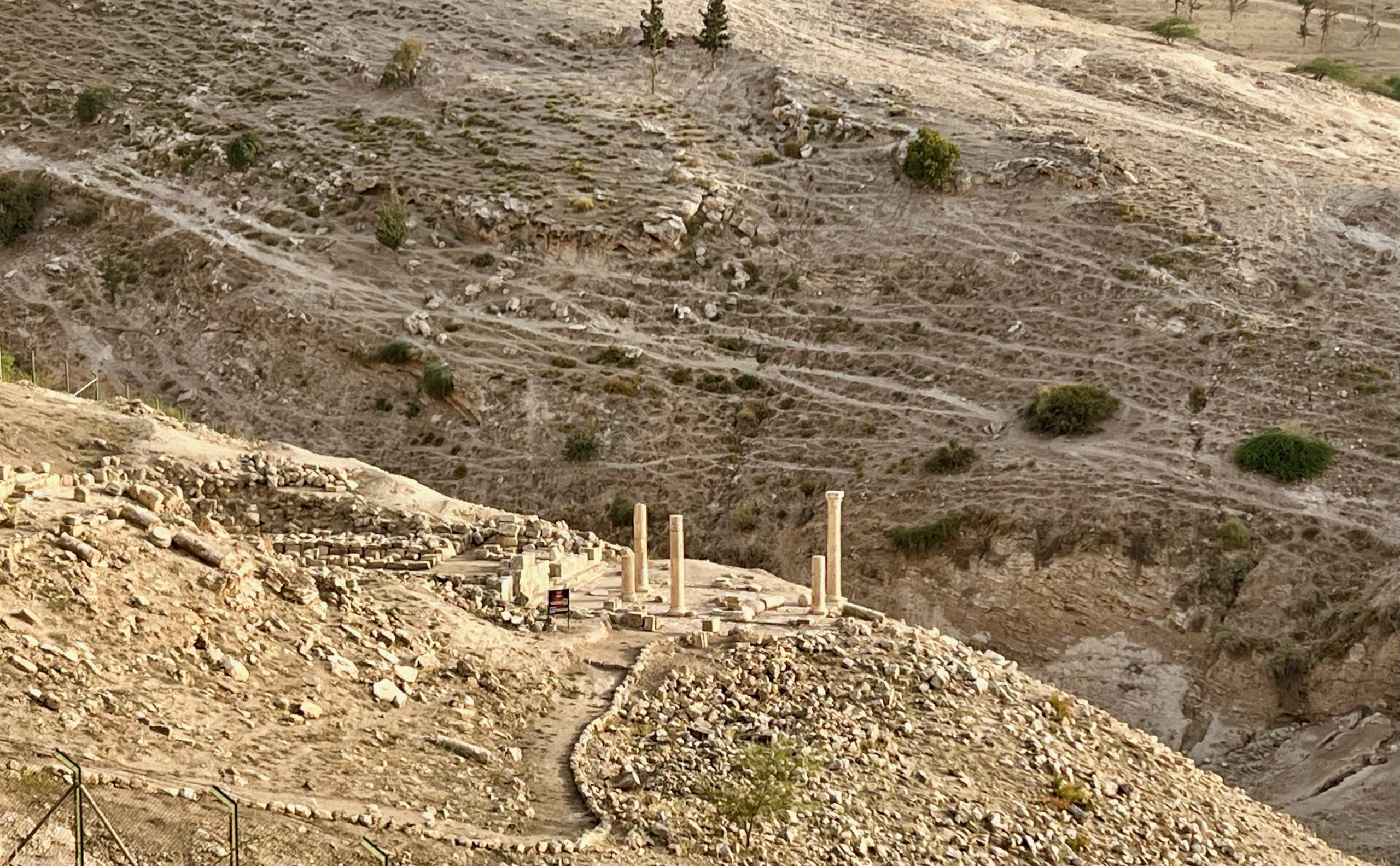
A few ragged columns on the edge of the site – and sheep tracks
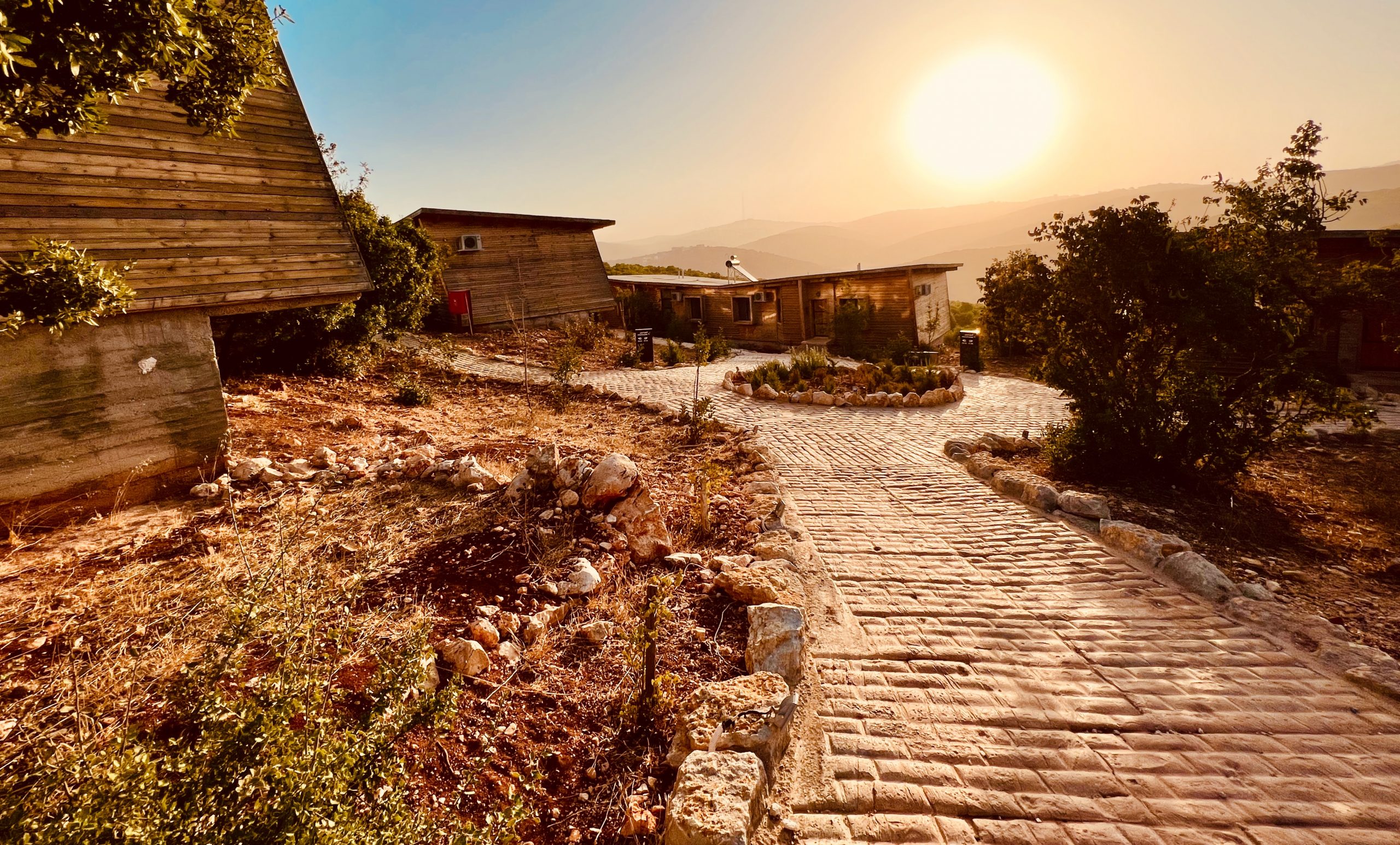
Overnight stay in Ajloun Forest Reserve

Ever since my younger years, in Cyprus and then briefly in Israel, I have loved places at high elevation – even if I suffer from vertigo. Today’s visit to the ancient city of Gadara was magical in that respect. And we had a wonderful lunch of mezzo, with a home-made lemon and mint drink.

We sat at small tables in the shade of a great arch, while looking out over the distant Sea of Galilee – with swallows roiling around in the blazing blue skies. Small bees showed a healthy interest in our creamy mahalabiya desserts, made with rose water and cardamom, while what I’m pretty sure were hornets showed a predatory interest in the bees.

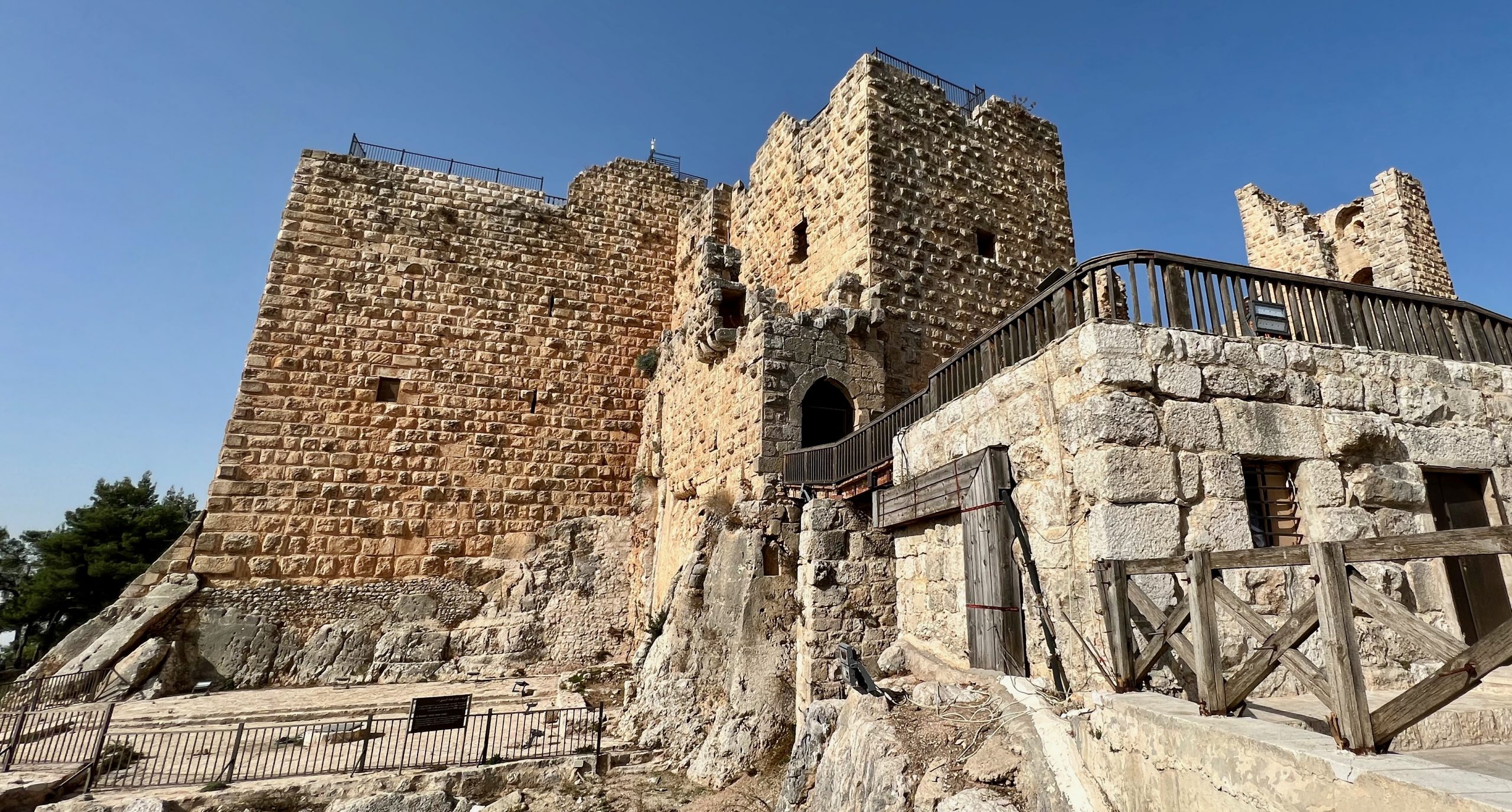
Then on to the ancient Roman city of Pella, or at least its ruins. We dipped down into the site a bit, but didn’t explore it in any detail. Then, in the evening, we drove up to the Ajloun Forest Reserve, high in the mountains, a site run by the Royal Society for Nature Conservation.

Had a fascinating walk around the reserve as the sun set, with evidence of owl and deer on the winding path. Among the more unusual animals to be found here, apparently, are the Striped Hyena, Crested Porcupine and Stone Marten.

Loved the smell of the forest and was impressed by the standard of the cabins within the reserve. A little digging, however, suggests that the RSNC, founded by King Hussein back in 1966, has been dogged by a number of controversies.

Our site was overlooked by a spectacular building housing the Royal Academy for Nature Conservation, which I understand was party a means of regenerating an old quarry. The academy was apparently the first in the Arab world to focus on nature conservation.

As we have travelled today, I have been liaising by email with Greener Publishing/Fast Company Press in Austin, Texas, about a number of options they have sent through for the cover of Tickling Sharks. Have asked for iterations of a couple of them, and also tested the options with family and team members. There’s a growing convergence, happily.

Jordan: Looping Desert Castles

John Elkington · 21 October 2023 · Leave a Comment

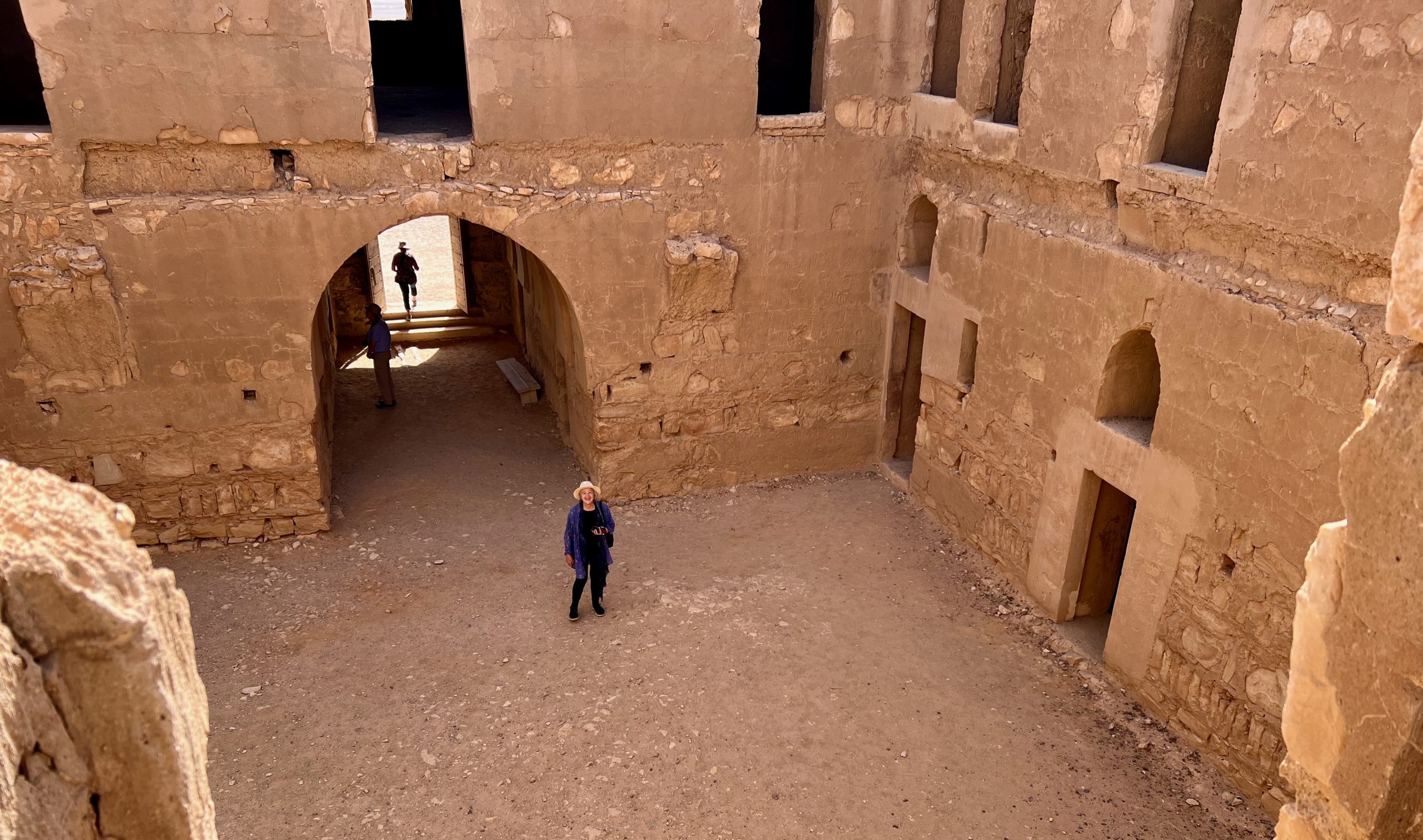
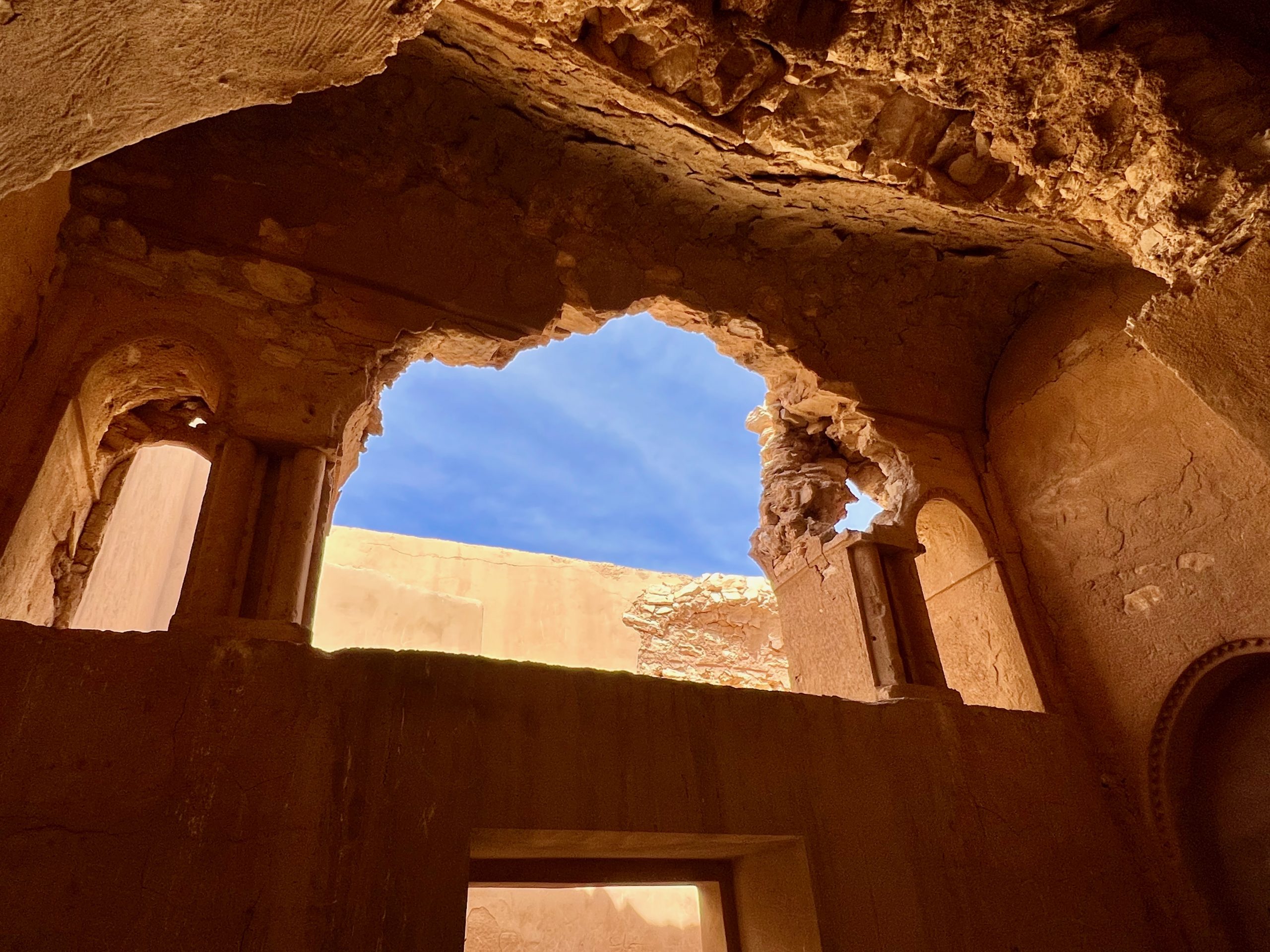
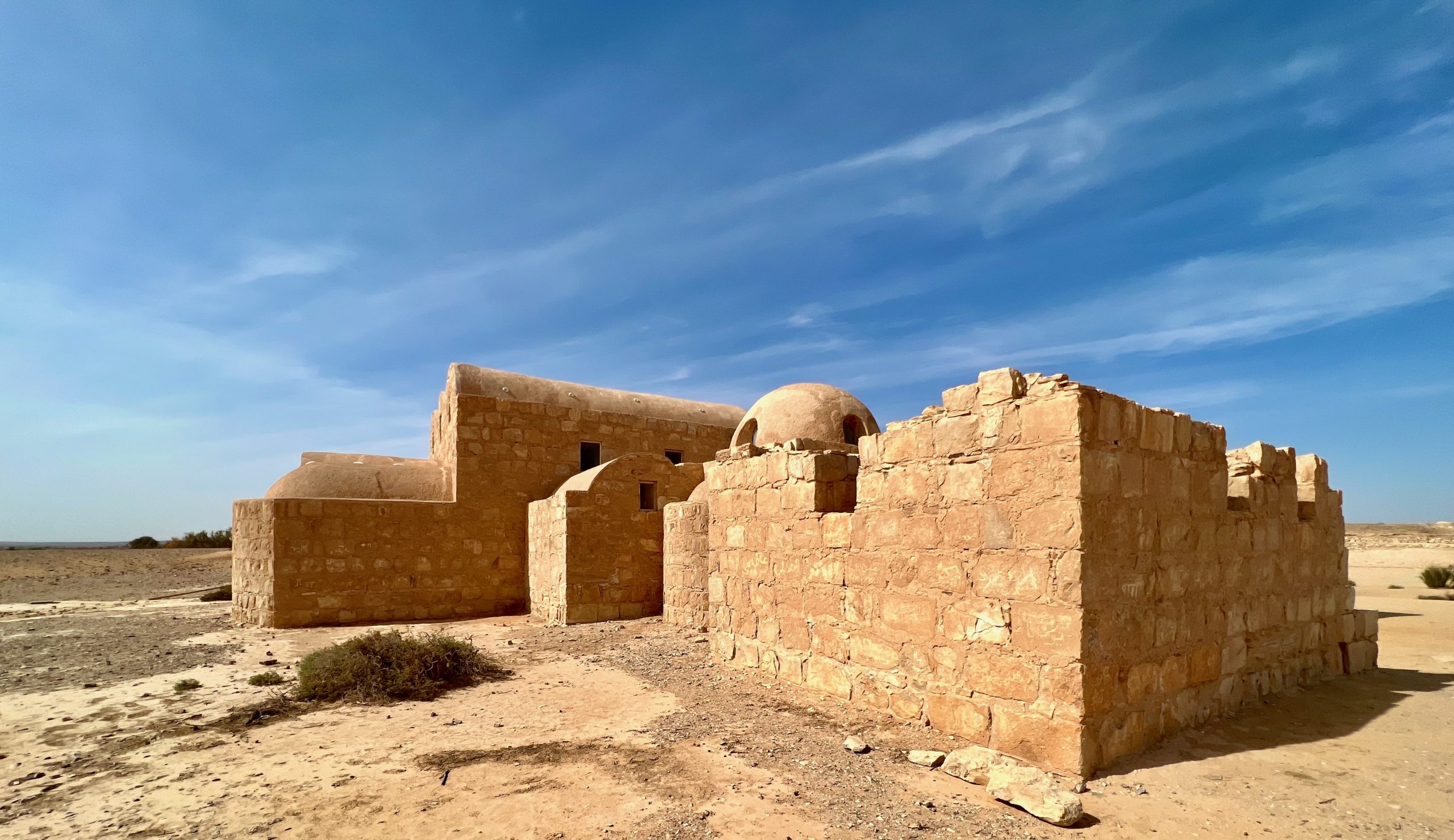
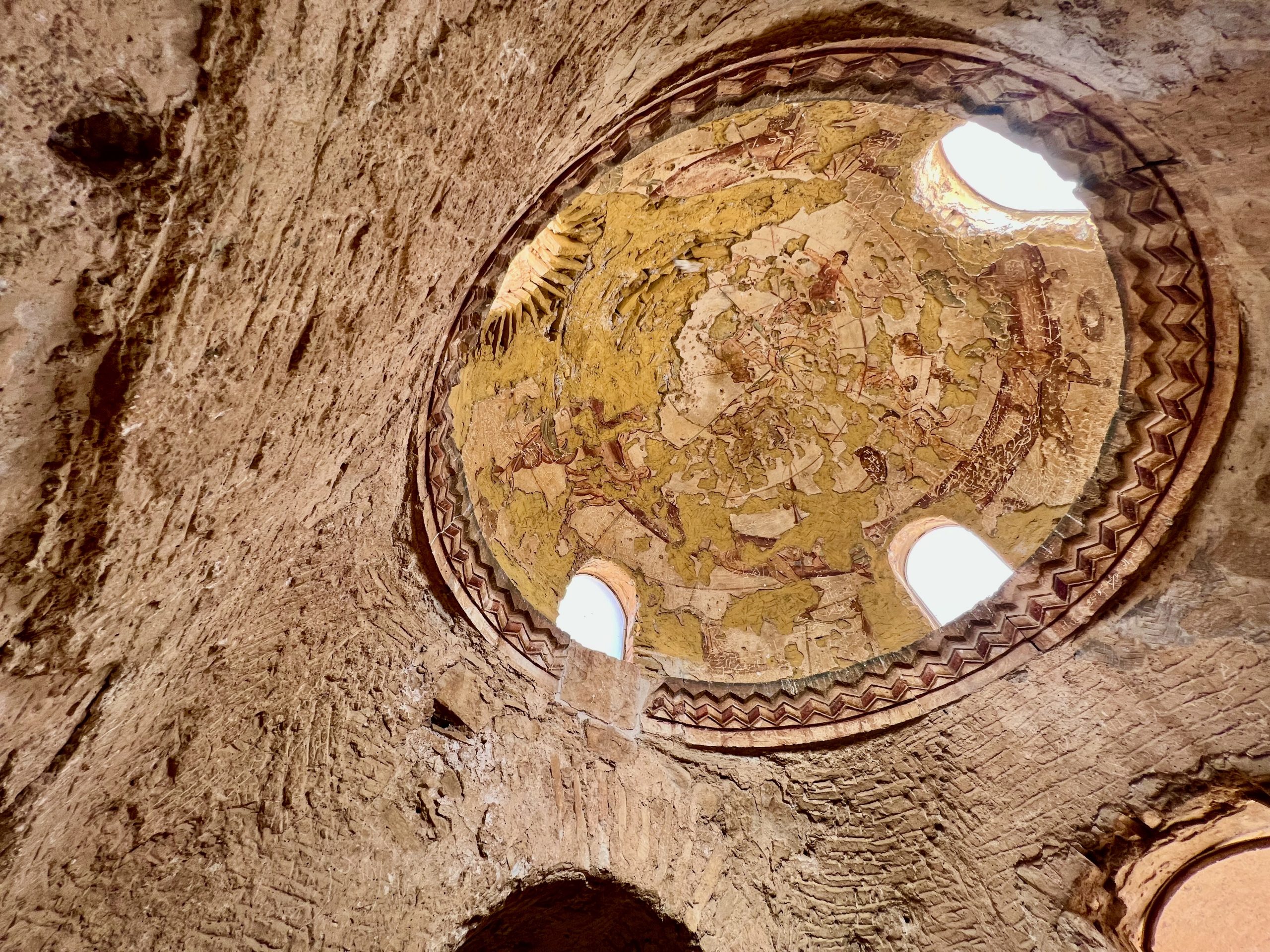
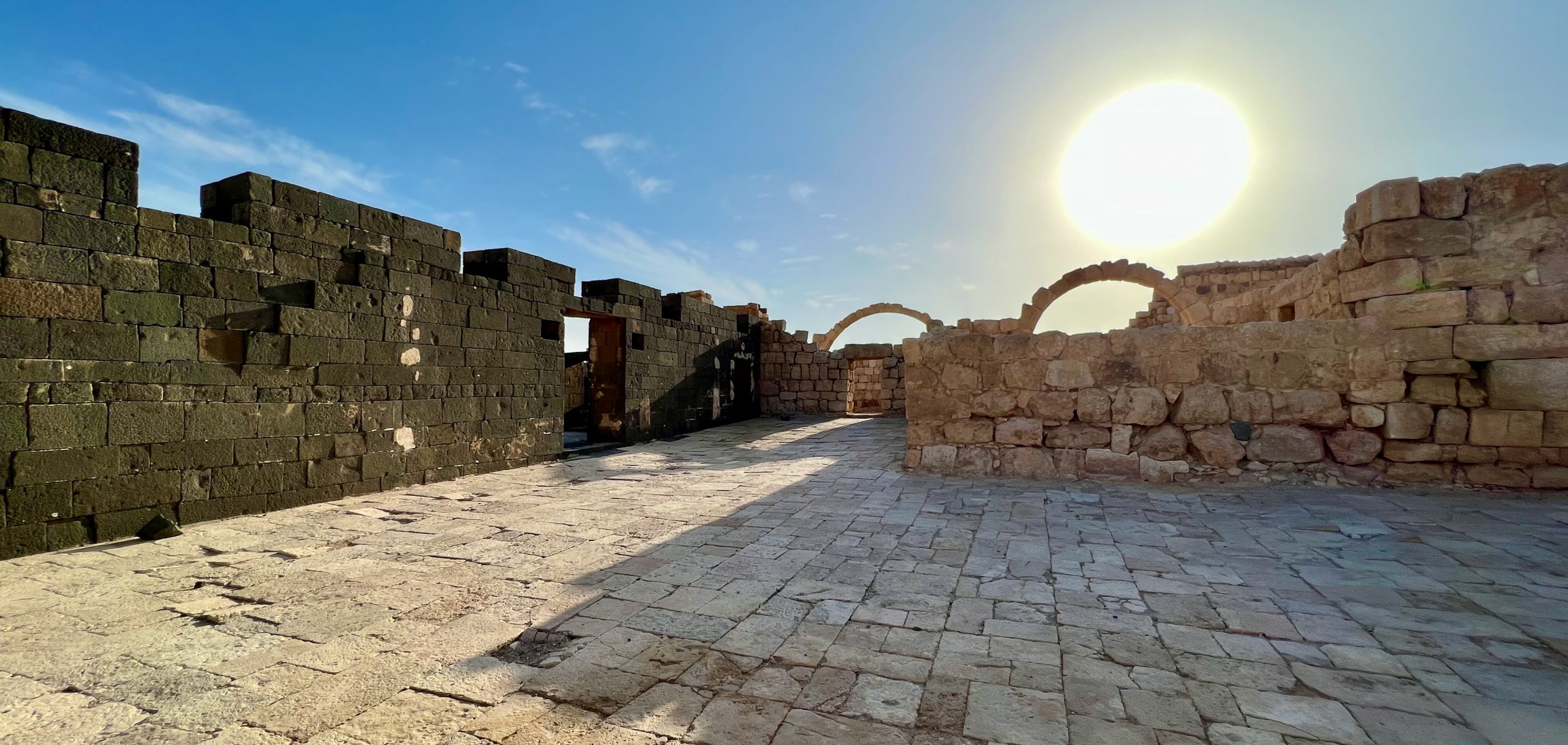
Arrived in Amman very early this morning and got to hotel (which had been switched to a different location due to pro-Gaza protests in the city) towards 02.00. Travelling with Exodus Travels, who make a feature of sustainability. Up at 07.00 and spent the day hammering around the so-called Desert Castles Loop, east of Amman, in a minibus. Roads full of sleeping policemen and extremely bumpy even when not.

Some flags flying at half-mast after the destruction of the hospital in Gaza, the blame for which remains disputed – although not in the minds of at least one Jordanian I spoke to. But the levels of tolerance and hospitality to outsiders in this country are amazing.

Saddening to see tiny remnants of reed marsh near the black basalt castle of Azraq, where Lawrence of Arabia spent some time while involved in the Arab Revolt. Interesting to think how marshes hosted renegades/freedom fighter, from Alfred the Great through Hereward the Wake to some of those fighting – or at least fleeing from – Saddam Hussein.

Spent a fair amount of time on the bus thinking through proposed covers for the new book, Tickling Sharks. Sent the options to various Volans team members and family members – and, happily, the fingers all pointed in the same direction.

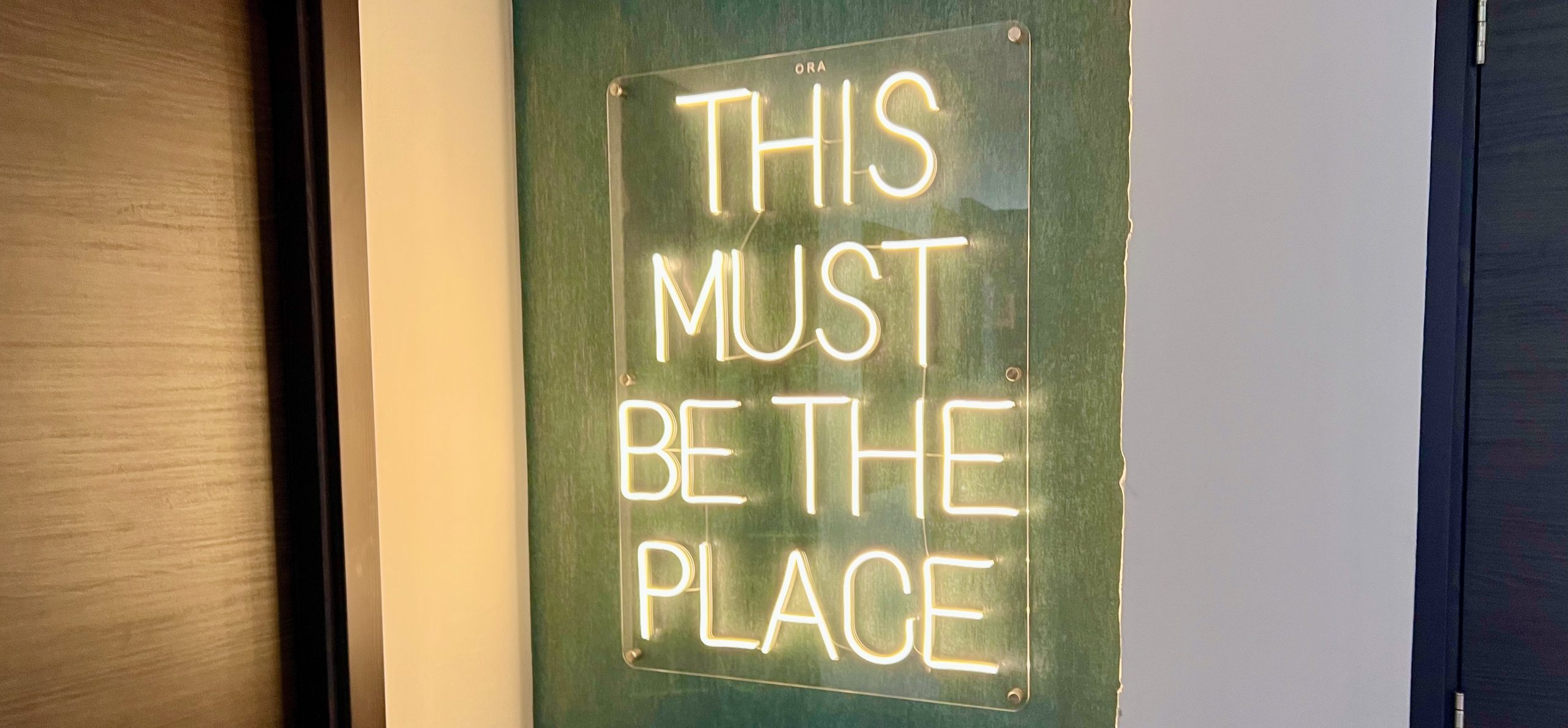
Writing on the hotel wall
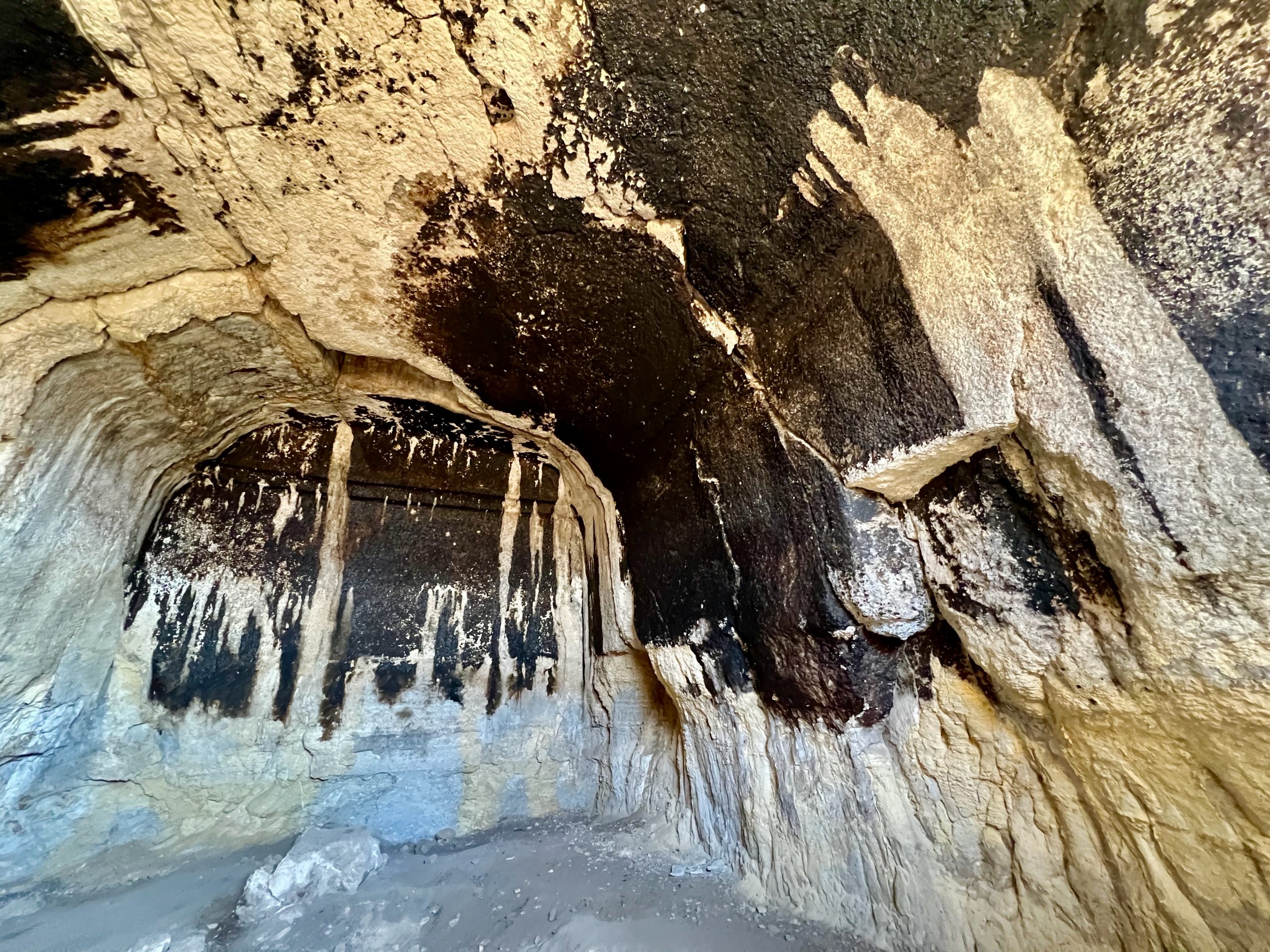
This must have been the place – with the sooty echoes of pre-historic gatherings and meals
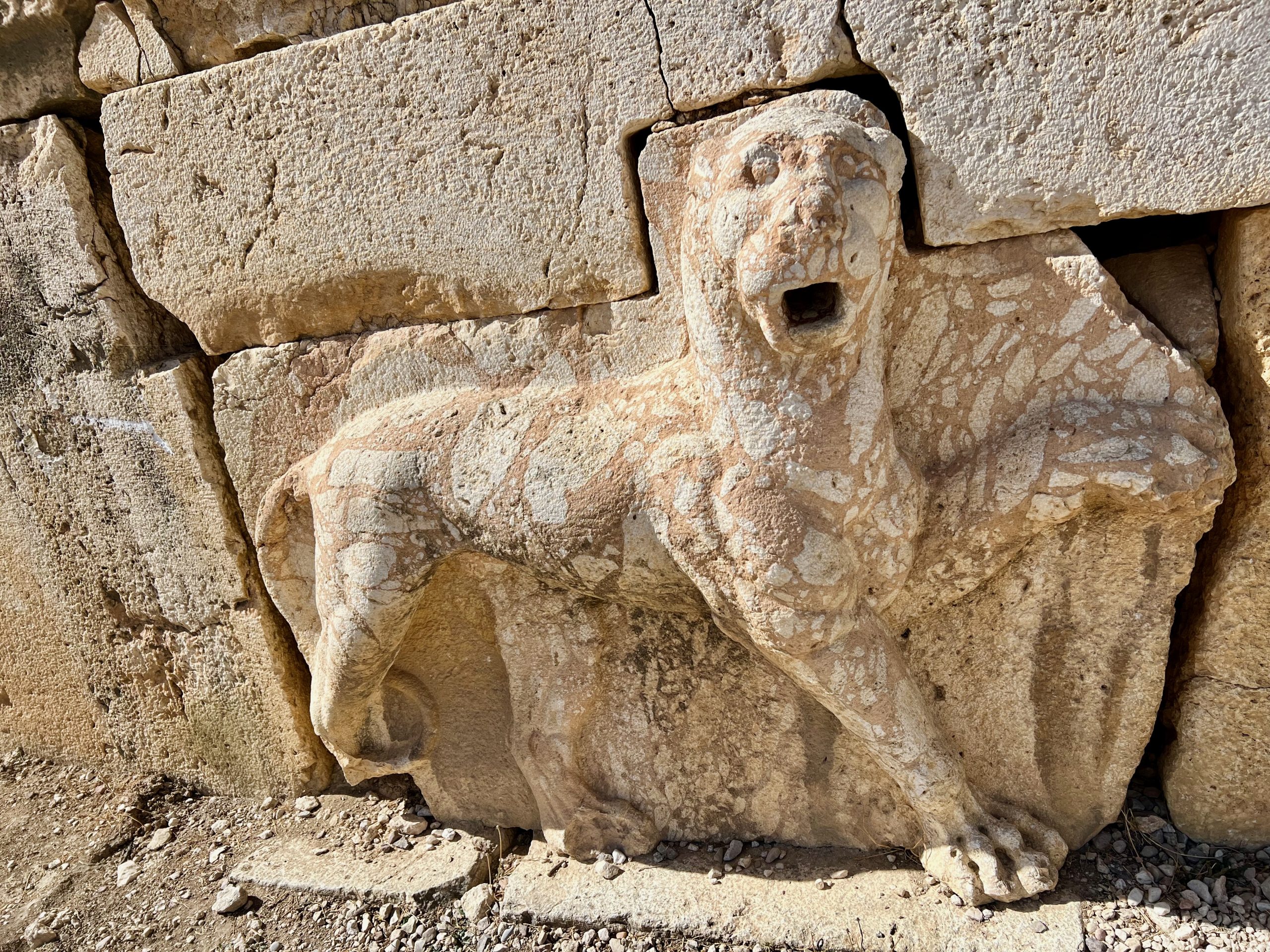
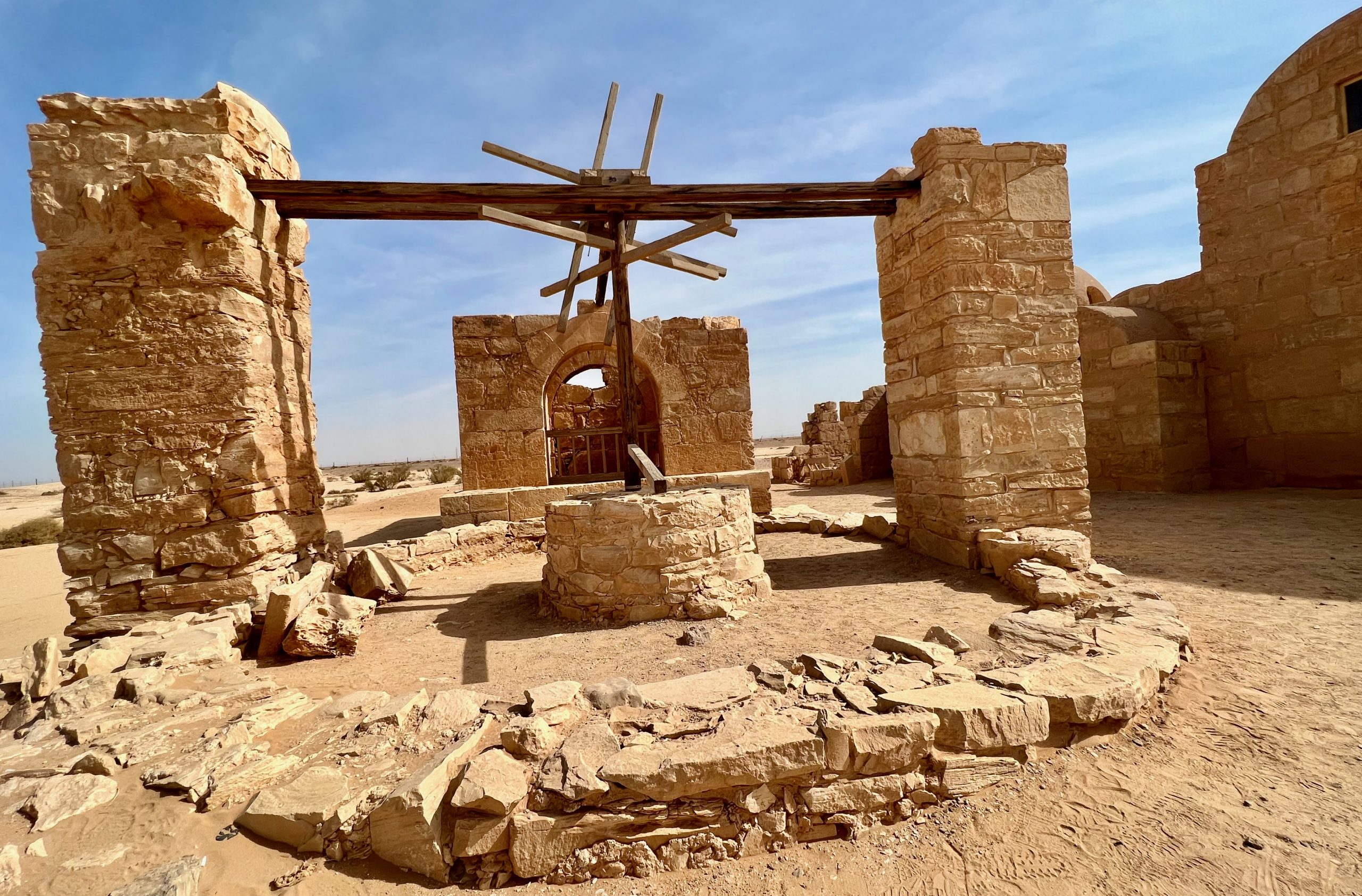
One of two panthers that once spouted into a lake surrounding Qasr al-Abd, the ‘Castle of the Slave‘
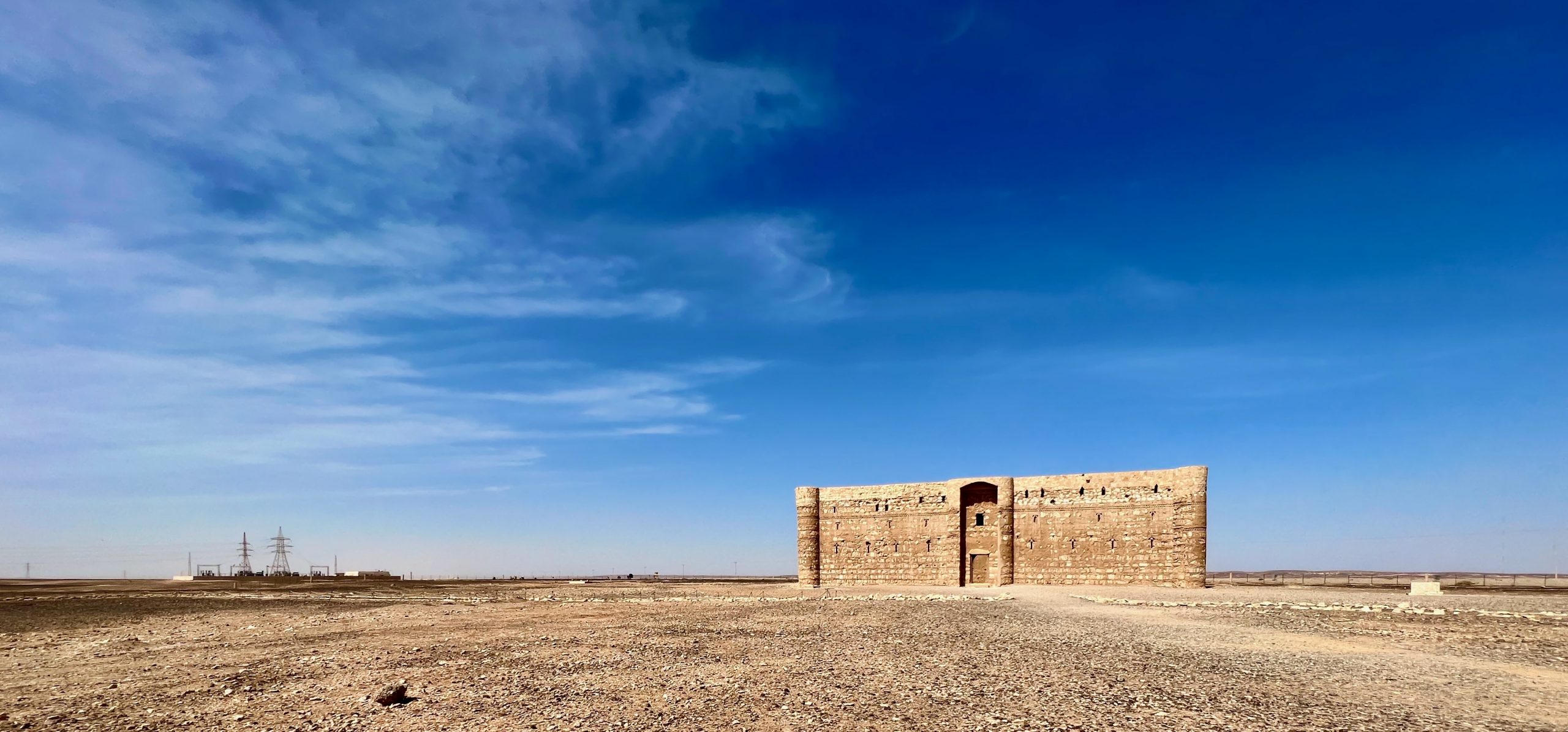
Old and newish: Qasr El Kharraneh (many spellings) and electricity transformer
Elaine
Quasar ‘Amra, a UNESCO World Heritage site
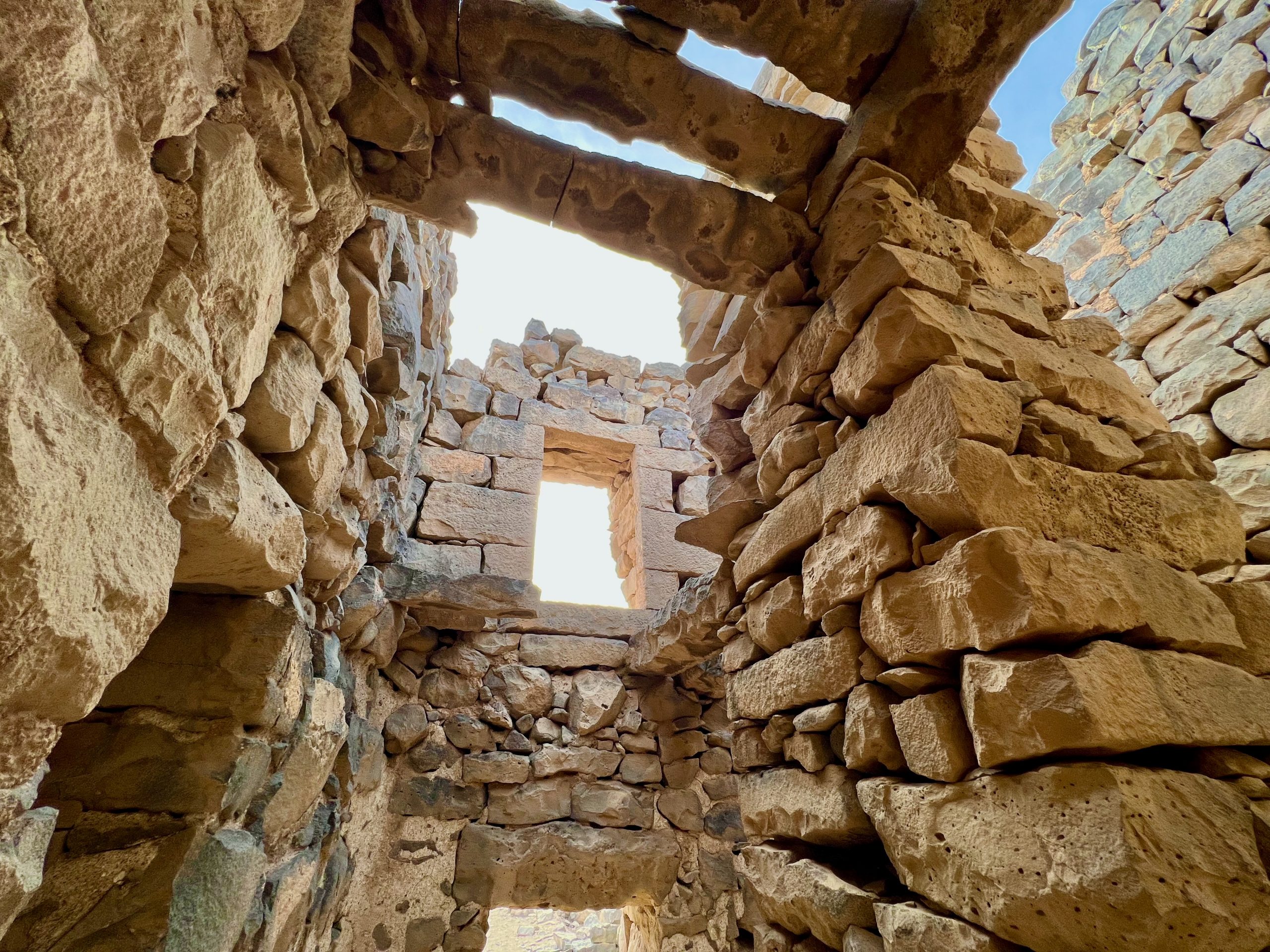
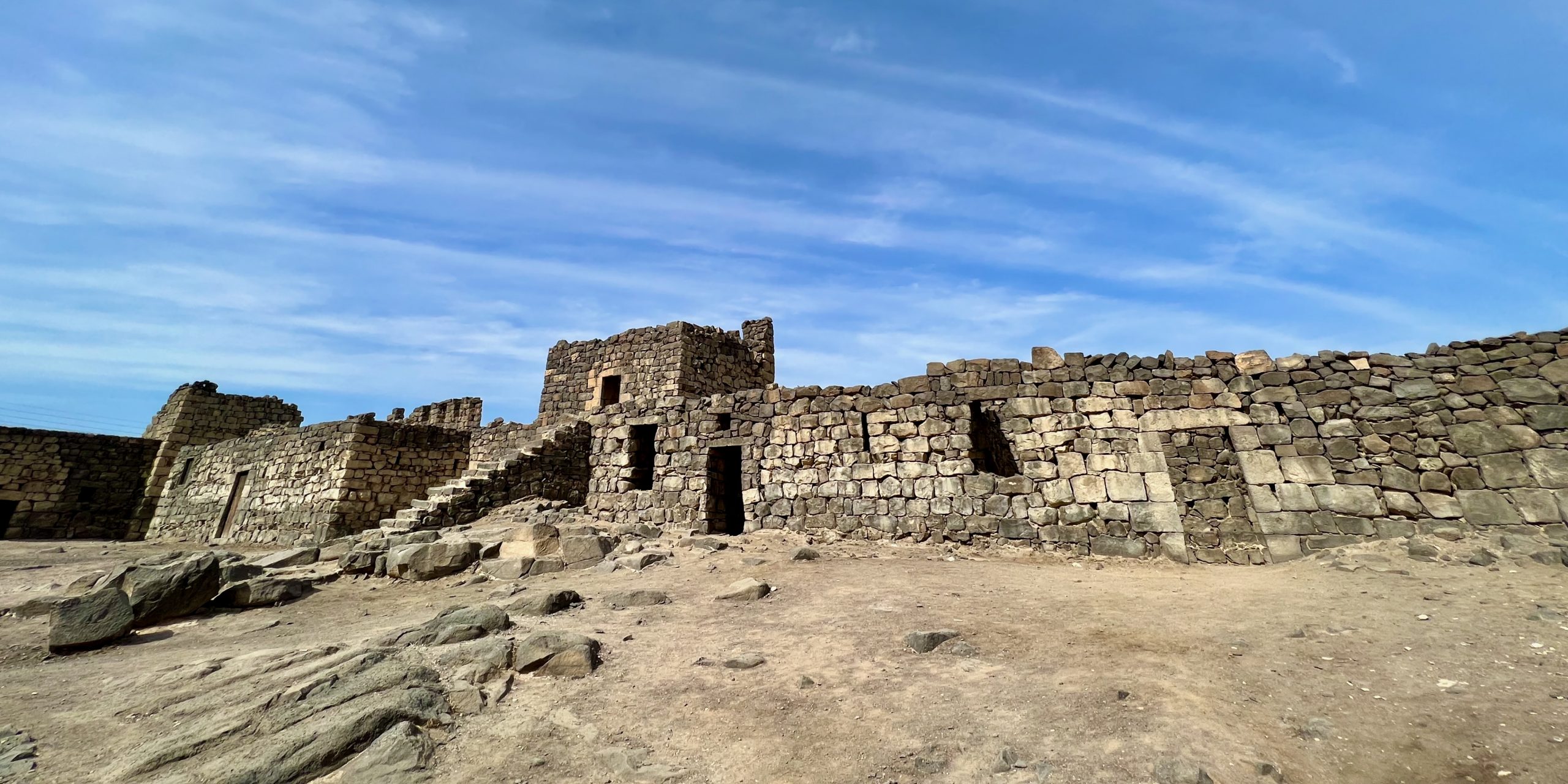
Black basalt castle of Azraq, where Lawrence of Arabia roosted during Arab Revolt
Health and safety might have things to say about the stairs
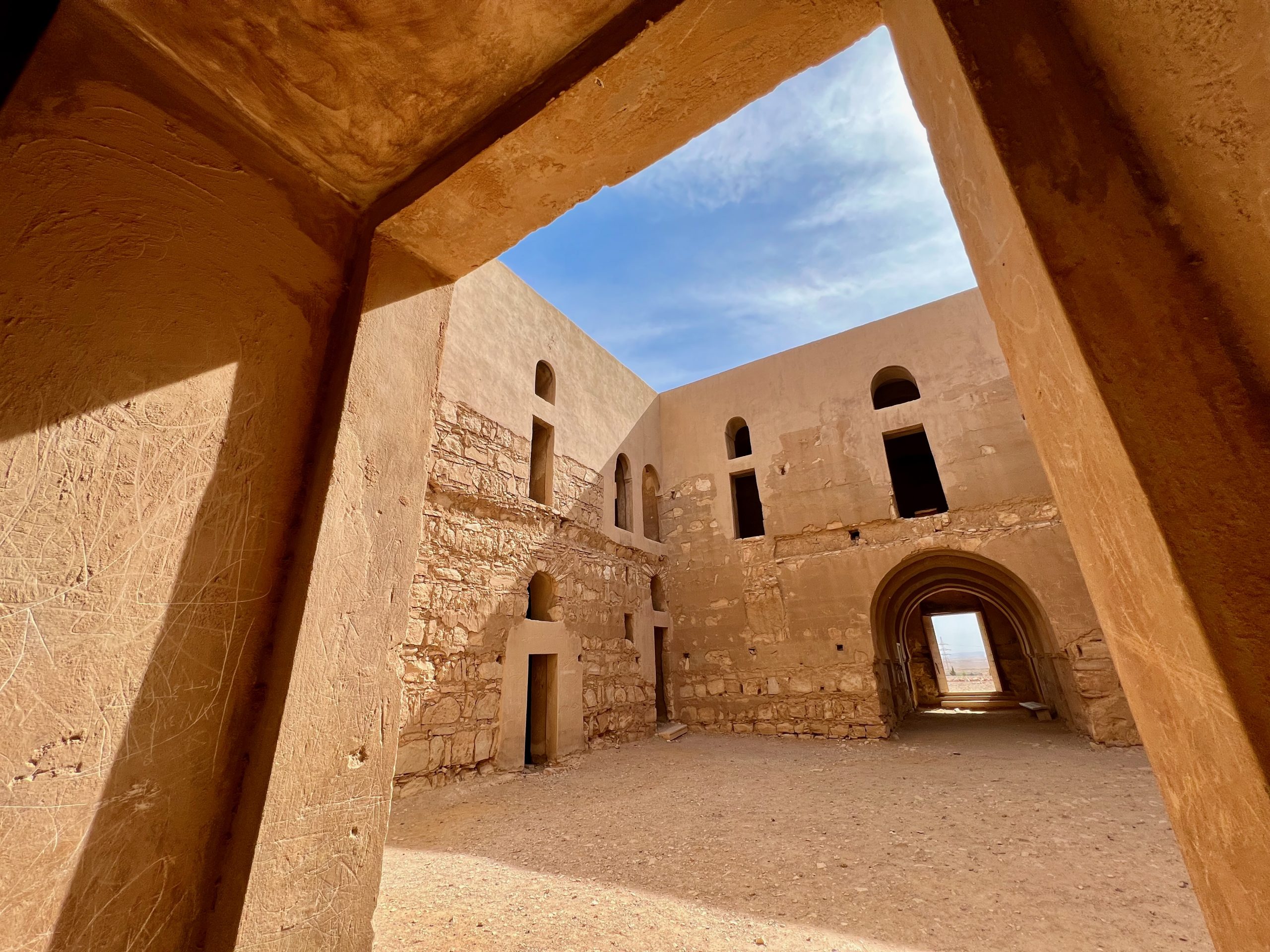
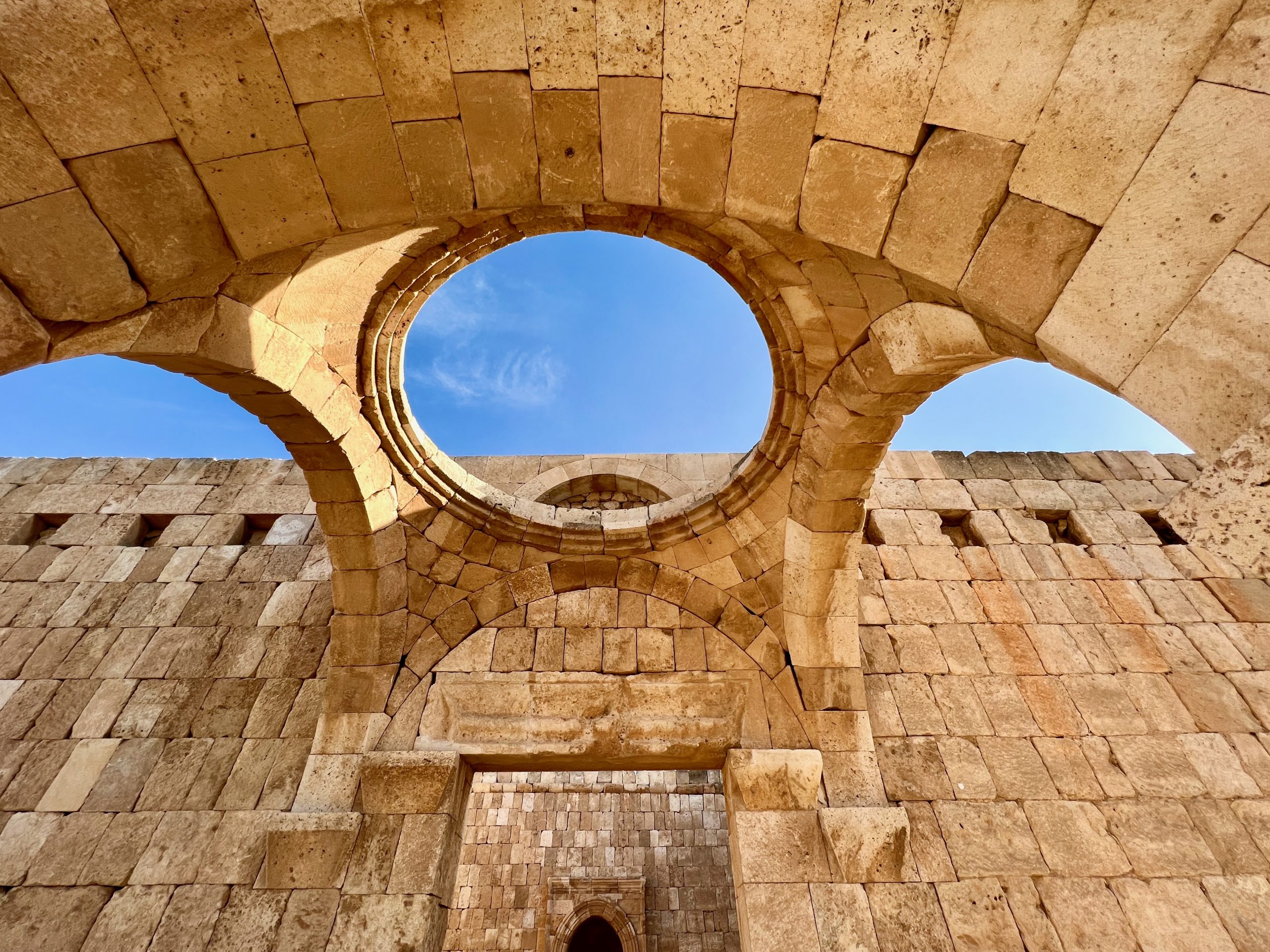
Following images all from Qasr al-Hallabat

Rosenzweigs In Town

John Elkington · 17 October 2023 · Leave a Comment

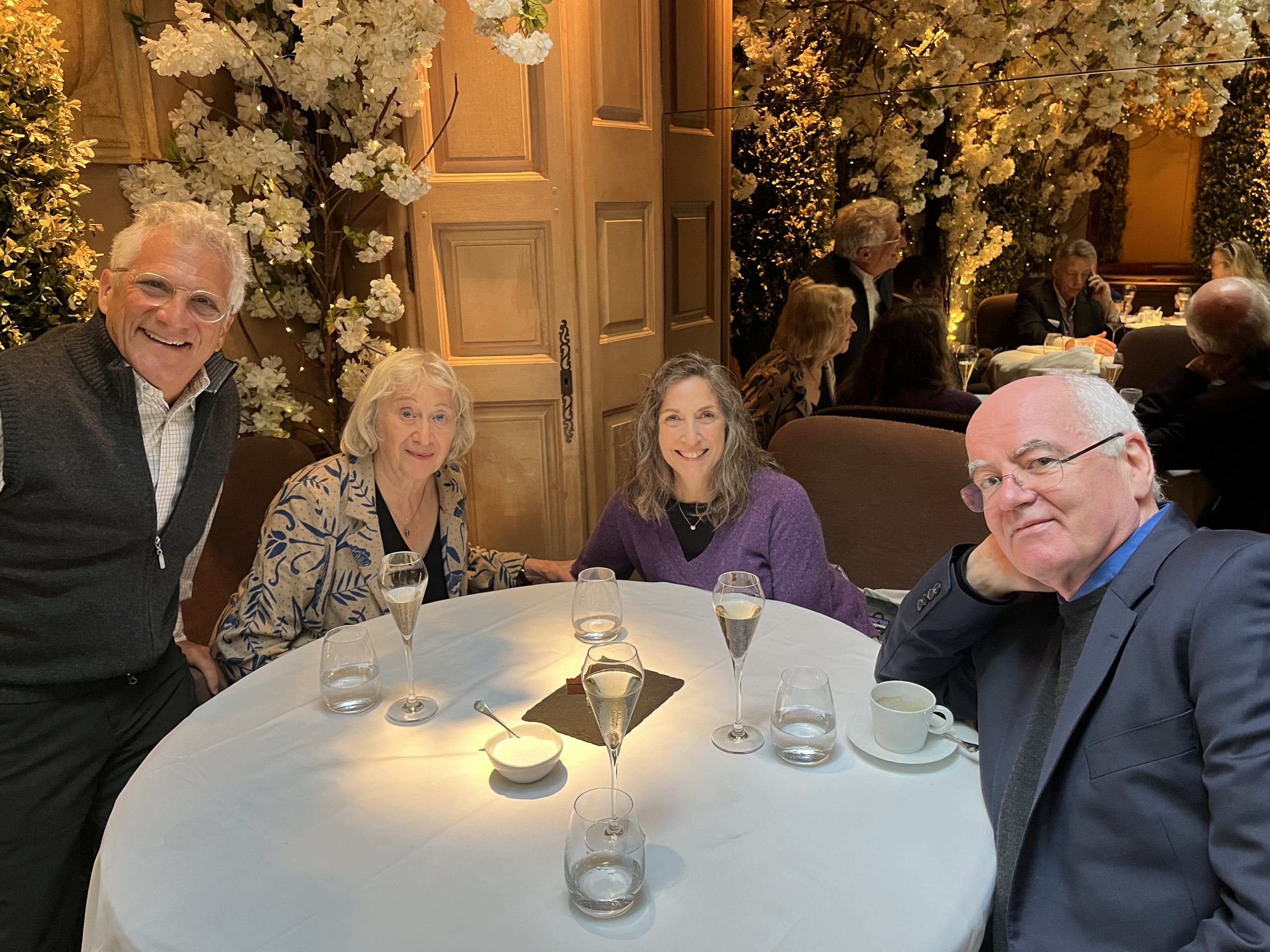
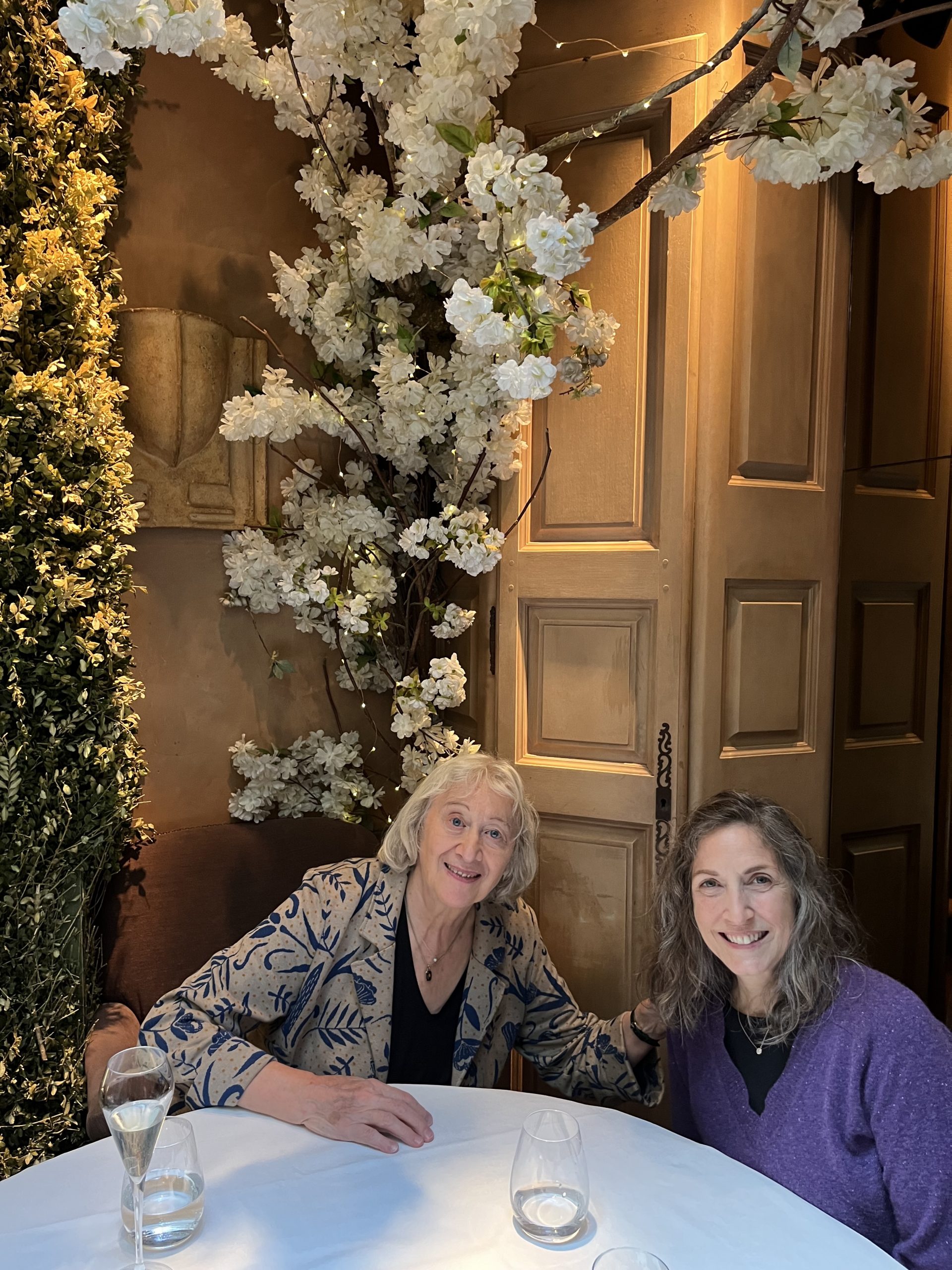
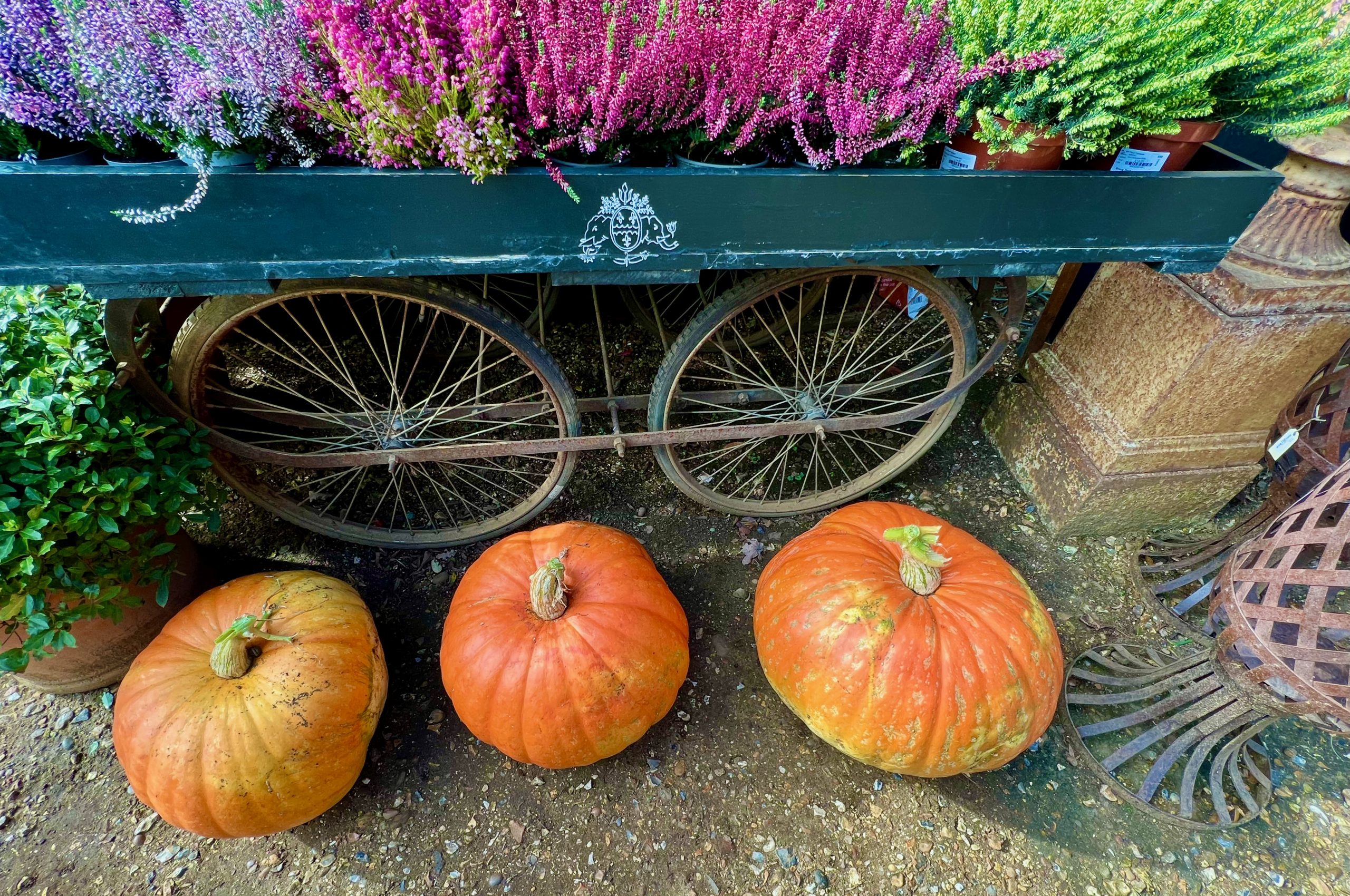
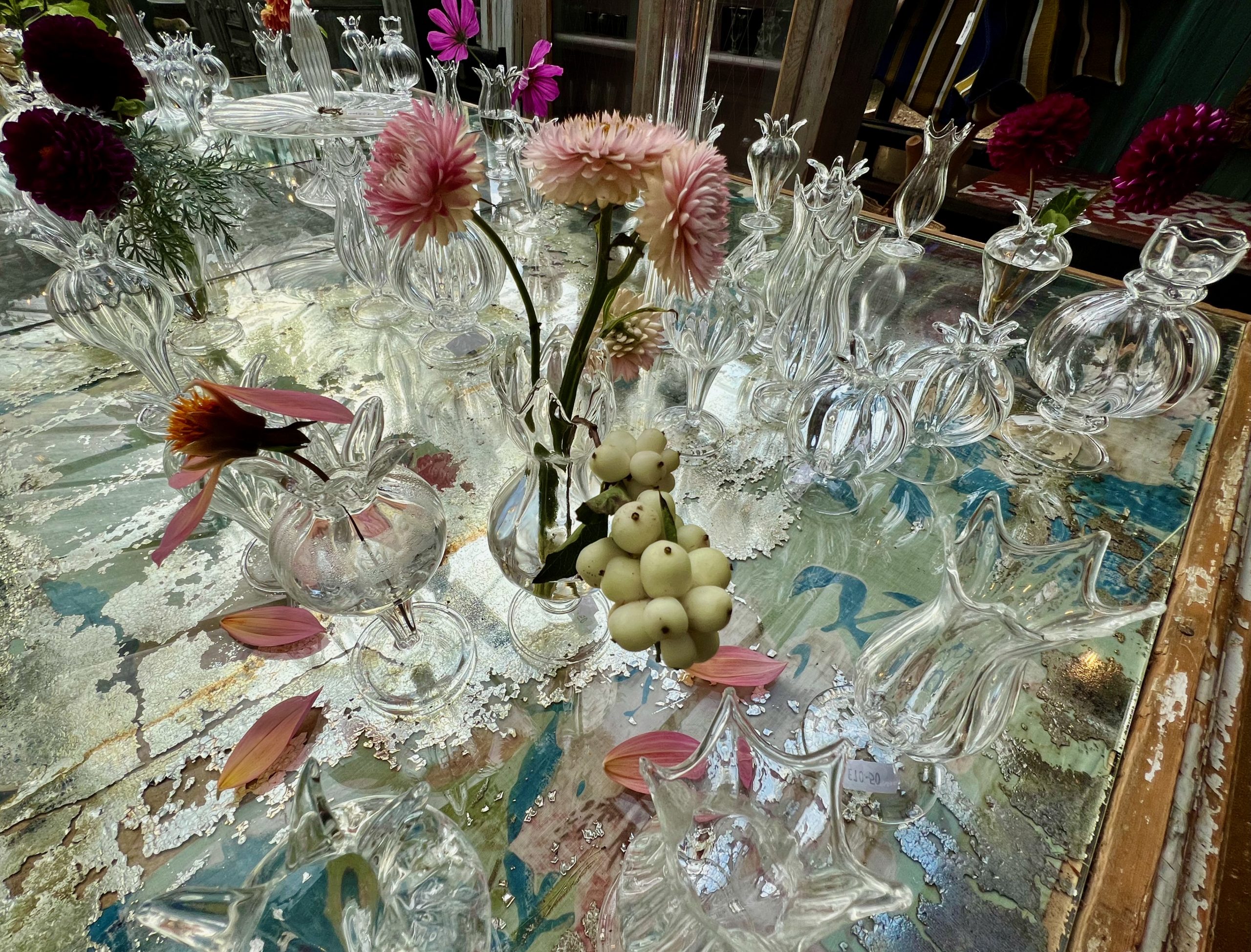
Will and Carla Rosenzweig were in town this week, from California. As something a bit special, to celebrate their anniversary, we took them to Clos Maggiore in Covent Garden on Friday 13th – and they reciprocated by taking us today to the restaurant at Petersham Nurseries. Memorably delightful. Discussed the evolving role of ‘sustainability elders’ in our societies. And we also began talking about a possible book launch for Tickling Sharks in the Bay Area next May.

Will, Elaine, Carla and I
Petersham Nurseries
Ditto

The Wave, Bristol

John Elkington · 12 October 2023 · Leave a Comment

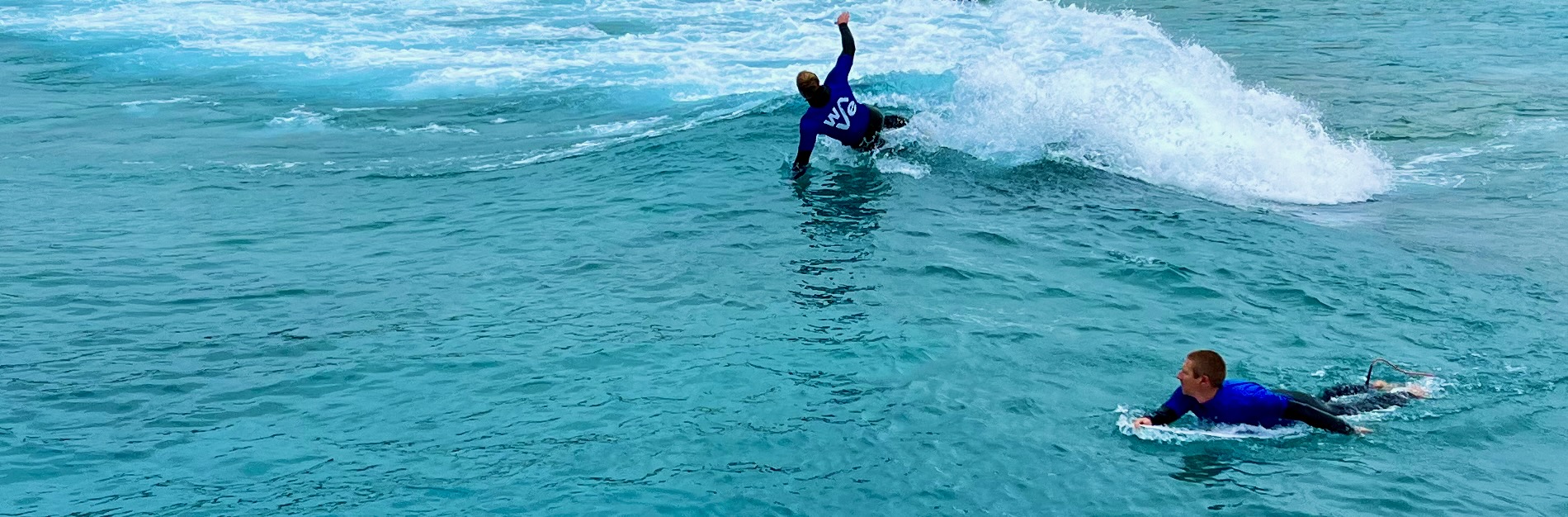
Wipeout
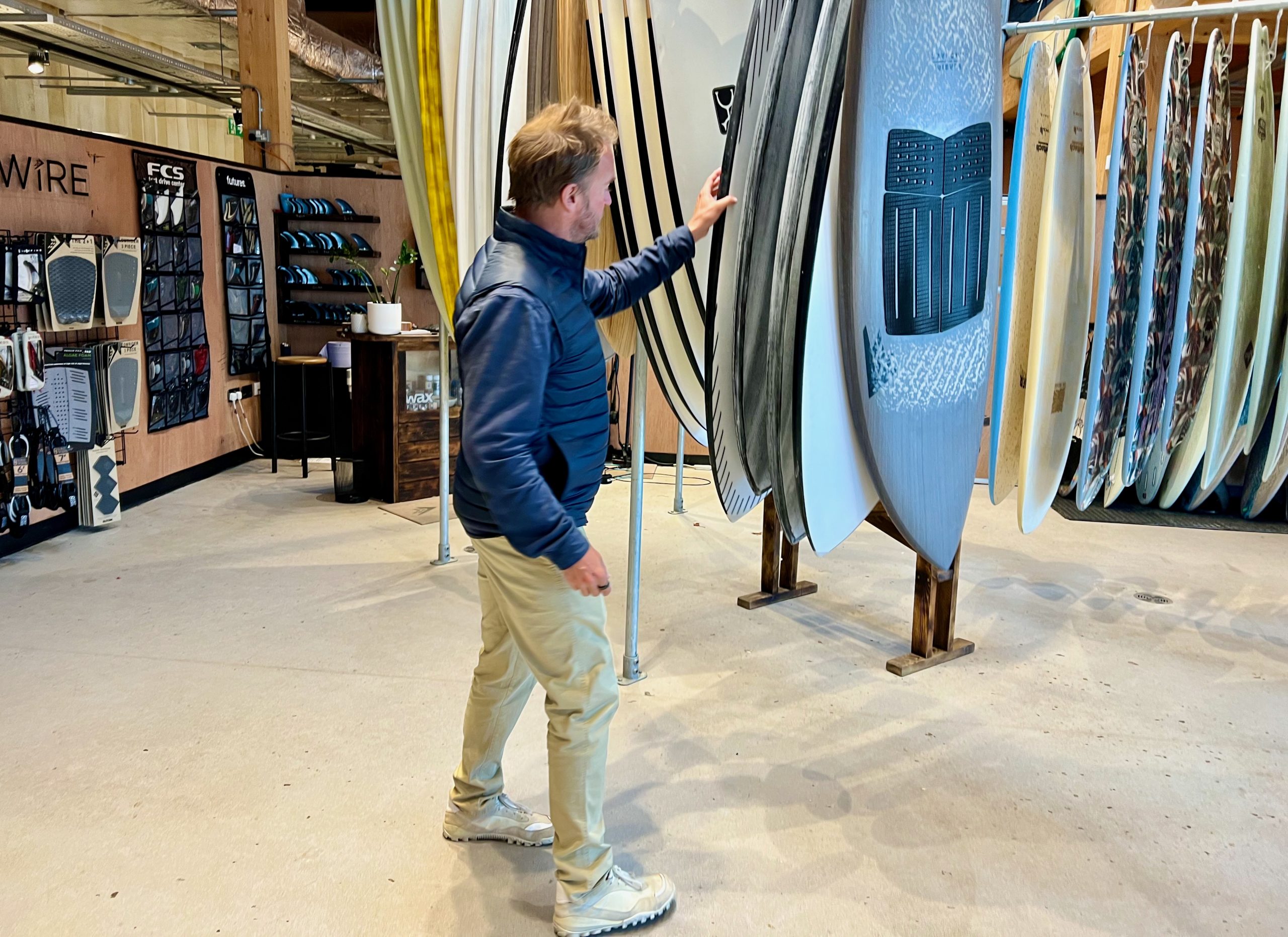
Nick shows me some boards
Ready to drive me back to Bristol Temple Meads station

Have been in Bristol, speaking at the Blue Earth Summit 2023, held in The Propyard. Great panel session with Kresse Wesling of Elvis & Kresse, Juliet Davenport, who founded GoodEnergy, and Andres Roberts, of the Bio-Leadership Project. Theme was: ‘Is Regenerative Business Possible?’ The answer: yes, but it’s the scaling that’s the challenge.
Then this morning, Nick Hounsfield of The Wave picked me up at my hotel and drove me out to the site with Abby Richardson. Magical. Then back to London for a session with the WWF Council of Ambassadors. Here’s the column I did for the Future Frontiers platform run by E-Square in Japan:

***

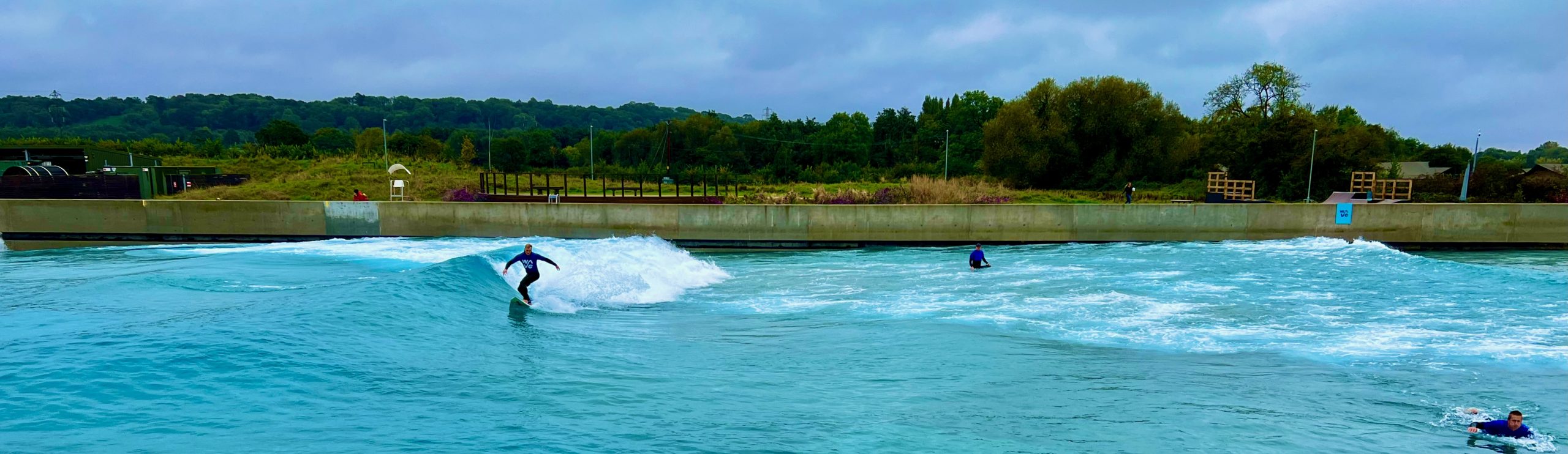
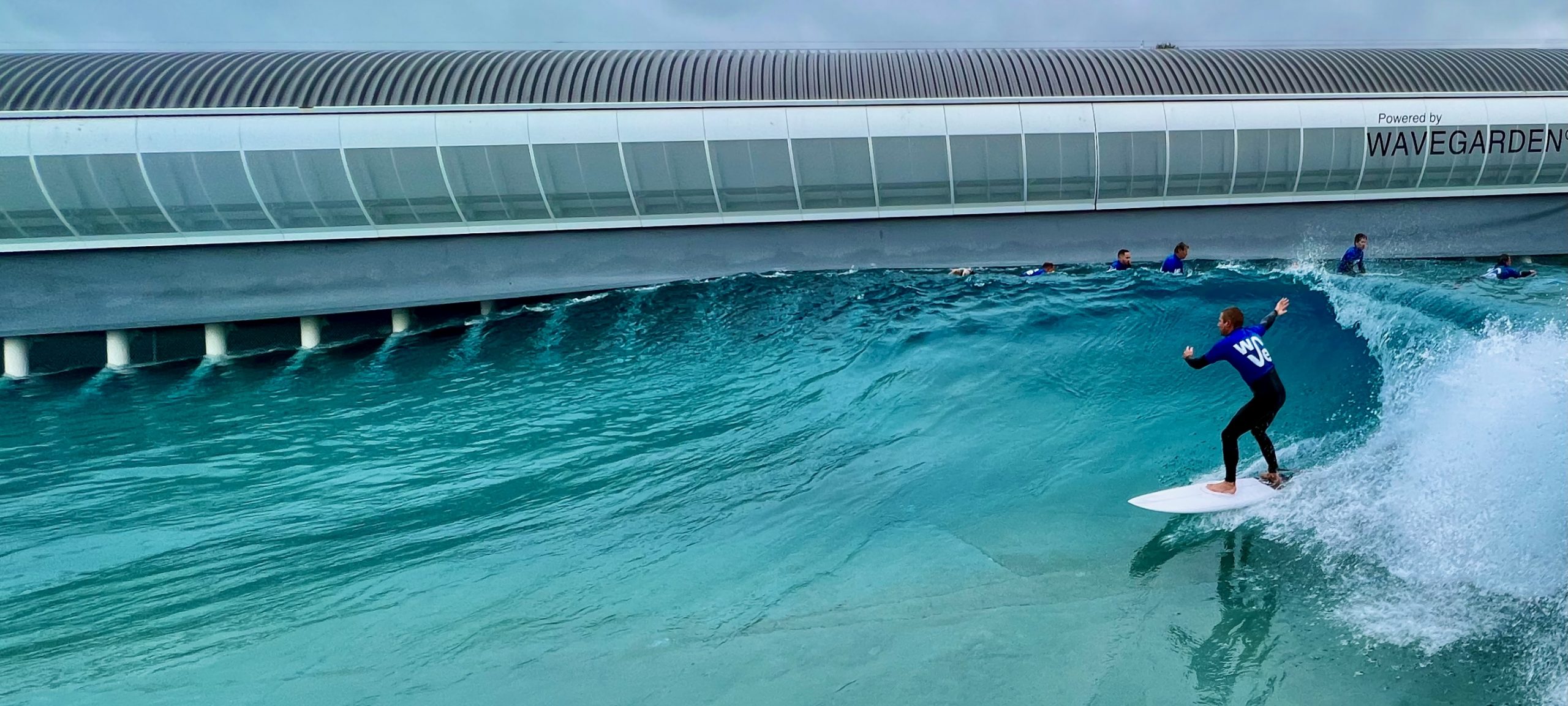
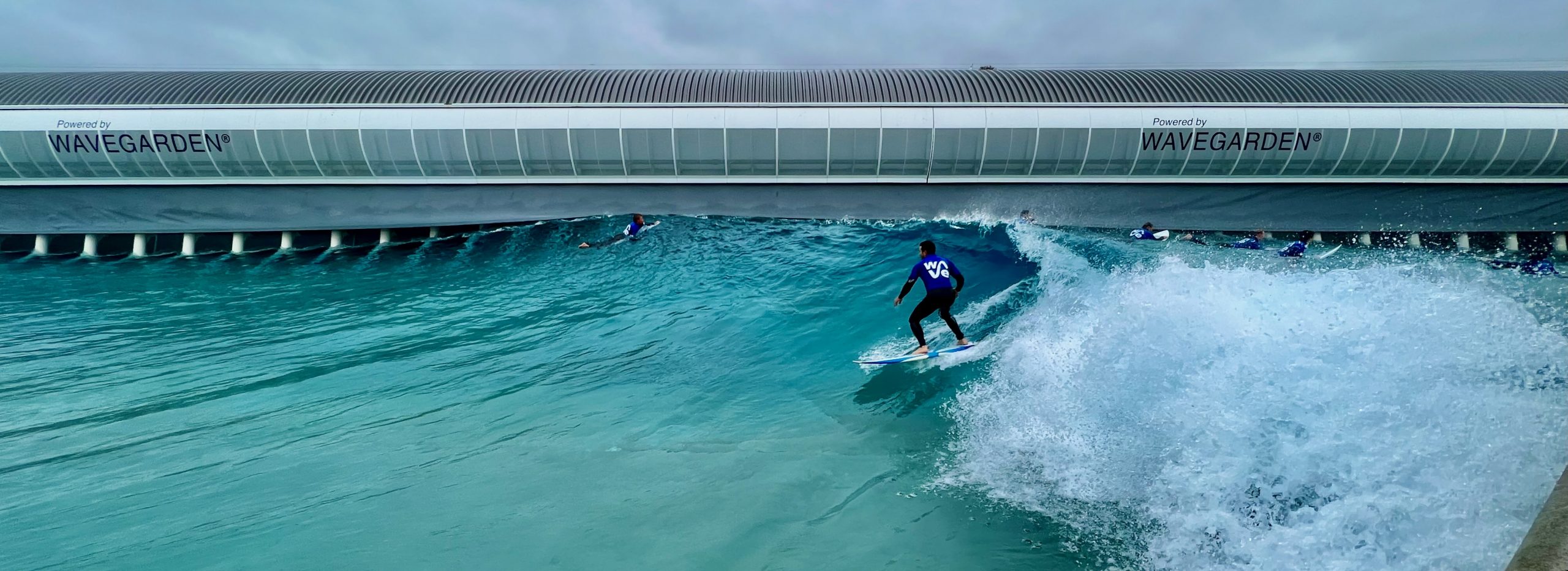
The boom of huge waves rolling, breaking, and crashing down was all around us. This, I learned, was Big Wave Thursday, with lines of wetsuited surfers paddling out to catch the incoming walls of water. The odd thing, though, was that we were not on the coast, nor anywhere near a beach. 

Instead, we were deep inland, near Bristol, one of Britain’s larger cities. And instead of the surf being whipped up across thousands of miles of wind-swept ocean, it was being generated—according to digital menus, as I saw in the control room—by banks of machines powered by renewable energy. 

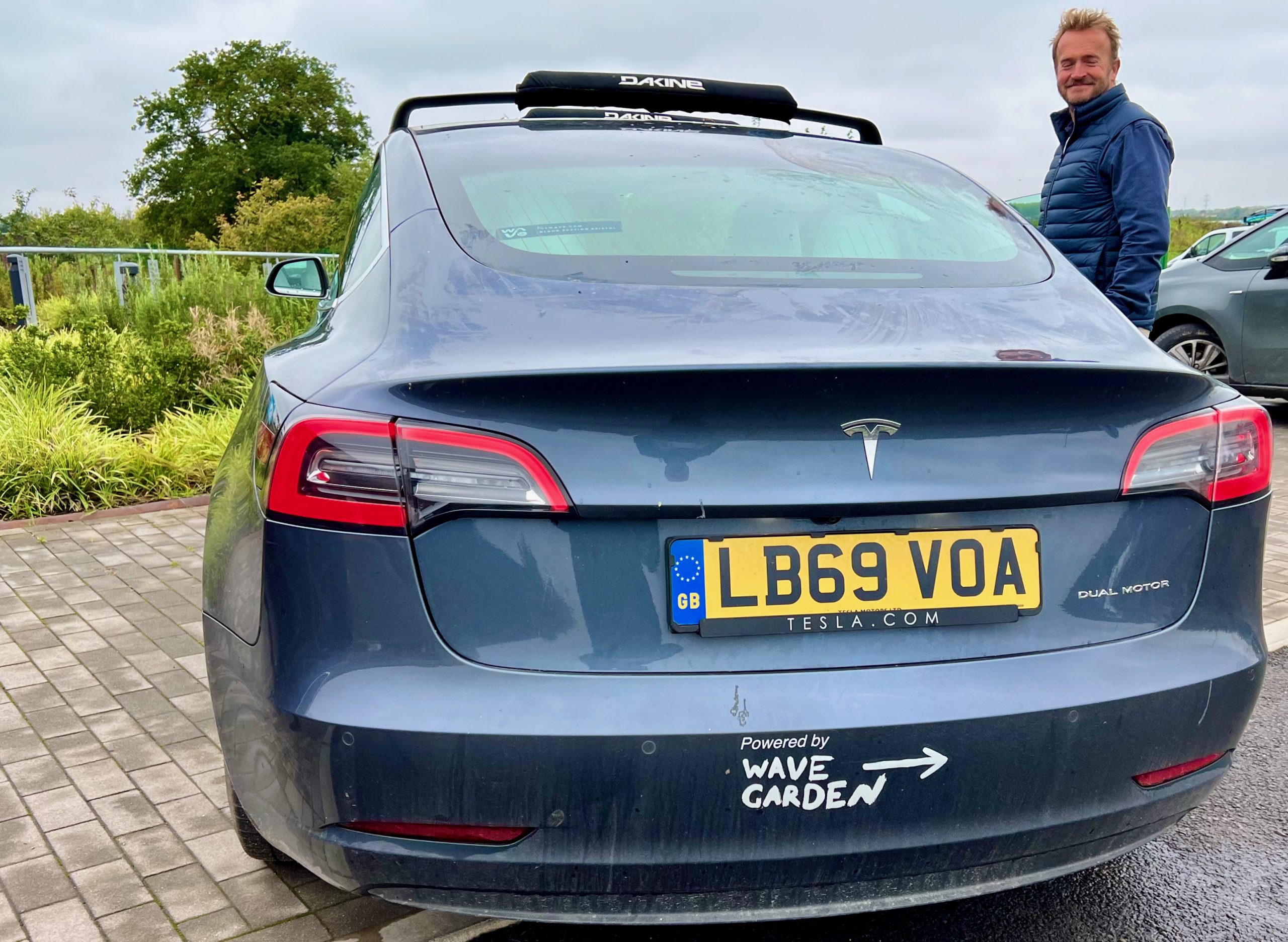
Finally, I had found my way—in a renewable energy-powered Tesla—to The Wave. It proved to be one of the most fascinating sustainability experiments I have ever visited. Better still, I was being guided around by the founder, entrepreneur Nick Hounsfield. 

I was in Bristol to speak at the 2023 Blue Earth Summit, chairing a panel on the future of regenerative business—and the possibility of dropping in on The Wave had been top of mind since the invitation to speak first came through. 

Nick and I had first met at an awards ceremony where, again, I was speaking. We were celebrating the architectural and planning firm WWA’s winning the Queen’s Award for Environmental Excellence. And one of their flagship projects, I discovered, had been The Wave. 

I was welcomed onto the WWA stage by Chris Hines, founder of Surfers Against Sewage, one of the most effective environmental campaigners I have come across. He had worked closely with Nick back in the early days of The Wave—building the concept around my idea of the triple bottom line.

That was back in 2012. From that point on, it took seven years to develop the £25 million surfing project—powered by 100% renewable electricity. It enables users to surf all year round, regardless of weather conditions and tides. Although it is not the world’s first artificial surfing lake, it was the first to use ‘Wavegarden Cove’ technology, providing up to 1,000 waves of varying sizes and shapes an hour.

The Wave Bristol eventually opened in October 2019.. The kite-shaped lake is 180 metres long, 200 metres wide and varying in depth from approximately 50 centimetres up to 3 metres. It contains 26 million litres of water and is divided into two parts for left breaking and right breaking waves, separated by a pier which houses the wave-making system. 

I had first met Chris thirty years ago, back in 1992, when he helped us launch our book, Holidays That Don’t Cost the Earth. He turned up at that event, which we hosted in a grand London swimming complex, with his surfboard—and cheekily wore a wetsuit covered in the sort of abandoned condoms that surfers so often encountered amidst the sewage around our coasts.

A couple of years later, I came up with two ideas that went on to have quite an impact. The first was the ‘triple bottom line’, launched in 1994. Then, that same year, I also developed a wave-based model of change with a friend, Nick Robins, who went on to become a leading climate specialist. 

From today’s perspective, each of the societal pressure waves we have tracked since then has built on previous ones. In that vein, the current, fifth, wave, has focused on the environmental, social and governance (ESG) agenda that evolved out of the triple bottom line. It also focuses on economic, social, and environmental impact, with a business’s impact seen as negative, neutral, or positive. Hundreds of impact reports are now being produced by the world’s 7,000-plus B Corporations and by many thousands of other businesses. 

My own organisation, Volans, was Britain’s first B Corporation, having incubated the UK end of the B Lab platform that promotes this approach to ‘for-benefit’ (rather than just for-profit) business. Although we should have produced an impact report each year since, we have struggled with the task of working out how to measure our real-world impact in terms of shifting how businesspeople think and feel about sustainability challenges and opportunities.

Now, however, we are evolving our first impact report—and it helps to look behind the scenes with other changemakers. Though its B Corp application is still going through the process, The Wave’s 2022 impact report is a model of how to engage and inform. Among other things, it spotlights several key challenges The Wave Bristol has experienced, among them cost control issues, an outbreak of an aggressive form of algae in the lake, and difficulties in attracting enough female surf coaches.

The team’s core focus is on three converging sets of change waves. The first, ‘waves of growth’, aims to support and expand the British para-surfing community, enabling disabled people to surf (One surfer I met there had a prosthetic leg, following a car accident; she is now a champion surfer.) The second, ‘waves of support’, involves working with organisations that help people with mental health issues to access the wellbeing benefits of surfing and surf therapy. And the third, ‘waves of change’, focuses on improving the gender and ethnicity balance in UK surfing.

Nick has long been an activist for ‘blue health’, exploring how the body and the mind responds to being in, or near, water. Among others, he has worked with legendary Irish surfer and social scientist, Easkey Britton. Five times Irish national surfing champion, she helped by pulling together more than 30 studies exploring the health benefits of water-based sports for both body and mind. 

Among the less obvious benefits identified in surf-therapy work with local youngsters were increased confidence, self-esteem, and resilience. Astonishingly, in 2019, surf-therapy was made available to children through doctors’ prescriptions via Britain’s National Health Service. An independent report concluded that the approach has ‘a lasting, positive impact.’

On the environmental side, one Wave project that caught my eye had first been mentioned to me by Easkey when I interviewed her for a new book of mine. And now Nick—and The Wave’s 2022 impact report—filled me in on the background. Late in 2022, The Wave team woke up to the fact that most wetsuits today are made of a synthetic rubber called Neoprene, the commercial name for chloroprene rubber, the product of a toxic, carcinogenic chemical process. 

There is only one chloroprene plant in the US, owned by the Japanese chemical company Denka. It sits at the heart of a region known as ‘Cancer Alley’. The cancer risk here is 50 times the national average. This, The Wave team says, is completely out of line with its triple bottom line approach to business, so it is now working on non-Neoprene alternatives for its surf school wetsuits. 

All work in progress, clearly, with The Wave team also now working on future surfing centres in cities like London. For me, though, one striking lesson from visiting the Bristol Wave was that we must now move beyond tracking and surfing today’s societal waves of change to building tomorrow’s. Great, thundering waves of social, political and market change. Positive versions, perhaps, of Hokusai’s Great Wave off Kanagawa.

Blue Earth Summit 2023

John Elkington · 11 October 2023 · Leave a Comment

Kresse Wesling
Kresse and I
Juliet Davenport and Andres Roberts
Andres

My first involvement in the Blue Earth Summit in Bristol today, where I chaired a panel session on the theme: ‘Is Regenerative Business Possible?’ My kick-off comment was yes, but the real challenge is how you bring it to scale. My panellists were Kresse Wesling of Elvis & Kresse, Good Energy founder Juliet Davenport, and Andres Roberts of the Bio-Leadership Project. Bit of a scamper with time constraints, but some great questions from the audience – and great feedback afterwards.
Evening before I had walked across from the hotel to Clifton for a dinner with Julia Hailes, Jeremy Bristol, Amanda Aitchison, Anna Guyer and others. Great fun and intriguing peek of the masts of the SS Great Britain below. This evening it was a dinner at the Coppa Club in Clifton, with the likes of Julia, Ed Gillespie and Mark Stevenson (the Futurenauts), The Wave’s Nice Hounsfield, and explorers Belinda Kirk and Roz Savage.

  • « Go to Previous Page
  • Go to page 1
  • Interim pages omitted …
  • Go to page 21
  • Go to page 22
  • Go to page 23
  • Go to page 24
  • Go to page 25
  • Interim pages omitted …
  • Go to page 168
  • Go to Next Page »

Primary Sidebar

Introduction

I began this blog with an entry reporting on a visit to the Woods Hole Oceanographic Institution on Cape Cod, on 30 September 2003. The blog element of the website has gone through several iterations since, with much of the older material still available.

Like so many things in my life, blog entries blur the boundaries between the personal and the professional. As explained on this site’s Home Page, the website and the blog are part platform for ongoing projects, part autobiography, and part accountability mechanism.

In addition, my blogs have appeared on many sites such as: Chinadialogue, CSRWire, Fast Company, GreenBiz, Guardian Sustainable Business, and the Harvard Business Review.

Recent Comments

  • John Elkington on The Hill House Elkingtons
  • sally fitzharris. (Rycroft) on The Hill House Elkingtons
  • Thomas Forster on Reminder of Glencot Years

Journal Archive

About

John Elkington is a world authority on corporate responsibility and sustainable development. He is currently Founding Partner and Executive Chairman of Volans, a future-focused business working at the intersection of the sustainability, entrepreneurship and innovation movements.
Contact

john@johnelkington.com  |  +44 203 701 7550 | Twitter: @volansjohn

John Elkington

Copyright © 2026 John Elkington. All rights reserved. Log in