
• Skip to primary navigation
  • Skip to main content
  • Skip to primary sidebar
John Elkington

John Elkington

A world authority on corporate responsibility and sustainable development.

  • About
    • Ambassador from the future
  • Past lives
    • Professional
      • Volans
      • SustainAbility
      • CounterCurrent
      • Boards & Advisory Boards
      • Awards & Listings
    • Personal
      • Family
      • Other Influences
      • Education
      • Photography
      • Music
      • Cycling
    • Website
  • Speaking
    • Media
    • Exhibitions
  • Publications
    • Books
    • Reports
    • Articles & Blogs
    • Contributions
    • Tweets
    • Unpublished Writing
  • Journal
  • Contact
  • Show Search
Hide Search
You are here: Home / Journal

Journal

Natural capital cost of plastics exceeds $75bn a year

John Elkington · 23 June 2014 · Leave a Comment

why-pdp

Every so often an initiative comes along where you think, “I wish I had thought of that!”

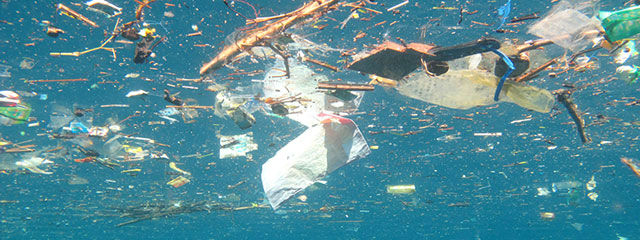
When I think of the environmental issues that most concern me, one is the rapid growth of the great gyres of plastic waste and debris that are choking the world ocean. And now there is the Plastic Disclosure Project. I have no idea what impact it will have, but it’s potentially an exciting new element in the disclosure firmament.

PDP points out that: roughly 33% of plastic is for single use, then thrown away; approximately 85% of total global plastic used is not recycled; plastic negatively impacts over 700 species of animals and birds; and plastics can hang around in the environment for hundreds of years. Among other things, PDP will encourage the annual disclosure of plastic footprints and management strategies; encourage efficiencies in plastic use, reuse and recycling; and broaden awareness of plastic investment risks and opportunities

The  project is being developed by the Hong Kong and California-based Ocean Recovery Alliance. This focuses on bringing innovation, technologies, creativity and collaborations together to address some of the challenges that face the ocean and our broader environment. Two preventative solutions to the plastic waste issues are the PDP and Global Alert, both of which were announced at the 2010 Clinton Global Initiative in New York.

A new report on the natural capital cost of plastic in the consumer goods industry (a joint program with UNEP and Trucost) is available – and its findings are getting coverage in the business media.

I, for one, will be watching this space with great interest.

Electric Harleyland

John Elkington · 21 June 2014 · Leave a Comment


harley-davidson-logo-2

I confess I raised an eyebrow when I first heard that Jochen Zeitz, my co-author on the new book due out in September, was on the Board of Harley-Davidson – and is responsible for sustainability issues. But reading Time‘s account of the company’s evolving LiveWire battery-powered bike had me rethinking. It’ll be interesting to see how riders take to whining rather than throbbing, but has to be a step in the right direction

I have always loved History – and by God there has been a lot in Europe!

John Elkington · 21 June 2014 · Leave a Comment

EU_Flag 2

Take a peek at the history behind this flag by running the 3-minute video below

I sometimes struggle to explain to people who don’t follow Twitter why I find it so useful. But it’s a bit like living alongside an eAmazon , a great outpouring of information, on which all sorts of interesting things are borne along with the flow. At one level, it appeals to the beachcomber in me. So, for example, one of today’s treasures was this video mapping of European country borders over the past 1,000 years. All in 3 minutes. The music is tiresome, but you can always turn it down, or off.

I have always loved History, but this is ridiculous. And I confess it makes me feel more pro-European. It also gives a sense of just how fragile the Eu project may prove to be in the longer term.

When was Gaia’s first selfie?

John Elkington · 21 June 2014 · Leave a Comment

1stphotofromspacejpg__600x0_q85_upscale

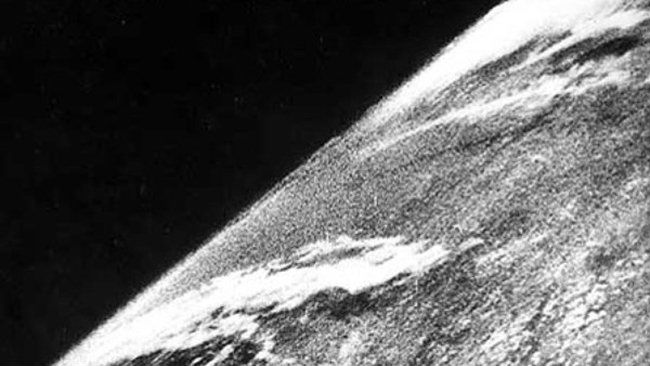
I was pondering anniversaries this morning, my 65th on Earth on the 23rd, 40 years in the environmental and sustainability fields this year, 20 years of the triple bottom line this year, and it occurred to me to wonder when Gaia – or life on Earth – first managed to take a ‘selfie,’ as we now seem to call photographic self-portraits?

I had been thinking of the NASA Gemini or Apollo missions, whose images I recall being wonderfully inspired by.

So I dug around a  bit – and found that it had happened considerably sooner than I had thought, indeed before I was born, in 1946. Scientists used a V2 rocket fired from the White Sands Missile Range to take a series of far-from-full-Earth photographs, but exciting, nonetheless. The image shown came from a camera on V-2 #13, launched on October 24, 1946. (Photo: White Sands Missile Range/Applied Physics Laboratory)

If being able to see yourself as others see you is a key step in self-actualisation, this was in important moment for all of us. That said, we still have a long, long way to go. But then perhaps the multi-millionaires and billionaires who, one day, will be rocketed into space in vehicles operated by the likes to Richard Branson’s Virgin Galactic will come back transformed, in the same way many astronauts would be.

Cement looks very different in the greenhouse

John Elkington · 19 June 2014 · Leave a Comment

650,000 years of climate change

I wrote my first report on climate change (among three other emerging environmental issues) for Herman Kahn of the Hudson Institute way back in 1978.

And the first blog in this series recorded a 2003 visit to the Woods Hole Oceanographic Institution on Cape Cod, where we learned just how systemic the crisis we are facing now is.

Even so, the way things are headed continuously takes my breath away. So, for example, two images I have come across in the past few days, while convalescing, brought home the sheer scale of what we are facing in the coming decades with climate change – and threw an uncomfortable light on where a growing proportion of the problem is now coming from.

The first image, above is from NASA, and shows that current carbon dioxide trends are, whatever the skeptics may choose to believe, unusual. The second came via Twitter, is equally shocking and shows that China used more cement in the three years from 2011-2013 than the United States did in the entire twentieth century.

This is not so much to point the finger as to underscore the extent to which China has clicked on and dragged across an obsolete industrial model from the West. If I try to put an optimist’s hat on, the best I can come up with is the notion that biomimicry might help inspire novel ways to produce cement and concrete – perhaps based on the way that the world’s coral reefs do it.

CEMENT 2

  • « Go to Previous Page
  • Go to page 1
  • Interim pages omitted …
  • Go to page 164
  • Go to page 165
  • Go to page 166
  • Go to page 167
  • Go to page 168
  • Interim pages omitted …
  • Go to page 283
  • Go to Next Page »

Primary Sidebar

Introduction

I began this blog with an entry reporting on a visit to the Woods Hole Oceanographic Institution on Cape Cod, on 30 September 2003. The blog element of the website has gone through several iterations since, with much of the older material still available.

Like so many things in my life, blog entries blur the boundaries between the personal and the professional. As explained on this site’s Home Page, the website and the blog are part platform for ongoing projects, part autobiography, and part accountability mechanism.

In addition, my blogs have appeared on many sites such as: Chinadialogue, CSRWire, Fast Company, GreenBiz, Guardian Sustainable Business, and the Harvard Business Review.

Recent Comments

  • John Elkington on The Hill House Elkingtons
  • sally fitzharris. (Rycroft) on The Hill House Elkingtons
  • Thomas Forster on Reminder of Glencot Years

Journal Archive

About

John Elkington is a world authority on corporate responsibility and sustainable development. He is currently Founding Partner and Executive Chairman of Volans, a future-focused business working at the intersection of the sustainability, entrepreneurship and innovation movements.

Contact

john@johnelkington.com  |  +44 203 701 7550 | Twitter: @volansjohn

John Elkington

Copyright © 2026 John Elkington. All rights reserved. Log in